










What Is a Multi Cylinder Hydraulic Cone Crusher?
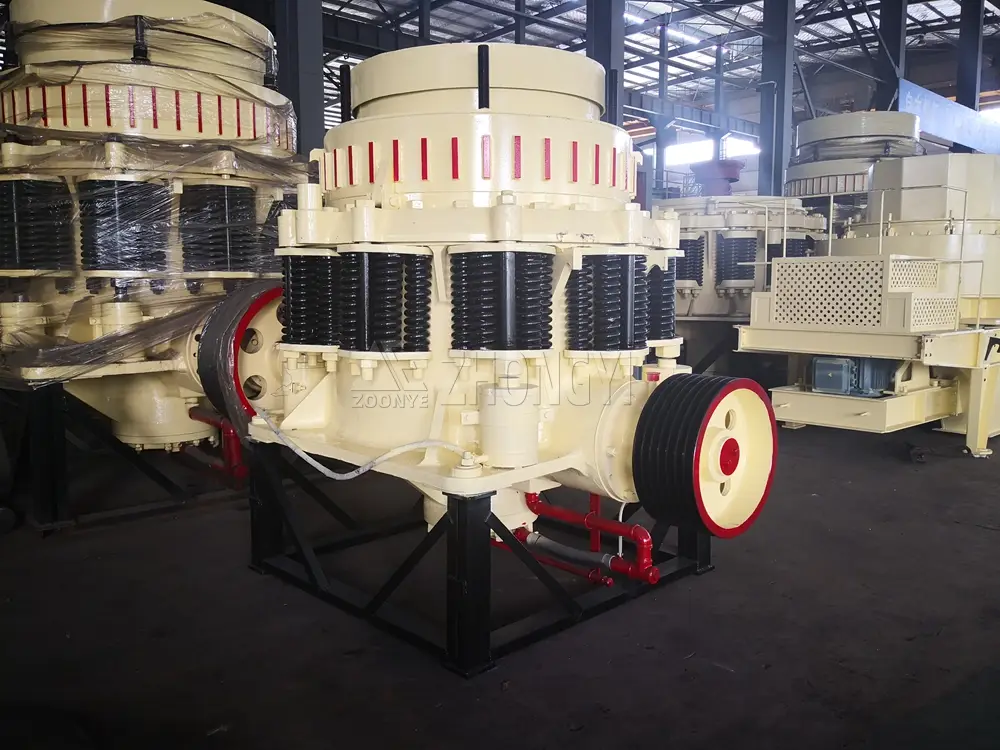
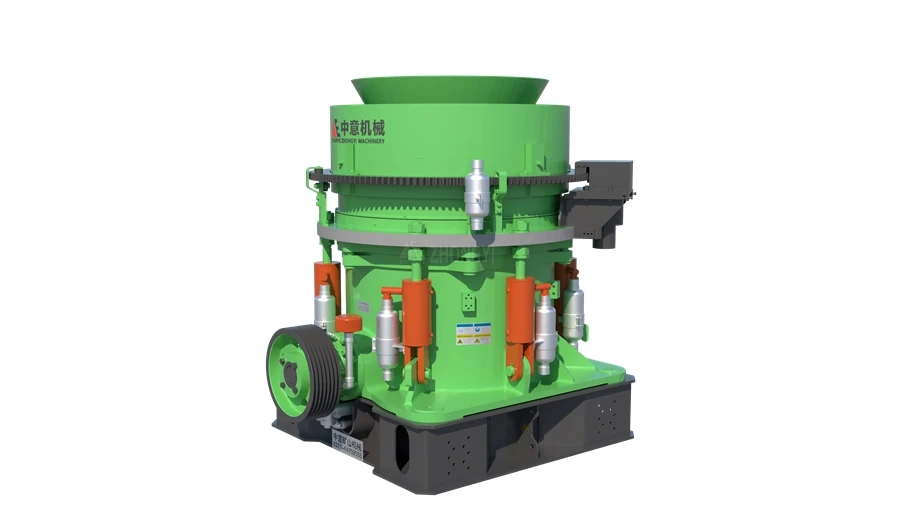
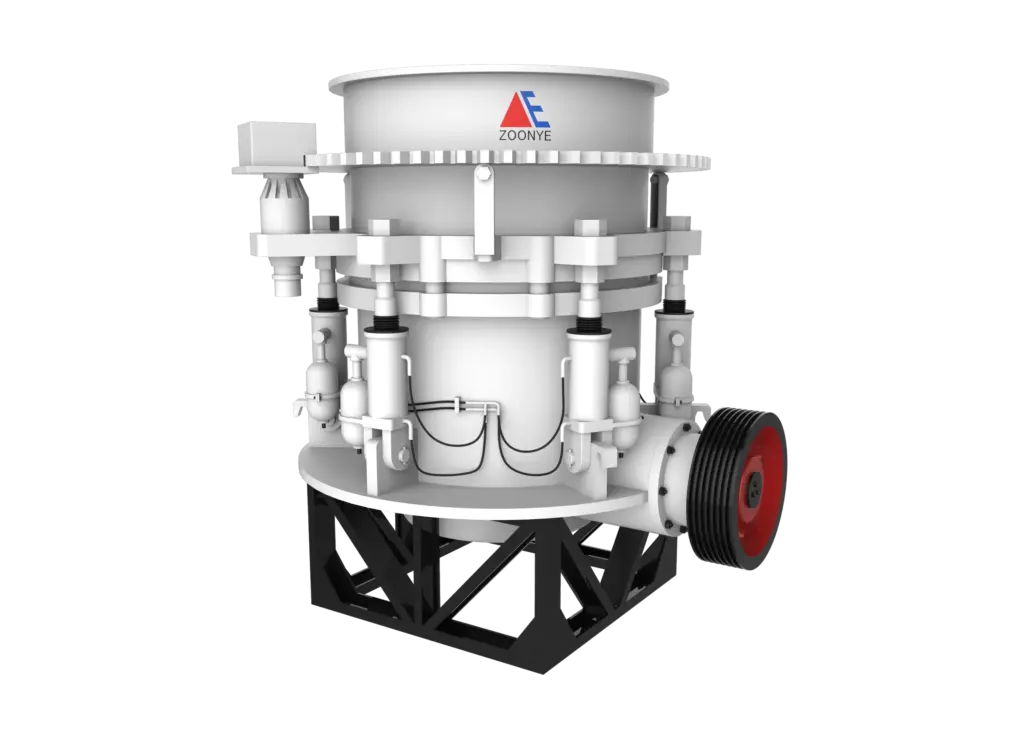
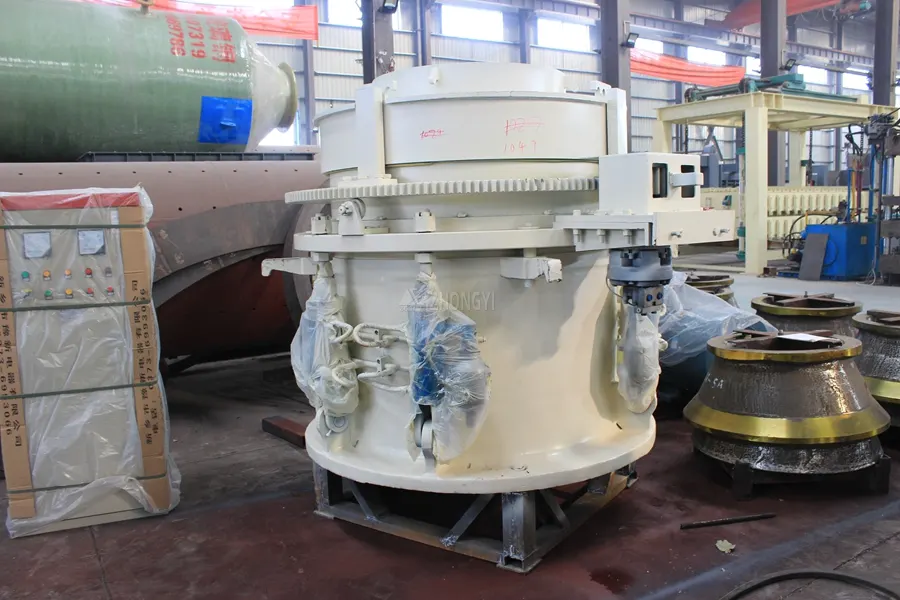
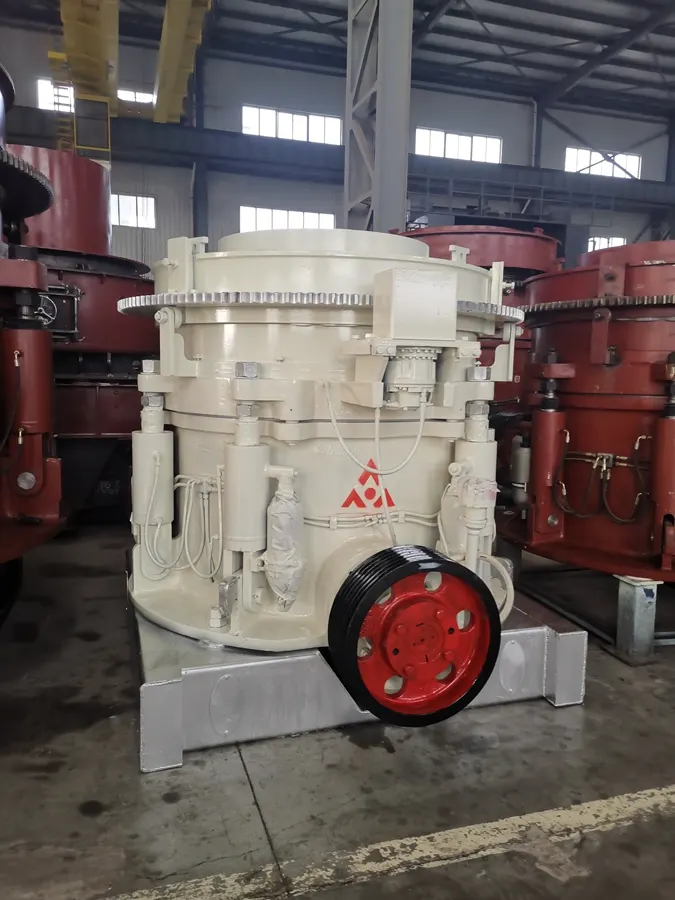
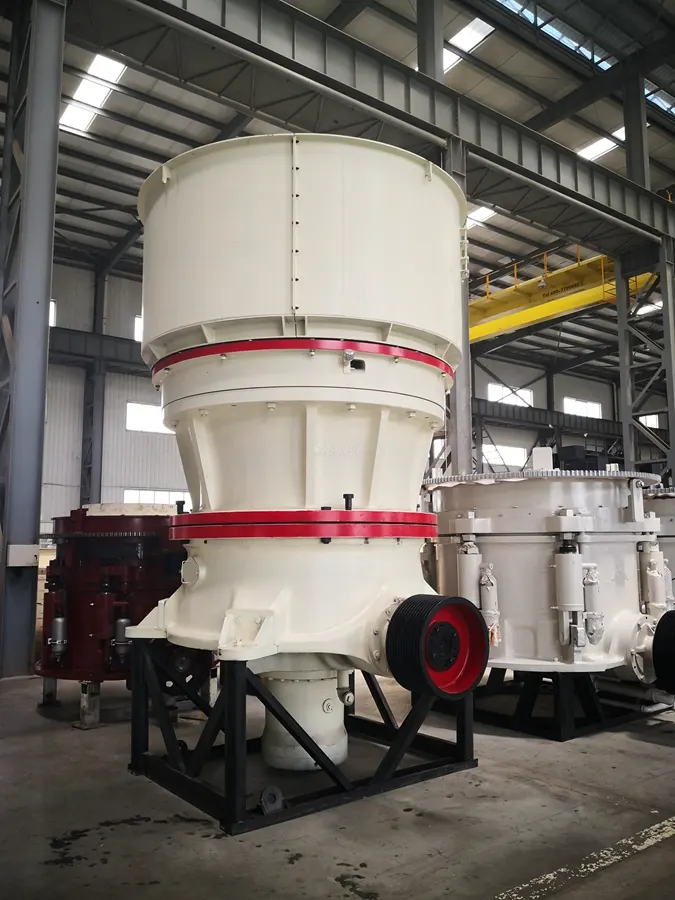
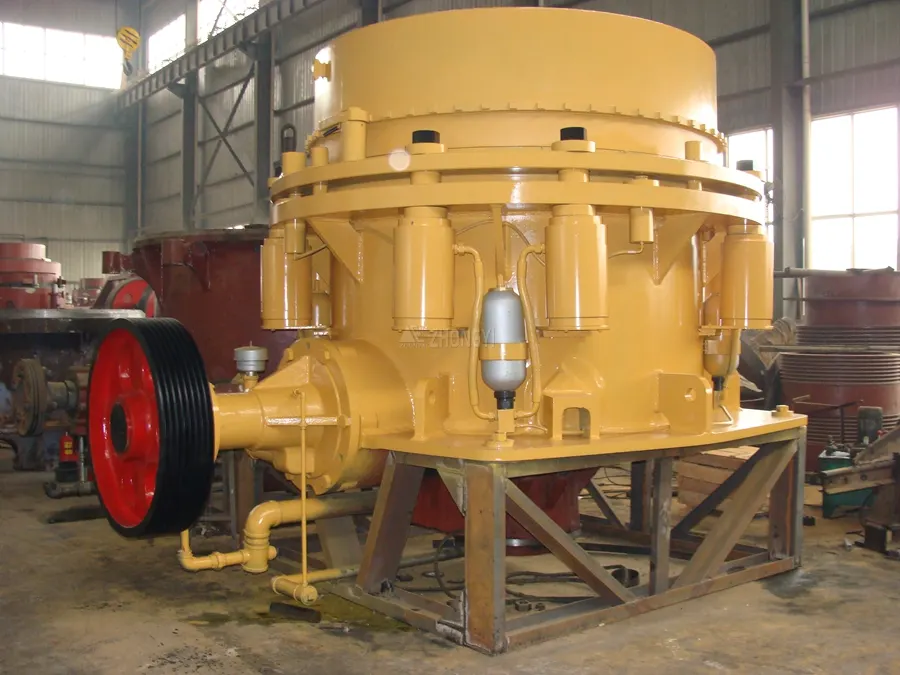
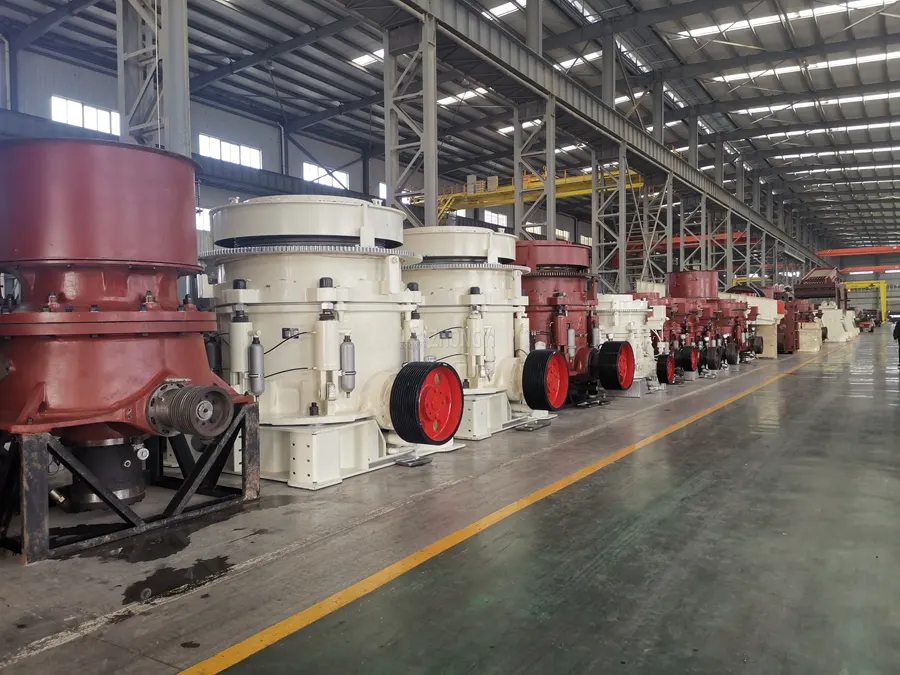
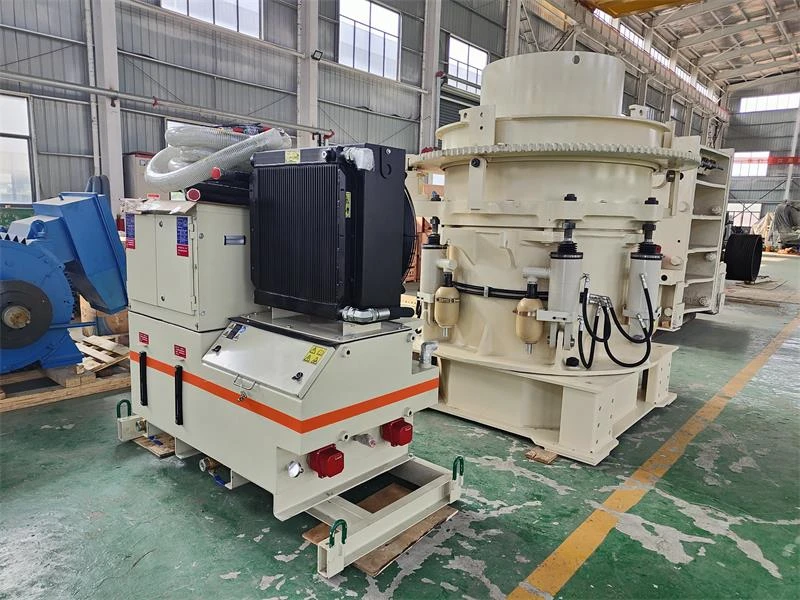
A multi cylinder hydraulic cone crusher, also known as an HPZ series cone crusher, is a fixed-shaft crushing machine designed for secondary and tertiary crushing of hard rock. Multiple hydraulic cylinders provide locking and overload protection, while the eccentric sleeve drives the mantle to compress material against the concave.
In a typical crushing line, it works after a jaw crusher and before a vibrating screen. Oversized material can be returned for further crushing. HPZ series models cover capacities of 180–1,200 TPH, depending on the model, material, and operating conditions.
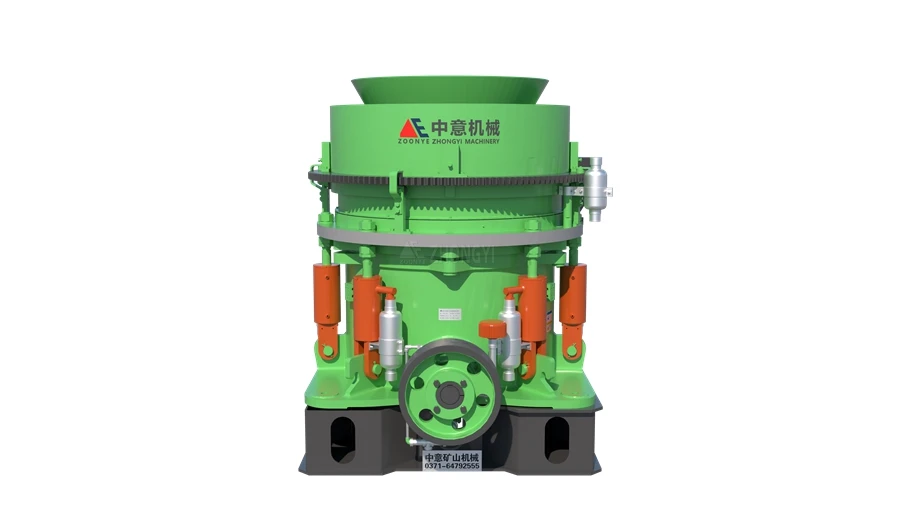
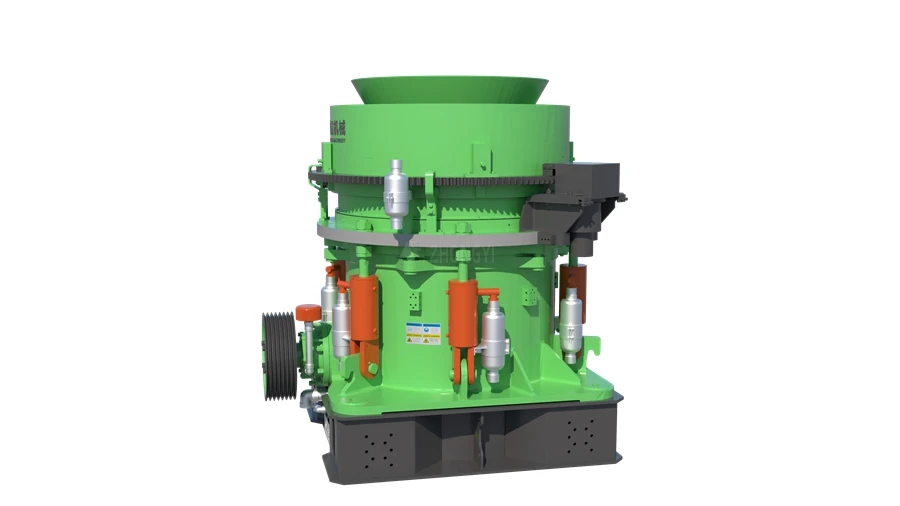
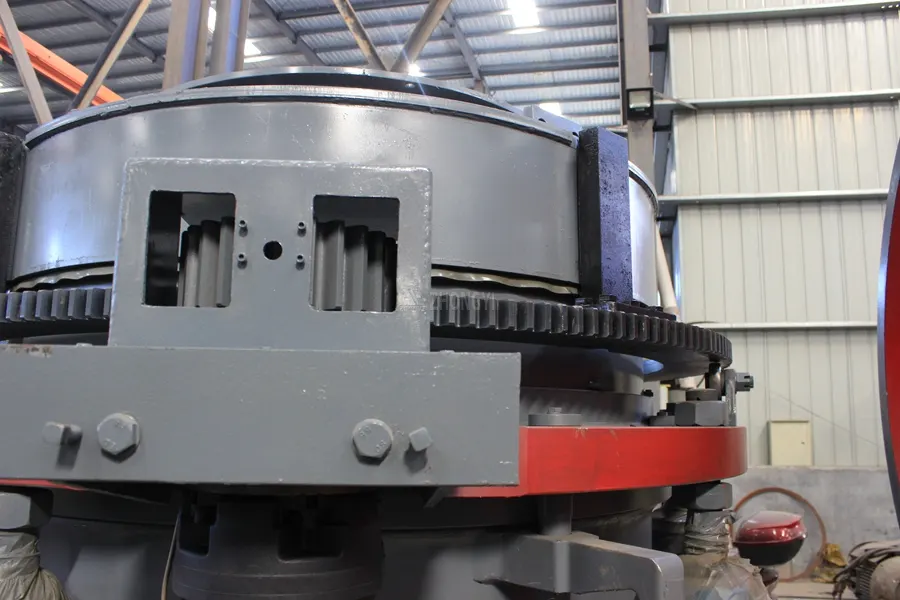
Components and Structure:
- Crushing Chamber (Mantle and Concave): Compresses material to reduce particle size.
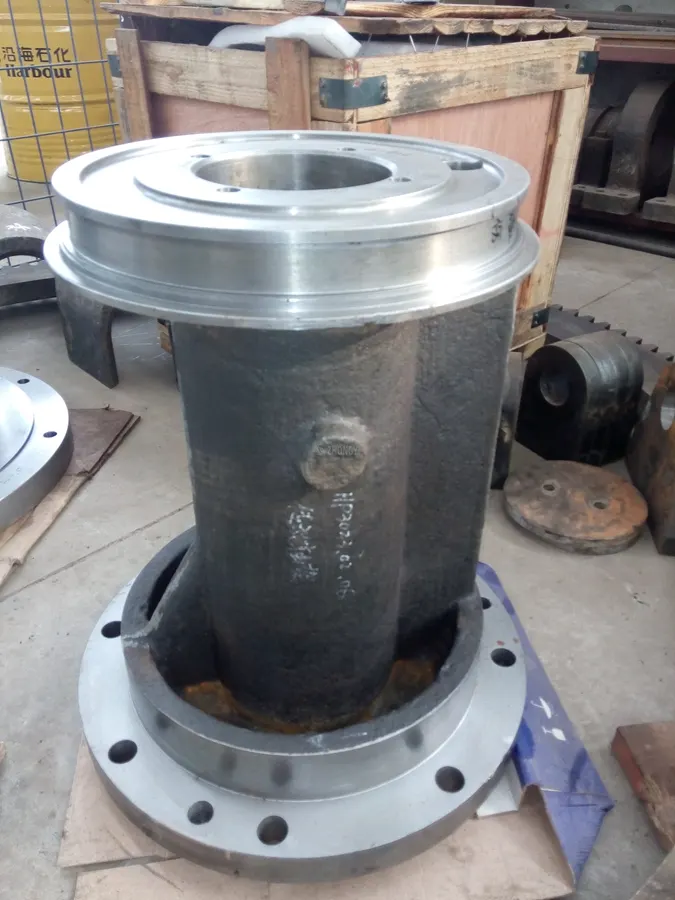
- Eccentric System: Drives the moving cone’s gyratory motion during crushing.
- Hydraulic System: Supports discharge setting adjustment, tramp iron release, and chamber clearing, depending on machine configuration.
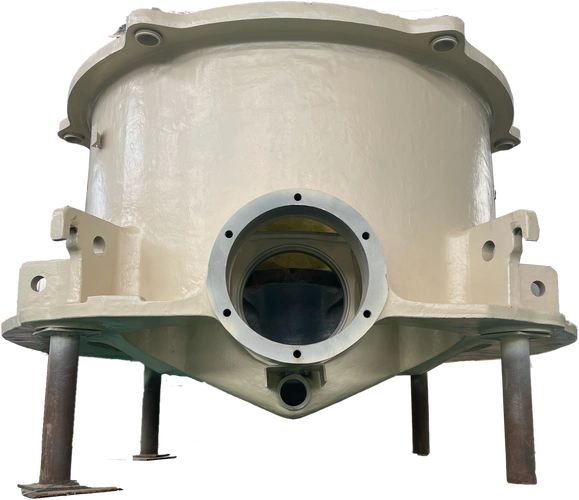
- Main Frame and Main Shaft: Support the crushing assembly and withstand operating loads.
- Lubrication System: Supplies lubricant to key moving parts to reduce friction and wear.
The multi-cylinder hydraulic system supports crushing force adjustment and overload protection, making the crusher suitable for secondary and tertiary crushing of hard, abrasive rock.
Çalışma Prensibi
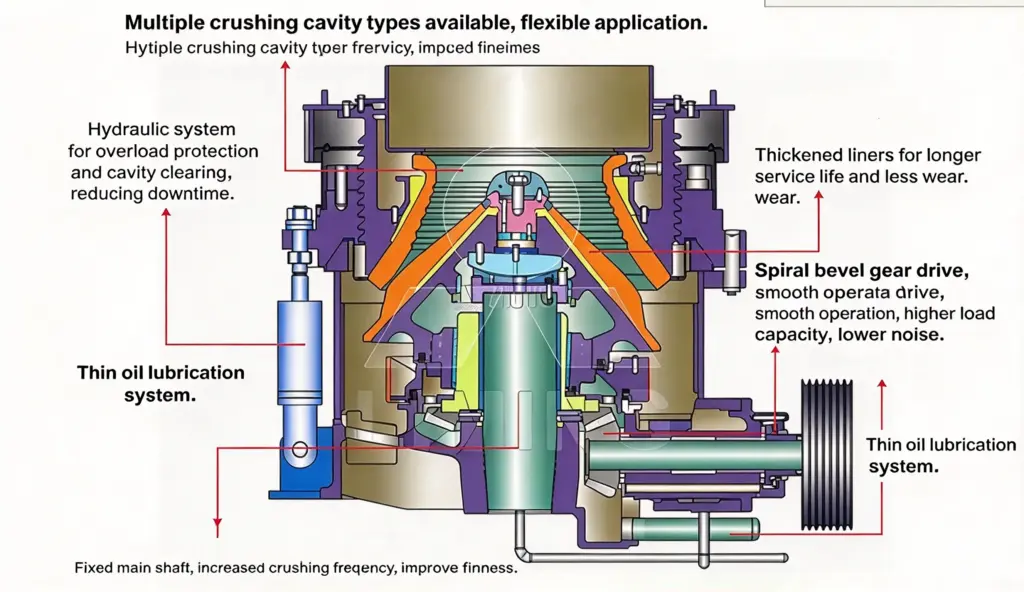
A multi cylinder hydraulic cone crusher reduces hard rock through compression. The motor drives the transmission shaft and eccentric sleeve, causing the mantle to gyrate around the fixed main shaft. As the gap between the mantle and concave narrows, material is compressed and crushed. When the gap widens, crushed material moves downward through the chamber and exits through the discharge opening.
Under consistent choke feeding, particles also compress against one another, supporting inter-particle crushing and helping produce more cubical aggregates under suitable operating conditions. The multi-cylinder hydraulic system supports adjustment-ring locking and overload protection. Discharge setting adjustment depends on the crusher’s specific configuration.
Advantages of Multi Cylinder Hydraulic Cone Crusher
The multi cylinder hydraulic cone crusher features a fixed-shaft structure and multiple hydraulic cylinders. It is designed for hard-rock crushing, fine crushing, and aggregate production where crushing force, particle shape, and discharge setting stability are important.
Uygulamalar
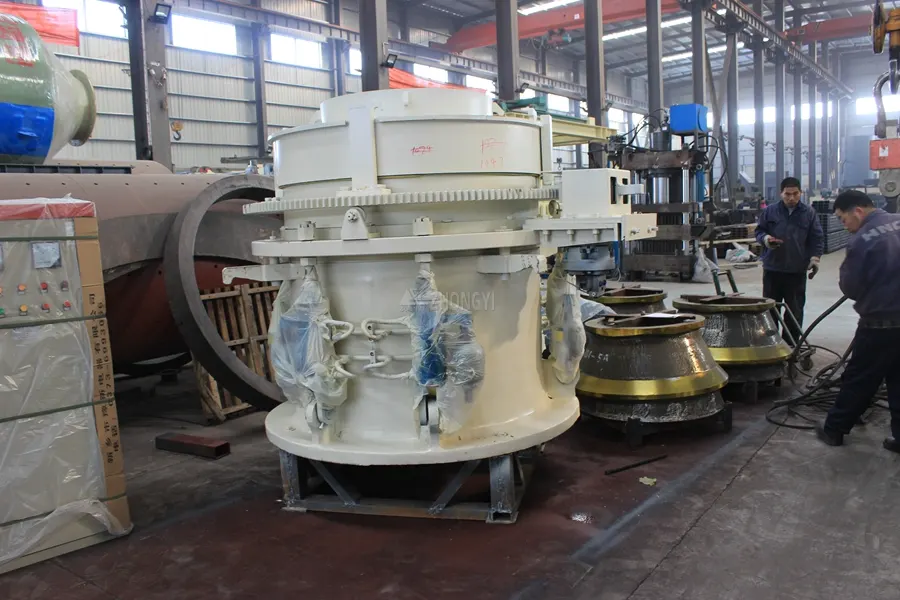
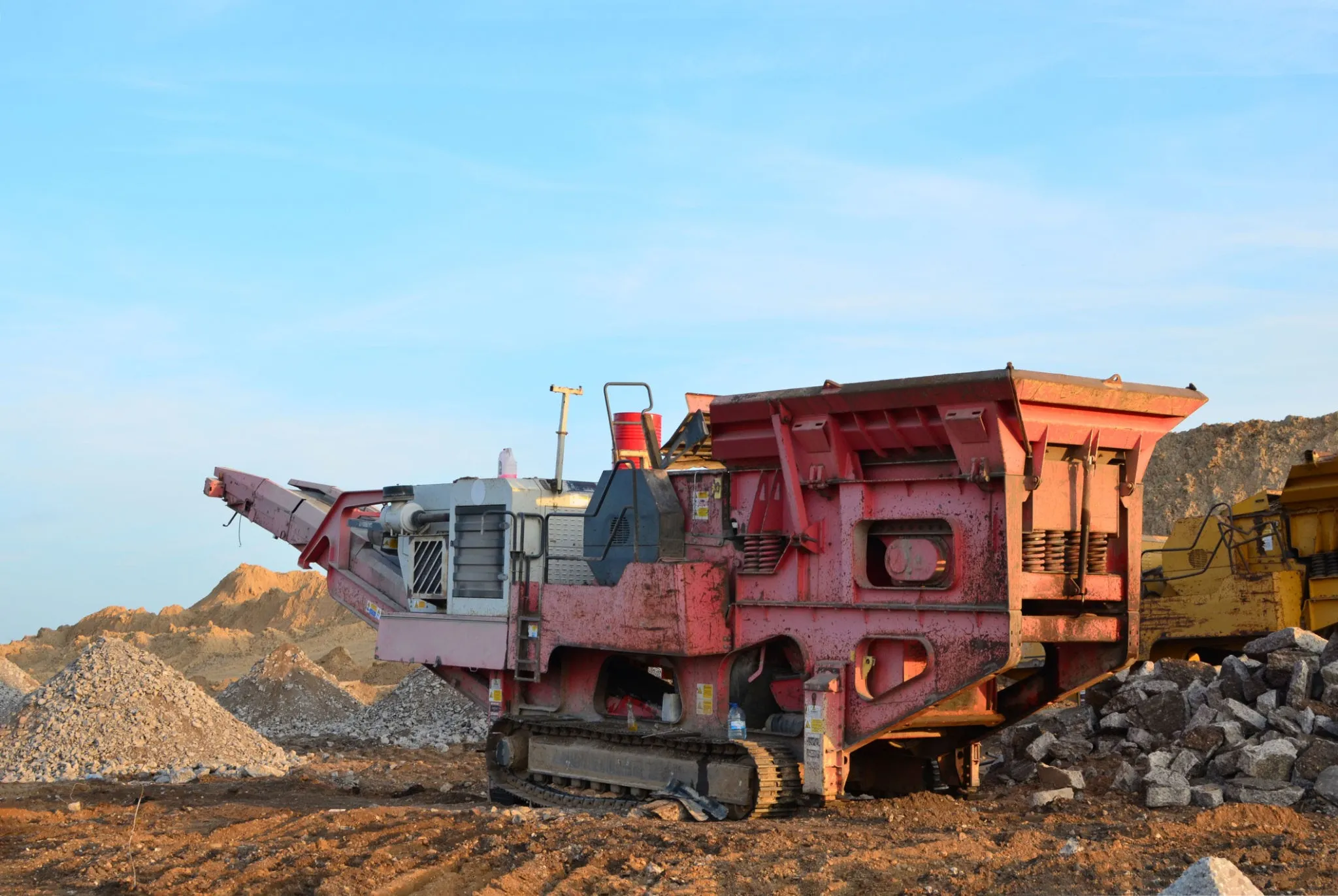
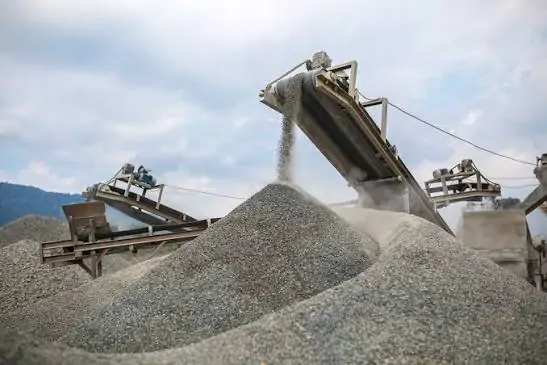
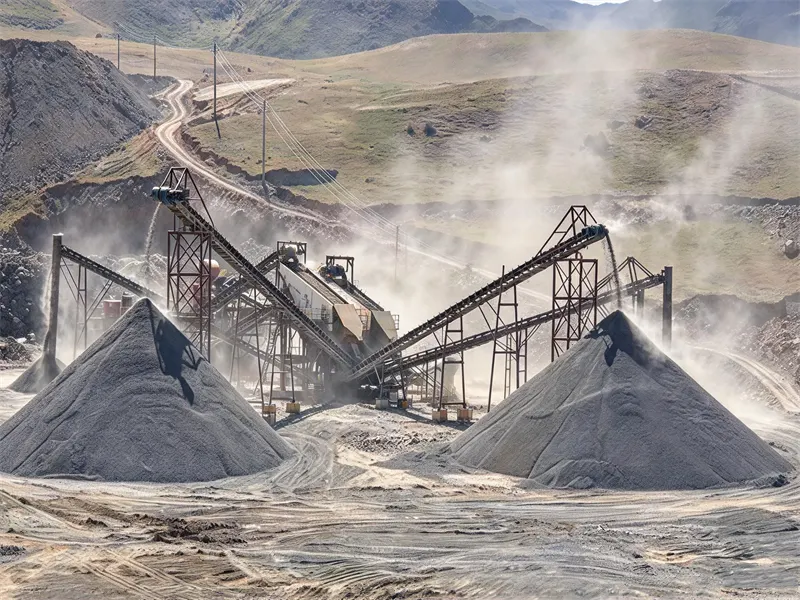
Multi cylinder hydraulic cone crushers are used for secondary and tertiary crushing in mining and aggregate production. They are suitable for hard, abrasive materials where crushing capacity, product size, and particle shape are key considerations.
Teknik Özellikler
The MC series multi cylinder hydraulic cone crushers cover capacities from 180 to 1,200 TPH, with maximum feed sizes of 300–350 mm. Select a model based on feed size, required output, and plant capacity.
| Model | Tip | Capacity (TPH) | Feed Size (mm) | Output Size (mm) | Motor Gücü (kW) | Ağırlık (t) |
| MC300 | Multi Cylinder | 180–400 | ≤300 | 10–38 | 160–250 | 18 |
| MC500 | Multi Cylinder | 300–700 | ≤320 | 12–45 | 250–400 | 26.5 |
| MC800 | Multi Cylinder | 500–1200 | ≤350 | 16–51 | 400–600 | 42 |
Multi Cylinder vs. Single Cylinder Cone Crusher
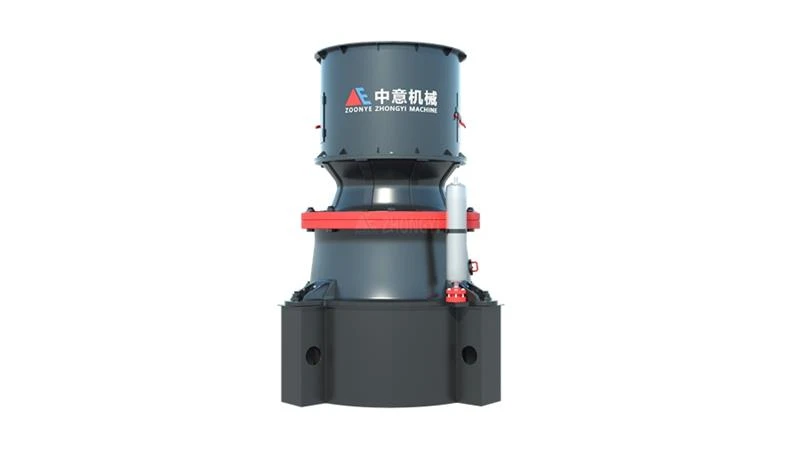
Single cylinder and multi cylinder hydraulic cone crushers differ in their main shaft structure, hydraulic adjustment method, and typical crushing applications. The choice depends on material hardness, feed size, required capacity, and final product specifications.
| Comparison Item | Single Cylinder Cone Crusher | Multi Cylinder Cone Crusher |
| Main Structure | One main hydraulic cylinder beneath the main shaft | Multiple hydraulic cylinders around the adjustment ring |
| Tipik Uygulama | Secondary crushing and intermediate crushing | Secondary and fine crushing |
| Suitable Materials | Selection depends on model, chamber, and material properties | Commonly selected for hard, abrasive rock |
| Crushing Performance | Suitable for high-throughput crushing across a range of applications | Suited to high-force crushing and fine crushing |
| Product Shape | Depends on chamber design, feed conditions, and settings | Can produce cubical aggregates under suitable choke-fed conditions |
| Discharge Setting Adjustment | Hydraulic movement of the main shaft | Hydraulic adjustment of the adjustment ring |
| Maintenance and Cost | Generally simpler structure and lower initial cost | More complex hydraulic system and generally higher initial cost |
Selection Guide: A single cylinder cone crusher may suit operations prioritizing structural simplicity and initial investment. A multi cylinder model is worth considering for hard-rock fine crushing and aggregate production where product shape and discharge setting stability are important. Final selection depends on feed size, material abrasiveness, required capacity, and target product size.
How to Choose the Right Multi Cylinder Hydraulic Cone Crusher?
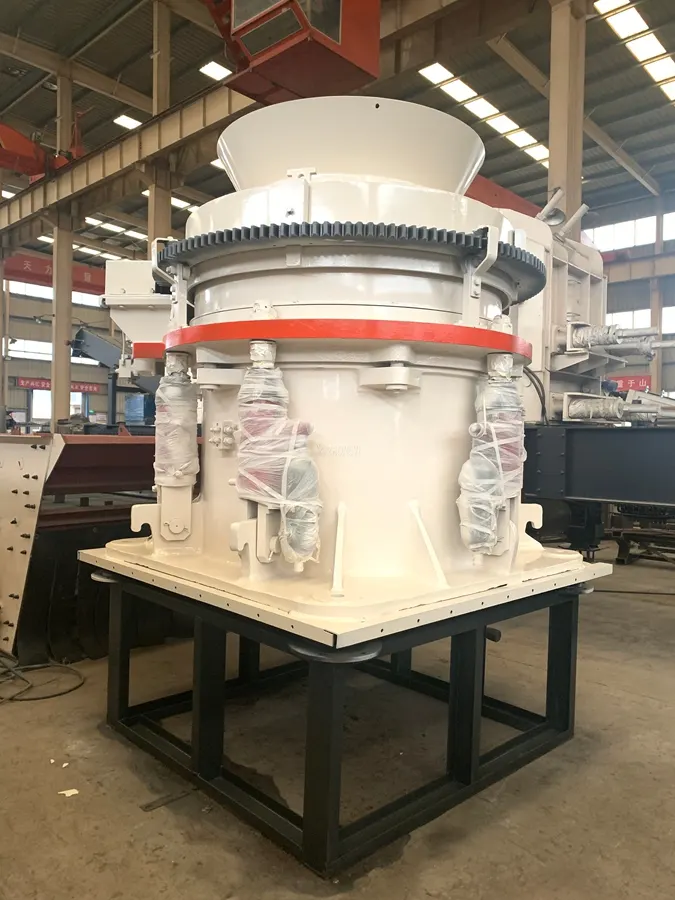
Select a multi cylinder hydraulic cone crusher according to the feed material, required capacity, target product size, and crushing stage. These factors determine the appropriate model and crushing chamber for your production line.
Maintenance and Operation of Multi Cylinder Hydraulic Cone Crusher
Regular maintenance of a multi cylinder hydraulic cone crusher focuses on lubrication, hydraulic pressure, feed control, discharge setting, and wear parts. Routine checks help prevent avoidable downtime and maintain stable crushing performance.
- Lubrication System: Check oil level, temperature, pressure, and filter condition. Confirm that the lubrication system is operating normally before starting the crusher.
- Hydraulic System: Inspect hydraulic lines, cylinder connections, and locking pressure. Hydraulic faults can affect adjustment ring stability and discharge setting.
- Feed Control: Keep feed size within the model’s rated limit and maintain consistent choke feeding to support crushing performance and reduce uneven liner wear.
- Discharge Setting: Follow the minimum discharge setting specified for the selected crushing chamber. Do not adjust below the manufacturer’s recommended limit.
- Wear Parts and Inspection: Check the mantle, concave, belts, fasteners, and lubrication lines regularly. Investigate abnormal noise, vibration, temperature, or oil leaks before restarting the equipment.
Why Choose Zhongyi Mining for Your Hydraulic Cone Crusher?
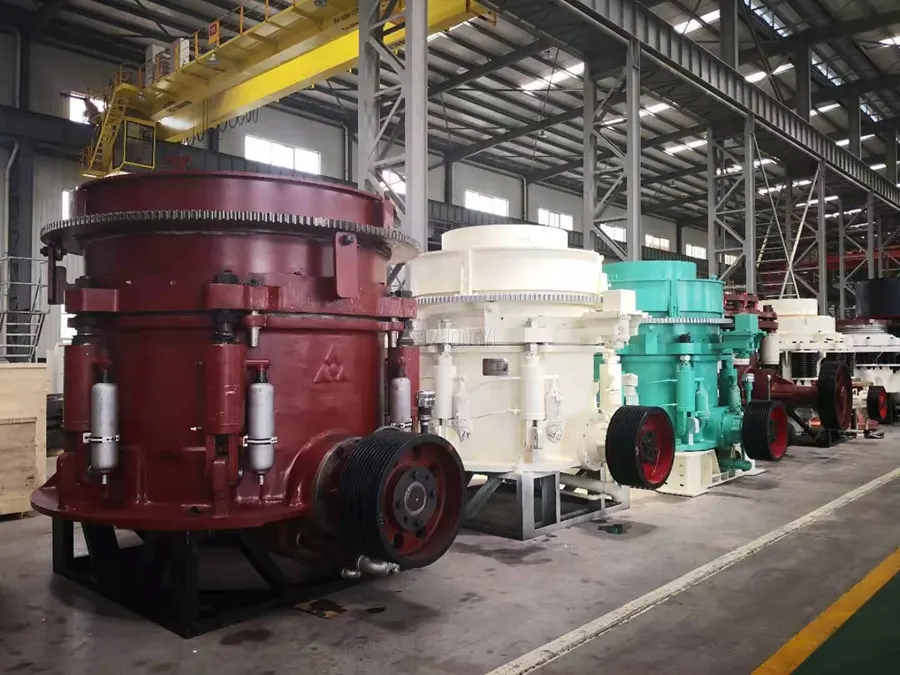
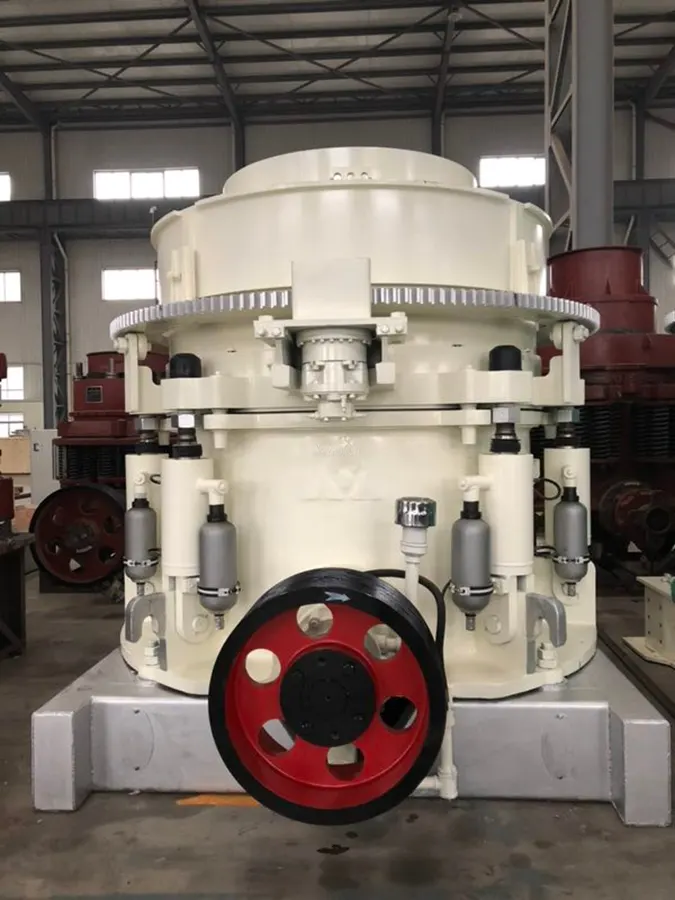
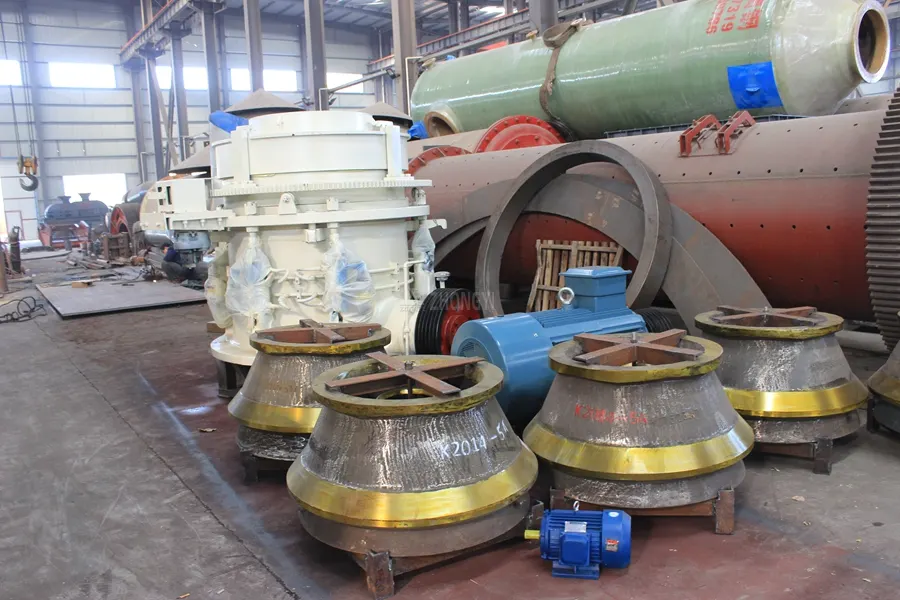
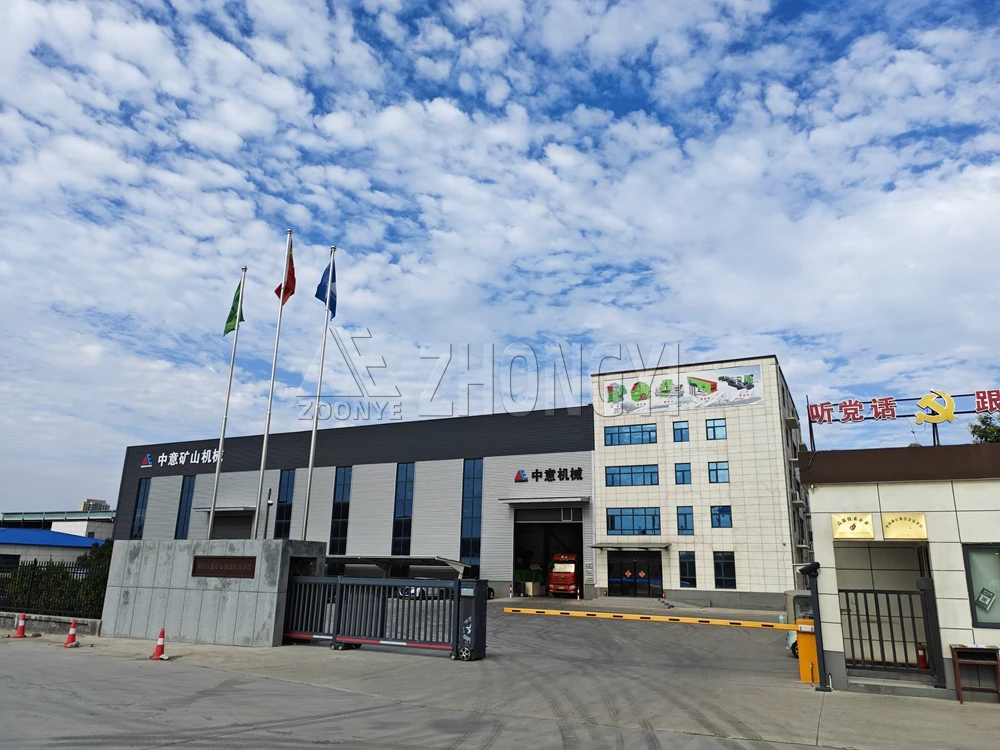
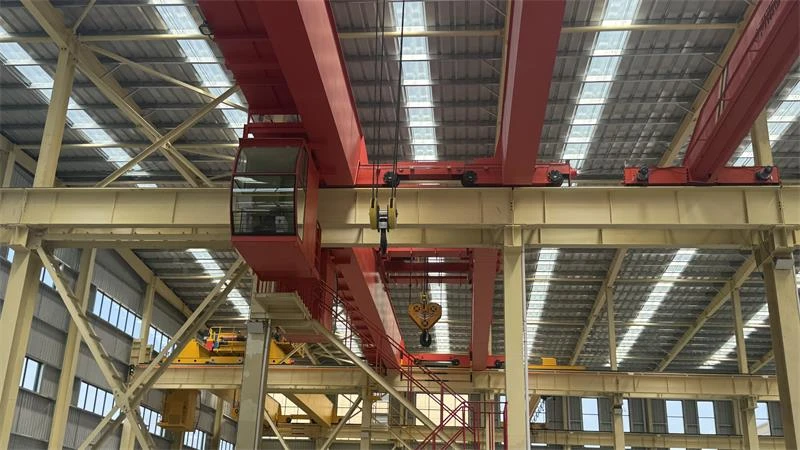
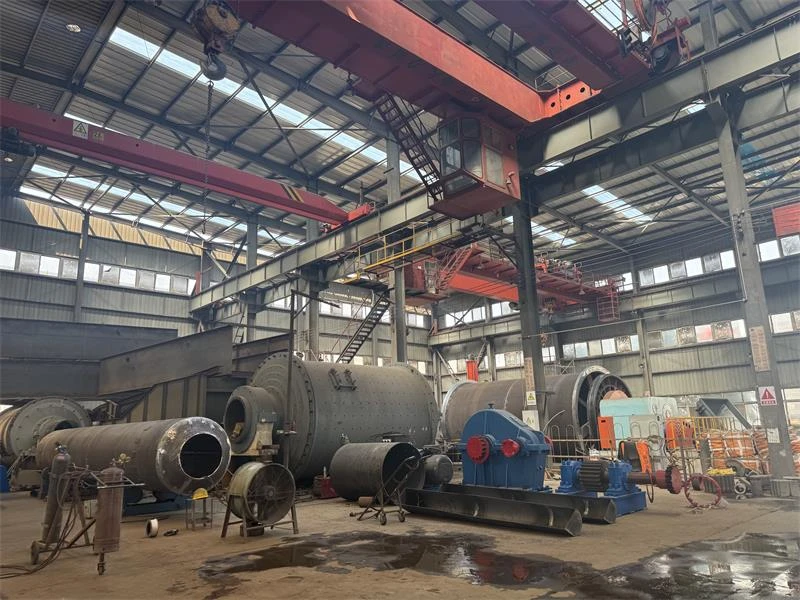
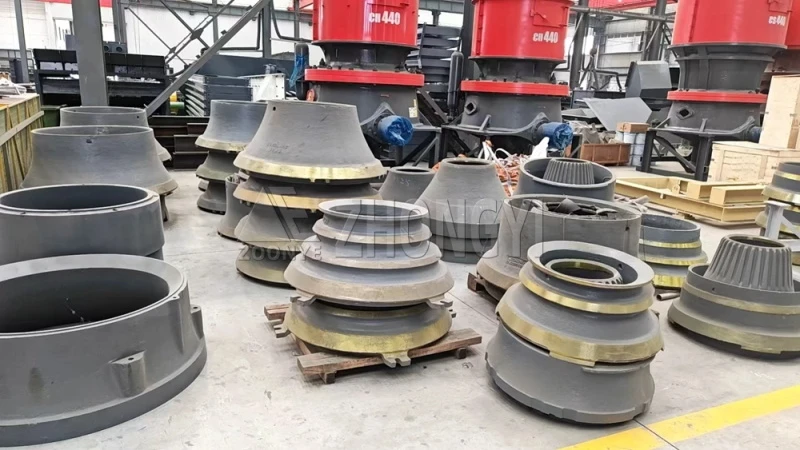
With manufacturing experience since 2010 and a factory area of over 40,000 m², Zhongyi Mining supplies crushing equipment for mining and aggregate production. We help customers match the crusher to their feed material, required capacity, target product size, and existing process layout.
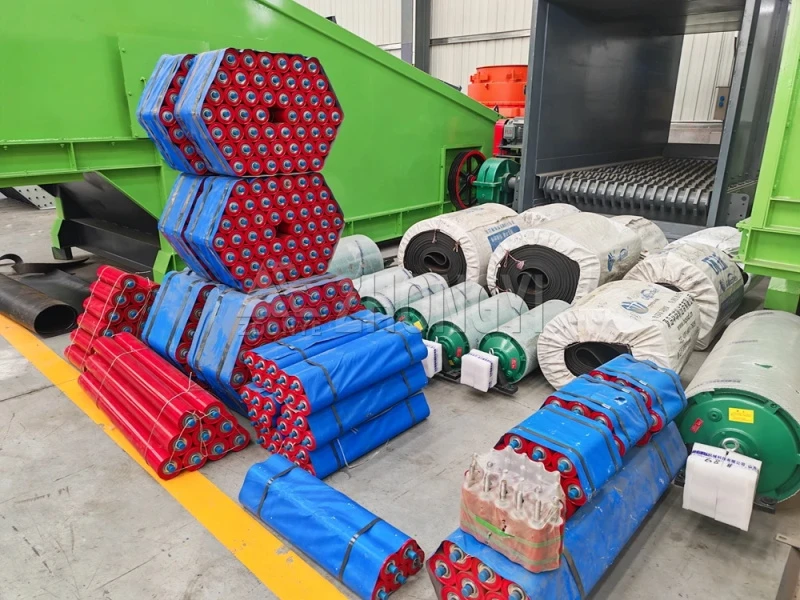
Our support extends beyond equipment supply to equipment selection, process flow design, and on-site installation and commissioning. By considering the crusher as part of the full production line, we help customers address capacity mismatches, output-size requirements, and integration challenges before installation.
Özelleştirilmiş Çözüm Talep Edin
Choose Zhongyi’s Multi Cylinder Hydraulic Cone Crusher for mining and aggregate production. We help match the crusher configuration to your material, capacity, and output requirements.
Request a Custom Hydraulic Cone Crusher
Every crushing project has different requirements. Tell us your material, feed size, target output, required capacity, and site conditions. Zhongyi Mining can help you select suitable equipment and configure a crushing line for your project. Explore our Stone Crusher Plant Solution to learn more, or contact our team to discuss your requirements.
To recommend the right hydraulic cone crusher solution, please provide:
FAQs
What Capacity Hydraulic Cone Crusher Do I Need for My Project?
The required capacity depends on material hardness, maximum feed size, target product size, and the production rate of the entire crushing line. When selecting a hydraulic cone crusher, consider both normal operating throughput and peak demand rather than relying only on the rated capacity. The crusher must also match the capacity of the feeder, screening equipment, and upstream crusher to avoid bottlenecks.
What Is the Difference Between Single Cylinder and Multi Cylinder Hydraulic Cone Crushers?
Single cylinder and multi cylinder hydraulic cone crushers differ in structure, hydraulic adjustment, and typical applications. Single cylinder models may suit operations prioritizing structural simplicity, while multi cylinder models are commonly selected for hard-rock crushing and fine aggregate production. The right choice depends on material properties, required capacity, discharge setting, maintenance requirements, and budget. Compare specific models and chamber configurations rather than choosing by cylinder count alone.
How Do You Control the Output Size of a Hydraulic Cone Crusher?
The discharge setting, commonly measured by the closed-side setting (CSS), is a major factor in controlling product size. However, the final particle-size distribution also depends on the crushing chamber, feed grading, material properties, and operating conditions. Operators should follow the manufacturer’s recommended setting range and use downstream screening to separate product sizes and return oversized material when the process requires closed-circuit crushing.
What Materials Can a Hydraulic Cone Crusher Process?
A hydraulic cone crusher is commonly used to crush hard and medium-hard rock, including granite, basalt, iron ore, and quartzite, depending on the model and crushing chamber. Before selection, assess material hardness, abrasiveness, moisture, maximum feed size, and any clay or fines in the feed. These factors affect throughput, liner wear, and operating stability. Confirm the crusher’s permitted feed specifications before finalizing the configuration.
What Maintenance Does a Hydraulic Cone Crusher Require?
Routine maintenance includes checking lubrication oil level and condition, monitoring oil temperature and pressure, inspecting hydraulic lines, and checking the mantle and concave for wear. Operators should also monitor feed consistency, abnormal vibration, noise, and oil leakage. Follow the maintenance intervals and operating limits in the manual for the specific model. Regular inspections help identify developing faults before they cause unplanned shutdowns or secondary equipment damage.
How Much Power Does a Hydraulic Cone Crusher Need?
Required motor power depends on the crusher model, material properties, feed size, discharge setting, and operating load. Motor power alone does not determine energy consumption per ton; actual performance depends on how the crusher is configured and operated. When comparing models, review rated power alongside expected throughput and product requirements. Consistent feeding and a suitable crushing chamber help the machine operate within its intended working range.
What Affects Hydraulic Cone Crusher Liner Service Life?
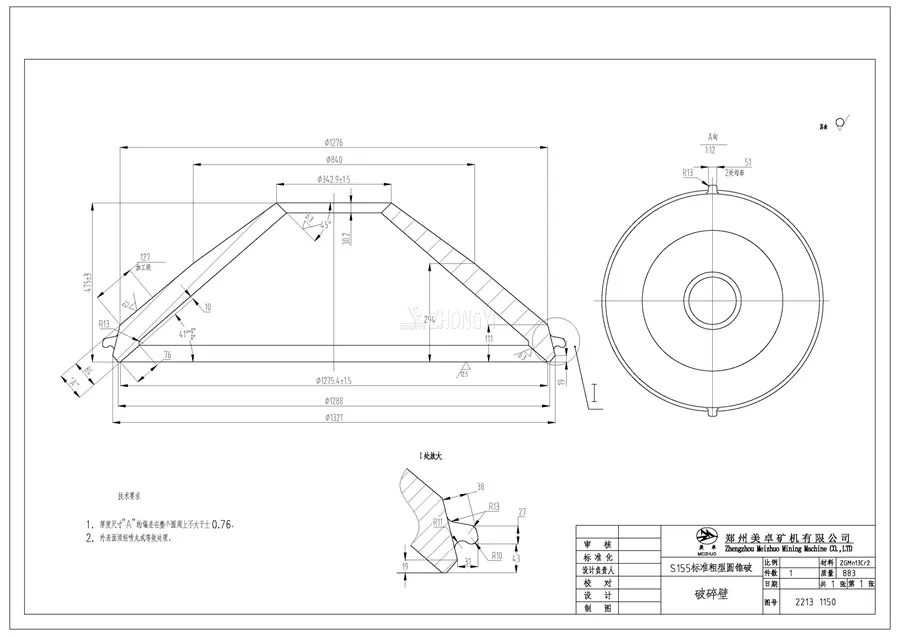
Mantle and concave service life depends on material abrasiveness, feed distribution, crushing chamber selection, discharge setting, and operating hours. Uneven feeding or unsuitable settings can contribute to uneven wear and unstable output. Select liner specifications for the material being processed and inspect wear patterns at regular intervals. Replacing liners at the manufacturer’s recommended limit helps maintain crushing performance and reduces the risk of operating with excessively worn components.
What Information Is Needed to Select a Multi Cylinder Hydraulic Cone Crusher?
To select a multi cylinder hydraulic cone crusher, provide the material type, maximum feed size, required capacity in tons per hour, target product size, and application. It is also useful to share the crushing stage, existing equipment, site layout, and power supply conditions. These details help engineers evaluate model and chamber options and determine how the crusher should connect with feeding, screening, and conveying equipment.