









简介
无论您是规划新建选矿厂还是改进现有磨矿回路,选择合适的球磨机都是磨矿工艺中最重要的决策之一。磨机规格、衬板设计、磨矿介质和操作条件都会影响磨矿效率、产品细度、功耗和维护成本。选择与您的物料和生产要求相匹配的设备,可以显著提高选厂性能并降低长期运营费用。.
本指南解释了什么是 矿用球磨机 以及它的工作原理、主要部件、常见类型和工业应用。您还可以找到针对不同加工要求选择合适球磨机的实用建议,以及来自实际选矿项目的工程经验,帮助您做出更明智的采购决策。.
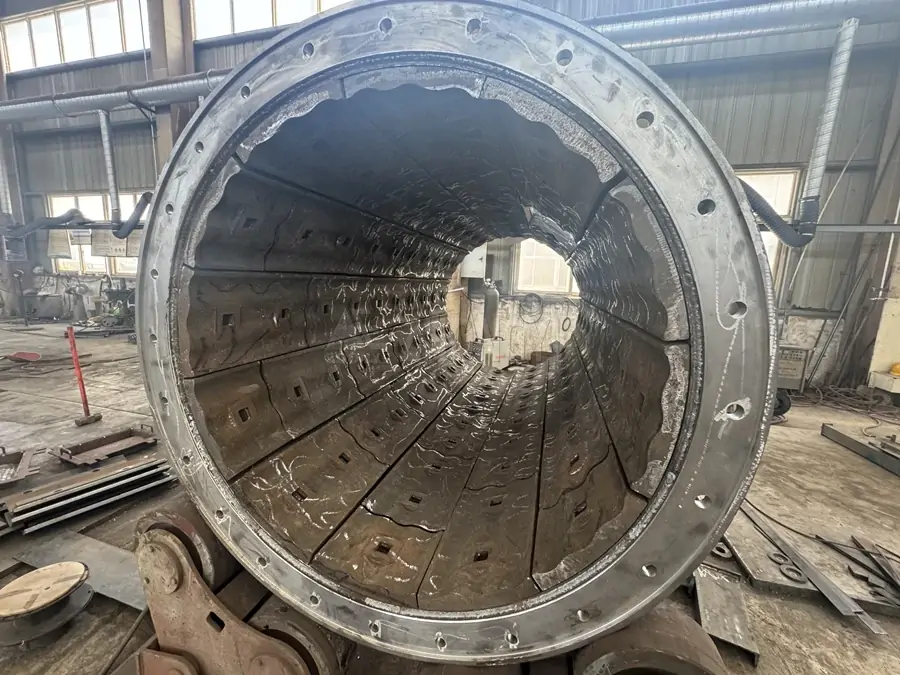
什么是球磨机?
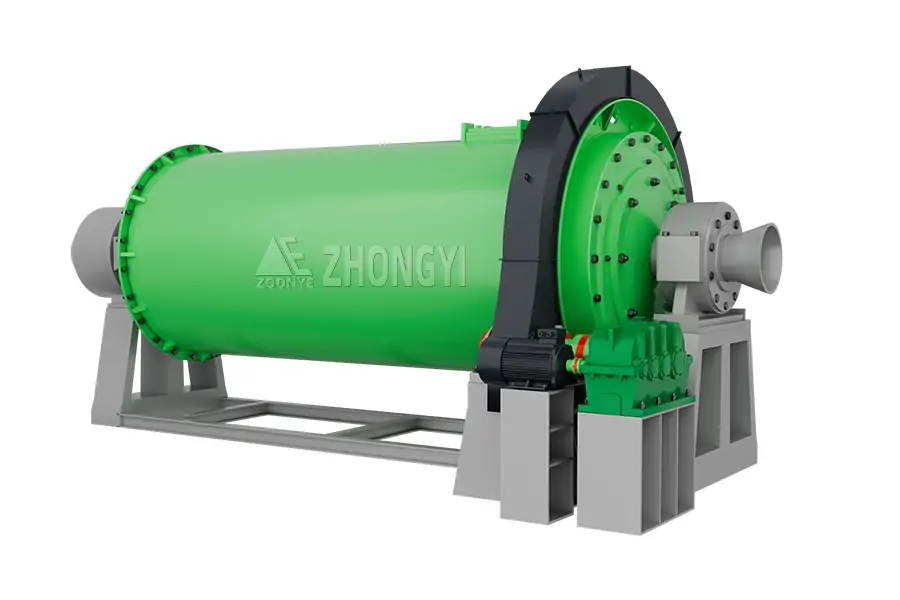
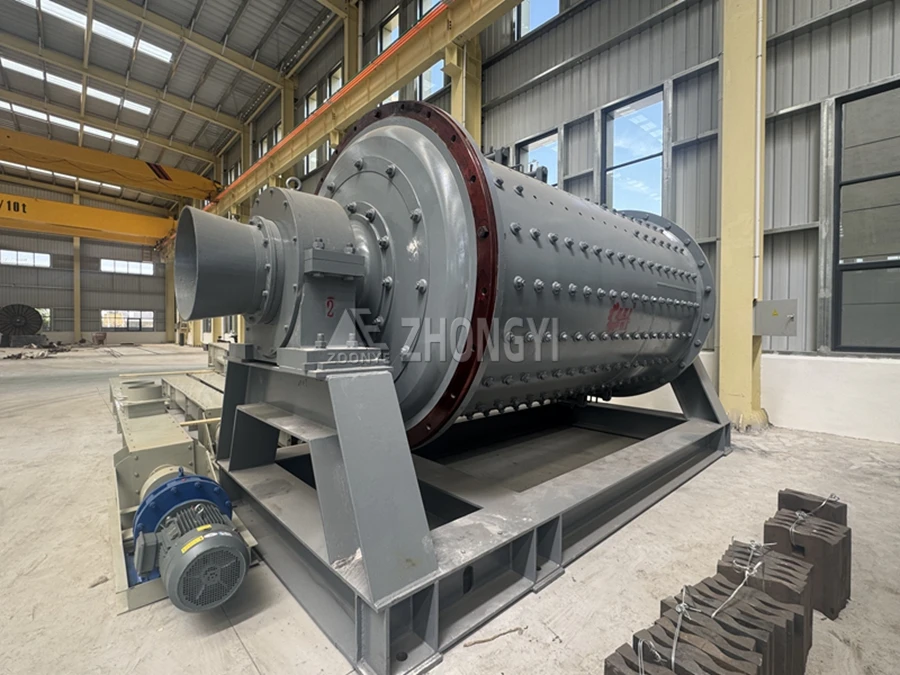
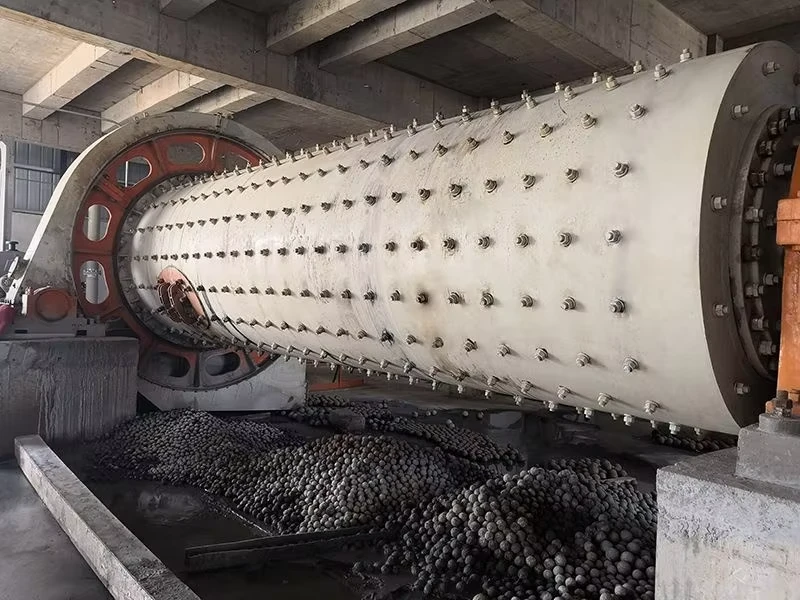
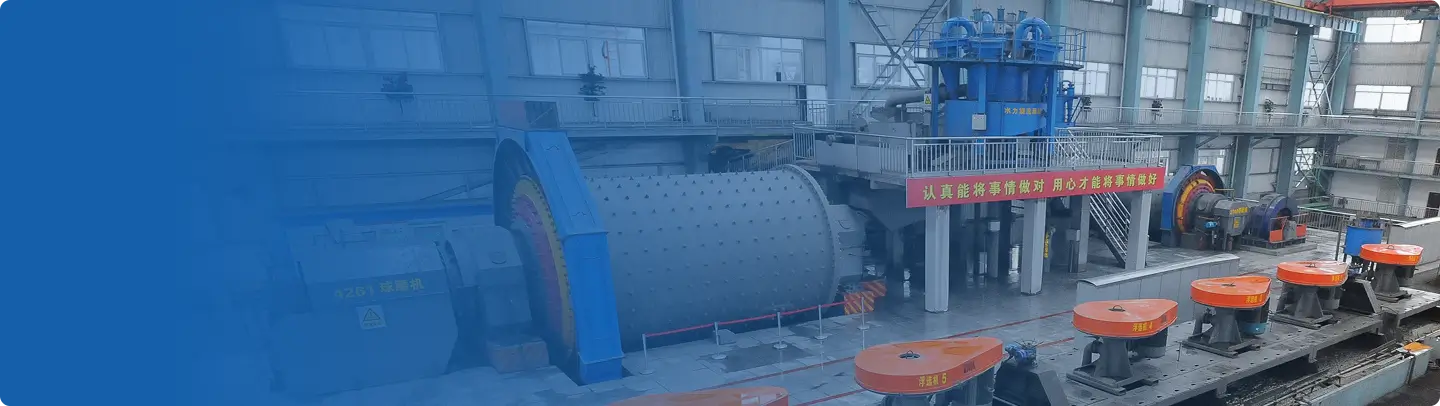
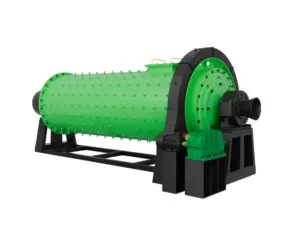
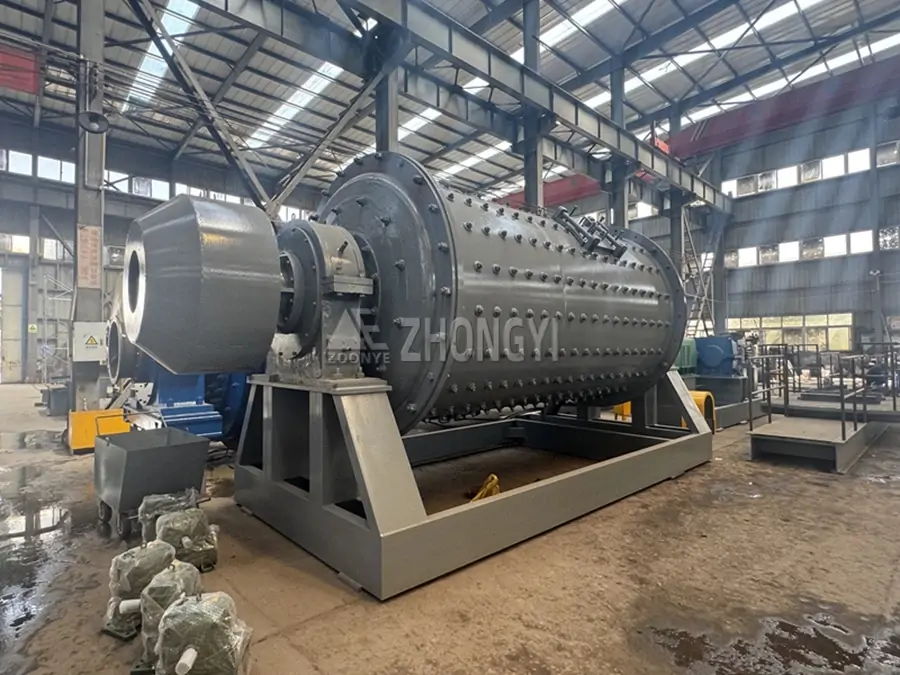
球磨机又称磨矿机,是矿山、水泥、冶金、化工和选矿行业中用于物料细磨的关键设备。它通过磨矿介质与旋转筒体之间的持续冲击和磨剥作用来减小物料粒度。.
该设备由一个水平旋转的圆柱形筒体组成,筒内装有钢球或陶瓷球。随着筒体旋转,物料被反复提升和落下,实现逐步的粒度减小。常见的排料细度可达约0.074毫米(200目),具体取决于物料特性和磨矿时间。.
它广泛应用于矿石、水泥熟料、石灰石、石英及其他散装物料的湿法和干法磨矿工艺。最终粒度可通过调整磨矿时间、介质尺寸和转速来调节,以满足不同的生产要求。.
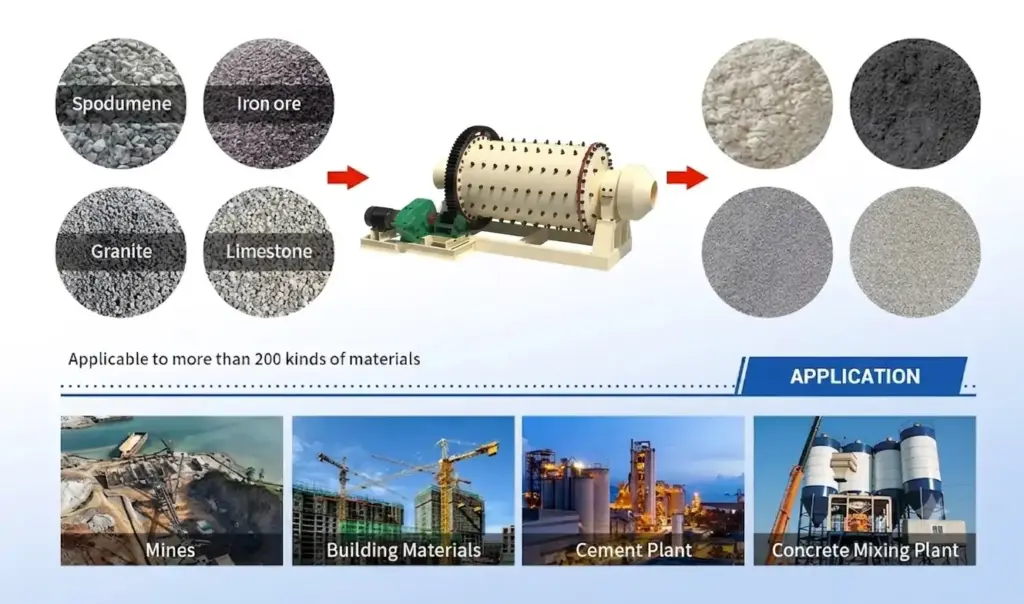
球磨机是如何工作的?
球磨机通过旋转圆柱形筒体内部的冲击和磨剥组合作用来减小物料粒度。筒体内部分填充有磨矿介质——通常为钢球或陶瓷球——并以精心控制的速度旋转。当磨机转动时,磨矿介质在衬板与介质之间的摩擦力作用下被提升,然后落下或滚回物料上。反复的冲击破碎粗颗粒,而球之间的持续磨剥逐渐将物料研磨至所需细度。.
磨矿性能取决于多个操作参数,包括磨机转速、球径和填充率、给料粒度、矿浆浓度(湿法磨矿)以及停留时间。对这些变量的适当控制可确保高效粒度减小,同时最大限度地降低能耗、衬板磨损和过磨。.
磨矿过程
磨矿过程遵循从物料给入到产品排出的连续顺序:
给料
↓
物料进入旋转磨机
↓
磨矿介质被旋转提升
↓
冲击破碎粗颗粒
↓
磨剥产生细颗粒
↓
磨好的物料通过排料口排出
给料—— 破碎后的物料通过给料口进入磨机。给料粒度经过控制,以匹配磨机设计和磨矿要求。.
旋转—— 电机通过齿轮传动驱动筒体,使筒体和磨矿介质一起旋转。.
冲击—— 当磨矿介质达到一定高度时,重力使其落到物料上,产生高冲击力破碎较大颗粒。.
磨剥—— 在滚动和滑动过程中,磨矿介质相互之间及与物料之间持续摩擦,通过磨剥作用产生更细的颗粒。.
排料—— 一旦达到目标粒度,物料通过排料端排出。根据磨机设计,排料可通过溢流型或格子型排料系统实现。.
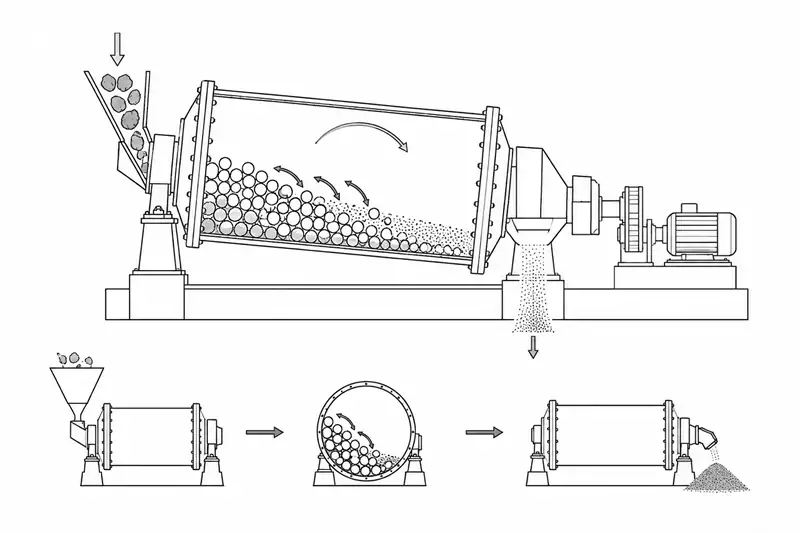
工作原理
临界转速
球磨机在适当的速度范围内运行效率最高,一般为临界转速的65–80%。低于此范围,磨矿介质主要沿衬板滚动,磨矿作用较弱。高于临界转速,离心力使钢球贴附在筒壁上,减少冲击并显著降低磨矿效率。.
磨矿介质运动
磨矿介质的运动随磨机转速变化。在正常工作转速下,钢球呈泻落式和抛落式运动。泻落式提供连续磨剥用于细磨,而抛落式产生强冲击力用于破碎粗颗粒。保持这两种运动之间的适当平衡对于高效磨矿和均匀产品粒度至关重要。.
湿法磨矿
在湿法磨矿中,向磨机中加入水或工艺矿浆以输送物料并提高磨矿效率。湿式球磨机具有更高的处理量、更好的散热性和更少的粉尘产生,使其成为大多数选矿厂的首选。矿浆通常排至水力旋流器或分级机进行闭路磨矿。.
干法磨矿
当最终产品必须保持无水分时使用干法磨矿,例如在水泥、石灰、陶瓷和某些化工粉末中。由于没有液体来携带热量或细颗粒,干法磨矿系统通常需要除尘设备和空气分级来维持产品质量和稳定运行。适当的通风也很重要,以防止磨机内部温度过高。.
球磨机的主要部件
球磨机是为连续磨矿作业设计的机械结构组合。筒体、衬板、磨矿介质、传动系统和支撑部件必须协同工作,以承受运行过程中的重载荷、冲击力和长期磨损。.
主要部件包括给料口、磨机筒体、衬板、磨矿介质、轴承、小齿轮、大齿圈、电机、排料系统和润滑系统。这些部件的设计和材料选择直接影响磨矿效率、设备可靠性和维护成本。.
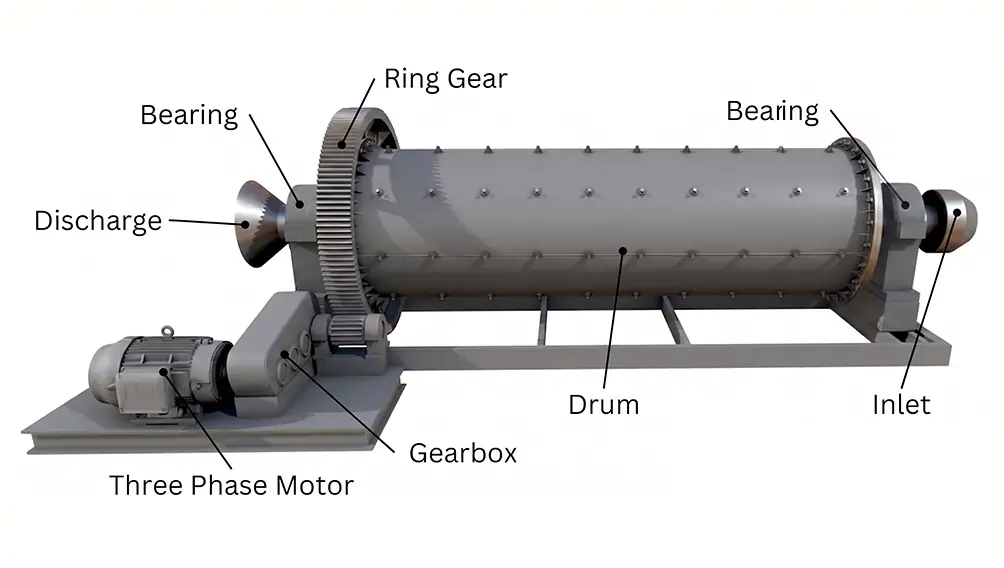
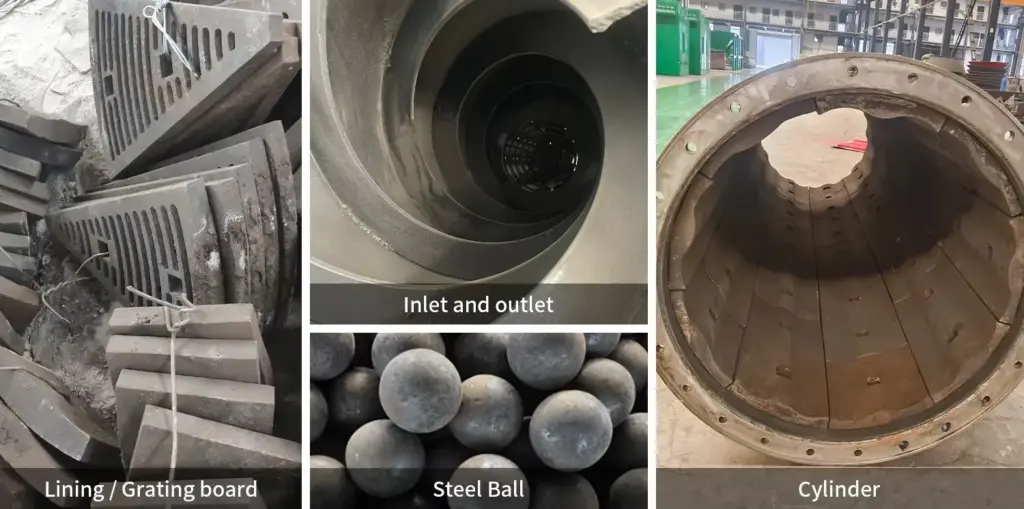
| 部件 | 功能 |
| 给料口 | 将破碎后的物料送入磨机腔体,并在运行过程中确保物料流稳定。. |
| 磨机筒体 | 承载研磨负荷并将运动传递给研磨介质的主要旋转圆筒。采用重型钢材制造,以承受持续冲击和磨损。. |
| 衬板 | 保护筒体内壁免受磨损,并有助于提升研磨介质以改善冲击和研磨性能。常用材料包括钢衬板、橡胶衬板和复合衬板。. |
| 研磨介质 | 通过冲击和摩擦减小物料粒度的钢球或陶瓷球。介质尺寸和硬度根据物料及所需细度进行选择。. |
| 轴承 | 支撑旋转筒体并在重载下保持平稳运行。常见类型包括中空轴轴承和滑履轴承。. |
| 小齿轮 | 将驱动系统的扭矩传递至大齿圈并带动磨机筒体旋转。. |
| 大齿圈 | 安装在筒体上的大型齿圈,与小齿轮配合工作,提供可靠的动力传输。. |
| 电机 | 提供旋转磨机所需的驱动力。电机功率根据磨机规格和研磨产能选型。. |
| 排料系统 | 将研磨后的物料从磨机中排出。溢流型和格子型排料设计常用于不同的研磨工艺。. |
| 润滑系统 | 为轴承和齿轮部件提供润滑剂,以减少摩擦、控制温度并延长使用寿命。. |
工业球磨机设备类型
工业球磨机是用于矿石、矿物和工业原料连续粒度减小的核心研磨设备。它通过旋转的圆柱形筒体和研磨介质实现高效的粒度减小,广泛应用于矿山、水泥、化工和电力行业。根据产能、细度和工艺要求选择不同的结构和排料设计。.
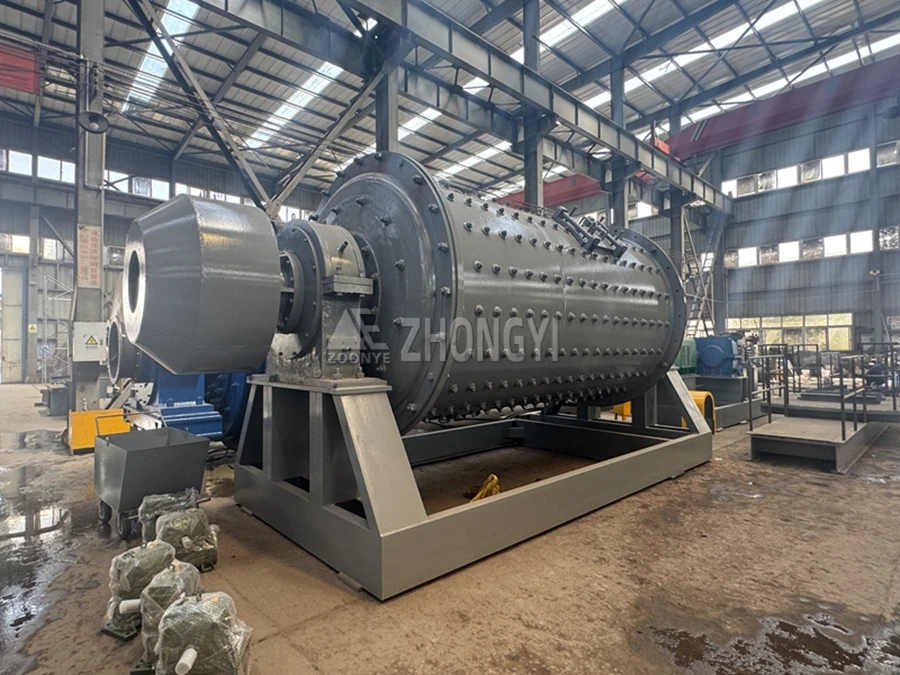
湿式球磨机
湿式球磨机以水或矿浆作为研磨介质,适用于需要细粒且稳定颗粒分离的选矿工艺。.
给料粒度:≤25 mm
出料细度:0.074–0.4 mm
产能:0.5–200 t/h
应用:金属及非金属矿石研磨
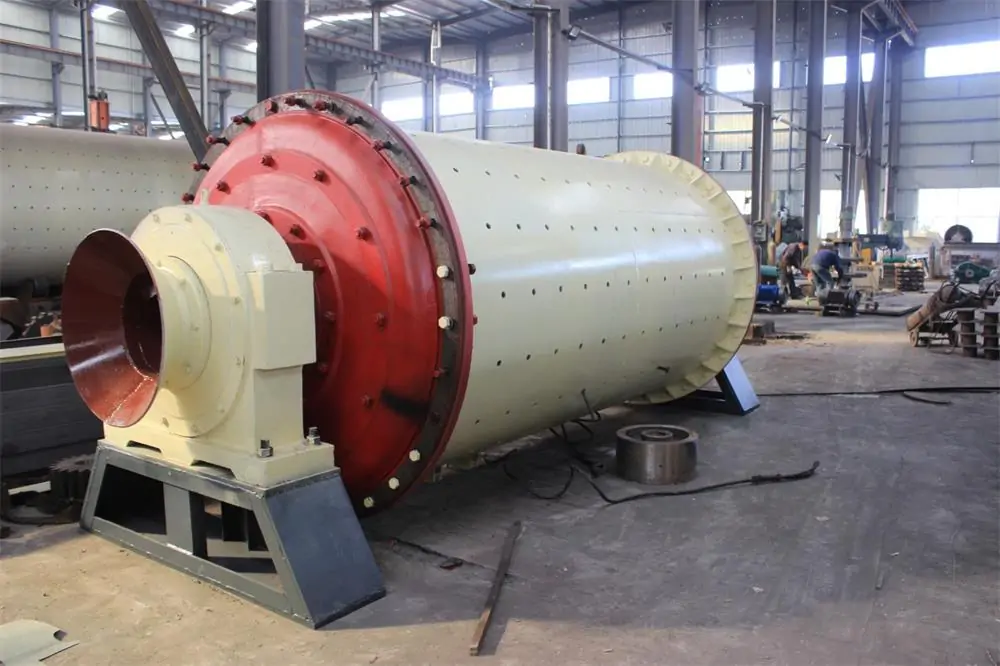
干式球磨机
干式球磨机在无液体添加的条件下运行,产出干粉产品。广泛应用于水泥、石灰、煤炭及其他工业粉体生产领域。.
给料粒度:≤20 mm
出料细度:0.074–0.2 mm
产能:0.5–150 t/h
应用:水泥、煤炭、工业粉体
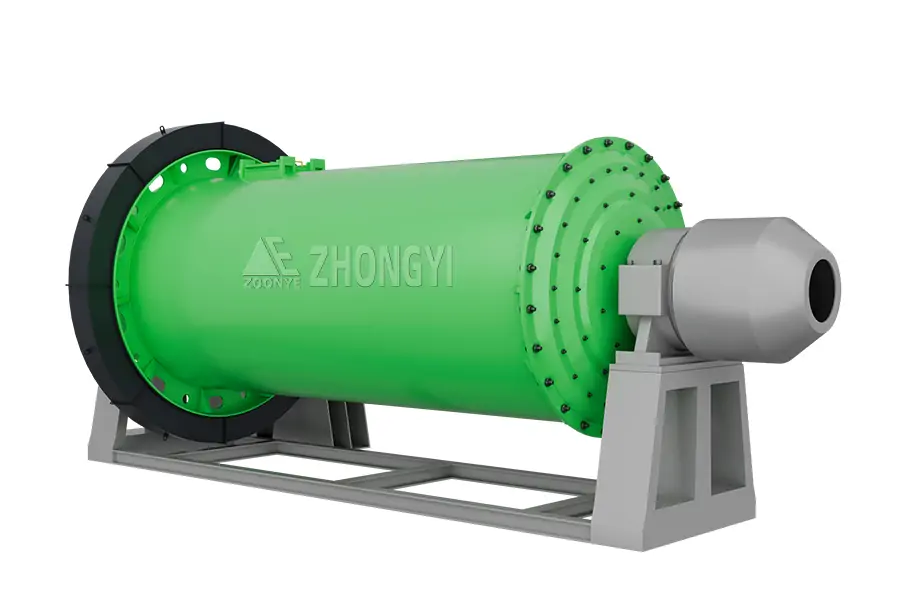
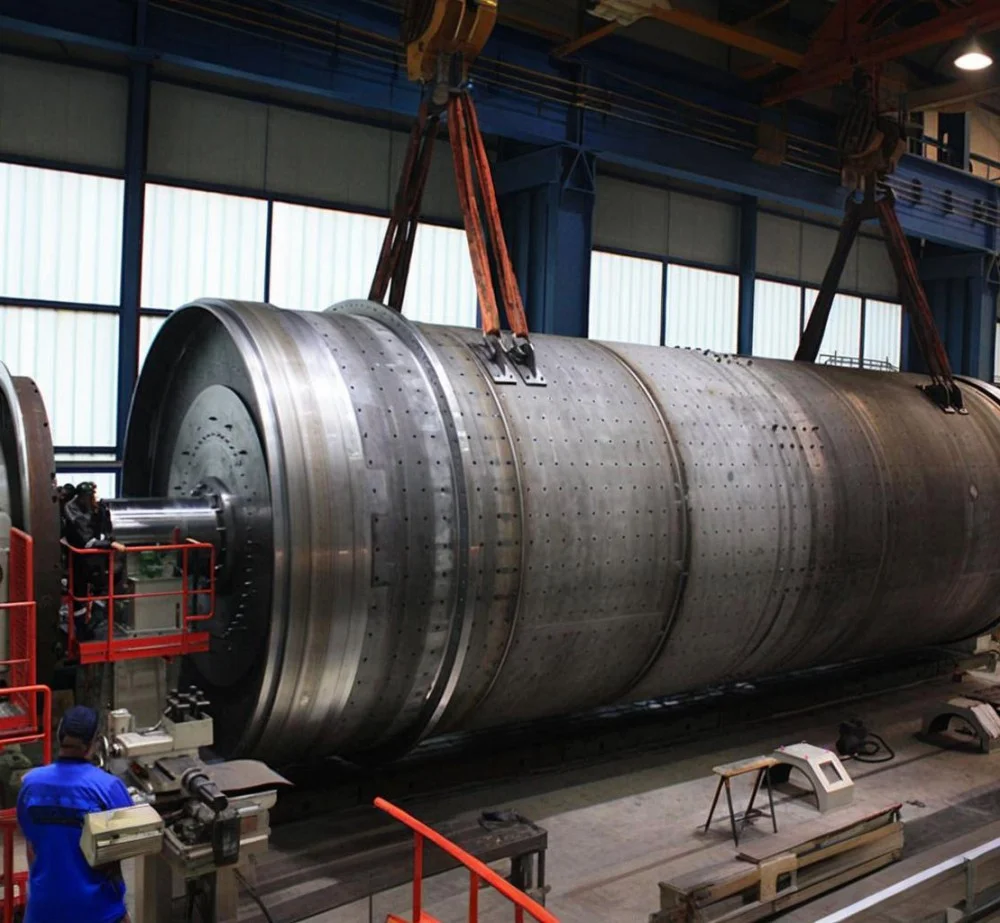
溢流型球磨机
溢流型球磨机通过自然溢流排出物料,适用于粒度控制稳定的细磨作业。常用于需要较高细度的选矿回路。.
给料粒度:≤25 mm
出料细度:0.074–0.3 mm
产能:0.5–200 t/h
特点:细磨、排料稳定
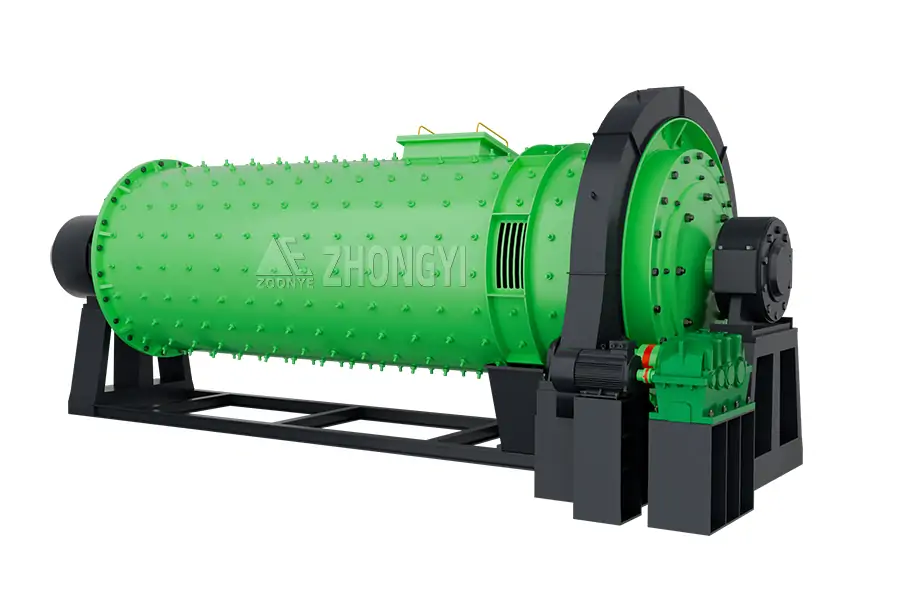
格子型球磨机
格子型球磨机采用格子板强制排料,提高处理量并防止过磨。适用于粗磨阶段。.
给料粒度:≤25 mm
出料细度:0.2–0.5 mm
产能:0.5–180 t/h
特点:排料效率高、产能大
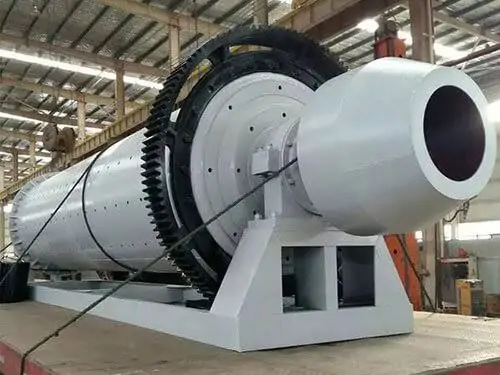
节能球磨机
节能球磨机采用优化的传动和研磨结构,在保持稳定产量的同时降低功耗。适用于大规模连续生产。.
给料粒度:≤25 mm
出料细度:0.074–0.4 mm
产能:0.5–250 t/h
特点:能耗更低、效率高
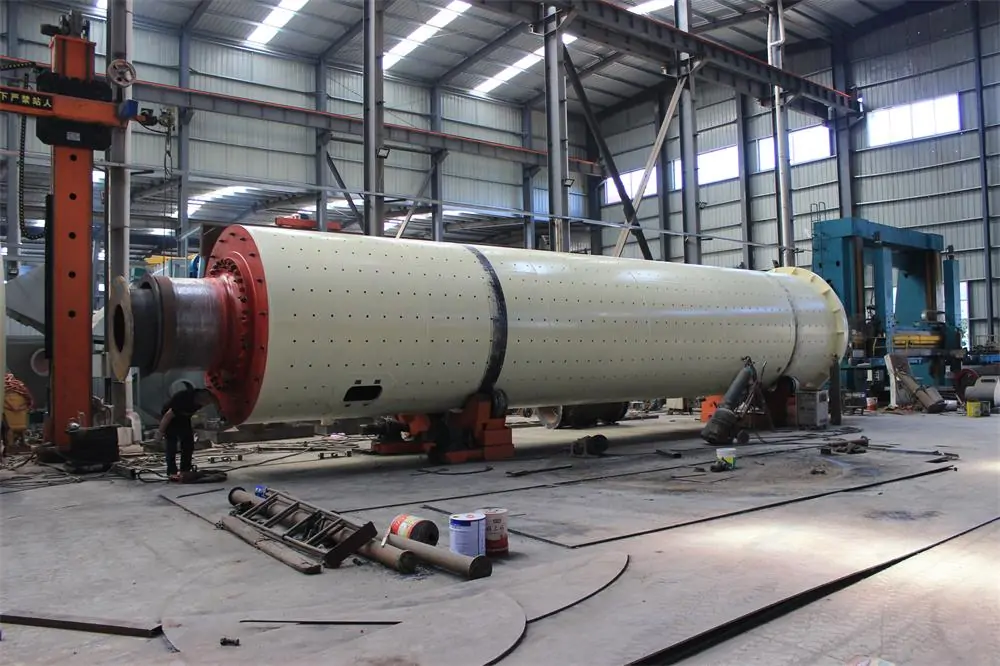
棒磨机与球磨机对比
棒磨机 和球磨机都是选矿厂中广泛使用的研磨设备,但它们的设计针对不同的研磨需求。主要区别在于研磨介质:棒磨机使用钢棒通过线接触研磨物料,而球磨机使用钢球通过点接触产生冲击和摩擦。.
在实际应用中,棒磨机通常用于粗磨和一段磨矿阶段,特别是在需要更均匀粒度分布的情况下。球磨机则更适合需要更高细度和更大研磨产能的细磨应用,如选矿、水泥生产和化工行业。.
| 对比 | 棒磨机 | 球磨机 |
| 研磨介质 | 使用钢棒作为研磨介质 | 使用钢球或陶瓷球作为研磨介质 |
| 研磨机理 | 主要利用棒之间的线接触进行选择性破碎和研磨 | 利用球与物料之间的冲击和磨剥实现粒度减小 |
| 产品粒度 | 适用于粗磨,通常产生更均匀的粒度 | 适用于细磨,产品细度更高 |
| Grinding Efficiency | Effective for reducing overgrinding and producing a narrow particle size distribution | Provides stronger grinding action for achieving fine particle sizes |
| Feed Size | Handles relatively larger feed materials in primary grinding applications | Usually requires smaller feed size after crushing |
| 应用 | Commonly used in copper, gold, iron ore, and other mineral processing plants for primary grinding | Widely used in mining, cement, ceramics, and chemical industries for secondary and fine grinding |
| Capacity Range | Generally suitable for lower to medium capacity grinding circuits | Available for small to large-scale grinding operations |
| 能耗 | Lower power consumption in coarse grinding applications | Higher energy demand due to intensive fine grinding |
| Overgrinding Control | Produces fewer fine particles and reduces slime generation | More likely to produce fine particles due to stronger grinding action |
| 维护 | Requires regular inspection of rods, liners, and internal wear parts | Requires monitoring of balls, liners, gears, bearings, and lubrication systems |
Which One Should You Choose?
The choice between a rod mill and a ball mill depends on the required product size, material characteristics, and grinding circuit design. Rod mills are often selected for primary grinding where uniform coarse particles are required, while ball mills are more suitable for secondary grinding and fine powder production.
For mineral processing projects requiring both high capacity and fine product size, a common configuration is a rod mill followed by a ball mill, allowing each machine to operate in its optimal grinding range. The final selection should consider ore hardness, feed size, target fineness, and plant production requirements.
应用领域
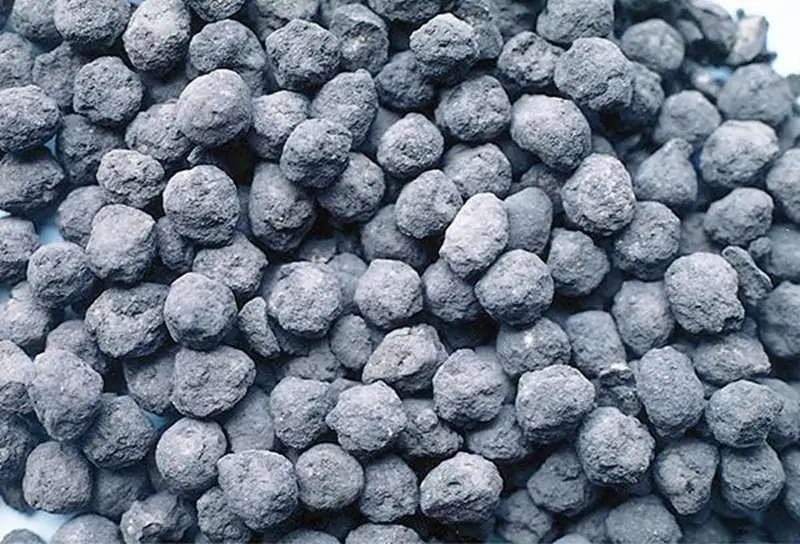
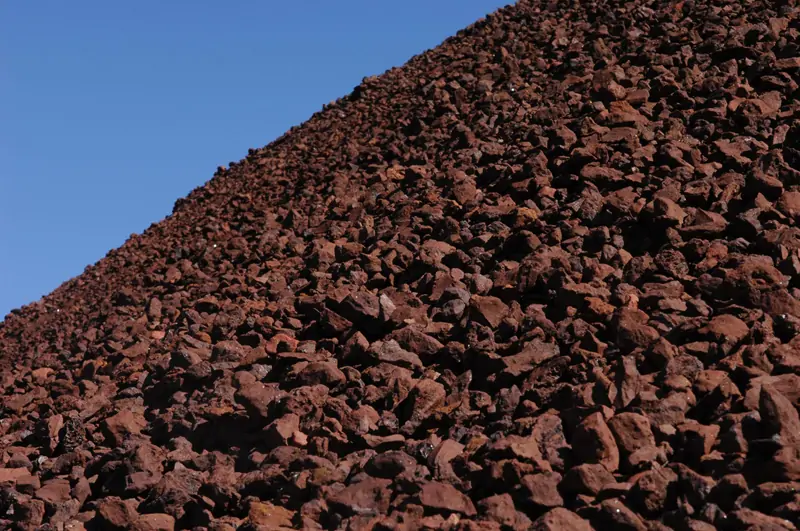
Industrial grinding Mills are used for fine grinding of cement clinker, ores, minerals, coal, and other bulk materials. They are widely applied in cement production, mining, metallurgy, chemical processing, and building material industries.
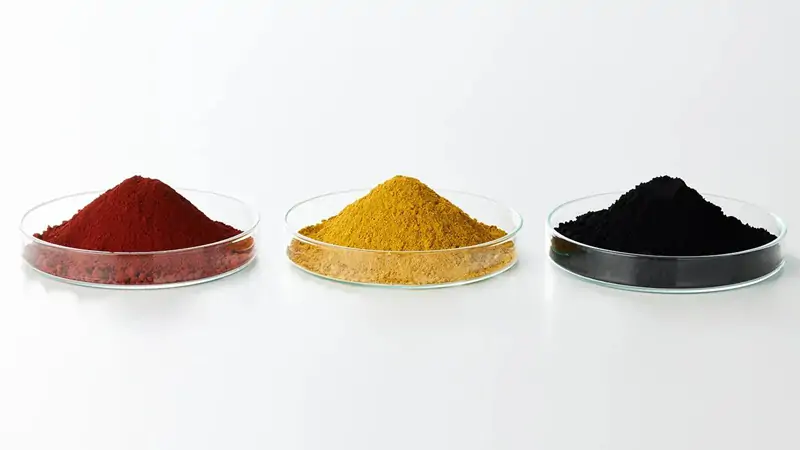
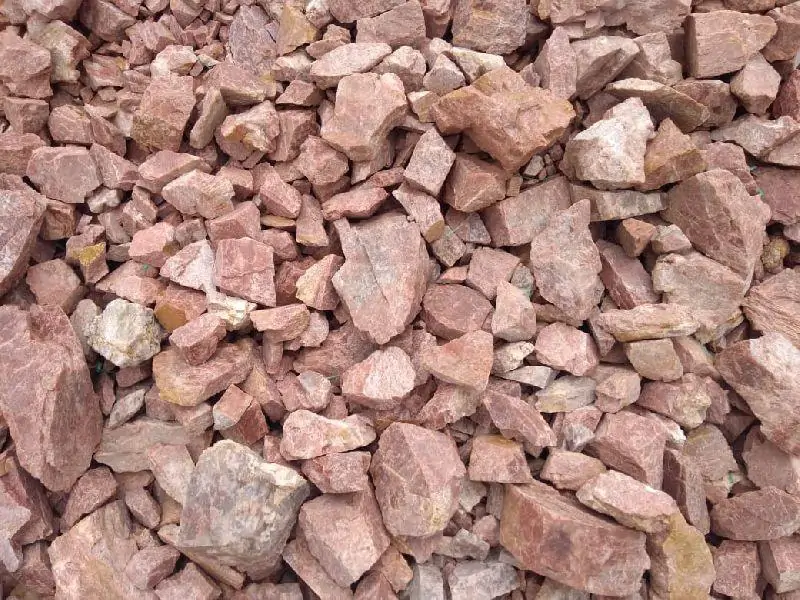
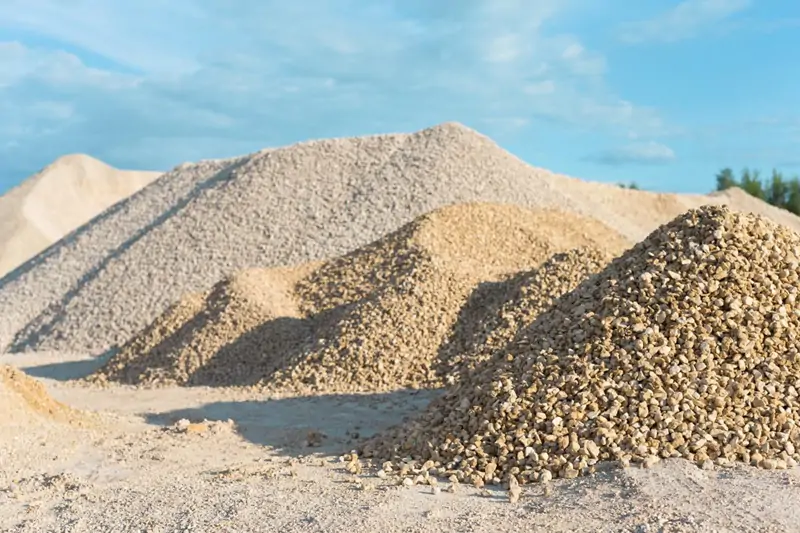
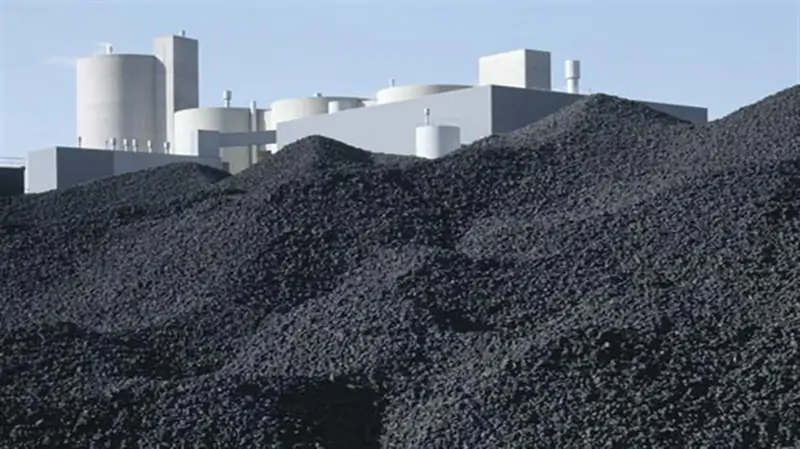
Ball Mill vs Other Grinding Equipment
Different mining grinding equipment is selected according to material properties, feed size, required product fineness, and production capacity. A ball mill is widely used for secondary grinding and fine grinding in mining, cement, and industrial applications, but it is not the only option for size reduction.
Compared with rod mills, SAG mills, vertical roller mills, Raymond mills, and ultra fine mills, ball mills have different operating principles and application ranges. The following comparison shows the typical use of each grinding equipment type.
| 设备 | Best Use | Main Characteristics |
| 球磨机 | Fine grinding of minerals, cement clinker, ceramics, and chemical materials | Uses steel balls or ceramic media to achieve size reduction through impact and friction. Suitable for wet or dry grinding with stable performance and wide application range. |
| 棒磨机 | Primary grinding and applications requiring uniform particle size | Uses steel rods as grinding media. Produces fewer fine particles and is commonly used before flotation or gravity separation circuits. |
| SAG Mill | Large-scale mineral processing plants with high throughput requirements | Uses a combination of ore particles and grinding balls for semi-autogenous grinding. Suitable for hard ores and large capacity operations. |
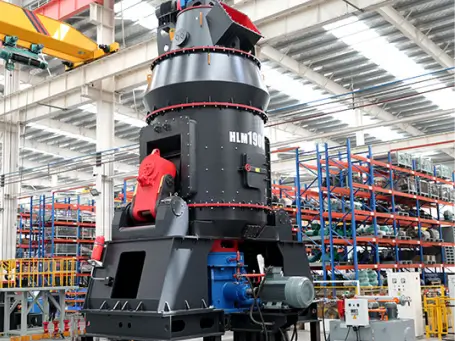
| Vertical Roller Mill (VRM) | Cement production, coal grinding, and mineral powder processing | Uses grinding rollers and a rotating table to achieve efficient vertical grinding. Offers lower energy consumption and a compact layout compared with traditional mills. |
| 雷蒙磨 | Medium-fine powder production for non-metallic minerals | Commonly used for limestone, gypsum, barite, and other soft to medium-hard materials. Suitable for lower capacity powder processing. |
| Ultra Fine Mill | Producing very fine powders and specialty materials | Designed for micron-level grinding. Used in applications requiring high fineness, such as chemicals, minerals, and advanced materials. |
Equipment Selection Considerations
For most mining grinding circuits, ball mills remain a common choice due to their reliability, flexible operation, and ability to handle a wide range of materials. However, the final selection depends on the ore hardness, feed size, target particle size, production capacity, and process flow design.
Large mining projects often combine different grinding technologies, such as SAG mill + ball mill circuits 或 rod mill + ball mill systems, to improve overall grinding efficiency and recovery performance. For powder processing applications, vertical roller mills and ultra fine mills may provide better energy efficiency and product fineness control.
How to Choose the Right Industrial Ball Mill?
Choosing an industrial ball mill equipment is mainly about matching the material, required output, and production scale. In real projects, most issues come from mismatch rather than equipment quality.
Final Ball Mill Selection
The right ball mill configuration depends on the ore properties, feed size, required fineness, processing capacity, and plant conditions. Mill type, liner design, grinding media, motor power, and discharge structure should be selected according to the specific grinding process rather than using a standard configuration.
At Zhongyi, ball mill designs are customized based on project requirements, including mineral characteristics, production targets, and operating conditions. The selection of mill structure, drive system, liner type, and grinding media is optimized to meet different mining and industrial grinding applications.
Common Problems and Maintenance Tips
A ball mill operates under continuous impact, heavy load, and abrasive conditions. Problems such as vibration, reduced grinding efficiency, excessive power consumption, and component wear are usually related to improper operation, equipment adjustment, or insufficient maintenance.
Regular inspection of key components, including liners, grinding media, bearings, gears, and lubrication systems, helps maintain stable operation and reduce unplanned downtime.
| Problem | Possible Cause | Solution |
| High Vibration | Misalignment of gear and pinion, worn bearings, uneven foundation, loose bolts, or unbalanced grinding media | Check alignment, inspect bearings and fastening parts, correct installation issues, and maintain proper mill loading. |
| Poor Grinding Performance | Incorrect grinding media size, low filling ratio, unsuitable feed size, worn liners, or improper operating speed | Adjust media size and filling level, optimize feed conditions, replace worn liners, and maintain proper mill speed. |
| High Power Consumption | Excessive feed load, overfilled mill, incorrect grinding media distribution, or increased mechanical resistance | Optimize feed rate, check mill loading, inspect drive system, and improve grinding parameters. |
| Excessive Liner Wear | High material abrasiveness, incorrect liner material, improper mill speed, or impact overload | Select suitable liner materials, adjust operating conditions, and replace liners before excessive wear affects performance. |
| High Grinding Media Consumption | Poor-quality media, excessive impact, incorrect media size, or abrasive feed material | Use wear-resistant grinding balls, optimize media grading, and control operating conditions. |
| Overheating | Insufficient lubrication, excessive load, poor ventilation, or bearing problems | Check lubrication system, monitor operating temperature, reduce overload conditions, and improve cooling. |
| Bearing Failure | Lack of lubrication, contamination, excessive load, improper alignment, or worn components | Maintain regular lubrication, monitor vibration and temperature, and inspect bearing condition during scheduled maintenance. |
Ball Mill Maintenance Recommendations
For stable operation and longer service life, Zhongyi recommends regular inspection and maintenance of key components, including liners, grinding media, bearings, gears, and lubrication systems.
Check liner wear regularly and replace worn liners in time.
Maintain proper lubrication for bearings and gear transmission systems.
Monitor vibration, temperature, and power consumption to identify early issues.
Adjust grinding media size and filling ratio according to operating conditions.
Keep maintenance records to improve equipment reliability and reduce downtime.
Real Project Experience
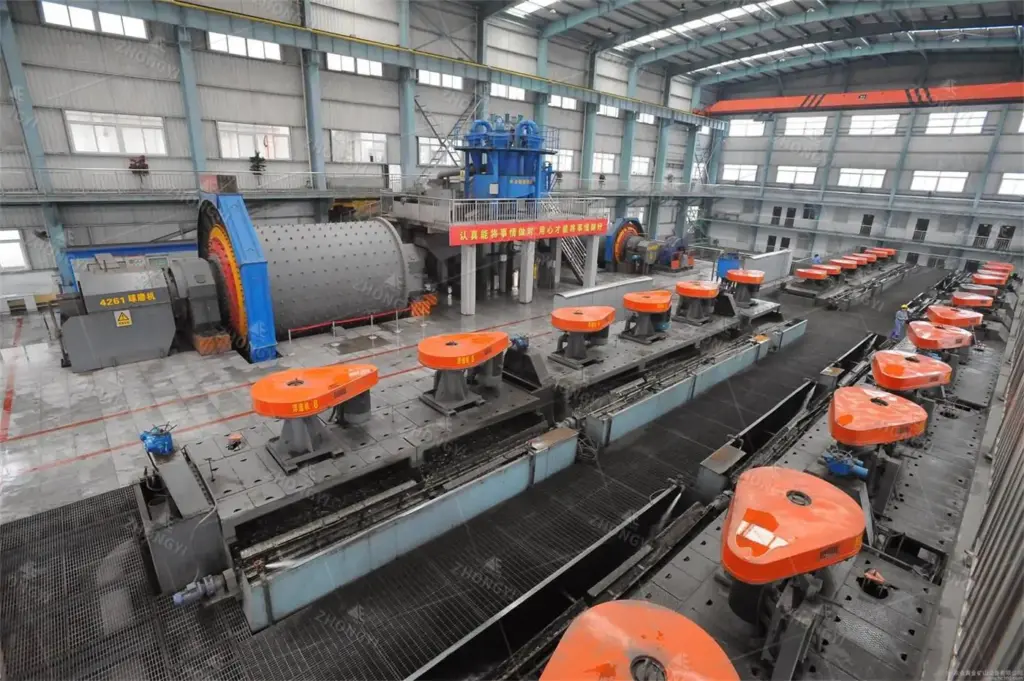
Case Study-1: 250TPD Hard Rock Gold Flotation Processing Plant in Turkey
Zhongyi supplied a complete gold flotation processing plant for a 250TPD hard rock gold project in Turkey. The plant processes refractory sulfide gold ore with a crushing, grinding, flotation, and dewatering flow sheet.
The production line includes two-stage closed-circuit crushing, closed-circuit grinding and classification, multi-stage flotation, thickening, and pressure filtration. The grinding circuit is equipped with an MQY2136 overflow ball mill and hydrocyclone unit, providing stable grinding operation and achieving a target fineness of 70% passing 200 mesh before flotation.
Main equipment supplied includes jaw crusher, cone crusher, vibrating screen, MQY2136 overflow ball mill, hydrocyclone, flotation cells, thickener, and filter press. After commissioning, the optimized grinding and flotation system increased gold recovery from 55% to 82–85%, with final gold concentrate grade reaching 48–52 g/t. The ball mill has maintained stable operation under continuous production conditions, supporting the plant’s long-term beneficiation performance.
Case Study-2: 150TPD Molybdenum Sulfide Flotation Processing Plant
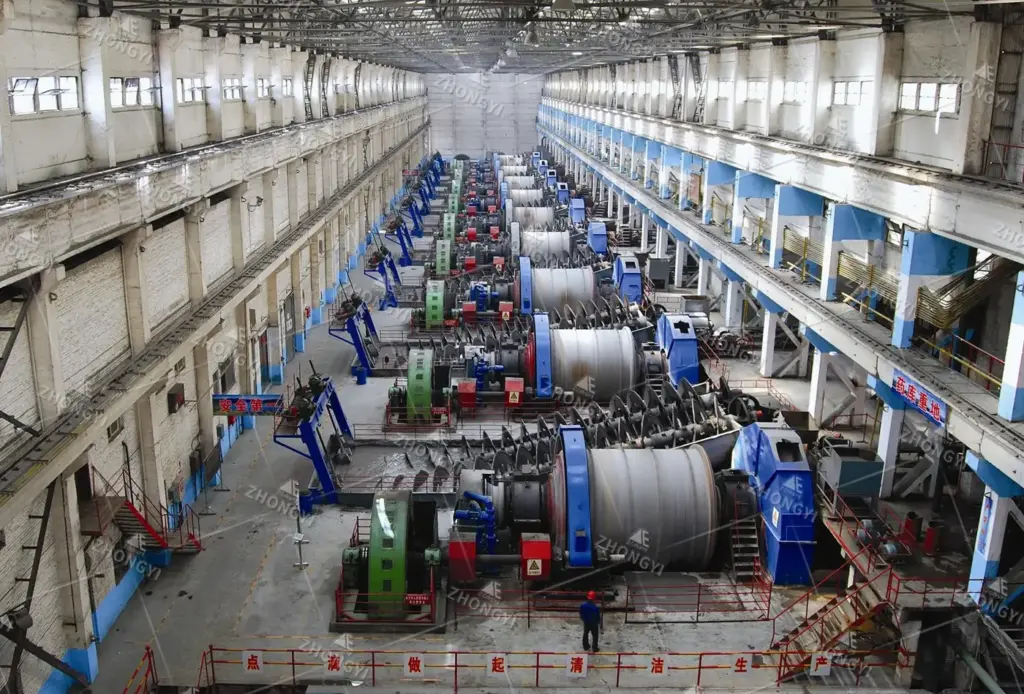
Zhongyi supplied MQY1836 overflow ball mills for a 150TPD molybdenum sulfide flotation plant, where the main challenge was controlling grinding fineness for fine-grained molybdenum ore. The raw ore contained finely disseminated molybdenite associated with quartz and other gangue minerals, requiring stable and accurate grinding conditions before flotation.
The project used a two-stage closed-circuit grinding system with MQY1836 overflow ball mills and hydrocyclones. The first-stage ball mill was used for primary grinding, with the product controlled at 65% passing 200 mesh before rough flotation. The second-stage ball mill further improved liberation by grinding the rough concentrate to 85% passing 200 mesh. This configuration helped reduce over-grinding and provided a more stable feed condition for the flotation circuit.
After operation adjustment, the grinding circuit achieved stable performance, supporting an increase in molybdenum recovery from 68% to 80–83%. The MQY1836 ball mills have maintained reliable operation with stable discharge fineness and controlled wear during continuous plant production.
Why Choose Zhongyi Ball Mill Solutions
Ball mill selection requires a clear understanding of the ore characteristics, grinding requirements, and plant operating conditions. Zhongyi provides ball mill solutions based on project requirements, covering equipment design, manufacturing, installation, and operation support.
Engineering
Our engineers evaluate ore properties, capacity requirements, grinding fineness, and process conditions to select suitable mill models and configurations.
Manufacturing
Ball mills are manufactured according to project specifications, with focus on key components including mill shell, liners, transmission system, and supporting structures.
Testing & Quality Control
Equipment components are inspected and tested before delivery to ensure dimensional accuracy, assembly quality, and reliable operation after installation.
Commissioning Support
Zhongyi provides on-site installation guidance, commissioning support, and parameter adjustment to help the grinding system reach the designed operating performance.
After-Sales Service
Technical support, spare parts supply, and operation guidance are provided to assist customers with long-term equipment maintenance and operation.
Customization
Ball mill specifications can be customized according to different materials, production capacities, grinding methods, and plant layouts.
Looking for the right ball mill machine for your project? Share your ore type, processing capacity, feed size, and target product size with Zhongyi’s engineering team. We will recommend a suitable grinding solution based on your process requirements and operating conditions.

于博士
Expert in Mineral Processing Solutions
With 15+ years of experience, Dr. Chen specializes in gravity, magnetic, flotation, and electrostatic separation. He focuses on ore processing and process optimization, sharing practical insights and equipment applications to help improve recovery rates and production efficiency.
常见问题
What is a ball mill machine used for?
A ball mill machine is used to grind crushed materials into fine powder or slurry. It is widely applied in mining for ore grinding, including gold, copper, iron ore, and lithium processing. It is also used in cement, ceramics, chemical, and other industrial grinding applications.
How does a ball mill work?
A ball mill works by rotating a cylindrical shell filled with grinding media. As the shell rotates, steel balls are lifted and dropped to create impact and friction, reducing material size. The ground product is discharged after reaching the required fineness.
What is the difference between a ball mill and a rod mill?
The main difference is the grinding media. A ball mill uses steel balls for impact and friction grinding, while a rod mill uses steel rods for line-contact grinding. Rod mills are commonly used for coarse grinding, while ball mills are preferred for finer grinding applications.
What is the difference between wet and dry ball milling?
Wet ball milling uses water or slurry during grinding and is commonly used in mineral processing plants because it provides better material flow and dust control. Dry ball milling is used when the final product requires low moisture content, such as cement and ceramic production.
Which industries use ball mills?
Ball mills are widely used in mining, cement manufacturing, ceramics, chemicals, metallurgy, and building materials industries. In mining operations, they are commonly installed in gold, copper, molybdenum, iron ore, and other mineral processing plants for secondary and fine grinding.
How long do ball mill liners last?
The service life of ball mill liners depends on ore hardness, liner material, mill speed, grinding media, and operating conditions. In mining applications, high-quality liners typically require regular inspection and replacement according to wear conditions to maintain grinding efficiency and protect the mill shell.
What is grinding media?
Grinding media are the materials placed inside a ball mill to grind the feed material. Common types include steel balls, ceramic balls, and other specialized media. Their size, hardness, and filling ratio directly affect grinding efficiency, energy consumption, and final product fineness.
How do I calculate ball mill capacity?
Ball mill capacity depends on several factors, including mill size, feed material, ore hardness, feed size, required fineness, and operating conditions. In practice, manufacturers determine capacity through process data, material testing, and grinding circuit design rather than using a single calculation value.
Which ball mill is best for gold ore?
For gold ore processing, overflow ball mills are commonly used in wet grinding circuits before flotation, gravity separation, or cyanidation. The suitable model depends on ore hardness, processing capacity, feed size, and required grinding fineness. A closed-circuit grinding system is often preferred for stable operation.
How much maintenance does a ball mill require?
Ball mill maintenance mainly includes checking liners, grinding media, bearings, gears, lubrication systems, and drive components. Regular inspection of vibration, temperature, and power consumption helps identify problems early. Proper maintenance schedules reduce downtime and extend equipment service life.
References
Wills, B.A., Finch, J. Wills’ Mineral Processing Technology: An Introduction to the Practical Aspects of Ore Treatment and Mineral Recovery. Elsevier.
https://shop.elsevier.com/books/wills-mineral-processing-technology/wills/9780080970530
Society for Mining, Metallurgy & Exploration. SME Mining Reference Handbook.
https://www.smenet.org/SME-Store/Mining-Reference-Handbook
Bond, F.C. Crushing and Grinding Calculations.
ScienceDirect. Grinding Mill and Comminution Research.
https://www.sciencedirect.com/topics/engineering/grinding-mill
Minerals Engineering Journal. Elsevier.