











مقدمة
How to choose an impact crusher is a key question for buyers planning an aggregate production line, processing natural rock, or recycling construction waste. The challenge is not simply finding a crusher with sufficient rated capacity or a large enough feed opening. The equipment must also match the material’s hardness and abrasiveness, handle the required feed size, and produce the target output at the expected throughput. A mismatch between these conditions and the crusher configuration can lead to excessive wear, unstable production, or higher operating costs.
This guide explains the main factors involved in impact crusher selection, from material characteristics and feed size to production capacity and final product requirements. It also examines the differences between European, mobile, tracked, and vertical shaft impact crushers, along with their typical applications and operating considerations. By understanding how these factors work together, buyers can make a more informed equipment choice based on actual project requirements rather than individual specifications.
What Is an Impact Crusher and When Should You Use One?
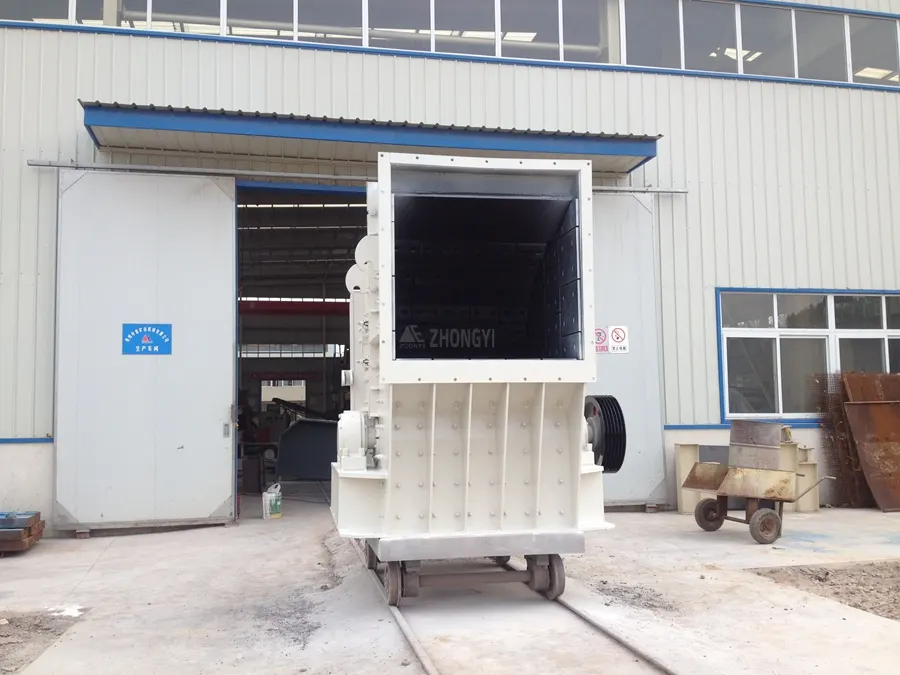
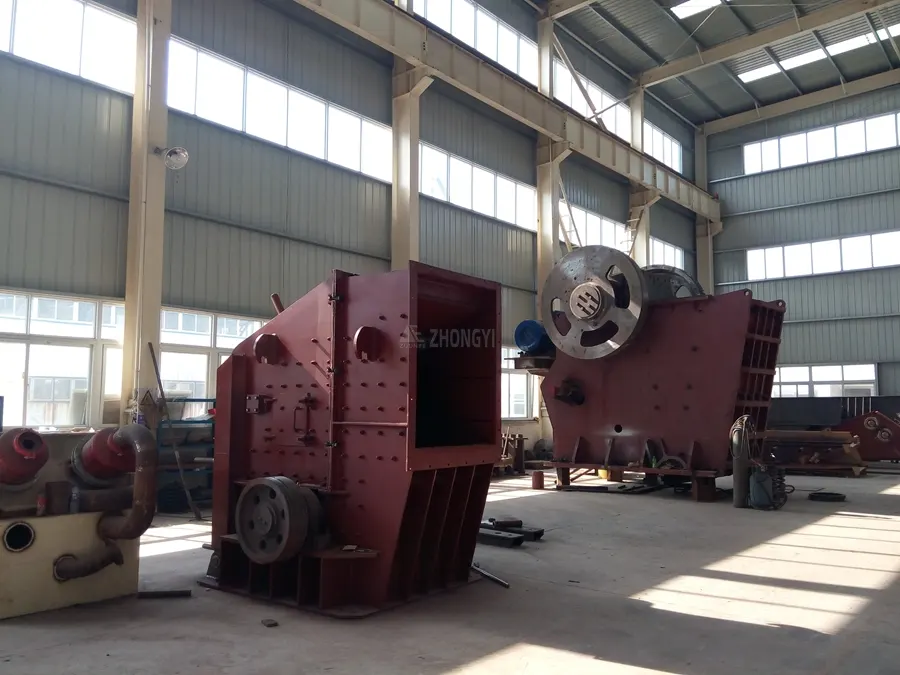
An impact crusher reduces material size by applying repeated mechanical impacts rather than relying mainly on compressive force. It is used in quarrying, aggregate production, mining, and construction waste recycling, particularly where the process requires controlled size reduction and good particle shape. Its performance, however, depends on the material being processed and the required product specifications. A crusher that handles the required feed size may not necessarily deliver the expected throughput or operating cost when material hardness, abrasiveness, and moisture are not properly considered.
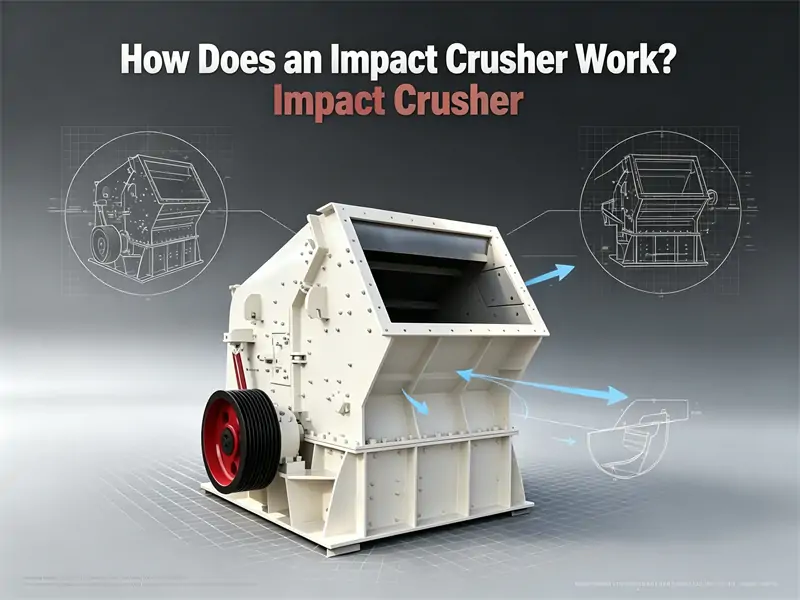
كيف تعمل الكسارة التصادمية؟
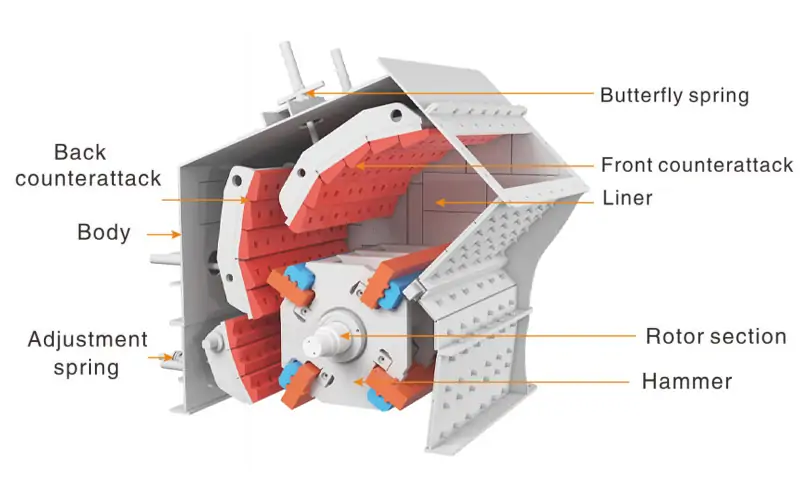
In an impact crusher, rotating impact components strike incoming material and accelerate it within the crushing chamber. The material then collides with impact surfaces or other particles, causing it to break into smaller pieces. These repeated impacts continue as the material moves through the chamber until it reaches a size that can pass through the discharge opening. The crushed material is then discharged for screening or further processing. The exact arrangement of impact components and crushing surfaces varies with the crusher design.
When Is an Impact Crusher the Right Choice?
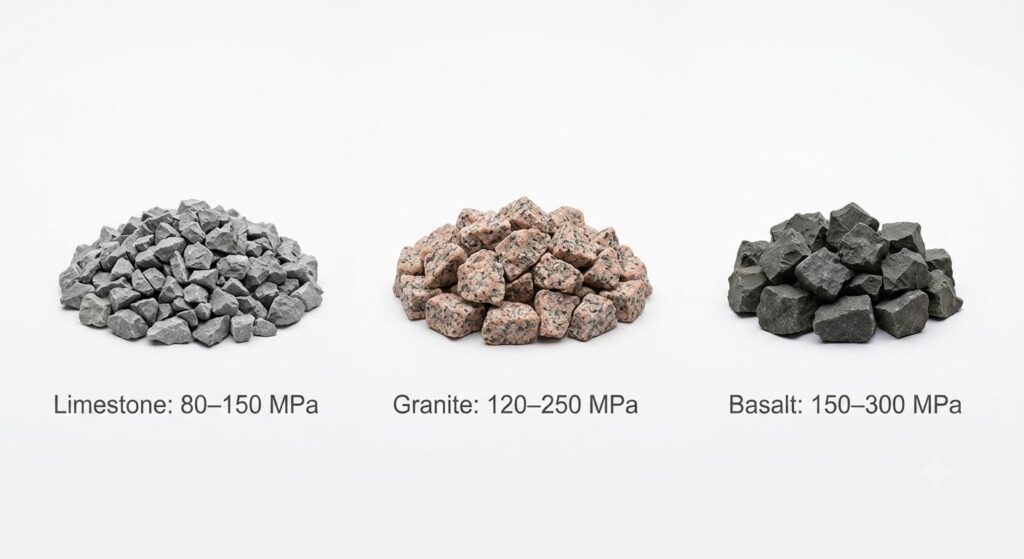
Impact crushers are widely used for limestone and dolomite crushing, concrete and asphalt recycling, and aggregate production. They are often a practical choice for soft to medium-hard materials when the required output includes well-shaped aggregate particles. However, highly abrasive materials such as granite, basalt, and quartz-rich rock can accelerate wear on blow bars and other impact components, increasing replacement frequency and operating costs. Wet, sticky, or clay-rich feed also needs careful assessment because material buildup can restrict flow through the crushing chamber and affect production stability.
What Factors Should You Consider When Choosing an Impact Crusher?
Choosing an impact crusher requires more than checking its rated capacity or maximum feed size. The selection needs to account for the material being processed, the feed condition, the required production rate, and the finished product specifications. These factors are interrelated. For example, highly abrasive feed can increase wear on blow bars and impact plates, while a demanding reduction ratio may affect throughput, product gradation, and energy consumption.
A practical Impact Crusher Selection process should therefore consider the crusher as part of the complete production line, rather than as an isolated machine. The following factors provide a basis for evaluating equipment suitability and determining the appropriate configuration.
خصائص المادة
The physical properties of the feed material are among the first factors to assess. Hardness affects how readily the material breaks under impact, while abrasiveness determines how quickly it wears the blow bars, impact plates, and other contact surfaces. Both properties influence crushing performance, wear part consumption, and maintenance requirements.
Other characteristics also affect the feeding and crushing process. High moisture or clay content can cause material to adhere to the feeder, chute, or crushing chamber, restricting material flow. Friable materials may generate more fines during crushing, which can change the product gradation. These properties should be evaluated together to determine whether impact crushing is suitable and whether pre-screening or other feed preparation is necessary.
Zhongyi Mining’s Inner Mongolia basalt project illustrates how material properties and product requirements shape the overall crushing circuit. To process hard basalt into 0–5 mm manufactured sand and 10–20 mm and 20–30 mm aggregates, the plant uses jaw crushing for primary reduction, cone crushing for further size reduction, closed-circuit screening, and VSI crushing for final shaping. See the خط إنتاج تكسير وصنع الرمل من البازلت بطاقة 1 مليون م³ في منغوليا الداخلية for the project configuration.
Feed Size and Feed Gradation
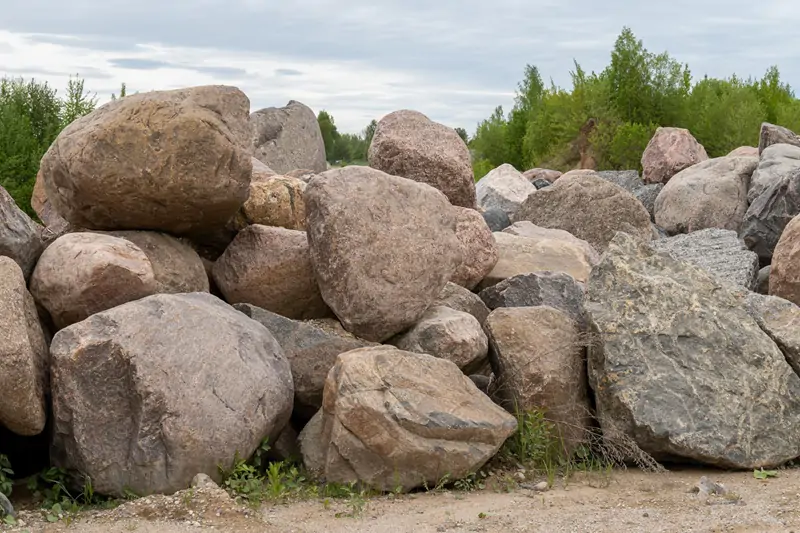
The maximum feed size must be within the crusher’s allowable feed dimensions and compatible with its feed opening. However, checking the largest particle alone is not enough. The feed’s particle size distribution, shape, and proportion of oversized material also affect how consistently material enters the crushing chamber.
A wide or uneven feed gradation can cause fluctuating crusher loading and make product size control more difficult. Excessive fines in the feed may also occupy part of the crushing chamber without requiring the same degree of size reduction as larger particles. The upstream feeder and any pre-screening arrangement should therefore be considered alongside the crusher to maintain a controlled feed rate and suitable feed distribution.
Required Production Capacity
The required Impact Crusher Capacity should be determined by the production target of the entire plant. Start with the required hourly output, then consider scheduled operating hours, planned maintenance, and expected equipment availability when assessing the crusher’s required operating capacity.
The capacity stated in a manufacturer’s catalogue is a reference under specified operating conditions, not a guaranteed output for every material and configuration. Actual throughput depends on feed properties, feed gradation, feed rate, reduction requirements, and crusher settings. In a closed-circuit system, the screen and circulating load also affect the crusher’s total processing duty because oversize material returns for further crushing. Model selection should be based on expected site conditions and the required sustained output.
Final Product Size and Particle Shape
The required output should be defined by the complete product specification, not simply the maximum particle size. For aggregate production, this includes the required size fractions, particle size distribution, oversize limits, fines content, and particle shape. The relative importance of each property depends on the intended application and relevant product standards.
For example, concrete aggregate production may require controlled grading and limits on flaky and elongated particles. Manufactured sand production places additional emphasis on particle shape, grading, and fines content. These requirements influence the crushing duty, equipment settings, and screening arrangement. They also help determine whether a single crushing stage is sufficient or whether additional crushing, shaping, and classification stages are needed.
Installation Conditions and Operating Costs
Site conditions can restrict the available equipment configurations. Available space, foundation capacity, transport access, lifting arrangements, and power supply all need to be checked during selection. Stationary crushers require suitable foundations and supporting infrastructure, whereas mobile configurations must also meet site access, transport, and relocation requirements.
The purchase price alone does not reflect the long-term cost of operating an impact crusher. Wear part consumption, energy use, routine maintenance, replacement time, and unplanned downtime all contribute to the operating cost per ton. Particular attention should be paid to access for inspecting and replacing blow bars and impact plates. A design that allows efficient maintenance can reduce service time and limit production interruptions.
Main Factors in Impact Crusher Selection
| عامل الاختيار | Technical Information to Check | Effect on Equipment Selection |
|---|---|---|
| Material | Hardness, abrasiveness, moisture, clay content, friability | Crushing suitability, wear rate, and feed preparation |
| التغذية | Maximum feed size, particle shape, feed gradation, feed opening | Feed compatibility and feeding arrangement |
| الطاقة | Required hourly output, operating hours, equipment availability | Required operating capacity and crusher model |
| Output | Product size fractions, gradation, fines content, particle shape | Crushing duty, equipment settings, and screening arrangement |
| التركيب | Site space, foundation, power supply, transport access | Stationary or mobile configuration and plant layout |
| Operating Cost | Wear part consumption, energy use, maintenance, downtime | Long-term operating cost per ton |
How Does Material Type Affect Impact Crusher Selection?
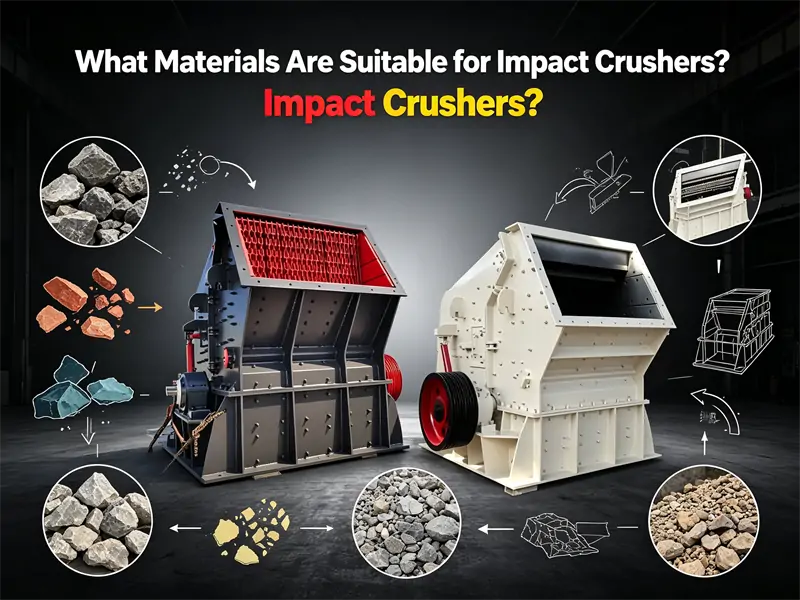
Different materials behave differently under impact crushing. Limestone generally responds well to impact reduction, while abrasive rock can accelerate wear. Recycled concrete introduces metal contamination, and clay-rich feed may cause material buildup. These differences determine whether an impact crusher is suitable for the application and economically practical. For a material-by-material reference, read What Materials Are Suitable for Impact Crushers?.
Soft to Medium-Hard Materials
Limestone, dolomite, shale, and coal are common candidates for HSI crushing. An Impact Crusher for Limestone is widely used in aggregate production. Dolomite requires attention to abrasiveness, while layered shale may break along natural discontinuities. For coal, crusher settings should limit excessive fines generation.
Hard and Abrasive Materials
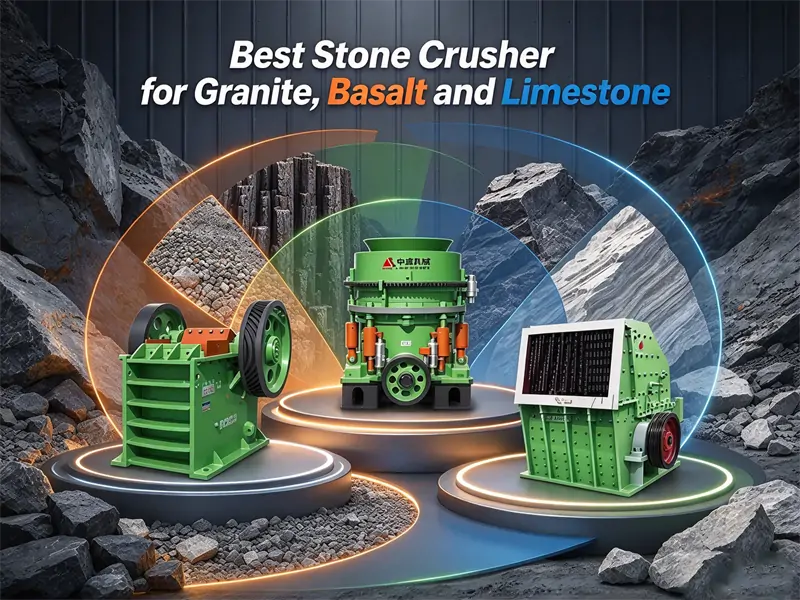
Granite, basalt, and quartzite can cause rapid blow bar and impact plate wear. Although HSI crushers can process these materials, replacement frequency may make continuous operation costly. Jaw and cone crushers commonly handle the main reduction stages in hard-rock plants, with VSI equipment used downstream for shaping or manufactured sand when justified by product requirements.
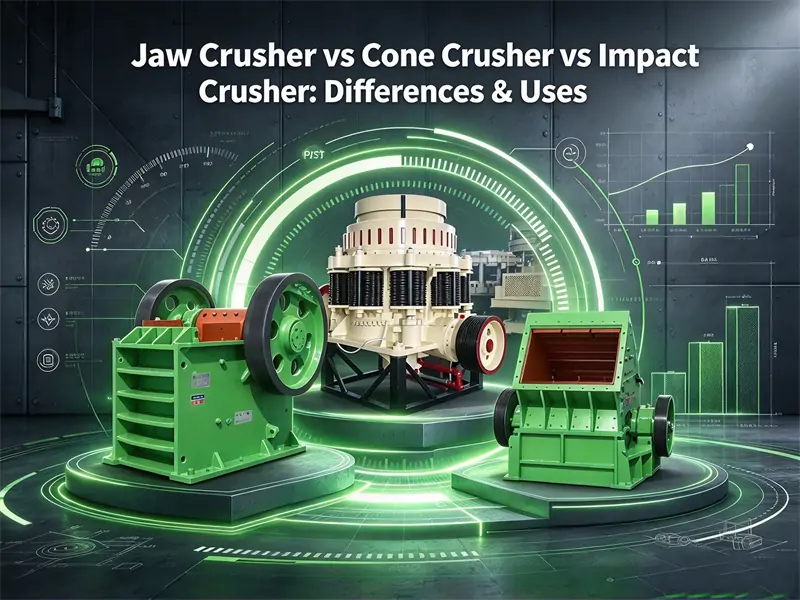
If abrasive feed makes impact crushing less economical, Jaw Crusher vs Cone Crusher: Differences, Applications and How to Choose provides a comparison of the compression crushers commonly considered for the primary and secondary stages.
Recycled Concrete and Construction Waste
Reinforced concrete contains steel bars and embedded metal that can cause blockages or damage. Pre-sorting removes large contaminants, while magnetic separators recover liberated ferrous metals after crushing. Feed control and access for clearing tangled reinforcement should also be considered when configuring a recycling line.
For background on recycled concrete processing, including crushing and steel recovery, see FHWA’s archived Reclaimed Concrete Material – Material Description. Equipment-specific feed and reinforcement limits still need to be confirmed.
Moist or Sticky Materials
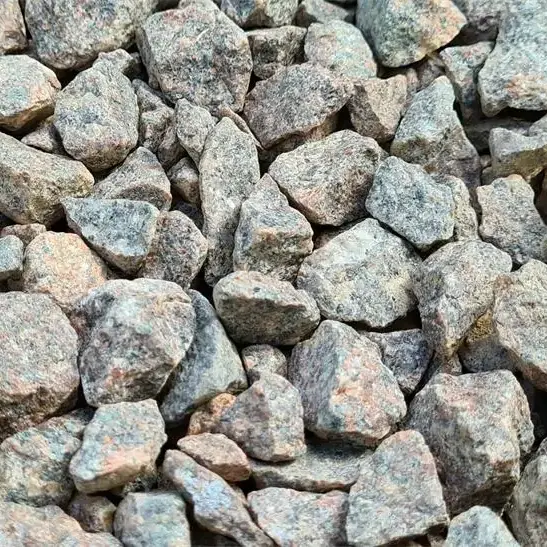
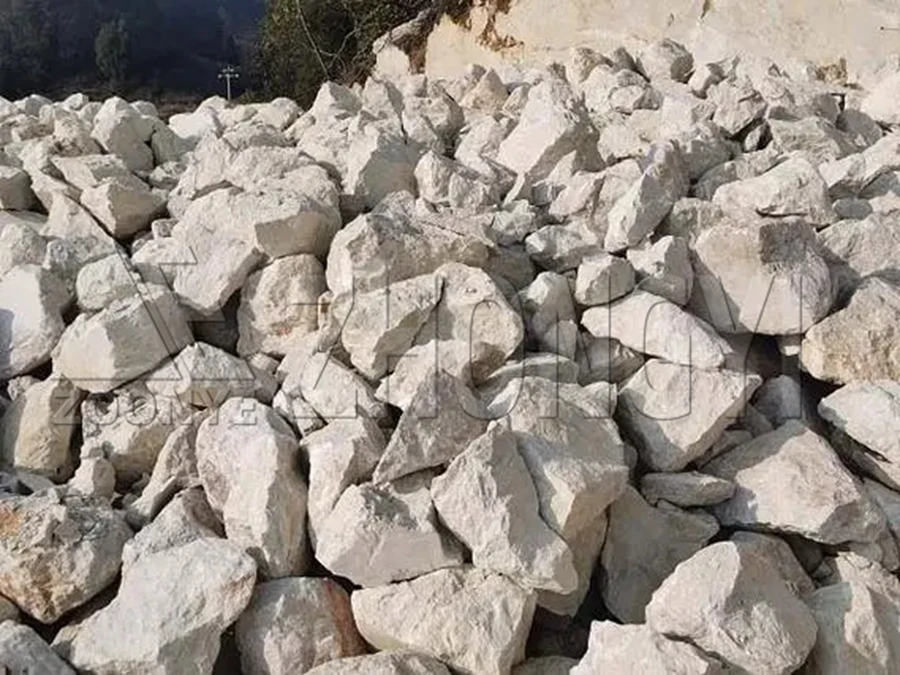
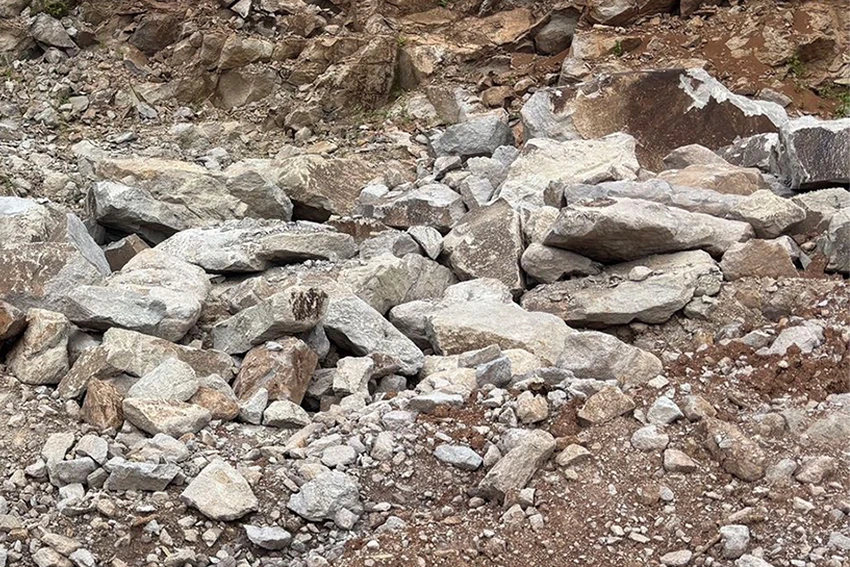
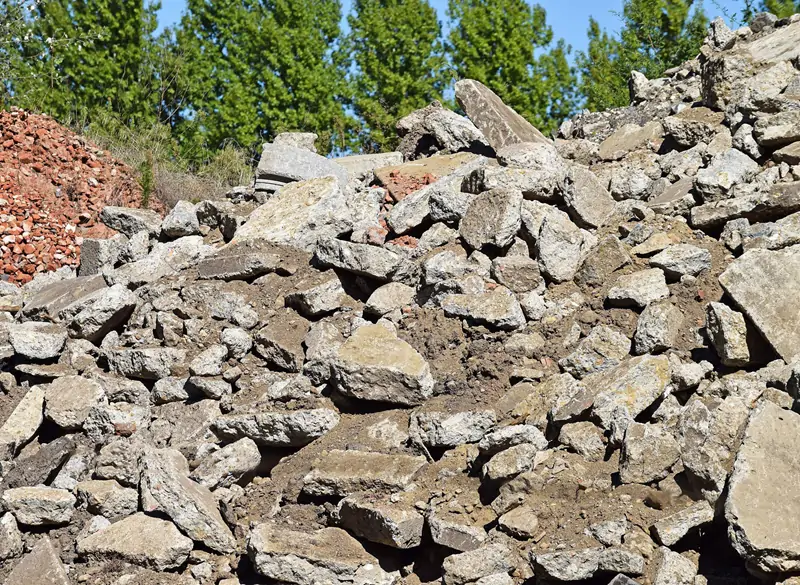
High moisture alone does not rule out impact crushing. Clay and wet fines are more likely to cause buildup in chutes and crushing chambers or blind screening surfaces. Check the actual feed condition before selecting the equipment. Drainage, pre-screening, or feed blending may help maintain material flow.
How Do Feed Size and Reduction Ratio Affect Impact Crusher Selection?
Feed size and reduction ratio determine whether an impact crusher can handle the incoming material and achieve the required size reduction in a given crushing stage. An oversized feed may exceed the crusher’s design limits, while an excessive reduction requirement can reduce throughput or make single-stage crushing impractical. Both parameters should be evaluated before selecting a model or defining the crushing circuit.
Maximum Feed Size and Crusher Feed Opening
The Maximum Feed Size must remain within the manufacturer’s specified limit for the selected model. However, the maximum feed size is not determined by the feed opening dimensions alone. The crushing chamber design and the shape of incoming particles also affect whether material can enter and pass through the crusher properly. Do not assume the catalogue maximum is the recommended size for continuous operation.
Understanding Reduction Ratio in Impact Crushing
For a particle size distribution, the Reduction Ratio can be estimated using the 80% passing sizes:
R = F80 / P80
Here, F80 is the feed size through which 80% of the material passes, and P80 is the corresponding product size. For example, an F80 of 200 mm and a P80 of 50 mm give a reduction ratio of 4:1. This value describes the overall size reduction, not the crusher’s maximum feed-to-discharge dimensions.
When Is Multi-stage Crushing Required?
When the required reduction exceeds what one crusher can handle economically, Multi-stage Crushing may be necessary. For example, a jaw crusher may handle primary reduction before an HSI secondary stage. A VSI can be added downstream when further particle shaping or manufactured sand production is required. Not every plant needs multiple stages; the decision depends on feed size, target product, throughput, and equipment capability.
How to Choose the Right Impact Crusher for Your Required Output Size?
The required Impact Crusher Output Size should cover the target size range and product gradation, not just the maximum particle size. Common aggregate specifications include 0–5 mm, 5–10 mm, 10–20 mm, and 20–40 mm. Buyers also need to define the fines proportion and Aggregate Particle Shape, including flakiness and elongation. Sieve analysis verifies whether the finished aggregate meets these specifications.
In an HSI crusher, Rotor Speed controls rotor peripheral speed and affects impact energy, crushing intensity, fines generation, and blow bar wear. The Impact Plate Gap and apron arrangement influence the degree of size reduction. A narrower gap generally increases breakage, but it does not guarantee a specific discharge size. Feed gradation, material properties, rotor configuration, and blow bar wear also affect the result. Final product grading should be checked through screening rather than judged by crusher settings alone.
When an HSI cannot meet the required product specifications efficiently, a VSI may be added for further crushing or shaping. The two machines use different impact mechanisms:
| المعامل | HSI Crusher | كسارة VSI |
|---|---|---|
| الوظيفة الرئيسية | Size reduction | Fine crushing and shaping |
| Impact mechanism | Blow bars strike material against impact plates | High-speed rotor accelerates material against anvils or a material bed |
| التطبيق النموذجي | Primary or secondary crushing, depending on design | Tertiary crushing and sand making |
| Product focus | Aggregate size reduction | Particle shape and manufactured sand |
VSI crushers use rock-on-rock or rock-on-anvil configurations. The choice affects the crushing process and wear characteristics, so it should match the feed material and final product requirements.
How to Calculate the Required Impact Crusher Capacity?
Selecting an Impact Crusher Capacity starts with the project’s production target. However, the required operating throughput is not necessarily the same as the rated capacity in a manufacturer’s catalogue. Operating hours, material properties, product specifications, and crushing circuit configuration all affect the final selection.
Determine Your Required Hourly Throughput
Calculate the required operating throughput using the annual feed requirement:
Q = P / (H × U)
Where:
Q = Required operating throughput (t/h)
P = Annual feed requirement (t)
H = Annual scheduled operating hours (h)
U = Effective operating availability
For example, a plant processing 600,000 tonnes of feed annually, with 3,000 scheduled hours and 85% availability, requires approximately 235 t/h during operation. If the annual target refers to finished product, adjust the feed requirement for process yield before calculating crusher capacity.
Understand the Difference Between Rated and Actual Capacity
Rated Capacity is specified under particular operating conditions. Actual Crushing Capacity varies with feed size distribution, bulk density, hardness, abrasiveness, and moisture. Rotor configuration, crushing chamber design, and impact plate settings also affect throughput. A tighter product specification may require more intensive crushing and reduce output. When comparing manufacturer data, check the stated material conditions, feed size, and discharge requirements rather than relying on the maximum advertised Impact Crusher TPH.
Consider the Capacity of the Entire Crushing Line
The vibrating feeder, primary crusher, impact crusher, vibrating screen, and belt conveyors must handle compatible material flows. In a closed-circuit system, returned oversize material adds to the crusher’s workload:
Qالكسارة = Qfresh + Qreturn
For example, 200 t/h of fresh feed plus 60 t/h of returned material gives a total crusher load of 260 t/h. This is not the same as finished product output. Screen capacity and conveying performance must also match the material flow; a bottleneck at any stage can limit the plant’s production.
How to Choose Between an Impact Crusher, Jaw Crusher, and Cone Crusher?
Choosing between an impact crusher, jaw crusher, and cone crusher starts with the crushing principle, material characteristics, and position in the production line. Jaw and cone crushers use Compression Crushing, while impact crushers rely on Impact Crushing. Neither principle is suitable for every material or crushing stage.
For a focused comparison of the two secondary-crushing options, Cone Crusher vs Impact Crusher: Which One Should You Choose? relates those principles to feed properties, product requirements, and expected wear.
The main differences in Impact Crusher vs Jaw Crusher and Impact Crusher vs Cone Crusher are summarized below:
| المقارنة | Impact Crusher (HSI) | الكسارة الفكية | الكسارة المخروطية |
|---|---|---|---|
| مبدأ التكسير | الصدم | الضغط | الضغط |
| التطبيق النموذجي | Secondary crushing; some primary applications | Primary crushing | Secondary and tertiary crushing |
| Common Feed Material | Low to medium-abrasiveness materials | Wide range of rock types, including hard rock | Medium-hard to hard, abrasive rock |
| شكل المنتج | Often produces more cubical aggregates | Depends on feed and operating conditions | Depends on chamber design and settings |
| أجزاء التآكل الرئيسية | Blow bars and impact plates | Jaw plates | Mantle and concave liners |
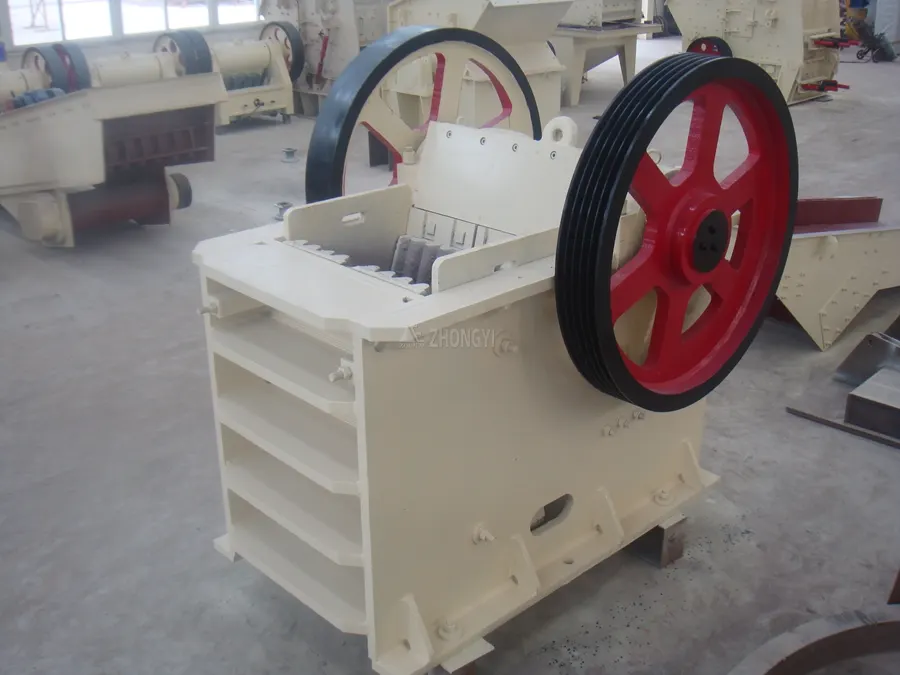
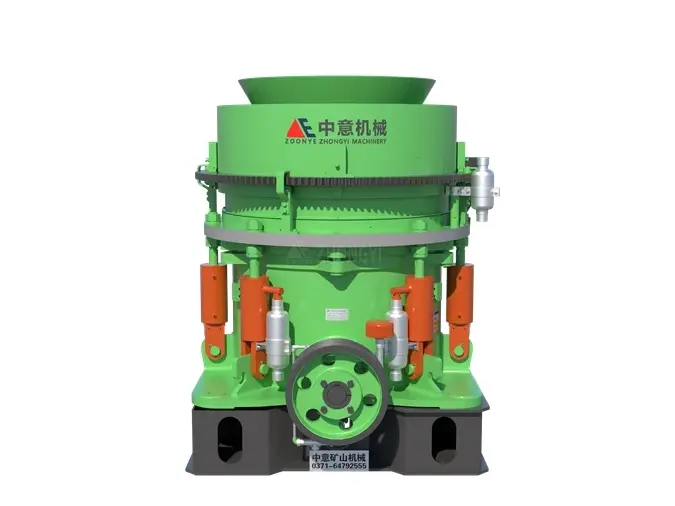
For Crushing Equipment Selection, these machines are often complementary rather than direct substitutes. A jaw crusher can handle primary reduction before an impact crusher processes less abrasive material for aggregate production. For hard, abrasive rock, a jaw-and-cone configuration is often worth evaluating because of wear-part consumption. If better particle shape or manufactured sand is required, a VSI can be added after cone crushing for further shaping.
The final configuration should match feed size, material abrasiveness, required capacity, product specifications, and operating costs. These are typical process options, not fixed rules for every plant. For a related comparison of equipment roles, see الكسارة الفكية مقابل الكسارة المخروطية مقابل الكسارة التصادمية: الفروق والاستخدامات.
What Type of Impact Crusher Is Best for Your Application?
Once impact crushing is selected, the next decision is the equipment configuration. A stationary European Impact Crusher suits fixed aggregate plants, while mobile units are designed for on-site processing. A Vertical Shaft Impact Crusher (VSI) serves a different purpose: fine crushing, manufactured sand production, and aggregate shaping. The choice depends on production location, feed conditions, and final product requirements.
European Impact Crusher for Stationary Aggregate Production
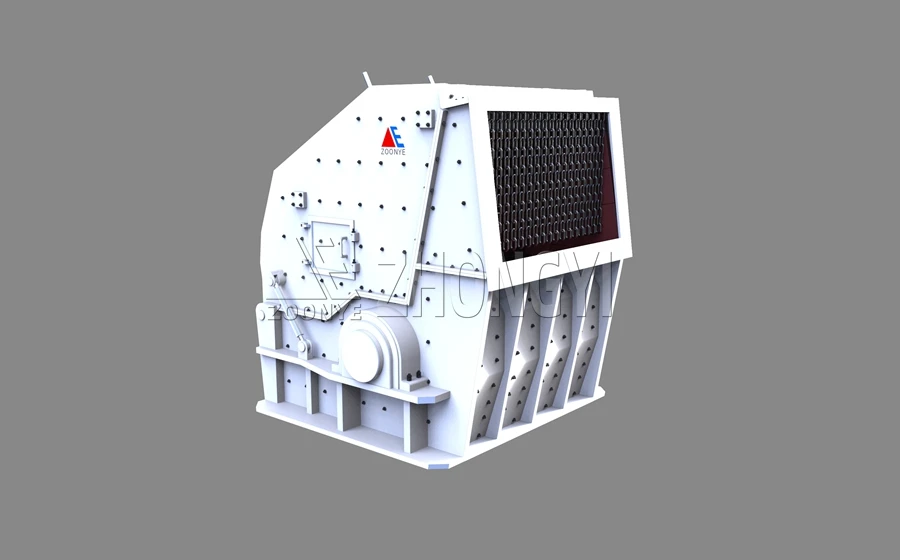
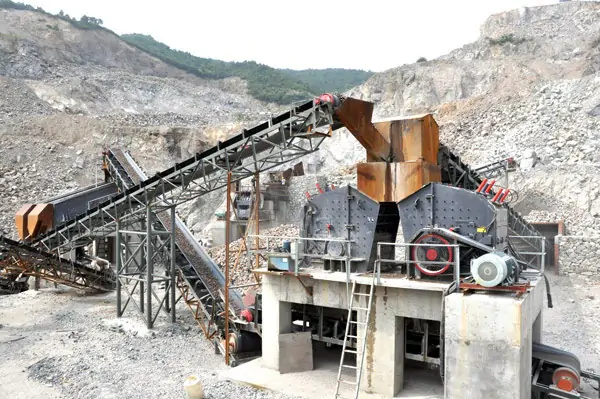
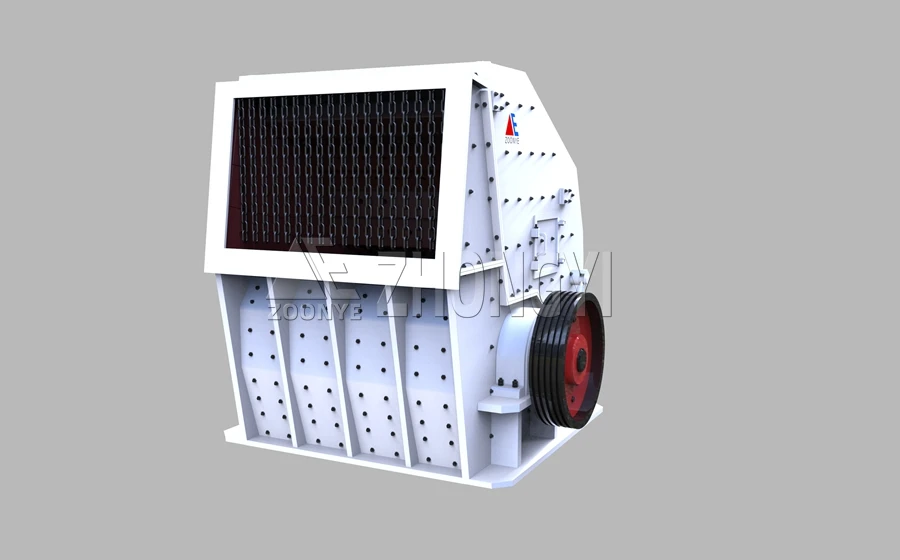
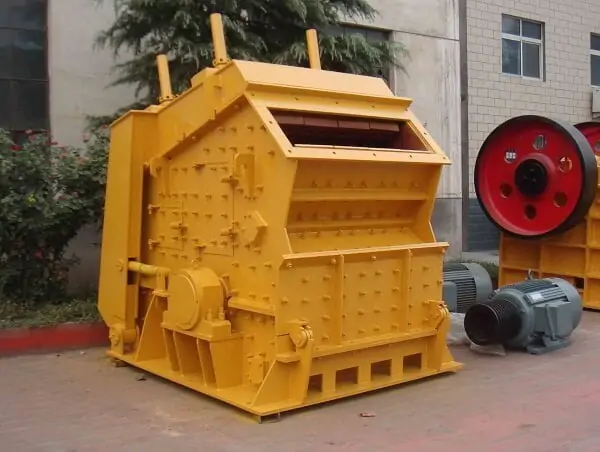
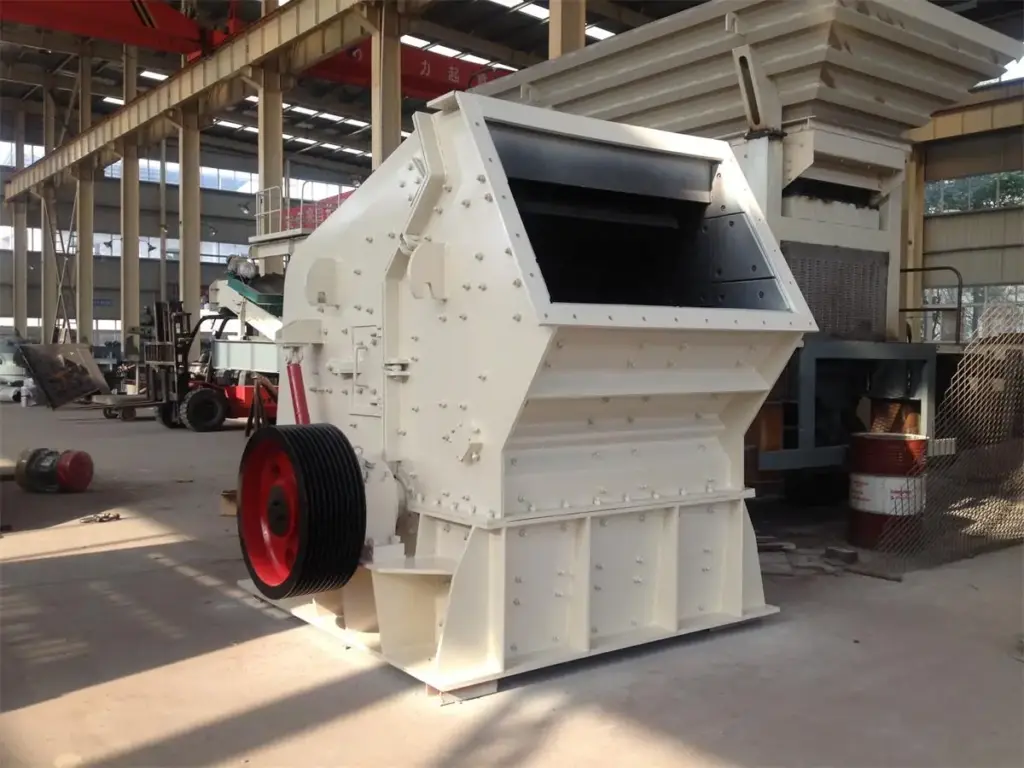
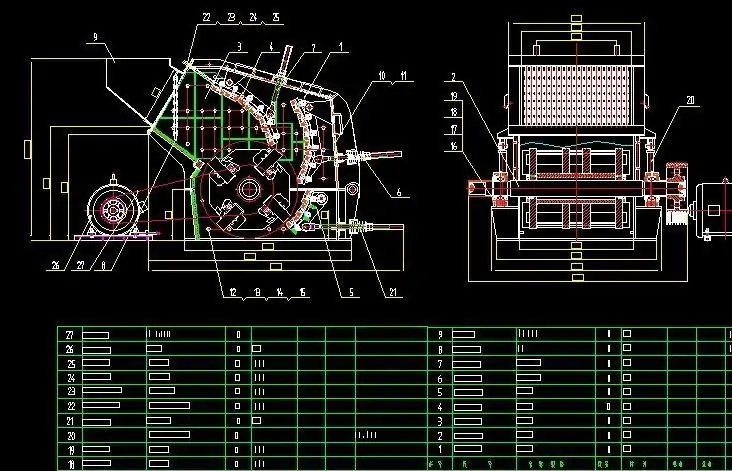
The European Impact Crusher is an HSI machine for secondary crushing and aggregate shaping in stationary plants. Its heavy-duty rotor, blow bars, and adjustable impact plates control material breakage and product gradation. For reference, the PFW-1214 handles feed up to 350 mm at 110–210 t/h, while the PFW-1315 handles up to 400 mm at 160–340 t/h. These figures are based on medium-hard limestone with closed-circuit screening; actual capacity varies with feed conditions. The الكسارة التصادمية الأوروبية product page lists the corresponding model specifications.
Tracked Impact Crusher for On-site Crushing
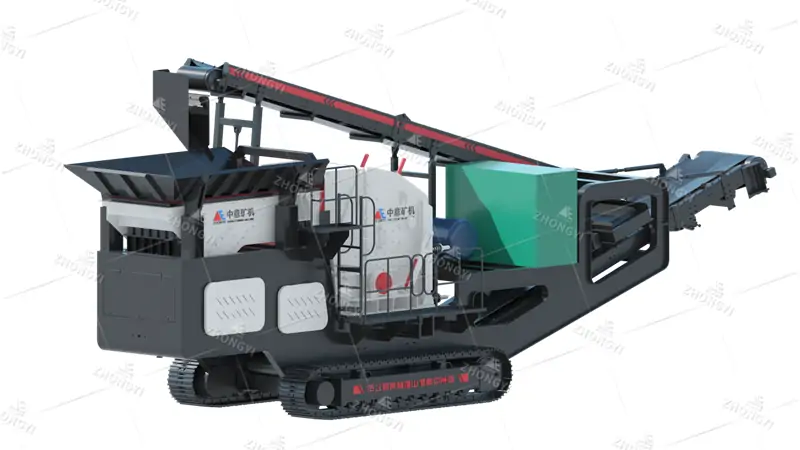
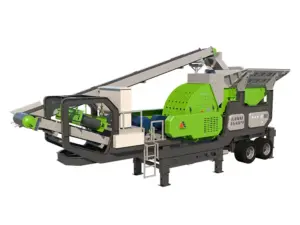
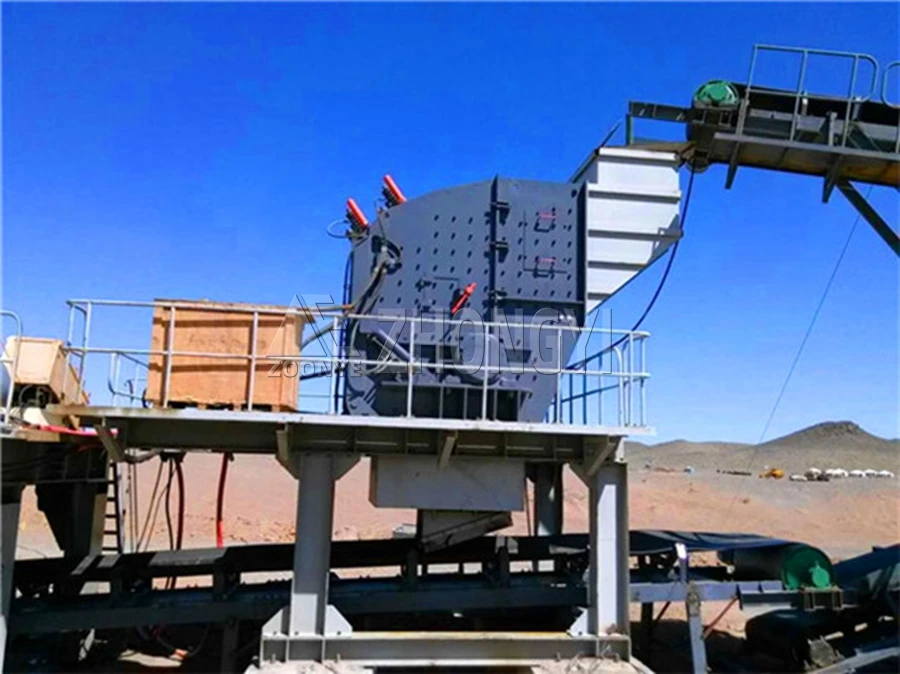
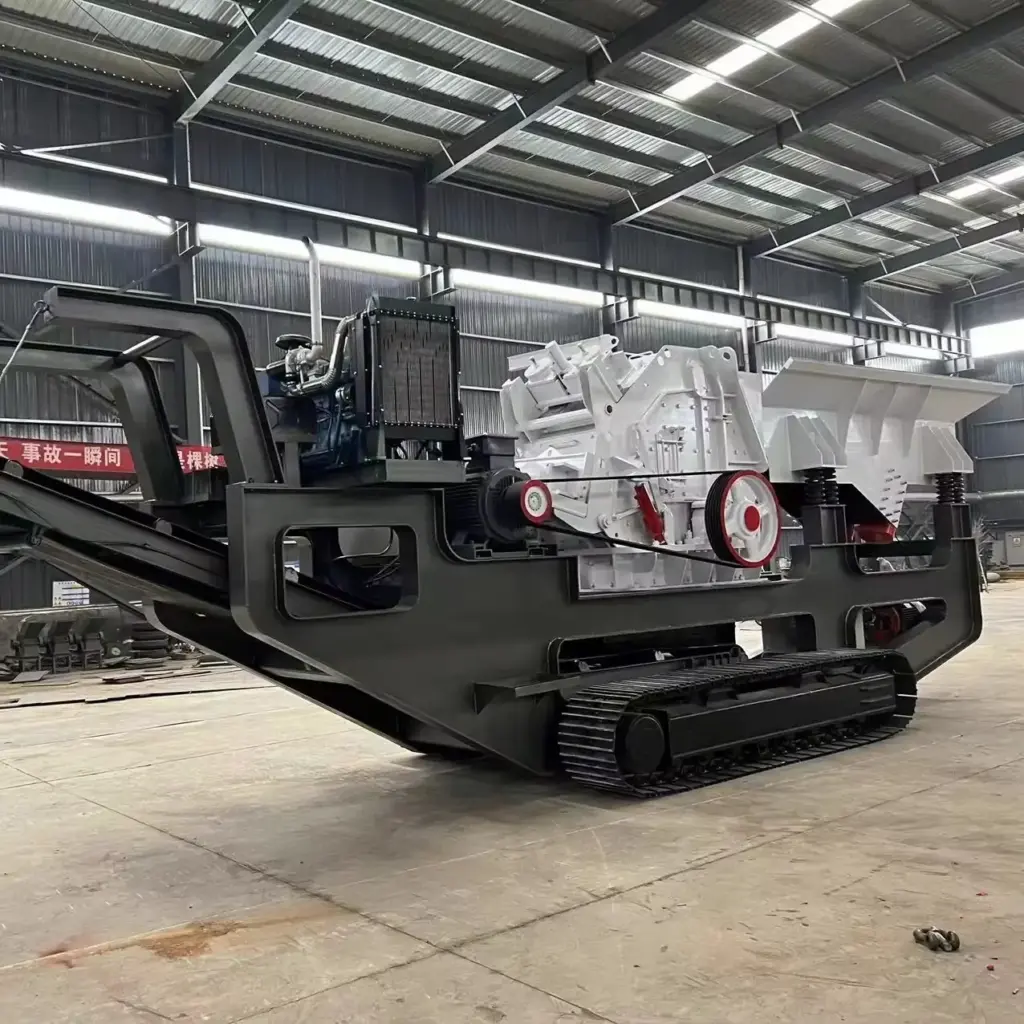
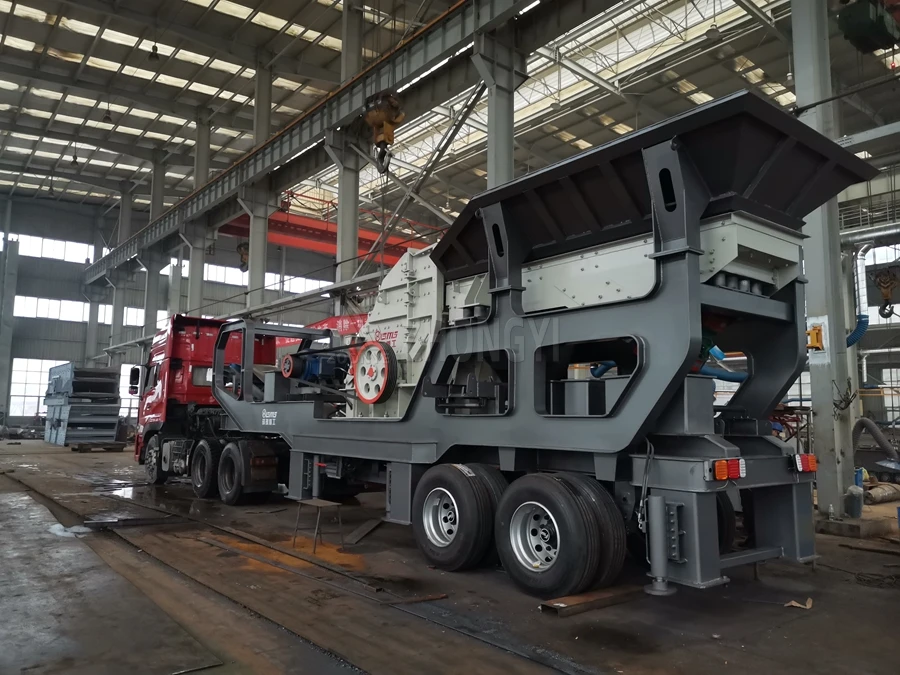
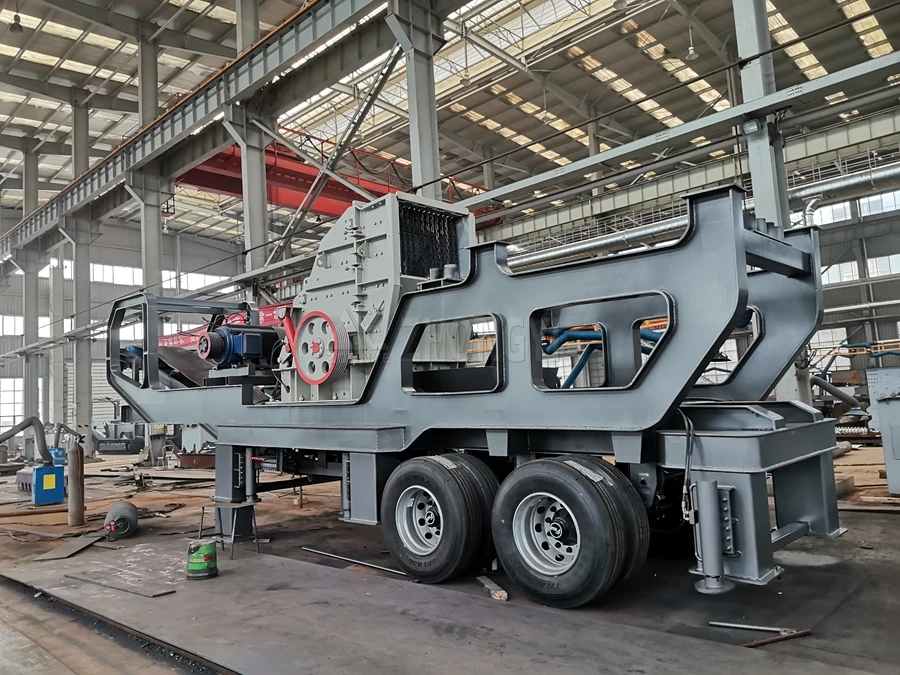
The Tracked Impact Crusher is suitable for quarrying, demolition, and recycling projects where material is processed directly at the working site. Its crawler chassis allows the unit to move between working areas without dismantling the crushing system. Before selection, check ground conditions, relocation frequency, feed size, and transport dimensions. The listed configuration has an 860 × 650 mm feed opening and a maximum feed size of 500 mm. Review the كسارة تصادمية مجنزرة for the listed configuration.
Mobile Impact Crusher for Flexible Production
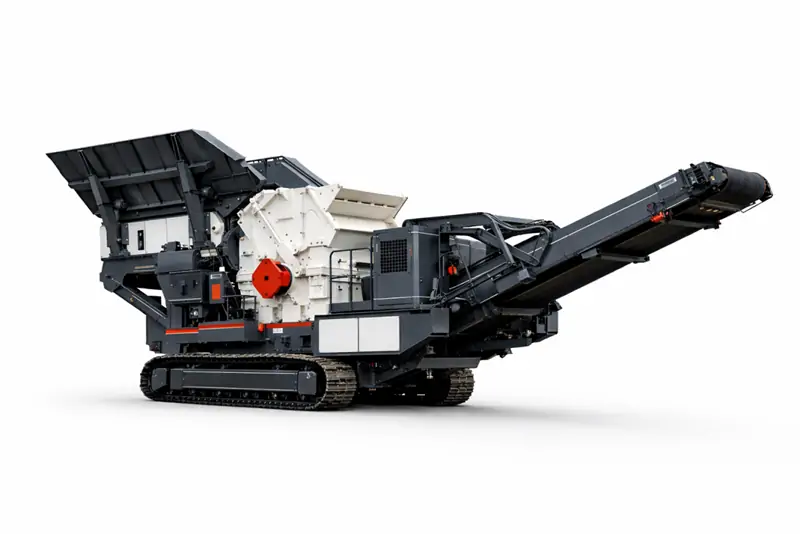
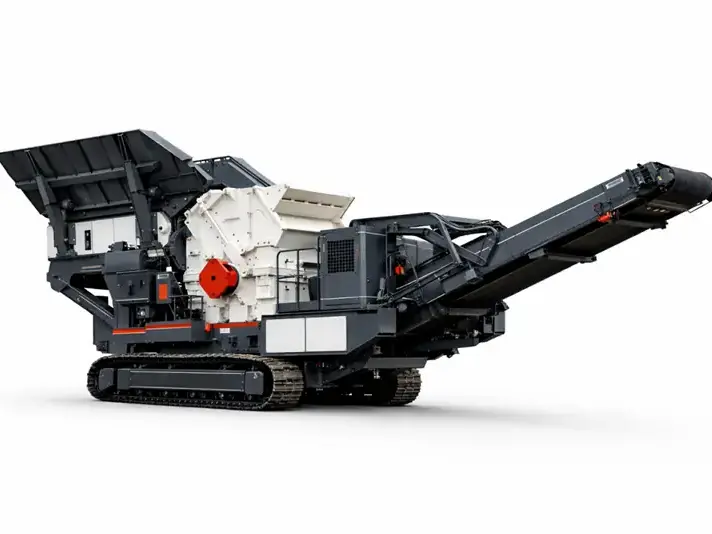
A Mobile Impact Crusher is a broader mobile production configuration, available in tracked, wheeled, and integrated crushing-screening layouts. Wheeled units suit sites with road access and relocation between locations, while integrated screening and return conveyors help produce specified aggregate sizes in a mobile closed circuit. Selection should focus on transport conditions, required output grading, and whether screening and material recirculation need to be integrated. The الكسارة التصادمية المتنقلة page provides a related mobile equipment reference.
Vertical Shaft Impact Crusher for Sand Making and Shaping
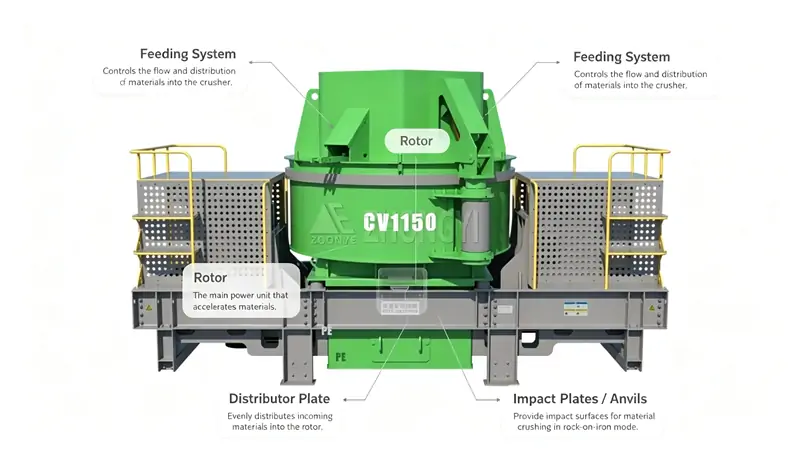
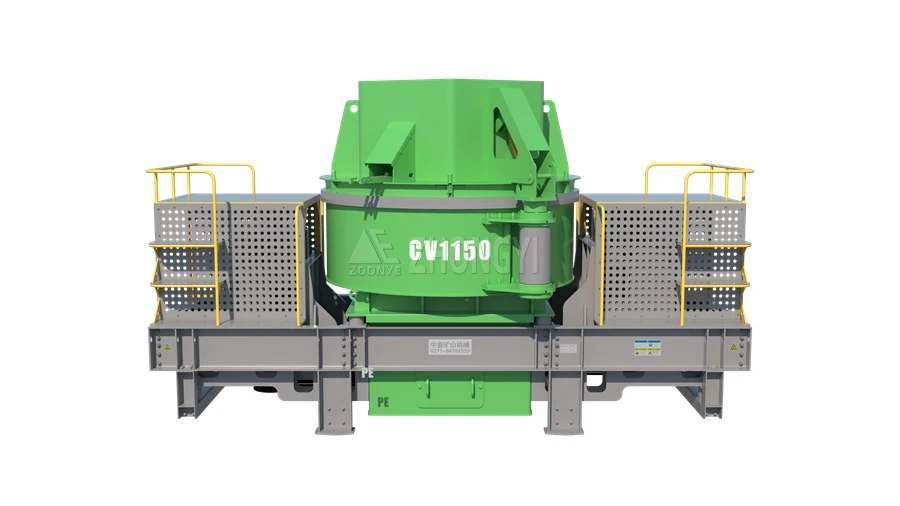
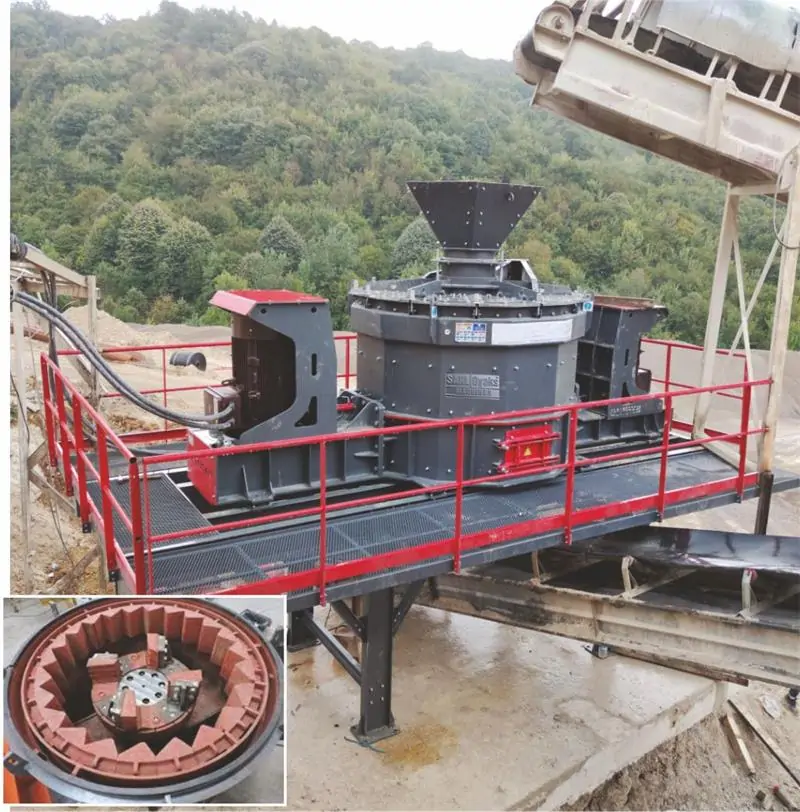
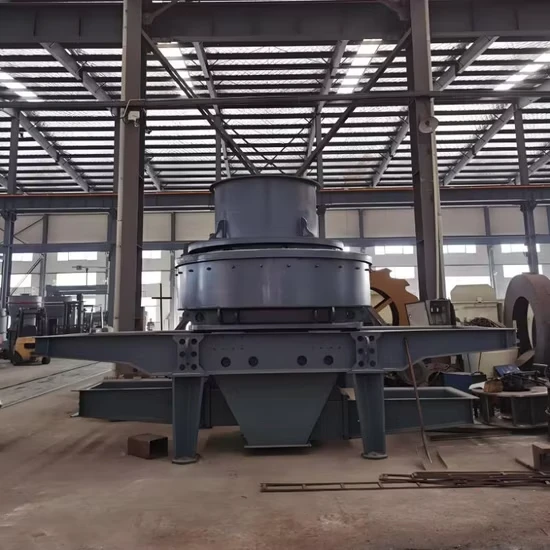
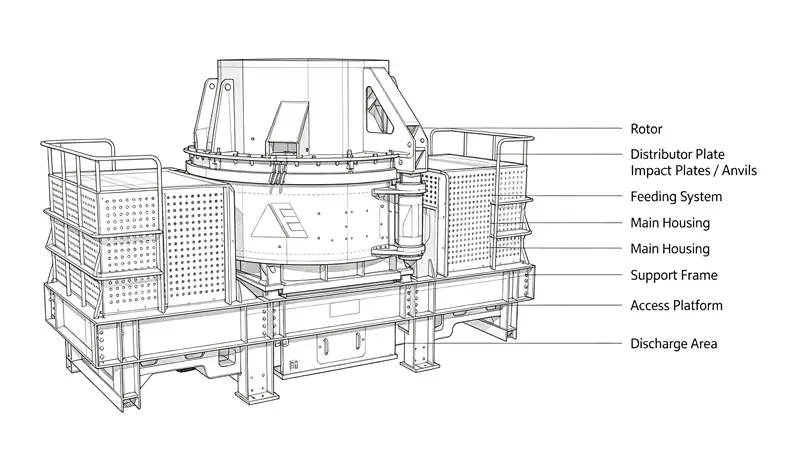
A Vertical Shaft Impact Crusher (VSI) is mainly used for manufactured sand production and aggregate shaping after primary or secondary crushing. Its high-speed vertical rotor accelerates material against other particles or metal anvils. Rock-on-rock reduces direct contact with metal wear parts, while rock-on-iron provides a different impact condition for size reduction. Zhongyi lists a maximum feed size of 60 mm and a reference capacity of 50–600 t/h. Check feed gradation, sand yield, and wear costs when choosing the crushing mode and model. Compare these requirements with the كسارة الصدم ذات المحور العمودي (كسارة VSI) product specifications.
Impact Crusher Application Matching
| المعدات | التطبيق الرئيسي | Key Selection Factor |
|---|---|---|
| الكسارة التصادمية الأوروبية | Stationary aggregate production | Feed size and required capacity |
| كسارة تصادمية مجنزرة | On-site crushing and recycling | Ground conditions and relocation |
| الكسارة التصادمية المتنقلة | Flexible mobile production | Chassis and screening configuration |
| كسارة VSI | Sand making and aggregate shaping | Feed gradation and crushing mode |
How Does the Crushing Circuit Affect Impact Crusher Selection?
An impact crusher must be selected according to its position in the complete Impact Crusher Plant Configuration. The upstream crusher determines the feed conditions, while screening and material return affect the impact crusher’s operating load. These factors should be evaluated together to avoid capacity mismatches and unnecessary recirculation.
Open-circuit vs Closed-circuit Crushing
In Open-circuit Crushing, material passes through the crusher once before moving to the next stage or product handling system. In Closed-circuit Crushing, a Vibrating Screen separates material that meets the target size from oversized particles, which return for further crushing.
Closed-circuit operation provides better control over product gradation, but the Recirculating Load increases the total material handled by the crusher. Screen capacity, return flow, and required product sizes must therefore be considered when designing the Crushing Circuit.
Match the Crusher with Feeding and Screening Equipment
The equipment combination should reflect material properties and production requirements. For limestone and dolomite, a jaw crusher followed by an impact crusher can handle primary and secondary reduction. Hard, abrasive materials such as granite and basalt generally require a jaw-and-cone configuration for the main crushing stages. River stone containing soil may need pre-screening, while construction waste lines may require magnetic separation to remove liberated ferrous metals.
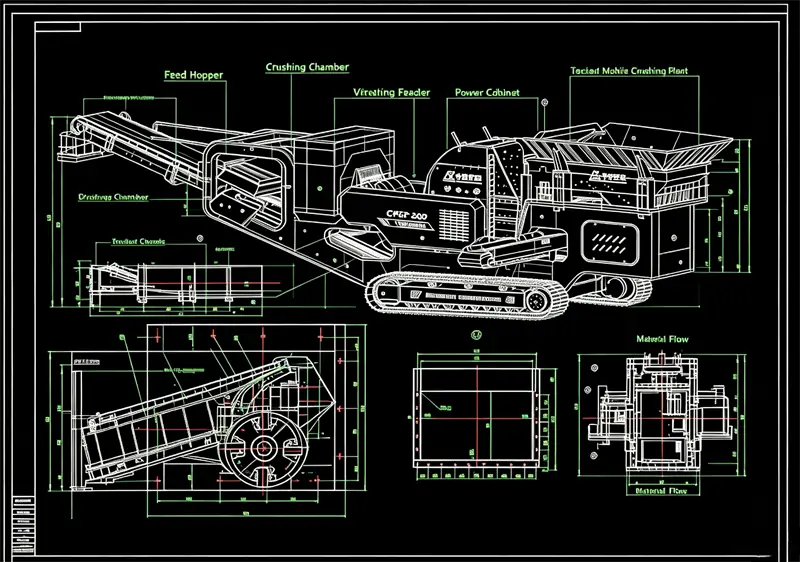
A typical line uses a vibrating feeder to control feed rate, crushers to reduce material size, and vibrating screens to classify finished products. Belt conveyors transfer material between stages, while a return conveyor carries oversize back to the crusher. The حلول محطات تكسير الحجارة provides examples of these equipment combinations.
How Do Operating Costs and Maintenance Affect Your Choice?
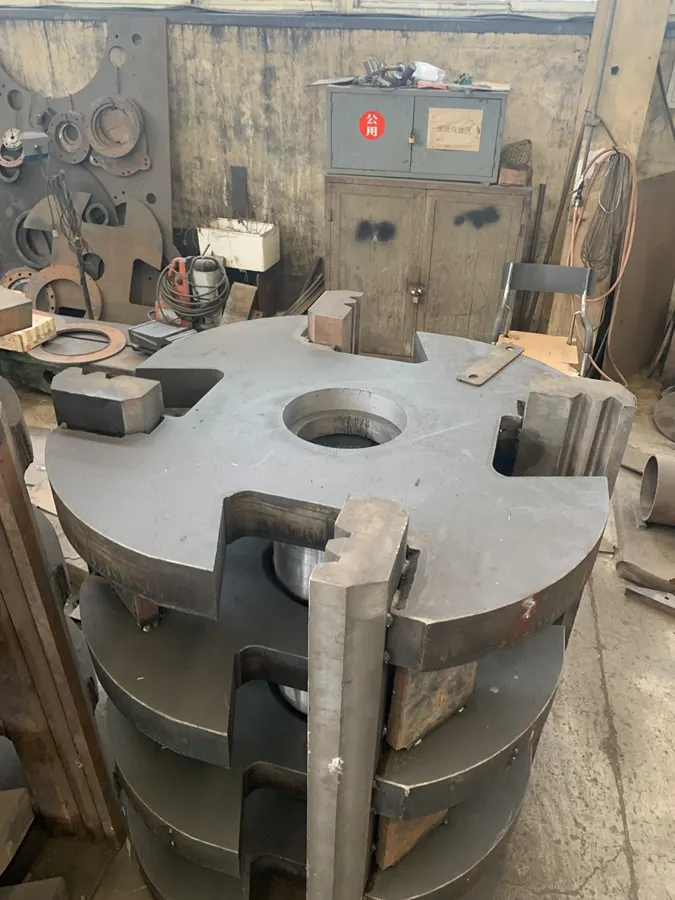
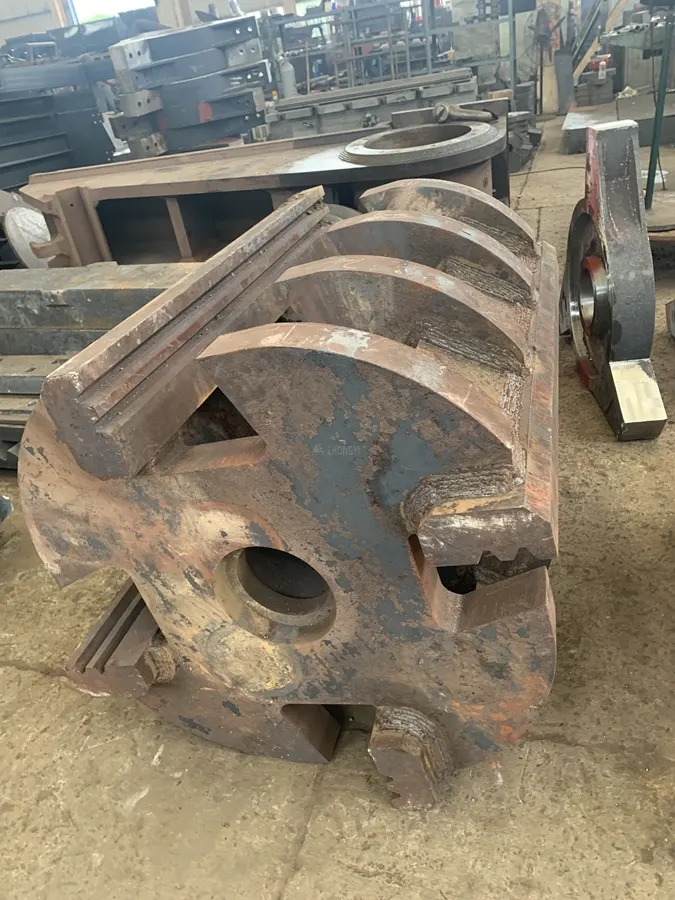
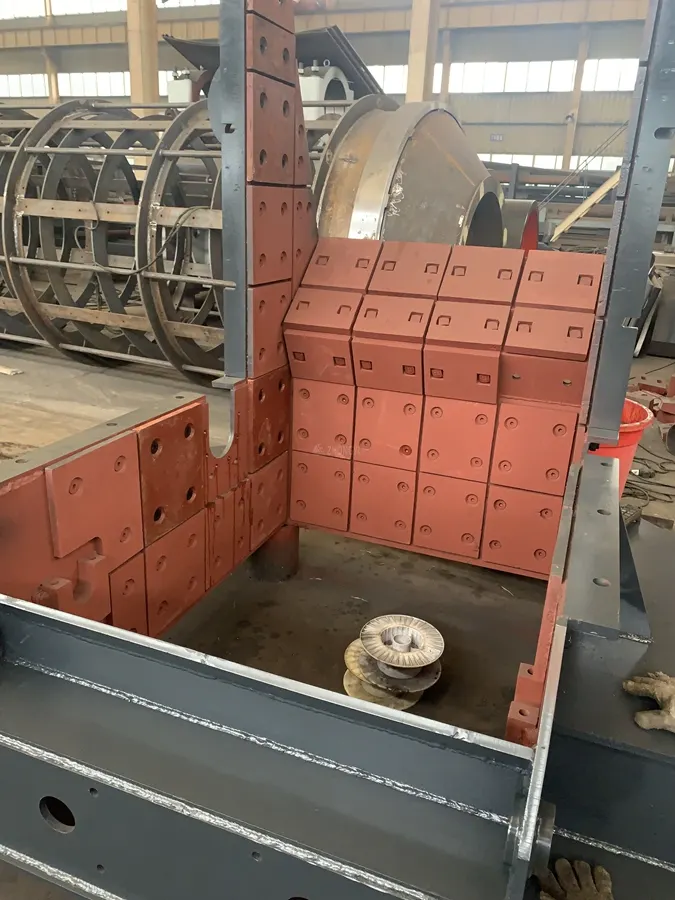
The initial purchase price does not reflect the full cost of owning an impact crusher. Impact Crusher Operating Costs mainly come from wear parts, energy consumption, maintenance, and production downtime. Common Impact Crusher Wear Parts include blow bars or hammer plates, impact plates, and chamber liners, depending on the crusher design. Their consumption depends on material abrasiveness, feed conditions, crushing intensity, and operating parameters. When comparing models, check wear-part materials, replacement procedures, availability, and actual consumption records from similar applications. These factors help estimate wear costs and the resulting Cost per Ton.
Energy Consumption and maintenance requirements also affect long-term costs. Installed motor power indicates rated drive capacity, not actual electricity use. Calculate energy consumption per tonne using measured power consumption and corresponding throughput. Routine Impact Crusher Maintenance should include bearing inspection, lubrication, rotor condition, and rotor balance. To compare equipment over a defined operating period, buyers can use a simplified Total Cost of Ownership (TCO) framework:
TCO = Cp + Ce + Cw + Cm + Cd
Where Cp = purchase and installation cost; Ce = energy cost; Cw = wear parts cost; Cm = maintenance cost; and Cd = downtime-related cost. Transportation, labor, financing, and residual value may also be included in a complete assessment. The lowest purchase price does not necessarily deliver the lowest operating cost.
What Should You Check Before Purchasing an Impact Crusher?
Before purchasing an impact crusher, check whether the equipment matches your feed material, production requirements, and site conditions. The following points help verify the machine and the manufacturer’s commitments before signing the contract.
- Technical Specifications:Maximum feed size, rated capacity, motor power, product size range, and equipment dimensions under specified operating conditions.
- Material Compatibility:Material hardness, abrasiveness, moisture content, feed gradation, and applicable material types.
- Main Components and Wear Parts:Rotor assembly, blow bars or hammer plates, impact plates, liners, bearing assemblies, and wear-part materials.
- Maintenance and Spare Parts:Component replacement procedures, maintenance access, spare parts availability, and delivery lead times.
- Performance Verification:Actual throughput, product gradation, particle shape, and power consumption under agreed test conditions.
- Manufacturer Capabilities:Manufacturing facilities, quality certifications, production and inspection processes, and experience with comparable projects.
- Technical Support and Contract Terms:Installation guidance, commissioning, warranty coverage, delivery scope, acceptance criteria, and after-sales responsibilities.
What Information Should You Prepare Before Selecting an Impact Crusher?
Before contacting an Impact Crusher Manufacturer, prepare information about your feed material, production targets, and installation conditions. These details help engineers evaluate suitable crusher models and recommend a crushing circuit that matches your project. Maximum feed size and required capacity alone are not enough; material properties, final product specifications, and existing equipment also affect Impact Crusher Selection.
| Information | Details to Provide |
|---|---|
| Raw Material | Limestone, granite, basalt, concrete waste, or other materials |
| حجم التغذية | Maximum feed size and feed size distribution |
| السعة المطلوبة | Target throughput (t/h) and planned operating hours |
| Final Product | Required output sizes, gradation, and particle shape |
| Material Properties | Hardness, abrasiveness, moisture content, and clay content |
| التطبيق | Quarrying, mining, aggregate production, recycling, or sand making |
| Installation Conditions | Stationary, tracked, or wheeled configuration; available space and site conditions |
| Existing Equipment | Available crushers, vibrating screens, feeders, and belt conveyors |
Conclusion
Choosing the right impact crusher requires a balanced assessment of Material Characteristics, feed size, reduction ratio, production requirements, and final product specifications. Different Impact Crusher Types and mobile configurations suit different operating conditions. Buyers should also consider wear parts, energy consumption, maintenance, and the compatibility of the complete crushing line rather than focusing on the initial equipment price alone.
With experience in mining and aggregate processing equipment, Zhongyi Mining can provide equipment recommendations and crushing plant configurations based on project requirements. Use our اتصل بنا page to discuss your material, production targets, and site conditions with our engineering team. We can help evaluate a suitable impact crushing solution for your project.
الأسئلة الشائعة
1. How to Choose an Impact Crusher?
Start with the material you need to process, its maximum feed size, and the required finished product. Then evaluate target throughput, material abrasiveness, and installation conditions. The crushing circuit also matters: a crusher operating in a closed circuit must handle returned oversize material. This is the basic approach to How to Choose an Impact Crusher for a specific production requirement.
2. What Materials Are Suitable for Impact Crushers?
Common Impact Crusher Materials include limestone, dolomite, shale, coal, and concrete waste. Limestone is generally suitable for impact crushing, while dolomite requires attention to abrasiveness. Concrete recycling requires measures to handle reinforcing steel and other metal contaminants. Granite and basalt can also be processed, but their abrasiveness may make wear-part consumption a significant operating cost.
3. Does Maximum Feed Size Determine Which Impact Crusher I Need?
Maximum Impact Crusher Feed Size is an important selection limit, but it is not the only criterion. Feed gradation, particle shape, crushing chamber design, and required reduction ratio also affect material entry and breakage. Check the manufacturer's specified feed limit against your actual feed conditions. This is an important step in how to choose an impact crusher for continuous operation.
4. How Much Capacity Do I Need in an Impact Crusher?
Determine the required Impact Crusher Capacity from the annual production target, scheduled operating hours, and expected equipment availability. If the target refers to finished product, account for process yield when calculating the required feed rate. In a closed-circuit plant, returned oversize adds to the crusher's workload, so capacity selection must reflect total material flow rather than fresh feed alone.
5. What Is the Difference Between HSI and VSI Crushers?
The main difference in HSI vs VSI Crusher selection is the rotor orientation and impact mechanism. An HSI uses a horizontal rotor with blow bars to strike material against impact plates, commonly for primary or secondary size reduction. A VSI uses a vertical rotor to accelerate material against other particles or anvils. It is commonly used for tertiary crushing, manufactured sand production, and aggregate shaping.
6. Is an Impact Crusher Suitable for Granite and Basalt?
An Impact Crusher for Granite applications can process granite and basalt, but their high hardness and abrasiveness may accelerate blow bar and impact plate wear. This can increase replacement frequency and cost per tonne. For large-scale hard-rock production, jaw and cone crushers are often evaluated for the main reduction stages. Compare expected wear costs and product requirements before selecting an impact crusher.
7. When Should I Choose a Mobile Impact Crusher Instead of a Stationary One?
A Mobile Impact Crusher is worth considering when material must be processed at different locations, near its source, or during a project with a limited operating period. A stationary unit is generally more suitable for long-term production at a fixed site with established infrastructure. Compare relocation frequency, transport access, site preparation, and screening requirements before deciding.
8. What Information Should I Provide to an Impact Crusher Manufacturer?
Provide the raw material type, maximum feed size, feed gradation, target throughput, and required finished product sizes. Also include material hardness, abrasiveness, moisture content, and installation conditions. If the crusher will be integrated into an existing plant, share the specifications of available feeders, crushers, screens, and conveyors. These details support accurate Impact Crusher Selection and help engineers recommend a suitable configuration.