











Einleitung
For quarry and mining projects, choosing the right crushing plant capacity starts with the required finished aggregate output. Buyers need to know how many tons the plant must produce per hour, based on the production target, scheduled operating hours, material properties, and required product sizes. The goal is to meet demand without paying for capacity the project does not need.
The challenge is that a crusher’s rated capacity does not represent the finished output of the entire plant. Rock hardness, feed size, screening efficiency, recirculating load, and equipment downtime all affect actual production. The feeder, crushers, screens, and conveyors must operate at matched capacities to avoid bottlenecks. Understanding these factors helps you estimate the required crushing plant capacity and select equipment based on real operating conditions, not rated figures alone.
What Does Crushing Plant Capacity Mean?
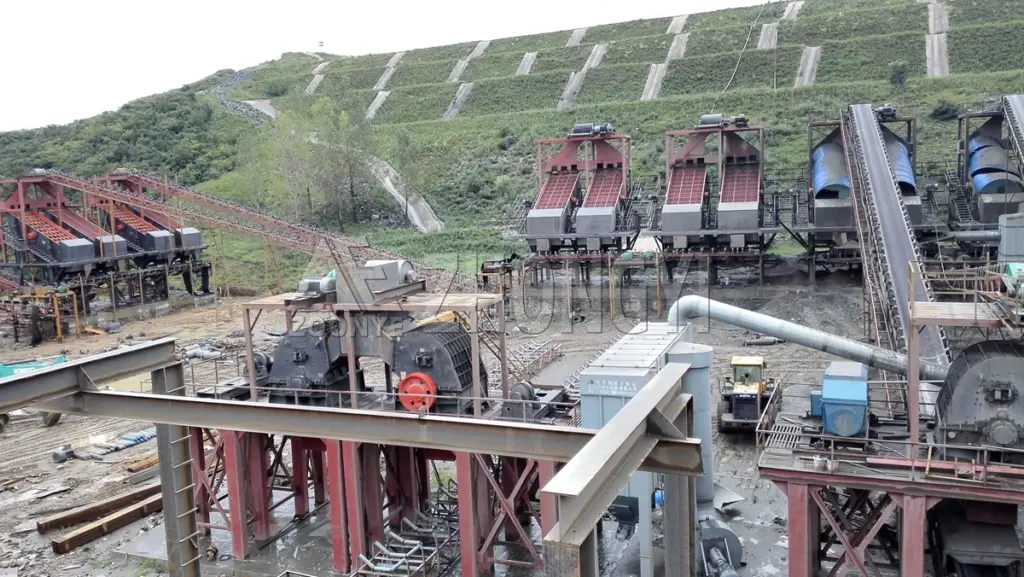
Crushing plant capacity refers to the amount of material a crushing and screening plant can process or produce over a given period. For quarry and mining projects, it is important to distinguish between a crusher’s rated capacity, actual throughput, and finished product output. Each measures a different stage of production and serves a different purpose in plant sizing.
Rated Capacity vs. Actual Throughput vs. Finished Product Output
- Rated capacity: The manufacturer’s stated processing rate under specified operating conditions.
- Actual throughput: The amount of material a crusher or processing line handles per unit of operating time under actual site conditions.
- Finished product output: The quantity of aggregate that meets the required particle-size distribution and other product specifications.
Actual crusher throughput depends on rock properties, feed size, discharge settings, and feed consistency. At plant level, screening efficiency, recirculating load, and downstream equipment capacity also affect production. A bottleneck at any stage can limit the output of the entire line, so rated capacity alone cannot predict actual plant production.
Why Crushing Plant Capacity Is Measured in TPH?
Capacity is commonly expressed in tons per hour (TPH), allowing buyers to estimate production based on planned operating hours and days. However, feed processing capacity and finished product output are not interchangeable. Finished output depends on the proportion of feed that meets product specifications, while closed-circuit systems must also handle recirculating material.
Always confirm whether specifications use metric tonnes (1,000 kg) or US short tons (2,000 lb). In this guide, capacity refers to the feed processing rate unless finished product output is explicitly stated.
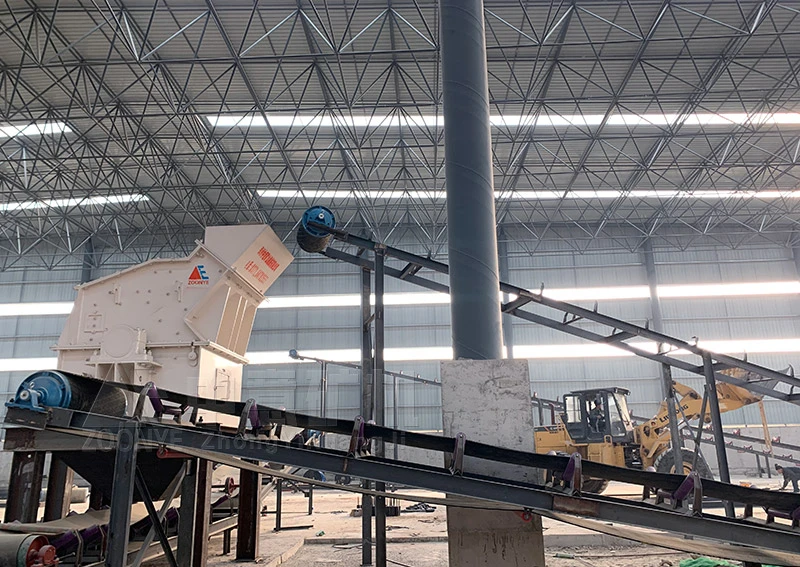
How to Calculate the Required Crushing Plant Capacity?
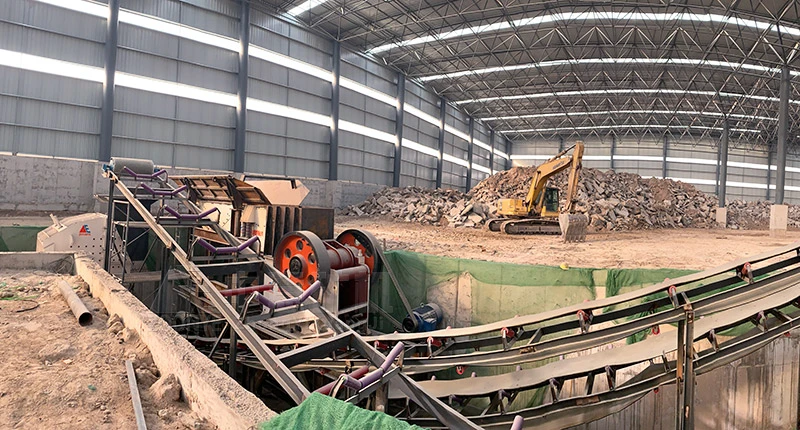
For a quarry or mining project, capacity planning starts with the amount of finished aggregate required and the time available to produce it. A crushing plant capacity calculation helps convert the production target into an hourly feed rate, accounting for downtime and the proportion of feed that meets the required product specifications.
Calculate Capacity from Your Daily or Annual Production Target
The basic formula for average hourly production is:
Required hourly production (TPH) = Target production volume ÷ (Operating days × Scheduled operating hours per day)
This gives the average hourly production requirement before accounting for downtime or differences between feed and finished product output.
If your target is qualified finished aggregate, use the following formula to estimate the required feed rate during actual operating time:
Required feed rate (TPH) = Annual target finished product (tonnes) ÷ (Operating days × Scheduled operating hours per day × Equipment availability × Finished product yield)
Here, equipment availability is the proportion of scheduled time when the plant is available to operate. Finished product yield is the proportion of total feed that becomes aggregate meeting the required specifications. If your target is raw material throughput rather than finished product output, do not divide by the finished product yield.
Crushing Plant Capacity Calculation Example
Suppose a quarry needs to produce 300,000 tonnes of qualified aggregate annually. It operates 300 days per year, with 10 scheduled hours per day. Assume equipment availability of 80% and a finished product yield of 90%. These are illustrative assumptions, not fixed industry standards.
| Calculation item | Result |
| Scheduled operating time | 3,000 h/year |
| Effective operating time | 2,400 h/year |
| Required finished product rate during operating time | 125 TPH |
| Required feed rate during operating time | Approximately 139 TPH |
The calculation is:
Required feed rate = 300,000 ÷ (300 × 10 × 0.80 × 0.90) ≈ 139 TPH
Under these assumptions, the plant needs to process approximately 139 tonnes of feed per effective operating hour to meet its annual target. This is a calculated requirement, not a guarantee that a crusher rated at 139 TPH will deliver the required output.
Rock properties, feed size, discharge setting, screening performance, and recirculating load must also be checked against the proposed equipment configuration.
How Much Capacity Reserve Should You Allow?
The required capacity margin depends on feed consistency, stockpile storage, maintenance requirements, and expected changes in demand. A plant receiving irregular deliveries may need more operating flexibility than one with steady feed and sufficient stockpiles.
Before selecting a larger crusher, check whether the rest of the line can handle the additional material. A vibrating screen, feeder, or conveyor with insufficient capacity can limit finished output regardless of the crusher’s rating. Also, avoid counting downtime twice if it is already included in the equipment availability factor.
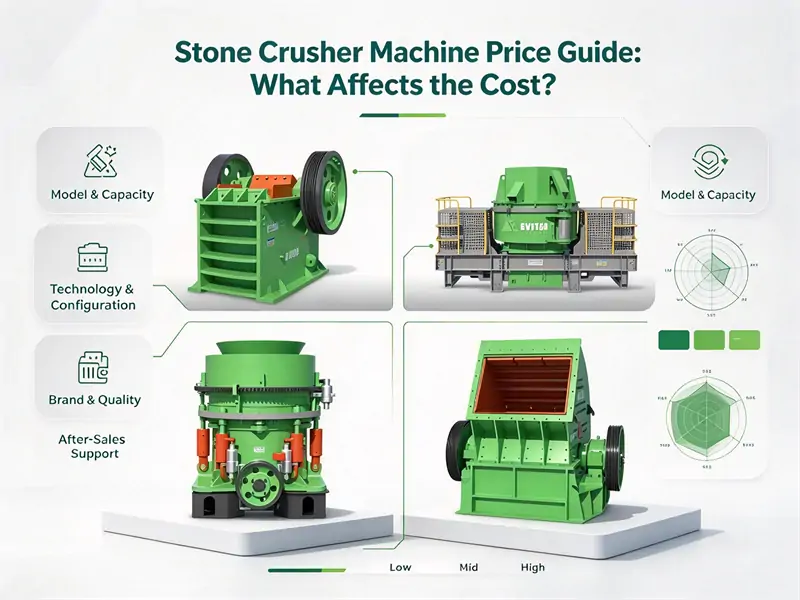
The selected plant should meet the calculated feed requirement under the project’s actual material and operating conditions, with sufficient capacity across the entire crushing and screening line. Once the required capacity is established, review [Stone Crusher Machine Price Guide: What Affects the Cost?] to understand how equipment configuration, processing requirements, and other project factors influence the overall investment.
What Factors Affect Crushing Plant Capacity?
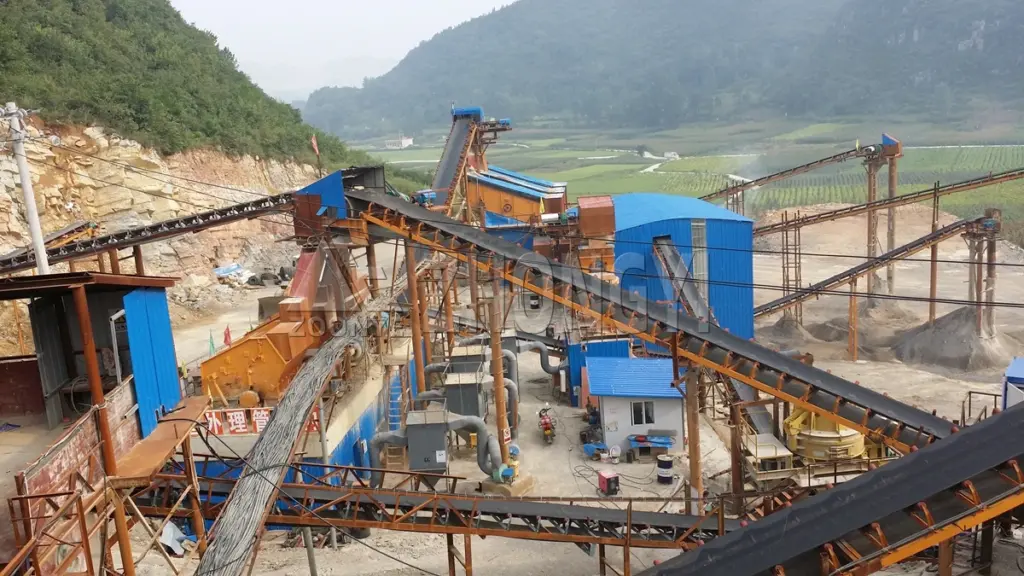
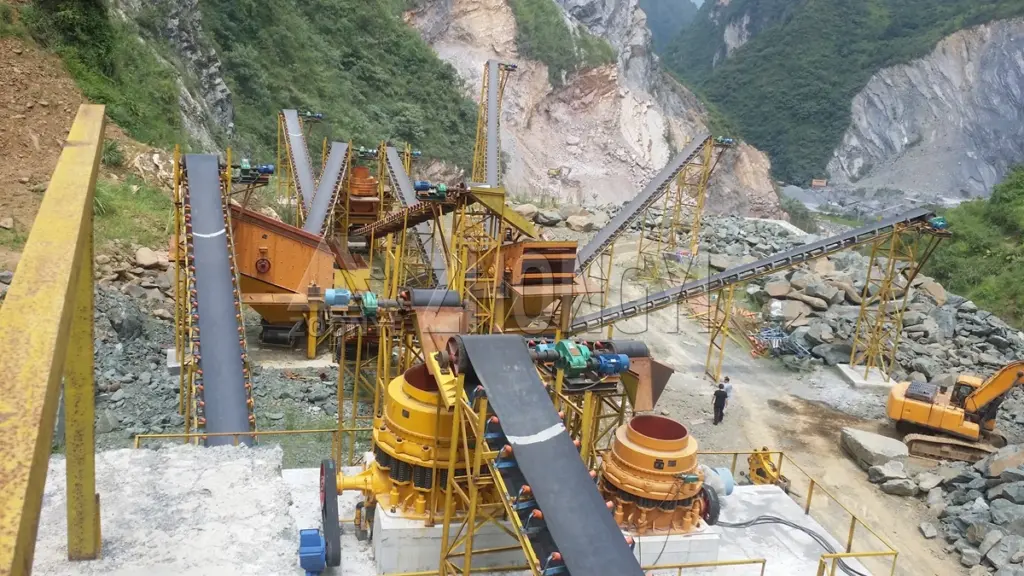
The crushing plant production capacity depends on material properties, target product sizes, screening performance, and operating conditions. Two plants with similar rated capacities may deliver different results because their feed conditions and process configurations differ. These factors must be considered when estimating actual crusher throughput.
Material Hardness, Abrasiveness, and Feed Size
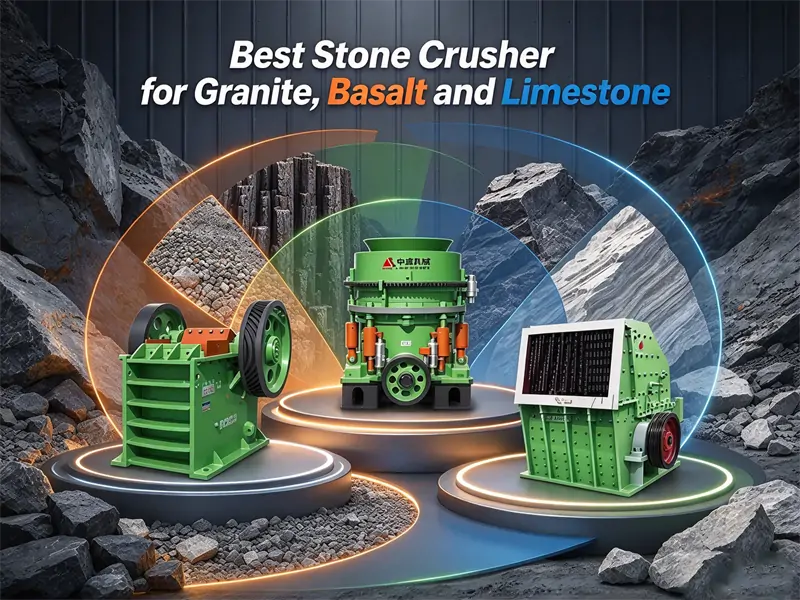
Granite and basalt are generally harder and more abrasive than limestone, while river pebbles can also be challenging to crush. Rock properties, feed size, crusher design, and discharge setting affect throughput and wear. For help matching equipment to different rock types, see [Best Stone Crusher Machine for Granite, Basalt and Limestone].
Required Product Size and Gradation
Finer aggregate may require additional crushing stages or tighter discharge settings, affecting throughput and screening load. For example, a plant producing 0–5 mm, 5–10 mm, and 10–20 mm aggregate must meet the demand for each fraction, not just the total output. Confirm the required size ranges and output proportions before selecting the crusher and screens.
Screening Efficiency and Recirculating Load
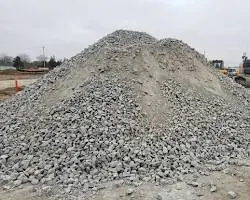
In a closed-circuit plant, oversize material returns from the screen to the crusher, increasing the processing load. For example, 100 TPH of new feed plus 30 TPH of return material gives 130 TPH of total crusher throughput—not 130 TPH of new feed or finished product. Screen capacity and efficiency must also match the required production rate.
Feed Consistency, Moisture, and Operating Conditions
Uneven feeding, sticky material, blocked screens, worn parts, and downtime can reduce plant output. Wet, clay-rich feed may restrict material flow or block screen apertures. If production falls below target, check the feeder, screen, conveyor, and wear parts before assuming the crusher is undersized.
How to Size the Entire Crushing Plant, Not Just the Crusher?
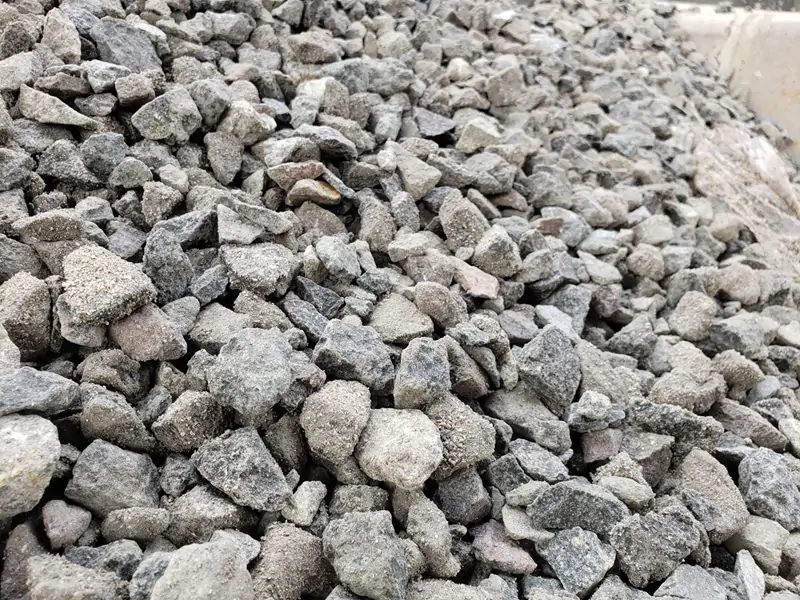
Crushing plant capacity depends on how well the entire production line handles the required material flow, not just the rated capacity of the main crusher. For accurate crushing plant sizing, start with the target finished-product output and work backward through feeding, crushing, screening, and conveying to identify the capacity required at each stage.
Match Capacity Across Primary Crushing, Secondary Crushing, and Screening
The primary crusher must accept the maximum feed size and process incoming material at the required rate. Secondary and tertiary crushers must handle the discharge from the previous stage while achieving the required product size.
Screening and conveying capacity must also match the crushing stages. If a screen cannot separate material fast enough or a conveyor cannot remove it, material may accumulate and restrict upstream production.
In a series-connected line, overall output is limited by the stage that cannot sustain the required flow under actual operating conditions. Parallel circuits require checking each branch’s capacity and feed distribution. Intermediate stockpiles can buffer short interruptions but cannot resolve a persistent capacity shortage. These checks help establish the required screening and crushing plant capacity.
How Recirculating Loads Affect Total Crusher Throughput?
In a closed-circuit plant, oversize material returns from the screen to the crusher for further reduction. This recirculating load increases the crusher’s workload without increasing the amount of new feed entering the plant.
For example, a crusher receiving 120 tonnes per hour of new feed and 60 tonnes per hour of return material handles 180 TPH in total. The new feed rate remains 120 TPH. This illustrative calculation shows why crusher throughput must be distinguished from new feed and finished-product output. Actual return loads depend on the circuit layout, screen performance, discharge setting, and material properties.
When checking equipment capacity, account for both new feed and return material to avoid undersizing the crusher or screen.
Fixed, Mobile, or Modular Crushing Plant?
The choice of plant configuration depends on the site layout, operating schedule, relocation needs, and future expansion plans.
| Plant type | Suitable applications | Capacity planning priorities |
| Fixed crushing plant | Long-term quarrying and mining with stable production demand | Continuous production, equipment matching, maintenance access, and expansion |
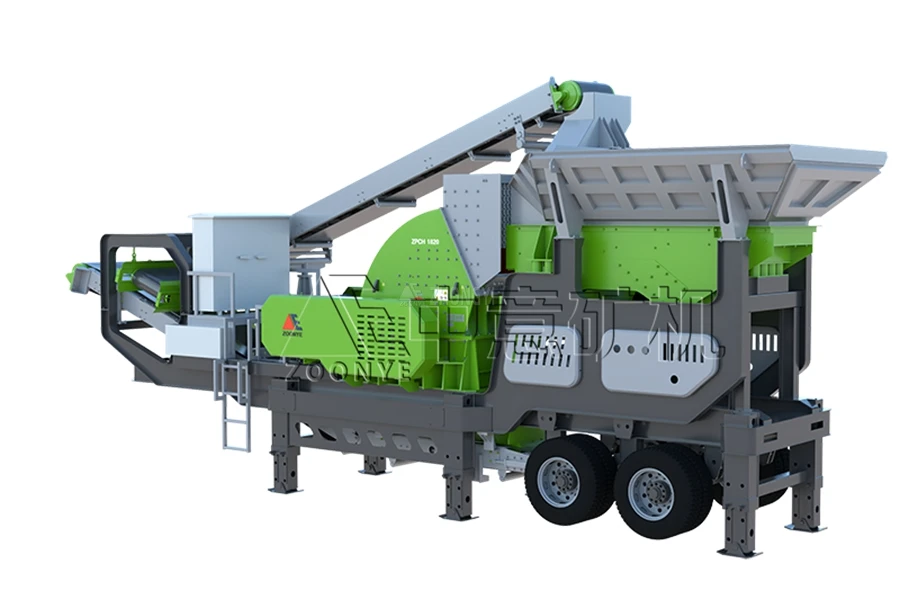
| Mobile crushing plant | Construction sites or projects requiring relocation | Feed availability, setup time, relocation frequency, and operating hours |
| Modular crushing plant | Projects requiring staged installation or planned expansion | Capacity of each module, connection points, site layout, and expansion requirements |
When determining crushing plant design capacity, account for actual operating hours, maintenance access, stockpile capacity, and future expansion. Compare plant configurations against the same production target and site conditions.
How to Choose a Crushing Plant Capacity for Your Project?
Choosing the required crushing plant capacity starts with the finished-product target, but the material and process configuration determine whether the plant can achieve it. A suitable capacity must account for feed size, rock properties, required product gradation, screening performance, and operating hours. Selecting equipment by rated tonnage alone can lead to bottlenecks elsewhere in the line.For equipment selection guidance, see [How to Choose the Right Stone Crusher Machine for Your Quarry].
Match Crusher Type to Material and Production Requirements
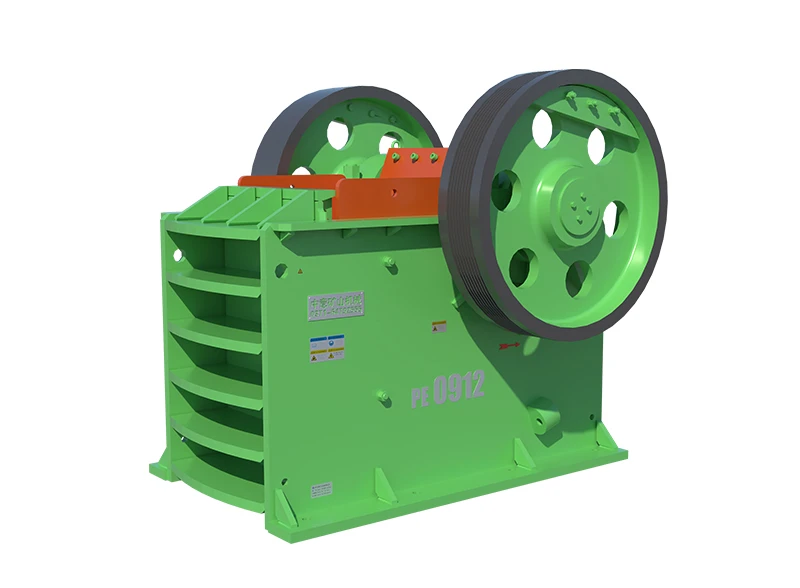
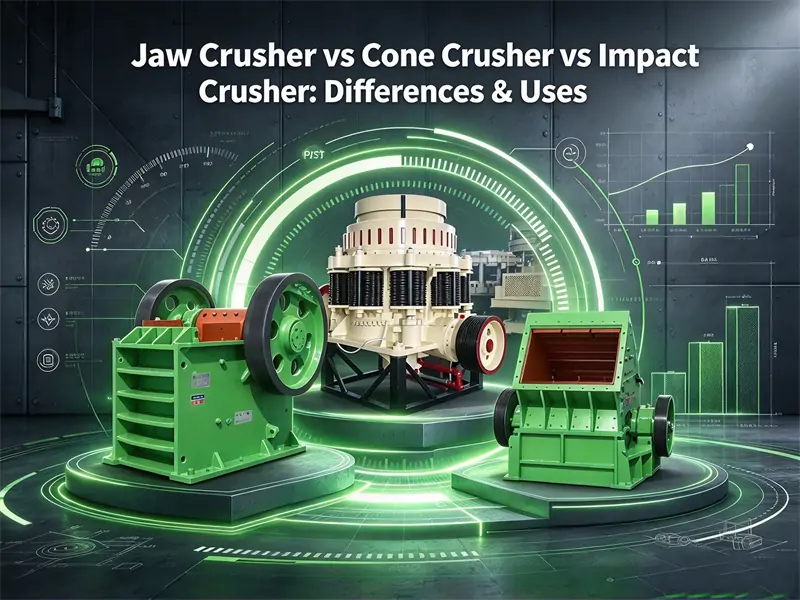
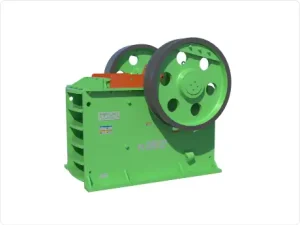
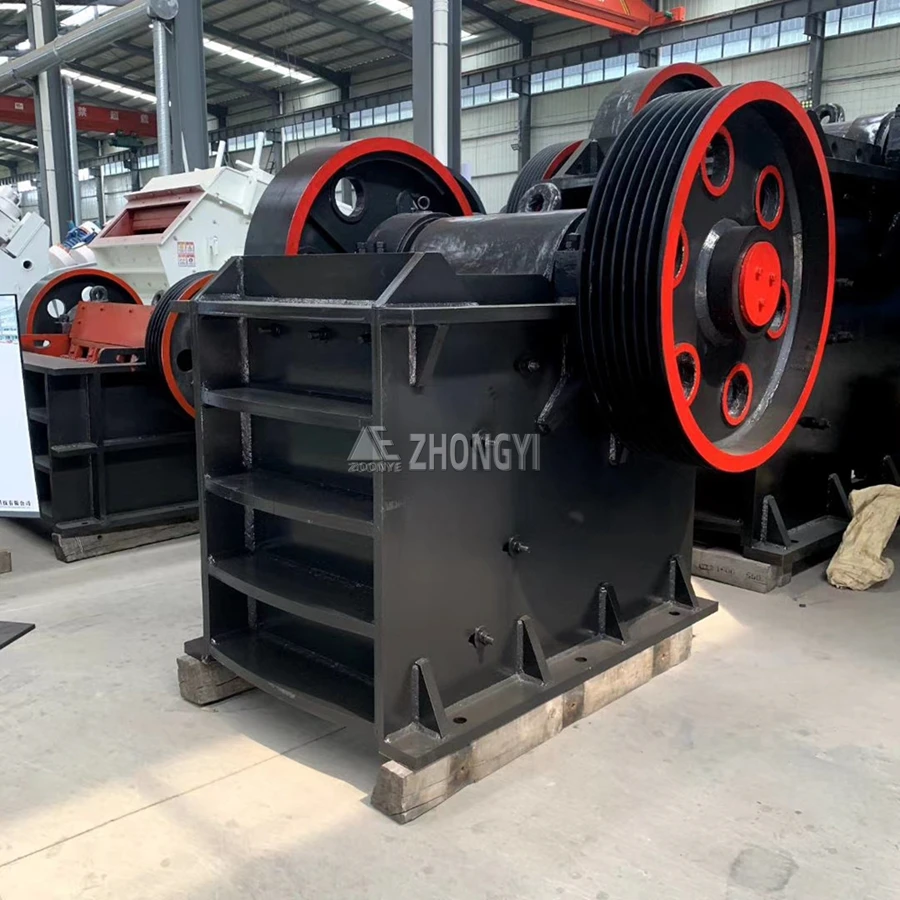
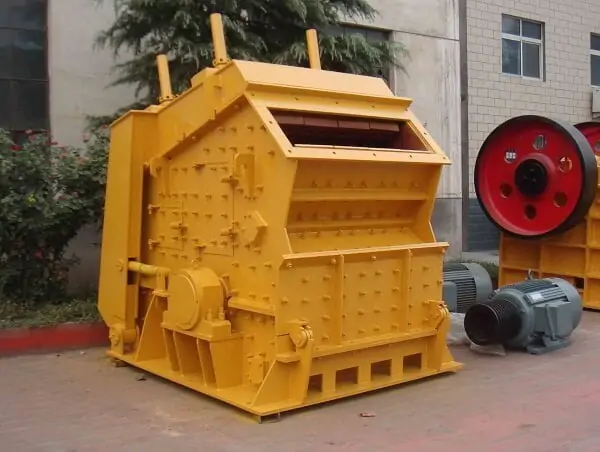
A jaw crusher is commonly used for primary crushing of large feed material. Cone crushers are widely used for secondary or tertiary crushing of medium-hard to hard rock, while impact crushers may be suitable for applications where material properties and the required particle shape favor impact crushing. The final choice depends on feed conditions, reduction requirements, and the target output.
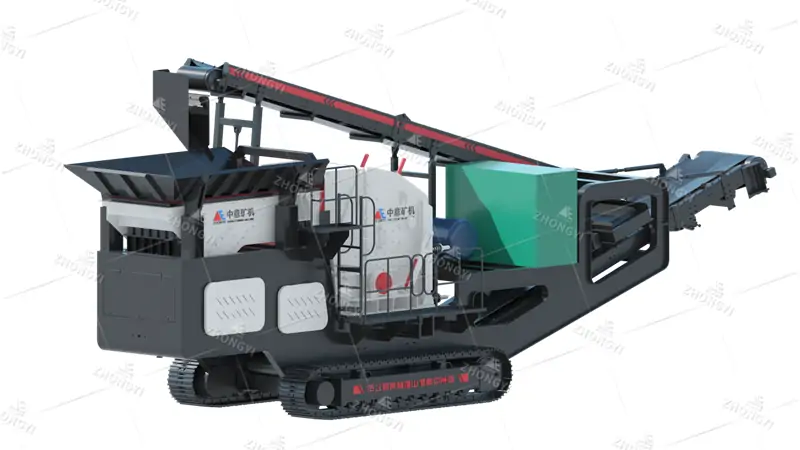
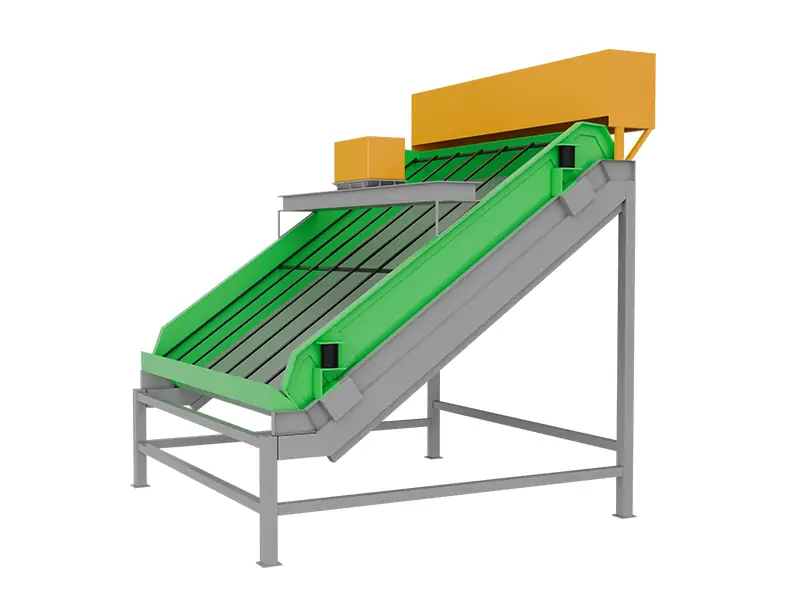
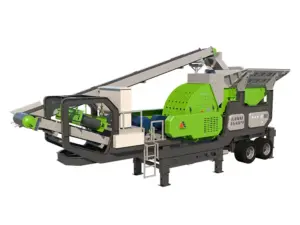
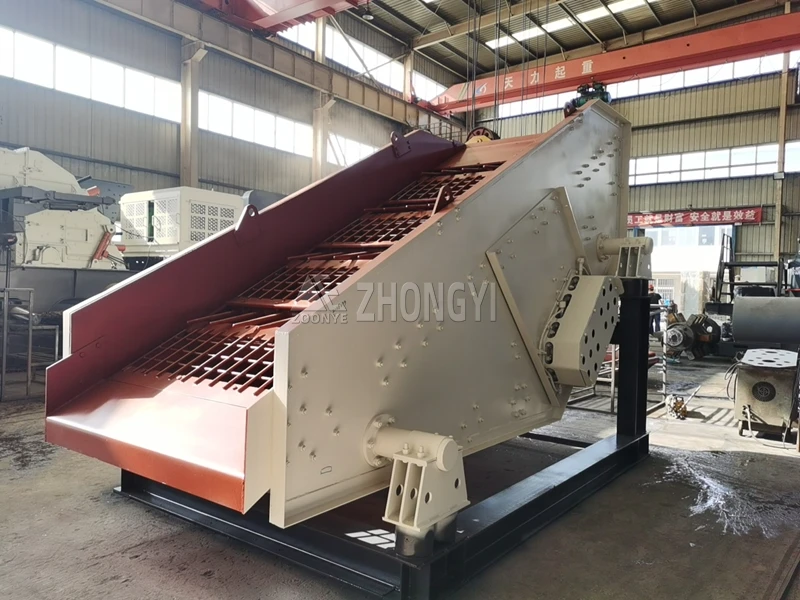
The feeder, vibrating screen, und conveyors must also handle the required material flow. A crusher with sufficient rated capacity cannot compensate for inconsistent feeding or undersized screening equipment. Explore Steinbrechanlagen for crushing equipment, Mobile Brechstation for projects requiring mobility, and Bergbau-Zuführungs- und Siebausrüstung for feeding and screening equipment.
What Information Do You Need Before Requesting a Crushing Plant Quote?
To evaluate the appropriate crusher plant capacity and configuration, prepare these six items:
- Material properties: Rock type, hardness, abrasiveness, and moisture content.
- Feed conditions: Maximum feed size and particle-size distribution.
- Product requirements: Target particle sizes and the required proportion of each product fraction.
- Production target: Required output per hour, day, or year, and whether this refers to feed throughput or finished aggregate.
- Operating schedule: Scheduled hours per day, operating days per year, and planned maintenance.
- Site conditions: Available space, fixed or mobile requirements, power supply, and existing equipment.
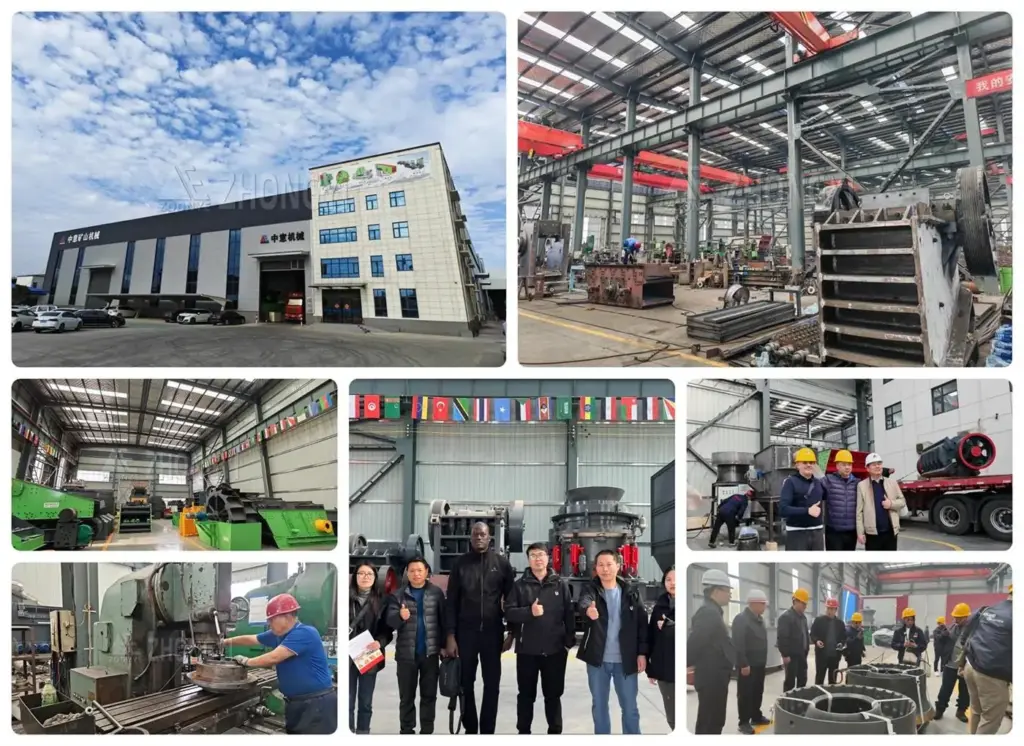
With these details, Zhongyi Mining can assess equipment selection and crushing and screening system configuration according to project requirements. Installation and commissioning support can also be discussed during project planning. The final capacity should be checked against actual material conditions and the performance of the complete production line, rather than a single rated-capacity figure.
Conclusion
Choosing the right crushing plant capacity means matching the production target with material properties, finished product requirements, operating conditions, and the capacity of each stage in the crushing and screening line. A well-matched configuration helps reduce bottlenecks and avoid selecting equipment based on rated capacity alone.
Zhongyi Mining supplies crushing equipment and crushing and screening plant configurations for quarry and mining projects. We can assess your material characteristics, target output, feed size, and site conditions to help determine suitable equipment and system arrangements. The aim is to align equipment selection with actual production requirements rather than rely on theoretical capacity figures alone.
Planning a new crushing plant or upgrading an existing line? Contact Zhongyi Mining to discuss your project requirements and explore suitable crushing plant configurations.
Individuelle Lösung anfordern
Work with Zhongyi Mining to determine the right crushing plant capacity based on your material properties, production targets, operating conditions, and finished aggregate requirements, with a crushing and screening configuration suited to your project.
FAQ
How Do You Calculate the Required Crushing Plant Capacity?
To calculate the required crushing plant capacity, start with the target finished aggregate output and divide it by the available production time, accounting for equipment availability and finished product yield. For an annual target, consider operating days, scheduled hours, downtime, and the proportion of feed that meets product specifications. If the target refers to raw feed throughput rather than finished aggregate, use a different calculation basis.
What Does TPH Mean in Crushing Plant Capacity?
TPH means tons per hour and is commonly used to express crushing plant capacity. However, confirm whether the figure refers to incoming feed, material processed by a crusher, or finished aggregate meeting the required specifications. These values are not interchangeable, especially in closed-circuit plants where oversize material returns for further crushing. Also check whether the supplier uses metric tonnes or US short tons.
What Factors Affect Crushing Plant Production Capacity?
Crushing plant production capacity depends on material hardness, abrasiveness, feed size, moisture content, discharge settings, and feeding consistency. The required product gradation also matters because finer output may require additional crushing or more demanding screening. At plant level, equipment availability and the capacity of feeders, screens, and conveyors can further restrict production. Evaluate these conditions together when estimating actual output.
How Do You Match Crushing Plant Capacity to Different Rock Types?
Matching crushing plant capacity to granite, basalt, or limestone starts with assessing rock properties, maximum feed size, and required finished aggregate sizes. Granite and basalt are generally harder and more abrasive than many limestone materials, affecting throughput and wear. Jaw crushers are commonly used for primary crushing, while cone or impact crushers may suit different secondary crushing requirements. Final selection should reflect actual feed conditions and product requirements.
Does the Entire Crushing Plant Need the Same Rated Capacity?
No. Each stage must handle the material flow it receives, which may differ from the plant’s new feed rate. Primary and secondary crushers, vibrating screens, feeders, and conveyors must be matched to avoid bottlenecks. In a closed-circuit system, returned oversize material adds to the crusher’s workload. When checking crusher throughput, account for recirculating material rather than assuming each machine processes only fresh feed.
How Much Capacity Reserve Should a Crushing Plant Have?
The required capacity margin depends on feed variability, operating hours, equipment availability, recirculating load, and future production plans. There is no universal reserve percentage for every crushing plant capacity requirement. Calculate the required feed rate first, then check whether the proposed equipment can sustain it under realistic operating conditions. Avoid adding an arbitrary percentage without checking whether the full line can handle the additional material.
What Information Should You Provide for Crushing Plant Sizing and Quotation?
Accurate crushing plant sizing starts with the material type, hardness, abrasiveness, moisture content, maximum feed size, and feed size distribution. Also provide the required finished product sizes, target output per hour or year, scheduled operating hours, and maintenance arrangements. Site dimensions, power supply, fixed or mobile requirements, and existing equipment help the supplier assess the required capacity and recommend a suitable crushing and screening configuration.
How Can You Verify a Supplier’s Crusher Plant Capacity Claims?
When comparing crusher plant capacity claims, ask whether the stated figure refers to feed throughput or finished output. Confirm the assumed material properties, feed size, discharge setting, product gradation, and circuit configuration. Comparable operating references or a material test can provide additional evidence where available. A rated figure alone cannot establish expected site performance; assess the proposed equipment against your project’s actual production requirements.