











Was ist ein Mining-Backenbrecher?
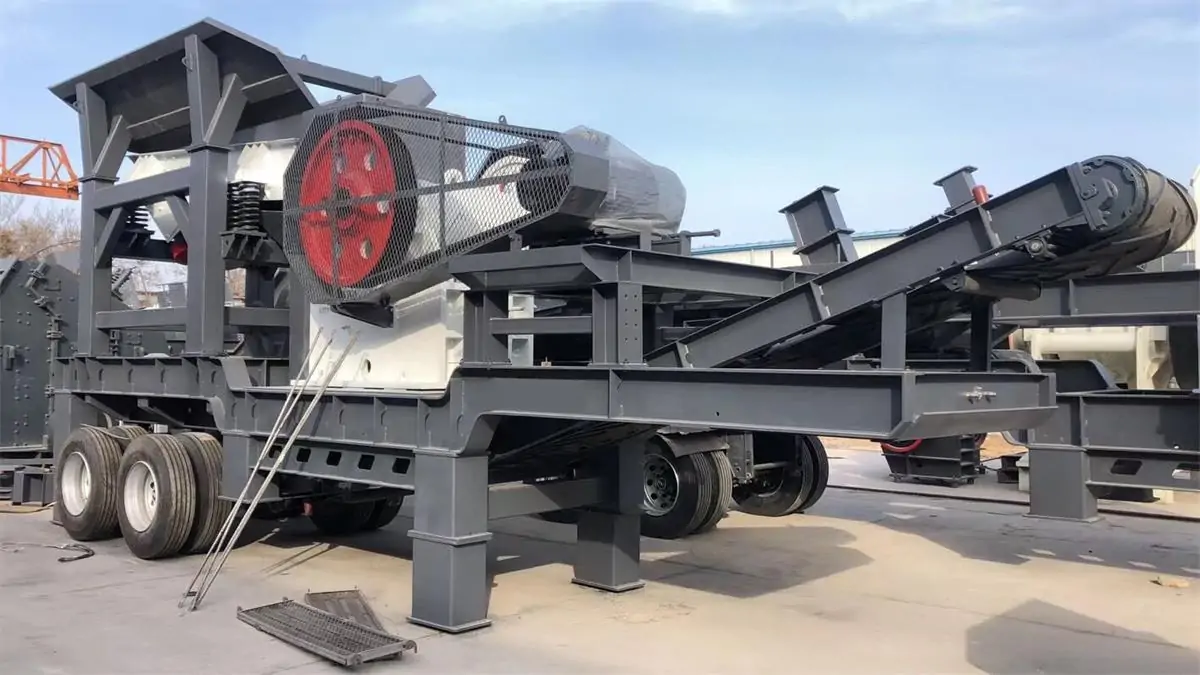
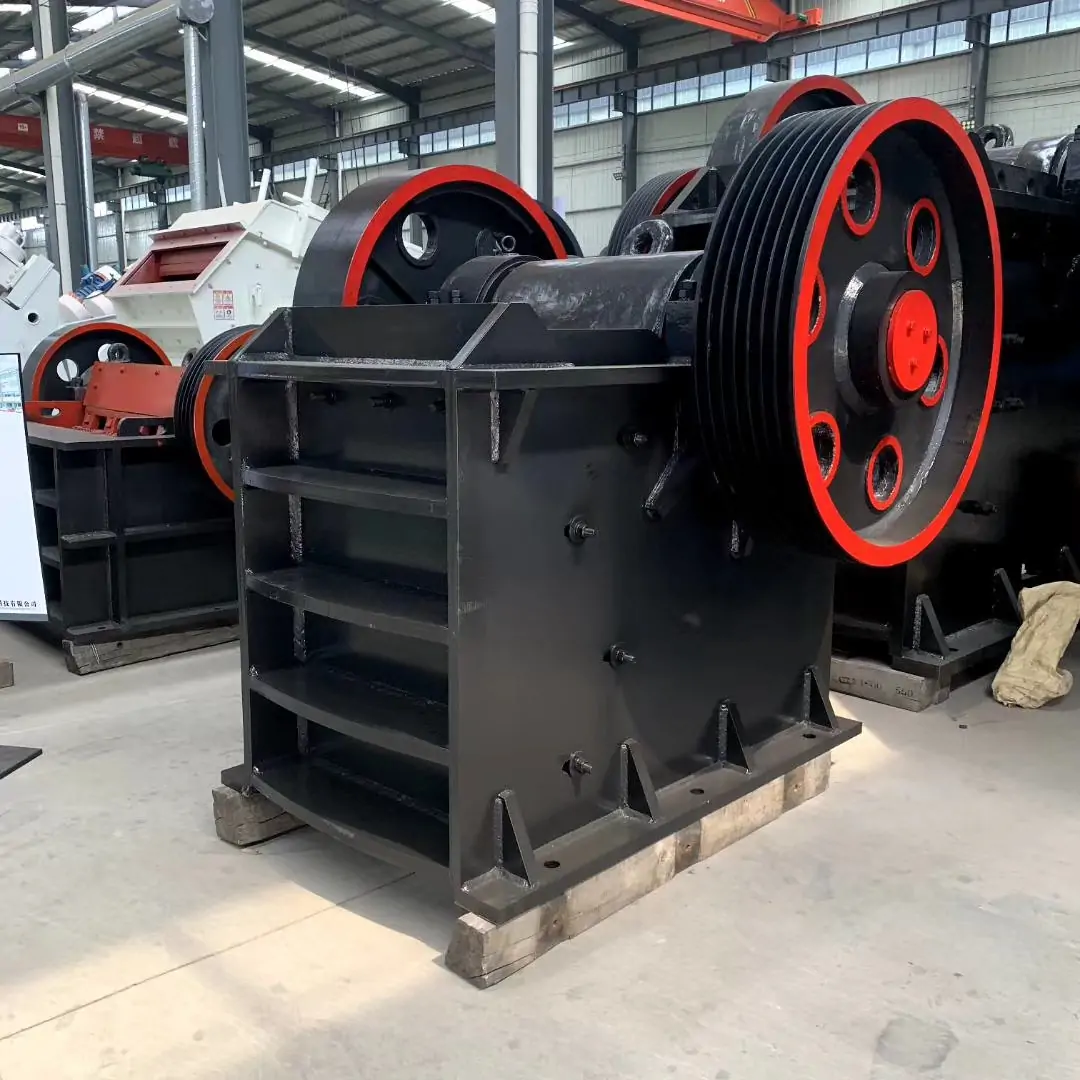
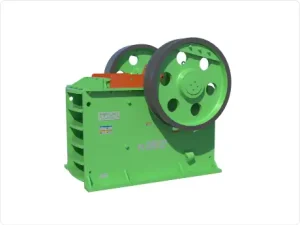
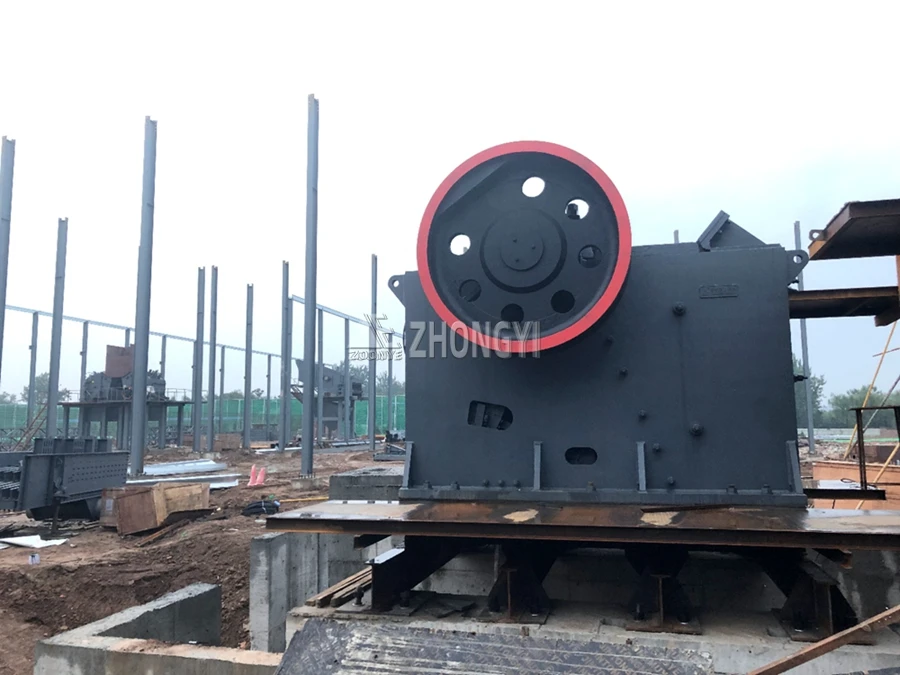
Ein Mining-Backenbrecher, auch bekannt als Primär-Backenbrecher oder Gesteins-Backenbrecher, ist eine Hochleistungs-Brechmaschine, die als Erststufenbrecher in Bergbau-, Steinbruch- und Zuschlagstoffverarbeitungsbetrieben eingesetzt wird. Er zerkleinert große Gesteine, Erze und gesprengte Materialien durch die Druckkraft zwischen einer festen Backenplatte und einer beweglichen Backenplatte auf kleinere, handhabbare Größen.
Als einer der am häufigsten eingesetzten Primärbrecher in der Bergbauindustrie ist ein Mining-Backenbrecher für die Verarbeitung von Materialien mit hoher Druckfestigkeit wie Granit, Basalt, Eisenerz, Kupfererz und Kalkstein ausgelegt. Seine einfache mechanische Struktur, große Aufgabeöffnung, hohes Zerkleinerungsverhältnis und zuverlässige Leistung machen ihn für den Dauerbetrieb in anspruchsvollen Arbeitsumgebungen geeignet.
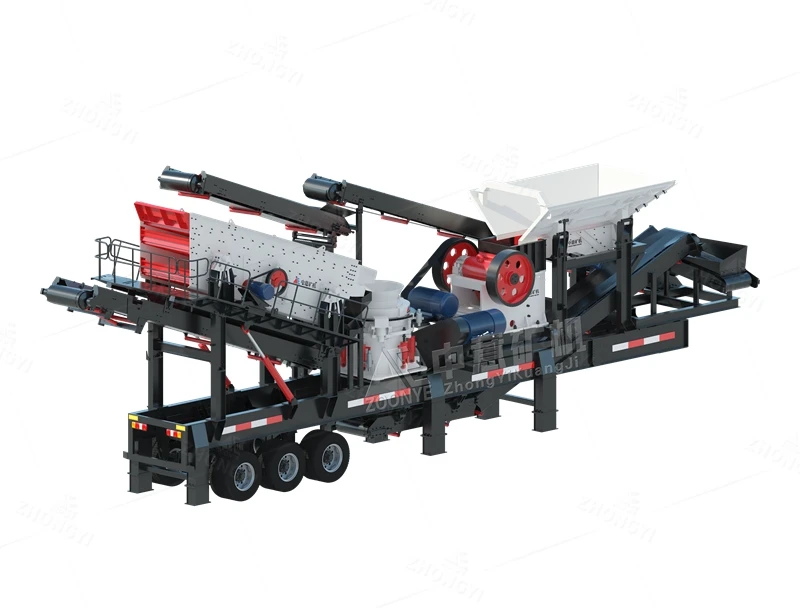
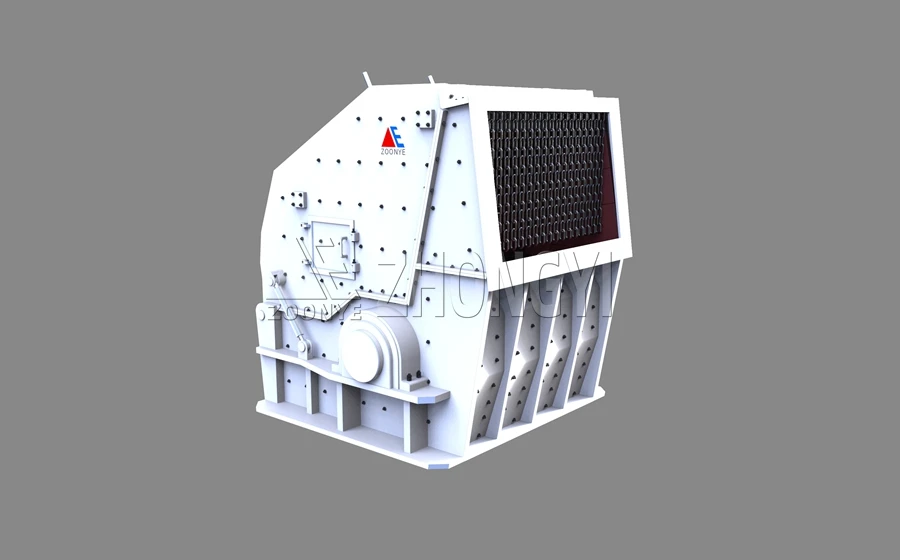
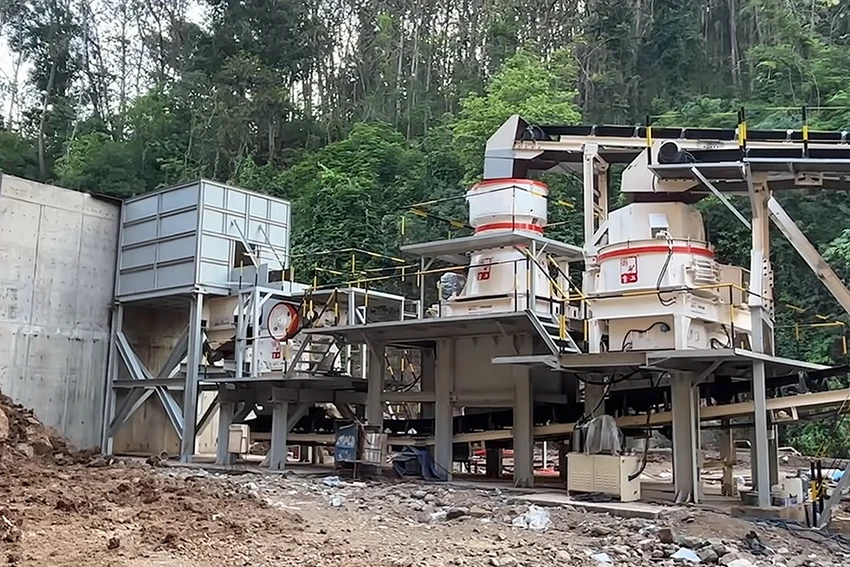
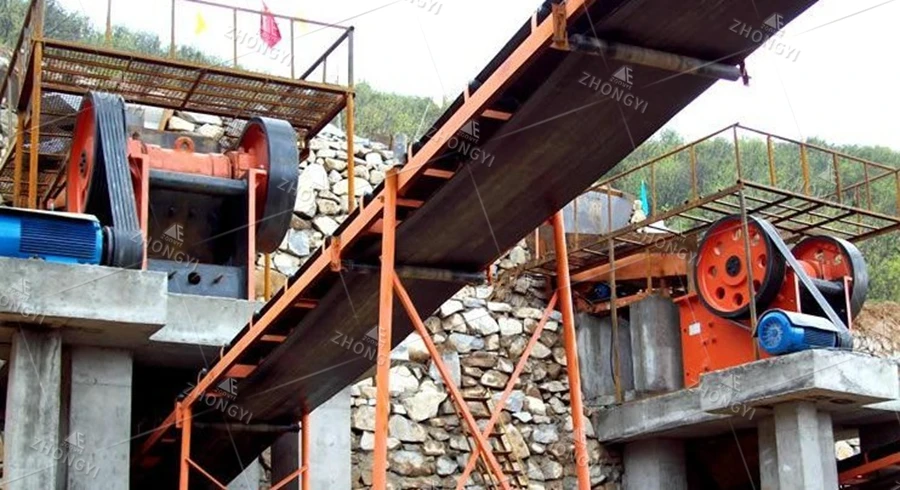
Mining-Backenbrecher werden üblicherweise vorgeschaltet zu Kegelbrechern, Prallbrechern, Vibrationssieben, und anderen Verarbeitungsanlagen installiert und bilden den Primärzerkleinerungsabschnitt vollständiger Steinbrech- und Erzverarbeitungsanlagen. Als Primärbrecher im Brechkreislauf reduziert ein Mining-Backenbrecher das große Aufgabematerial auf die für nachgeschaltete Verarbeitungsanlagen erforderliche Größe und gewährleistet einen reibungslosen Materialfluss durch die gesamte Anlage.
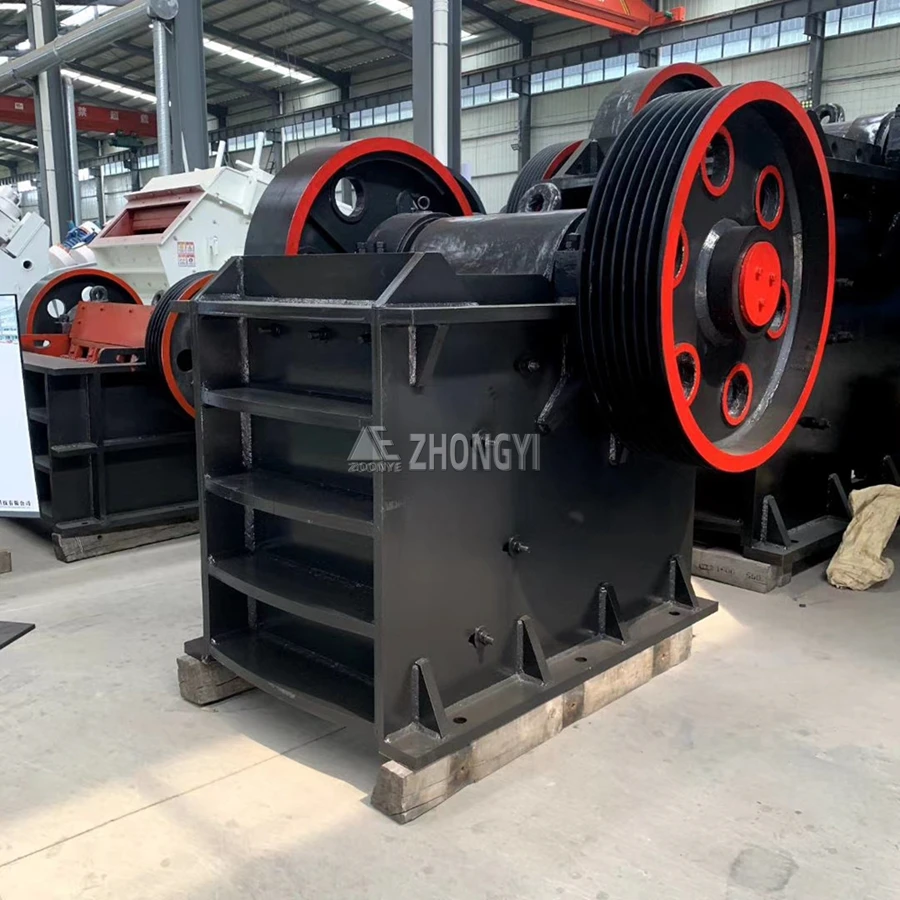
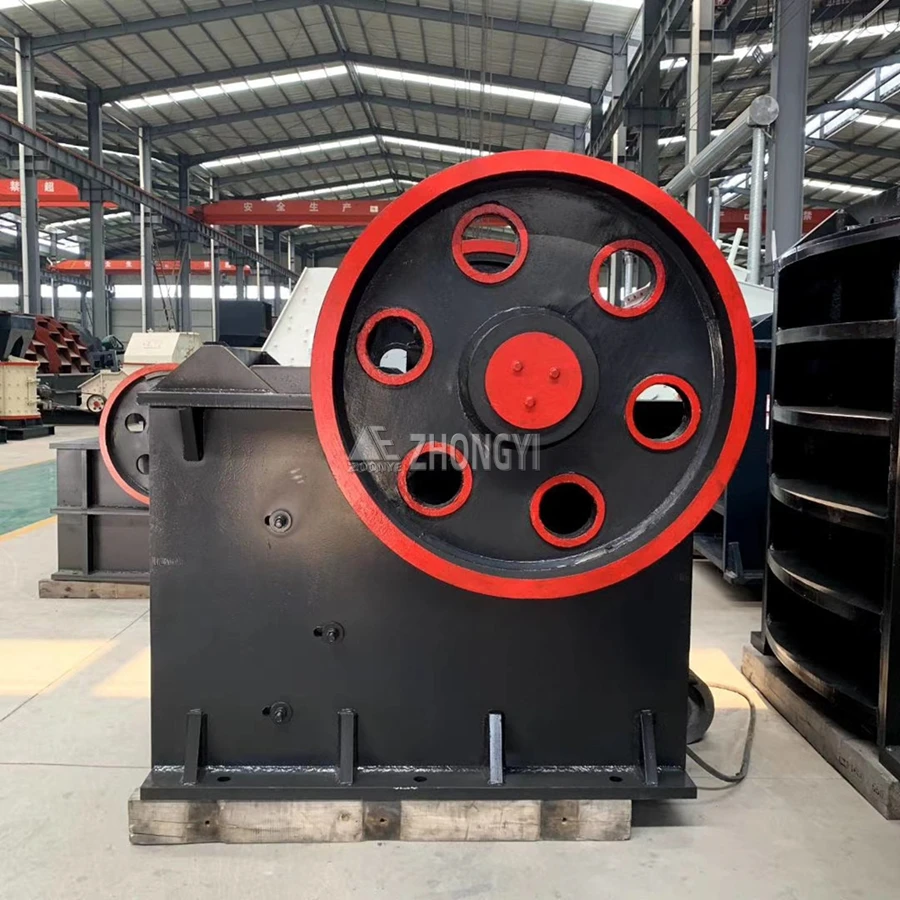
Arbeitsprinzip des Backenbrechers
Der Backenbrecher basiert auf der Druckzerkleinerungswirkung zwischen einer festen Backenplatte und einer beweglichen Backenplatte, die in einer V-förmigen Brechkammer angeordnet sind.
Der Motor treibt die Exzenterwelle an, die über das Schwingen- und Umschaltplattensystem die bewegliche Backe zu einer Hin- und Herbewegung gegen die feste Backe veranlasst. Diese Bewegung erzeugt ein abwechselndes Öffnen und Schließen der Brechkammer.
Das Aufgabematerial wird von oben in die Kammer eingeführt. Wenn sich die bewegliche Backe zur festen Backe hin bewegt, wird das Material unter hohem Druck komprimiert, gebrochen und zerkleinert. Wenn sich die bewegliche Backe zurückzieht, bewegt sich das gebrochene Material durch die Schwerkraft nach unten in die untere Kammer. Der Zyklus wiederholt sich, bis die Partikelgröße unter die Austragsöffnungseinstellung reduziert ist, wonach das Material aus dem unteren Auslass ausgetragen wird.
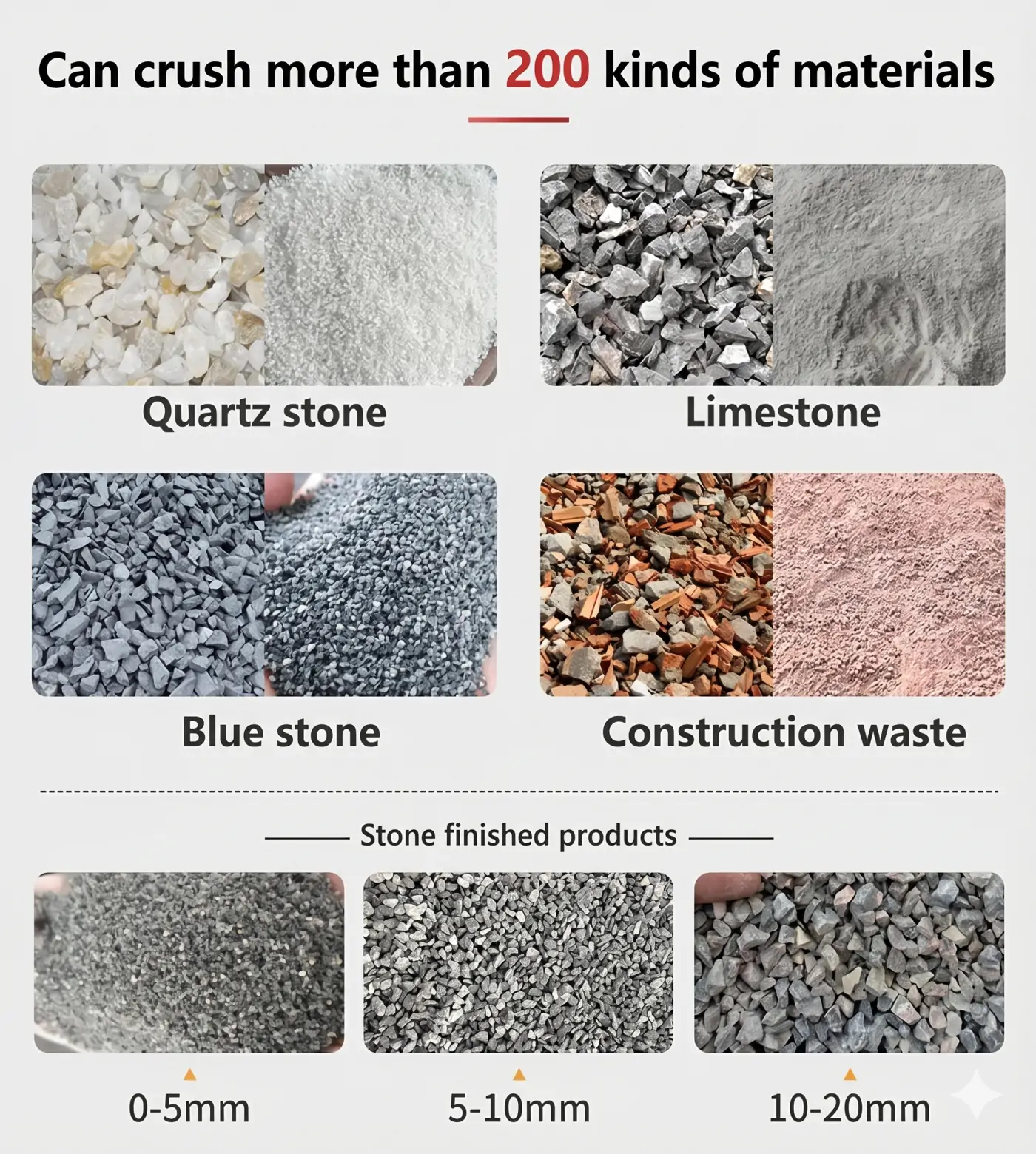
Fertige Steinprodukte
Nach der Primär- und Sekundärzerkleinerung können auf Backenbrechern basierende Produktionslinien eine Reihe von gebrochenen Steinprodukten herstellen, die in Bau- und Infrastrukturprojekten verwendet werden. Typische Fertigungsgrößen umfassen 0–5 mm Feinzuschlagstoffe, 5–10 mm und 10–20 mm Schotter sowie größere 20–40 mm Basismaterialien, abhängig von der Brech- und Siebkonfiguration.
Die Maschine wird häufig in Betonmischanlagen, Asphaltmischanlagen, beim Straßenbau und für Eisenbahnschotter eingesetzt.
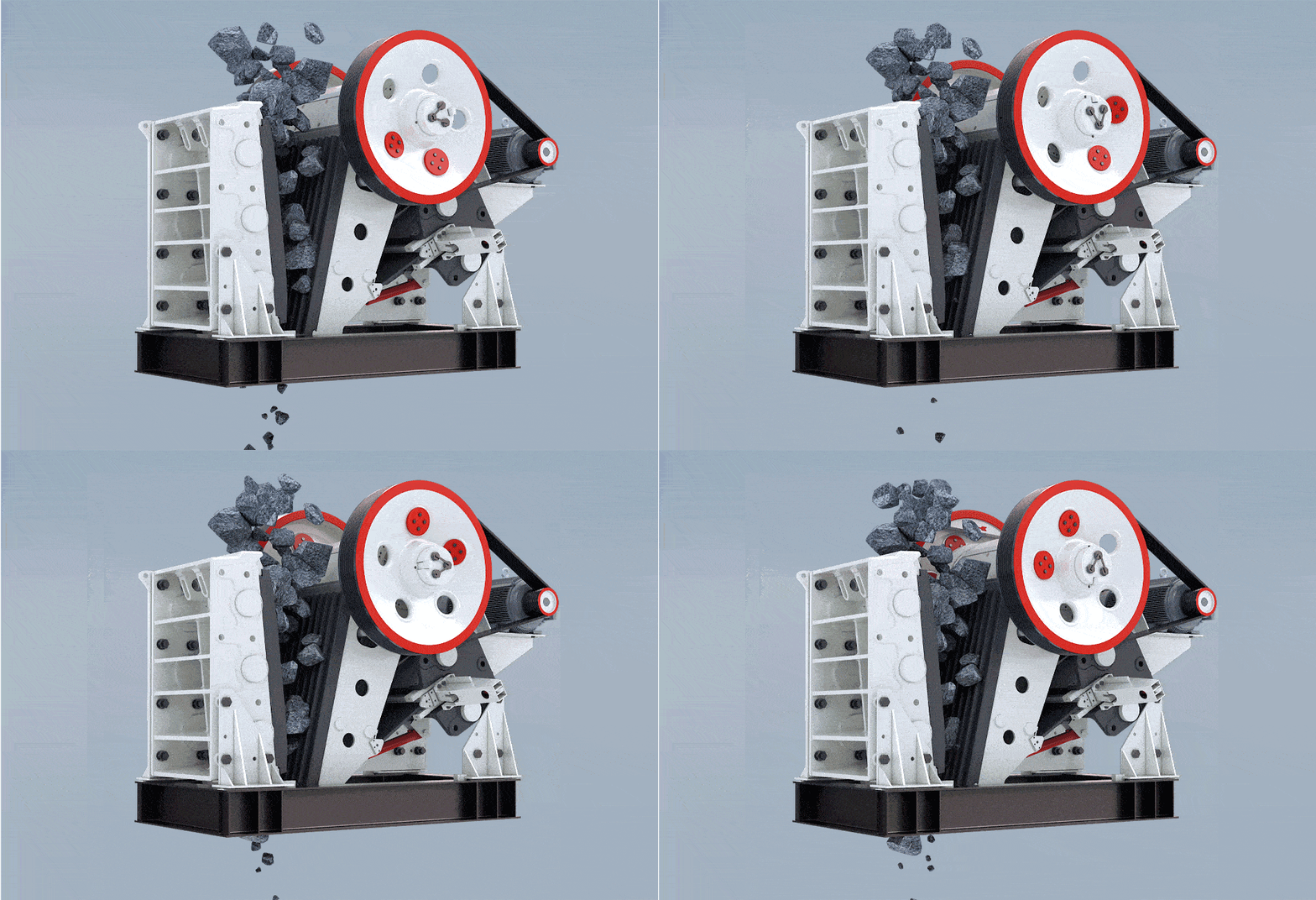
Teile des Mining-Backenbrechers
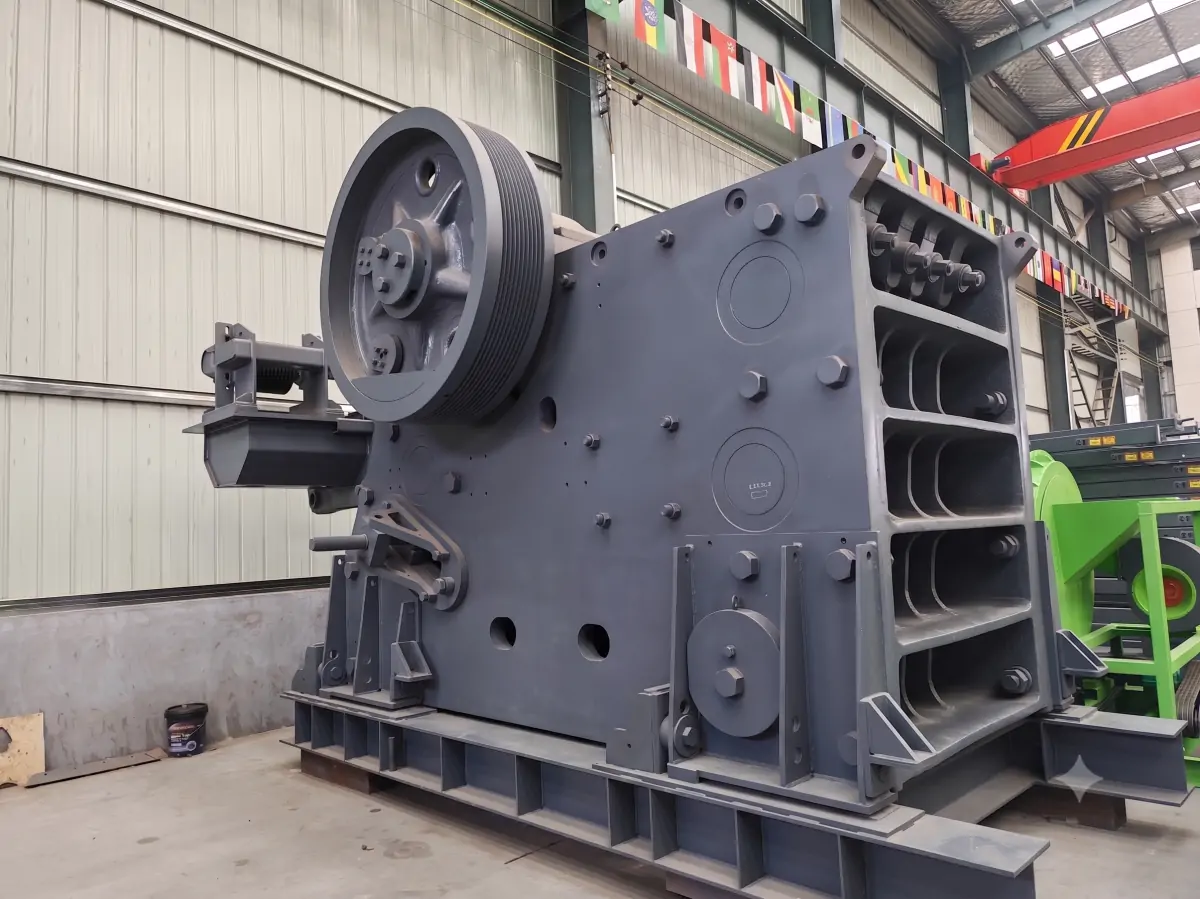
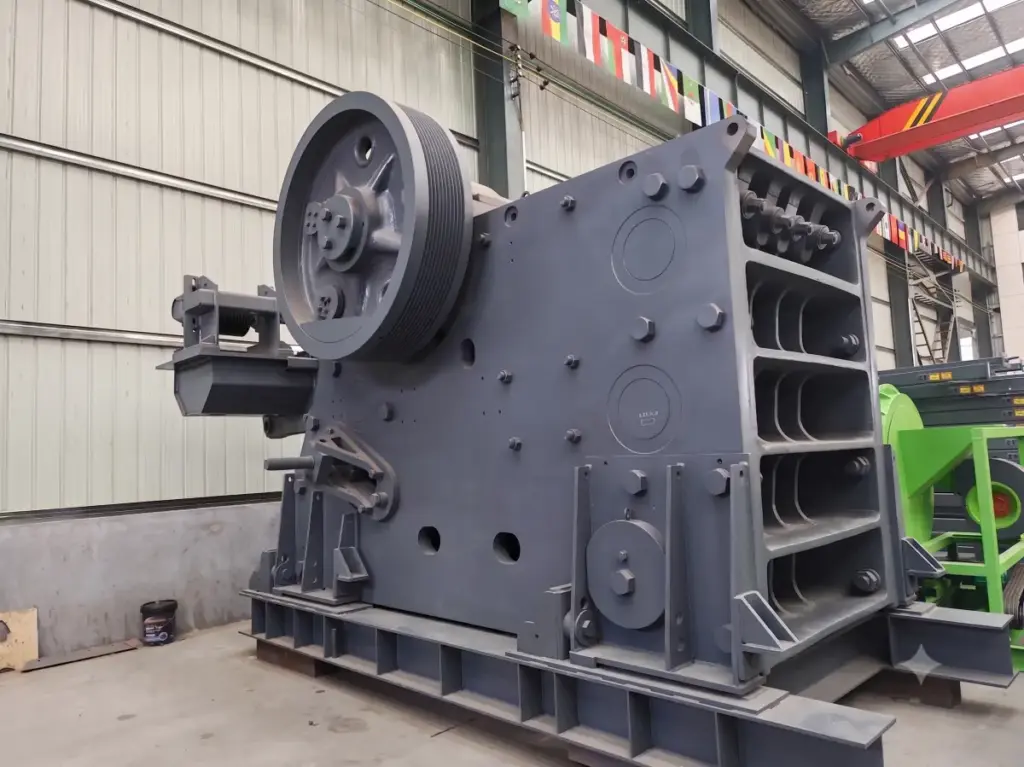
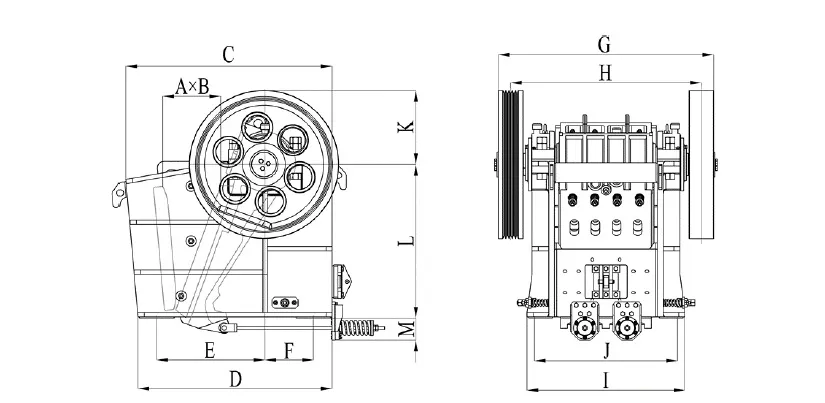
Der Mining-Backenbrecher besteht aus einem Hauptrahmen, einer festen Backe, einer beweglichen Backenbaugruppe, einer Exzenterwelle, einer Umschaltplatte, einer Einstellvorrichtung, einem Antriebssystem und Verschleißteilen. Die Struktur ist für die Primär-Druckzerkleinerung unter schweren Arbeitsbedingungen ausgelegt.
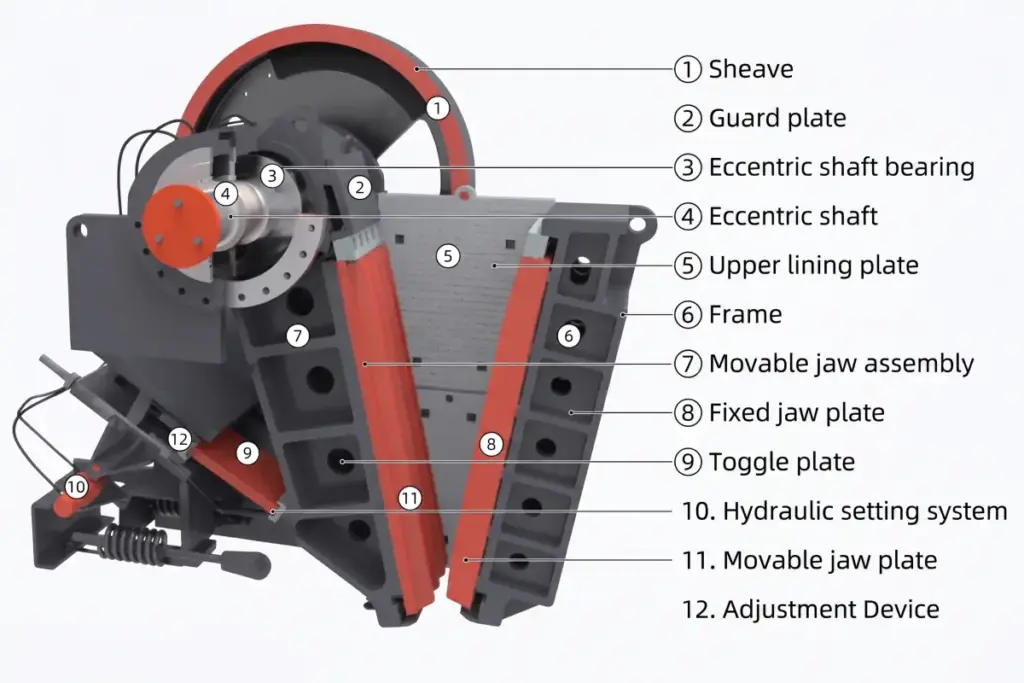
Teileübersicht
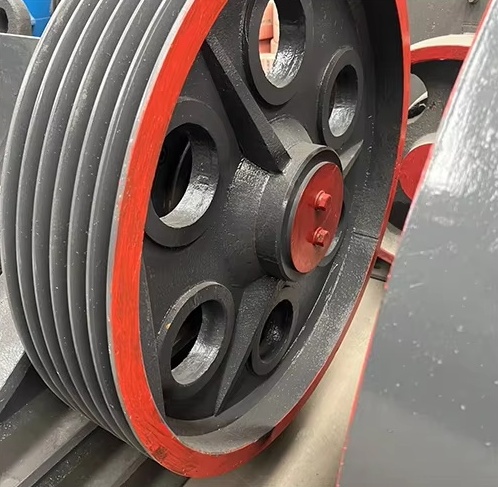
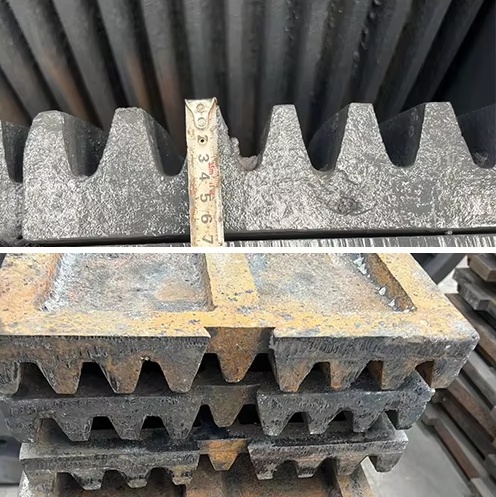
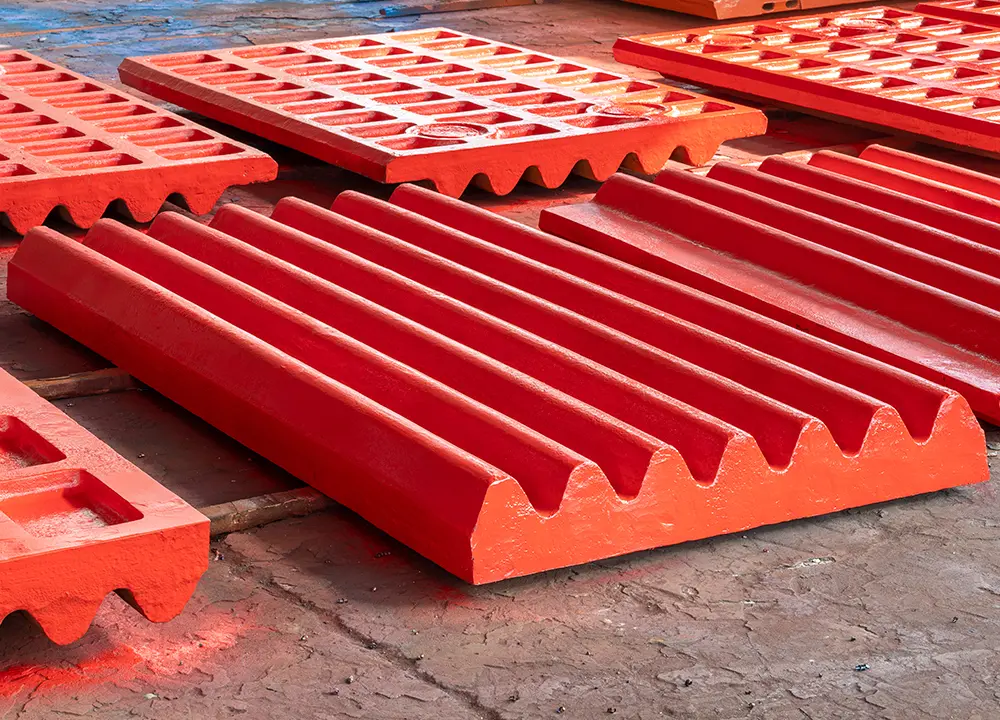
| Komponente | Funktion | Beschreibung |
| Hauptrahmen | Tragstruktur | Der Hauptrahmen ist die tragende Kernstruktur des Backenbrechers und wird typischerweise aus Gussstahl oder geschweißten Stahlplatten gefertigt, um schwere Brechlasten und Dauerbetrieb standzuhalten. |
| Feste Backenplatte | Stationäre Brechfläche | Die feste Backenplatte ist am vorderen Rahmen montiert und wirkt mit der beweglichen Backe zusammen, um Materialien zu komprimieren und zu zerkleinern. |
| Bewegliche Backenbaugruppe | Brechwirkung | Besteht aus dem beweglichen Backenkörper, der Backenplatte, der Welle und den Lagern. Sie erzeugt die für die Materialzerkleinerung erforderliche Hin- und Herbewegung. |
| Exzenterwelle | Kraftübertragung | Die Exzenterwelle wandelt die Rotationsenergie des Motors in die Schwingbewegung der beweglichen Backe um und ist eine der kritischsten Komponenten. |
| Umschaltplatte | Kraftübertragung & Schutz | Überträgt die Brechkraft auf die bewegliche Backe und dient gleichzeitig als Überlastschutzvorrichtung, um Schäden durch nicht zerkleinerbare Materialien zu verhindern. |
| Einstellvorrichtung | Austragssteuerung | Wird zur Einstellung der Austragsöffnungsgröße verwendet, sodass Bediener die Endproduktgröße entsprechend den Produktionsanforderungen steuern können. |
| Schwungrad | Energiespeicherung | Speichert kinetische Energie während des Betriebs und gibt sie während des Brechzyklus frei, um eine stabile und effiziente Leistung zu gewährleisten. |
| Antriebssystem | Stromversorgung | Umfasst den Motor, Riemenscheiben, Keilriemen und Übertragungskomponenten, die die Rotation der Exzenterwelle antreiben. |
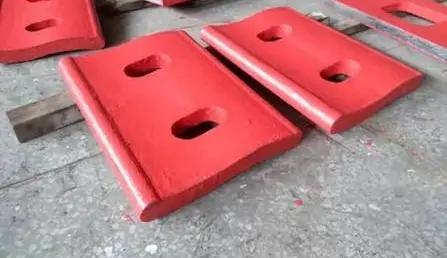
| Backenplatten | Verschleißteile | Die festen und beweglichen Backenplatten sind die primären Verschleißkomponenten und werden üblicherweise aus hochmanganhaltigem Stahl oder Legierungswerkstoffen hergestellt. |
| Bearings | Rotating Support | Heavy-duty bearings support the eccentric shaft and ensure smooth operation under high load conditions. |
| Side Liners | Frame Protection | Installed inside the crushing chamber to protect the crusher body from material abrasion and extend equipment life. |
| Tension Rod & Spring | Toggle Assembly Support | Maintain proper tension on the toggle plate and assist in returning the movable jaw during operation. |
Types of Jaw Crusher
We provides different types of jaw crushers for mining, quarrying, aggregate production, and recycling applications. Depending on material hardness, feed size, required capacity, and installation conditions, customers can choose from standard PE jaw crushers, fine jaw crushers, European jaw crushers, heavy-duty mining jaw crushers, and mobile jaw crushing plants.
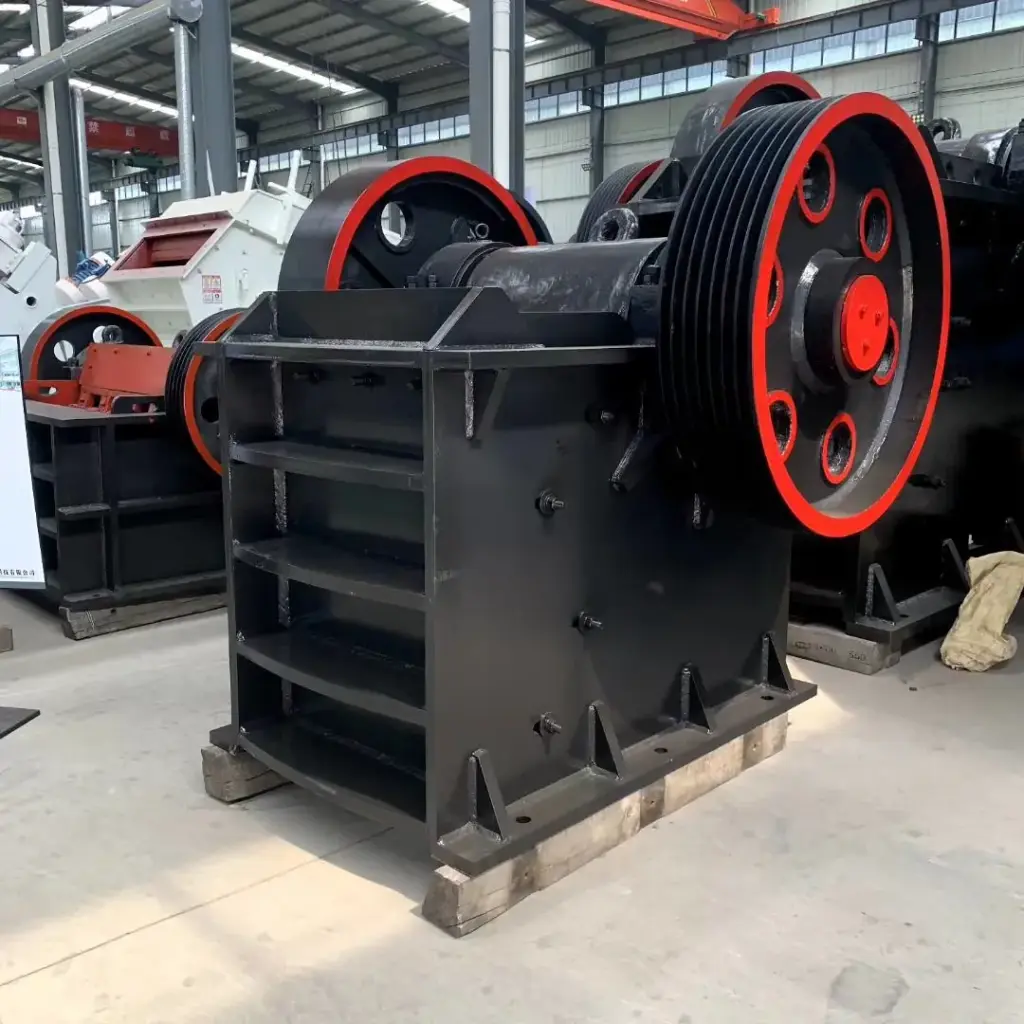
PE Series Jaw Crusher
PE series jaw crushers are the most commonly used primary crushing equipment in aggregate and mining industries. They feature a simple structure, stable performance, and low operating cost, making them suitable for crushing limestone, granite, basalt, river stone, and various ores with compressive strength up to 320 MPa.
- Feed opening: 250×400 mm – 1200×1500 mm
- Maximum feed size: 210 – 1020 mm
- Discharge size: 20 – 300 mm
- Processing capacity: 5 – 1000 t/h
- Motor power: 15 – 160 kW
PEX Series Fine Jaw Crusher
PEX series jaw crushers are designed for secondary crushing and are widely used for producing smaller aggregate sizes after primary crushing. Compared with standard PE models, PEX crushers provide finer discharge sizes and better particle shape control.
- Feed opening: 250×750 mm – 300×1300 mm
- Maximum feed size: 210 – 250 mm
- Discharge size: 15 – 90 mm
- Processing capacity: 13 – 105 t/h
- Motor power: 30 – 75 kW
European Jaw Crusher
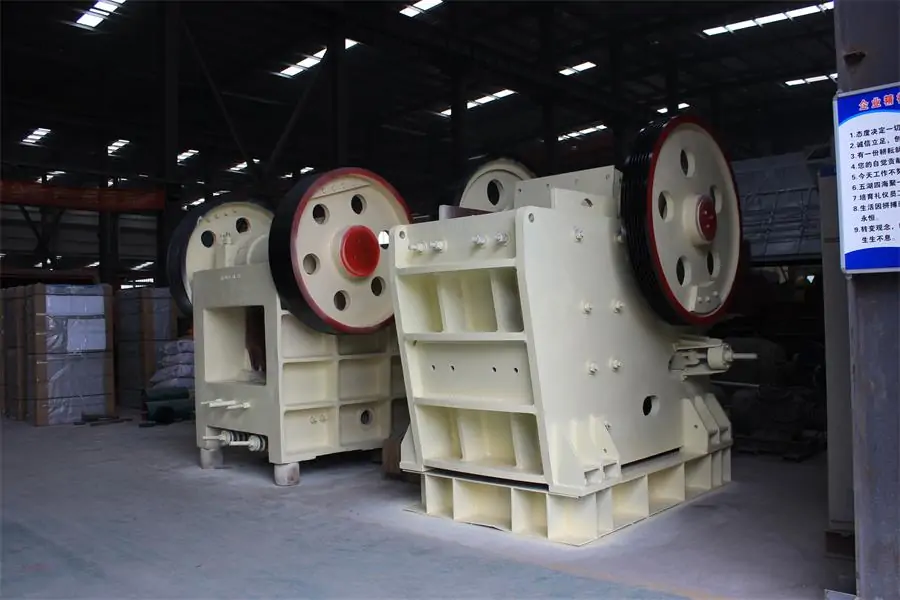
European jaw crushers adopt optimized crushing chamber design, heavy-duty frame structures, and advanced adjustment mechanisms. They are suitable for large-scale aggregate plants and mining projects requiring higher crushing efficiency, lower wear costs, and greater automation.
- Feed opening: 930×580 mm – 1250×950 mm
- Maximum feed size: 480 – 760 mm
- Discharge size: 70 – 200 mm
- Processing capacity: 120 – 840 t/h
- Motor power: 90 – 200 kW
Heavy-Duty Mining Jaw Crusher
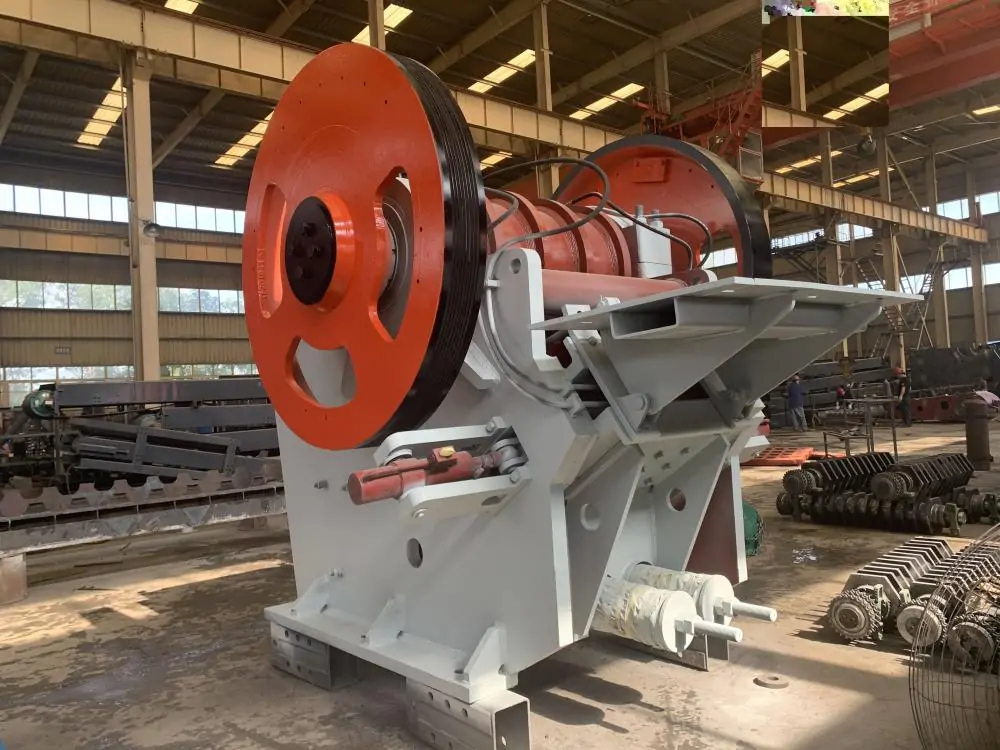
Heavy-duty mining jaw crushers are specially designed for continuous operation in harsh mining environments. With reinforced structures, oversized bearings, and high crushing forces, they are suitable for processing hard and abrasive ores in large-scale mining operations.
- Feed opening: 1200×1500 mm – 1800×2100 mm
- Maximum feed size: 1000 – 1500 mm
- Discharge size: 150 – 350 mm
- Processing capacity: 400 – 1800 t/h
- Motor power: 160 – 500 kW
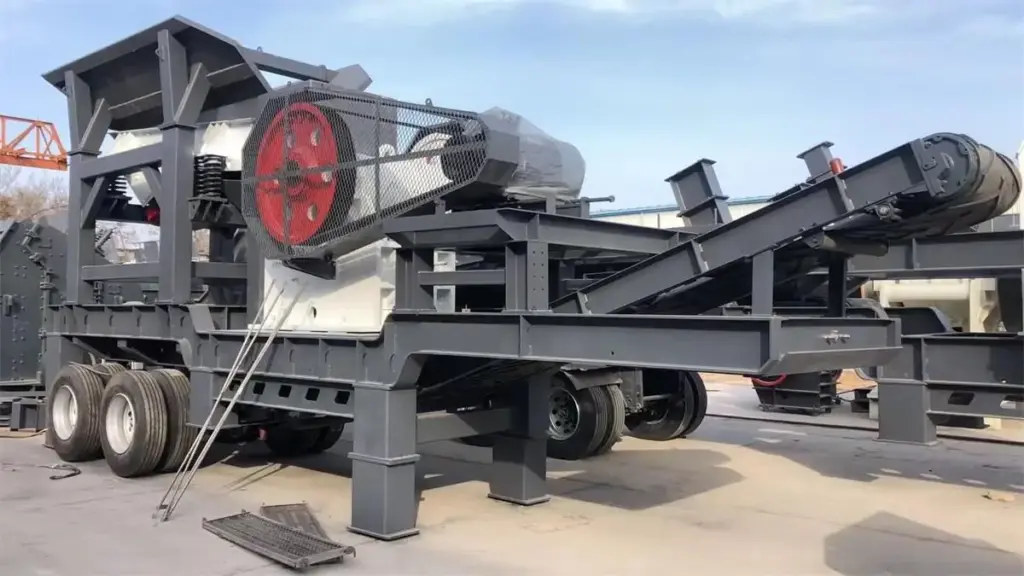
Mobile Jaw Crushing Plant
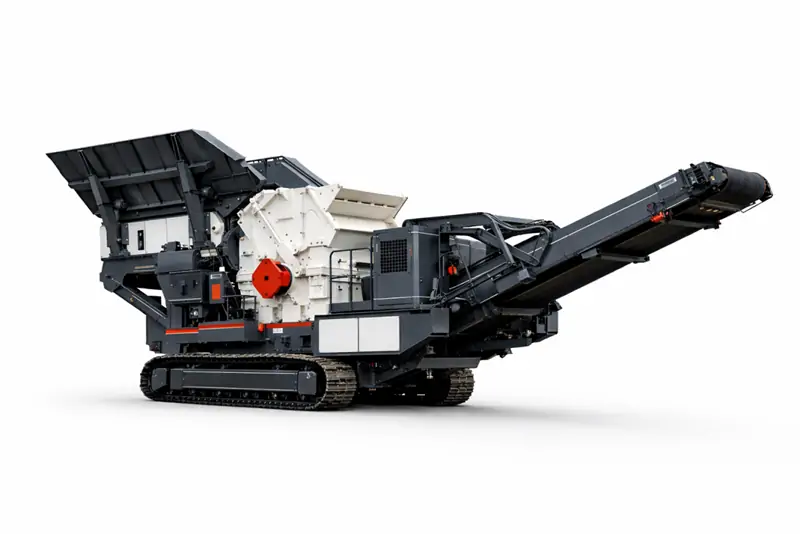
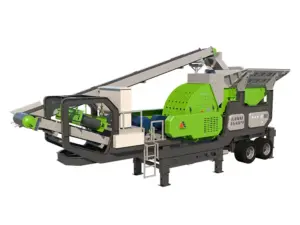
Mobile jaw crushing plants combine feeding, crushing, conveying, and power systems on a single chassis, providing flexible and efficient crushing solutions for quarrying, construction waste recycling, and temporary crushing projects. Their mobility reduces foundation costs and shortens installation time.
- Feed size: ≤500 – 760 mm
- Discharge size: 50 – 200 mm
- Processing capacity: 50 – 800 t/h
- Total installed power: 120 – 400 kW
- Chassis type: Wheel-mounted or crawler-mounted
Technische Daten
| Modell | Max Feeding(mm) | Capacity(t/h) | Discharging Opening(mm) | Power(kw) | Weight(kg) |
| PE-250*400 | 210 | 5 – 21 | 20 – 80 | 15 | 2800 |
| PE-400*600 | 340 | 16 – 64 | 40 – 100 | 30 | 6500 |
| PE-500*750 | 425 | 46 – 100 | 50 – 100 | 55 | 10300 |
| PE-600*900 | 500 | 48 – 120 | 65 – 160 | 75 | 15500 |
| PE-750*1060 | 630 | 51 – 208 | 80 – 140 | 110 | 25100 |
| PE-900*1200 | 750 | 144 – 304 | 100 – 200 | 132 | 43300 |
| PE-1000*1200 | 850 | 165 – 342 | 195 – 265 | 132 | 50600 |
| PE-1200*1500 | 1000 | 300 – 800 | 150 – 350 | 220 | 78140 |
| PEX-250*1000 | 160 | 16 – 51 | 20 – 55 | 30 | 6500 |
| PEX-250*1200 | 210 | 20 – 60 | 25 – 60 | 37 | 7700 |
| PEX-300*1300 | 250 | 16 – 104 | 20 – 90 | 75 | 11000 |
Features
Applications of Mining Jaw Crusher
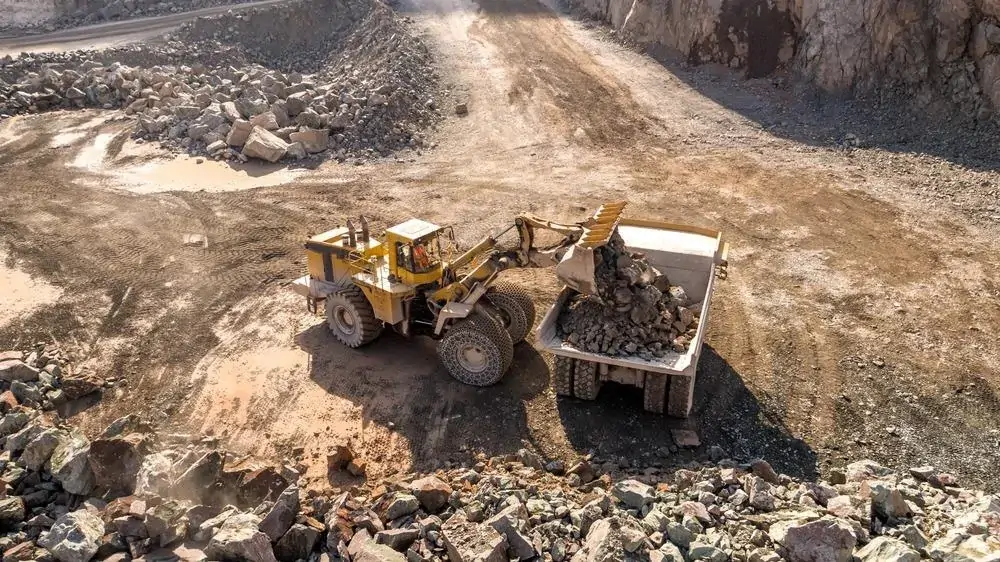
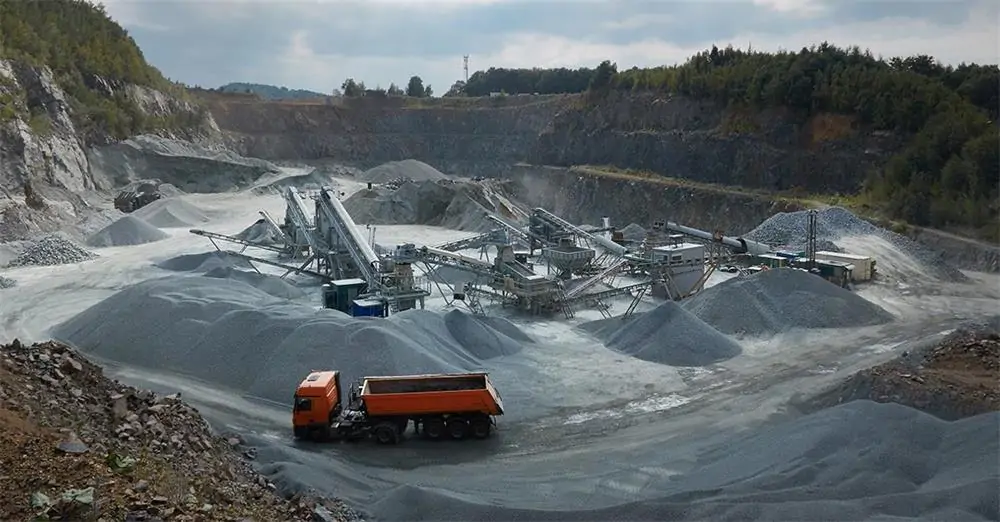
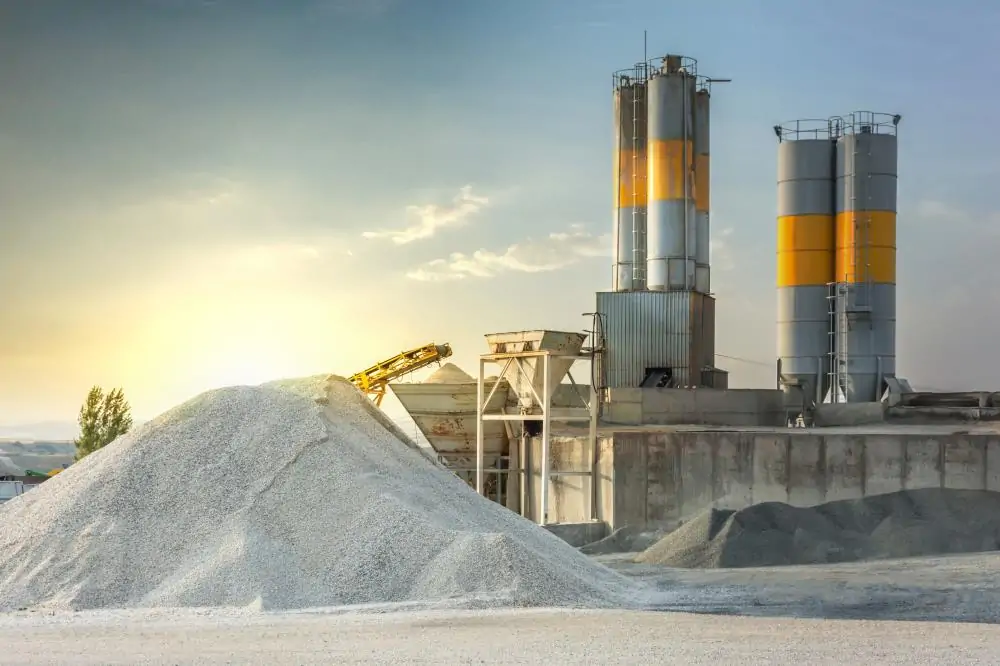
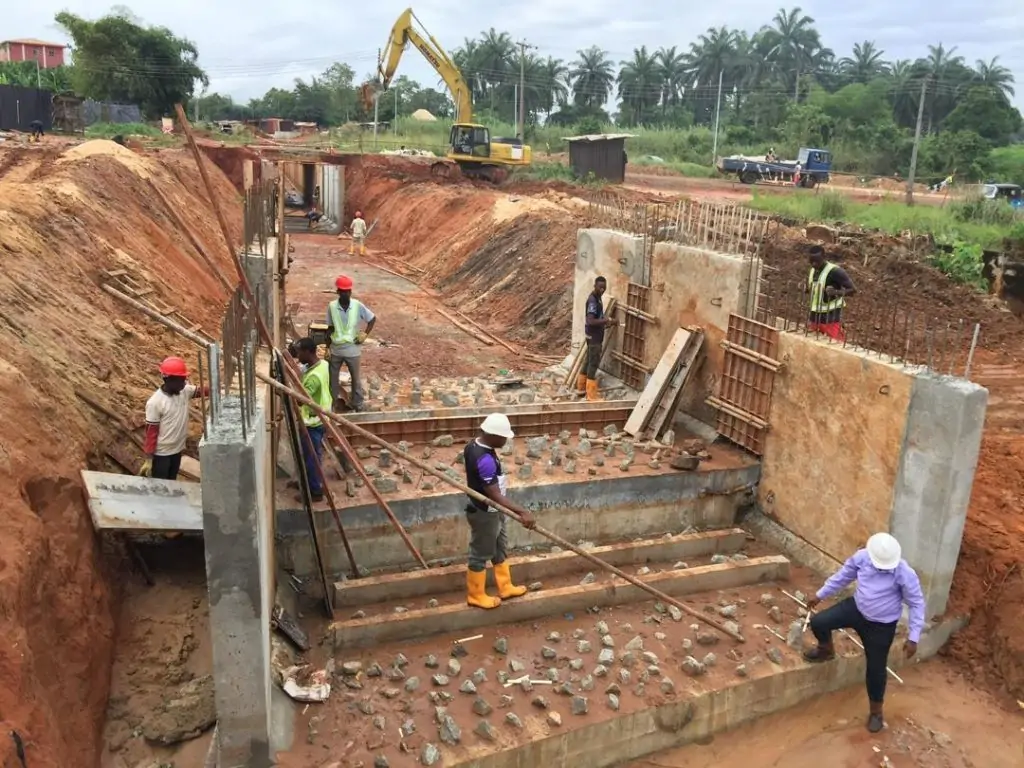
Mining jaw crusher is primarily used for the first-stage crushing of hard and medium-hard rock materials. It reduces run-of-mine (ROM) ore or blasted stone into smaller sizes suitable for secondary crushing and screening systems. The equipment is widely adopted in mining and aggregate production lines due to its ability to handle large feed sizes and high compressive strength materials under continuous operation.
Jaw Crusher vs Other Crushing Equipment – Which One Fits Your Operation Best?
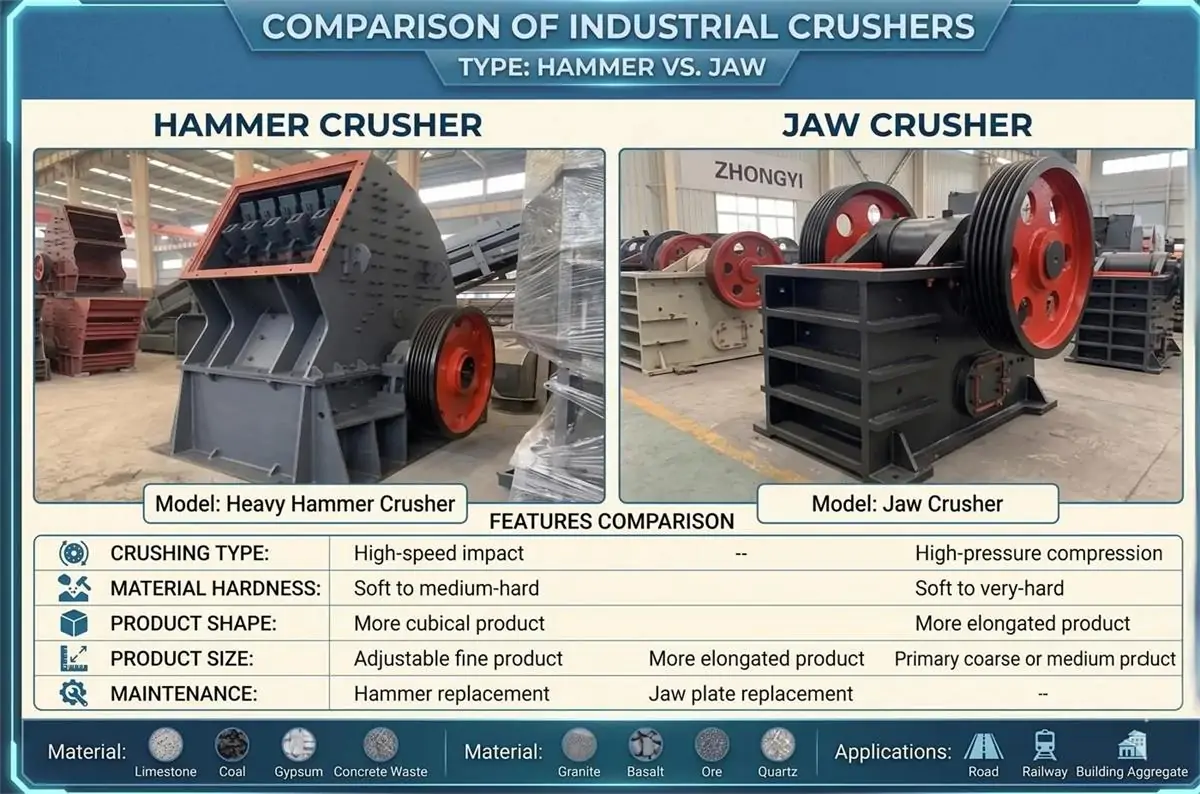
Crushing equipment selection is based on feed size, material hardness, and required output. A jaw crusher is commonly used as primary crushing equipment in mining, quarry, and construction waste recycling lines. Compared with other crusher types, it is better suited for large feed sizes and hard materials, offering stable operation and simple maintenance. Our jaw crusher solutions cover capacities from 1–1000 t/h, depending on model and configuration.
| Position | Jaw Crusher | Hammer Crusher | Impact Crusher | Kegelbrecher |
|---|---|---|---|---|
| Funktionsprinzip | Compression between fixed and movable jaw plates | High-speed hammer impact crushing | Rotor impact and rebound crushing | Lamination crushing by mantle and concave |
| Konstruktives Design | Heavy-duty frame, fixed + movable jaw plate | Rotor with hammer heads | Rotor + impact plate system | Hydraulic cone structure |
| Verarbeitungskapazität | 1–1000 t/h | 5–300 t/h | 30–500 t/h | 50–1200 t/h |
| Effizienz | Stable for primary crushing of large feed | High for soft materials | Good for medium-hard materials | High for secondary and fine crushing |
| Energieverbrauch | Moderate (about 0.5–1.5 kWh/t depending on model) | Higher wear-related loss | Medium | Lower in fine crushing stage |
| Stellfläche | Medium | Compact | Medium | Larger installation space |
| Wartung | Low, jaw plate replacement every 3–6 months (based on material) | Frequent hammer replacement | Medium liner wear | More complex hydraulic system maintenance |
| Investitionskosten | Medium | Low | Medium | High |
| Suitable Materials | Granite, basalt, limestone, river stone, construction waste | Limestone, coal, gypsum | Medium-hard stone, recycled aggregates | Hard ore, fine crushing feed |
| Typische Anwendungen | Primary crushing in mining, quarry, recycling and aggregate plants | Small-scale cement and soft stone crushing | Secondary crushing in aggregate production lines | Fine crushing in mineral processing systems |
Selection Guide
For primary crushing of hard rock and construction waste, Zhongyi Jaw Crusher is the preferred choice. It accepts feed sizes up to ≤1200 mm and delivers stable reduction for downstream processing. Hammer crushers are suitable for soft and brittle materials, while impact crushers are used for secondary crushing. Cone crushers are mainly applied in fine crushing stages requiring controlled particle shape.
In mining, quarry, and recycling projects, Jaw Crusher remains the most widely used first-stage crushing equipment due to its stability, wide material adaptability, and low maintenance requirements. Zhongyi provides complete crushing line solutions based on project capacity and material conditions.
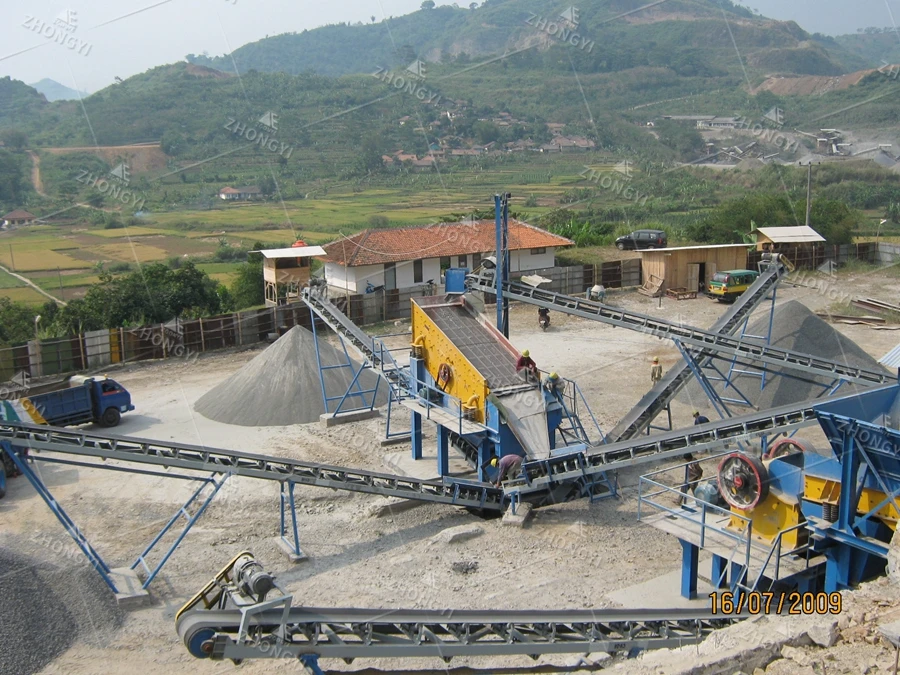
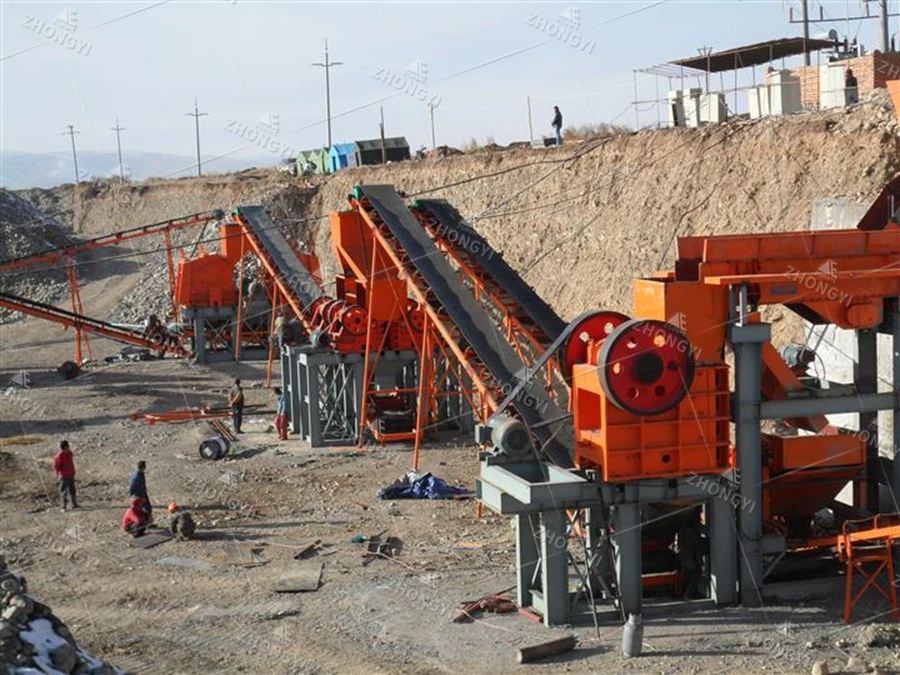
Project Site
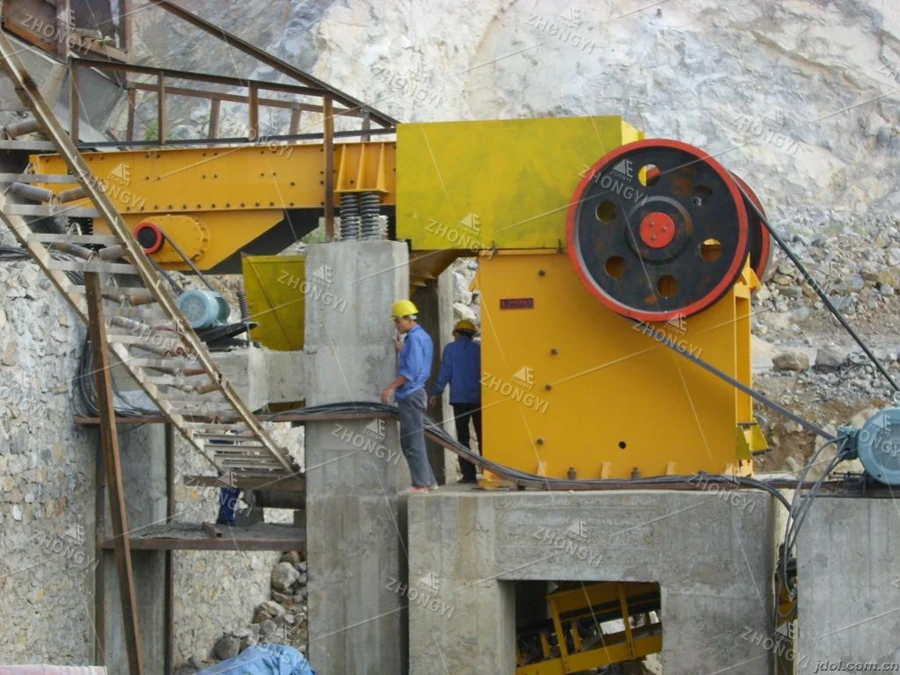
Individuelle Lösung anfordern
Partner with Zhongyi for expert technical support, customized solutions, and reliable equipment tailored to your ore characteristics and production requirements.
Custom Jaw Crusher Solutions
Different quarry and mining projects require different feed sizes, capacity levels and product specifications. Standard models may not fully match site conditions, especially in high-hardness rock or high-capacity continuous production lines. Custom configuration is available to match actual operating requirements and downstream process layout.
Customizable Parameters
- Feed opening size
- Capacity (TPH)
- Max feed size
- Discharge opening range
- Jaw plate material (Mn13Cr2 / Mn18Cr2 or customized)
- Motor power configuration
- Flywheel size and inertia design
- Frame structure type (welded / cast steel)
- Lubrication system (manual / automatic)
- Installation type (fixed / semi-mobile / mobile skid-mounted)
Please share your raw material, feed size, target output, and capacity requirements. Zhongyi will customize the ideal equipment configuration for your plant, whether your layout feeds a downstream rod mill sand line or direct mineral processing circuit.
Jaw Crusher Manufacturer and Supplier
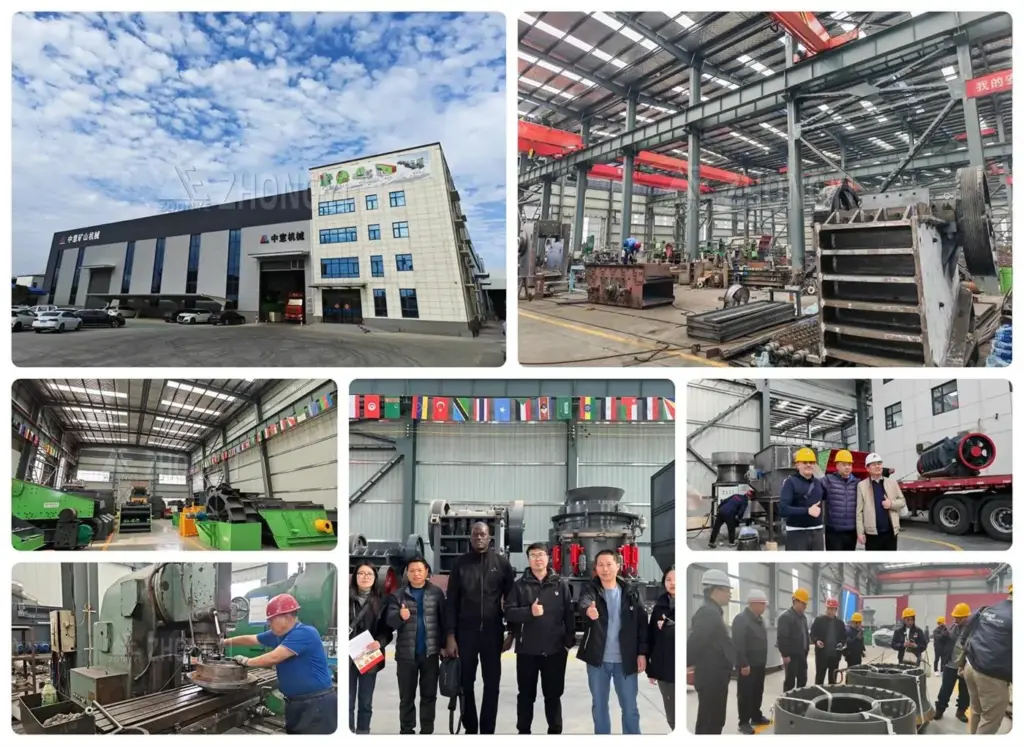
Zhongyi manufactures mining jaw crushers for quarrying, mining and aggregate production lines. Production covers frame fabrication, machining, assembly and factory testing. Manufacturing is carried out under ISO quality management requirements. Main structures are welded or cast steel, with key components machined in-house. Equipment is supplied with CE compliance for export markets. Product range includes PE series jaw crushers and customized configurations for fixed and semi-mobile crushing plants, selected according to feed size, capacity and material hardness.
Single machines and complete crushing solutions are provided, including vibrating feeders, belt conveyors, cone crushers and screening systems. Layout design and equipment matching are offered based on project conditions. Equipment is applied in primary crushing of hard and abrasive rock. Focus is placed on stable feed control, reduced wear rate and consistent discharge size through proper system configuration. Our service covers model selection, technical support, installation guidance and spare parts supply throughout the equipment lifecycle.
FAQs
1. What is a jaw crusher used for in mining?
A jaw crusher is used as primary crushing equipment to reduce large run-of-mine (ROM) rocks into smaller sizes. It is commonly applied in mining, quarrying and aggregate production lines for hard and abrasive materials.
2. What materials can a jaw crusher process?
Jaw crushers are suitable for hard and medium-hard materials such as granite, basalt, limestone, river stone, and iron ore. It is designed to handle compressive strength up to around 320 MPa depending on model configuration.
3. What is the typical feed size of a mining jaw crusher?
It is suitable for iron ore, copper ore, coal, limestone, granite, river stone, and construction aggregates. It also performs well with high fine-content and mixed feed materials.
4. How does a jaw crusher work?
Material is compressed between a fixed jaw plate and a movable jaw plate. The eccentric shaft drives the movable jaw in a reciprocating motion, creating a repeated crushing cycle until the material is reduced to the required discharge size.
5. What is the output size of a jaw crusher?
Output size is adjustable through the discharge opening setting. Typical primary crushing output ranges from 100 mm to 300 mm depending on the application and downstream process requirements.
6. What factors affect jaw crusher capacity?
Capacity is influenced by feed size, material hardness, moisture content, crusher opening size, and downstream discharge conditions. Proper feed control and correct model selection are critical for stable throughput.
7. What maintenance is required for a jaw crusher?
Routine maintenance includes lubrication system checks, wear part inspection (jaw plates, toggle plate), bolt tightening, and periodic replacement of high-wear components. Proper maintenance reduces downtime and extends service life.
8. What is the difference between jaw crusher and cone crusher?
A jaw crusher is used for primary crushing of large feed materials, while a cone crusher is used for secondary or tertiary crushing to produce finer and more uniform output sizes.