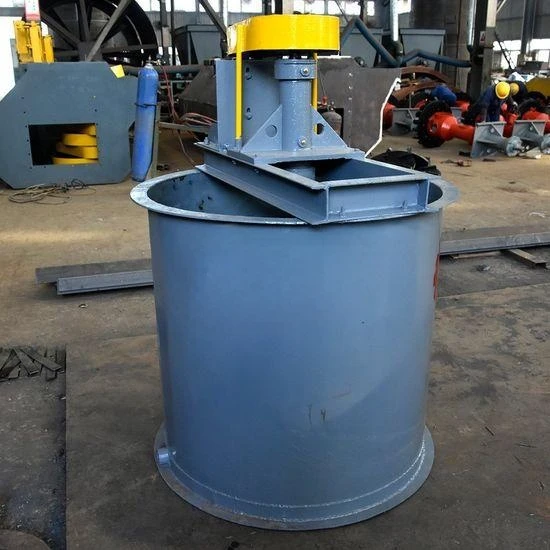












Apa Itu Tangki Agitasi Dasar Kerucut?
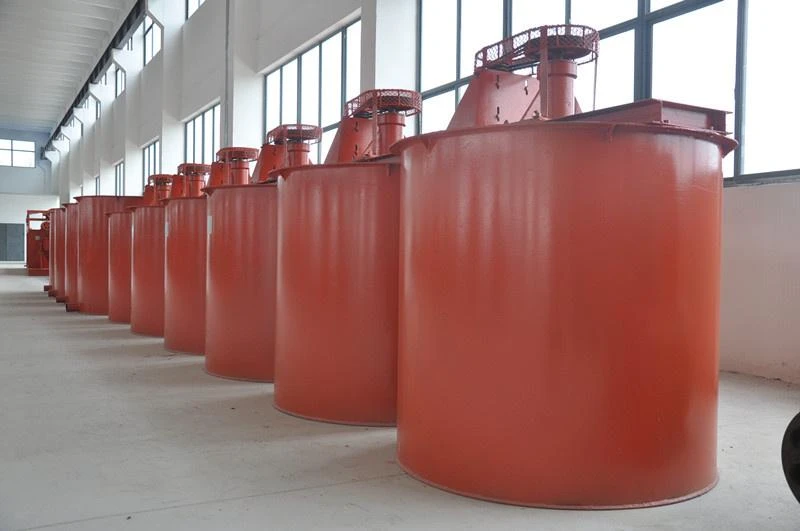
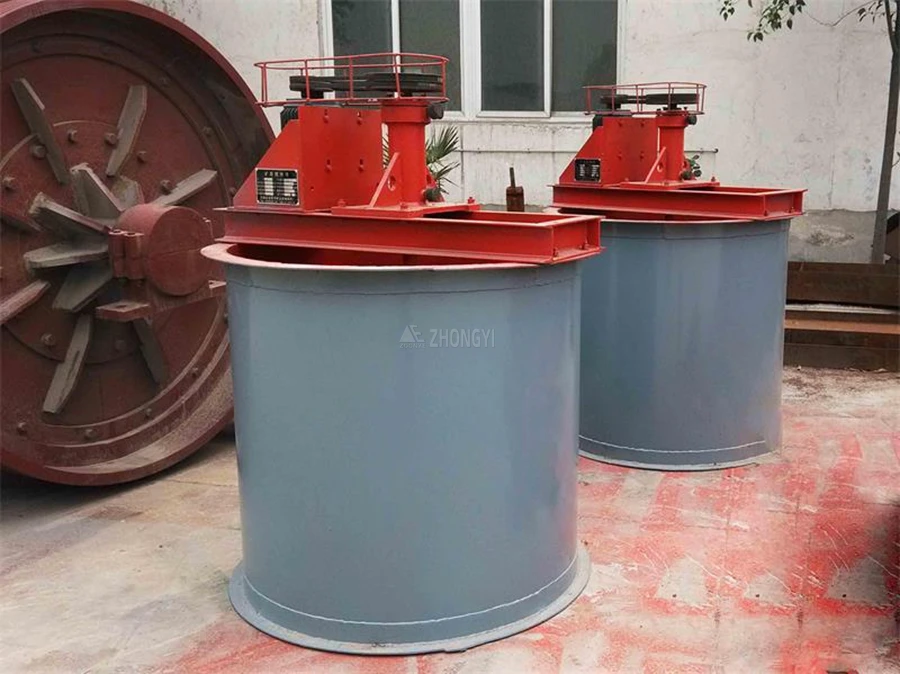
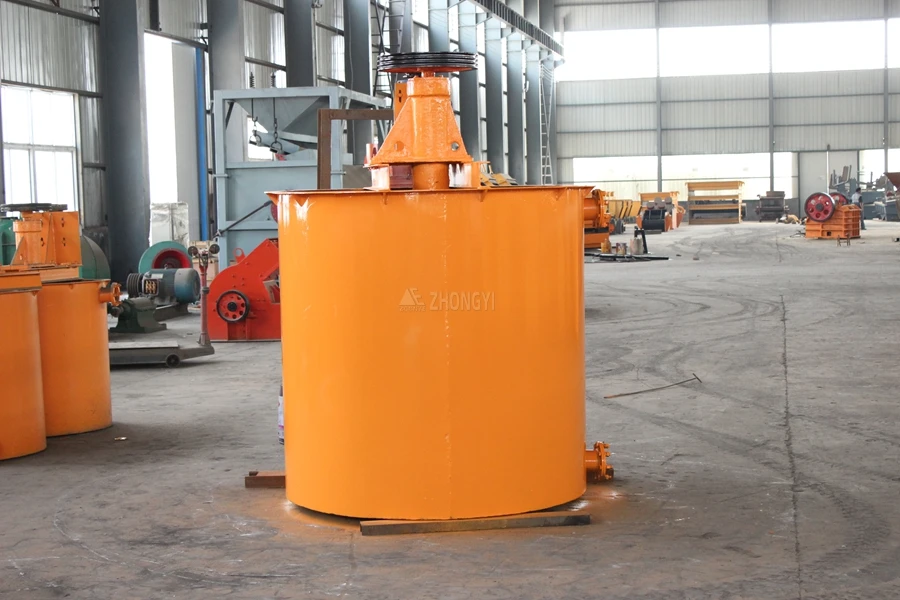
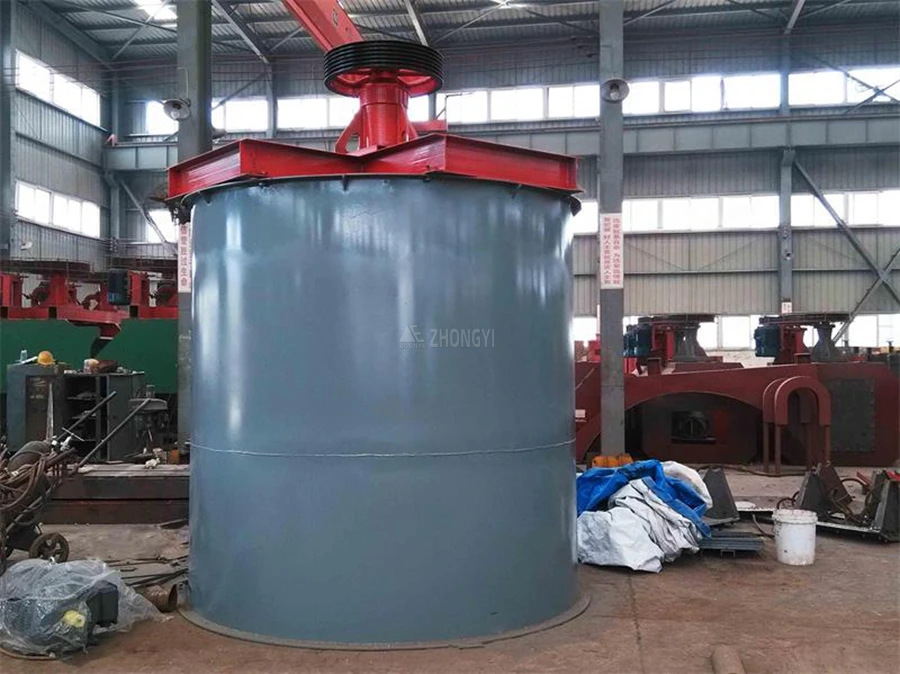
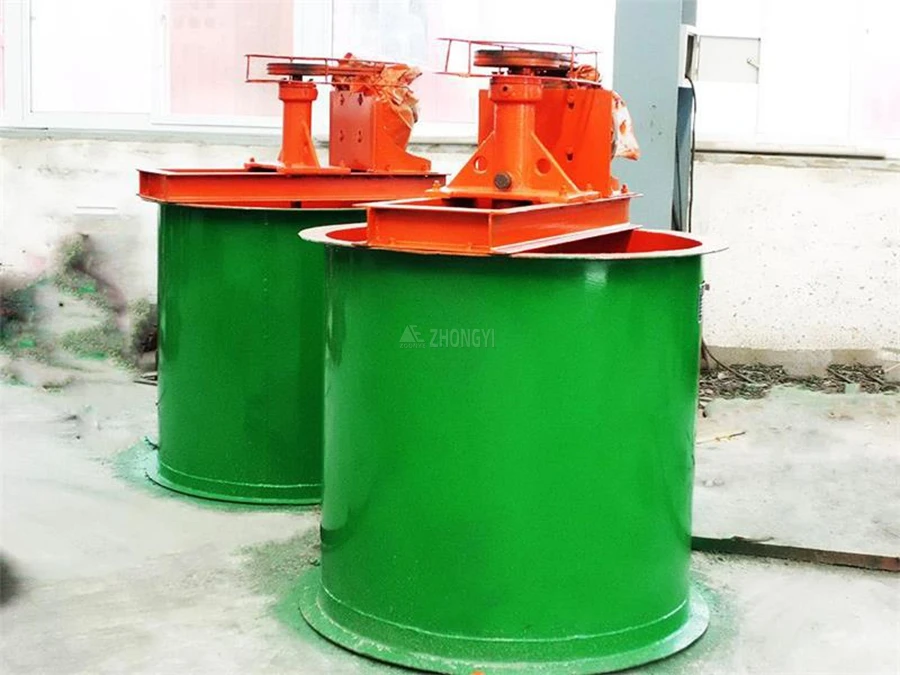
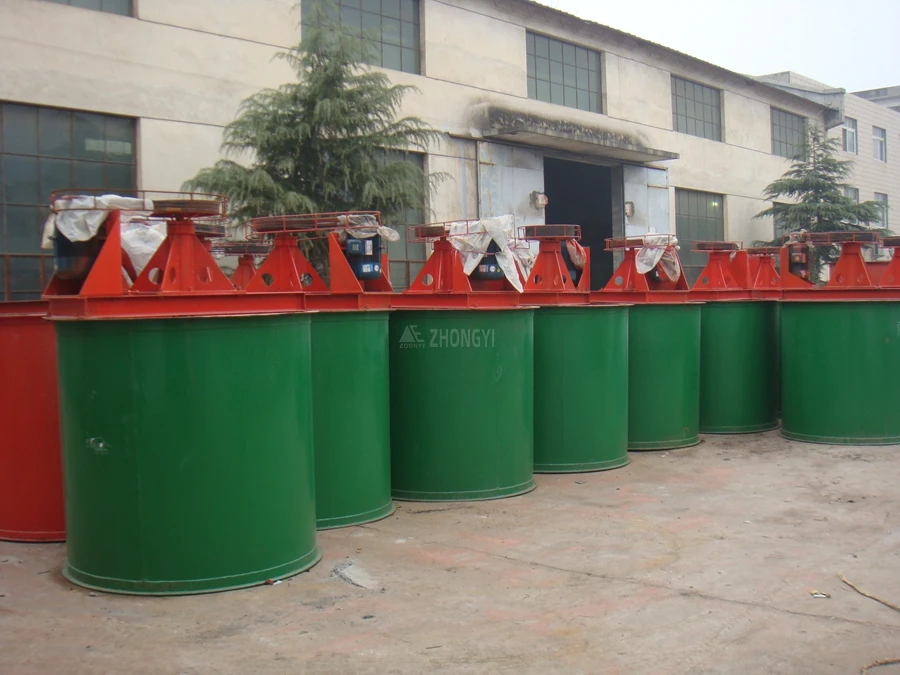
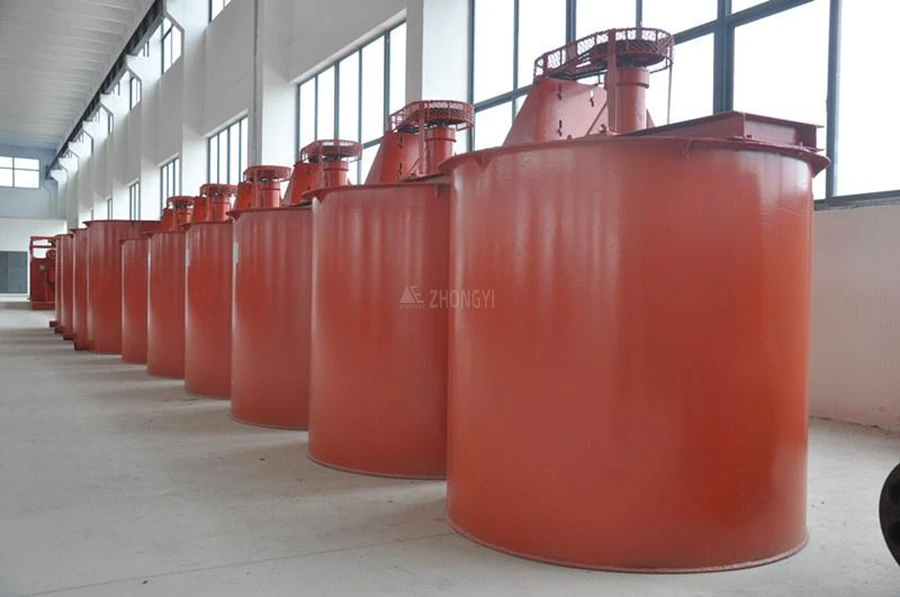
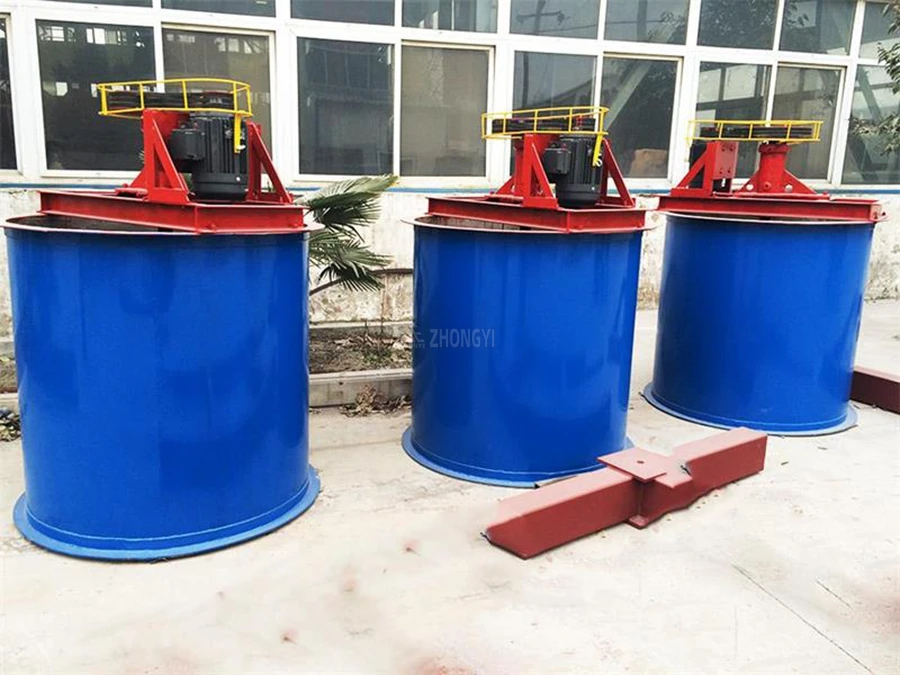
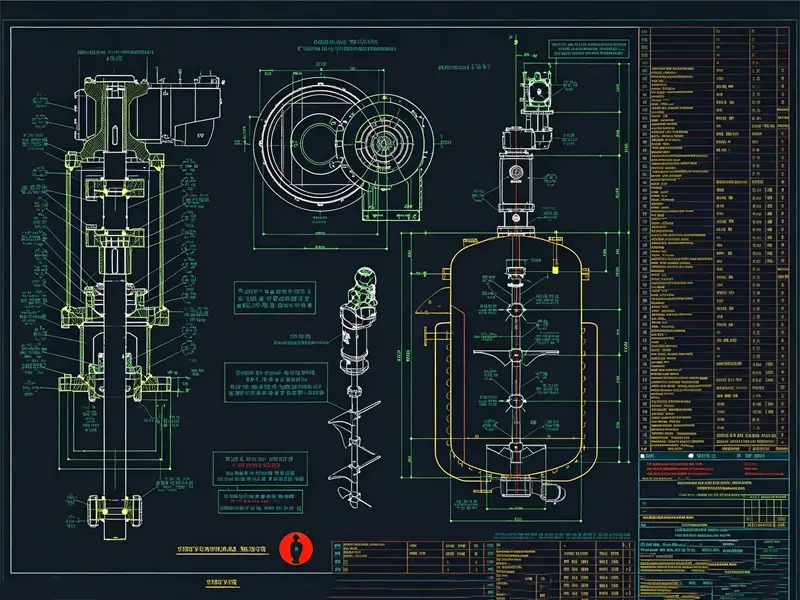
Tangki Agitasi Dasar Kerucut, juga dikenal sebagai Tangki Pencampur Dasar Kerucut, Tangki Agitasi Bubur, atau Tangki Agitasi Pertambangan, adalah bejana pencampur vertikal yang digunakan untuk pengondisian bubur mineral sebelum flotasi. Tangki ini memiliki badan tangki silindris, dasar kerucut, poros vertikal, impeler, motor, sistem transmisi, dan saluran keluar limpahan. Tangki biasanya dipasang setelah peralatan penggilingan dan klasifikasi serta sebelum mesin flotasi, tempat tangki mencampur bubur mineral dengan reagen flotasi dan menjaga suspensi pulp tetap seragam. Tangki ini cocok untuk konsentrasi bubur hingga 30% berdasarkan berat, tergantung pada kondisi proses.
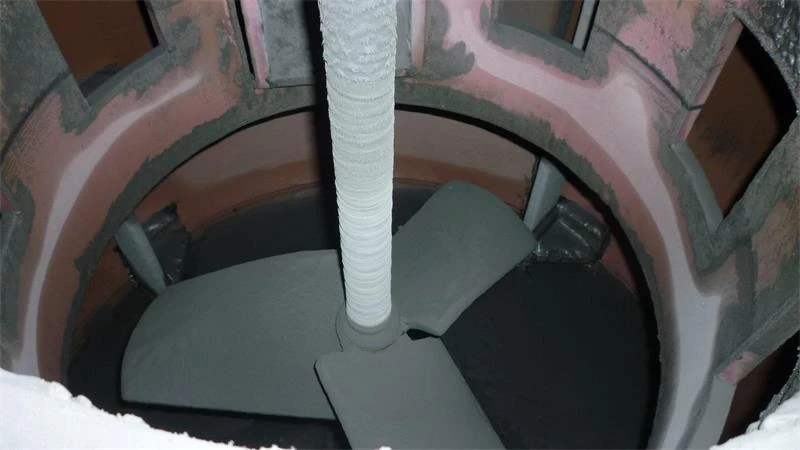
Motor menggerakkan impeler melalui sistem transmisi, menciptakan sirkulasi bubur untuk dispersi reagen yang seragam dan kontak partikel mineral. Dasar kerucut memudahkan pengumpulan dan pengeluaran bubur sekaligus mengurangi penumpukan material di bagian bawah. Untuk pulp yang abrasif atau korosif, tangki dapat dilengkapi dengan lapisan karet tahan aus dan tahan korosi untuk meningkatkan masa pakai dan operasi yang andal.
Prinsip Kerja Tangki Agitasi Dasar Kerucut
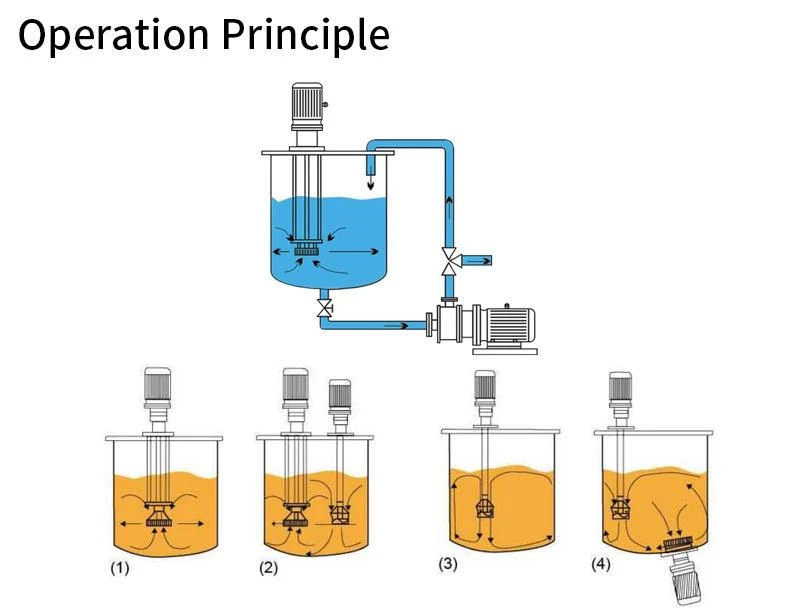
Motor menggerakkan impeler melalui transmisi puli dan sabuk V, menghasilkan sirkulasi aksial dan radial yang kontinu di dalam tangki. Hal ini menjaga partikel mineral tetap tersuspensi dan mendorong kontak yang seragam antara pulp dan reagen flotasi, memberikan pengondisian yang stabil sebelum flotasi. Dasar kerucut mendukung pergerakan bubur menuju bagian bawah dan membantu membatasi penumpukan padatan selama operasi.
Setelah pengondisian, bubur melimpah ke peralatan flotasi di hilir. Dasar berbentuk kerucut juga memudahkan pengurasan dan mengurangi sisa pulp selama pengeluaran dan perawatan. Tangki umumnya dirancang untuk bubur mineral dengan konsentrasi hingga 30% berdasarkan berat dan kepadatan bijih hingga 3,5, tergantung pada kondisi proses tertentu.
Desain Dasar Kerucut dan Sistem Agitasi
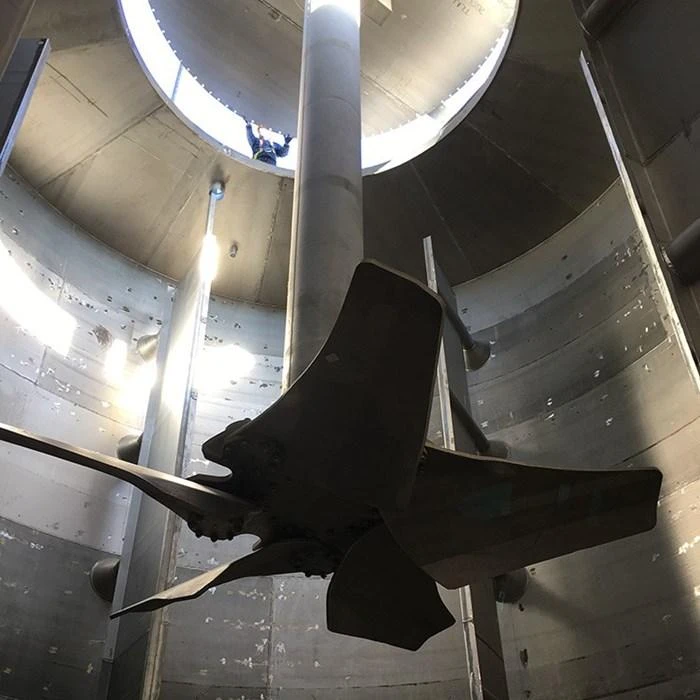
Kinerja tangki agitasi dasar kerucut bergantung pada desain terkoordinasi antara geometri tangki dan sistem agitasi. Dasar kerucut mengarahkan bubur menuju bagian bawah dan mendukung pengeluaran material, sedangkan impeler menghasilkan sirkulasi di seluruh tangki. Kedua komponen ini bekerja sama untuk menjaga pergerakan bubur dan memberikan pengondisian yang konsisten untuk pengolahan mineral.
Spesifikasi Tangki Agitasi Dasar Kerucut
Tabel berikut mencantumkan spesifikasi standar tangki agitasi dasar kerucut seri RJZ. Volume efektif, kecepatan impeler, diameter impeler, dan daya motor bervariasi menurut ukuran tangki dan dipilih sesuai dengan tugas pencampuran yang diperlukan.
| Model | Volume Efektif (m³) | Kecepatan Impeler (r/menit) | Diameter Impeler (mm) | Model Motor | Daya Motor (kW) | Berat (t) |
| RJZ-1000×1000 | 0.62 | 610 | 250 | Y90S-4 | 1.5 | 0.75 |
| RJZ-1250×1250 | 1.51 | 492 | 310 | Y100L₁-4 | 2.2 | 0.95 |
| RJZ-1600×1600 | 2.8 | 332 | 400 | Y132M₁-6 | 4 | 1.33 |
| RJZ-2000×2000 | 5.6 | 305 | 550 | Y160M-6 | 7.5 | 2.6 |
Keunggulan Tangki Agitasi Dasar Kerucut
Untuk pengolahan mineral, tangki agitasi dasar kerucut terutama dihargai karena penanganan buburnya, ketahanan aus, dan pengoperasiannya yang sederhana. Desain ini sangat cocok untuk persiapan flotasi, di mana pencampuran pulp yang konsisten dan pengeluaran yang andal sangat penting.
Aplikasi Tangki Agitasi Dasar Kerucut
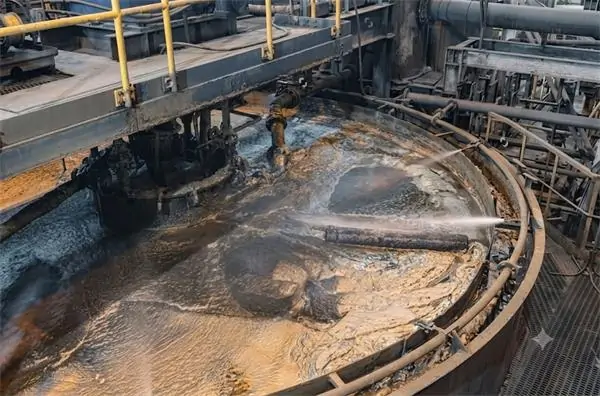
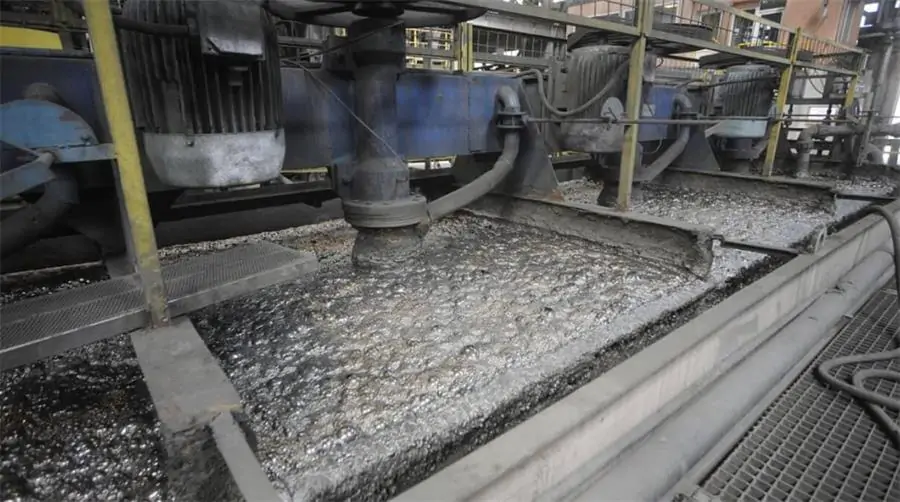
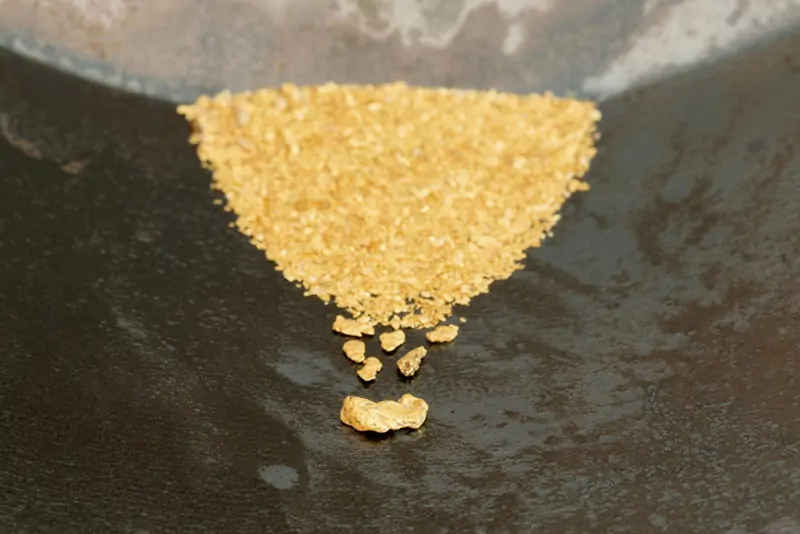
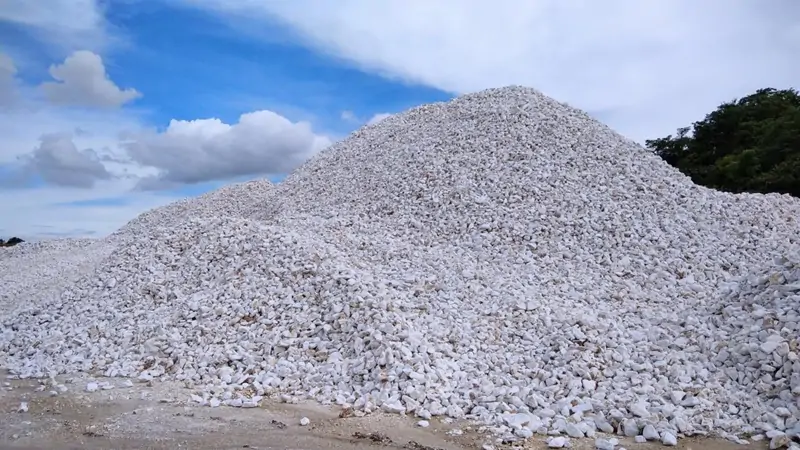
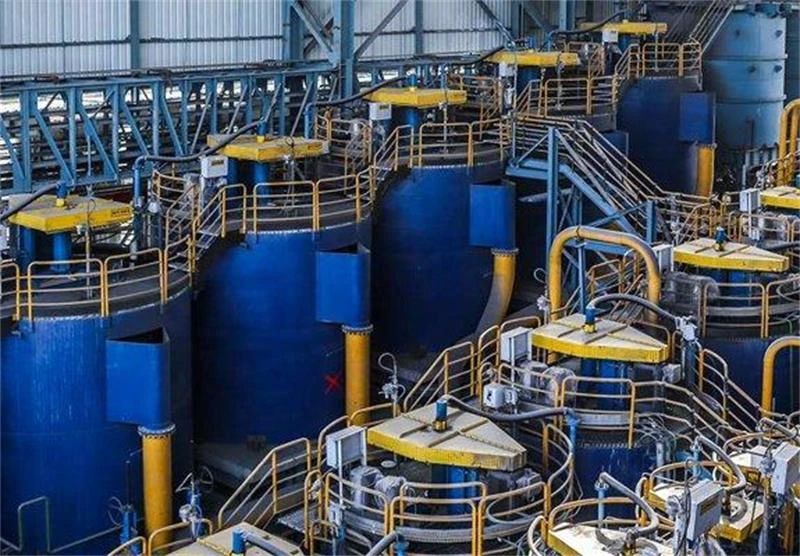
Tangki agitasi dasar kerucut banyak digunakan dalam sirkuit pengolahan mineral di mana persiapan dan pengondisian bubur memengaruhi kinerja pemisahan di hilir. Peran spesifiknya bervariasi menurut jenis bijih, metode flotasi, dan sistem reagen, sehingga konfigurasi tangki dipilih sesuai dengan karakteristik setiap sirkuit pengolahan.
Bagaimana Memilih Tangki Agitasi Dasar Kerucut?
Pemilihan tangki agitasi dasar kerucut harus didasarkan pada kondisi bubur aktual dan tugas pencampuran, bukan hanya kapasitas tangki. Untuk pengolahan mineral, faktor utama meliputi volume efektif, kepadatan bubur, konsentrasi padatan, ukuran partikel, konfigurasi impeler, dan daya motor. Model yang dipilih harus menyediakan volume pengkondisian dan sirkulasi yang cukup untuk operasi yang stabil.
Volume efektif harus sesuai dengan laju aliran bubur dan waktu pengkondisian yang diperlukan. Volume yang diperlukan umumnya ditentukan dari laju aliran bubur dan waktu tinggal, dengan mempertimbangkan kondisi operasi aktual. Kepadatan bubur dan konsentrasi padatan juga harus dipertimbangkan karena beban padatan yang lebih tinggi meningkatkan beban agitasi dan mungkin memerlukan impeler yang lebih besar, input daya yang lebih tinggi, dan perlindungan aus yang sesuai.
Ukuran partikel dan karakteristik pengendapan menentukan kapasitas suspensi yang diperlukan, terutama untuk partikel mineral kasar atau padat. Diameter impeler dan kecepatan rotasi harus disesuaikan dengan dimensi tangki dan sifat bubur. Kecepatan rotasi yang lebih tinggi tidak selalu memberikan pencampuran yang lebih baik; sistem agitasi lengkap harus dipilih untuk mencapai sirkulasi dan dispersi reagen yang cukup sekaligus menghindari konsumsi daya dan keausan yang tidak perlu.
Tangki Agitasi Dasar Kerucut vs Tangki Agitasi Biasa
Perbedaan utama terletak pada geometri dasar dan perilaku aliran serta pengeluaran bubur yang dihasilkan. Dasar kerucut mengarahkan bubur mineral menuju saluran keluar bawah, membuat desain ini cocok untuk pengkondisian bubur dan pengeluaran terkontrol, sedangkan tangki agitasi biasa lebih mengandalkan struktur dasarnya, susunan saluran keluar, dan pola sirkulasi internal. Tidak ada desain yang secara universal lebih baik; pemilihan harus didasarkan pada sifat bubur dan persyaratan sirkuit pengolahan mineral.
| Fitur | Tangki Agitasi Dasar Kerucut | Tangki Agitasi Biasa |
| Geometri Dasar | Dasar kerucut | Dasar konvensional |
| Pengeluaran Bubur | Saluran keluar bawah mendukung pengeluaran bubur terkonsentrasi | Tergantung pada posisi saluran keluar dan desain tangki |
| Akumulasi Padatan | Conical geometry can help reduce lower-section accumulation | More dependent on internal circulation |
| Aplikasi Tipikal | Pre-flotation slurry conditioning and mineral slurry mixing | General slurry mixing and conditioning |
| Selection Focus | Slurry characteristics, discharge behavior, and conditioning duty | Mixing duty, slurry properties, and tank volume |
Materials and Wear Protection
Material selection for a cone bottom agitation tank depends mainly on the abrasiveness, particle size, slurry density, and chemical properties of the pulp. For mineral processing applications, the tank body, impeller, shaft, and other wetted components can be configured with appropriate base materials and protective measures to suit the actual operating conditions.
Badan Tangki
Carbon steel is a common base material for the tank body, while rubber lining or other wear- and corrosion-resistant protection can be added when the slurry contains abrasive solids or corrosive reagents.
Impeller
The impeller is directly exposed to the moving slurry, so its material and protective treatment should be selected according to particle size, slurry density, abrasiveness, and required agitation intensity. This helps control wear on one of the main working components.
Shaft and Wetted Components
The shaft and other wetted parts must withstand both mechanical loading and contact with the slurry. Material selection and surface protection should therefore consider corrosion, abrasive wear, shaft loading, and the operating speed of the agitation system.
Why Choose Our Cone Bottom Agitation Tank?
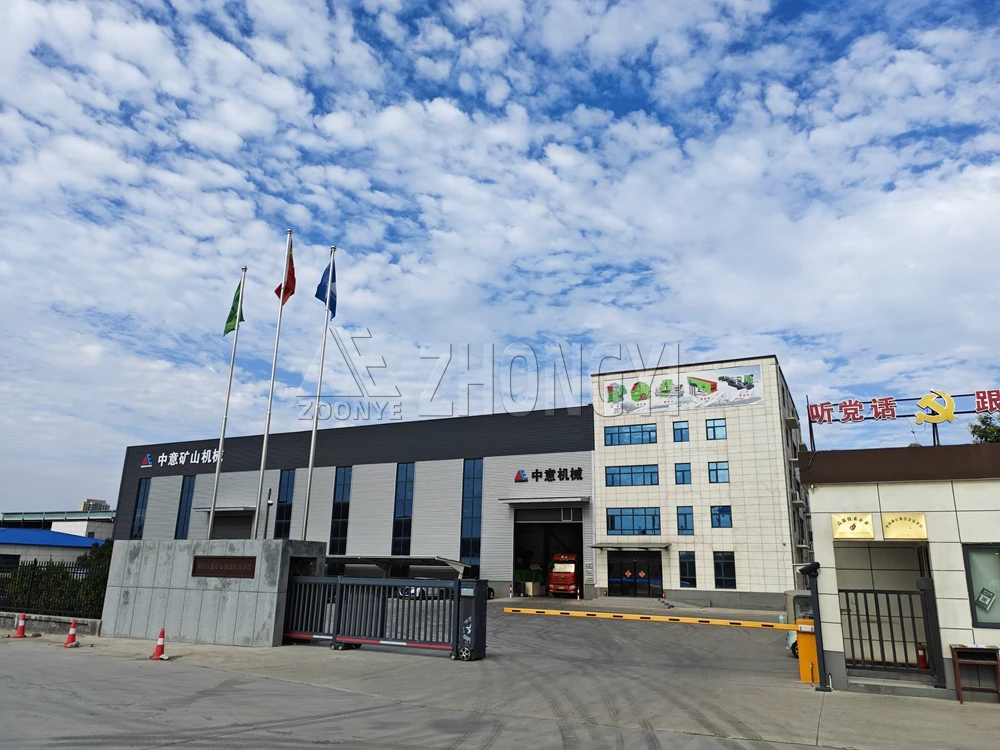
With more than 16 years of manufacturing experience, Zhongyi Machinery operates a 40,000+ m² production facility equipped with more than 60 sets of processing equipment. Design, fabrication, machining, assembly, and inspection are handled through our own production system, giving us direct control over the manufacturing process.
Our workshop covers the key stages of equipment fabrication, including steel cutting, welding, machining, component assembly, and final inspection. Before shipment, each tank is checked against the agreed specifications and configuration, providing a clear quality-control process from fabrication to finished equipment.
Our experience in mining and mineral processing supports practical equipment development and project delivery. With 60+ patent certificates and an established manufacturing team, we can produce equipment for different plant conditions while maintaining the fabrication standards and configuration agreed with each customer.
Minta Solusi yang Disesuaikan
Partner with us for a Cone Bottom Agitation Tank engineered for consistent slurry conditioning, controlled discharge, and reliable operation in flotation and mineral processing applications.
Custom Cone Bottom Agitation Tank Solutions
Every mineral processing circuit has different slurry conditions, plant layouts, and flotation requirements. Share your slurry flow rate, solids concentration, ore density, particle size, required tank volume, and process position, and we can recommend the appropriate cone bottom agitation tank configuration. For complete process planning, explore our Solusi Pabrik Flotasi Mineral to see how agitation, flotation, and related equipment can be integrated into a complete circuit. Contact us with your process details for equipment selection and a project-specific quotation.
Harap Berikan Informasi Berikut:
FAQ
What is a cone bottom agitation tank used for?
A cone bottom agitation tank is mainly used to mix and condition mineral slurry before flotation. It keeps the pulp suspended while distributing flotation reagents throughout the slurry. The conical bottom also helps guide slurry toward the discharge point and limit solids accumulation. It is typically installed after grinding or classification and before flotation equipment in a mineral processing circuit.
How does a cone bottom agitation tank work?
The motor drives the impeller through a pulley and V-belt transmission. The rotating impeller creates circulation within the tank, keeping mineral particles suspended and promoting contact between the pulp and flotation reagents. After conditioning, the prepared slurry is discharged or overflows to the next process stage. The actual mixing performance depends on impeller speed, slurry properties, and tank configuration.
What slurry concentration can a cone bottom agitation tank handle?
The standard RJZ series is designed for mineral slurry concentrations of up to 30% by weight and ore density up to 3.5, subject to the specified operating conditions. Final selection also depends on particle size, slurry flow, settling characteristics, and required mixing intensity. These parameters should be provided when selecting the tank to ensure the agitation system matches the actual pulp conditions.
How do I select the right cone bottom agitation tank?
Tank selection starts with the slurry flow rate and required effective volume. Solids concentration, ore density, particle size, conditioning time, and reagent requirements should also be considered. These factors determine the appropriate tank size, impeller diameter, rotation speed, and motor power. A suitable model should provide enough mixing capacity for the process without unnecessarily increasing equipment size or operating power.
Can a cone bottom agitation tank be used before flotation?
Yes. Pre-flotation conditioning is one of the main applications of a cone bottom agitation tank. It mixes mineral pulp with flotation reagents and maintains the required slurry condition before the flotation machines. When the agitation tank and flotation equipment are arranged at the same elevation, the tank can be used as the pre-flotation conditioning unit, depending on the process layout.
What materials are available for abrasive mineral slurry?
Carbon steel is commonly used for the tank body, while wear- or corrosion-resistant lining can be added according to the slurry conditions. The impeller, shaft, and other wetted components should also be selected based on particle size, slurry density, abrasiveness, and chemical properties. For abrasive mineral pulp, appropriate wear protection helps reduce component wear and maintain reliable operation.
What are the standard specifications of the RJZ cone bottom agitation tank?
The standard RJZ series includes RJZ-1000×1000, RJZ-1250×1250, RJZ-1600×1600, and RJZ-2000×2000, with effective volumes from 0.62 to 5.60 m³. Impeller speeds range from 305 to 610 r/min, while motor power ranges from 1.5 to 7.5 kW. The final configuration can be adjusted when slurry conditions or plant requirements differ from the standard models.
What information is needed for a cone bottom agitation tank quotation?
For preliminary selection, provide the slurry flow rate, solids concentration, ore density, particle size, and required effective volume. Information about flotation reagents, operating temperature, process position, and plant layout can further improve equipment selection. Based on these details, we can recommend a suitable tank model, agitation configuration, and relevant options for the specific mineral processing application.