What Is a Cone Bottom Agitation Tank?
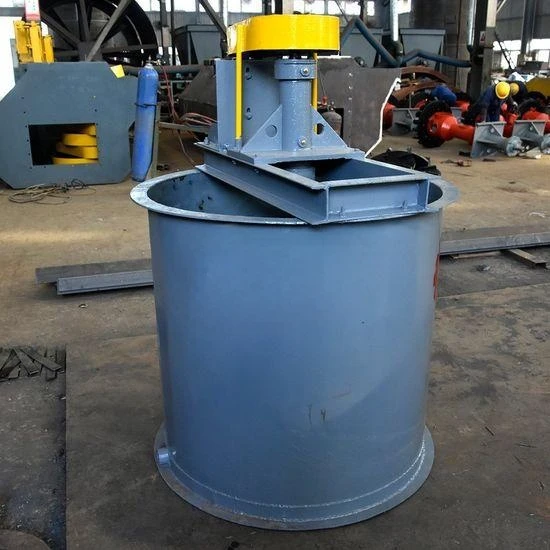
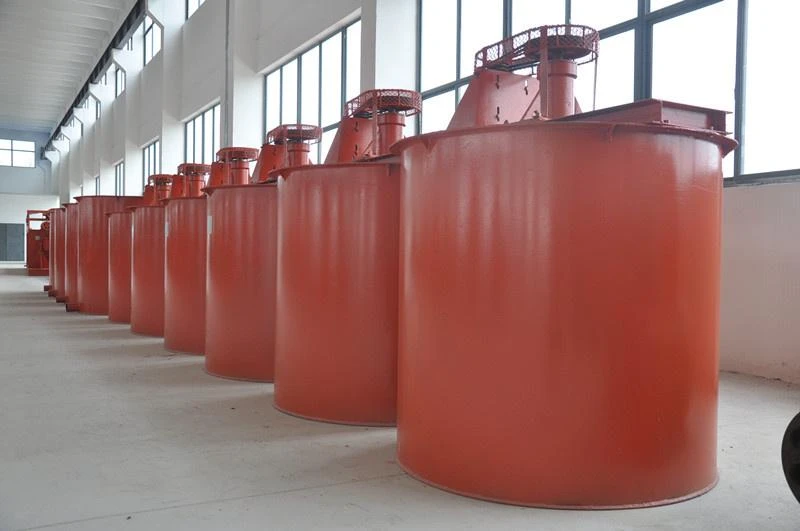
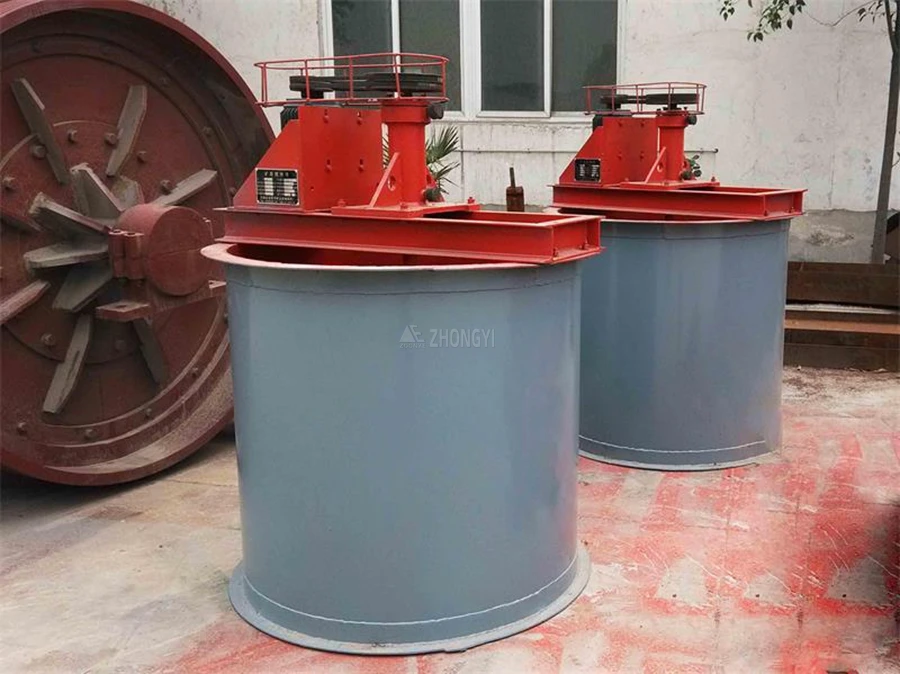
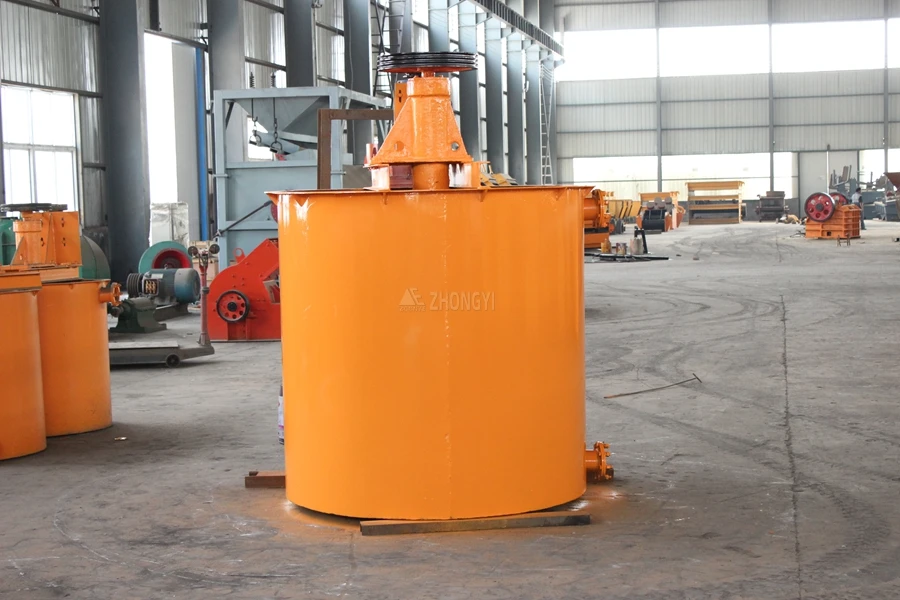
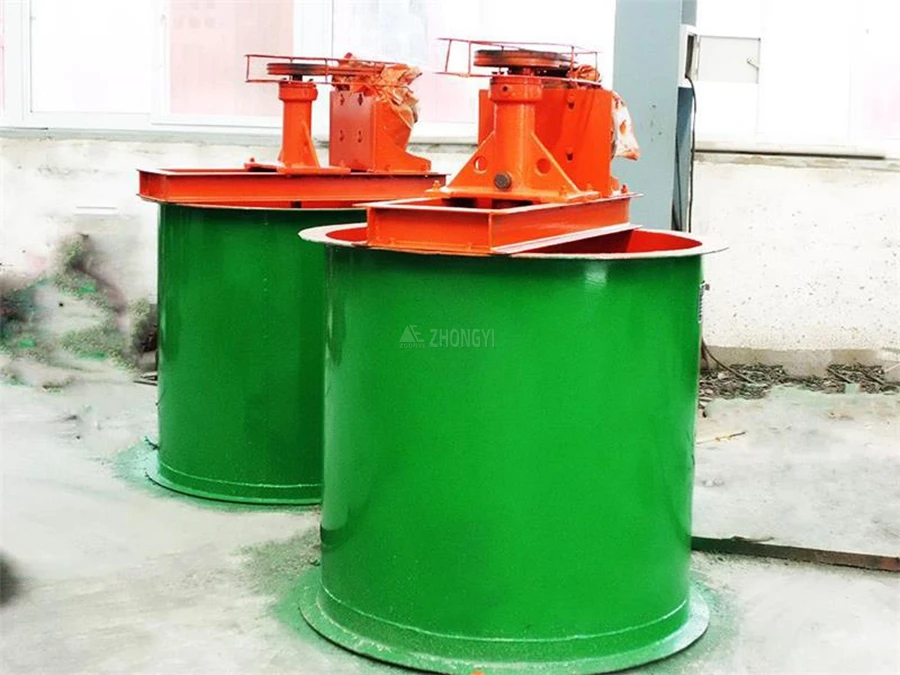
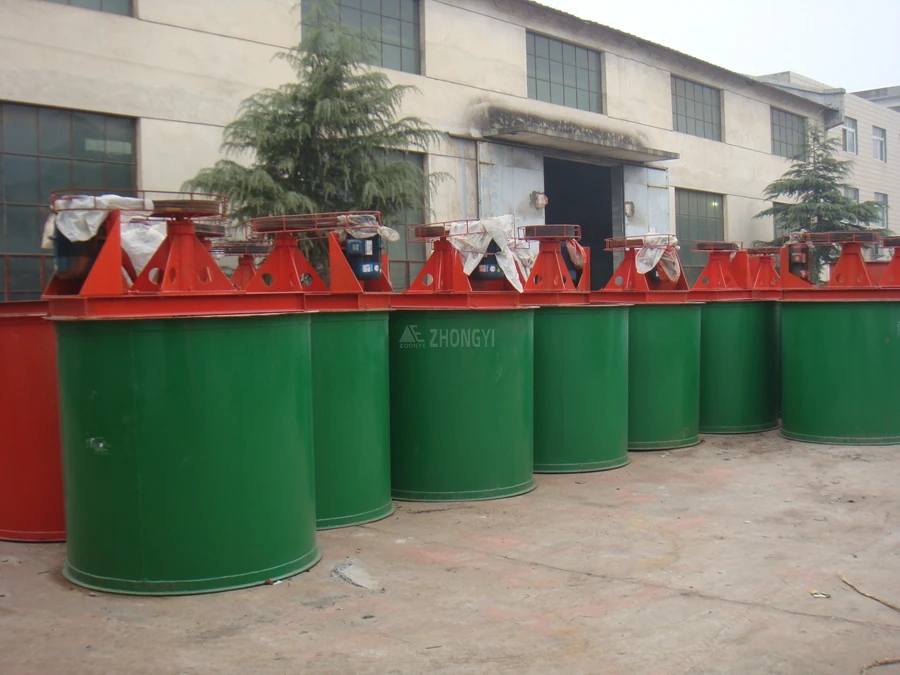
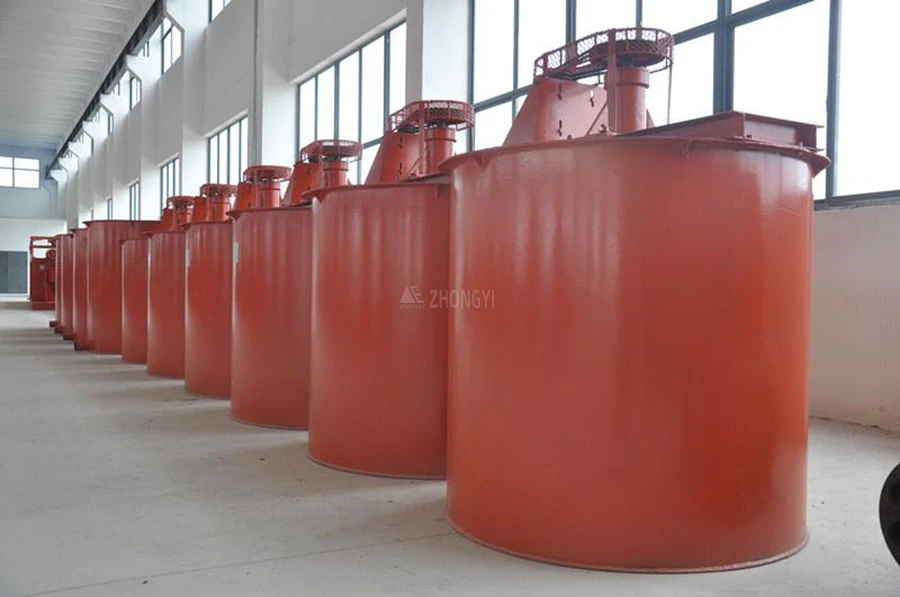
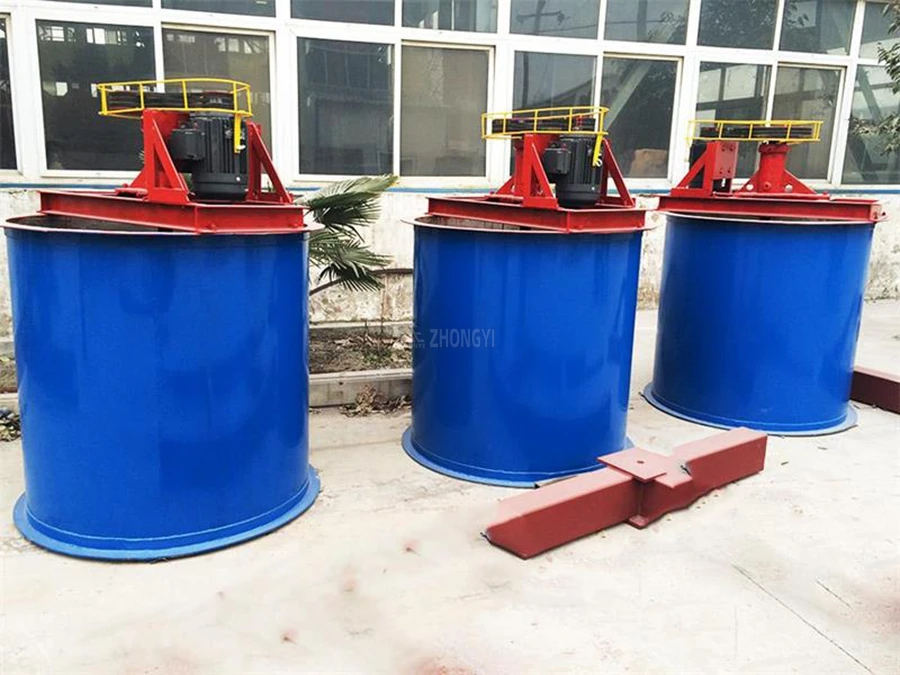
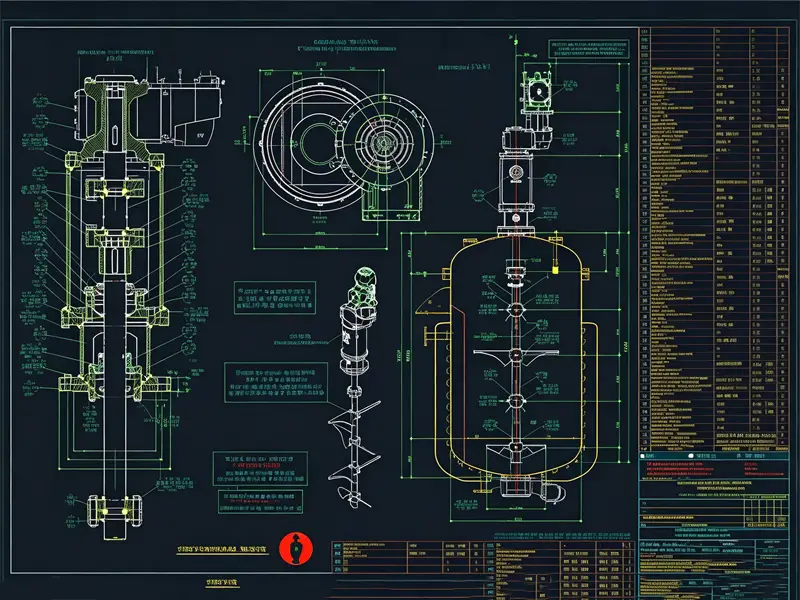
A Cone Bottom Agitation Tank, also known as a Cone Bottom Mixing Tank, Slurry Agitation Tank, or Mining Agitation Tank, is a vertical mixing vessel used for mineral slurry conditioning before flotation. It features a cylindrical tank body, conical bottom, vertical shaft, impeller, motor, transmission system, and overflow outlet. The tank is typically installed after grinding and classification equipment and before flotation machines, where it mixes mineral slurry with flotation reagents and maintains uniform pulp suspension. It is suitable for slurry concentrations of up to 30% by weight, depending on process conditions.
The motor drives the impeller through the transmission system, creating slurry circulation for uniform reagent dispersion and mineral-particle contact. The conical bottom facilitates slurry collection and discharge while reducing material accumulation in the lower section. For abrasive or corrosive pulp, the tank can be equipped with wear-resistant and corrosion-resistant rubber lining for improved service life and reliable operation.
Cone Bottom Agitation Tank Working Principle
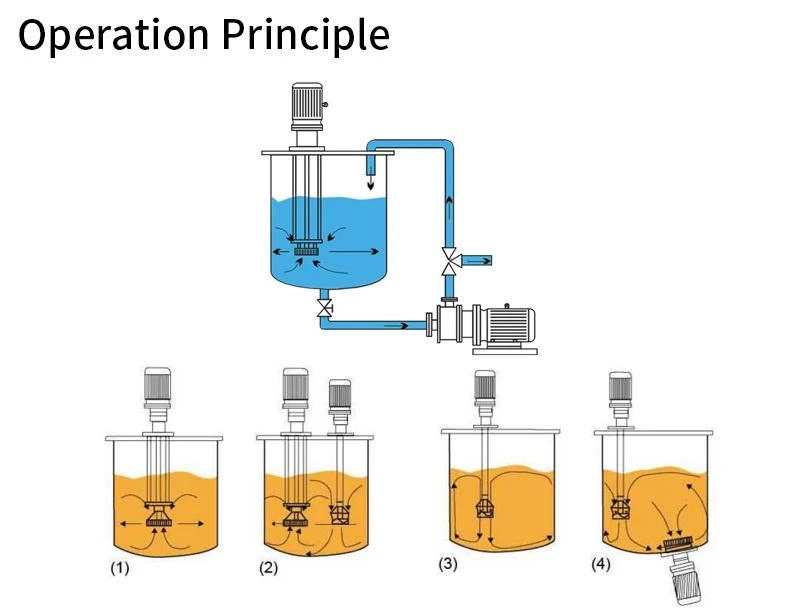
The motor drives the impeller through a pulley and V-belt transmission, generating continuous axial and radial circulation inside the tank. This keeps mineral particles suspended and promotes uniform contact between the pulp and flotation reagents, providing stable conditioning before flotation. The conical bottom supports slurry movement toward the lower section and helps limit solids accumulation during operation.
After conditioning, the slurry overflows into the downstream flotation equipment. The cone-shaped bottom also facilitates drainage and reduces residual pulp during discharge and maintenance. The tank is generally designed for mineral slurry with a concentration of up to 30% by weight and ore density up to 3.5, subject to specific process conditions.
Cone Bottom Design and Agitation System
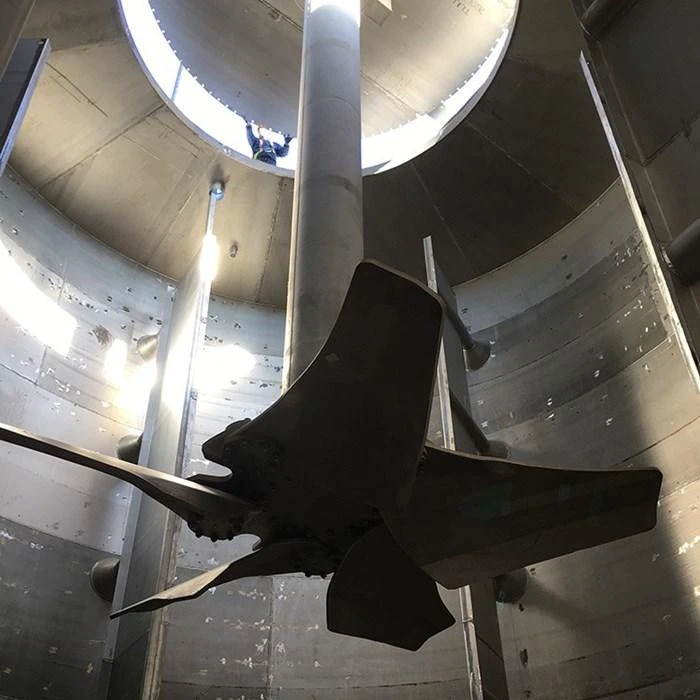
The performance of a cone bottom agitation tank depends on the coordinated design of the tank geometry and agitation system. The conical bottom guides slurry toward the lower section and supports material discharge, while the impeller generates circulation throughout the tank. These two components work together to maintain slurry movement and provide consistent conditioning for mineral processing.
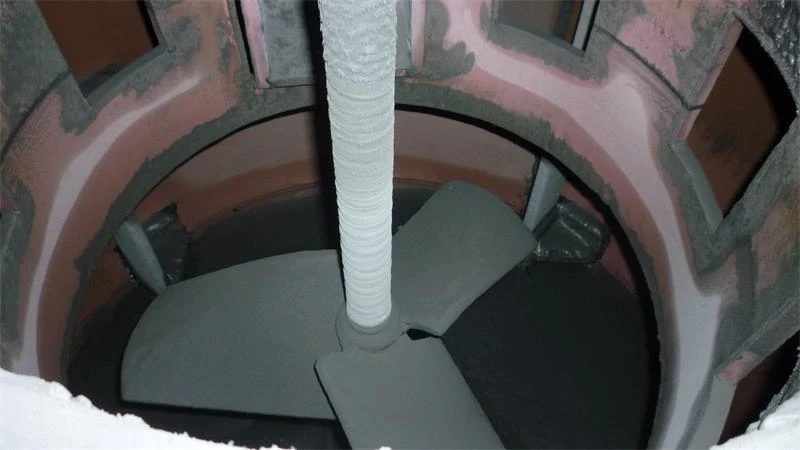
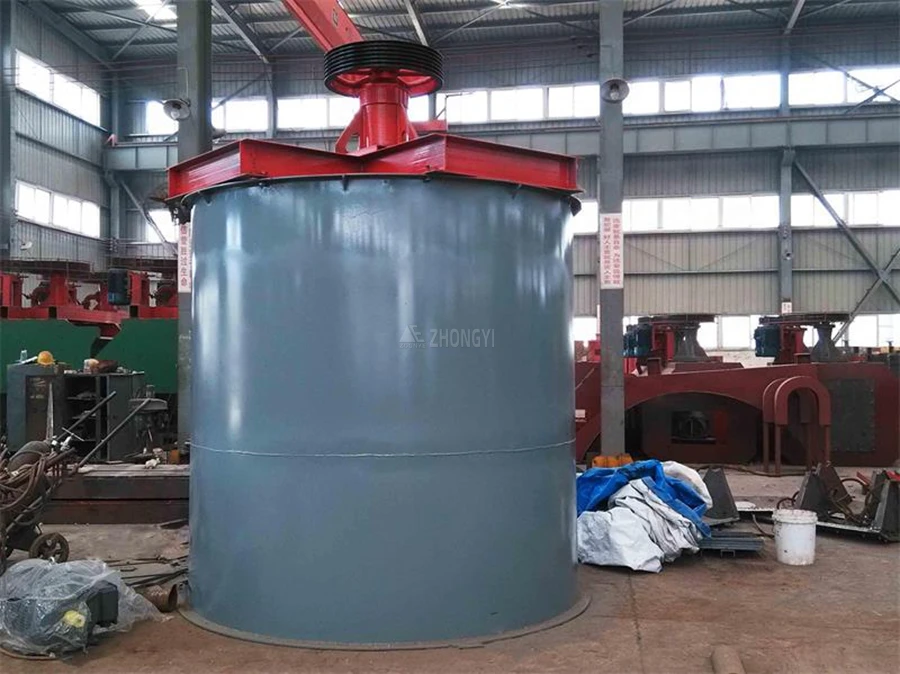
Cone Bottom Agitation Tank Specifications
The following table lists the standard specifications of the RJZ series cone bottom agitation tanks. Effective volume, impeller speed, impeller diameter, and motor power vary by tank size and are selected according to the required mixing duty.
| Model | Effective Volume (m³) | Impeller Speed (r/min) | Impeller Diameter (mm) | Motor Model | Motor Power (kW) | Weight (t) |
| RJZ-1000×1000 | 0.62 | 610 | 250 | Y90S-4 | 1.5 | 0.75 |
| RJZ-1250×1250 | 1.51 | 492 | 310 | Y100L₁-4 | 2.2 | 0.95 |
| RJZ-1600×1600 | 2.8 | 332 | 400 | Y132M₁-6 | 4 | 1.33 |
| RJZ-2000×2000 | 5.6 | 305 | 550 | Y160M-6 | 7.5 | 2.6 |
Advantages of Cone Bottom Agitation Tank
For mineral processing, the cone bottom agitation tank is mainly valued for its slurry handling, wear resistance, and straightforward operation. The design is particularly suited to flotation preparation, where consistent pulp mixing and dependable discharge are important.
Applications of Cone Bottom Agitation Tanks
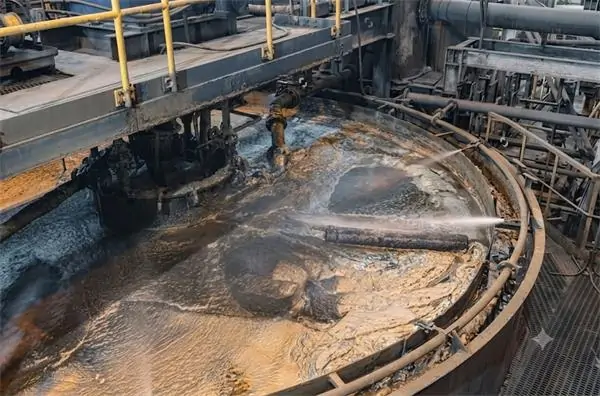
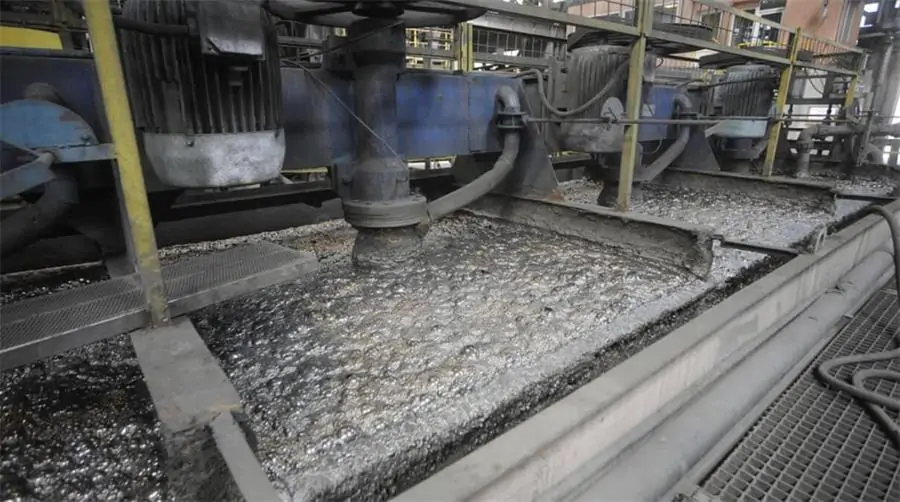
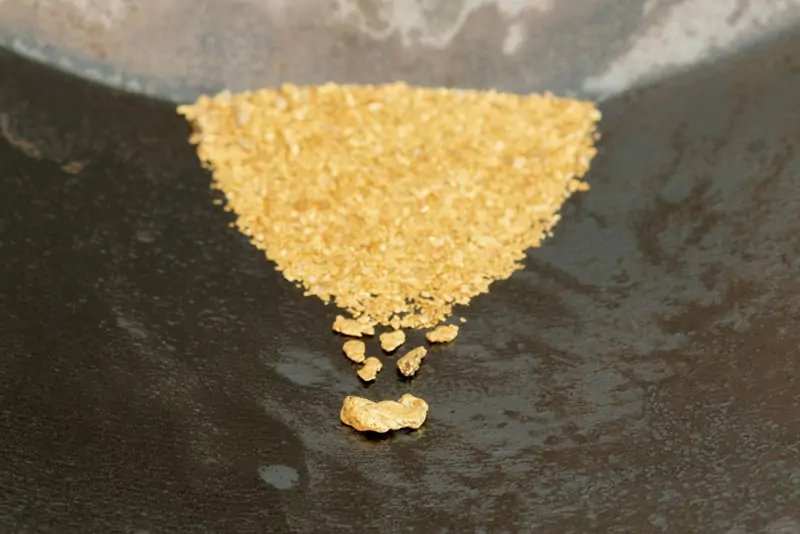
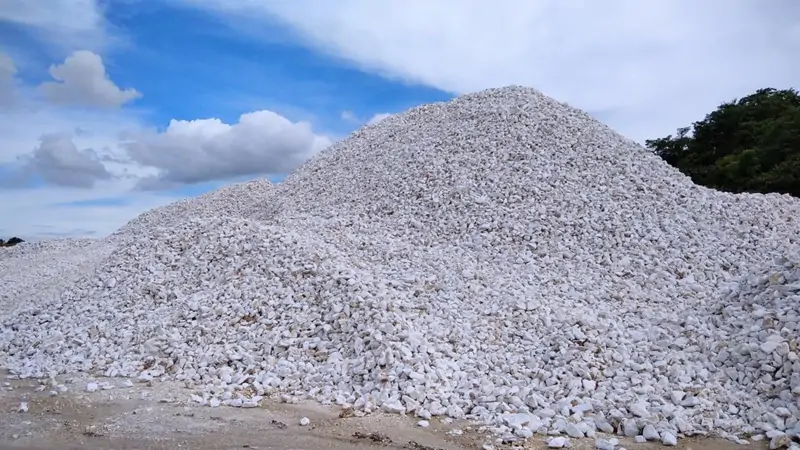
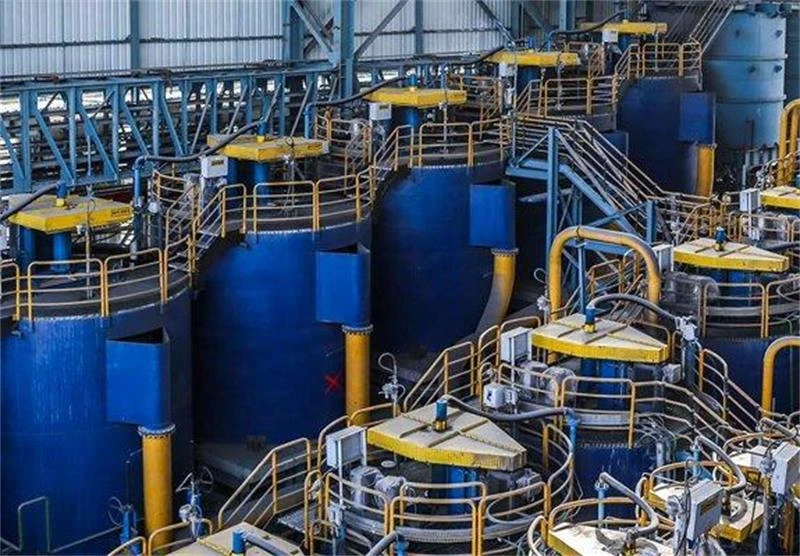
Cone bottom agitation tanks are widely used in mineral processing circuits where slurry preparation and conditioning affect downstream separation performance. The specific role varies with the ore type, flotation method, and reagent system, so the tank configuration is selected according to the characteristics of each processing circuit.
How to Select a Cone Bottom Agitation Tank?
Selecting a cone bottom agitation tank should be based on the actual slurry conditions and mixing duty, rather than tank capacity alone. For mineral processing, the main factors include effective volume, slurry density, solids concentration, particle size, impeller configuration, and motor power. The selected model should provide sufficient conditioning volume and circulation for stable operation.
Effective volume should match the slurry flow rate and required conditioning time. The required volume is generally determined from slurry flow rate and residence time, with allowance for actual operating conditions. Slurry density and solids concentration should also be considered because higher solids loading increases the agitation load and may require a larger impeller, higher power input, and suitable wear protection.
Particle size and settling characteristics determine the required suspension capacity, particularly for coarse or dense mineral particles. Impeller diameter and rotation speed should therefore be matched with tank dimensions and slurry properties. A higher rotation speed does not necessarily provide better mixing; the complete agitation system should be selected to achieve sufficient circulation and reagent dispersion while avoiding unnecessary power consumption and wear.
Cone Bottom Agitation Tank vs Ordinary Agitation Tank
The main difference lies in the bottom geometry and resulting slurry flow and discharge behavior. A cone bottom guides mineral slurry toward the lower outlet, making the design suitable for slurry conditioning and controlled discharge, while ordinary agitation tanks rely more on their bottom structure, outlet arrangement, and internal circulation pattern. Neither design is universally better; selection should be based on slurry properties and the requirements of the mineral processing circuit.
| Feature | Cone Bottom Agitation Tank | Ordinary Agitation Tank |
| Bottom Geometry | Conical bottom | Conventional bottom |
| Slurry Discharge | Bottom outlet supports concentrated slurry discharge | Depends on outlet position and tank design |
| Solids Accumulation | Conical geometry can help reduce lower-section accumulation | More dependent on internal circulation |
| Typical Application | Pre-flotation slurry conditioning and mineral slurry mixing | General slurry mixing and conditioning |
| Selection Focus | Slurry characteristics, discharge behavior, and conditioning duty | Mixing duty, slurry properties, and tank volume |
Materials and Wear Protection
Material selection for a cone bottom agitation tank depends mainly on the abrasiveness, particle size, slurry density, and chemical properties of the pulp. For mineral processing applications, the tank body, impeller, shaft, and other wetted components can be configured with appropriate base materials and protective measures to suit the actual operating conditions.
Tank Body
Carbon steel is a common base material for the tank body, while rubber lining or other wear- and corrosion-resistant protection can be added when the slurry contains abrasive solids or corrosive reagents.
Impeller
The impeller is directly exposed to the moving slurry, so its material and protective treatment should be selected according to particle size, slurry density, abrasiveness, and required agitation intensity. This helps control wear on one of the main working components.
Shaft and Wetted Components
The shaft and other wetted parts must withstand both mechanical loading and contact with the slurry. Material selection and surface protection should therefore consider corrosion, abrasive wear, shaft loading, and the operating speed of the agitation system.
Why Choose Our Cone Bottom Agitation Tank?
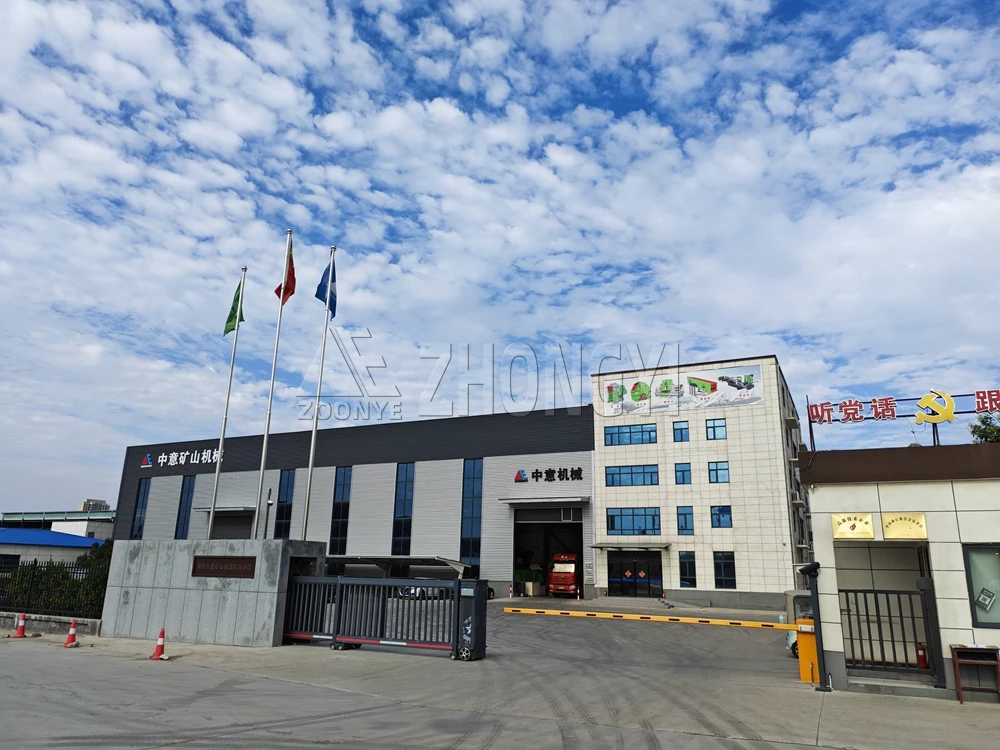
With more than 16 years of manufacturing experience, Zhongyi Machinery operates a 40,000+ m² production facility equipped with more than 60 sets of processing equipment. Design, fabrication, machining, assembly, and inspection are handled through our own production system, giving us direct control over the manufacturing process.
Our workshop covers the key stages of equipment fabrication, including steel cutting, welding, machining, component assembly, and final inspection. Before shipment, each tank is checked against the agreed specifications and configuration, providing a clear quality-control process from fabrication to finished equipment.
Our experience in mining and mineral processing supports practical equipment development and project delivery. With 60+ patent certificates and an established manufacturing team, we can produce equipment for different plant conditions while maintaining the fabrication standards and configuration agreed with each customer.
Request a Customized Solution
Partner with us for a Cone Bottom Agitation Tank engineered for consistent slurry conditioning, controlled discharge, and reliable operation in flotation and mineral processing applications.
Custom Cone Bottom Agitation Tank Solutions
Every mineral processing circuit has different slurry conditions, plant layouts, and flotation requirements. Share your slurry flow rate, solids concentration, ore density, particle size, required tank volume, and process position, and we can recommend the appropriate cone bottom agitation tank configuration. For complete process planning, explore our Mineral Flotation Plants Solution to see how agitation, flotation, and related equipment can be integrated into a complete circuit. Contact us with your process details for equipment selection and a project-specific quotation.
Please Provide the Following Information:
FAQs
What is a cone bottom agitation tank used for?
A cone bottom agitation tank is mainly used to mix and condition mineral slurry before flotation. It keeps the pulp suspended while distributing flotation reagents throughout the slurry. The conical bottom also helps guide slurry toward the discharge point and limit solids accumulation. It is typically installed after grinding or classification and before flotation equipment in a mineral processing circuit.
How does a cone bottom agitation tank work?
The motor drives the impeller through a pulley and V-belt transmission. The rotating impeller creates circulation within the tank, keeping mineral particles suspended and promoting contact between the pulp and flotation reagents. After conditioning, the prepared slurry is discharged or overflows to the next process stage. The actual mixing performance depends on impeller speed, slurry properties, and tank configuration.
What slurry concentration can a cone bottom agitation tank handle?
The standard RJZ series is designed for mineral slurry concentrations of up to 30% by weight and ore density up to 3.5, subject to the specified operating conditions. Final selection also depends on particle size, slurry flow, settling characteristics, and required mixing intensity. These parameters should be provided when selecting the tank to ensure the agitation system matches the actual pulp conditions.
How do I select the right cone bottom agitation tank?
Tank selection starts with the slurry flow rate and required effective volume. Solids concentration, ore density, particle size, conditioning time, and reagent requirements should also be considered. These factors determine the appropriate tank size, impeller diameter, rotation speed, and motor power. A suitable model should provide enough mixing capacity for the process without unnecessarily increasing equipment size or operating power.
Can a cone bottom agitation tank be used before flotation?
Yes. Pre-flotation conditioning is one of the main applications of a cone bottom agitation tank. It mixes mineral pulp with flotation reagents and maintains the required slurry condition before the flotation machines. When the agitation tank and flotation equipment are arranged at the same elevation, the tank can be used as the pre-flotation conditioning unit, depending on the process layout.
What materials are available for abrasive mineral slurry?
Carbon steel is commonly used for the tank body, while wear- or corrosion-resistant lining can be added according to the slurry conditions. The impeller, shaft, and other wetted components should also be selected based on particle size, slurry density, abrasiveness, and chemical properties. For abrasive mineral pulp, appropriate wear protection helps reduce component wear and maintain reliable operation.
What are the standard specifications of the RJZ cone bottom agitation tank?
The standard RJZ series includes RJZ-1000×1000, RJZ-1250×1250, RJZ-1600×1600, and RJZ-2000×2000, with effective volumes from 0.62 to 5.60 m³. Impeller speeds range from 305 to 610 r/min, while motor power ranges from 1.5 to 7.5 kW. The final configuration can be adjusted when slurry conditions or plant requirements differ from the standard models.
What information is needed for a cone bottom agitation tank quotation?
For preliminary selection, provide the slurry flow rate, solids concentration, ore density, particle size, and required effective volume. Information about flotation reagents, operating temperature, process position, and plant layout can further improve equipment selection. Based on these details, we can recommend a suitable tank model, agitation configuration, and relevant options for the specific mineral processing application.