









Qu'est-ce que la cellule de flottation par air XCF ?
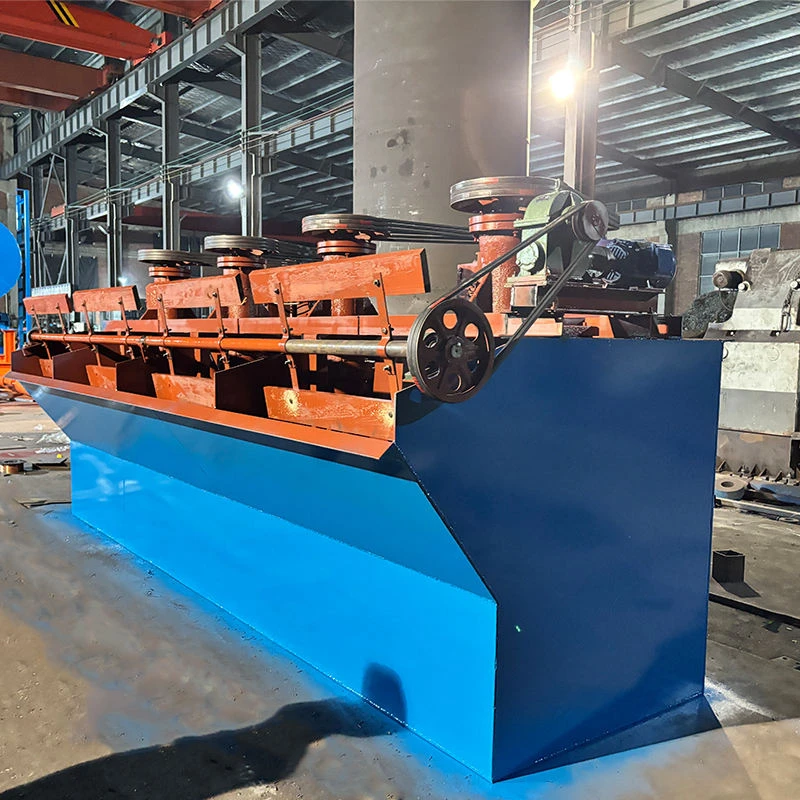
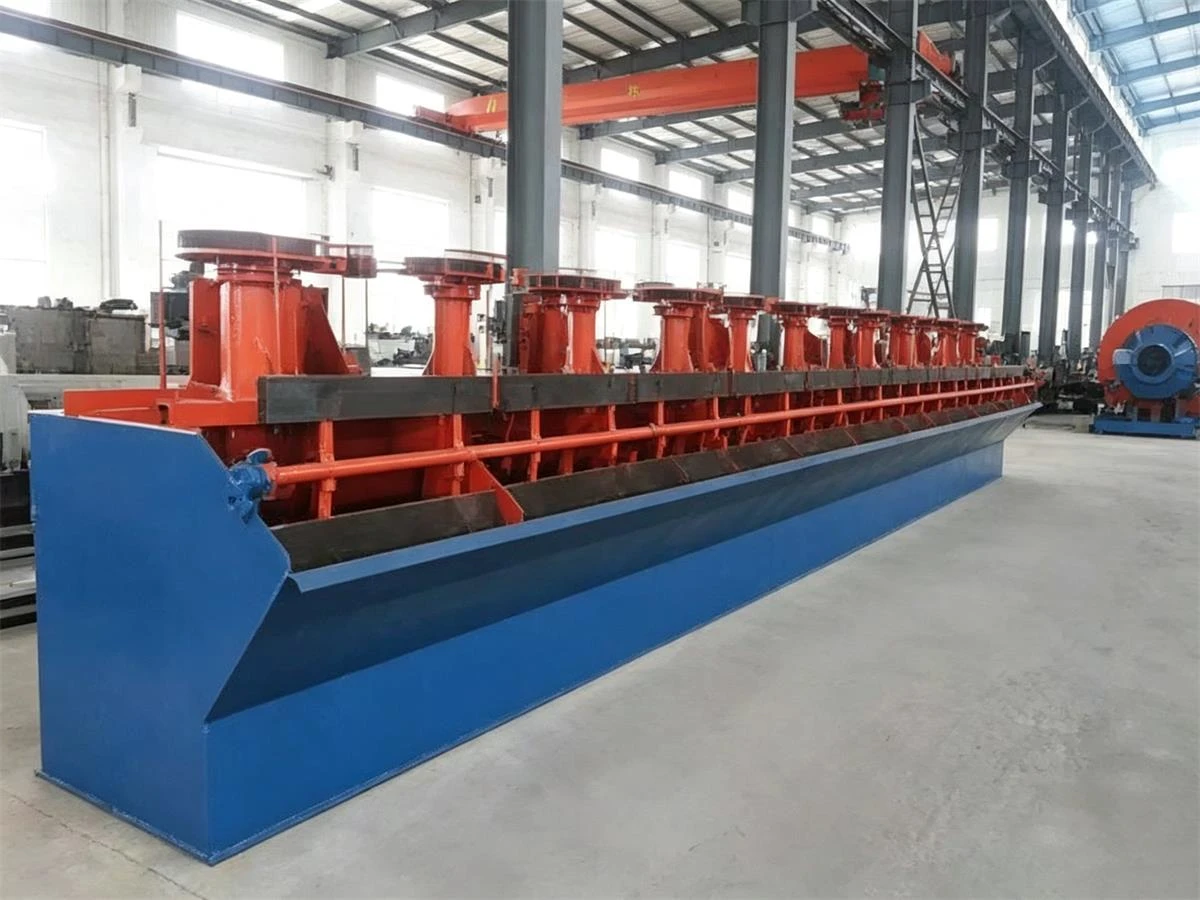
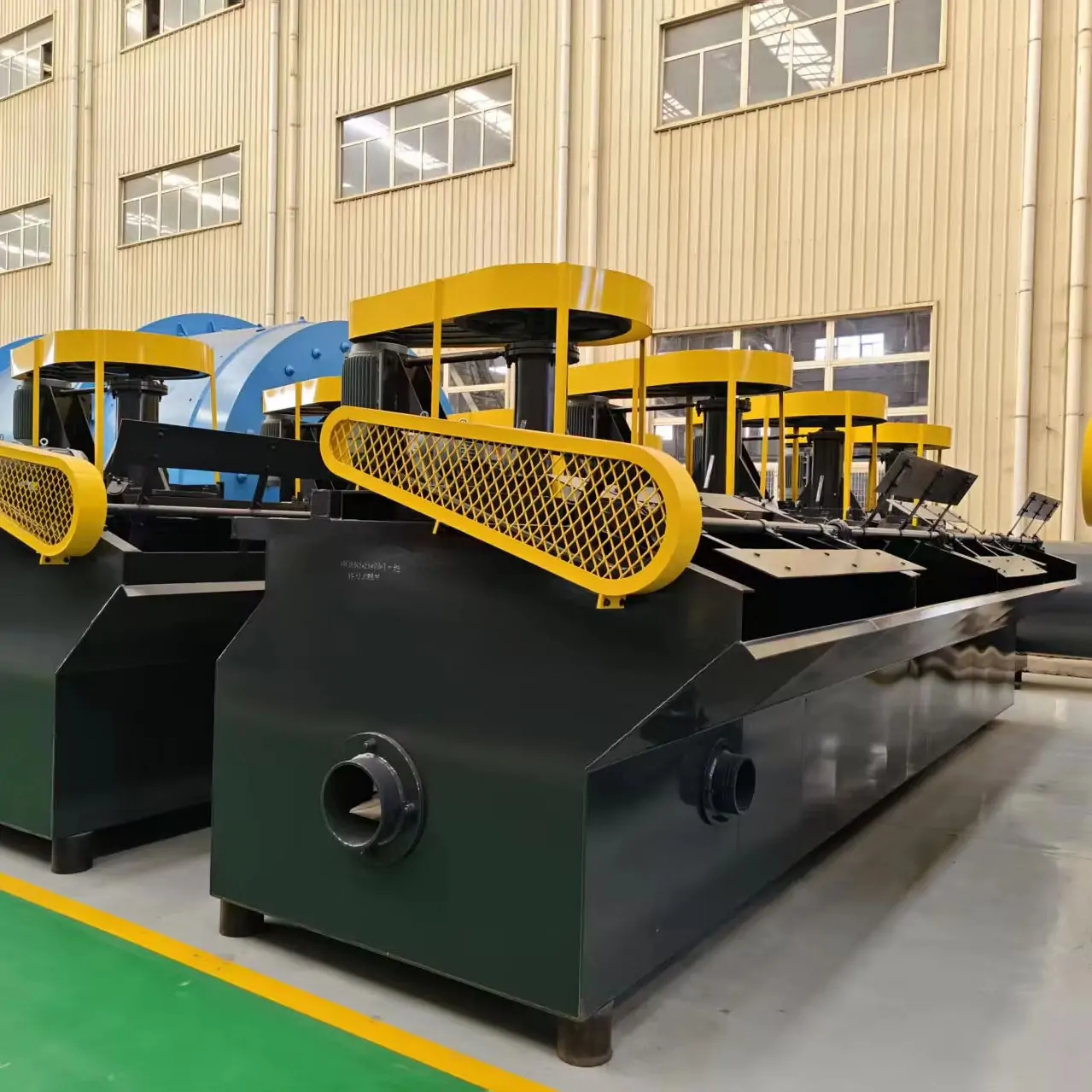
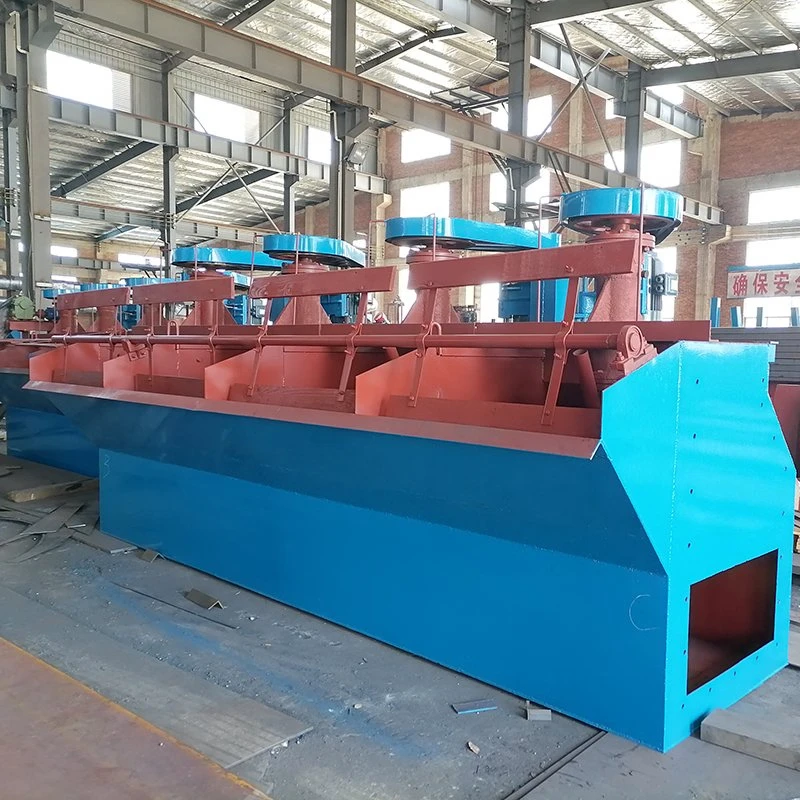
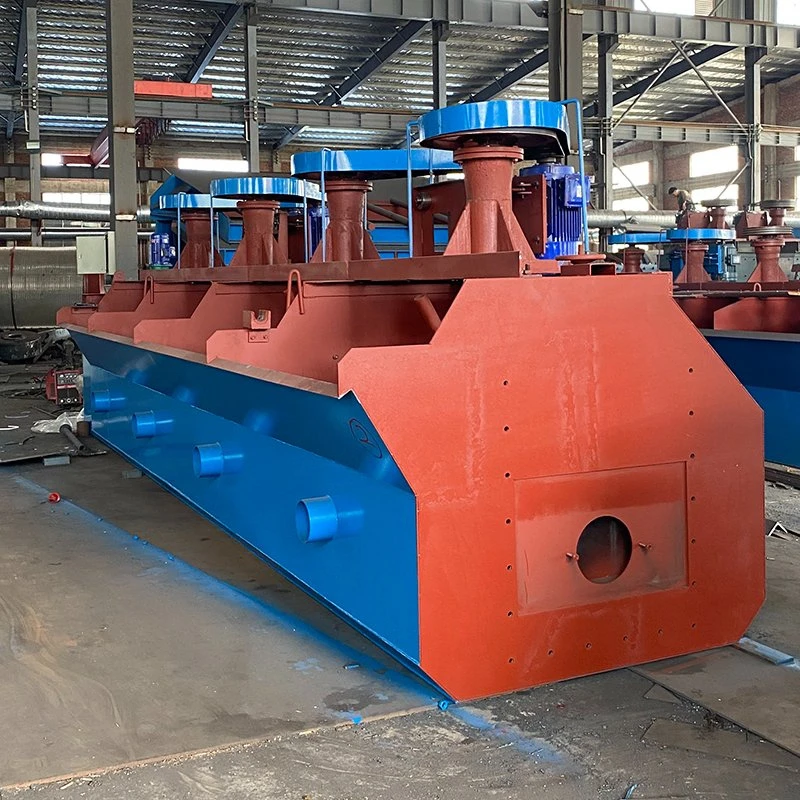
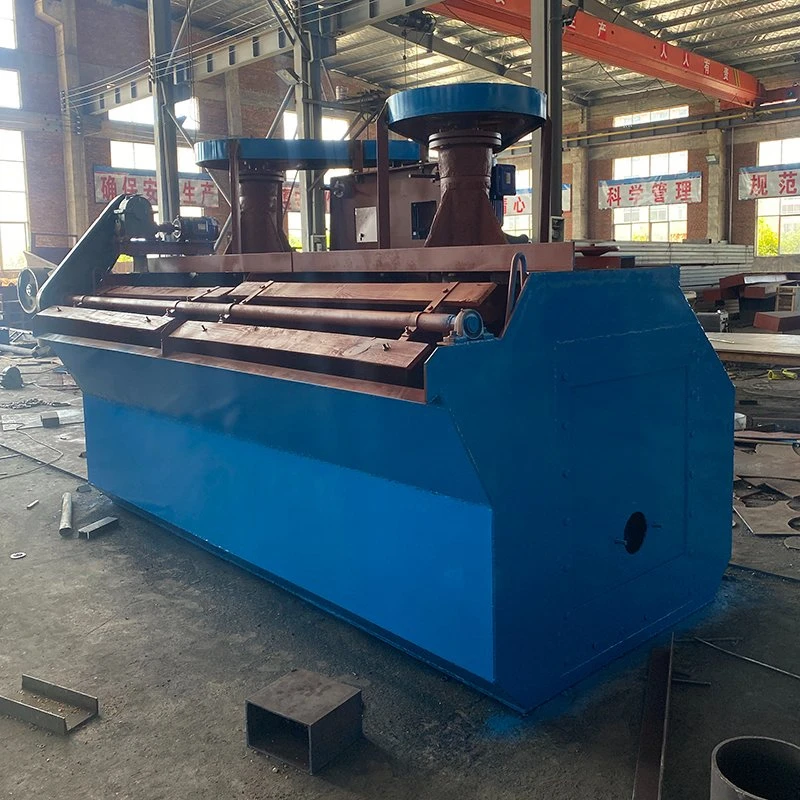
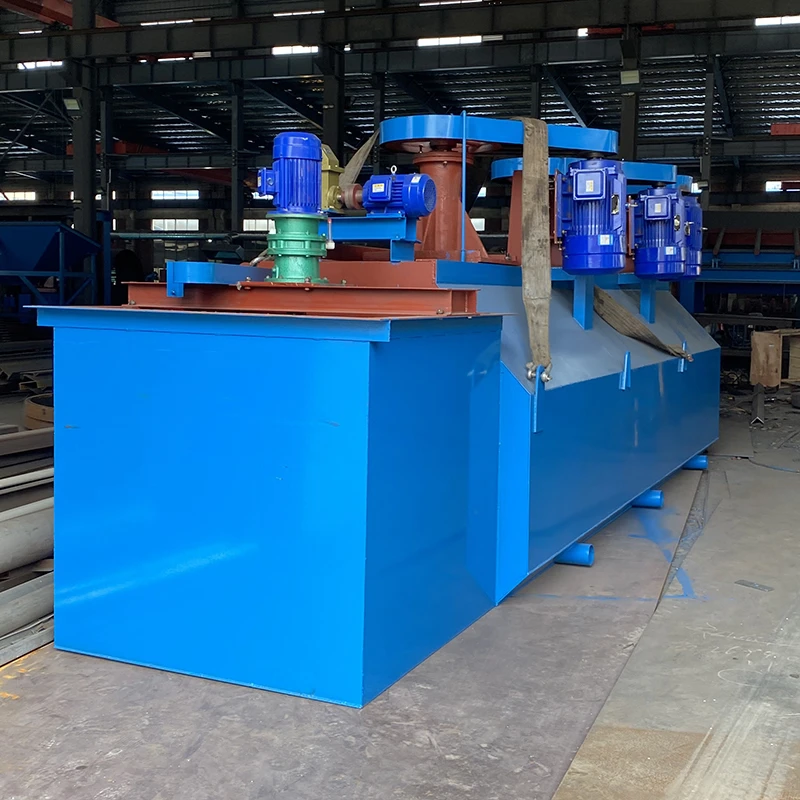
La machine de flottation XCF est une cellule de flottation par air utilisée pour la séparation minérale dans les usines de flottation. Également appelée cellule de flottation mécanique à alimentation en air externe, elle introduit de l'air à basse pression via un ventilateur tandis que le système de turbine et de stator assure une agitation mécanique pour créer des bulles stables et améliorer la circulation de la pulpe. Contrairement aux cellules de flottation auto-aspirantes, les cellules de flottation XCF utilisent un système d'alimentation en air externe tout en maintenant la capacité d'auto-aspiration de la pulpe pour des opérations de flottation continues.
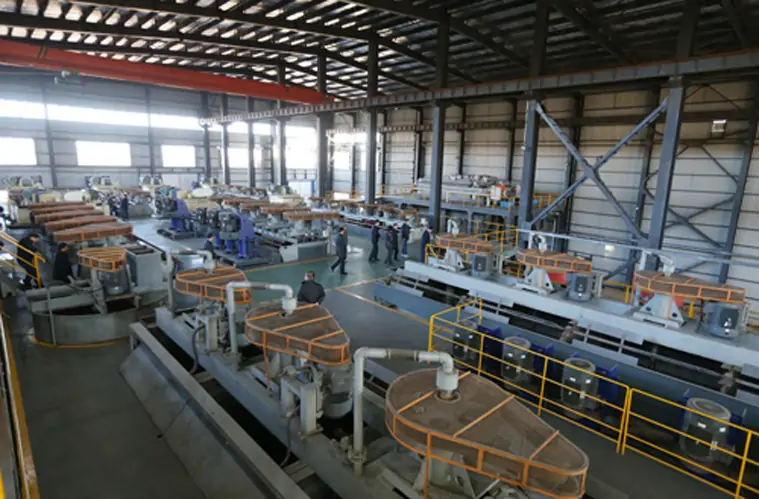
Dans un circuit de flottation complet, les machines de flottation XCF sont couramment combinées avec les machines de flottation KYF pour former une unité de flottation. Les cellules XCF sont principalement utilisées comme cellules de flottation de type aspiration, exploitant leur capacité d'auto-aspiration de la pulpe pour améliorer le transfert de pulpe entre les cellules, tandis que les cellules KYF sont généralement disposées comme cellules de flottation à écoulement direct en aval. Cette configuration combinée est largement appliquée dans les étapes de dégrossissage et de récupération pour le cuivre, l'or, le plomb-zinc et d'autres usines de traitement des minéraux. Si vous souhaitez en savoir plus, cliquez sur “Types de cellules de flottation pour le traitement des minéraux.”
Comment fonctionne la cellule de flottation à insufflation d'air XCF ?
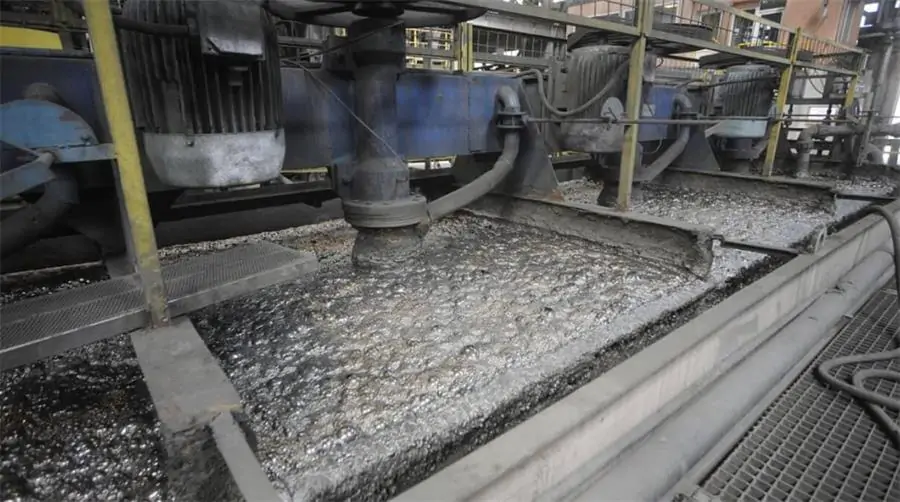
La cellule de flottation à insufflation d'air XCF sépare les minéraux précieux de la gangue en combinant une injection d'air externe, une agitation mécanique et une circulation continue de la pulpe. Pendant le fonctionnement, la turbine génère une circulation verticale de la pulpe à l'intérieur de la cuve, tandis que l'air à basse pression fourni par un ventilateur est introduit dans la pulpe et mélangé avec la pulpe pour produire des bulles minéralisées stables.
Les bulles minéralisées remontent vers la couche de mousse, où les minéraux précieux sont récupérés sous forme de concentré, tandis que la gangue indésirable reste dans la pulpe et est évacuée sous forme de résidus. Grâce à sa capacité d'auto-aspiration de la pulpe, la cellule de flottation XCF peut être utilisée comme cellule de type aspiration dans les circuits de flottation et est couramment combinée avec les machines de flottation KYF pour des opérations continues de dégrossissage et de récupération.
Composants principaux
Les principaux composants d'une machine de flottation XCF comprennent la turbine, le stator, le système de distribution d'air et la structure d'auto-aspiration. Leur conception détermine l'efficacité de la dispersion de l'air, de la circulation de la pulpe et du contact bulle-minéral pendant le processus de flottation.
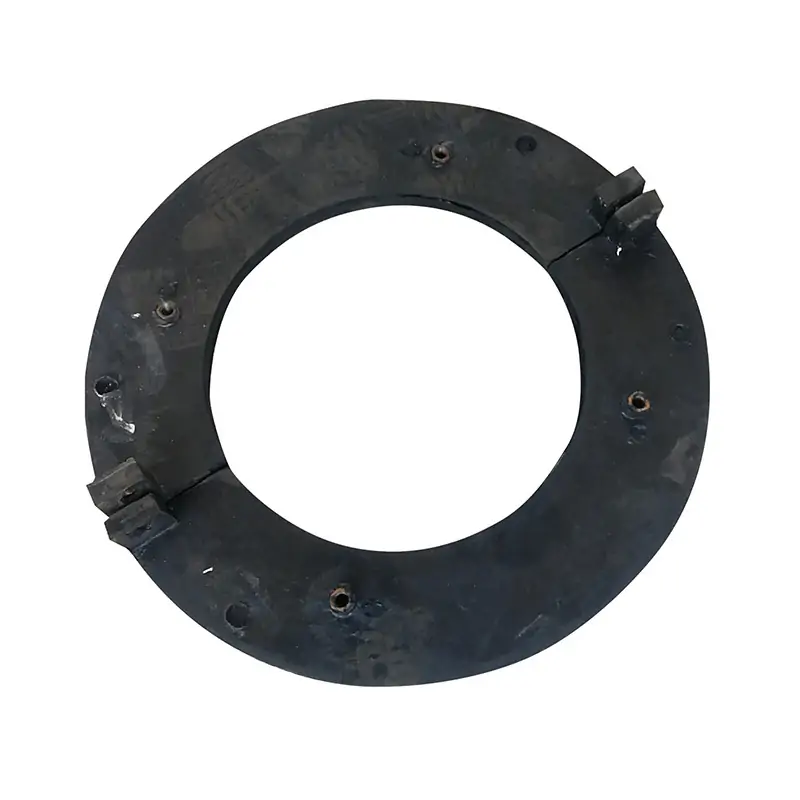
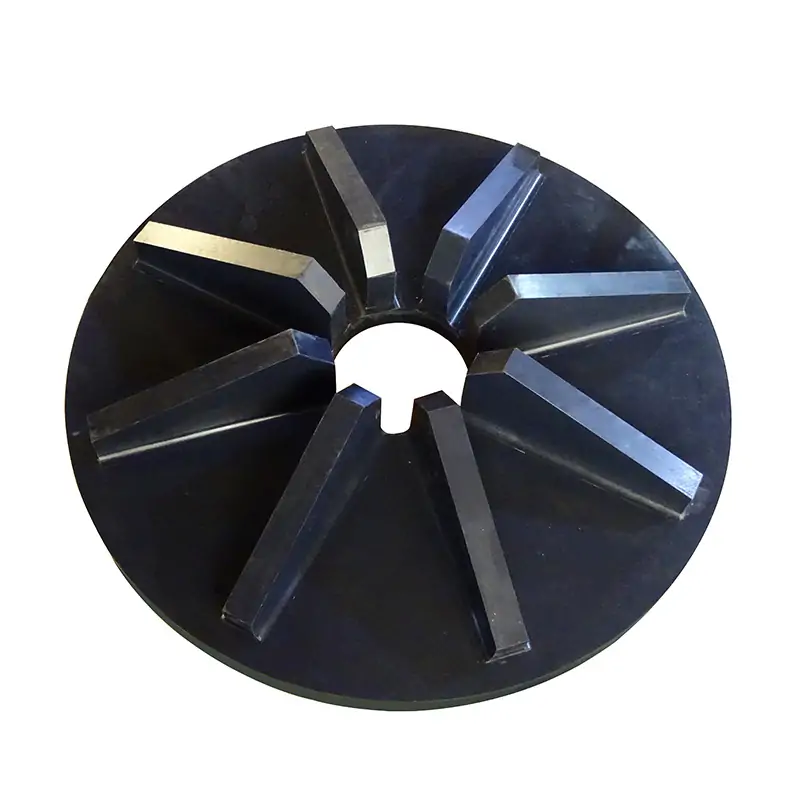
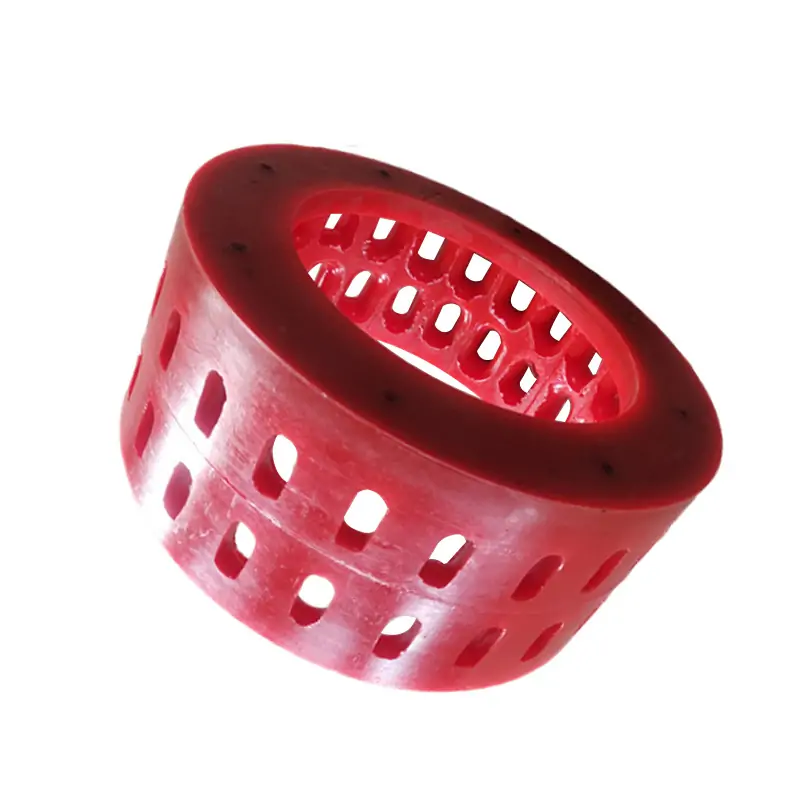
Spécifications
Les machines de flottation XCF sont disponibles en plusieurs modèles avec différents volumes de cellule et capacités de traitement pour répondre aux exigences de divers circuits de flottation. La sélection d'un modèle approprié dépend de facteurs tels que les caractéristiques du minerai, la capacité de l'usine et la conception du processus de flottation. Les spécifications techniques suivantes fournissent les principaux paramètres des cellules de flottation XCF à titre de référence.
| Modèle | Volume effectif (m³) | Capacité de traitement (m³/min) | Diamètre de la turbine (mm) | Vitesse de la turbine (tr/min) | Pression d'air du ventilateur (kPa) | Volume d'air maximal (m³/m²·min) | Puissance du moteur de la turbine (kW) | Puissance du moteur du racleur (kW) | Poids (t) |
| XCF-2 | 2 | 0.4-2 | 470 | 331 | ≥14,7 | 2 | 7.5 | 1.1 | 1.653 |
| XCF-3 | 3 | 0.6-3 | 540 | 266 | ≥19,8 | 2 | 11 | 1.5 | 2.259 |
| XCF-4 | 4 | 1.2-4 | 620 | 215 | ≥19,8 | 2 | 15 | 1.5 | 2.669 |
| XCF-8 | 8 | 3.0-8 | 720 | 185 | ≥21,6 | 2 | 22 | 1.5 | 4.435 |
| XCF-16 | 16 | 4.0-16 | 860 | 160 | ≥25,5 | 2 | 37 | 1.5 | 6.568 |
| XCF-24 | 24 | 4.0-24 | 950 | 153 | ≥30,4 | 2 | 37 | 1.5 | 8 |
| XCF-38 | 38 | 10-38 | 1050 | 148 | ≥24,3 | 2 | 45 | 1.5 | 11 |
Avantages
La machine de flottation XCF est largement utilisée dans les circuits de flottation de moyenne et grande échelle. Elle adopte un système d'alimentation en air externe et une structure de turbine spécialement conçue pour maintenir la circulation de la pulpe et le mélange air-pulpe pendant le fonctionnement. Grâce à sa capacité d'auto-aspiration de la pulpe, les cellules XCF peuvent être facilement disposées dans des circuits de flottation continus pour le cuivre, l'or, le plomb-zinc et d'autres applications de traitement des minéraux.
Applications
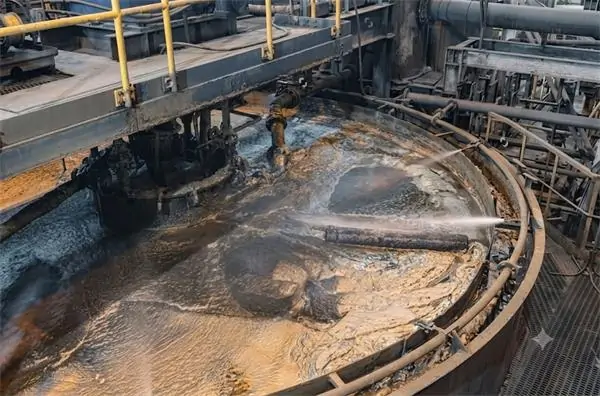
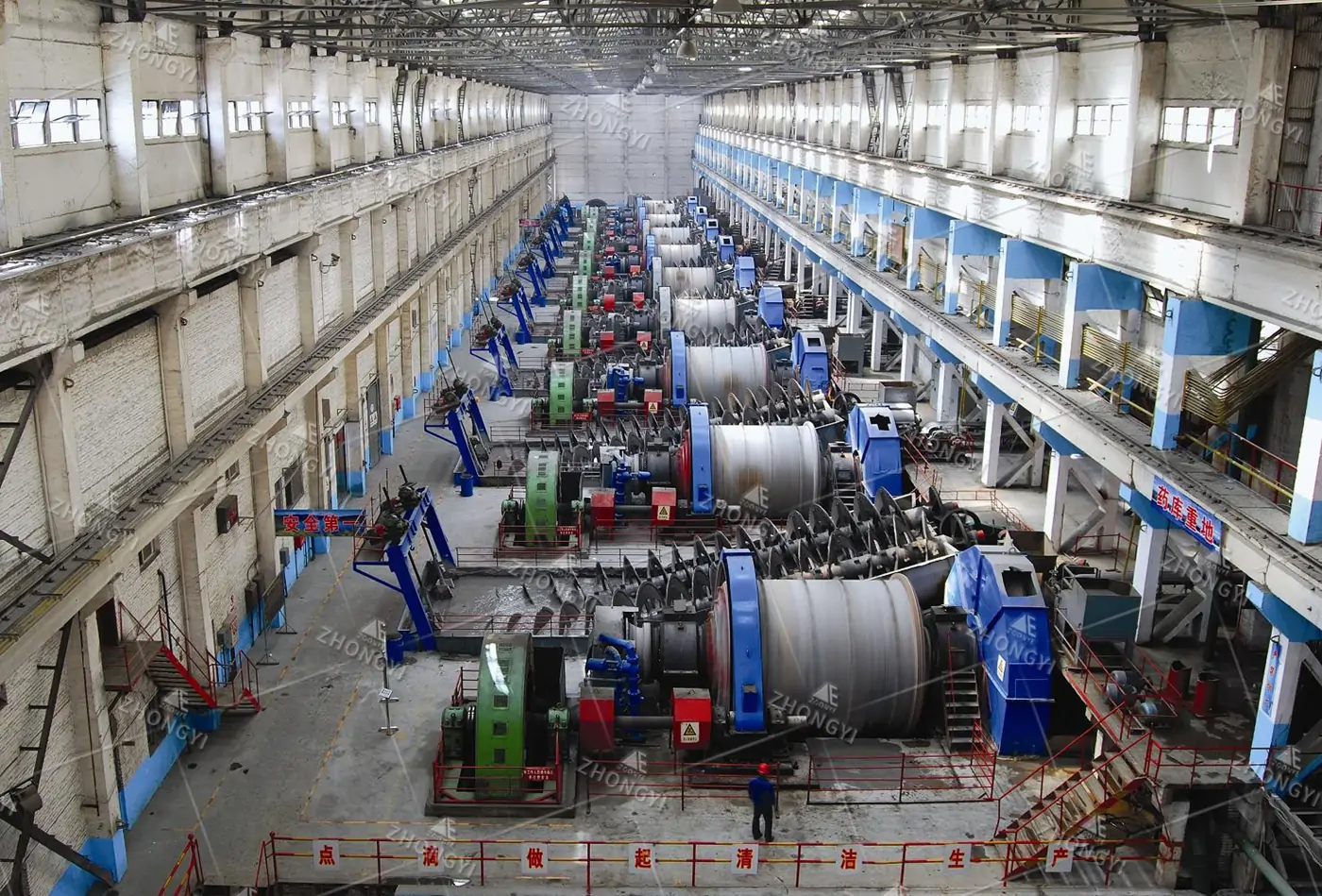
XCF flotation cells are widely used in mineral processing plants for the flotation separation of metallic and non-metallic minerals. They are mainly applied in roughing and scavenging circuits where reliable pulp handling and continuous flotation operation are required. Typical applications include copper, gold, lead-zinc, sulfide minerals, and other ore beneficiation processes.

XCF vs Other Flotation Machines
XCF flotation machines differ from KYF flotation machines and self-aspirated flotation cells in air supply method, slurry transfer capability, and circuit arrangement. The comparison below shows the key differences to help select the right flotation equipment for different processing requirements.
Practical Equipment Comparison
| Comparison Item | XCF Flotation Machine | KYF Flotation Machine | Mechanical Self-Aspirated Flotation Cell |
| Air Supply Method | External blower air supply | External blower air supply | Air drawn by impeller rotation |
| Air Control | Adjustable air supply according to flotation requirements | Adjustable air supply according to flotation requirements | Limited by self-aspiration performance |
| Self-Suction Capability | Yes | No | Yes |
| Slurry Handling | Suitable as suction-type cell in flotation circuits | Used as downstream direct-flow cell | Independent operation depending on design |
| Typical Application | Roughing and scavenging circuits, especially combined flotation units | Used together with XCF in large flotation circuits | Small and medium flotation plants |
| Circuit Arrangement | Allows flexible horizontal arrangement with reduced slurry transfer requirements | Requires slurry flow from upstream cells | Usually requires independent circuit design |
| Suitable Plant Scale | Medium and large-scale mineral processing plants | Medium and large-scale flotation circuits | Small to medium-scale applications |
How XCF and KYF Flotation Machines Work Together?
XCF and KYF flotation machines are commonly combined to form a flotation unit in medium and large-scale mineral processing plants. In this arrangement, the XCF flotation cell is used as a suction-type cell, utilizing its self-suction slurry capability to draw pulp into the flotation circuit, while the KYF flotation machine works as a downstream direct-flow cell for continuous flotation separation.
The XCF-KYF combination allows flotation cells to be arranged in a more flexible layout without complex slurry transfer systems. XCF handles slurry suction at the front section, and KYF continues the flotation process with stable mixing and aeration performance. This configuration is widely used in copper, gold, lead-zinc, and other mineral processing plants where continuous flotation operation is required.
How to Choose the Right XCF Flotation Machine?
Selecting the right XCF flotation machine depends mainly on the flotation process, plant capacity, and ore characteristics. XCF flotation cells are generally selected for medium and large-scale beneficiation plants that require external air supply, stable slurry circulation, and suction-type flotation operation. They are often combined with KYF flotation machines to form continuous flotation circuits.
The machine size should be selected according to the required processing capacity and flotation residence time. Small and medium models are suitable for lower-capacity plants, while large-volume models such as XCF-16, XCF-24, and XCF-38 are commonly used in large flotation circuits with higher throughput requirements.
Ore properties should also be considered during selection, including mineral type, particle size, and slurry conditions. Before finalizing the equipment, the flotation flowsheet, blower system, and installation layout should be evaluated to ensure the selected XCF flotation machine matches the project requirements.
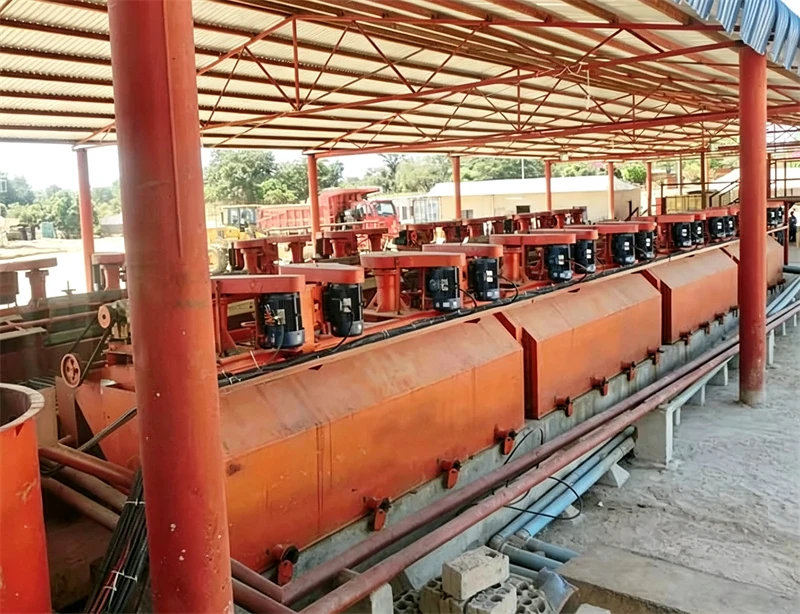
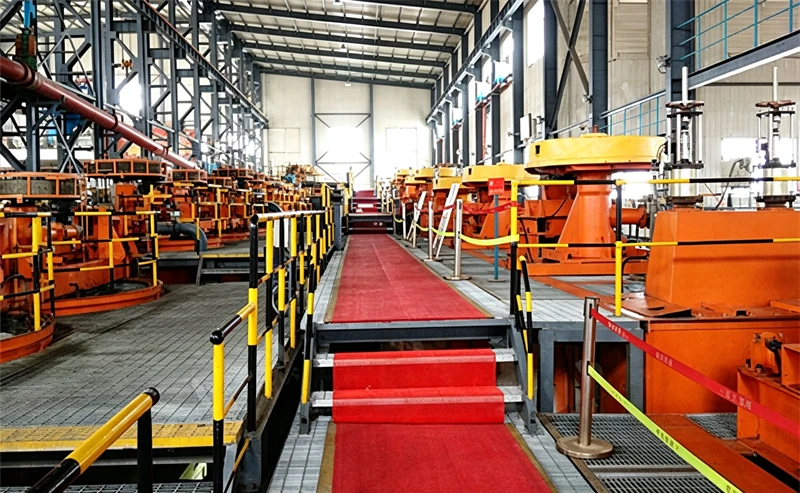
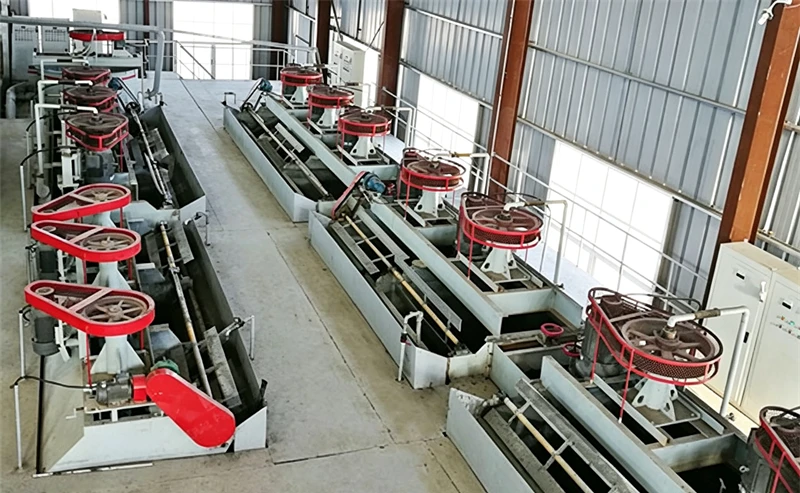
Projects Show
Why Choose Zhongyi?
Zhongyi Mining combines engineering experience, manufacturing capability, and project support to provide reliable mineral processing equipment solutions. With 60+ patented technologies and 3 manufacturing bases, we continuously optimize equipment design, production quality, and delivery efficiency for different mining applications.
Our team provides customized equipment selection, process integration, and technical support based on ore characteristics, processing capacity, and plant conditions. From initial design to installation guidance and commissioning support, Zhongyi helps customers achieve stable operation and long-term performance.
Demander une solution personnalisée
Partner with Zhongyi for reliable flotation equipment designed to improve mineral recovery, optimize beneficiation processes, and deliver stable performance across copper, gold, lead-zinc, and other mineral processing applications.
Customized XJK Flotation Machine Solutions
Zhongyi Mining provides customized flotation solutions based on your ore characteristics, processing capacity, flotation process requirements, and plant conditions. Whether you need a single flotation machine or a complete mineral processing plant solution, our engineering team can optimize equipment selection and process configuration to meet your project goals. Contact us with your project details to get a suitable flotation solution.
Please Provide the Following Information:
FAQs
What minerals can flotation machines process?
Flotation machines are widely used for the separation of copper, gold, lead-zinc, nickel, molybdenum, and other non-ferrous metal ores. The suitable equipment configuration depends on ore properties, including mineral composition, feed size, and flotation characteristics. Proper selection helps achieve efficient mineral separation and stable recovery performance.
How do I choose the right flotation machine for a mineral processing plant?
Selecting the right flotation machine depends on factors such as ore type, processing capacity, feed characteristics, required recovery rate, and flotation circuit design. Engineers typically evaluate these conditions to determine the appropriate flotation cell model, volume, and configuration for reliable operation and optimized beneficiation performance.
What is the difference between SF, BF, KYF, and XCF flotation machines?
SF and BF flotation machines are self-aspirated flotation cells commonly used in various flotation operations, while KYF and XCF models are generally applied in combined flotation circuits with external air supply and slurry circulation. The suitable model depends on plant layout, production capacity, and specific flotation process requirements.
What factors affect flotation machine performance?
Flotation machine performance is affected by ore properties, particle size, pulp concentration, air dispersion, impeller design, and reagent conditions. Proper equipment selection and process optimization improve bubble-mineral contact, enhance separation efficiency, and help maintain stable operation during continuous mineral processing.
What information is needed to select a suitable flotation machine?
To select suitable flotation equipment, customers should provide information including ore type, processing capacity, feed size, mineral characteristics, flotation requirements, and existing plant conditions. These details help engineers evaluate operating conditions and recommend an appropriate flotation configuration for specific project requirements.
What is the processing capacity range of flotation machines?
The processing capacity of flotation machines varies depending on the cell model, volume, ore characteristics, and flotation circuit design. Different flotation cells are available for small, medium, and large-scale mineral processing plants, with customized configurations to meet specific production capacity and recovery requirements.
What maintenance is required for flotation machines?
Regular maintenance includes checking impeller and stator wear, inspecting bearing lubrication, monitoring drive components, and replacing worn parts when necessary. Proper maintenance helps reduce unplanned downtime, improve equipment reliability, and extend the service life of flotation machines in demanding mineral processing applications.
Can flotation machines be integrated into complete mineral processing plants?
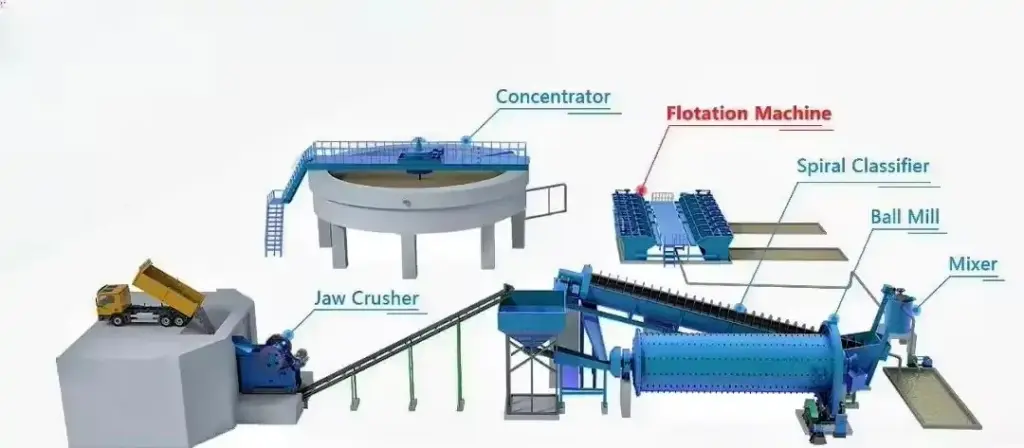
Yes. Flotation machines can be integrated into complete mineral processing plants together with crushing, grinding, classification, and other beneficiation equipment. Engineering teams can provide equipment selection, process configuration, and technical support based on ore characteristics, production targets, and overall plant requirements.