











Qu'est-ce que la cellule de flottation à auto-aspiration de type SF ?
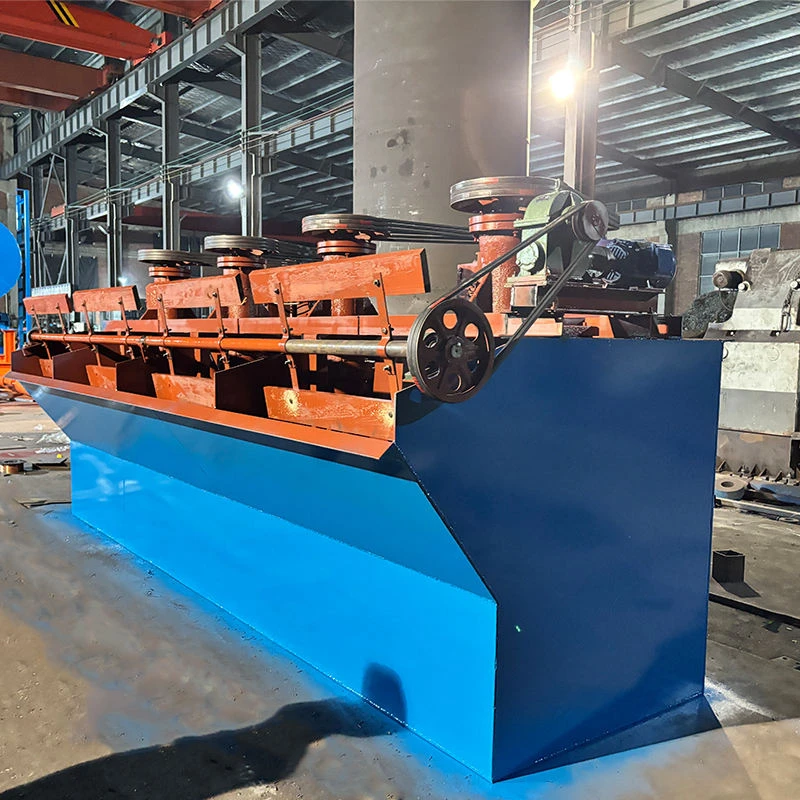
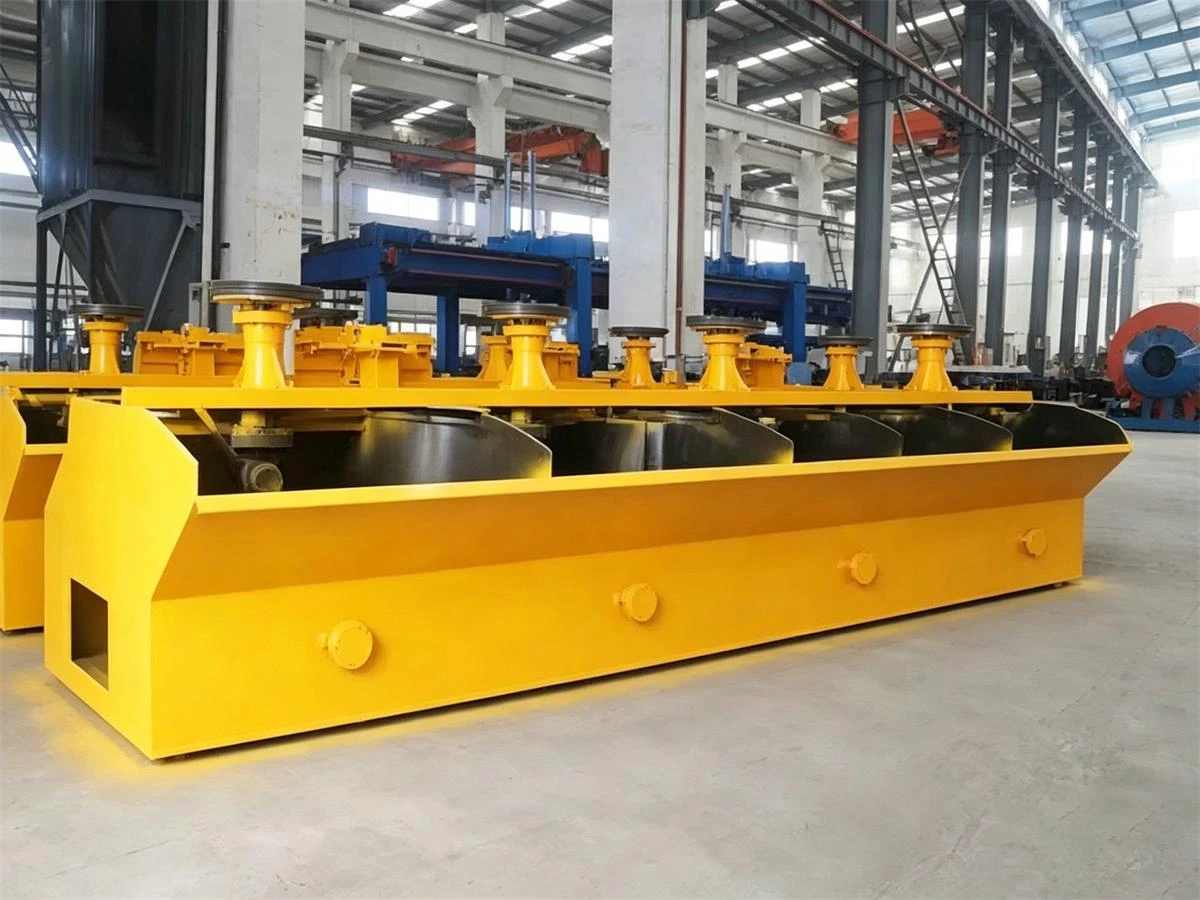
La cellule de flottation à auto-aspiration de type SF, également appelée machine de flottation SF ou cellule de flottation à auto-aspiration, est un équipement de flottation à agitation mécanique utilisé pour séparer les minéraux précieux de la pulpe de minerai par le procédé de flottation par mousse. Elle est principalement appliquée dans les usines de traitement de minéraux pour l'enrichissement du cuivre, du plomb-zinc, de l'or, du molybdène, du minerai de fer, du graphite, de la fluorite et d'autres minéraux métalliques et non métalliques.
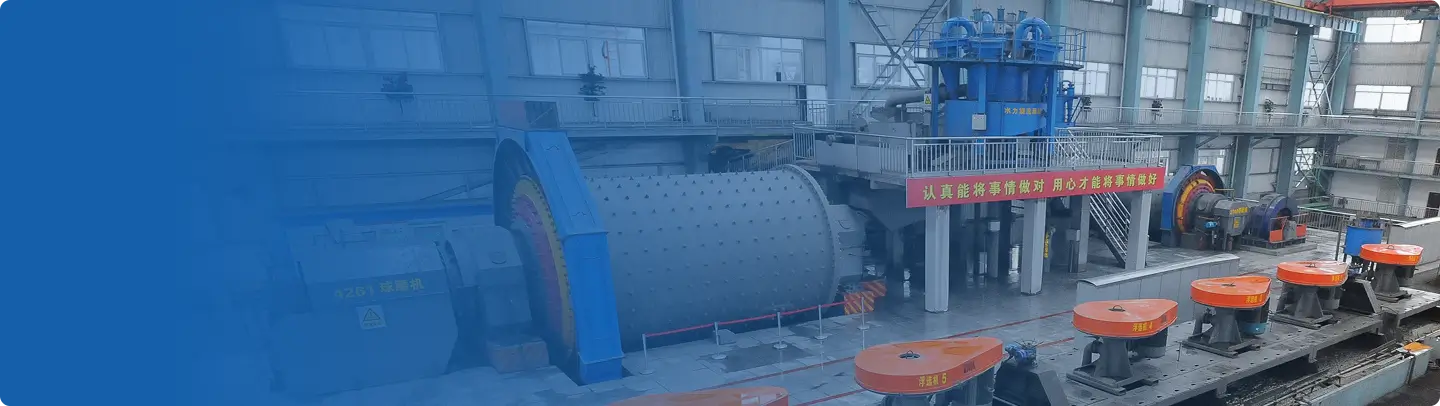
La cellule de flottation SF combine les fonctions d'aspiration d'air, d'aspiration de pulpe et de flottation en une seule unité. La turbine rotative génère une pression négative pour aspirer automatiquement l'air et la pulpe dans la chambre, créant un mélange suffisant et une dispersion des bulles pour la séparation des minéraux. Dans une usine d'enrichissement complète, les cellules de flottation SF sont généralement installées après les processus de broyage, de classification et de conditionnement, et sont largement utilisées dans les circuits de dégrossissage, d'épuisement et de nettoyage. Selon la capacité de l'usine et les exigences du procédé, les modèles SF sont disponibles en différents volumes de cellule, les unités industrielles étant couramment configurées de plusieurs mètres cubes à plus de 10 m³ par cellule. Si vous souhaitez en savoir plus, cliquez sur “Qu'est-ce qu'une cellule de flottation ?”
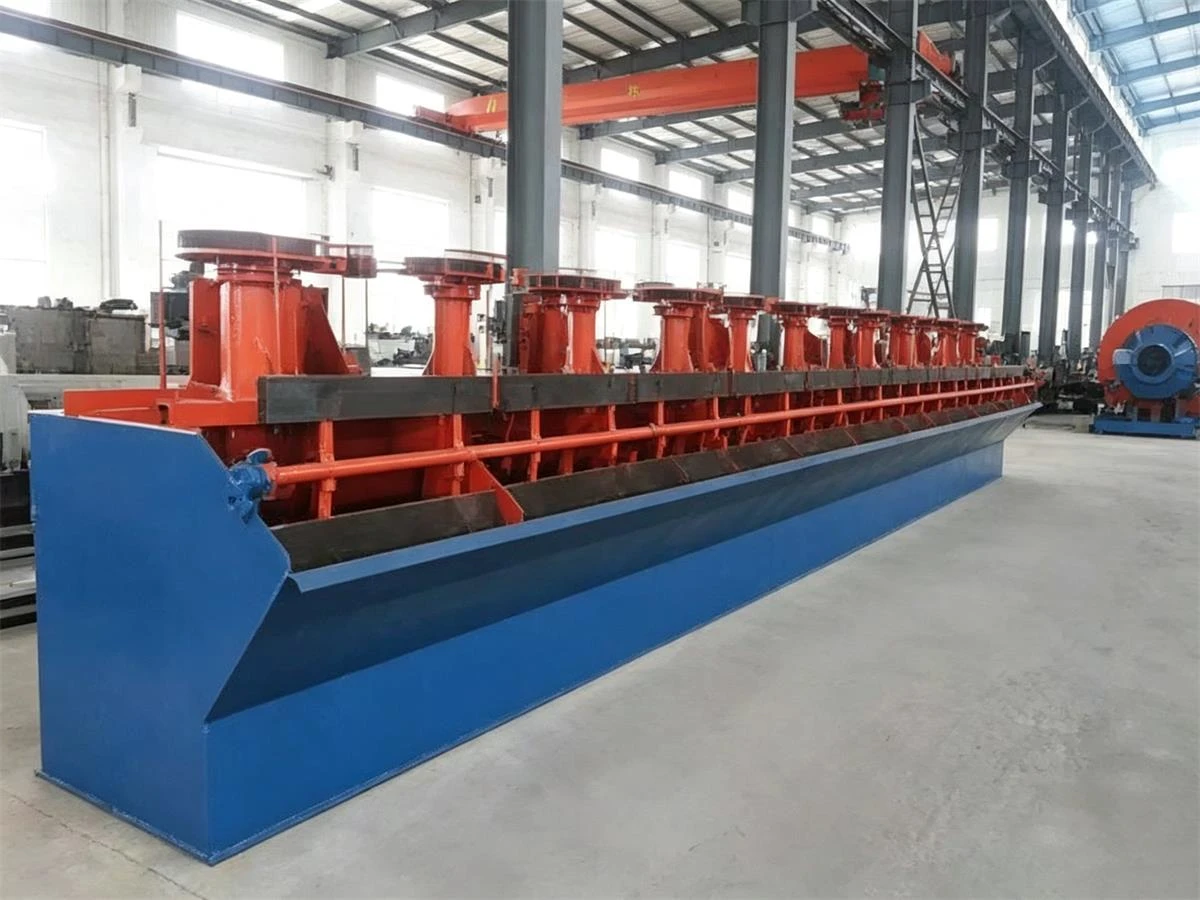
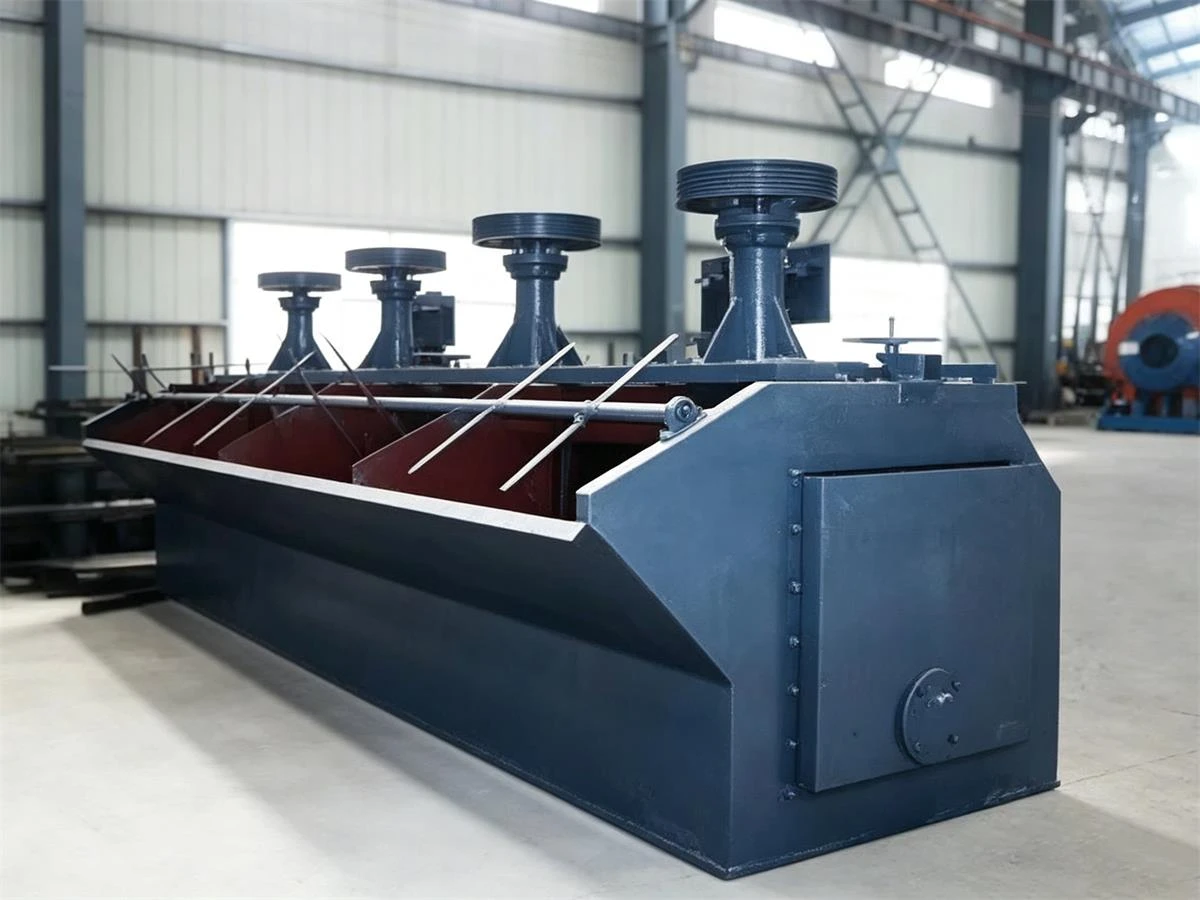
Comment fonctionne la cellule de flottation à auto-aspiration ?
La cellule de flottation à auto-aspiration de type SF fonctionne grâce à l'action combinée de l'agitation de la turbine, de l'aspiration d'air et de la flottation des minéraux. Pendant le fonctionnement, la turbine rotative crée une pression négative à l'intérieur de la chambre de la turbine, aspirant automatiquement l'air par l'arbre creux tout en faisant circuler la pulpe du réservoir. Cette conception à auto-aspiration permet un mélange continu de la pulpe et une dispersion de l'air sans nécessiter de système d'alimentation en air externe.
Mélange de la pulpe et aspiration d'air
Le moteur entraîne la rotation de la turbine, créant une différence de pression dans la chambre de la turbine. Les pales supérieures aspirent l'air dans la cellule de flottation, tandis que les pales inférieures font circuler la pulpe depuis le fond du réservoir pour maintenir les particules en suspension et réduire la sédimentation des particules grossières.
Fixation bulles-minéraux
La turbine disperse l'air entrant en fines bulles et les mélange uniformément avec la pulpe. Sous l'action des réactifs de flottation, les particules minérales précieuses adhèrent aux surfaces des bulles et forment des bulles minéralisées pour la séparation.
Collecte et récupération de la mousse
Les bulles minéralisées remontent à la surface et forment une couche de mousse, qui est évacuée par le mécanisme de raclage sous forme de concentré. La pulpe restante continue à travers le circuit de flottation pour une séparation ultérieure, plusieurs cellules SF étant couramment disposées en série pour les opérations de dégrossissage, d'épuisement et de nettoyage.
Structure de la cellule de flottation à auto-aspiration de type SF
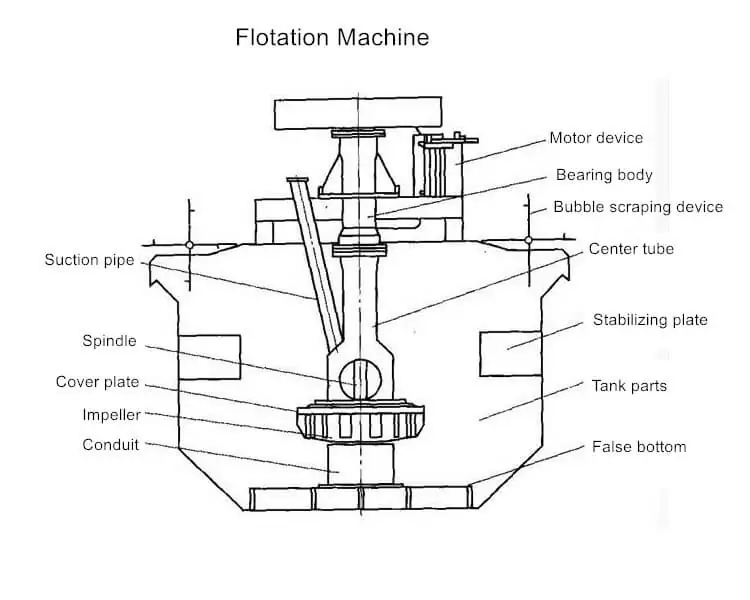
La cellule de flottation à auto-aspiration de type SF est composée d'un système turbine-stator, d'un système de circulation air-pulpe, d'une cuve de flottation et d'une unité de transmission, formant une structure de flottation complète.
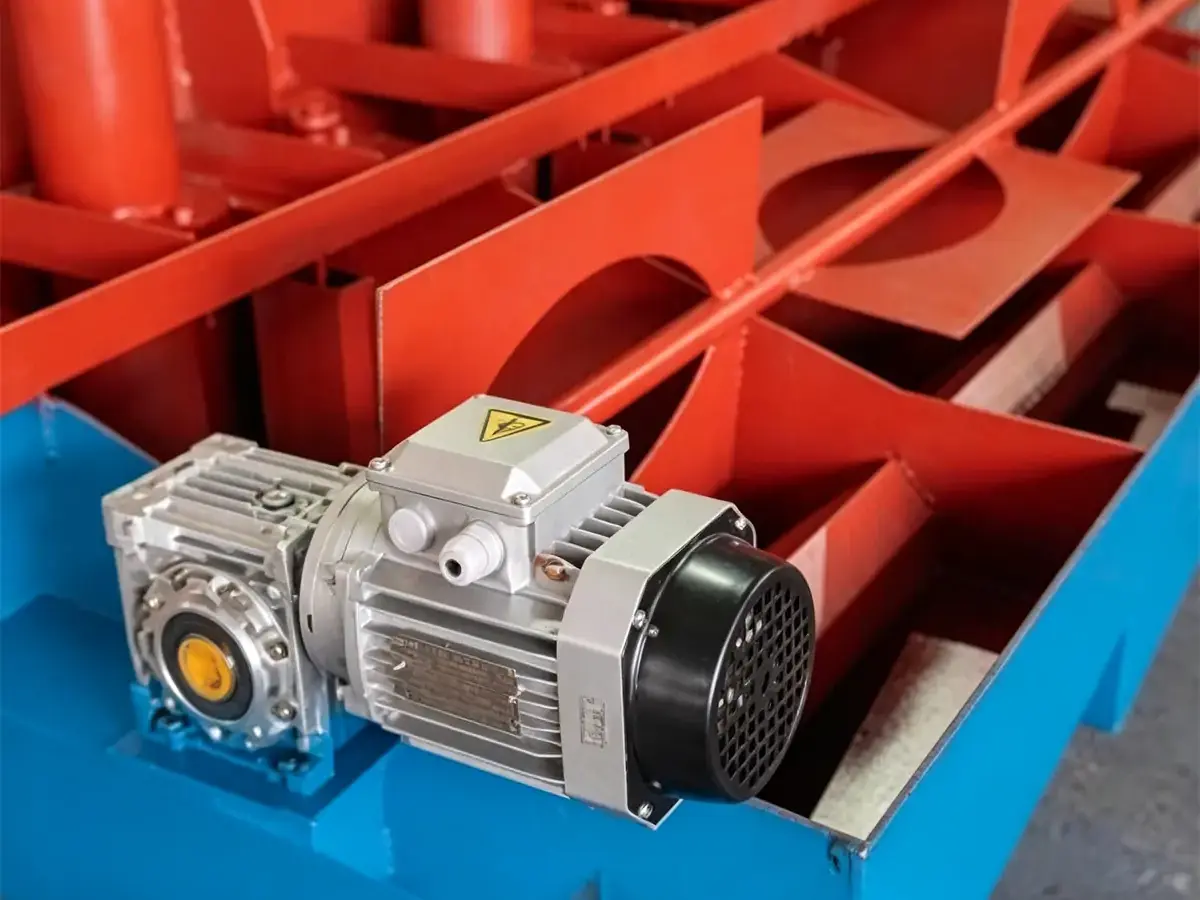
Moteur-réducteur à vis sans fin
Il entraîne l'arbre du racleur de mousse à la surface de la cuve de la machine de flottation, provoquant la rotation de la lame racleuse qui évacue la mousse de concentré de la surface du liquide. C'est un composant du système de raclage de la mousse.
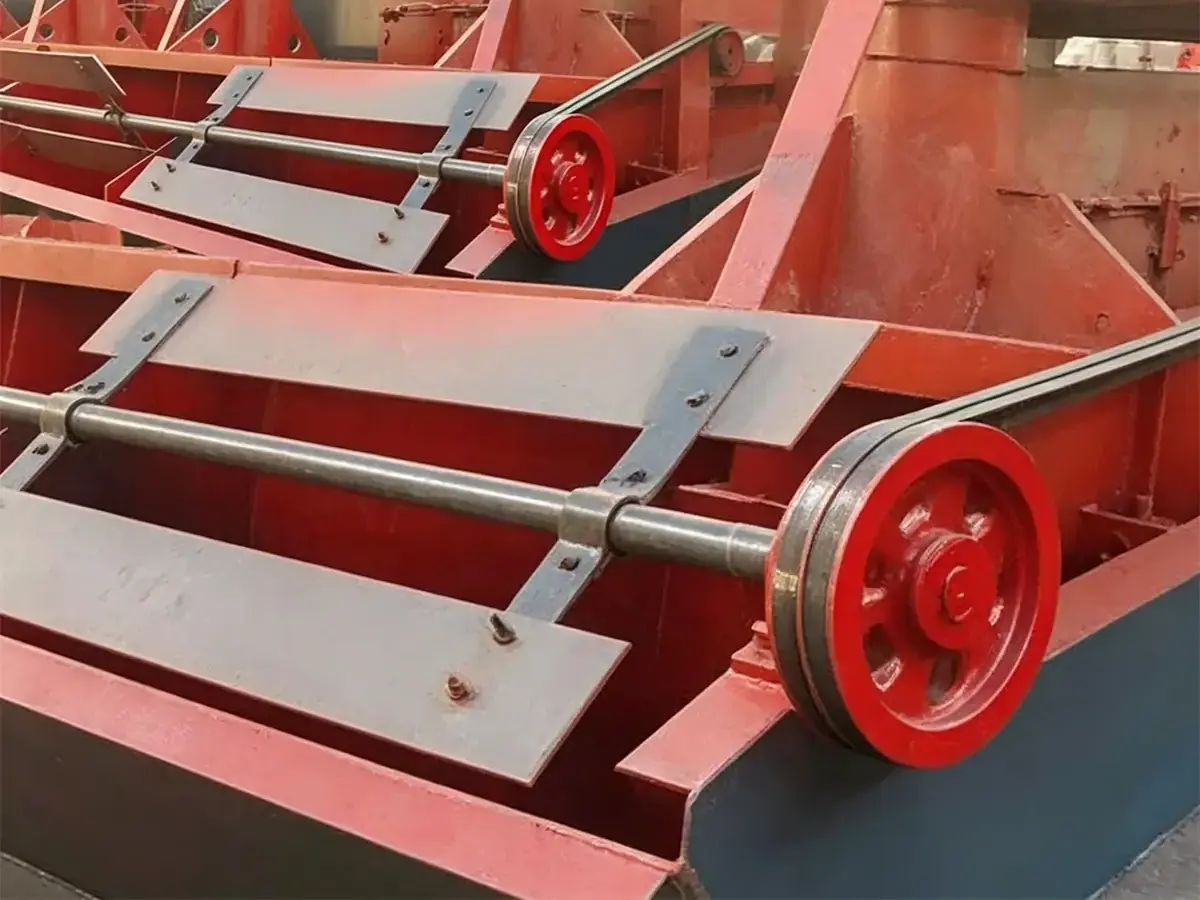
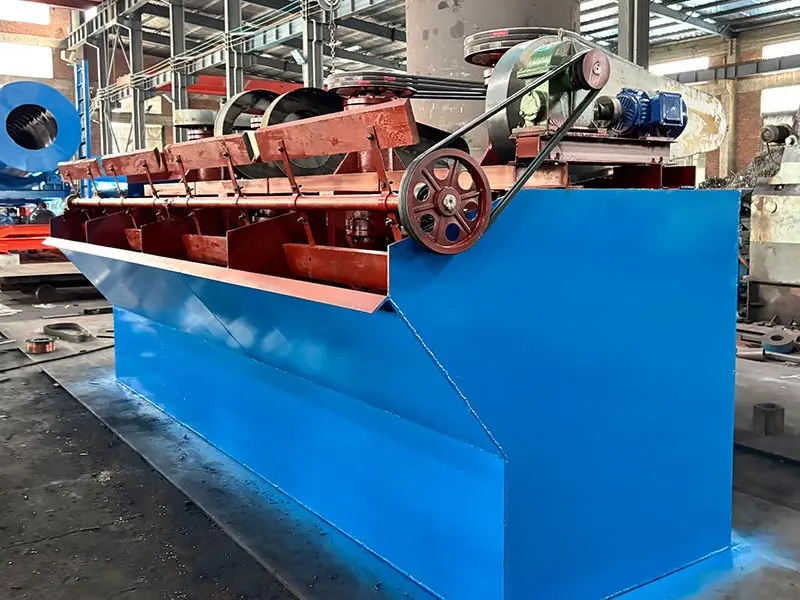
Arbre de raclage, lames racleuses et ensemble de poulie
Cet ensemble constitue le mécanisme de raclage de mousse d'une machine de flottation ; le composant rouge est une poulie, le long arbre sert d'arbre principal pour le racleur, et la plaque d'acier fait office de lame racleuse. Un moteur entraîne cet arbre via une courroie pour effectuer un raclage continu de la mousse.
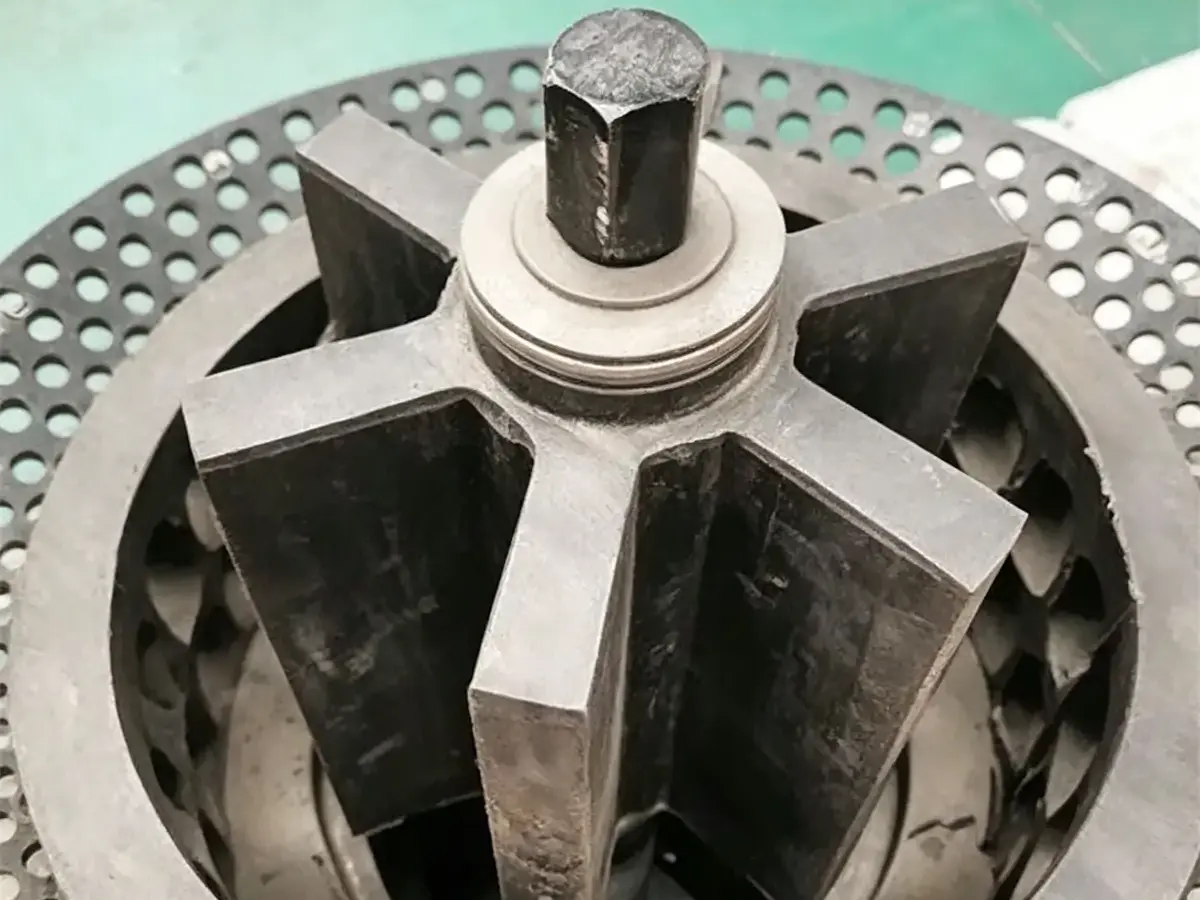
Ensemble turbine et stator
Pièces d'usure clés (composants d'agitation et d'aération) : la turbine rotative génère une pression négative pour aspirer l'air et agiter la pulpe, tandis que le disque extérieur perforé sert de stator (plaque de recouvrement), stabilisant l'écoulement de la pulpe et cisaillant les bulles d'air — ce qui en fait le “ cœur ” de la machine de flottation.
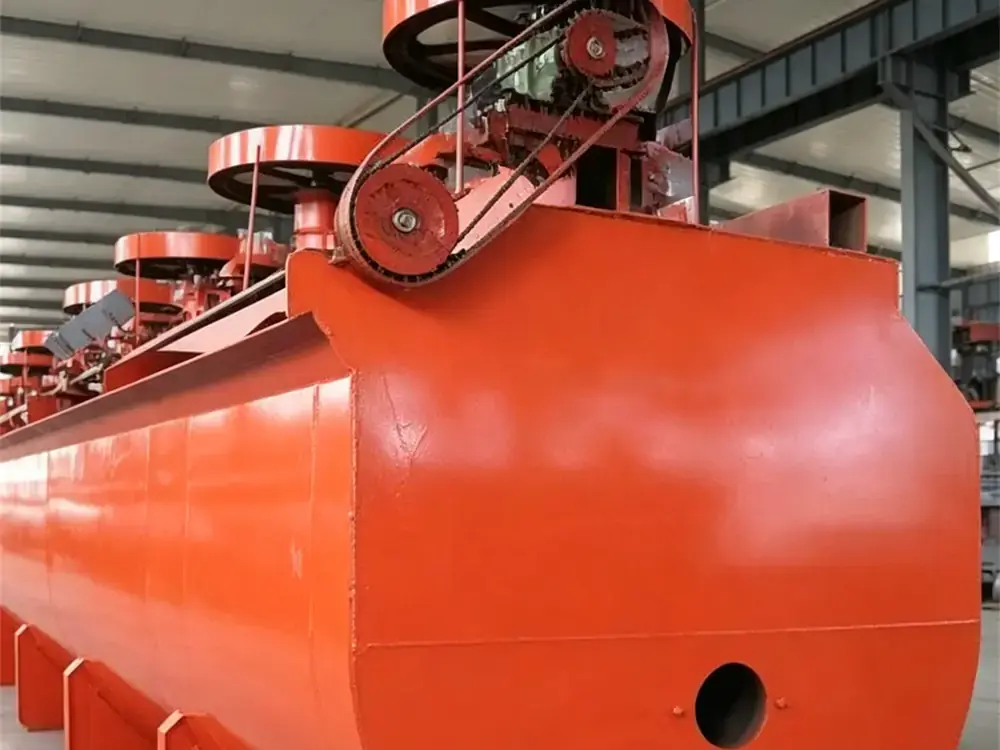
Cuve de la machine de flottation
Le corps principal de la machine se compose d'une enveloppe qui contient la pulpe et sert de zone de réaction pour la flottation ; le mécanisme d'agitation de l'arbre principal et le dispositif de raclage de mousse sont montés au-dessus de la cuve. La machine de flottation SF présente une conception de cuve en forme de U inclinée vers l'avant.
Spécifications
Le tableau de spécifications suivant fournit des informations détaillées pour chaque modèle de machine de flottation SF, aidant les clients à comparer différentes configurations et à sélectionner l'équipement approprié en fonction de leurs exigences de traitement.
| Modèle | Volume effectif (m³) | Diamètre de la turbine (mm) | Vitesse de la turbine (r/min) | Capacité de traitement (m³/min) | Moteur de la turbine | Moteur du racleur | Dimensions de la cuve (mm) | Poids (t) | Volume d'aspiration d'air (m³/m·min) | ||
| Modèle | Puissance (kW) | Modèle | Puissance (kW) | ||||||||
| SF-0.37 | 0.37 | 296 | 386 | 0.2–0.4 | Y90L-4 | 1.5 | Y801-4 | 0.55 | 700×700×750 | 0.47 | 0.9–1.0 |
| SF-0.65 | 0.65 | 350 | 400 | 0.3–0.9 | Y132S-6 | 3 | Y90L-6 | 1.1 | 900×900×900 | 0.93 | 0.9–1.0 |
| SF-1.2 | 1.2 | 450 | 312 | 0.6–1.2 | Y132M2-6 | 5.5 | Y90L-6 | 1.1 | 1100×1100×1100 | 1.37 | 0.9–1.0 |
| SF-2.8 | 2.8 | 550 | 270 | 1.5–3.5 | Y160L-6 | 11 | Y90L-6 | 1.1 | — | 2.13 | 0.9–1.0 |
| SF-4 | 4 | 650 | 220 | 2–4 | Y200L-8 | 15 | Y100L-6 | 1.5 | 1850×2050×1200 | 2.58 | 0.9–1.0 |
| SF-8 | 8 | 760 | 191 | 4–8 | Y250M-8 | 30 | Y100L-6 | 1.5 | 2200×2900×1400 | 4.13 | 0.9–1.0 |
| SF-10 | 10 | 760 | 191 | 5–10 | Y250M-8 | 30 | Y100L-6 | 1.5 | 2200×2900×1700 | 4.49 | 0.9–1.0 |
| SF-16 | 16 | 850 | 169–193 | 5.0–16 | — | 45 | — | — | — | 7.415 | 0.9–1.0 |
| SF-20 | 20 | 730 | 186 | 5.0–20 | — | 30×2 | — | — | — | 9.823 | 0.9–1.0 |
Avantages
SF Flotation Cell is designed for efficient mineral separation with integrated air suction, slurry circulation, and flotation functions. Its self-suction structure, optimized impeller system, and wear-resistant components provide stable flotation performance, lower energy consumption, and easier maintenance.
Applications
SF Type Self Suction Flotation Cell is mainly applied in roughing and scavenging circuits of mineral processing plants. With its integrated air suction, slurry suction, and flotation functions, it is suitable for the separation of various metallic and non-metallic minerals, including sulfide ores, precious metals, and industrial minerals.If you’d like to learn more, click on “Types de cellules de flottation pour le traitement des minéraux.”
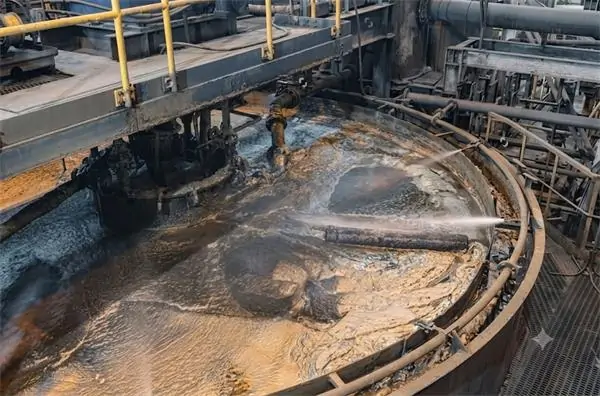

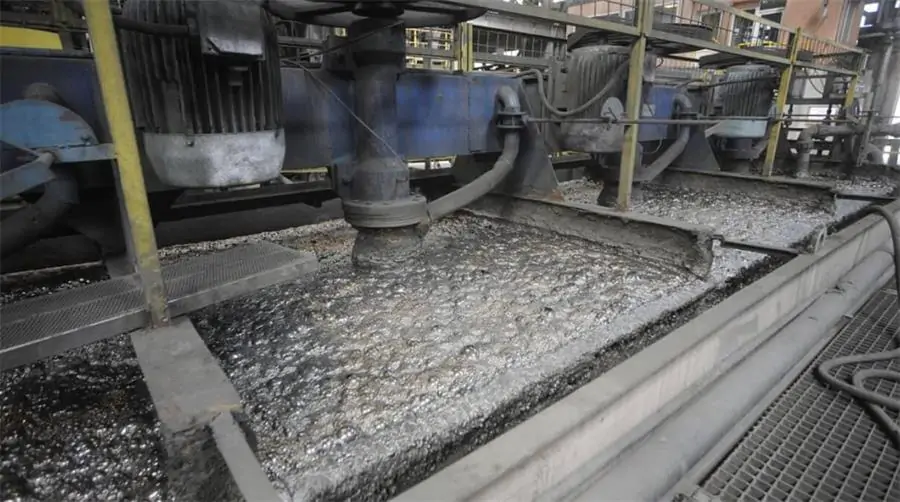
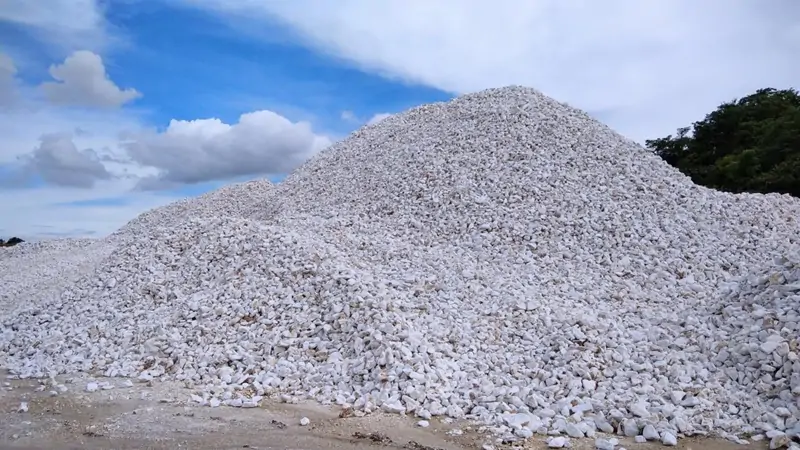
SF Flotation Cell in Flotation Plant Process
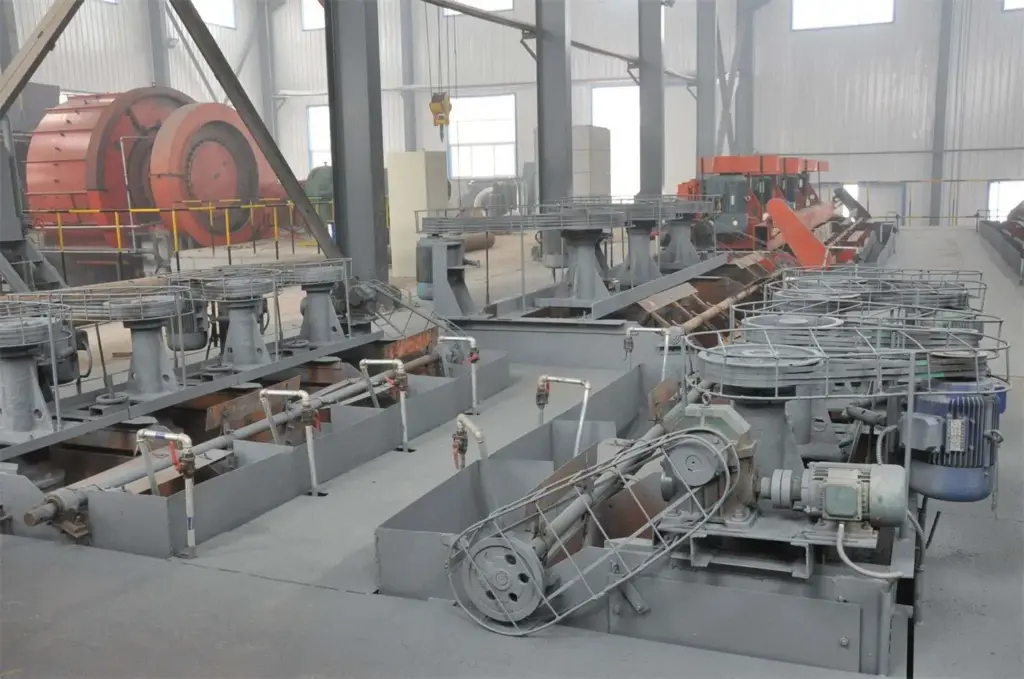
SF Type Flotation Cell is typically installed after grinding, classification, and conditioning processes as the main flotation equipment for mineral separation. It is widely applied in roughing, scavenging, and cleaning circuits, using its self-air suction and slurry suction design to provide continuous pulp aeration and mixing without external air supply systems.
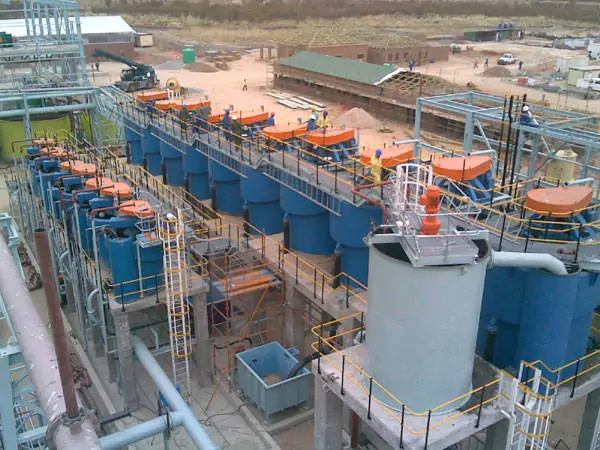
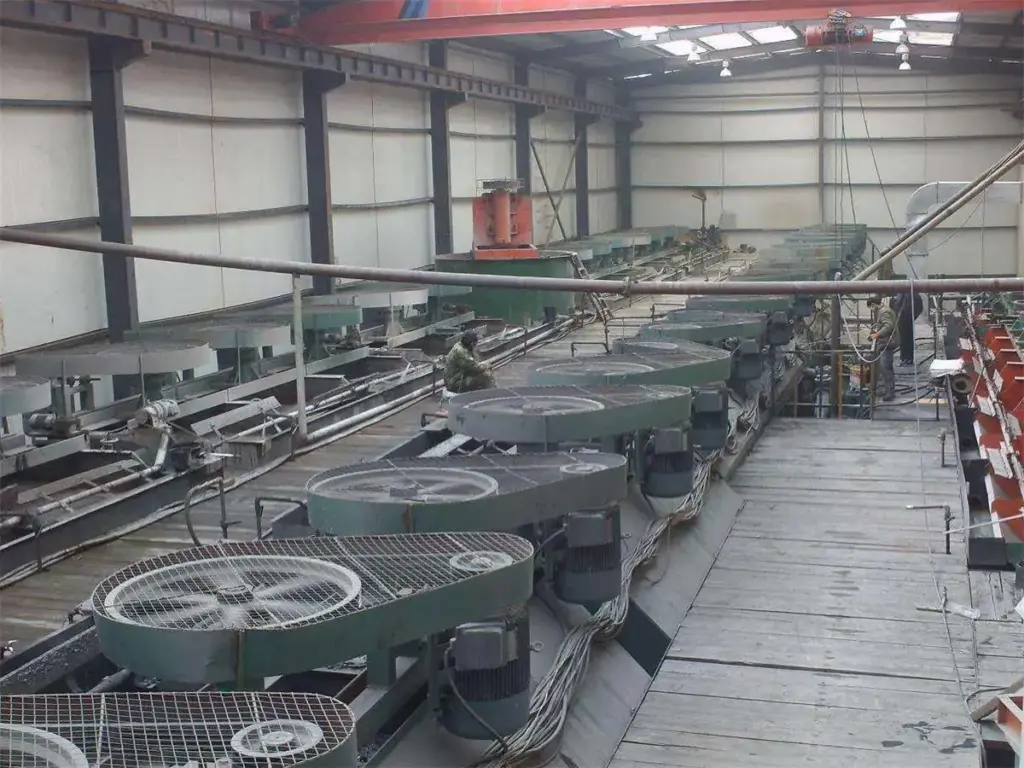
In a flotation plant, multiple SF Flotation Cells can be connected in series to complete continuous separation operations. The self-suction structure simplifies flotation circuit arrangement and allows flexible horizontal installation. SF cells can also be combined with JJF flotation cells to form flotation machine groups, which are commonly used for optimizing flotation layouts in medium and large beneficiation plants.
Projects Show
How to Choose the Right SF Type Flotation Cell?
Based on our project experience, SF Type Flotation Cell selection starts with the required processing capacity and flotation circuit design. The cell volume and quantity should match the plant throughput and flotation stages. For example, SF-2.8, SF-4, and SF-8 models are commonly used in small and medium beneficiation plants, while larger plants may require SF-10, SF-16, or combined flotation configurations. The final selection should be based on slurry flow, residence time, and the requirements of roughing, scavenging, and cleaning circuits.
Below are the selection recommendations summarized by our engineers:
Confirm Processing Capacity
Choose the flotation cell model according to the required ore processing capacity and plant scale.
Check Ore Characteristics
Select the cell based on ore type, particle size, mineral properties, and flotation difficulty.
Choose the Right Cell Volume
Match the flotation cell volume with slurry flow rate and required flotation residence time.
Consider Flotation Stage
Rougher, cleaner, and scavenger flotation require different flotation performance and configurations.
Evaluate Mixing and Aeration Performance
Choose equipment with stable agitation, uniform air dispersion, and efficient mineral-bubble contact.
Consider Energy Consumption
Select a flotation cell with efficient power usage to reduce long-term operating costs.
Check Wear Resistance and Maintenance
Prioritize durable impellers, stators, and easy-maintenance designs for continuous operation.
Select Based on Test Results
Use mineral processing tests to determine the suitable SF flotation cell model and configuration.
Choose an Experienced Manufacturer
Work with a professional flotation equipment supplier for proper selection and process optimization.
Why Choose Zhongyi?
Zhengzhou Zhongyi Mining Machinery Co., Ltd has been specializing in mining and mineral processing equipment manufacturing since 2010. Based in Zhengzhou, China, the company provides SF flotation cells, crushing equipment, screening equipment, and complete mineral processing solutions for different mining applications.
With 3 manufacturing bases covering more than 300 acres, Zhongyi Mining has established complete production capabilities, including CNC machining, laser cutting, welding, and equipment assembly. The company follows the ISO9001 quality management system and applies strict quality control throughout equipment design, manufacturing, and delivery.
In addition to supplying individual flotation machines, Zhongyi Mining provides technical support from equipment selection and process design to installation guidance and commissioning. With experience in mineral processing projects, we work with customers to develop practical flotation solutions based on ore characteristics, production capacity, and plant conditions.
Demander une solution personnalisée
Partner with Zhongyi for SF Type Self Suction Flotation Cell solutions engineered for reliable mineral recovery, low energy consumption and stable operation in copper, gold, lead-zinc and other mineral beneficiation plants.
Customized XJK Flotation Machine Solutions
SF flotation cell selection and configuration depend on ore properties, processing capacity, and the existing plant layout. China Zhongyi Mining provides customized equipment recommendations based on actual project conditions, including flotation cell model selection, process arrangement, and equipment configuration. Our technical team can support projects from single flotation equipment supply to complete mineral processing plant solutions.
Please Provide the Following Information:
FAQ
What is an SF Type Self Suction Flotation Cell?
SF Type Self Suction Flotation Cell is a mechanical agitation flotation machine designed for mineral separation through the froth flotation process. It integrates air suction, slurry suction, and flotation functions in one unit. The impeller creates negative pressure to draw air and slurry into the chamber, providing continuous mixing and bubble dispersion for the recovery of valuable minerals.
What minerals can be processed by SF Flotation Cell?
SF Flotation Cells are suitable for processing a wide range of metallic and non-metallic minerals, including copper, gold, lead-zinc, molybdenum, iron ore, graphite, and fluorite. The actual application depends on mineral properties, feed conditions, and flotation requirements. Proper equipment selection helps match the flotation process with the characteristics of different ores.
What are the advantages of SF Flotation Cell compared with other flotation machines?
The main advantage of SF Flotation Cell is its self-suction design, which combines air intake, slurry circulation, and flotation functions in one machine. Compared with flotation systems requiring additional air supply equipment, SF cells offer flexible installation and simpler circuit arrangement. They are commonly used where reliable operation and practical process configuration are required.
How to choose the right SF Flotation Cell model?
The correct SF Flotation Cell model should be selected according to processing capacity, ore characteristics, slurry conditions, and flotation circuit design. Important factors include required cell volume, number of units, feed size, and flotation stages. Engineers usually evaluate the complete process flow rather than selecting equipment only based on production capacity.
Can SF Flotation Cells be used for roughing, scavenging, and cleaning stages?
Yes. SF Flotation Cells can be applied in roughing, scavenging, and cleaning circuits depending on the beneficiation process design. Multiple units are usually arranged in series to provide sufficient flotation time and continuous mineral separation. The final configuration depends on ore properties, target recovery requirements, and plant production capacity.
Does SF Flotation Cell require an external air blower?
No. SF Flotation Cell adopts a self-air suction structure, where the rotating impeller generates negative pressure to automatically draw air into the flotation chamber. This eliminates the need for external air supply equipment in suitable applications and helps simplify the flotation circuit layout while reducing auxiliary equipment requirements.
Can SF Flotation Cell be combined with JJF Flotation Cell?
Yes. SF Flotation Cell is often combined with JJF Flotation Cell to form a flotation machine group. In this configuration, SF cells typically work as suction cells, while JJF cells operate as direct-flow cells. This arrangement allows flexible flotation circuit design and is commonly used in medium and large beneficiation plants.
What information is needed to select a suitable SF Flotation Machine?
To recommend a suitable SF Type Flotation Cell, customers should provide basic project information, including ore type, processing capacity, feed size, slurry concentration, existing flotation process, and plant layout. Based on these conditions, engineers can evaluate the required flotation volume, equipment quantity, and suitable configuration for the specific application.