Introduction
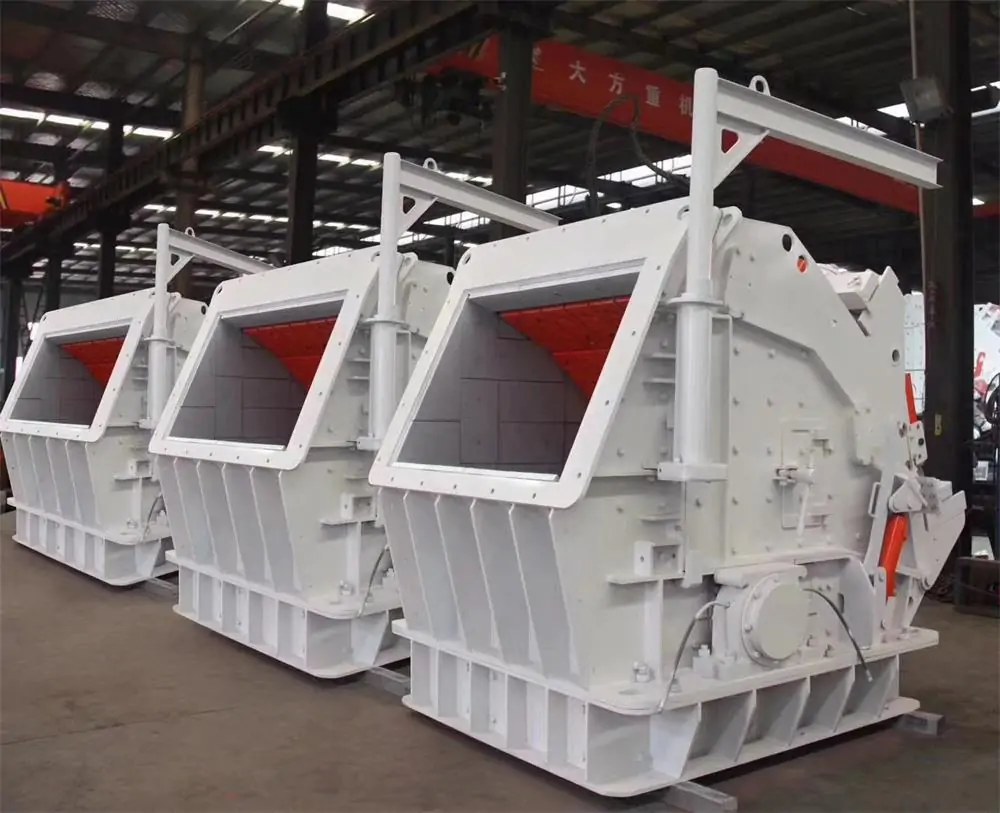
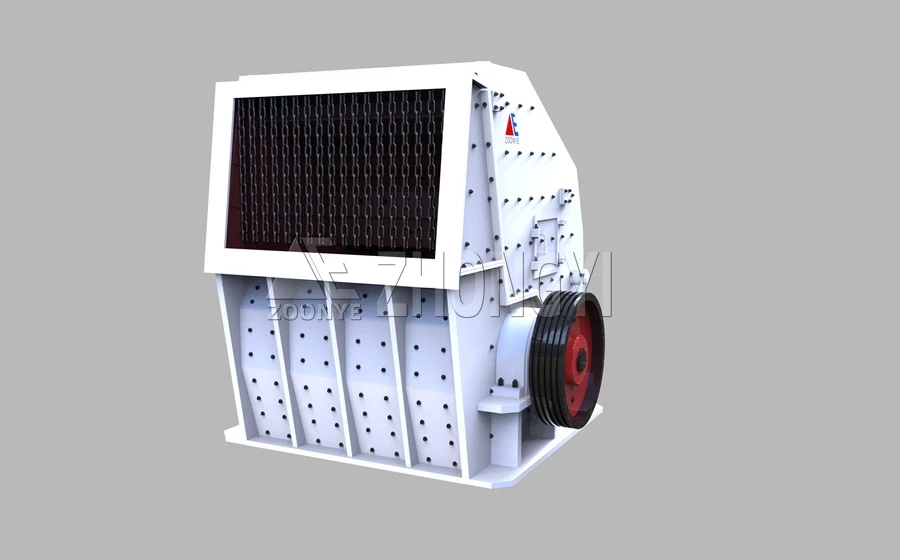
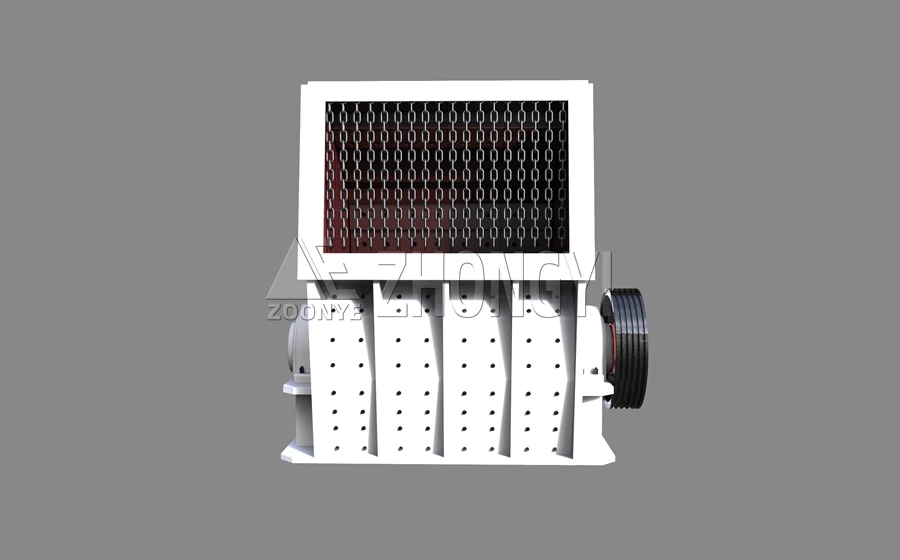
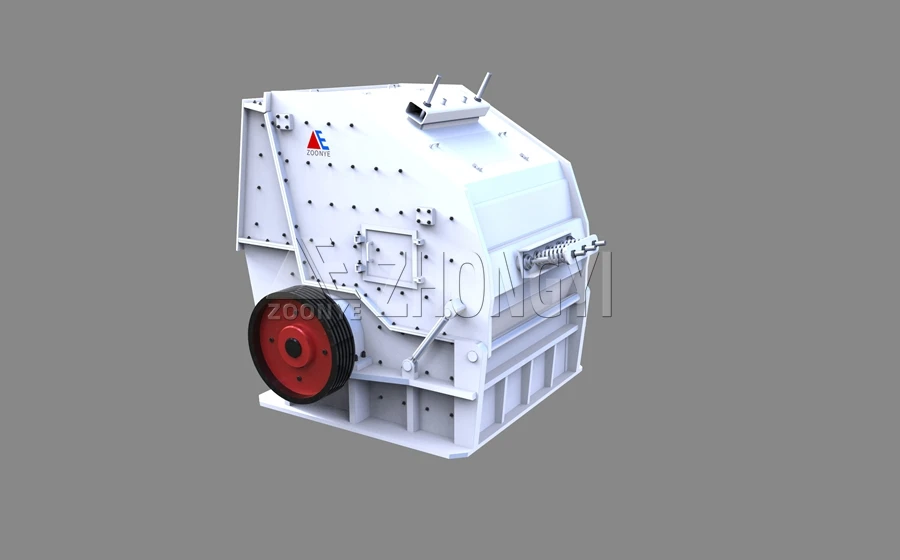
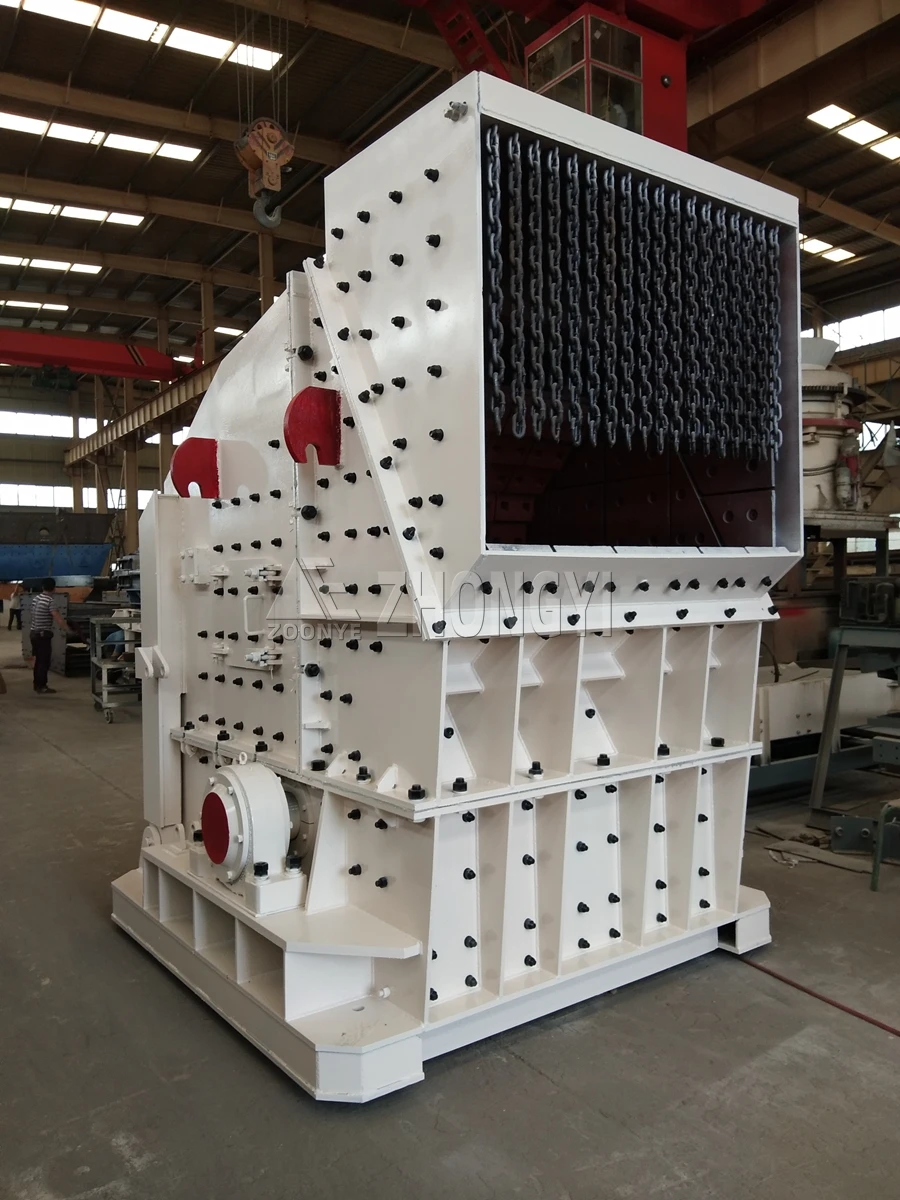
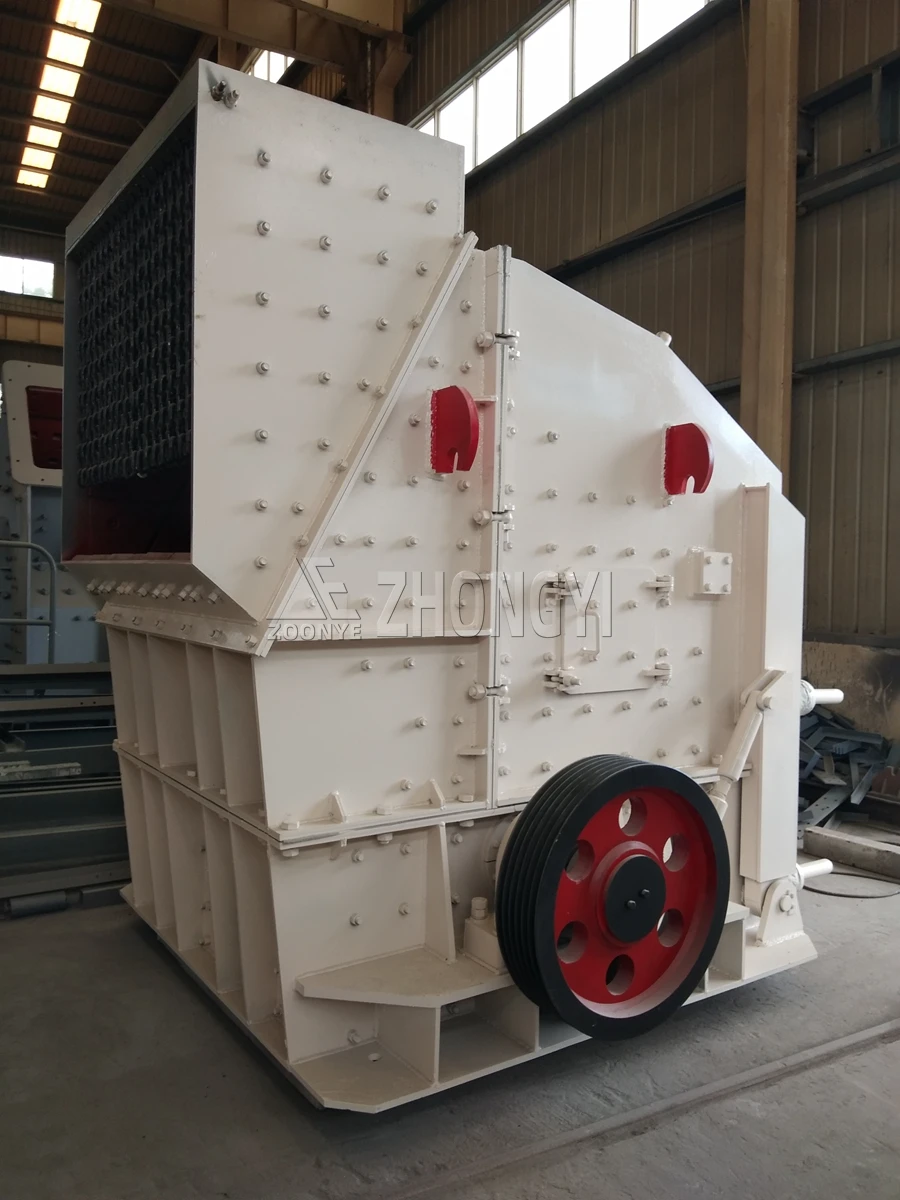
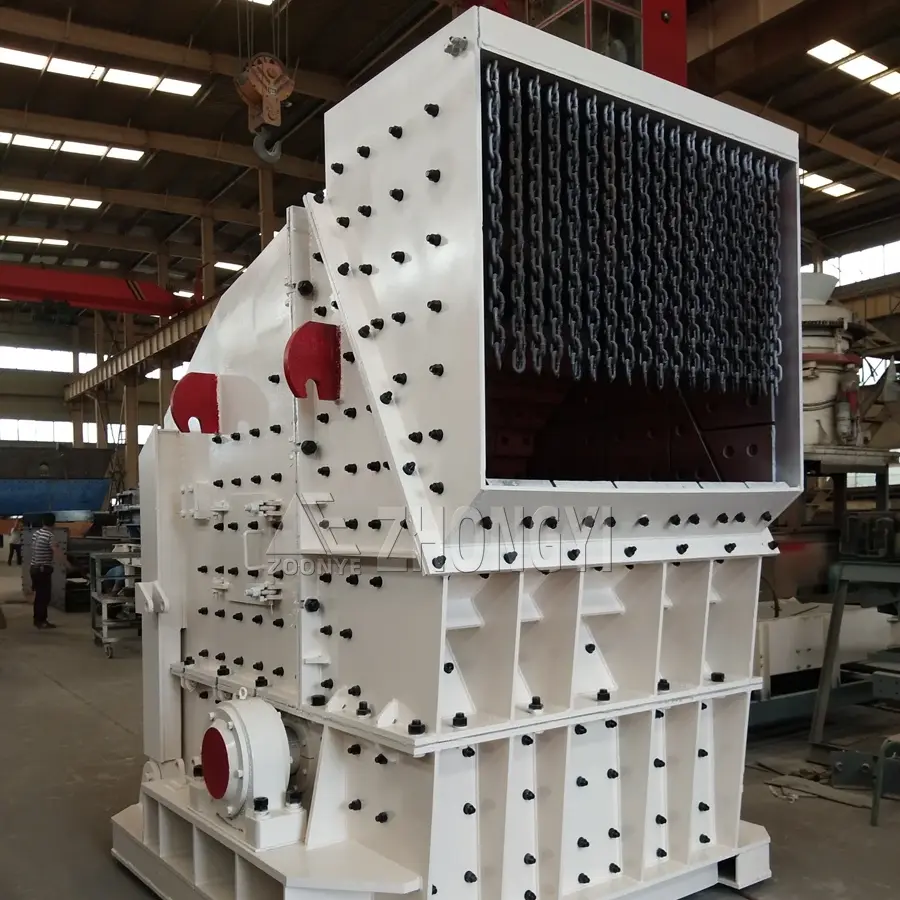
A European Impact Crusher is a type of horizontal shaft impact crusher (HSI) designed with European engineering standards, focusing on a heavier-duty rotor system, optimized crushing chamber, and improved wear resistance for more stable secondary or tertiary crushing performance.
Working Principle
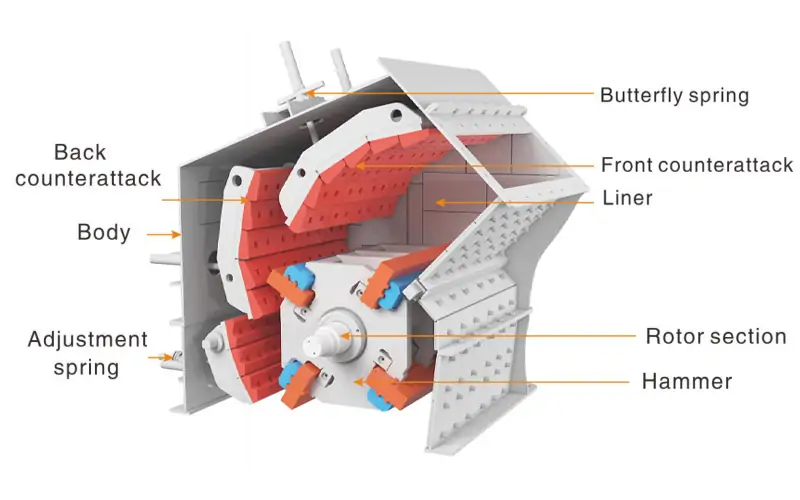
The working principle and crushing process of a European-style impact crusher can be divided into the following three stages:
High-speed impact crushing stage: After entering the crushing chamber, the material is directly struck and crushed by the hammer plates driven by the high-speed rotating rotor. The rotor speed typically ranges from 500 to 800 rpm; the hammer plates have a high linear velocity, and the instantaneous impact load can reach 200–300 MPa, enabling primary crushing of medium-hardness materials.
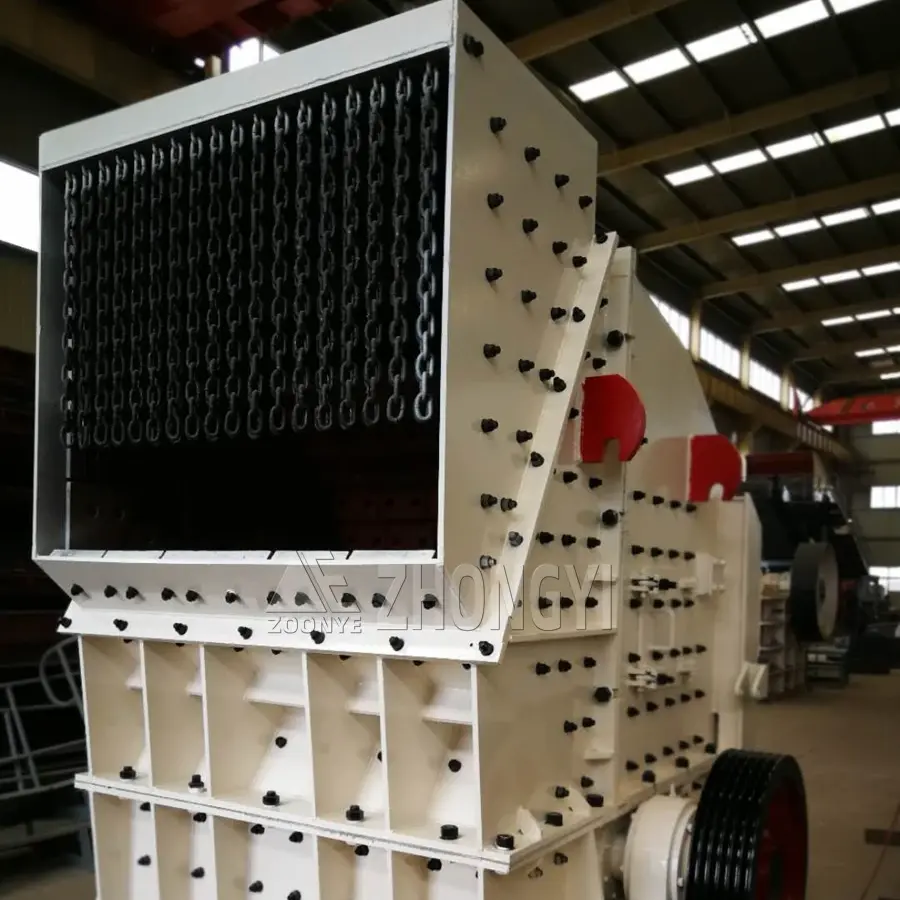
Multi-stage impact crushing stage: The ejected material strikes the upper impact liner, undergoing secondary crushing, and then falls back into the rotor’s working zone to participate in the crushing cycle. Through continuous back-and-forth movement between the impact liner and the hammer plates, continuous impact and shearing forces are generated, gradually reducing the material’s size and improving its particle shape.
Particle Size Control and Discharge Stage: When the particle size falls below the discharge gap, the material is discharged from the bottom of the machine body. By adjusting the position of the impact frame hydraulically or mechanically, the crushing gap can be altered to achieve flexible control of the discharge particle size and stable output.
Structural Components of the European-Style Impact Crusher
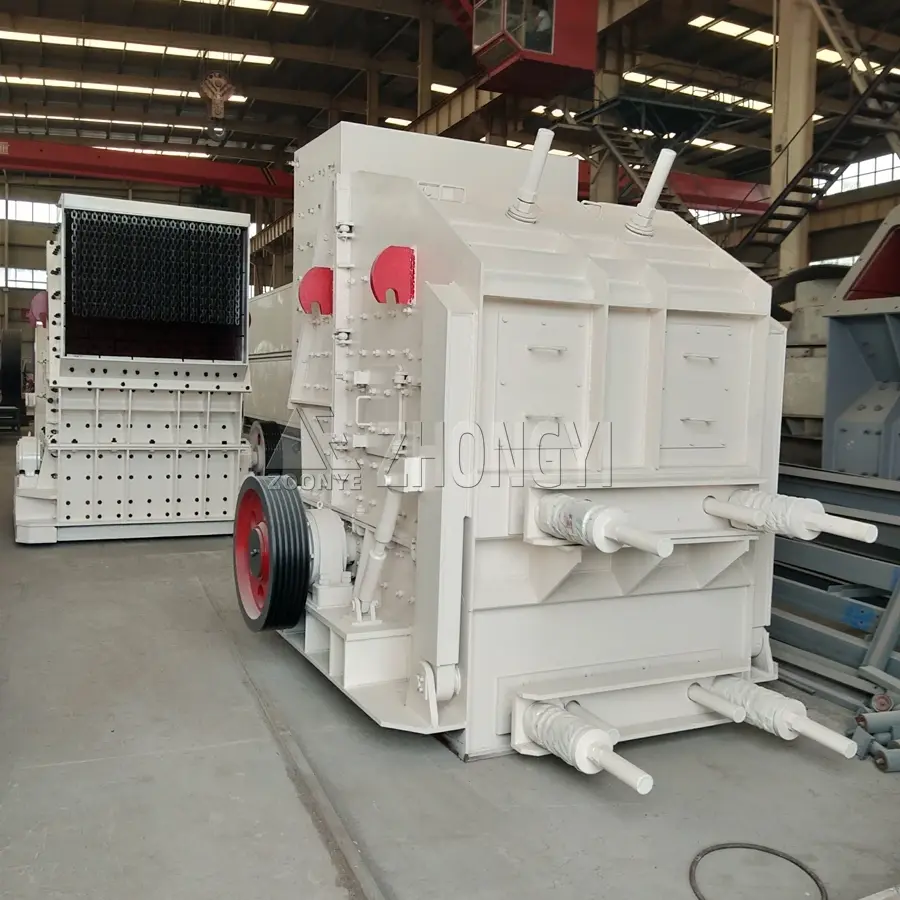
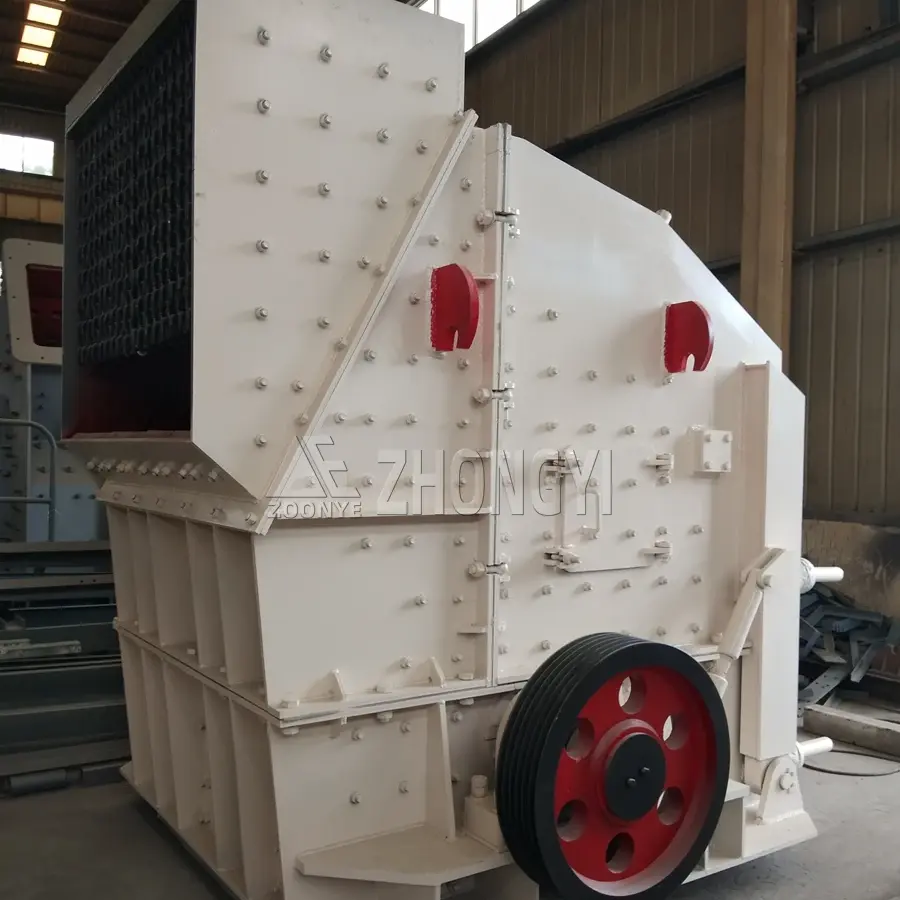
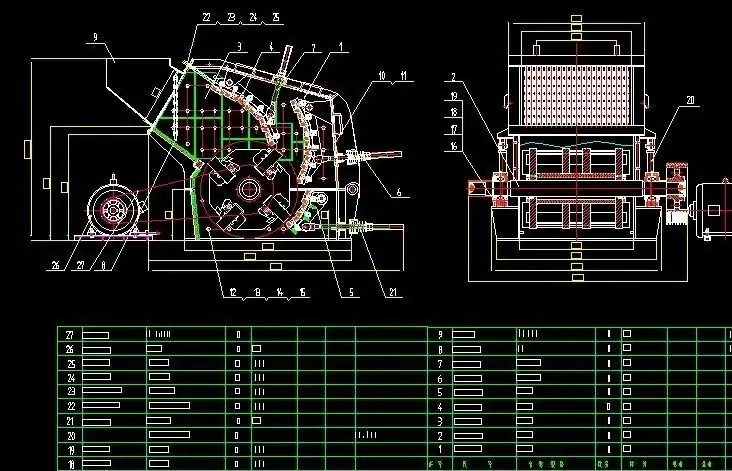
It primarily consists of a feed mechanism, a heavy-duty rotor assembly, hammer plates, an impact plate assembly, a frame, a drive system, a hydraulic opening system, and a lubrication system.
The core structure has been optimized through European standardized design, which is primarily reflected in the following aspects:
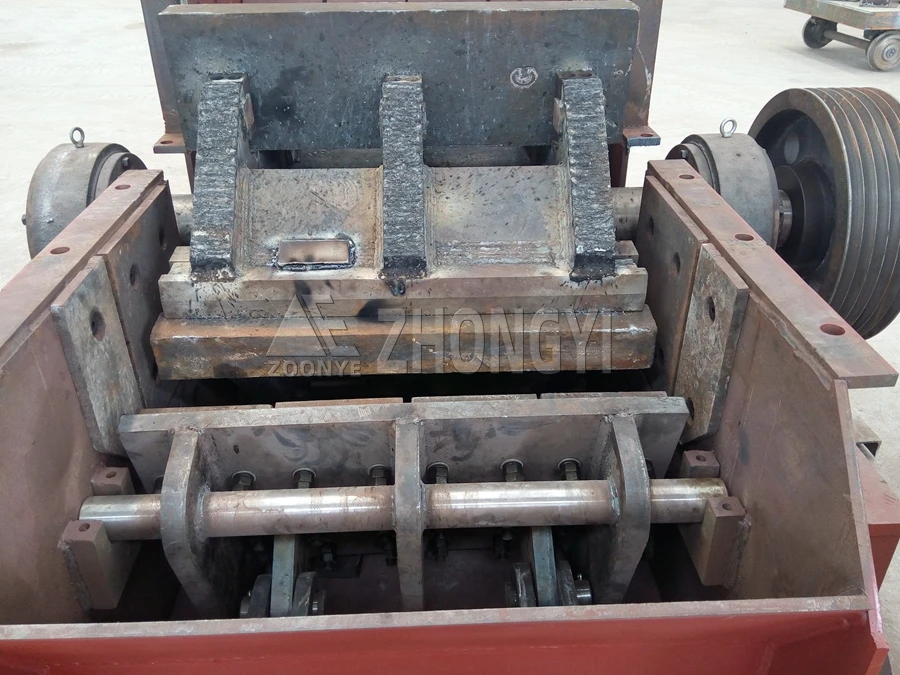
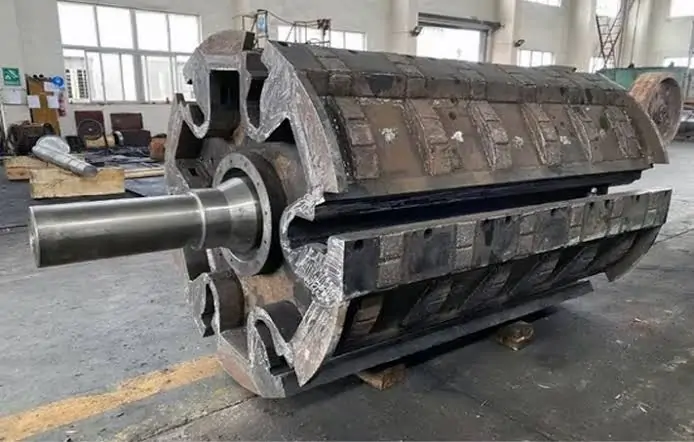
Heavy-Duty Rotor Structure: Features a monolithic welded heavy-duty rotor with high structural rigidity, ensuring stable operation even under high-speed conditions and delivering continuous, powerful impact crushing force.
Multi-layer Impact Plate System: The impact plates are arranged in a stepped or tiered configuration. The clearance between the impact plates and the rotor (approximately 5–30 mm) can be precisely adjusted via a hydraulic system, thereby controlling the material’s crushing path within the chamber, the number of crushing passes, and the fineness of the final product.
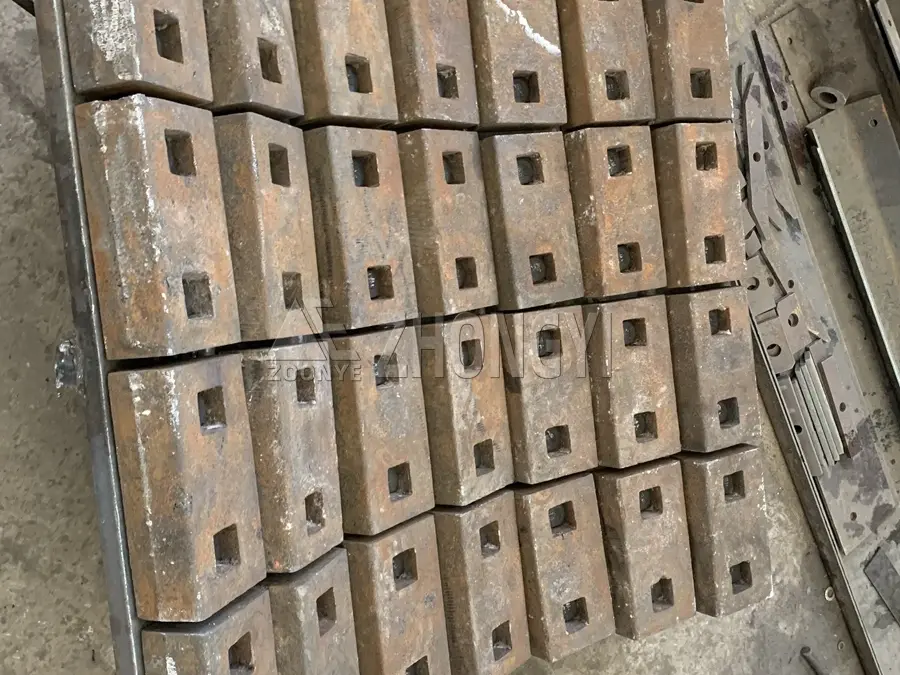
Hydraulic Cover Opening System: The machine is equipped with a quick-opening mechanism that allows the housing to be opened in a short time (typically <5 minutes) during maintenance, facilitating the replacement of hammer plates and impact liners. This significantly reduces downtime for maintenance and markedly improves maintenance efficiency compared to traditional bolted structures.
Details Show
Specifications
| Model | Feeding Size (mm) | Discharge Size (mm) | Capacity (t/h) | Motor Power (kW) | Rotor Size (mm) | Weight (t) |
| PFW-1210 | ≤300 | 5–40 | 70–140 | 132 | Φ1,150×960 | 16.5 |
| PFW-1214 | ≤350 | 5–50 | 110–210 | 160 | Φ1,150×1,400 | 21.8 |
| PFW-1315 | ≤400 | 5–60 | 160–340 | 220 | Φ1,300×1,500 | 28.3 |
| PFW-1320 | ≤450 | 5–60 | 240–480 | 315 | Φ1,300×2,000 | 36.7 |
| PFW-1520 | ≤500 | 5–70 | 350–650 | 500 | Φ1,500×2,000 | 48.2 |
Note: Figures based on medium-hard limestone (bulk density 1.6 t/m³) with closed-circuit screening. Actual capacity varies with material hardness, feed gradation, and moisture. Contact Zhongyi for a model recommendation based on your process conditions.
Advantages
For more details on performance and limitations, see “Advantages and Disadvantages of Impact Crusher” to better support your equipment selection.
Request a Customized Solution
Contact our engineering team to get a customized solution for your aggregate or recycling project.
Applications
Aggregate Production Industry
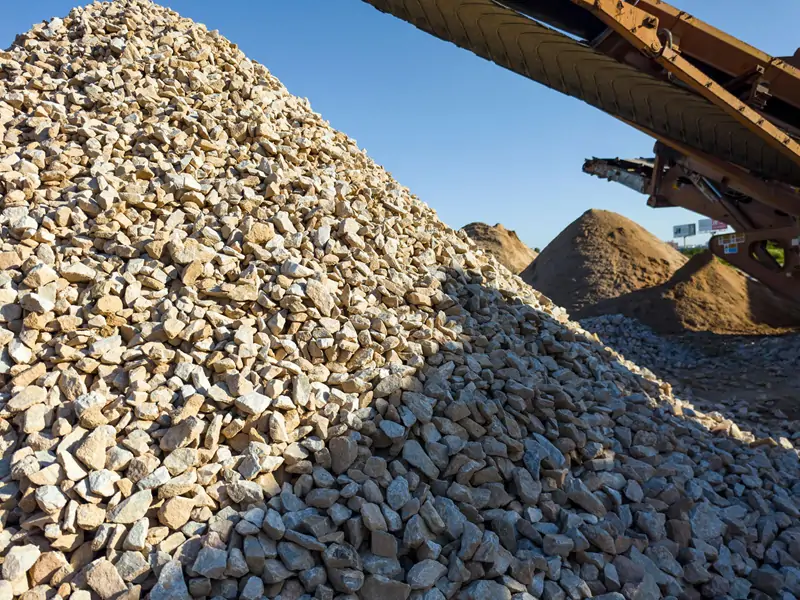
Used for producing high-quality aggregates for concrete, asphalt, and road base materials with controlled particle shape.
Construction & Demolition (C&D) Recycling
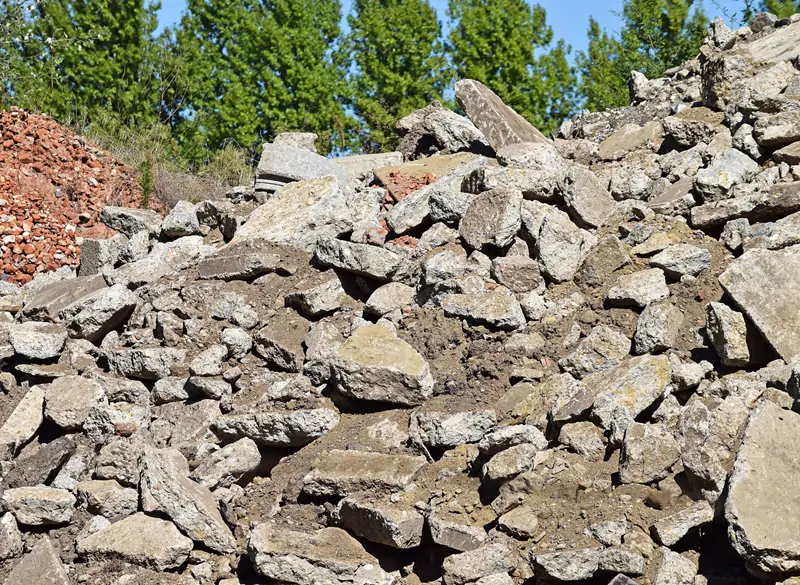
Crushes concrete blocks, bricks, and construction waste into reusable recycled aggregates for infrastructure reuse.
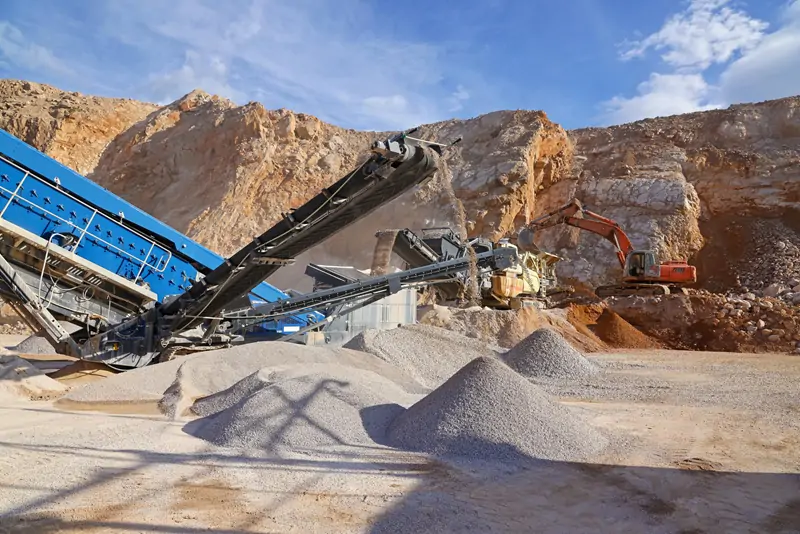
Mining Industry (Soft to Medium Ores)
Applied in secondary crushing of limestone, dolomite, gypsum, and other medium-soft ores in beneficiation plants.
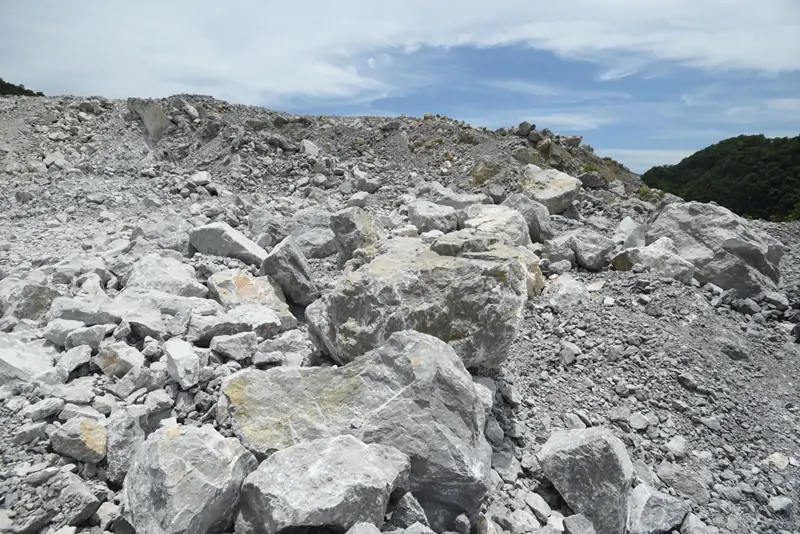
Cement & Building Materials Industry
Used for limestone pre-crushing and raw material preparation in cement production lines, ensuring stable feed size for grinding systems.
Applicable Materials
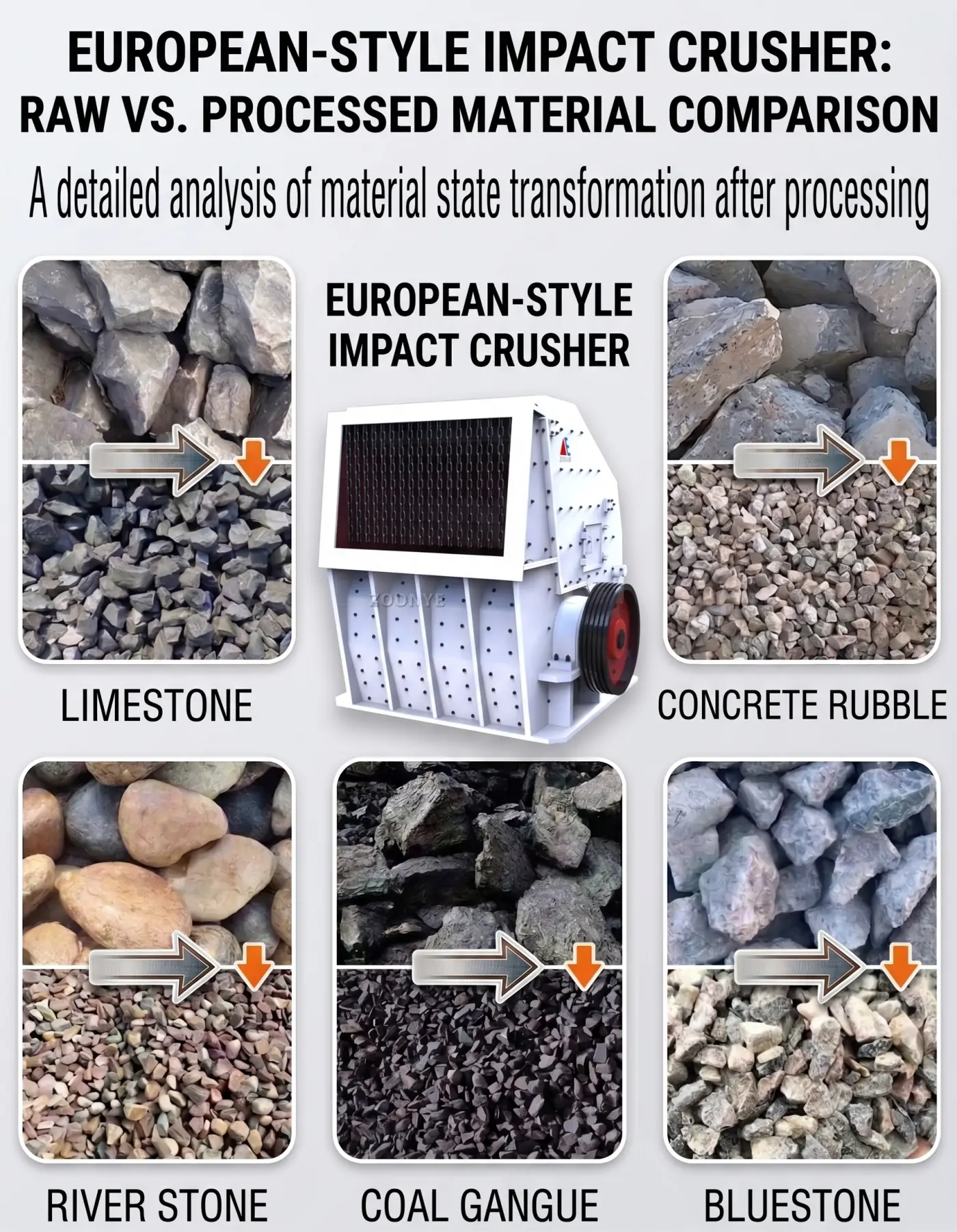
The European-style impact crusher can efficiently process more than 200 types of medium-soft and brittle materials, crushing and shaping limestone, dolomite, construction waste, concrete blocks, and other materials into finished aggregates of various specifications, such as 0–5 mm manufactured sand, 5–10 mm, 10–30 mm, and 40–50 mm crushed stone, as well as 1/2 inch, 3/4 inch, G1, G2, G3, among others. At the same time, they produce a certain proportion of fine material and stone powder, meeting the multi-gradation material requirements for sand and gravel aggregates and road construction projects.
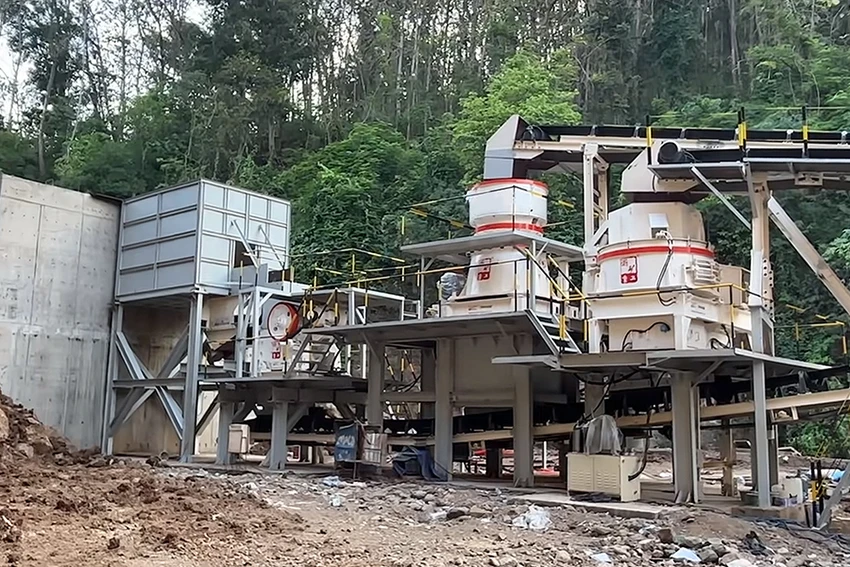
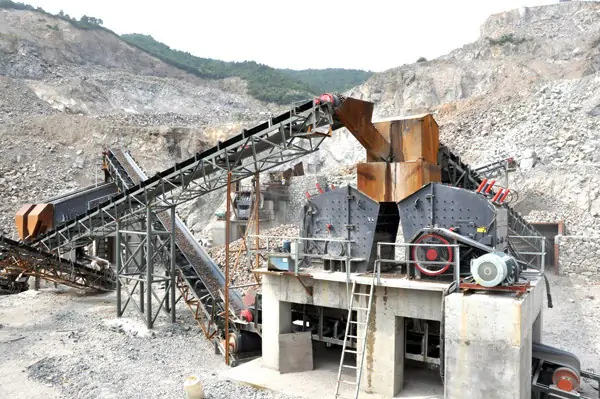
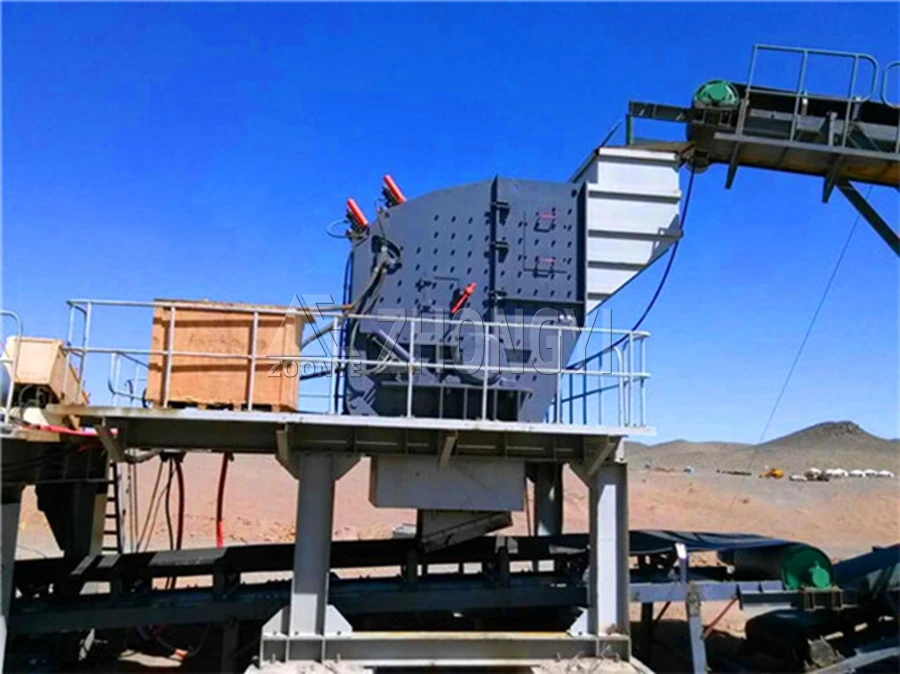
Customer Site
Request a Customized Solution
Tell us your material, capacity, and output requirements—we will recommend the right configuration for your project.
Get a Customized European Impact Crusher Solution
Looking for a European impact crusher for your aggregate or limestone project?
Contact Zhongyi Mining engineering team for:
- Plant design
- Equipment selection
- Capacity calculation
- Layout optimization
European Impact Crusher Manufacturer and Supplier
Zhongyi Mining offers European impact crusher equipments specifically designed for aggregate production and recycling applications. These crushers are stable and reliable, and we provide comprehensive engineering support, not just equipment. With extensive project experience in Asia, Africa, and South America, we can provide customized crushing solutions for different material conditions and production needs.
Our capabilities encompass the complete design of crushing plants, from process layout and equipment selection to system integration. We also offer customized rotor configurations and wear parts solutions to optimize efficiency and extend equipment lifespan under various operating conditions.
FAQs
1. What materials can a European Impact Crusher process?
European impact crushers are mainly used for limestone, dolomite, concrete waste, coal, and gypsum. They are suitable for medium to low hardness materials with feed size generally below 400 mm. In aggregate plants, they are widely used for secondary crushing and shaping applications.
2. Can a European Impact Crusher handle granite or basalt?
It is not recommended for highly abrasive hard rock such as granite or basalt. Although crushing is possible, wear rate of blow bars increases significantly, leading to higher operating costs and shorter service life. Cone crushers are usually a better option for these materials.
3. What is the typical capacity range of a European Impact Crusher?
Capacity varies by model and configuration, typically ranging from 80 TPH to 400+ TPH. In real project applications, 150–300 TPH is the most common range for limestone and aggregate production lines, depending on feed size and required final output specification.
4. What is the main advantage compared with a jaw crusher?
Compared with jaw crushers, European impact crushers deliver better particle shape and higher reduction ratio. They are more suitable for secondary or tertiary crushing stages, especially when cubic aggregate is required for concrete or road base applications.
5. How is the final product size controlled?
Final product size is controlled by adjusting the gap between the rotor blow bars and impact plates. Operators can also fine-tune output through rotor speed and impact chamber settings, allowing flexible production of different aggregate sizes such as 0–5 mm or 5–20 mm.
6. What are the wear parts and replacement cycle?
The main wear parts include blow bars and impact plates. Under normal limestone applications, blow bars typically last several hundred operating hours, depending on feed hardness and abrasiveness. Regular inspection is recommended to maintain stable output and reduce unexpected downtime.
7. Is it suitable for recycling applications?
Yes, European impact crushers are widely used in construction and demolition waste recycling. They can process concrete blocks and asphalt materials efficiently, producing reusable aggregates for road construction and base material production with good particle shape.
8. What should be considered when selecting a European Impact Crusher?
Key factors include material hardness, feed size, required capacity, and final product specification. For limestone projects, impact crushers are ideal, while for granite-heavy applications, a cone crusher may be more cost-effective in long-term operation.