Project Overview
This project is a typical hard rock crushing case we carried out in West Java, Indonesia. The client is a local quarry that primarily supplies aggregate for road subbases and stone for ready-mix concrete. The raw material on-site is typical high-hardness granite, with a maximum feed size of nearly 700 mm. The project required long periods of continuous operation without frequent shutdowns.
To be honest, we’ve handled many granite projects like this. The challenge isn’t whether we can crush the rock, but rather whether we can ensure stability and keep wear-and-tear costs under control.
Project Challenge
The customer previously used a standard jaw crusher and screening configuration, but encountered the following issues during actual operation:
Large granite chunks easily caused jams, disrupting continuous feeding.
Output fluctuated significantly, making it difficult to maintain the design capacity.
Wear parts needed frequent replacement, resulting in high maintenance costs.
The gradation of the finished aggregate was inconsistent, affecting the quality of downstream concrete.
In particular, during continuous production, the equipment could not withstand the impact of hard materials—this was the most pressing issue.
Our Solution
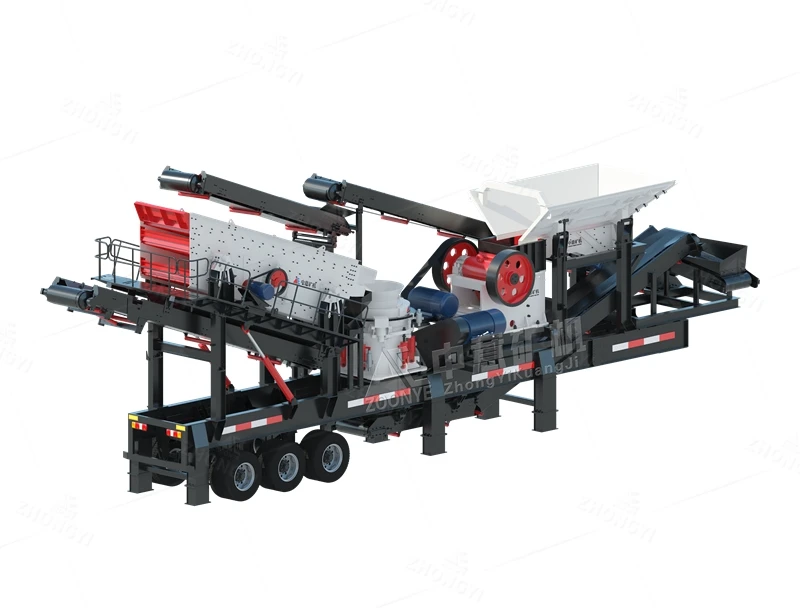
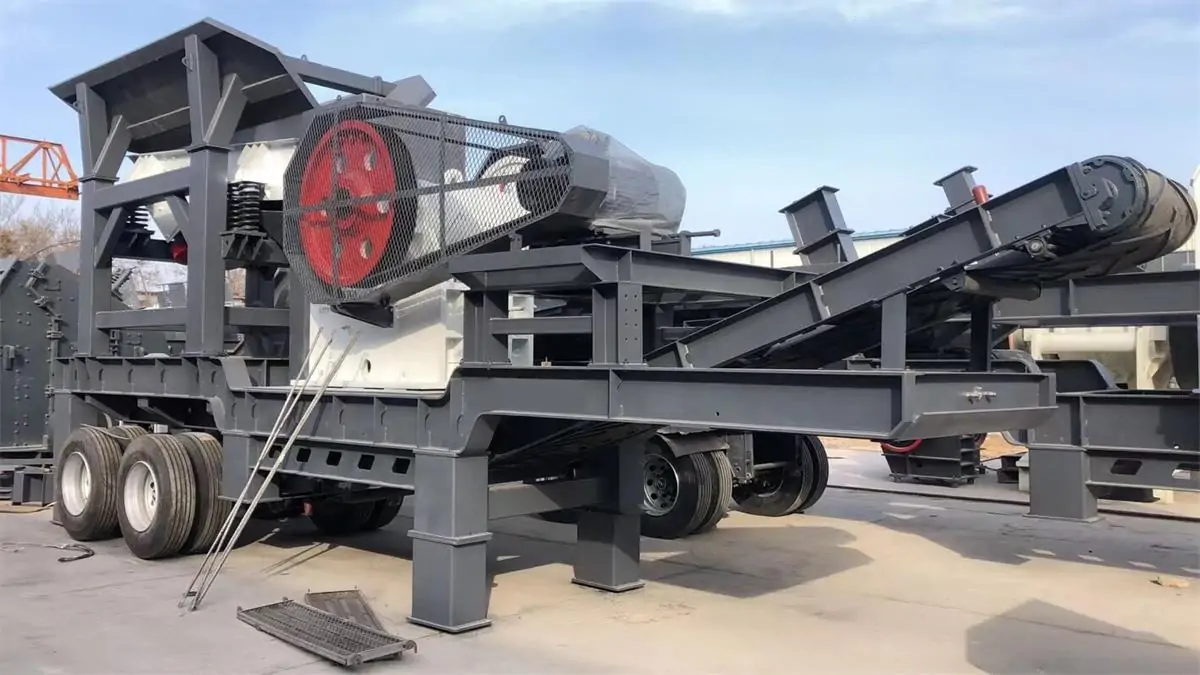
Taking into account the on-site operating conditions, we redesigned a 300 TPH granite crushing production line for the client, with the primary objectives of first stabilizing the primary crusher and then ensuring the shaping capability of the secondary crushing stage. In this project, our design focused on three key areas:
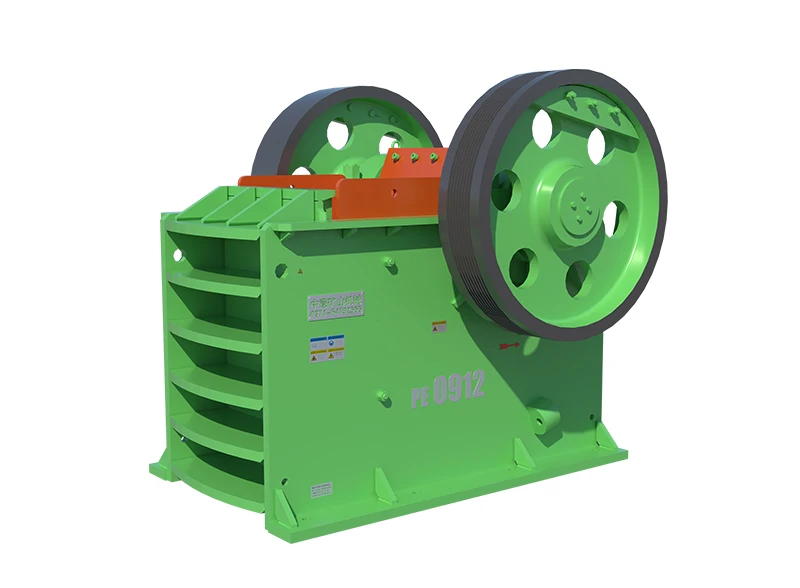
- Prioritizing Primary Crushing Stability: A European jaw crusher was used to address the impact issues caused by large granite feed pieces
- Optimizing Secondary Crushing Particle Shape: A cone crusher enhances the control of needle- and flake-shaped particles in the finished aggregate
- Continuous Line Design: The conveying and screening systems are synchronized to a 300 TPH cycle to avoid bottlenecks
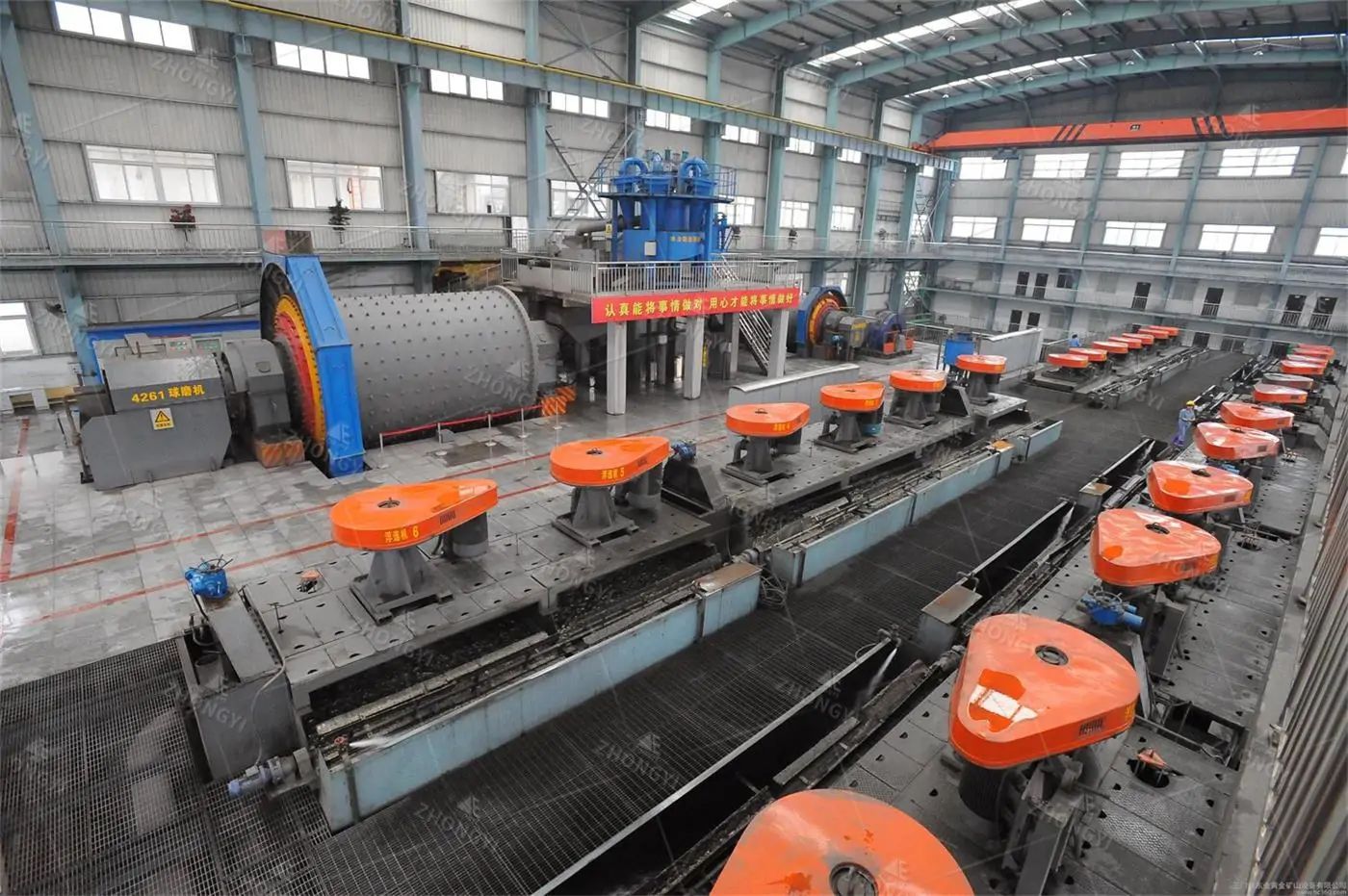
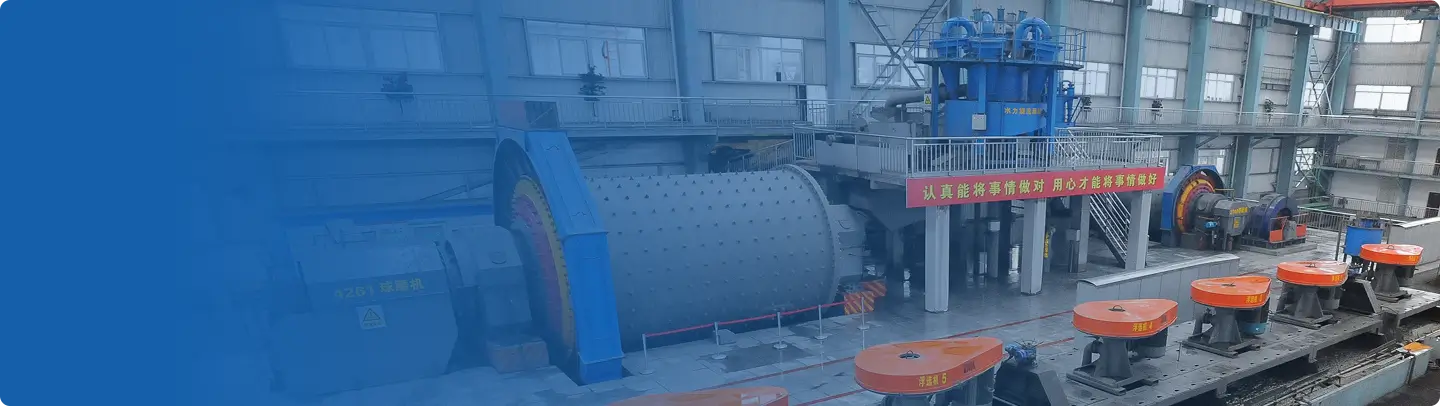
Project Site
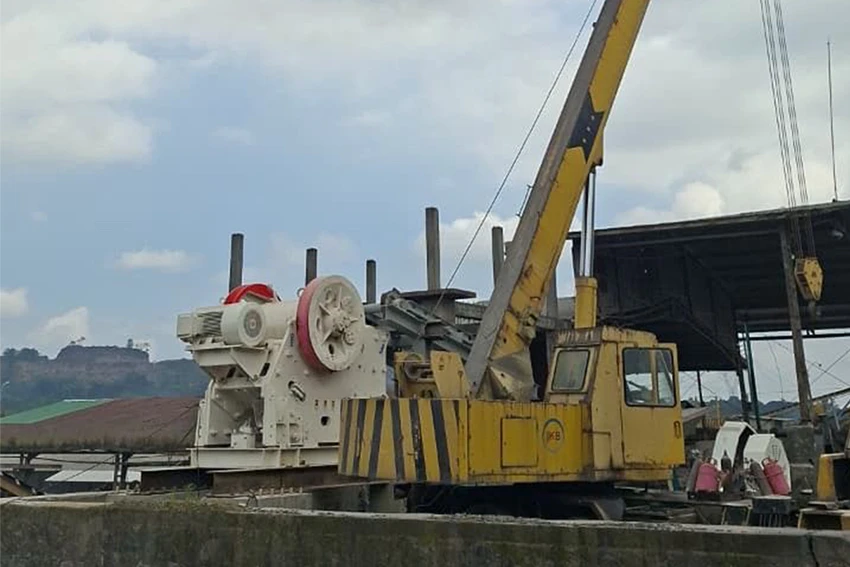
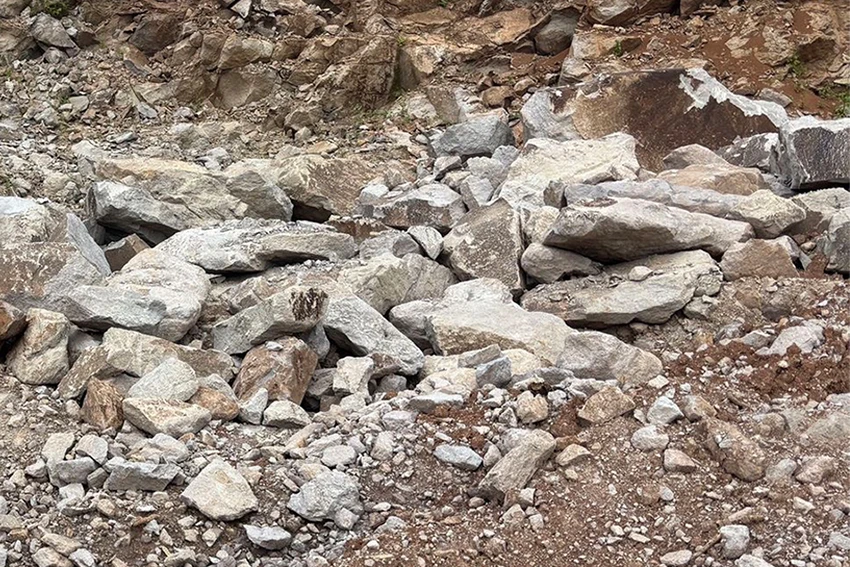
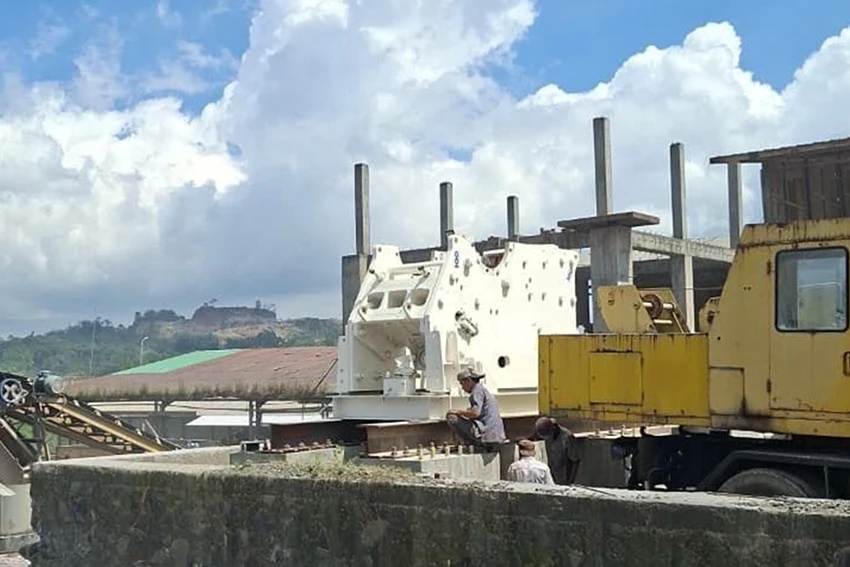
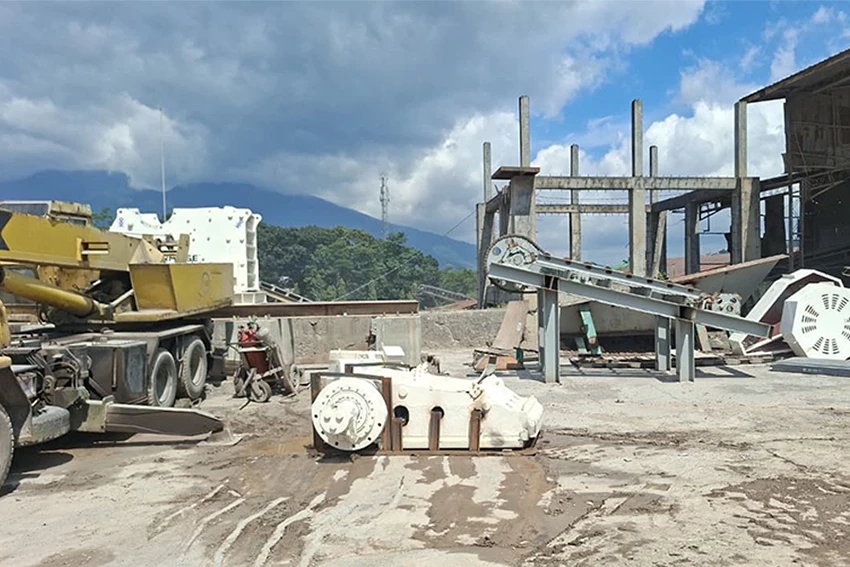
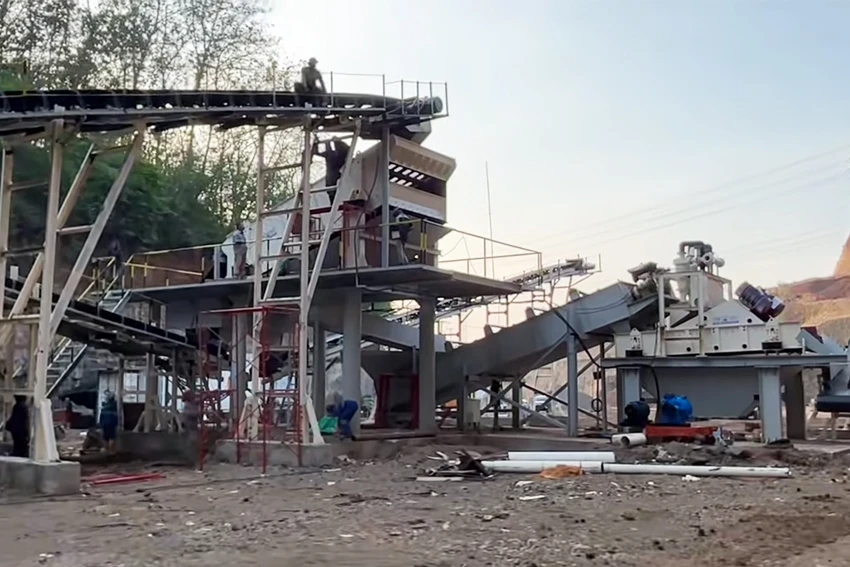
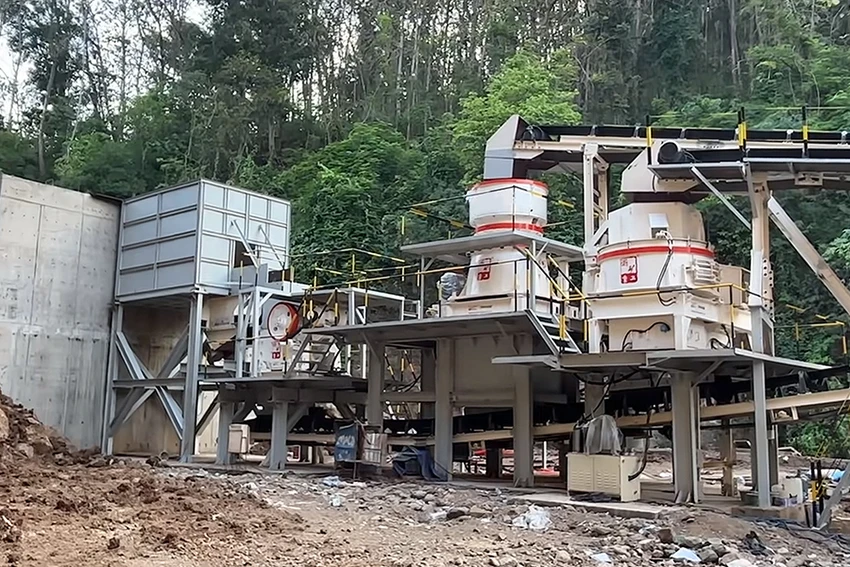
Parameters
| Item | Specification |
| Project Name | 300 TPH Granite Crushing Plant |
| Project Location | West Java, Indonesia |
| Commissioning Status | — (Based on actual project schedule) |
| Designed Capacity | 300 TPH |
| Raw Material | Granite (high-hardness hard rock) |
| Max Feed Size | ≤700 mm |
| Operation Mode | Continuous operation (24h design available) |
| Final Product Sizes | 0–5 mm / 5–20 mm / 20–40 mm |
| End Use | Road base, asphalt aggregate, concrete aggregate |
On-site Operation Experience
During the commissioning phase of this project, our engineers spent a considerable amount of time on-site, primarily to monitor the stability of the front-end coarse crushing process.
Granite is a relatively “hard” material right from the start, but after the European-version jaw crusher was put into operation, the overall performance was smoother than expected:
- Large chunks of material fed through smoothly, requiring no frequent manual intervention.
- The discharge rate from the hopper was stable, with no noticeable instances of “material jamming.”
- Under the same production conditions, the wear rate of the jaw plates was slower than that of the previous equipment.
- Feedback from on-site operators was also straightforward, essentially stating: “This unit is easier to use than the previous one; it hardly ever gets jammed.”
After integrating the downstream cone crusher with the vibrating screen, the gradation of the finished product became noticeably more stable, particularly in the 0–20 mm range. This has received positive feedback from the local concrete batching plant, where both particle uniformity and controllability are now more ideal.
Project Results
After the entire production line officially went into operation, its performance gradually stabilized. The most noticeable change for the customer was that output remained consistently within the designed range of 300 TPH, with a more stable production rhythm and a significant reduction in the frequent shutdowns for maintenance that had previously occurred. At the same time, the replacement cycles for wear parts were extended, leading to a decrease in overall spare parts and maintenance costs, and significantly reducing the on-site management burden.
Based on our practical project experience, the success of this type of high-hardness granite crushing production line depends not only on the performance of individual pieces of equipment but also on the compatibility and stability of the entire system under continuous operation.
If you are planning a similar granite crushing production line or aggregate production project, please feel free to contact Zhongyi. We can provide tailored design solutions and configuration recommendations based on your material conditions and production capacity requirements.