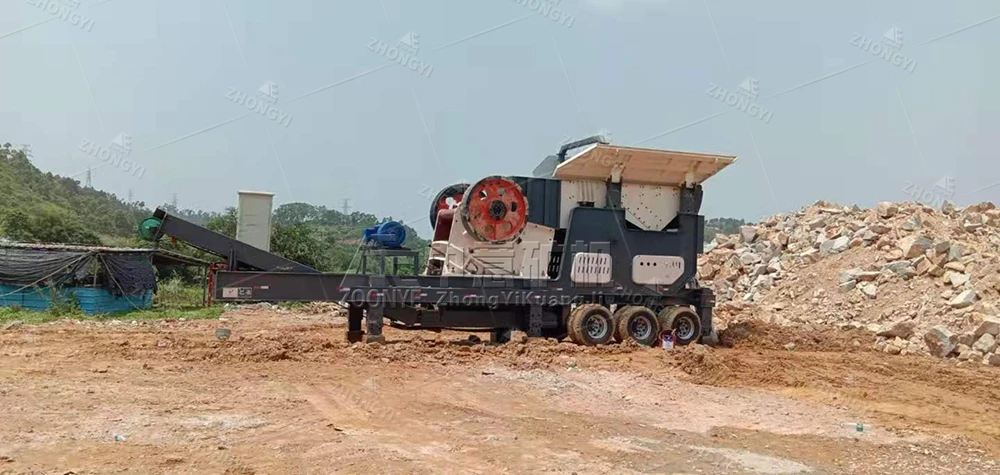
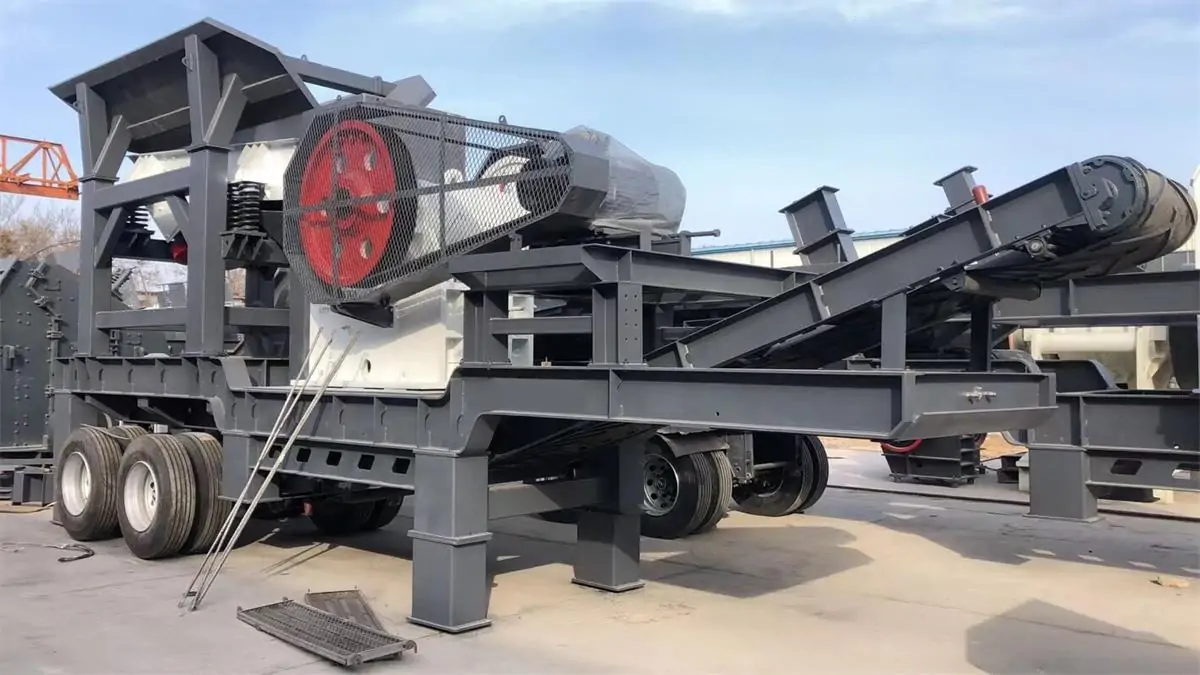
What Is a Mobile Jaw Crusher Machine?
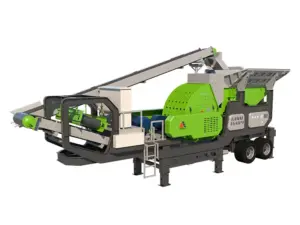
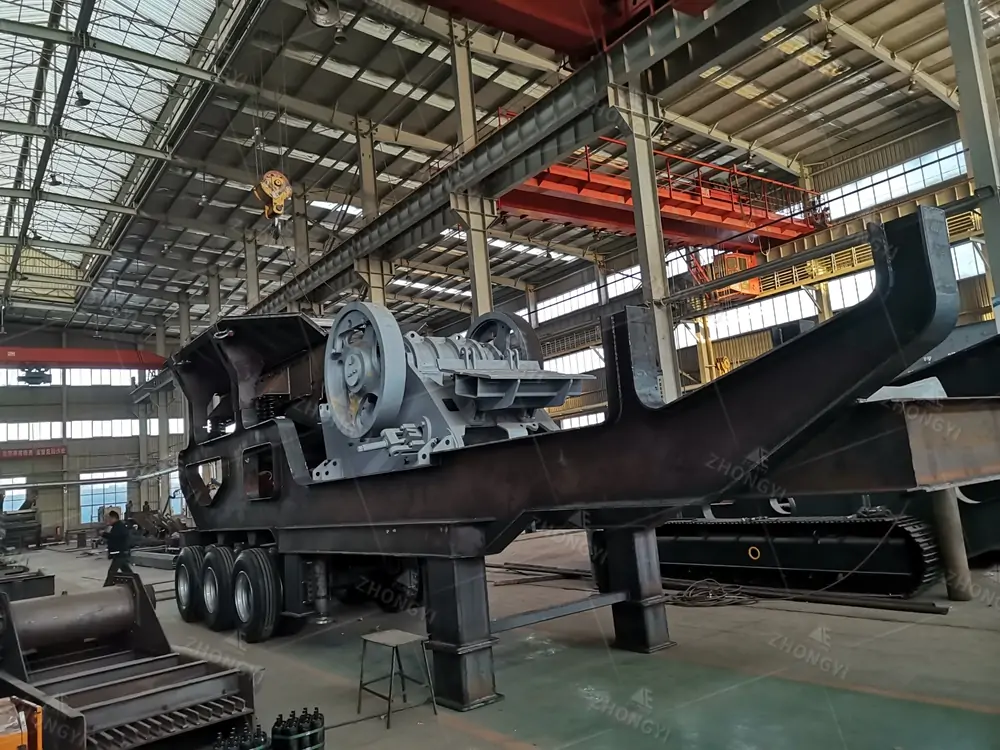
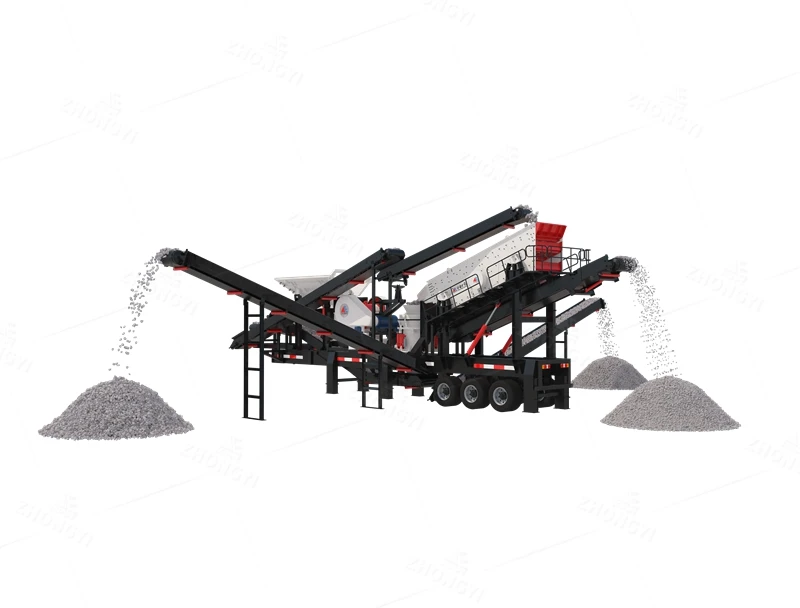
A Mobile Jaw Crusher Machine, also known as a mobile jaw crushing station or portable jaw crusher, is a wheel- or track-mounted crushing system designed for on-site primary crushing of hard rock and construction materials. It integrates feeding, crushing, and conveying functions into a single mobile unit, allowing flexible relocation between job sites without complex installation. The processing capacity ranges from 50–400 t/h depending on configuration.
In a complete crushing and screening line, the mobile jaw crusher usually works after a vibrating feeder or hopper system for primary material feeding, and is followed by secondary crushing equipment such as impact crushers or cone crushers. Downstream, it connects with vibrating screens, magnetic separators, and conveyor systems to complete material classification and stockpiling. This setup is widely used in mining, quarrying, and construction waste recycling projects where flexible deployment and fast commissioning are required.
Types of Mobile Jaw Crusher Machine
Zhongyi supplies different types of mobile jaw crusher machines to suit site conditions and project requirements. Options include tracked units, wheeled units, and integrated crushing & screening plants, covering both standalone primary crushing and complete mobile production setups. Each type is designed for easy relocation and stable on-site operation in mining, quarrying, and construction waste processing.
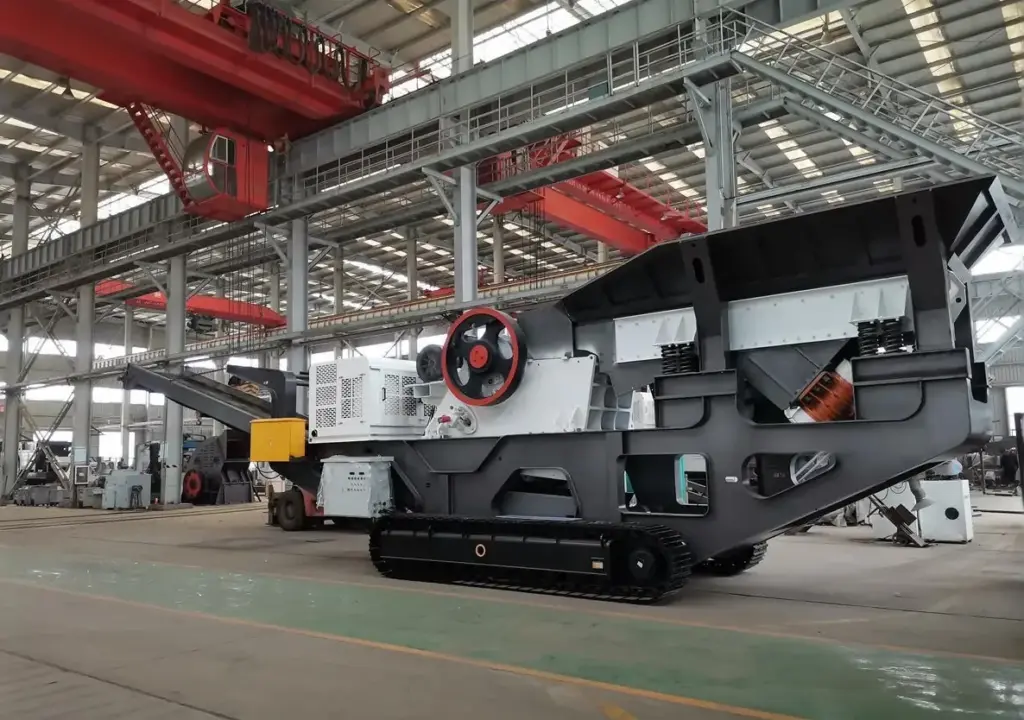
Tracked Mobile Jaw Crusher
Self-propelled crawler-type crusher designed for direct operation in complex or unpaved sites.
- Feed size: ≤600–1000 mm
- Output size: 60–150 mm (adjustable)
- Capacity: 100–400 t/h
- Power system: Diesel engine or hybrid drive
- Mobility: Crawler track, no road transport required
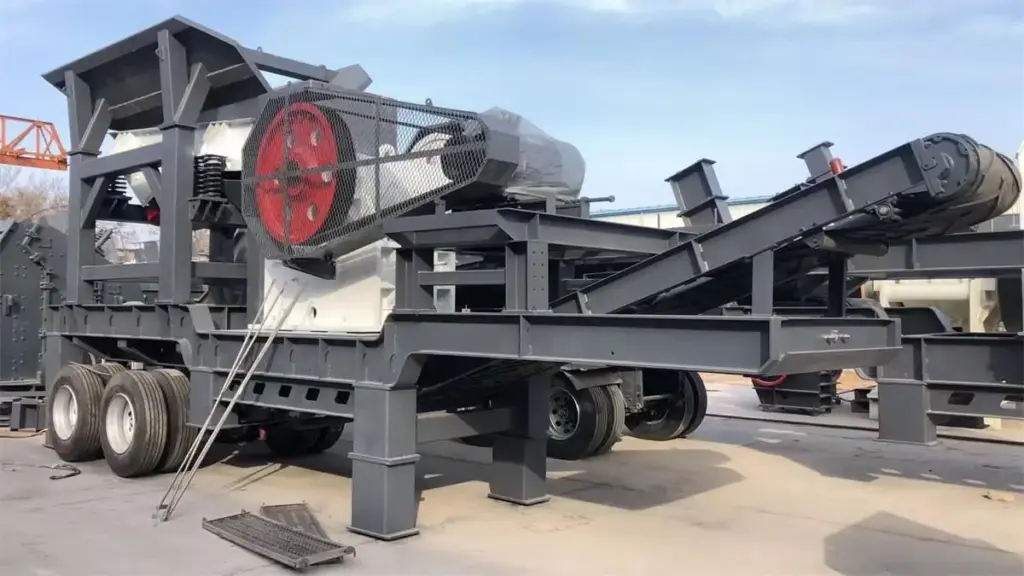
Wheeled Mobile Jaw Crusher
Trailer-mounted crusher designed for fast road transport between fixed job sites.
- Feed size: ≤600–900 mm
- Output size: 60–150 mm (adjustable)
- Capacity: 50–300 t/h
- Power system: Diesel or external electric supply
- Mobility: Wheel-mounted, towable by truck
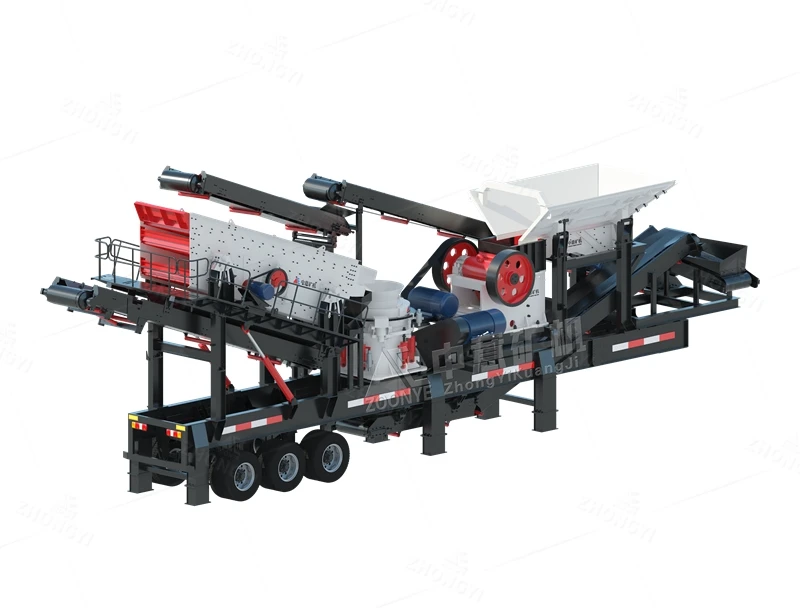
Integrated Mobile Crushing & Screening Plant
Combined system integrating feeding, jaw crushing, and screening for finished aggregate production.
- Feed size: ≤500–800 mm
- Output size: 0–150 mm (multi-grade output)
- Capacity: 80–350 t/h
- Configuration: Jaw crusher + vibrating screen + conveyors
- Application: Closed-loop crushing and grading system
How a Mobile Jaw Crusher Machine Works?
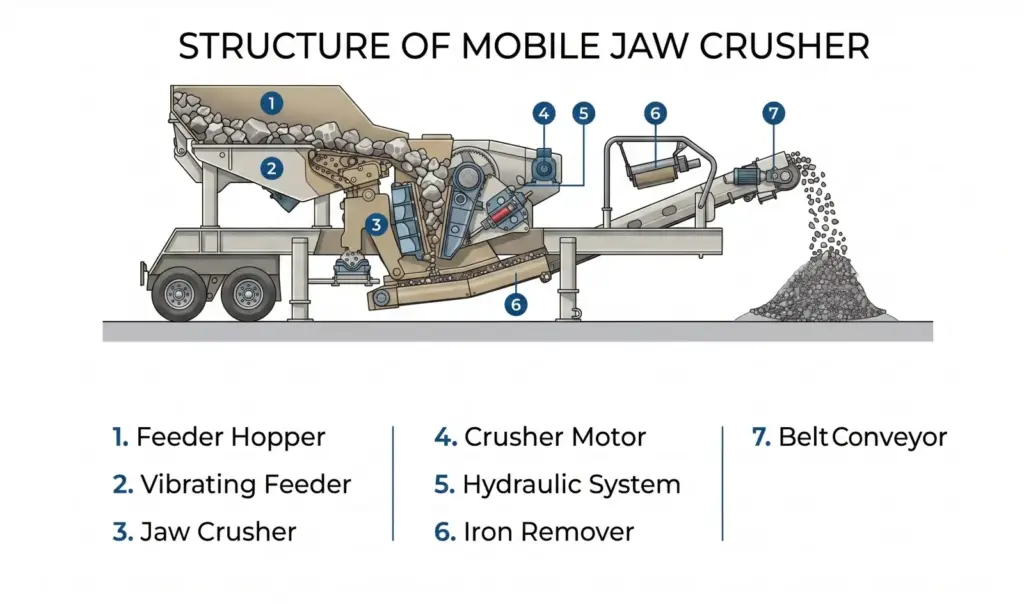
A mobile jaw crusher station is a compact crushing system integrating feeding, crushing, screening, and material transport on a mobile chassis. It operates on the classic jaw crusher principle, where materials are reduced through compressive force generated by the relative motion between a fixed and a moving jaw plate, enabling flexible on-site crushing without permanent installation. The working process is below:
Feeding stage
Raw materials are loaded into the hopper and evenly delivered into the crushing chamber through a controlled feeder, maintaining a stable feed rate.
Crushing mechanism
The motor transmits power via belt and pulley to the eccentric shaft, driving the movable jaw to perform periodic reciprocating motion. During the closing stroke, material is compressed and broken between the two jaw plates under high pressure.
Discharge & classification
When the movable jaw retreats, crushed material meeting the required size is discharged from the bottom outlet. Oversized particles are directed to a screening unit and returned for further crushing, forming a closed-loop process.
Continuous operation
With continuous rotation of the drive system, the crushing cycle repeats steadily, enabling uninterrupted processing and consistent production output.
Parts of Mobile Jaw Crusher Machine
Specifications
| Model Class | Feed Opening | Max Feed Size | CSS Range | Capacity | Engine Power | Operating Weight |
|---|---|---|---|---|---|---|
| Compact (tracked) | 600 × 400 mm | ~400 mm | 20–60 mm | 15–40 t/h | Isuzu turbo-diesel | ~5,000 kg |
| Mid (wheeled) | 750 × 1060 mm | 630 mm | 80–180 mm | 72–150 t/h | 90–110 kW | 28 t |
| Mid-large (tracked) | 900 × 1200 mm | 780 mm | 95–255 mm | 100–240 t/h | 110–132 kW | 49 t |
| Large (tracked, diesel) | 1,200 × 870 mm | 1,200 mm | 100–250 mm | 250–800 t/h | 310 kW CAT diesel | 62,000 kg |
| Large (tracked, diesel-electric) | 1,200 × 870 mm | 1,200 mm | 100–250 mm | 250–600 t/h | 310 kW + 420 kVA generator | 65,000 kg |
Note: specifications are for reference only. Zhongyi’s specific model family, capacity, and motor power are confirmed per inquiry. Tracked and wheeled configurations and diesel / diesel-electric drives are available on request.
Applications
The mobile jaw crusher is a heavy mobile unit with jaw crusher, mainly used for primary crushing of hard and abrasive materials on construction and mining sites. The equipment is designed to reduce large-sized raw feed into manageable aggregate for secondary processing or direct utilization. Typical feed size is up to 600–1000 mm, and the output size can be adjusted to 60–150 mm depending on the closed-side setting, making it suitable for downstream screening or secondary crushing systems.
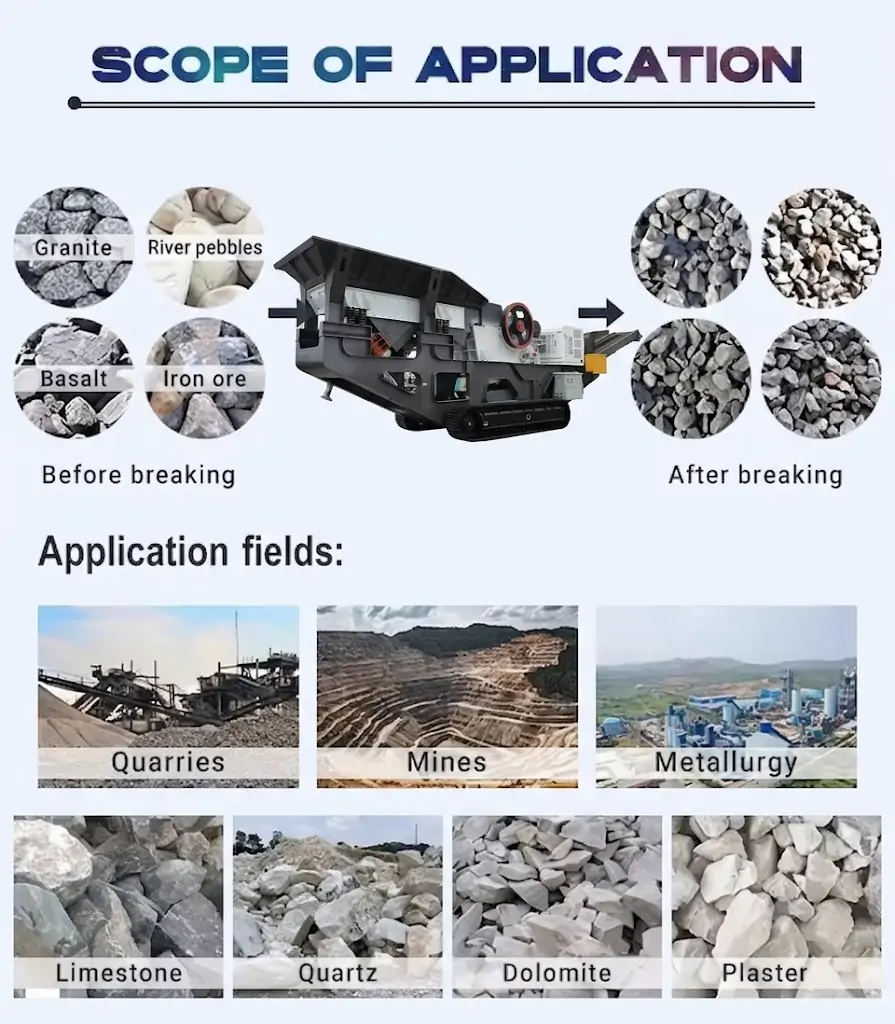
Mining & Quarrying
Hard rock, granite, basalt, quartz, iron ore, limestone blocks
Construction Waste Recycling
Concrete debris, reinforced concrete, bricks, asphalt lumps
Road Construction Projects
Road demolition waste, sub-base materials, excavated rock
Aggregate Production
Crushed stone for concrete batching plants, asphalt mixing plants, road base materials
Infrastructure & Earthworks
Tunnel muck, bridge demolition materials, foundation excavation rock
Industrial Material Processing
Slag, metallurgical waste, large-size inert solid waste
How to Choose a Mobile Jaw Crusher Machine: Track vs Wheel vs Diesel-Electric
Mobile jaw crusher machine comes in different power and mobility configurations, and the right choice depends on site conditions, mobility requirements, and energy access. Tracked, wheeled, and diesel-electric systems each have distinct operating strengths in terms of setup speed, transport flexibility, and fuel efficiency.
Below is a comparison table:
| Type | Mobility | Setup Time | Power System | Best Use Case | Advantages | Limitations |
|---|---|---|---|---|---|---|
| Tracked Mobile Jaw Crusher | Self-propelled (crawler) | Very fast (no foundation needed) | Diesel or hybrid | Mining sites, remote quarries, rough terrain | High mobility, works on uneven ground, no site preparation | Higher fuel consumption, higher maintenance cost |
| Wheeled Mobile Jaw Crusher | Towed by truck | Medium (requires leveling) | Diesel or electric | Construction sites, urban projects, highway projects | Easy road transport, lower cost, flexible deployment | Requires flat ground, less stable in rough terrain |
| Diesel-Electric Mobile Crusher | Track or wheel based | Fast | Diesel generator + electric drive | Large-scale continuous operations | Lower energy cost, stable power output, reduced wear | Higher initial investment, more complex system |
Selection Guide
- Choose tracked type if the project location changes frequently or terrain is complex
- Choose wheeled type if you need fast road transport between fixed job sites
- Choose diesel-electric type if long-term continuous operation and energy efficiency are priorities
For project-specific selection, it is recommended to match equipment configuration with material type, capacity demand, and site conditions.
Need Help Selecting the Right Mobile Jaw Crusher?
Not sure which configuration fits your site conditions, material size, or production target? Zhongyi engineering team can help you match the right mobile crushing solution based on your project requirements, from single-unit crushers to complete mobile crushing lines.
Projects Show
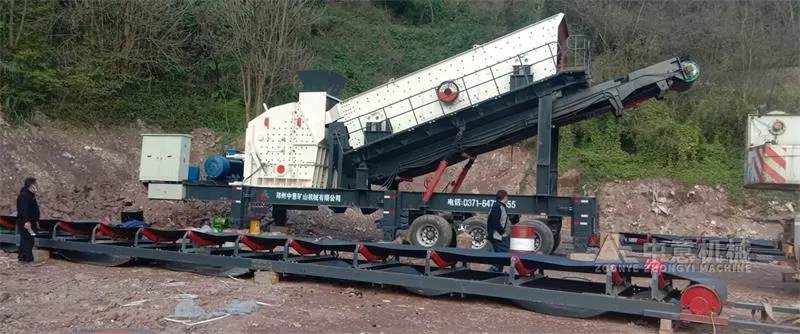
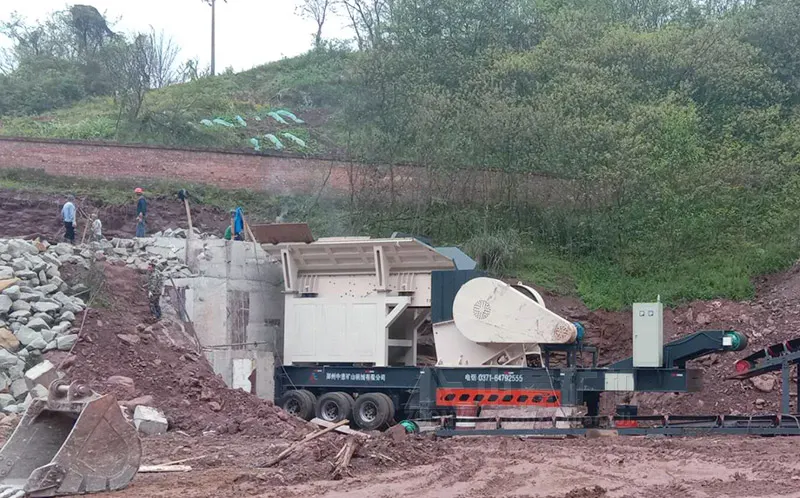
Chongqing 1,800 TPD Mobile Sand & Aggregate Production Line
The Mobile Jaw Crusher Machine was used as the primary crushing unit in a 1,800 TPD mobile sand and aggregate production line in Chongqing, China. The project processes granite and limestone, with the mobile jaw crusher handling the initial size reduction before the material enters the downstream mobile impact crushing and screening stage.
The machine was delivered to the project site as part of the complete mobile plant and commissioned under actual working conditions. Zhongyi Mining engineers provided on-site installation and commissioning support, helping the customer complete equipment setup and bring the mobile jaw crushing unit into regular production.
Custom Jaw Mobile Crusher
To receive a precise, tailored technical solution and a competitive price for your Mobile Jaw Crusher Machine please complete our inquiry form below. Our engineering team will review your project details and respond promptly.
Mobile Jaw Crusher Machine Manufacturer and Supplier
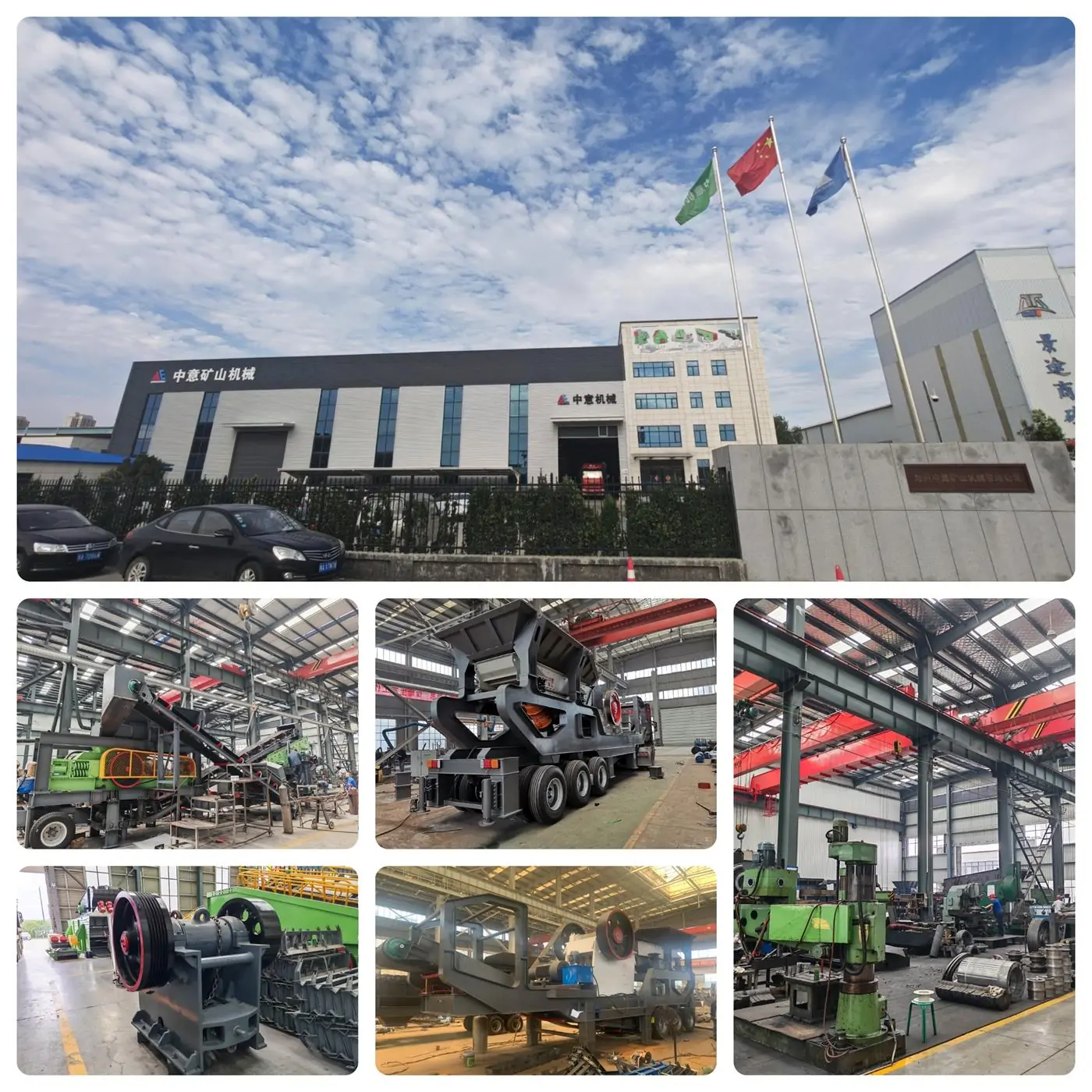
Zhongyi is a mining and mineral processing equipment manufacturer in Zhengzhou, China, with 16 years of experience, 60 patents, and 3 production bases building crushing, grinding, and screening equipment for aggregate, mining, and recycling customers. The export footprint covers Southeast Asia, Africa, South America, and Eastern Europe, with reference projects on granite, basalt, and limestone crushing circuits.
The mobile jaw crusher machine draws on the same engineering as the company’s stationary jaw crushers, with the chassis, hydraulic system, and control integration completed at the Zhengzhou facility. Our hold ISO9001:2015 certification and supports mobile plant configuration per inquiry, including tracked or wheeled chassis, diesel or diesel-electric drive, jaw chamber size, and pre-screen options.
FAQs
What is a mobile jaw crusher machine?
A mobile jaw crusher machine is a primary jaw crusher mounted on a tracked or wheeled chassis with an integrated feeder, discharge conveyor, and diesel or diesel-electric power pack that relocates between job sites.
What is the difference between tracked and wheeled mobile jaw machine?
Tracked jaw crusher plants walk on rubber-pad steel tracks at ~1 km/h and set up in 10–20 minutes; they need lowboy trailers and heavy-haul permits for road moves. Wheeled jaw crusher plants tow on standard flatbeds without permits but need 1–2 hours of jacking and leveling on arrival.
How much does a mobile jaw crusher machine cost?
Entry-level compact tracked plants in the 15–40 t/h class start around USD 30,000–60,000. Mid-size wheeled and tracked plants in the 100–200 t/h class run USD 100,000–250,000. Large tracked diesel-electric plants in the 500–800 t/h class run USD 500,000–700,000.
What is the difference between jaw crusher and impact crusher for primary crushing?
A jaw crusher compresses rock with a single-toggle motion, producing fewer fines and handling larger feed size. An impact crusher breaks rock with hammer impact, producing more fines and a more cubical product. Mobile jaw plants are used as primary; mobile impact plants follow as secondary or tertiary.
What size mobile jaw plant do I need for 200 t/h of granite?
A 900 × 1200 mm jaw chamber with 110–132 kW engine on a mid-size chassis delivers 100–240 t/h at 95–255 mm CSS. For continuous 200 t/h of granite, specify a diesel-electric drive to keep the engine loaded efficiently.
How often does the jaw liner need replacement?
Quarry granite and basalt feed wears manganese jaw dies in 600–1,200 hours of continuous operation. Demolition concrete and limestone feed extends liner life to 1,500–2,500 hours. Specify two sets of cheek plates and dies with the plant to keep downtime low.
Can a mobile jaw crusher machine run on diesel-electric hybrid?
Yes. The Metso Lokotrack LT120E and Terex Finlay J-1175 Hybrid are diesel-electric, with a 310 kW diesel engine driving a 420 kVA generator that powers the electric crusher and conveyors. Mains-electric only operation is available on the Terex Finlay J-1175 Electric.
What is the lead time for a mobile jaw crusher machine?
Compact and mid-size plants ship in 25–40 days from Chinese and European factories. Large tracked diesel-electric plants ship in 60–90 days. Spare parts (jaw dies, cheek plates, VGF springs) typically ship in 7–15 days from stock.
Related Articles
What Is a Jaw Crusher? Definition, Working Principle, Types & Uses
Heavy Hammer Crusher vs Jaw Crusher: Differences, Pros & Best Applications
Best European Jaw Crusher for Hard Rock: Complete Guide for Mining & Quarry Projects