What Is a Rake Thickener?
A Rake Thickener is a large circular solid-liquid separation equipment used to concentrate slurry and recover process water in mining, mineral processing, and tailings treatment plants. It uses gravity settling and a rotating rake mechanism to separate solid particles from liquid, producing clarified overflow water and a higher-density thickened underflow.
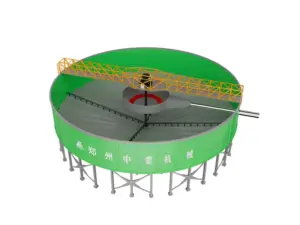
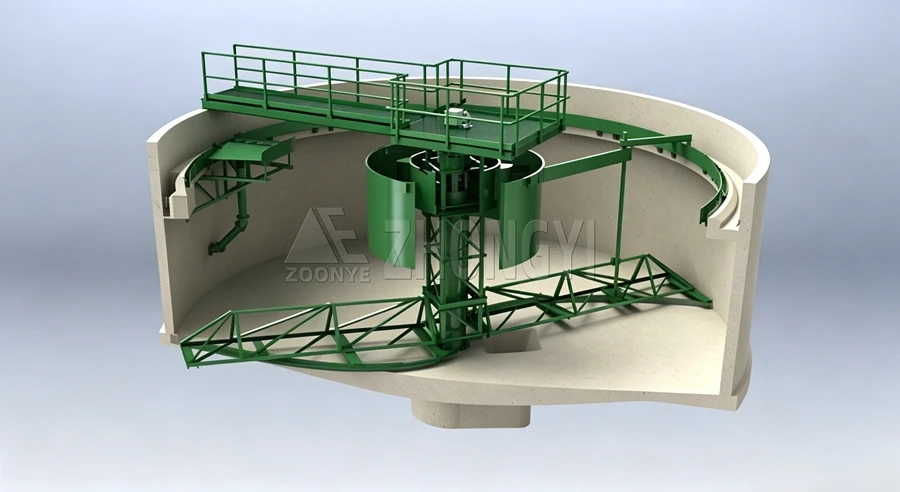
A rake thickener mainly consists of a circular tank, central feedwell, rake arms, drive unit, and underflow discharge system. During operation, slurry enters the tank through the feedwell and spreads into the settling area. Solid particles settle at the bottom of the tank under gravity, while the upper clarified water flows out through the overflow weir. The rotating rake assembly moves the settled sludge toward the center discharge outlet for continuous underflow removal. For large-diameter units, the peripheral drive system installed around the tank provides stable rotation of the bridge and rake structure, making it suitable for continuous concentrate and tailings dewatering operations.
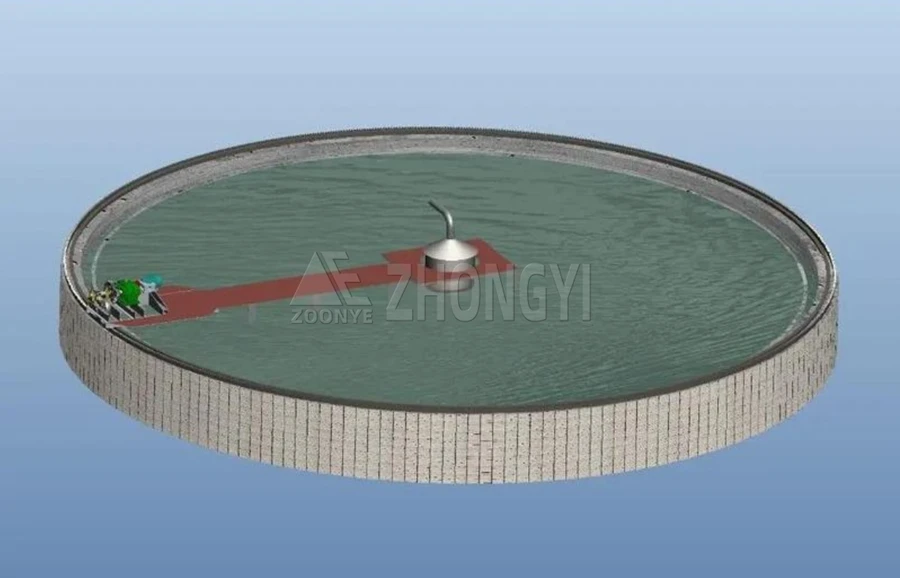
How Does a Rake Thickener Work?
A Rake Thickener uses gravity settling and a mechanical rake system to separate solids from slurry. The rotating rake assembly collects settled solids and moves them toward the discharge area, while clarified water overflows from the tank.
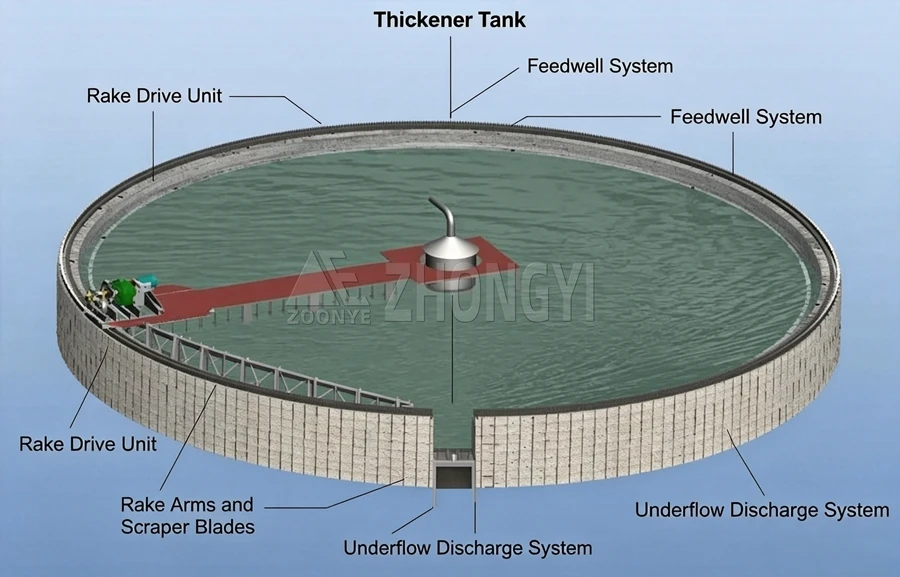
Main Components
A Rake Thickener mainly consists of a circular tank, feedwell, rake assembly, drive unit, and underflow discharge system. Unlike center drive thickeners, the peripheral drive system is installed around the tank edge to rotate the bridge and rake assembly, making it suitable for large-diameter thickening applications.
Thickener Tank
The circular tank provides the settling area for slurry separation. Solid particles settle at the bottom, forming a concentrated sludge layer for rake collection.
Feedwell System
The feedwell introduces slurry into the center of the tank and reduces flow disturbance before the slurry enters the settling zone.
Rake Drive Unit
The peripheral drive unit is installed at the tank circumference and uses a motor, reducer, and gear or roller mechanism to rotate the bridge and rake structure. The torque system monitors load changes during operation.
Rake Arms and Scraper Blades
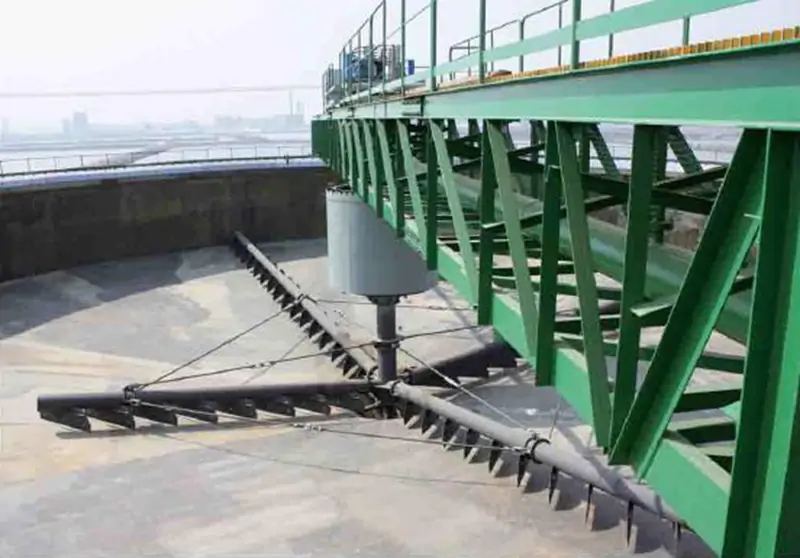
The rake assembly consists of rake arms and scraper blades installed under the rotating bridge. It moves settled solids along the tank bottom toward the center discharge outlet.
Underflow Discharge System
The collected sludge is discharged through the center outlet as thickened underflow for further processing, such as filtration or tailings handling.
Specifications and Capacity Range
Peripheral drive rake thickeners use a peripheral drive system to rotate the rake assembly for continuous sludge collection and underflow discharge. The standard models cover tank diameters of 15–53 m, processing capacities of 390–3,400 t/d, and settling areas of 177–2,202 m². Detailed specifications are listed below.
Core Technical Specifications
| Model | Drive Type | Tank Diameter (m) | Central Depth (m) | Capacity (t/d) | Settling Area (m虏) | Motor Model | Motor Power (kW) | Weight (t) |
| NG-15 | Peripheral Wheel Drive | 15 | 3.5 | 390 | 177 | Y132M-6 | 5.5 | 9.1 |
| NG-18 | Peripheral Wheel Drive | 18 | 3.5 | 560 | 255 | Y132M-6 | 5.5 | 10 |
| NG-24 | Peripheral Wheel Drive | 24 | 3.7 | 1,000 | 452 | Y160M-6 | 7.5 | 24 |
| NG-30 | Peripheral Wheel Drive | 30 | 3.6 | 1,570 | 707 | Y160M-6 | 7.5 | 26.4 |
| NT-15 | Peripheral Rack Drive | 15 | 3.5 | 390 | 177 | Y132M-6 | 5.5 | 11 |
| NT-18 | Peripheral Rack Drive | 18 | 3.5 | 560 | 255 | Y132M-6 | 5.5 | 12.1 |
| NT-24 | Peripheral Rack Drive | 24 | 3.7 | 1,000 | 452 | Y160M-6 | 7.5 | 28.3 |
| NT-30 | Peripheral Rack Drive | 30 | 3.6 | 1,570 | 707 | Y160M-6 | 7.5 | 30.9 |
| NT-45 | Peripheral Rack Drive | 45 | 5.06 | 2,400 | 1,590 | Y160L-6 | 11 | 58.6 |
| NT-50 | Peripheral Rack Drive | 50 | 4.524 | 3,000 | 1,964 | Y160L-6 | 11 | 65.9 |
| NT-53 | Peripheral Rack Drive | 53 | 5.07 | 3,400 | 2,202 | Y160L-6 | 11 |
Note
Specifications may vary depending on slurry conditions and project requirements.
Types
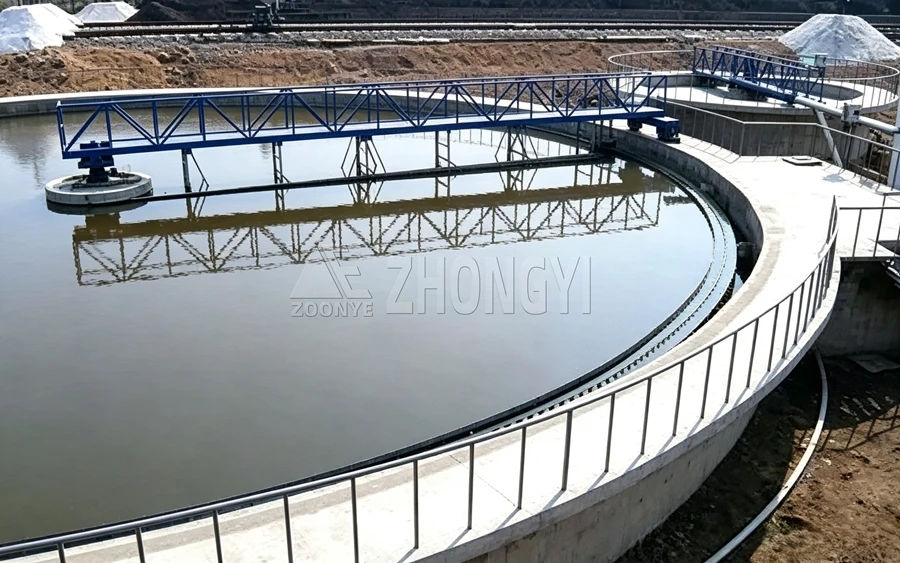
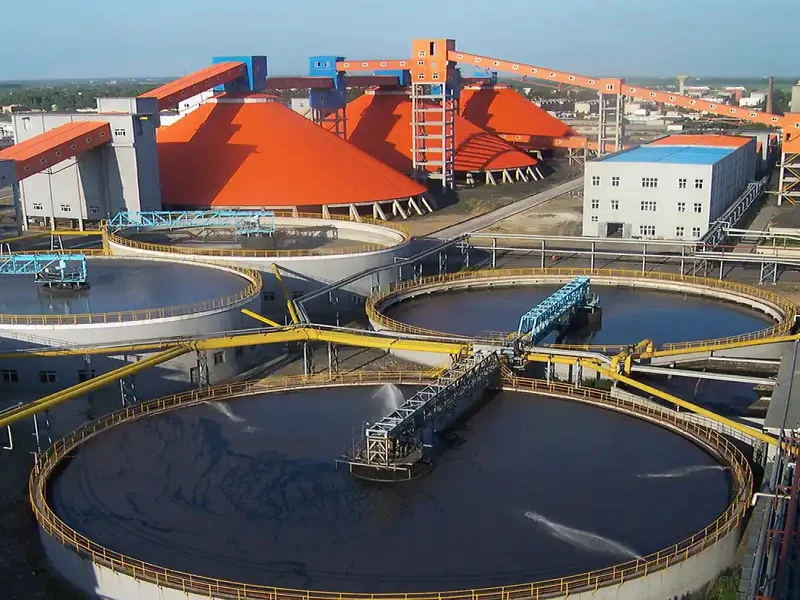
Peripheral drive rake thickeners are mainly divided into peripheral wheel drive and peripheral rack drive types according to the drive structure. The main difference is the way the rake bridge is driven. Wheel drive uses rollers running on a circular track, while rack drive uses gears engaging with a fixed rack around the tank.
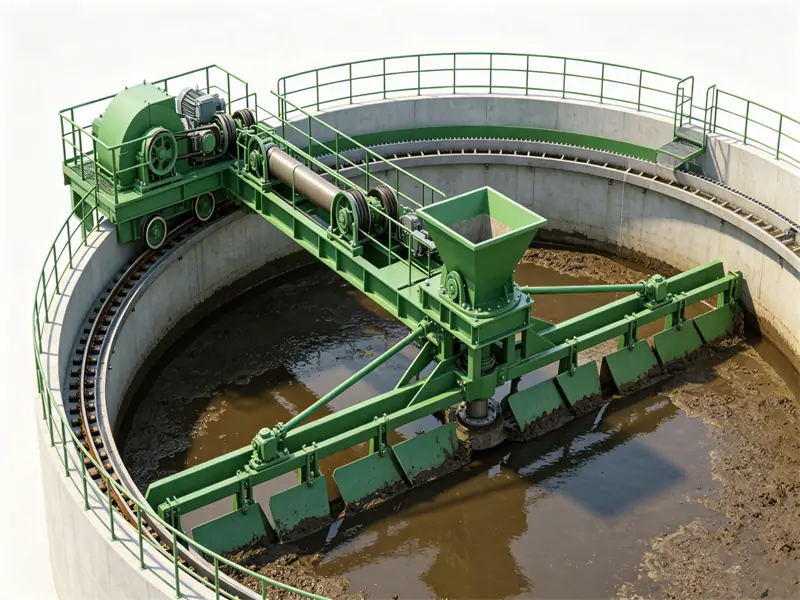
Peripheral Wheel Drive Rake Thickener
The peripheral wheel drive rake thickener uses rollers installed at the tank edge to drive the bridge and rake assembly. The rollers move along the circular track and rotate the rake system for continuous sludge collection.
- Advantages: It has a simple structure, easy maintenance, and low operating cost. The design is reliable for regular thickening operations.
- Disadvantages: The rollers may slip under high loads or poor operating conditions, limiting its use in large-scale and heavy-duty applications.
- Best For: It is suitable for medium-capacity mineral processing plants with normal slurry conditions.
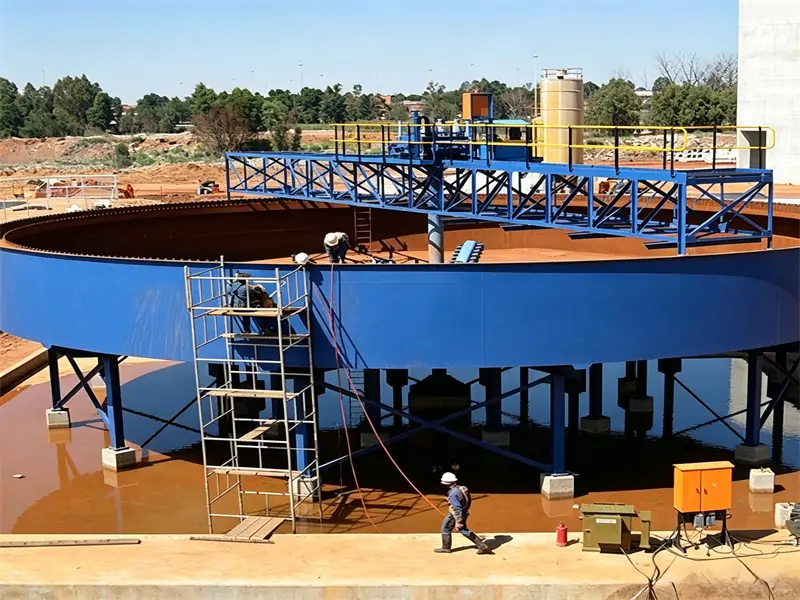
Peripheral Rack Drive Rake Thickener
The peripheral rack drive rake thickener uses a gear and fixed rack system around the tank to drive the bridge and rake assembly. The gear-rack transmission provides stable operation.
- Advantages: It provides stronger driving force and better load capacity, making it suitable for high-concentration slurry and large-scale thickening operations.
- Disadvantages: The structure is more complex and requires higher manufacturing accuracy, resulting in higher equipment cost and maintenance requirements.
- Best For: It is suitable for large concentrator plants, tailings thickening, and heavy-duty slurry processing.
Peripheral Drive vs Center Drive Rake Thickener
Peripheral drive and center drive rake thickeners are two common thickener types used for mineral slurry and tailings treatment. The main differences are drive design, tank size, discharge method, and suitable applications.
| Comparison | Peripheral Drive Thickener | Center Drive Thickener |
| Drive Method | Bridge driven from tank perimeter | Shaft driven from tank center |
| Tank Size | Large diameter, usually 50–100 m | Small and medium size, usually ≤24 m |
| Slurry Capacity | High-capacity and heavy-duty thickening | Standard thickening applications |
| Discharge Method | Center discharge with peripheral overflow | Center cone discharge |
| Support Design | Steel bridge with high rigidity | Center shaft support with stable torque |
| Applications | Large concentrators and tailings treatment | Small and medium processing plants |
Advantages
Peripheral drive rake thickeners are designed for large-scale slurry thickening in mining plants. They improve solid-liquid separation, increase underflow concentration, and support process water recovery.
Applications
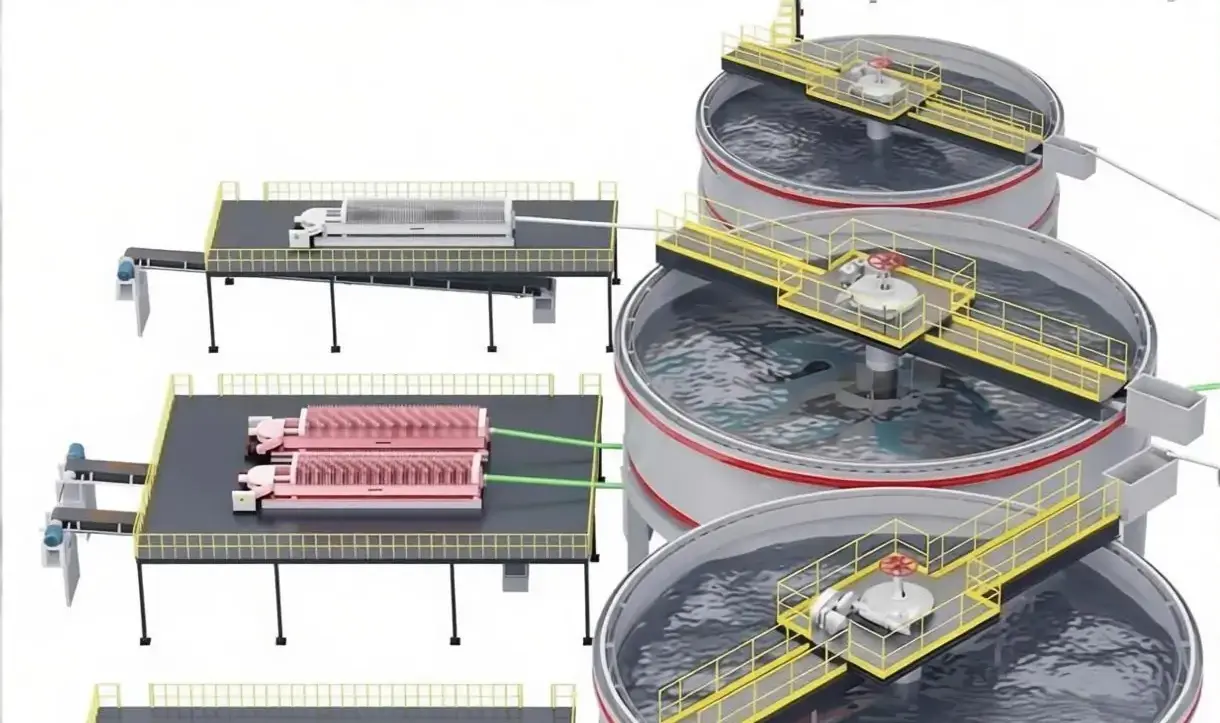
Peripheral drive rake thickeners are used for continuous solid-liquid separation in mining, mineral processing, sand washing, and wastewater treatment. They concentrate slurry, recover process water, and improve plant efficiency.
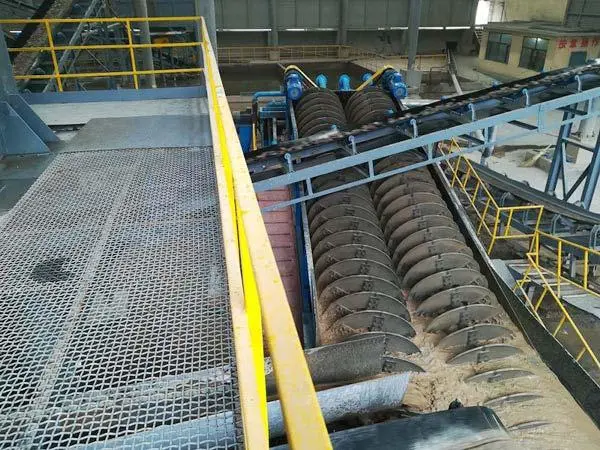
Peripheral Drive Rake Thickener Selection Guide
Selecting the right peripheral drive rake thickener requires matching the drive type, slurry properties, processing capacity, and site conditions. Proper selection improves thickening efficiency and long-term operation reliability.
Why Choose Zhongyi?
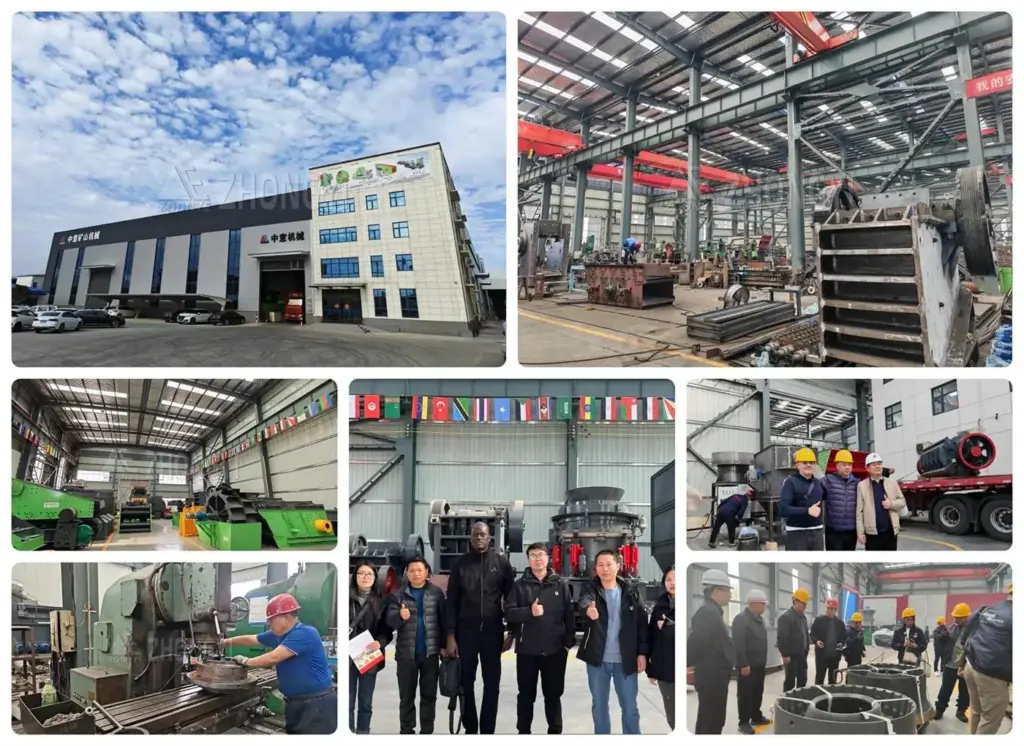
Zhongyi Mining focuses on engineering-based thickener design. We analyze slurry properties, processing capacity, and operating conditions to select suitable drive systems, tank sizes, and thickener configurations for different mining applications.
With in-house manufacturing and project experience, we provide customized rake thickener production, installation guidance, and commissioning support. Our solutions are designed for reliable operation in concentrate thickening, tailings treatment, and large-scale mineral processing plants.
Request a Customized Solution
Looking for an efficient tailings dewatering solution? Contact Zhongyi for a customized mining rake thickener recommendation ba
Customize Solutions
Zhongyi Mining develops customized rake thickener solutions based on your slurry properties, capacity requirements, and site conditions. Our engineers evaluate key parameters such as feed characteristics, underflow density, and installation layout to recommend suitable equipment configurations.
Please Provide the Following Information:
FAQs
What is a peripheral drive rake thickener used for?
A peripheral drive rake thickener is used for solid-liquid separation in mining and mineral processing plants. It is mainly applied for concentrate thickening, tailings dewatering, and process water recovery by separating settled solids from clarified overflow water.
What is the difference between wheel drive and rack drive rake thickener?
Wheel drive rake thickeners use rollers running on a circular track and are suitable for standard thickening applications. Rack drive models use gear-rack transmission, providing higher driving torque and better performance for large-scale plants and high-density slurry conditions.
How do I select the right rake thickener for my project?
Selection depends on slurry characteristics, processing capacity, required underflow density, tank diameter, and installation conditions. Particle size, solid concentration, viscosity, and downstream processes such as filtration or backfilling should also be considered.
Is a rake thickener suitable for tailings treatment?
Yes. Peripheral drive rake thickeners are widely used for tailings thickening and dewatering in mining plants. They reduce water content, increase tailings concentration, and recover process water for reuse or further treatment.
What size of rake thickener do I need for my mining plant?
The required thickener size depends on feed flow rate, slurry concentration, settling characteristics, and target underflow density. Large mining operations usually require large-diameter peripheral drive thickeners, while smaller plants can use compact models.
What underflow density can a rake thickener achieve?
The underflow density depends on ore properties, particle size, feed concentration, and operating conditions. The equipment can be designed to meet different requirements for concentrate thickening, tailings treatment, dry stacking, and mine backfilling.
How can a rake thickener prevent rake overload?
Rake thickeners can be equipped with overload protection and automatic rake lifting systems. These features help prevent damage caused by excessive torque when high-density slurry accumulates at the tank bottom.
What information is needed to select a rake thickener?
Key information includes material type, slurry characteristics, feed capacity, particle size, solid concentration, required underflow density, installation space, and downstream process requirements. This information helps determine the suitable thickener size and configuration.