What is a Mobile Screening Plant?
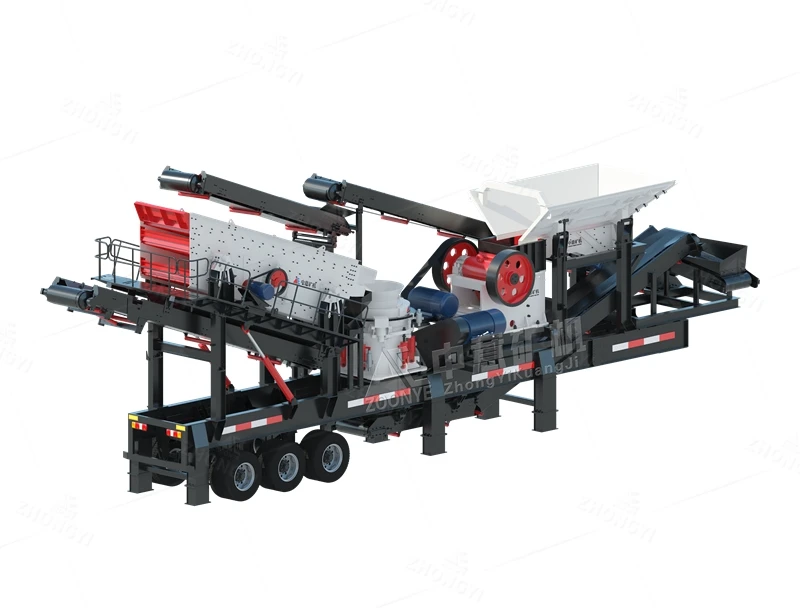
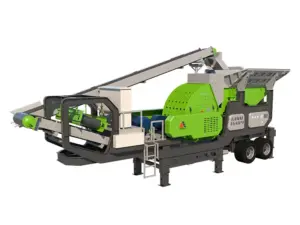
A Mobile Screening Plant, also known as a Mobile Screening Station or Portable Screening Plant, is a wheeled or tracked screening system designed for on-site material classification without fixed installation. It integrates a vibrating screen, feeding system, conveyors, power unit, and mobile chassis into a single operational unit, enabling rapid deployment and relocation in quarrying, mining, and construction waste recycling applications.
It is typically used for the separation and grading of aggregates, ores, and recycled materials. The system allows direct processing at the source, reducing material handling steps and improving overall site efficiency. A standard configuration can achieve a processing capacity of up to 300–500 TPH, depending on screen size and material type.
Mobile screening plants are widely applied in aggregate production, mining operations, and demolition waste processing. They can operate independently or be integrated into crushing and screening circuits, providing flexible configuration for different site layouts and production requirements.
Types of Mobile Screening Plants
Mobile screening plants are mainly divided into two configurations: wheel-mounted (tire-type) and crawler-mounted (track-type) systems. Both provide mobile screening capability, but differ in mobility mode and applicable working conditions.
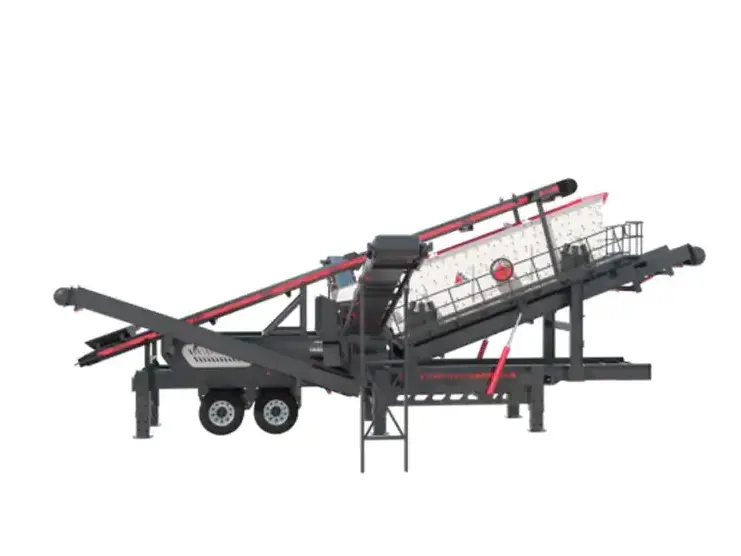
Wheel-Mounted Mobile Screening Plant (Tire Type)
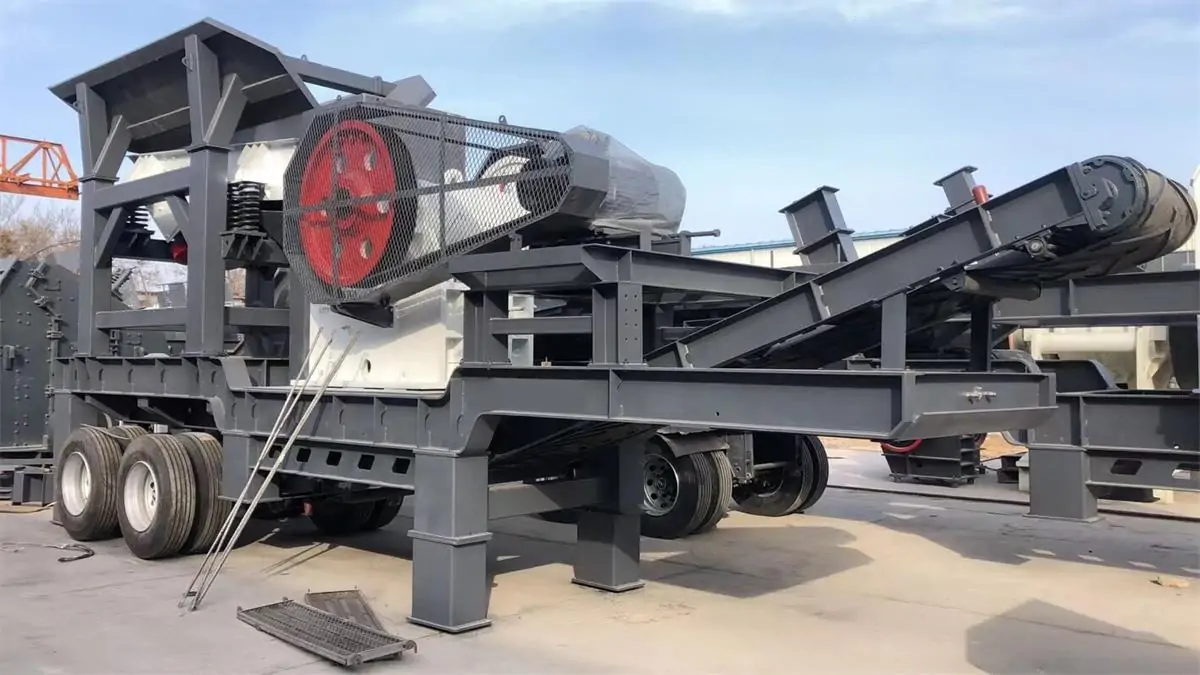
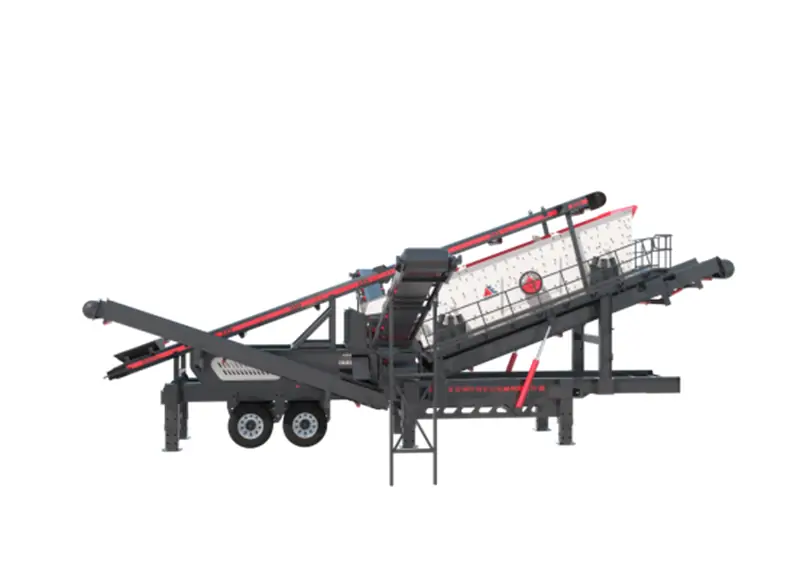
The wheel-mounted type is a semi-mobile system transported by tractor head, designed for road-based relocation with low ground impact and efficient inter-site transfer. It is widely used in construction waste treatment, earthwork projects, and urban construction sites, where road access is available and working conditions are relatively stable.
- Advantages: Fast road transport and low relocation cost, suitable for frequent site transfer.
- Limitations: Requires towing equipment and has limited adaptability in soft or rough terrain.
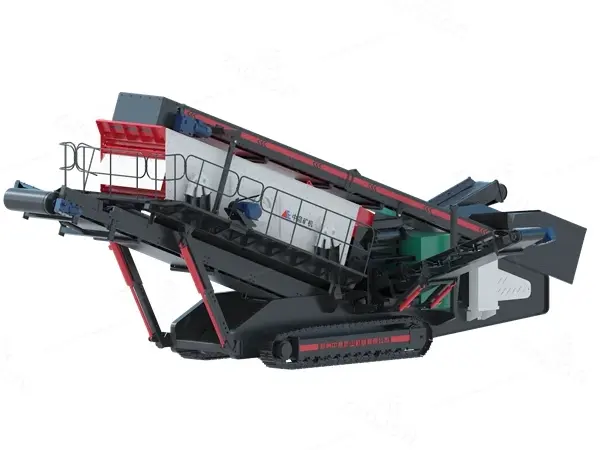
Crawler-Mounted Mobile Screening Plant (Track Type)
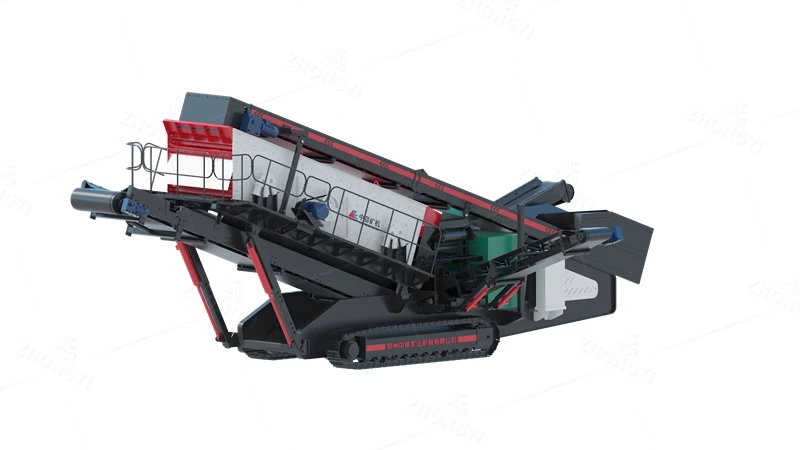
The crawler type is a self-propelled hydraulic system with remote-controlled movement, designed for high mobility in complex terrain such as mining areas, mountainous regions, wetlands, and steep working sites. It typically adopts a hybrid power system combining diesel and electric drive for screening and travel functions.
- Advantages: Strong off-road capability with self-propelled operation, suitable for harsh working environments.
- Limitations: Higher equipment cost and more complex maintenance requirements.
Selection Recommendation
Wheel type is preferred for projects with good road access and frequent relocation needs, while crawler type is recommended for mining and complex terrain conditions requiring high mobility and adaptability.
How Does a Mobile Screening Plant Work?
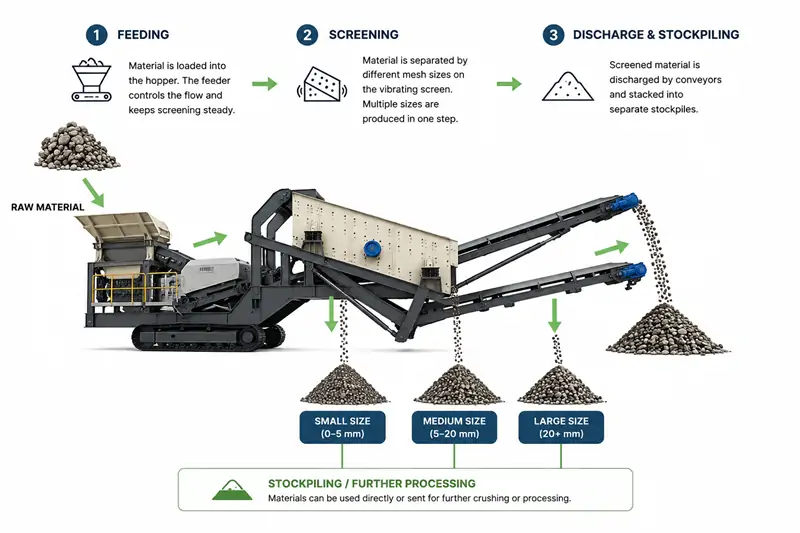
A mobile screening plant separates materials into different sizes through a simple process of feeding, screening, and conveying. It is used on site to sort materials quickly and keep production running smoothly in mining, aggregate, and recycling work.
Feeding Process
Material is loaded into the plant through a hopper or mining vibrating feeder. The feed system keeps the material flowing at a steady rate so the screen can run without interruption or overload.
Screening Process
Inside the vibrating screen, material is separated by different mesh sizes. Larger pieces stay on the top deck and move forward, while smaller material passes through to the lower decks. In multi-deck systems, several size groups are made in one step.
Discharge and Stockpiling
After screening, material is carried out by conveyors. Each size is sent to a separate stockpile. These materials can go directly to use, or be sent for further crushing or processing depending on the job.
Advantages
Mobile screening plant is an integrated and highly flexible material classification system designed for on-site screening operations. It eliminates the constraints of fixed installations and enables “screening where the material is” operation mode, making it suitable for mining, aggregate production, and construction waste recycling projects with variable site conditions.
Applications
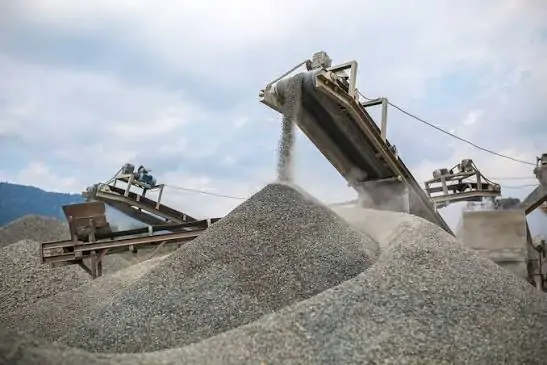
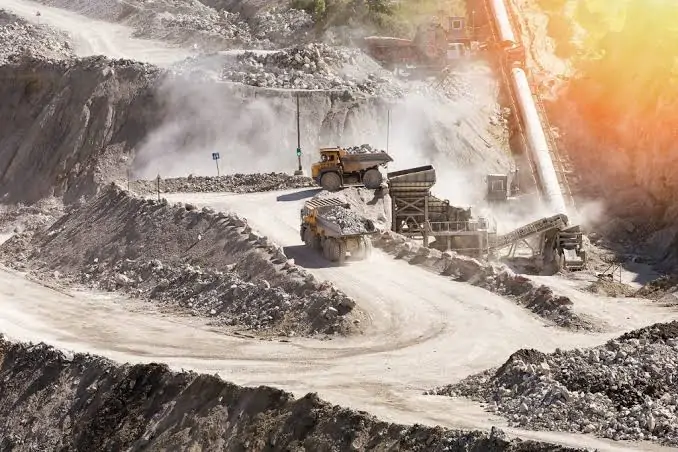
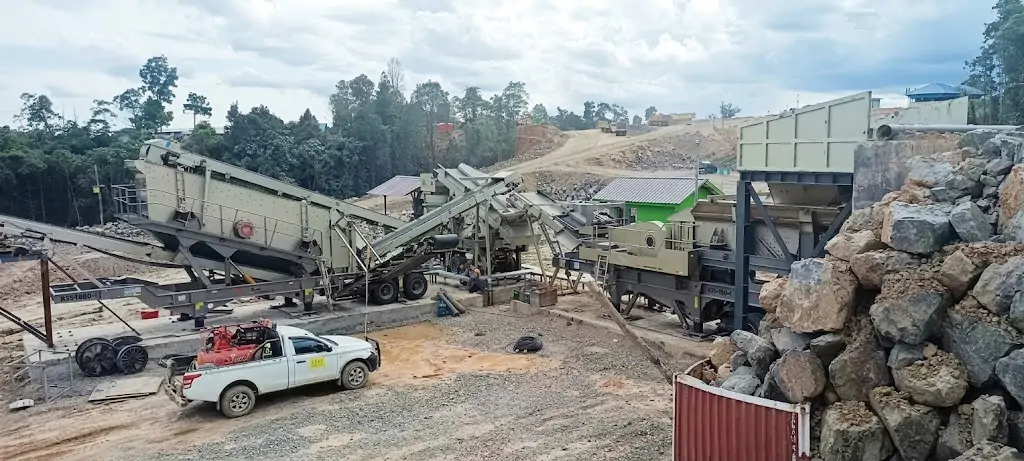
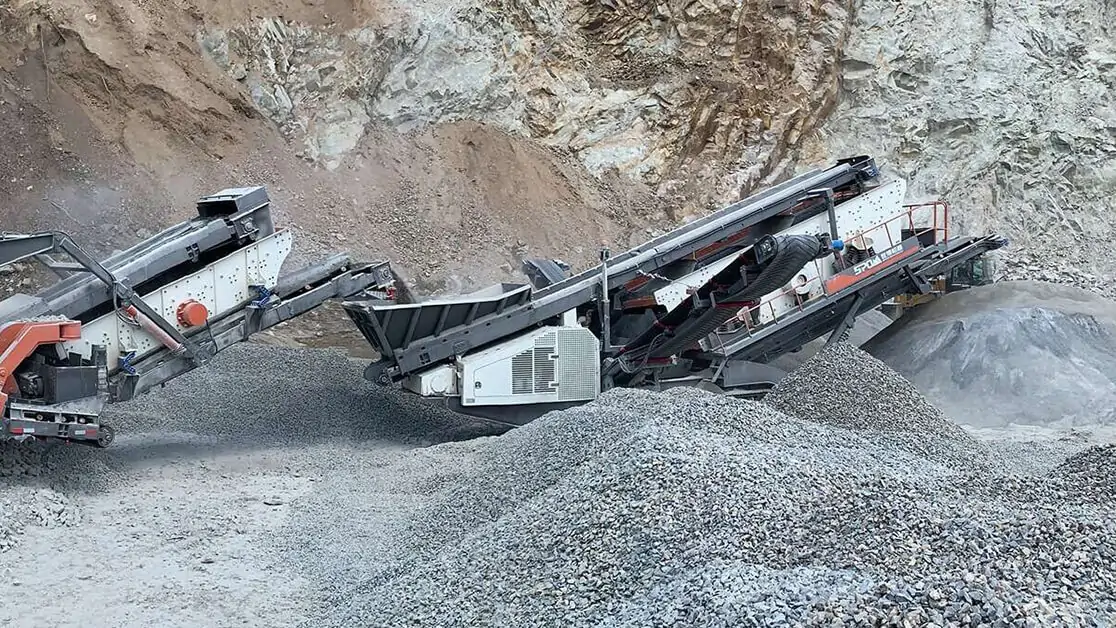
Mobile screening equipments are used for on-site material separation and sizing in mining, quarrying, and recycling operations. They are typically installed after crushing or directly at the material source to separate crushed feed into different size fractions for further processing or direct use.
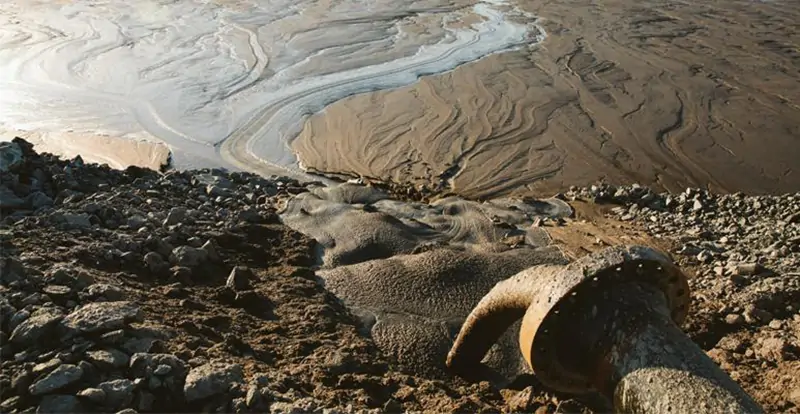
They are applied across a wide range of materials and working conditions, as shown below.
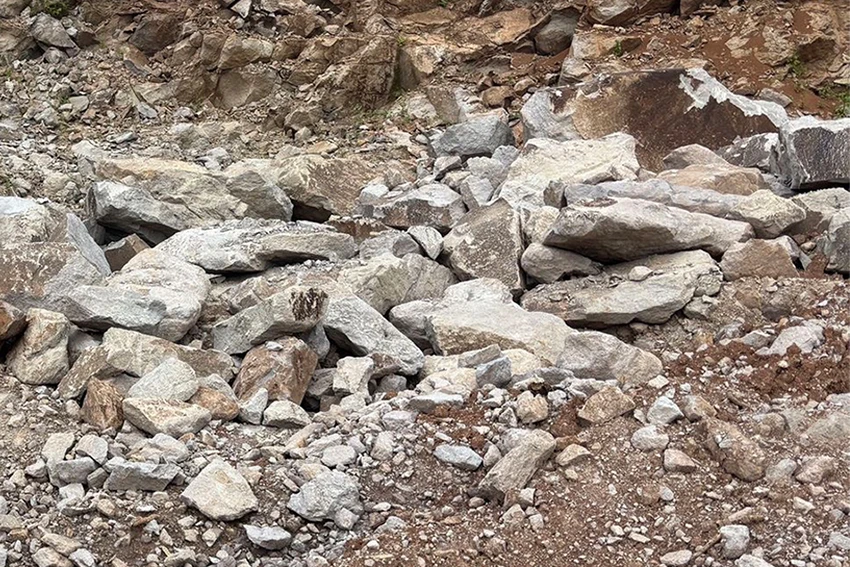
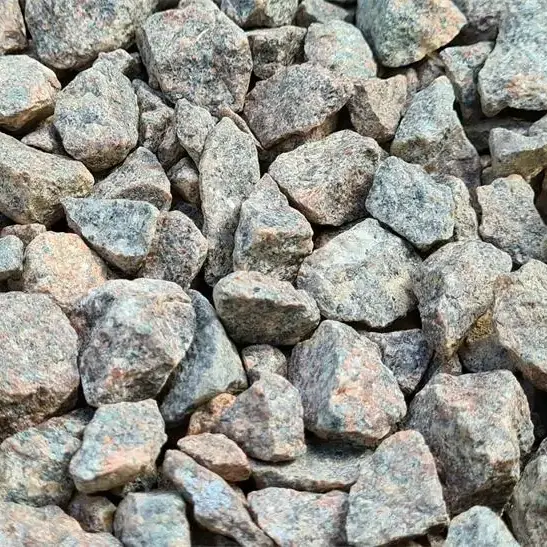
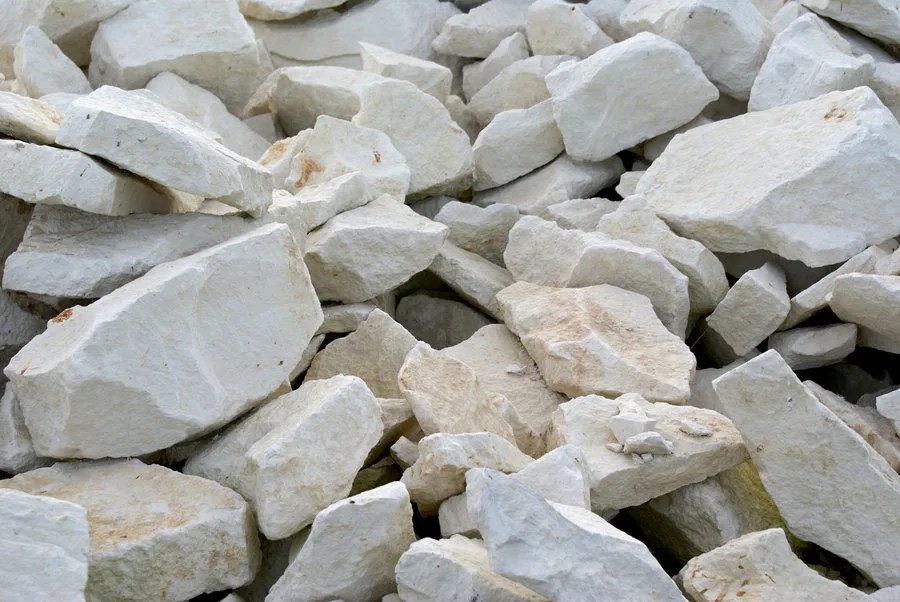
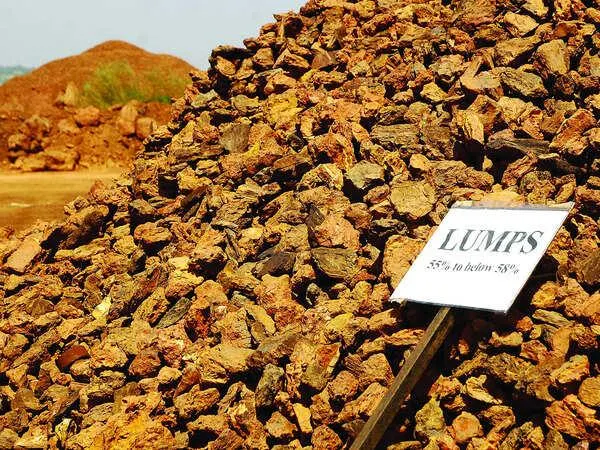
Materials Suitable for Screening
Mobile screening plants are widely used for grading and separating a broad range of natural aggregates, ores, and recycled materials in mining, quarrying, and construction applications.
Natural Aggregates
Granite
Basalt
Limestone
River Pebble
Gravel
Sand
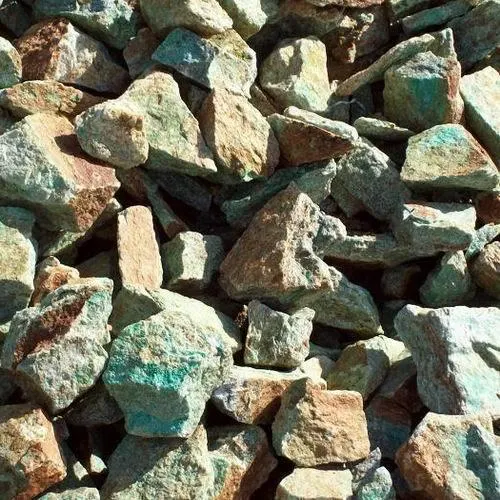
Metal Ores
Iron Ore
Copper Ore
Gold Ore
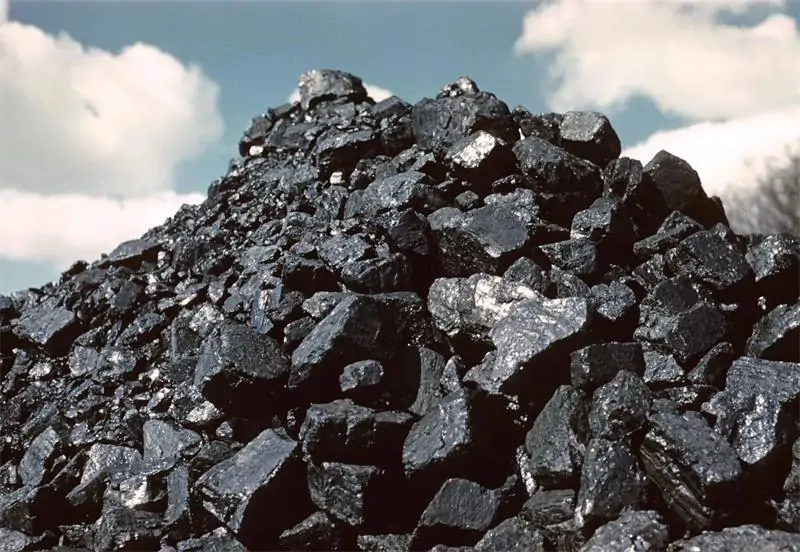
Coal
Construction & Recycled Materials
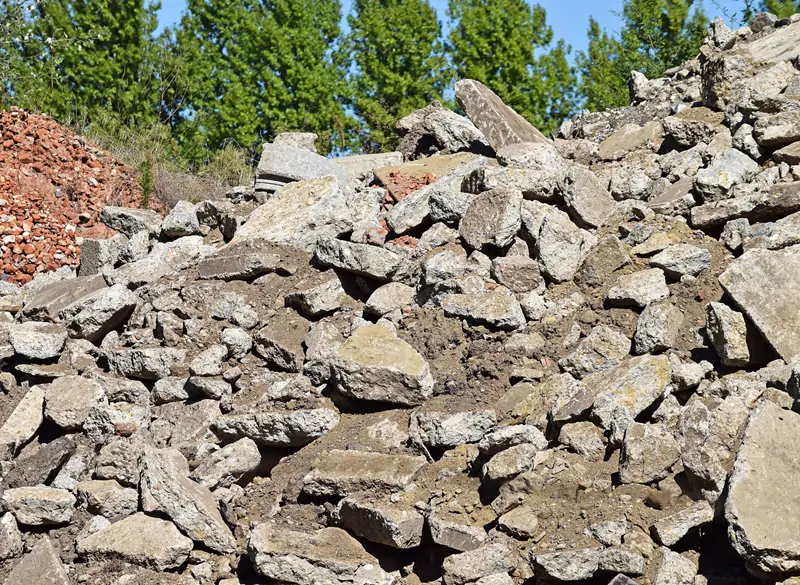
Construction Waste
Concrete
Asphalt
Soil & Organic Materials
Topsoil
Compost

Specifications
Please refer to the specifications below to select the most suitable mobile screening plant for your project requirements.
| Model | Capacity (t/h) | Screen Size (mm) | Screen Layers | Power (kW) | Weight (t) | Transport Size (L×W×H mm) |
|---|---|---|---|---|---|---|
| FTM3S1848 | 80–150 | 1800 × 4800 | 2–3 | 55–75 | 16 | 10280 × 2830 × 4350 |
| FTM3S1860 | 100–200 | 1800 × 6000 | 2–3 | 75–90 | 18 | 11480 × 2830 × 4350 |
| FTM3S2160 | 150–300 | 2100 × 6000 | 2–4 | 90–132 | 19 | 11480 × 3150 × 4350 |
Note: Capacity may vary depending on material type, feed size, and operating conditions. Custom configurations can be provided according to specific project requirements.
Mobile Screening Plant vs Stationary Screening Plant & Trommel Screen
Screening equipment selection should be based on site mobility, material type, and production scale rather than capacity alone. Mobile screening plants are designed for on-site flexible operation, while stationary plants focus on long-term stable production and trommel screens are used for wet or sticky materials. The following table compares the main types of screening equipment.
| Factor | Mobile Screening Plant | Fixed Screening Plant | Trommel Screen |
|---|---|---|---|
| Working Principle | Vibrating screening on mobile chassis (800–1000 rpm) | Multi-deck vibration screening on fixed structure (900–1200 rpm) | Rotating drum separation (10–25 rpm) |
| Structure Design | Integrated unit with feeder, screen, conveyors | Fixed steel structure with foundation support | Cylindrical drum mounted on inclined frame |
| Processing Capacity | 50–300 t/h | 100–600 t/h | 10–150 t/h |
| Screening Efficiency | 80–95% | 85–98% | 60–80% (material dependent) |
| Energy Consumption | 0.8–1.2 kWh/t | 0.6–1.0 kWh/t | 1.0–1.5 kWh/t |
| Footprint | 80–200 m² working area | 300–1000 m² plant area | 50–150 m² |
| Mobility | High (tracked or wheeled) | None | Low (semi-fixed) |
| Installation Requirement | No foundation required | Civil foundation required | Simple support frame |
| Maintenance | Screen media and conveyor system | Full plant shutdown maintenance | Drum wear and blockage cleaning |
| Investment Cost | Medium | High (includes civil works) | Medium |
| Suitable Materials | Crushed stone, sand, gravel, C&D waste (≤300 mm) | Hard rock, ores, large-scale aggregates | Wet soil, clay, compost, mixed waste |
| Typical Applications | Quarry relocation, mining face operations, recycling yards | Permanent aggregate or mining production lines | Municipal waste, soil screening, organic materials |
Wheel Mounted vs Tracked Mobile Screening Plant
Wheel-mounted and tracked mobile screening plants are two common mobile screening configurations used in aggregate processing, mining, and construction waste recycling. The main difference lies in their mobility system and terrain adaptability. Wheel-mounted units focus on road transport efficiency and lower investment cost, while tracked units are designed for on-site self-propelled movement and harsh working conditions. Selection depends on site accessibility, project duration, and terrain complexity.
| Item | Wheel Mounted Mobile Screening Plant | Tracked Mobile Screening Plant |
| Transportation Method | Towed by tractor head via road transport | Self-propelled hydraulic track system |
| Applicable Working Conditions | Flat sites, urban construction, demolition waste, earthwork projects | Mountainous areas, mining sites, wetlands, steep or rough terrain |
| Investment Cost | Lower initial investment | Higher initial investment |
| Maintenance Cost | Relatively lower and simpler structure | Higher due to hydraulic and track system complexity |
| Mobility Efficiency | High on-road transport efficiency, slower site-to-site setup | Fast on-site relocation with remote control operation |
| Suitable Projects | Urban infrastructure, construction waste recycling, short-term projects | Mining operations, quarry sites, long-term harsh environment projects |
Request a Customized Solution
Work with Zhongyi Mining Machinery to get a mobile screening solution tailored to your material type, capacity requirement, and site conditions. We provide full engineering support from configuration to system design, ensuring stable and efficient on-site performance.
Complete Mobile Crushing and Screening Solutions
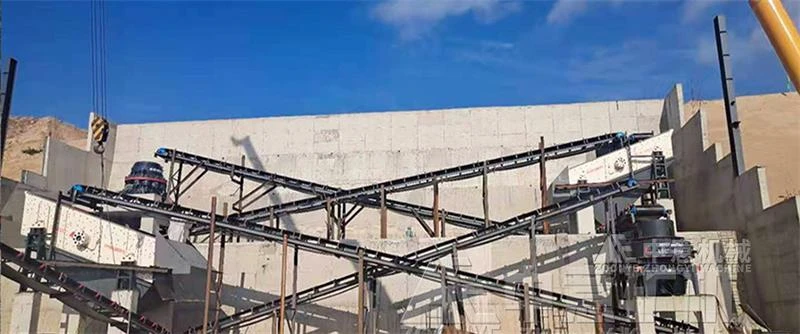
Zhongyi provides fully integrated mobile crushing and screening systems for quarrying, mining, and construction waste recycling applications. Our solution covers the entire material processing flow, including feeding, primary crushing, secondary crushing, screening, and final stockpiling, enabling efficient on-site production with flexible system configuration based on project requirements.
System Configuration Modules
A complete mobile production line can be configured through modular equipment integration:
Portable Jaw Crusher – Primary crushing of large and hard materials
Portable Cone Crusher – Secondary and fine crushing of high-hardness aggregates
Portable Impact Crusher – Shaping and crushing of medium-hard materials
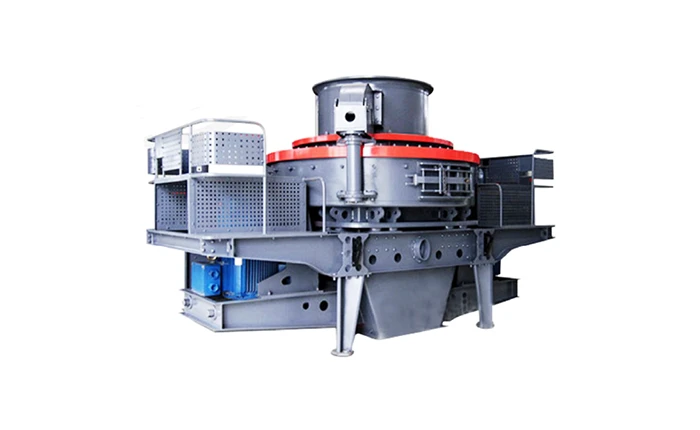
Mobile Sand Making Plant – High-quality sand production and final shaping
Feeding System – Stable and controlled material feeding to ensure continuous operation
Conveying System – Conveyor for continuous material transfer between processing units
Stacking System – Stacker for efficient stockpile management and site space optimization
Cases Show
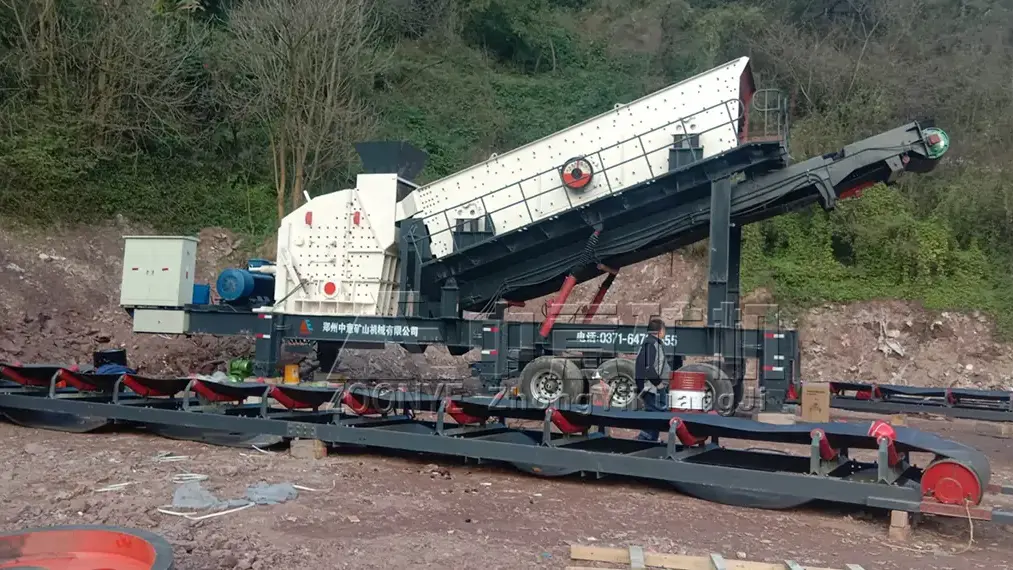
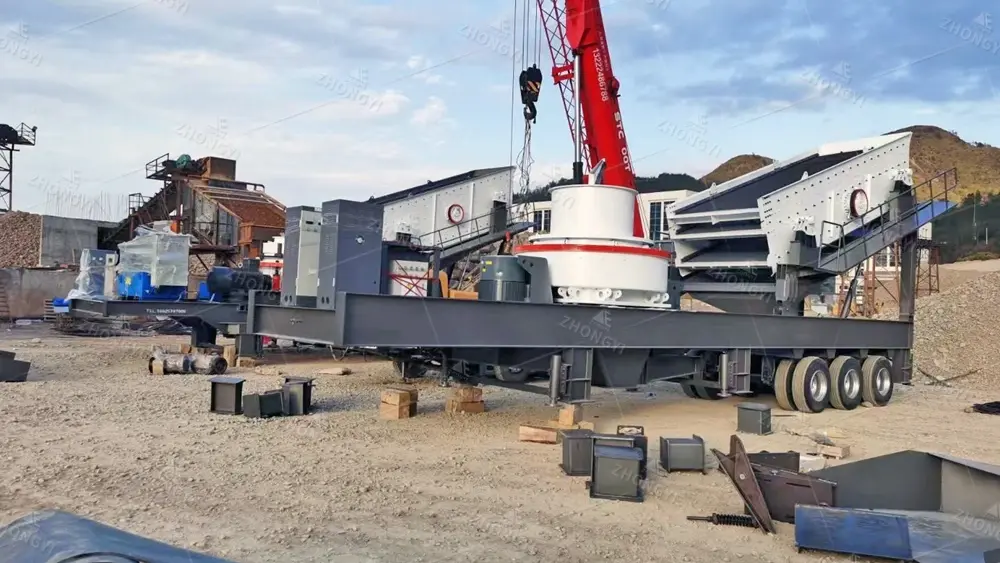
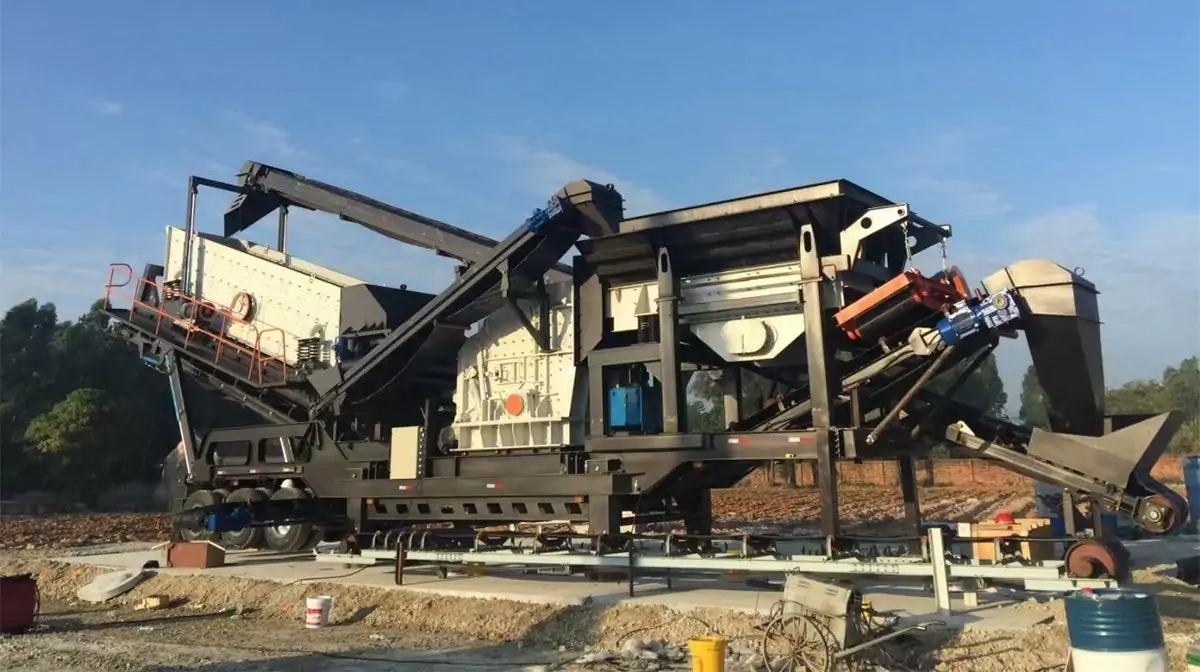
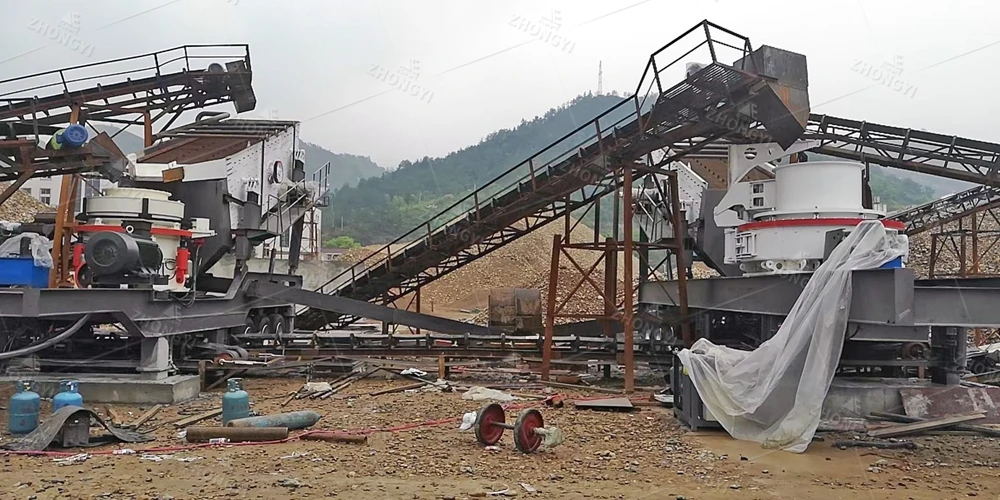
Custom Mobile Screening Plant Solution
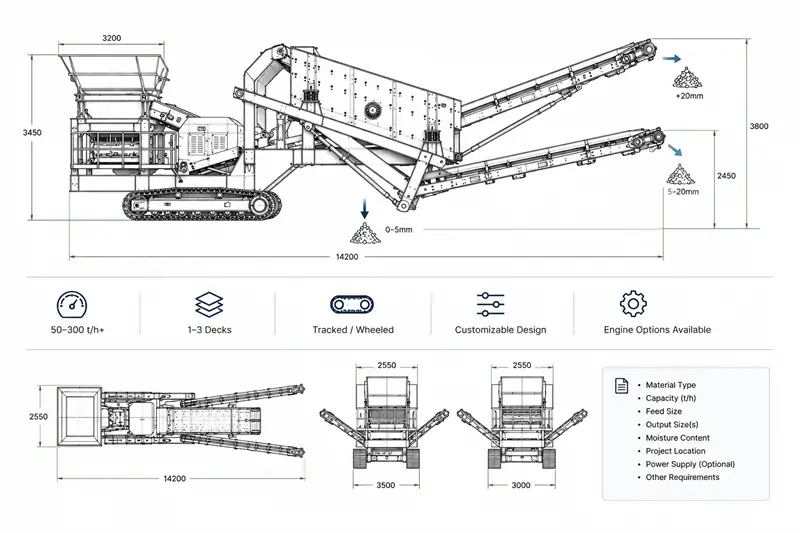
To recommend a suitable mobile screening plant and provide an accurate quotation, please share your project requirements. Our team will help match the right configuration based on your material, capacity, and site conditions.
Please Provide the Following Information:
Mobile Screening Plant Manufacturer and Supplier
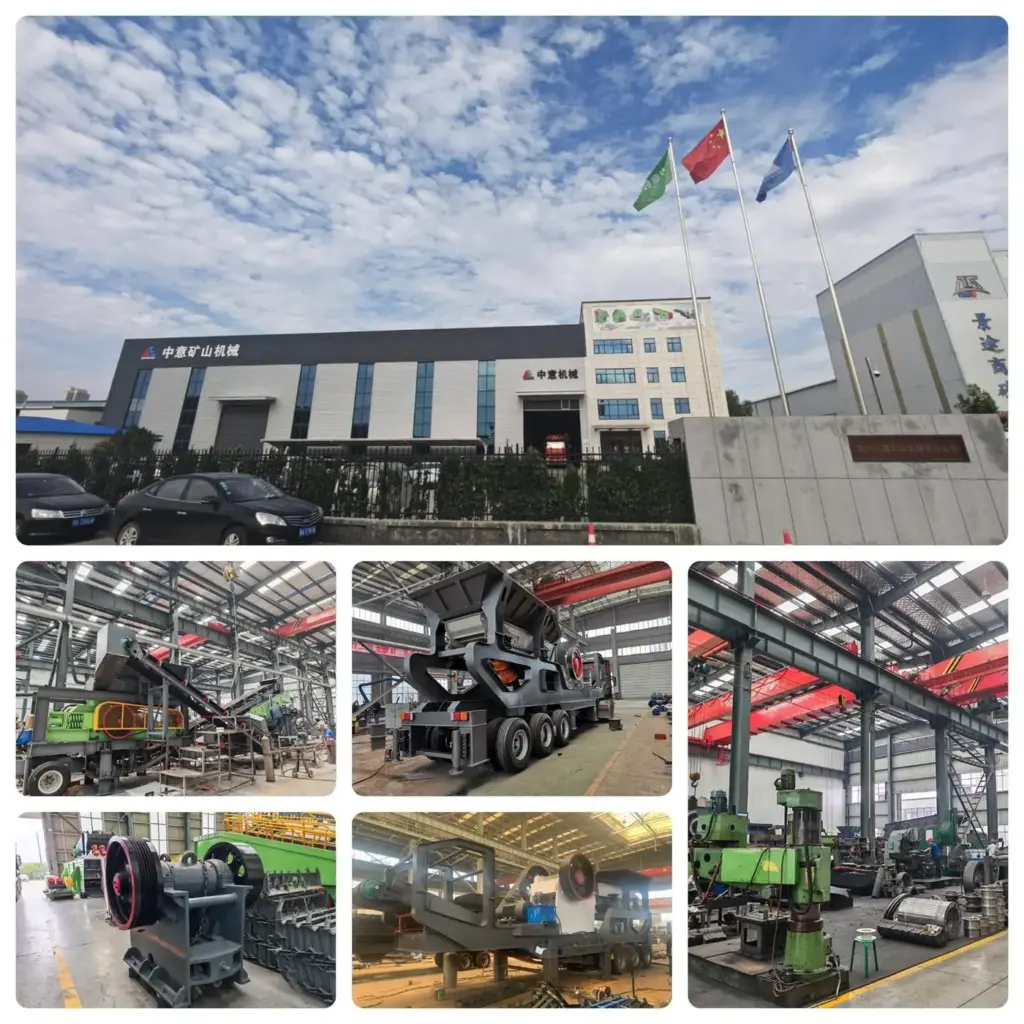
Zhongyi is a professional manufacturer and supplier of mobile screening plants, with more than 15 years of experience in mining and aggregate equipment production. Our manufacturing system follows ISO 9001 quality standards, covering design, fabrication, assembly, and testing to ensure stable performance in real working conditions.
We have delivered equipment to quarrying, mining, and recycling projects across multiple regions, supporting a wide range of materials including crushed stone, sand, gravel, and construction waste. Based on different project requirements, we provide complete screening solutions, from single machines to integrated production lines.
Beyond equipment supply, Zhongyi offers technical support, configuration guidance, and after-sales service to help customers achieve stable and efficient operation throughout the project lifecycle.
Contact us to get a tailored solution and quotation for your project.
FAQs
What is a mobile screening plant used for?
A mobile screening plant is used to separate materials into different sizes directly on site. It is commonly used in aggregate production, mining, sand and gravel processing, and construction waste recycling.
What materials can a mobile screening plant process?
Mobile screening plants can handle a wide range of materials, including crushed stone, limestone, sand, gravel, recycled concrete, asphalt waste, and demolition materials. Screen configurations can be adjusted based on material characteristics and required product sizes.
What is the capacity of a mobile screening plant?
Capacity depends on the model and application. Most mobile screening plants operate between 50 and 300 t/h, with larger configurations available for higher production requirements.
What is the difference between tracked and wheeled mobile screening plants?
Tracked models are better suited for rough terrain and frequent on-site movement. Wheeled models are easier to transport between locations and are often selected for projects with more stable working conditions.
How do I choose the right mobile screening plant?
Key factors include material type, required capacity, target product sizes, moisture content, and mobility requirements. These factors help determine the most suitable screen configuration and plant layout.
Can a mobile screening plant be used with a crusher?
Yes. Mobile screening plants are often combined with jaw crushers, cone crushers, or impact crushers to create a complete crushing and screening system for aggregate and mining applications.
Can a mobile screening plant produce multiple product sizes at the same time?
Yes. Multi-deck screening systems can separate material into several size fractions in a single pass, allowing multiple finished products to be produced simultaneously.
Can Zhongyi Mining provide custom mobile screening plant solutions?
Yes. Zhongyi Mining can configure mobile screening plants based on material type, required capacity, product size requirements, and site conditions. Custom layouts and supporting equipment can also be supplied to match specific project needs.