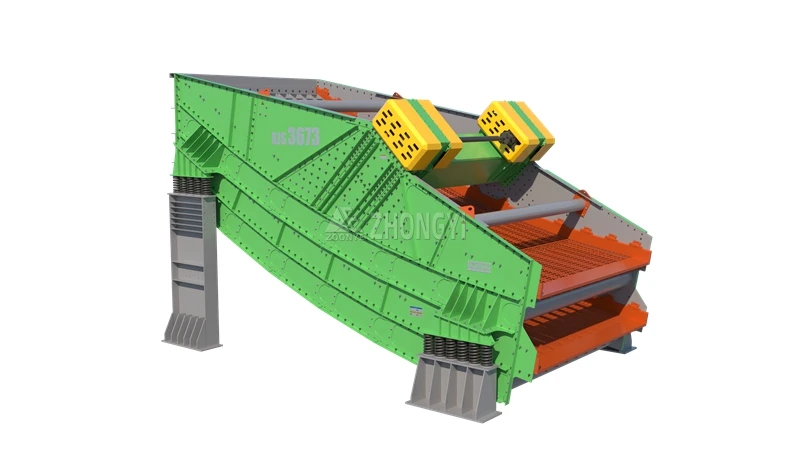
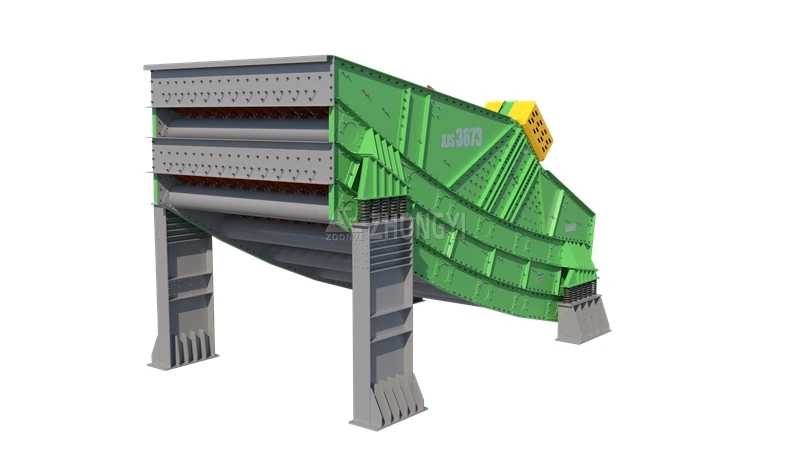
What Is a Banana Vibrating Screen?
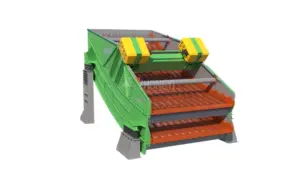
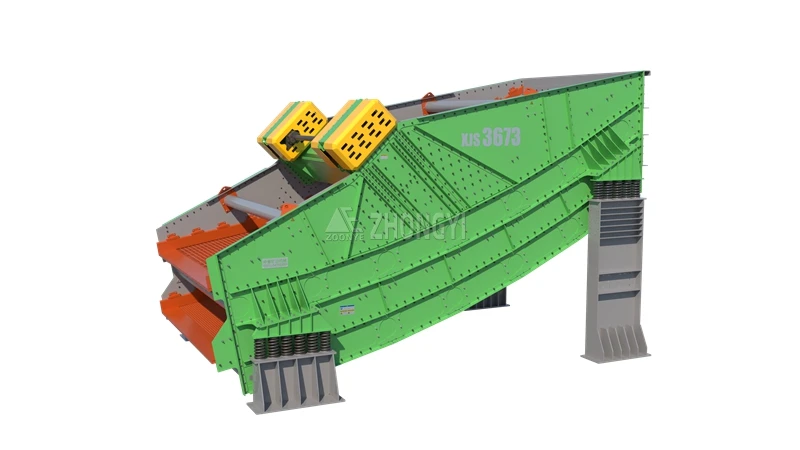
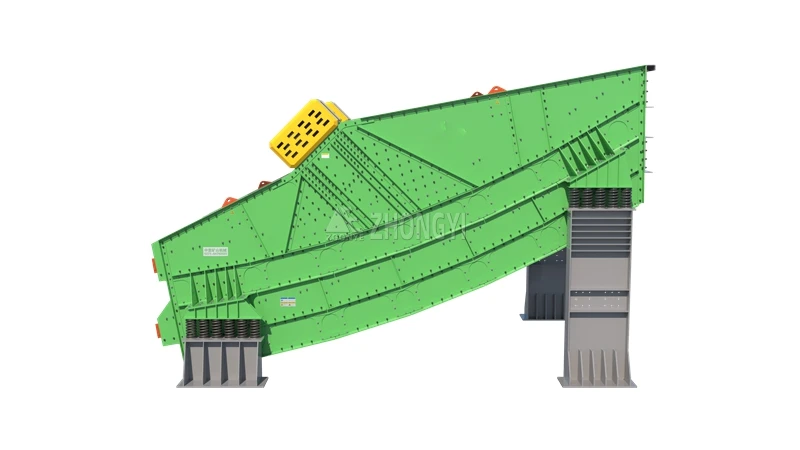
A Banana Vibrating Screen, sometimes called a multi-slope vibrating screen, is a screening machine designed for high-capacity material classification. Its screen deck consists of several sections with different inclination angles, forming a banana-shaped profile. This design allows large volumes of material to be distributed quickly across the screen surface, making it widely used in mining, quarrying, coal, and aggregate processing plants.
Compared with conventional vibrating screens, a banana vibrating screen handles more material within the same footprint while maintaining good screening efficiency. It is particularly suitable for processing medium and fine particles, with plant capacities often increasing by 20% or more after upgrading from traditional screening equipment.
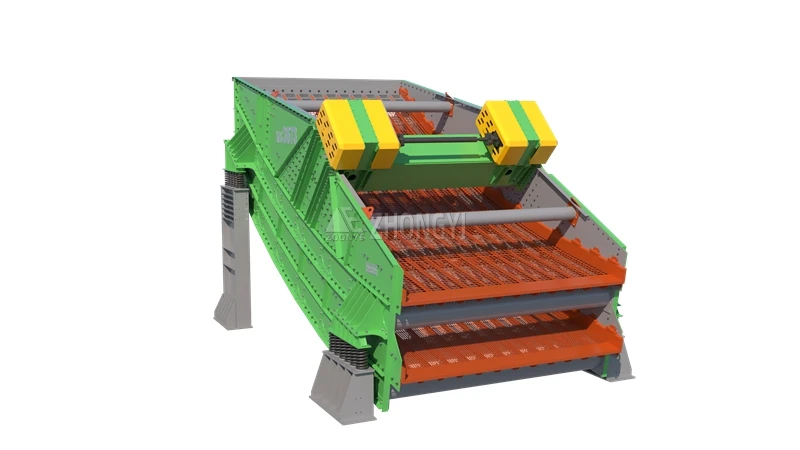
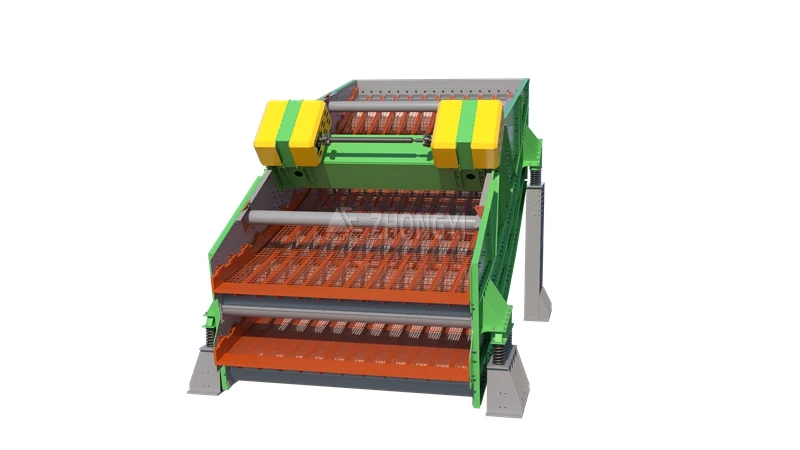
Working Principle
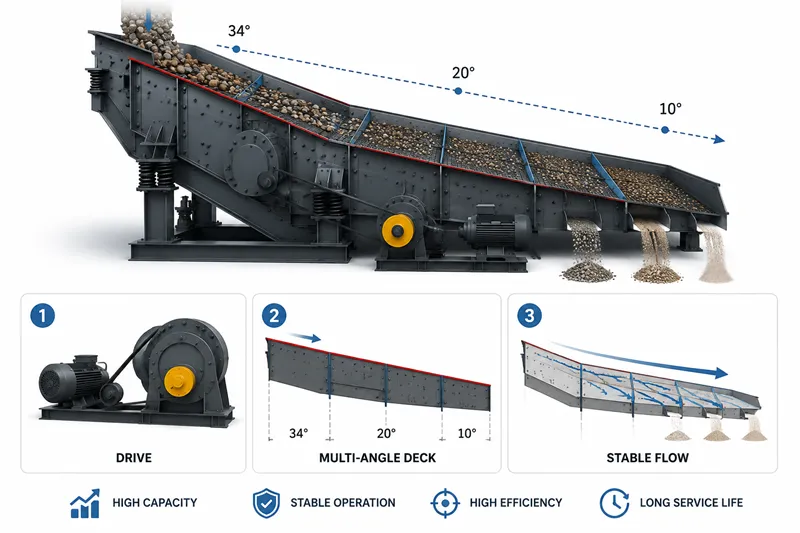
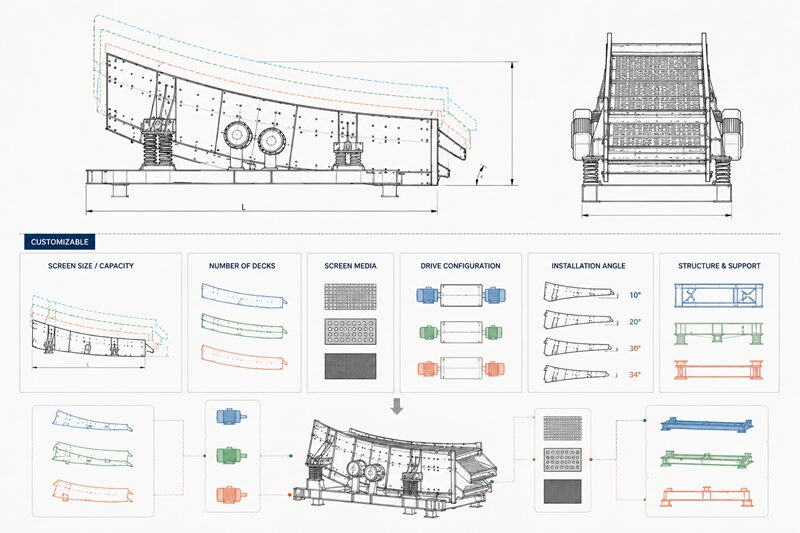
The Banana Vibrating Screen operates based on the equal-thickness screening principle. Its screen deck consists of multiple sections with progressively decreasing inclination angles, typically ranging from about 30°–34° at the feed end to around 10° at the discharge end. Driven by a vibration exciter, the screen generates continuous linear vibration, causing material to move rapidly across the steep feed section and spread evenly over the entire screen surface.
As the material travels along the screen deck, the decreasing slope gradually reduces its velocity, allowing particles to remain on the screen longer and improving stratification. Fine particles pass through the screen openings while oversized material is discharged from the end of the deck. This multi-slope design maintains a relatively uniform material layer throughout the screening process, resulting in higher throughput and better screening efficiency than conventional vibrating screens, especially in large-capacity mining and aggregate applications.
Specifications
Zhongyi offers Banana Vibrating Screens in a wide range of sizes and configurations to meet different processing capacities, particle sizes, and installation requirements. Screen length, width, deck quantity, vibration parameters, and screen media can be selected according to the characteristics of the material and plant layout. In addition to standard models, we provide customized designs for large-capacity mining, coal preparation, and aggregate screening applications. The following specifications are for reference, and custom solutions are available upon request.
| Model | Feed Size (mm) | Vibration Frequency (rpm) | Amplitude (mm) | Power (kW) | Capacity (m³/h) |
|---|---|---|---|---|---|
| BS3673 | ≤300 | 970 | 8–12 | 2×22 | 160–750 |
| BD3673 | ≤300 | 970 | 8–12 | 2×30 | 190–800 |
| BS3685 | ≤300 | 970 | 8–12 | 2×22 | 200–800 |
| BD3685 | ≤300 | 970 | 8–12 | 2×30 | 240–1100 |
Applications
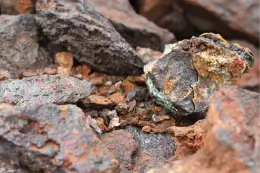
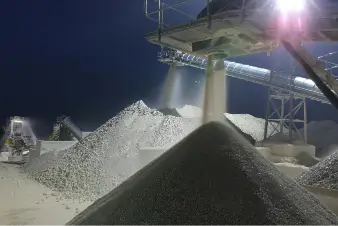
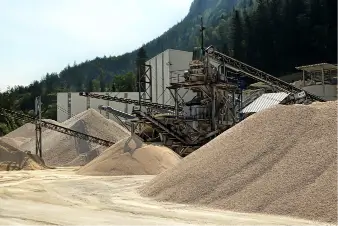
The equal thickness vibrating screen operates in coal processing, mining, and aggregate production lines. It is suitable for continuous high-capacity screening, especially under high fine content and unstable feed conditions. Also used in metal ore processing and sand & gravel production systems that require stable grading.
Is a Banana Vibrating Screen Better Than a Conventional Vibrating Screen?
For high-capacity mining and aggregate processing plants, screen selection directly affects production efficiency and operating costs. Compared with conventional circular and linear vibrating screens, the Banana Vibrating Screen uses a multi-slope deck design based on the equal-thickness screening principle, allowing more material to be processed within the same screening area. It is particularly suitable for large throughputs, fine particle classification, and applications where both capacity and screening efficiency are critical.
| Comparison Item | Banana Vibrating Screen | Linear Vibrating Screen | Circular Vibrating Screen |
|---|---|---|---|
| Screen Deck Design | Multi-slope banana-shaped deck | Single-angle deck | Inclined deck with circular motion |
| Screening Principle | Equal-thickness screening | Layered screening | Circular motion screening |
| Processing Capacity | Very High | Medium | Medium to High |
| Material Distribution | Uniform across entire deck | Concentrated near feed end | Moderate |
| Screening Efficiency | High, especially for fine materials | Good | Good |
| Footprint | Smaller for same capacity | Larger | Larger |
| Suitable Particle Size | Medium to fine particles | Fine to medium particles | Medium to coarse particles |
| Best Application | Large-scale mining, coal, aggregates | General classification and dewatering | Quarry and aggregate screening |
| Investment Cost | Higher initial investment | Lower | Moderate |
| Overall Productivity | Highest among the three | Moderate | Moderate |
For operations handling large material volumes, a Banana Vibrating Screen can often replace multiple conventional screens, reducing installation space while increasing overall plant throughput.
How to Choose the Right Banana Vibrating Screen?
Selecting a suitable banana vibrating screen depends on production capacity, material characteristics, and plant configuration. The aim is to ensure stable screening performance under continuous operation in mining and aggregate production lines.
Key selection factors include the following:
Request a Customized Solution
Partner with Zhongyi for expert technical support, customized solutions, and reliable equipment tailored to your ore characteristics and production requirements.
Project Cases
800 TPH Granite Aggregate Screening Plant Indonesia
A quarry in Indonesia needed to increase screening capacity without expanding the existing production line. The original screen struggled to handle high volumes of crushed granite, resulting in reduced efficiency and inconsistent product sizing.
Zhongyi supplied a 3-deck Banana Vibrating Screen for the aggregate classification stage. The multi slope screen design improved material distribution across the deck and maintained stable screening performance under continuous operation.
After installation, the plant achieved higher throughput, smoother material flow, and more consistent aggregate grading. The equipment continues to operate reliably in daily production with low maintenance requirements.
Capacity: 800 TPH
Material: Crushed Granite
Feed Size: 0–120 mm
Equipment: 3-Deck Banana Vibrating Screen
Application: Aggregate Screening
Custom Design
Zhongyi provides customized banana vibrating screen solutions based on project requirements. To receive an accurate quotation, please provide the following information through the inquiry form:
Provide the Following Information:
Banana Vibrating Screen Manufacturer and Supplier
Zhongyi, established in 2010, manufactures banana vibrating screens for mining, aggregate and material classification applications. Our company has multiple manufacturing bases with CNC machining, laser cutting and automated welding systems managed under ISO9001 quality control. Equipment is supplied for domestic and overseas projects in quarrying, mining and solid waste processing industries.
Banana vibrating screens are designed for high-capacity screening conditions in wet and dry classification applications. The equipment is integrated into complete production lines including feeding, crushing, screening and conveying systems. System configuration is based on your material characteristics, particle size distribution and required throughput. Support covers process layout design, equipment matching and on-site commissioning. Service includes model selection, spare parts supply and technical support throughout the equipment lifecycle.
FAQs
1.What is a banana vibrating screen used for?
A banana vibrating screen is used for high-capacity material classification in mining and aggregate production lines. It processes ore, coal, limestone, sand, and other bulk materials under continuous heavy-load conditions with stable separation performance.
2.What capacity range can a banana screen handle?
Capacity typically ranges from 160–1100 m³/h depending on model size and configuration. Larger multi-deck designs are used in high-throughput mining and aggregate plants requiring continuous screening.
3.What materials are suitable for this equipment?
It is suitable for iron ore, copper ore, coal, limestone, granite, river stone, and construction aggregates. It also performs well with high fine-content and mixed feed materials.
4. What is the advantage of equal thickness design?
Equal thickness design improves material stratification along the screen deck. It reduces overload at the feed end and maintains stable screening efficiency across varying feed conditions.
5.How is the banana screen price determined?
Price depends on model size, screening area, motor power, material selection, and configuration level. Heavy-duty mining models with reinforced structures and higher capacity require higher investment.
6. What is the service life of the equipment?
Under normal mining conditions, the service life is typically 8–10 years. Wear parts such as screen media require periodic replacement depending on material abrasiveness and operating hours.
7. Can the equipment be customized?
Yes. Screen size, deck number, screen media, inclination angle, and drive system can all be customized according to production requirements and material conditions.
8.Do you provide customized solutions for different projects?
Yes. Zhongyi provides full customization for banana vibrating screens, including structural design, capacity planning, screen configuration, and drive system selection to match specific production line requirements.