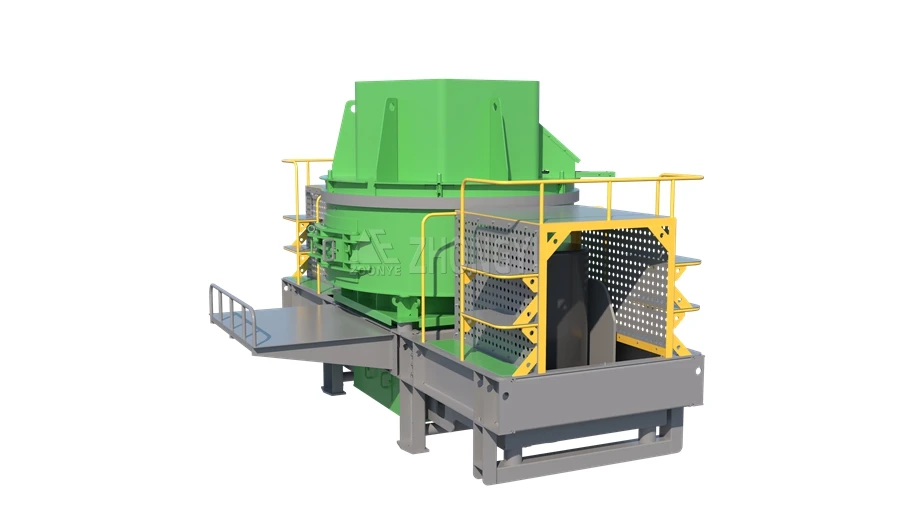
What is a Vertical Shaft Impact Crusher?
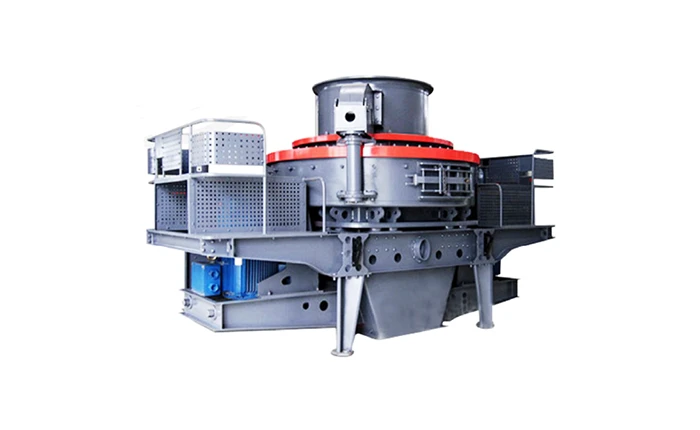
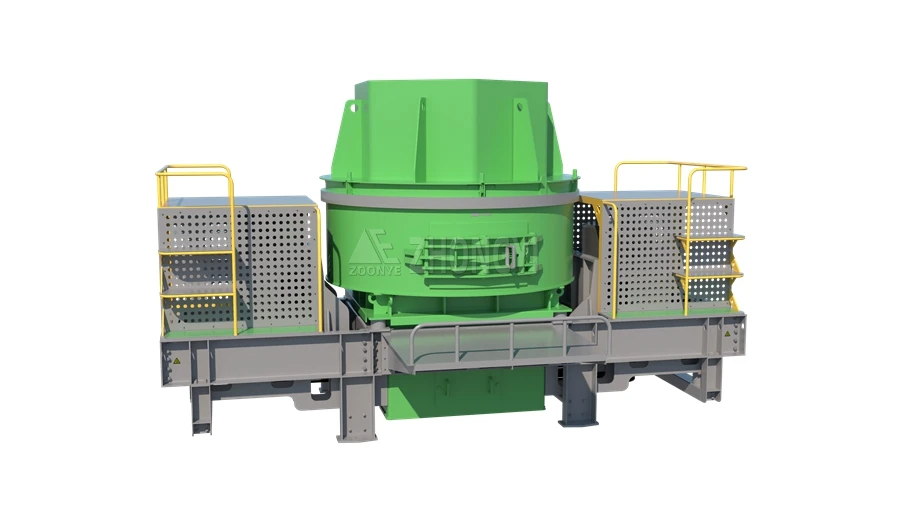
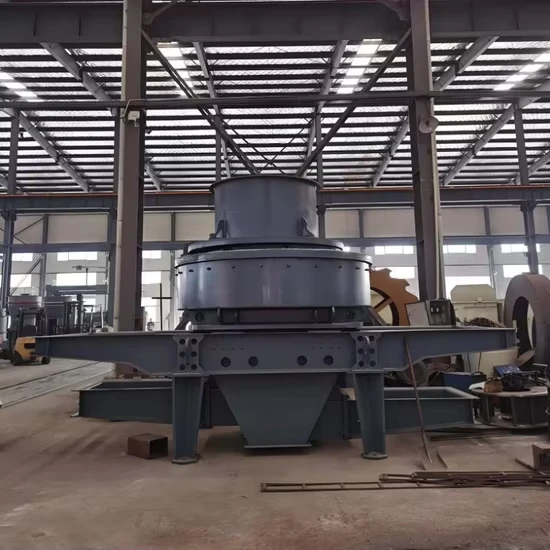
A Vertical Shaft Impact Crusher (VSI Crusher) is a high-efficiency crushing machine that uses high-speed rotor-driven impact force to break materials. Unlike traditional compression crushers, it relies on “rock-on-rock” or “rock-on-iron” impact to achieve fine crushing and particle shaping, it has especially suitable for sand production and aggregate optimization.
Definition of VSI Crusher
A VSI crusher is a type of impact crusher with a vertical shaft configuration. Materials are fed into the center of a high-speed rotating rotor and are rapidly accelerated outward, colliding with other materials or impact liners. This repeated impact process results in precise size reduction and superior particle shape.
Difference from Other Crushers (Jaw / Cone)
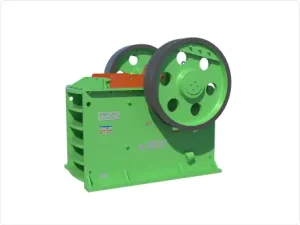
- Jaw Crusher: Primarily used for coarse crushing; works by compressing materials between two plates.
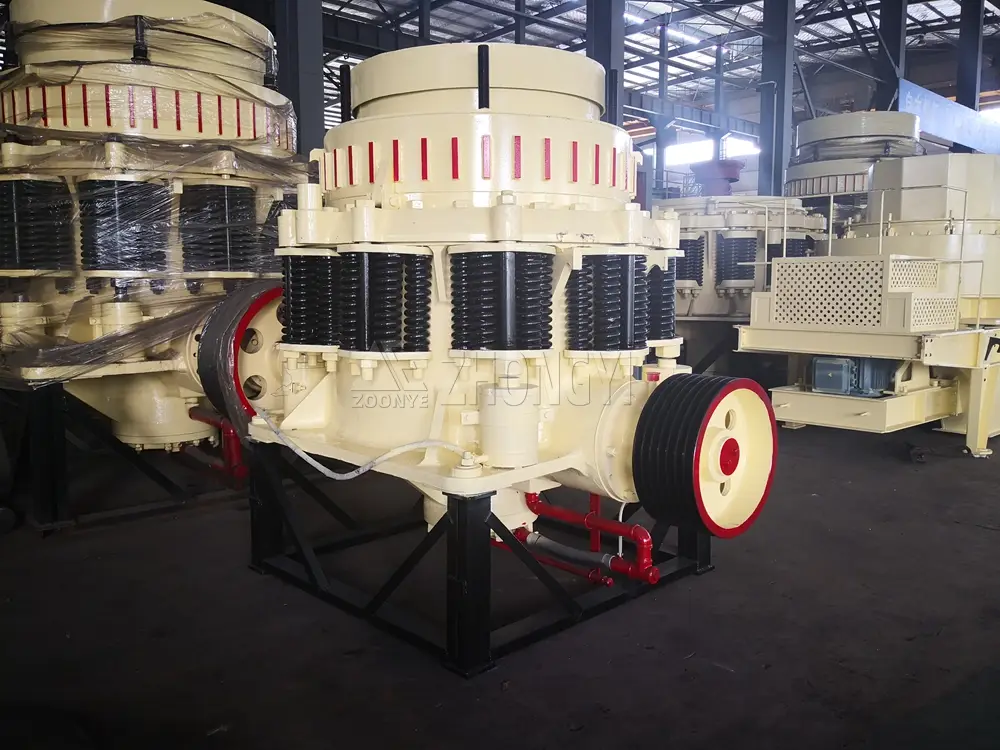
- Cone Crusher: Used for secondary or tertiary crushing; relies on compression and extrusion.
- VSI Crusher: Focuses on fine crushing and shaping; uses impact instead of compression, producing more uniform and cubical particles.
Core Value: Sand Making & Shaping
The equipment produces high-quality manufactured sand with stable particle size distribution, helping meet the requirements of concrete and asphalt production. Through efficient shaping and crushing, it improves aggregate particle shape by reducing flaky and elongated particles, resulting in more cubical and well-graded materials. It is also suitable for upgrading low-quality aggregates, improving material utilization and overall production efficiency.
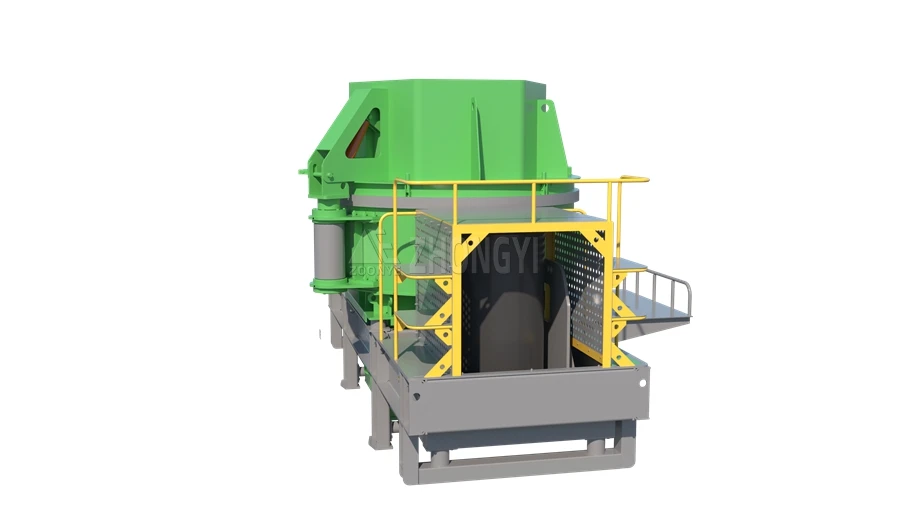
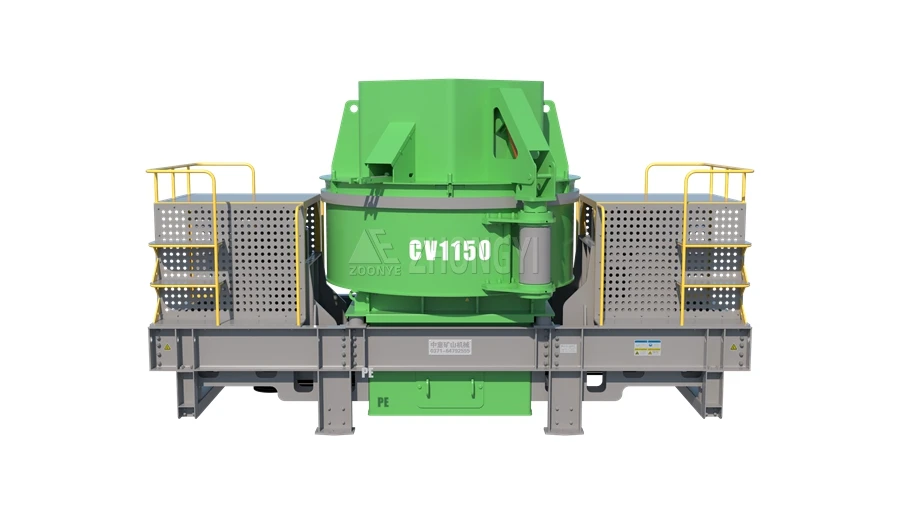
How Does a VSI Crusher Work?
A VSI crusher operates by accelerating materials to high velocity and using impact energy for crushing and shaping. Through a precisely controlled rotor system and internal impact mechanism, it delivers consistent particle size, superior shape, and high production efficiency.
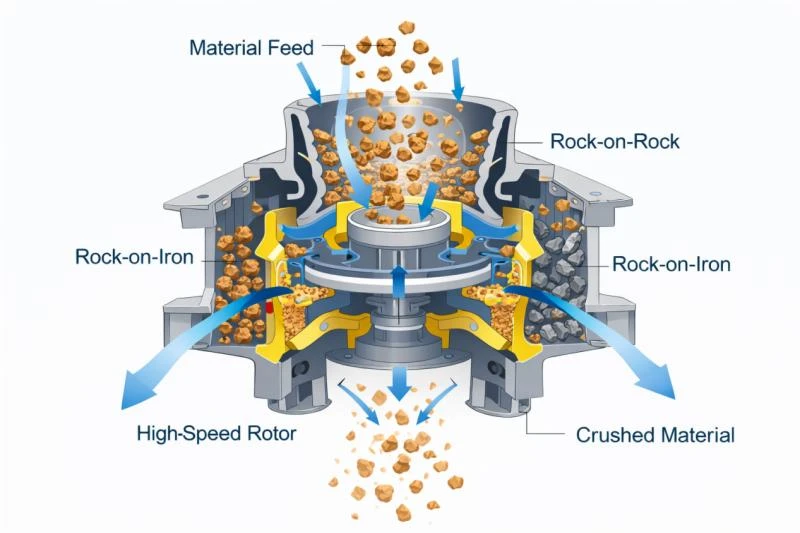
Working Principle of VSI Crusher
The working principle of a VSI crusher is based on high-speed impact rather than compression, enabling efficient fine crushing and shaping.
Rock-on-Rock
Materials are accelerated by the rotor and collide with other materials inside the crushing chamber. This method minimizes wear parts consumption and produces high-quality, cubical aggregates—ideal for sand making.
Rock-on-Iron
Materials are thrown against metal impact plates (anvils). This increases crushing efficiency and output, making it suitable for harder materials or when higher reduction ratios are required.
High-Speed Rotor Mechanism
The rotor is the core of the VSI crusher. It spins at high speed, generating strong centrifugal force that accelerates materials outward. This kinetic energy is converted into crushing force upon impact, ensuring precise size reduction and particle shaping.
Components of VSI Crusher
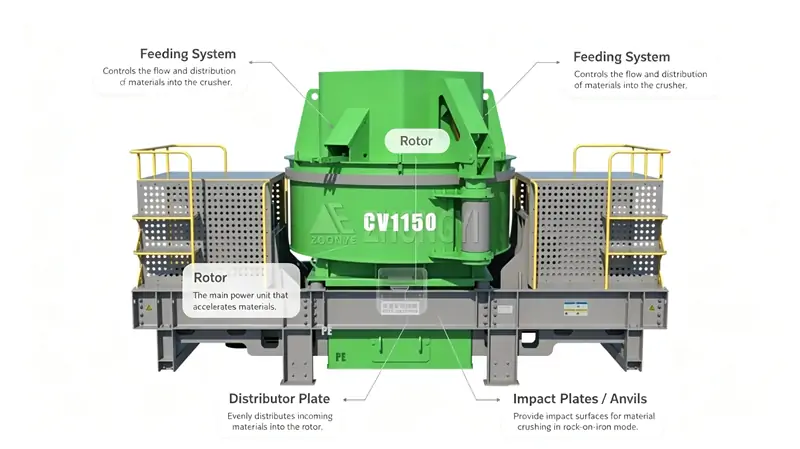
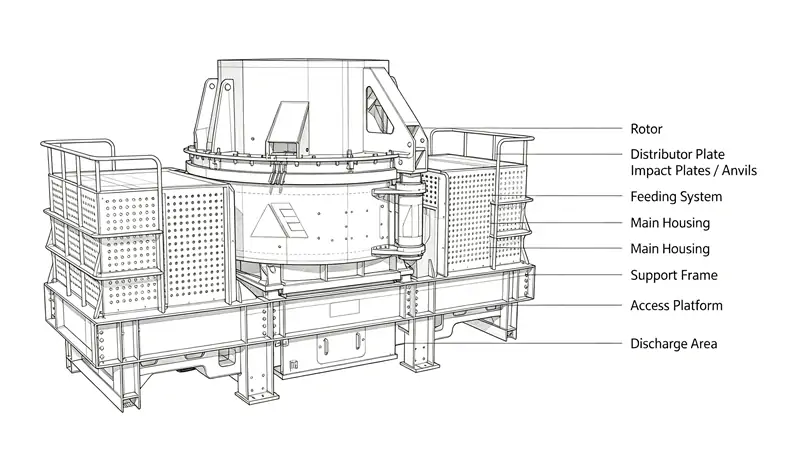
A VSI crusher consists of several critical components that work together to ensure efficient operation and consistent output quality.
Rotor
The main power unit that accelerates materials. Its design directly affects crushing efficiency, capacity, and final product shape.
Distributor Plate
Evenly distributes incoming materials into the rotor, ensuring balanced feeding and stable operation.
Impact Plates / Anvils
Provide impact surfaces for material crushing in “rock-on-iron” mode, enhancing reduction efficiency.
Feeding System
Controls the flow and distribution of materials into the crusher, ensuring continuous, uniform feeding for optimal performance.
Types of Vertical Shaft Impact Crushers
Vertical Shaft Impact Crushers are available in different configurations to meet different material characteristics, capacity requirements, and cost considerations.
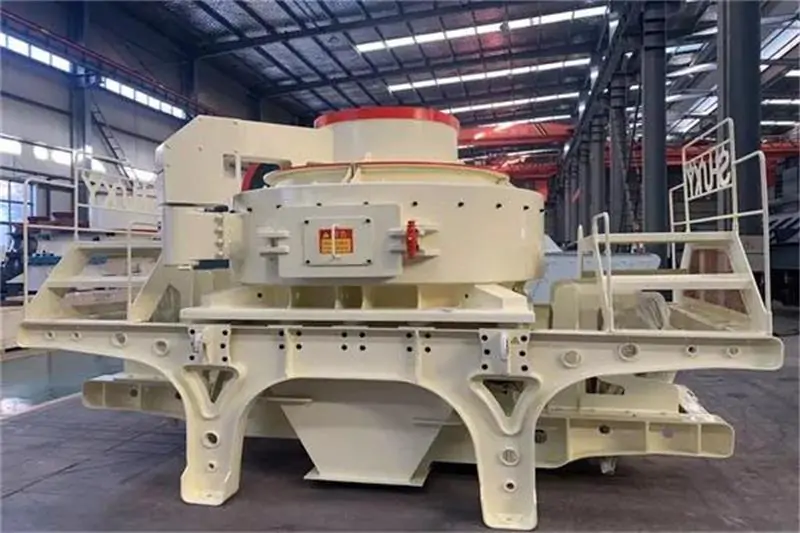
Rock-on-Rock VSI Crusher
Rock-on-Rock VSI crushers use material-to-material impact, where aggregates collide with each other inside the crushing chamber.
- Feed size: typically ≤ 45 mm
- Output size: 0–5 mm (high-quality manufactured sand)
- Wear cost: 30–50% lower than rock-on-iron
- Particle shape: excellent cubical shape (>90%)
Best for producing high-grade manufactured sand, supplying quality aggregates for concrete and asphalt applications, and processing low-abrasion or medium-hard materials.
Rock-on-Iron VSI Crusher
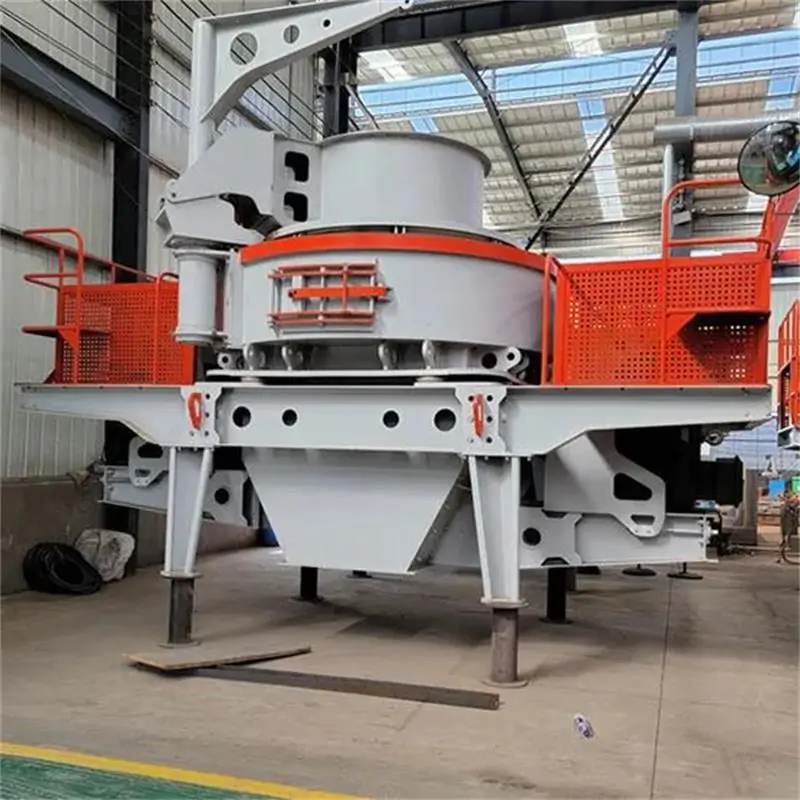
Rock-on-Iron VSI crushers use material-to-metal impact, where materials strike anvils or impact plates for stronger crushing force.
- Reduction ratio: up to 1:10
- Capacity increase: 10–20% higher than rock-on-rock
- Wear consumption: higher (due to metal contact)
- Throughput: typically 50–600 t/h (model-dependent)
Best for processing hard and abrasive materials such as granite and basalt, supporting high-capacity production lines where stable output and processing efficiency are prioritized over wear cost.
Mobile VSI Crusher
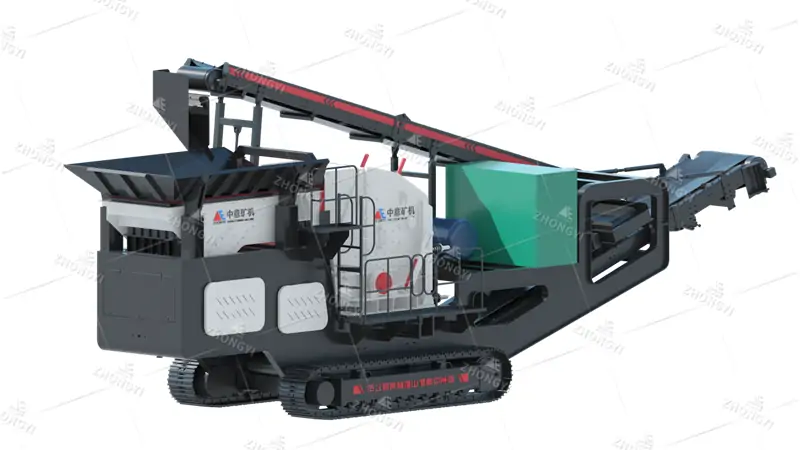
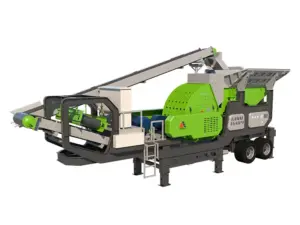
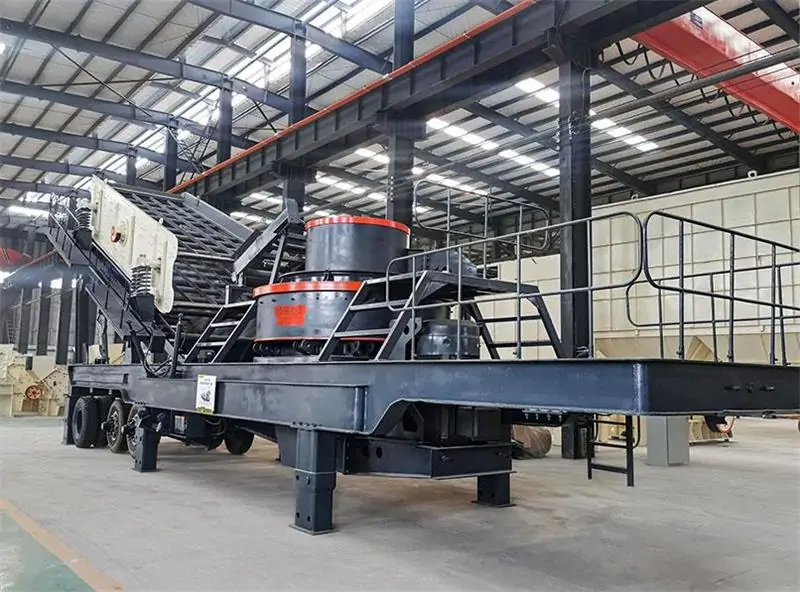
Mobile VSI crushers integrate the VSI unit into a portable or track-mounted system, enabling flexible and on-site crushing.
- Mobility: relocation within hours
- Capacity range: 80–350 t/h
- Setup time: reduced by 30–50% vs stationary plants
- Transport cost saving: up to 20–40%
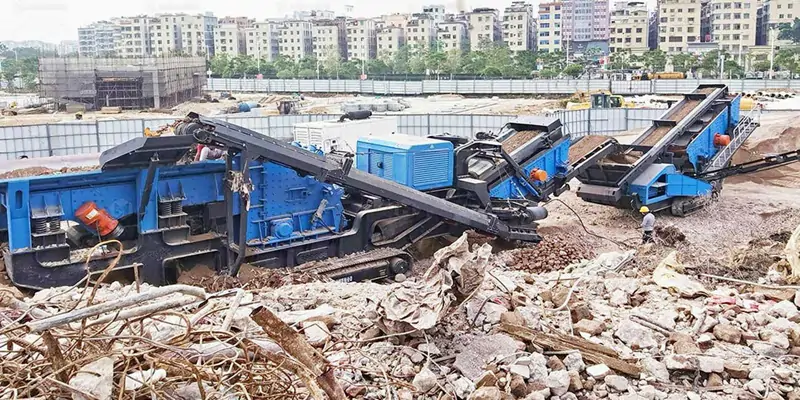
Best for recycling construction waste, producing sand directly at the job site, and supporting short-term or multi-location projects that require flexible and mobile processing solutions.
Advantages
Applications
VSI crushers are widely used across construction, mining, and recycling industries due to their ability to produce high-quality sand and well-shaped aggregates.
VSI Crusher Specifications & Technical Data
VSI crusher specifications vary by model and configuration, but key parameters such as capacity, feed size, power, and output size are critical for equipment selection. The table below provides typical ranges to guide users in matching machine performance with project requirements.
| Parameter | Typical Range | Description |
| Capacity | 50–600 t/h | Depends on material type, rotor speed, and crushing mode (rock-on-rock / rock-on-iron) |
| Feed Size | ≤ 45–60 mm | Maximum allowable input size for optimal crushing efficiency |
| Power | 75–400 kW | Motor power varies by model and production capacity |
| Output Size | 0–5 mm (adjustable) | Final product size for sand making and fine aggregate shaping |
Note: Actual performance may vary based on material hardness, moisture content, and operational settings. Selecting the right configuration ensures optimal efficiency, product quality, and cost control.
Vertical Shaft Impact Crusher Price
The price of a VSI crusher varies depending on capacity, configuration, brand, and project location. Choosing the right specification ensures optimal performance while controlling investment and operating costs. Zhongyi provides cost-effective VSI crusher solutions tailored to different production needs.
What Affects VSI Crusher Price?
How to Choose the Right VSI Crusher?
Choosing the right VSI crusher depends on material characteristics, production requirements, and application scenarios. A proper selection ensures optimal performance, product quality, and cost efficiency.
Selecting the right VSI crusher requires a comprehensive evaluation of material characteristics, production capacity, and application requirements. By considering these factors together, you can choose a suitable model that delivers stable performance and efficient production. With over 15 years of industry experience, Zhongyi provides professional equipment selection guidance and reliable VSI crushing solutions tailored to different project needs worldwide.
Project Case
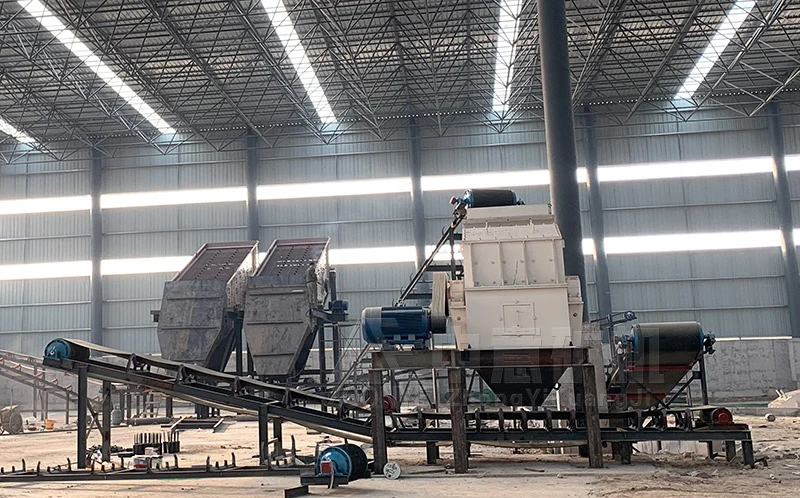
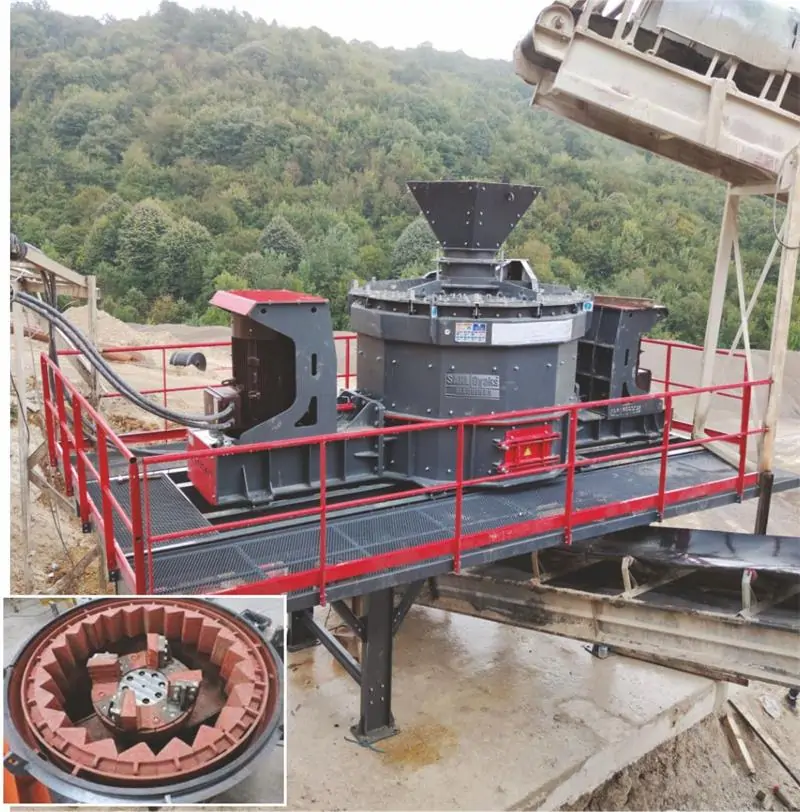
A quarry customer needed a reliable crushing solution to improve production capacity and produce high-quality aggregates for sand making and concrete applications. Based on the material characteristics and output requirements, Zhongyi recommended our heavy hammer crusher with optimized crushing performance and a durable structure. The equipment effectively processes raw stone into uniform aggregates, reducing unnecessary crushing stages and improving overall production efficiency. Manufactured by Zhongyi, this crusher provides stable operation, easy maintenance, and excellent adaptability for stone and sand production lines. Through professional equipment selection and customized guidance, Zhongyi helped the customer achieve more efficient and cost-effective aggregate processing.
Why Work With Zhongyi Mining?
Zhongyi Mining is a reliable partner with real engineering experience in mining and aggregate equipment manufacturing. Since 2010, we have been integrating equipment design, R&D, production, and installation to provide practical crushing solutions based on different materials and project requirements. Our experience across mining, construction materials, and related industries helps us understand actual site challenges and deliver equipment that performs reliably in demanding working conditions.
With our own manufacturing facility and professional production team, Zhongyi Mining ensures consistent quality and dependable service. Covering over 40,000 m² and equipped with more than 200 processing machines, we maintain strict control throughout the manufacturing process. Our skilled technicians and engineers focus on every detail, from equipment design to final installation, helping customers achieve stable operation and long-term production benefits.
Request a Customized Solution
Partner with Zhongyi for a VSI Crusher solution tailored to your material, capacity, and application requirements, delivering reliable crushing performance and optimized production results.
Request a Custom Vertical Shaft Impact Crusher Station
Every project has different material characteristics, capacity requirements, and production goals. Share your specific requirements with Zhongyi, including raw material, expected output, and application needs, and our engineers will provide a customized VSI Crusher solution. From single-machine selection to complete Stone Crusher Plant Solution, we help optimize crushing processes and ensure reliable performance. Contact Zhongyi today for professional support and a tailored solution for your project.
Please Provide the Following Information:
FAQs
What is a vertical shaft impact crusher used for?
A vertical shaft impact crusher (VSI crusher) is mainly used for manufactured sand production, aggregate shaping, and fine crushing applications. It uses high-speed rotor impact technology to produce particles with excellent cubic shape and consistent size distribution, making it suitable for concrete, asphalt, mining, and construction waste recycling industries.
How does a VSI crusher work?
A VSI crusher works by accelerating material through a high-speed rotating rotor and crushing it through impact with other particles or wear-resistant surfaces. This impact crushing process improves particle shape, reduces flaky materials, and produces high-quality manufactured sand and fine aggregates with controlled gradation.
How much does a VSI crusher cost?
The cost of a VSI crusher usually ranges from $10,000 to $150,000+, depending on crushing capacity, rotor configuration, motor power, automation level, and installation requirements. The final price varies according to material characteristics and production goals. Zhongyi provides customized VSI crushing solutions based on specific project requirements.
Why is VSI crusher preferred for manufactured sand production?
VSI crushers are widely used for manufactured sand production because they provide better particle shape, controlled grading, and lower flake content compared with traditional crushing methods. The high-speed impact mechanism creates cubical sand particles that meet the quality requirements of concrete, asphalt, and high-performance construction materials.
What materials can a VSI crusher process?
A VSI crusher can process various hard and abrasive materials, including granite, basalt, limestone, river stone, quartz, and recycled concrete. The suitable material depends on hardness, moisture content, feed size, and required final product specifications. Proper configuration selection helps achieve stable output and longer wear part life.
What is the difference between rock-on-rock and rock-on-iron VSI crushing?
Rock-on-rock crushing uses material-to-material impact, which reduces wear costs and is suitable for abrasive materials requiring better particle shaping. Rock-on-iron crushing uses impact against metal surfaces, providing higher crushing efficiency and capacity. The right configuration depends on material hardness, production requirements, and operating cost considerations.
What output size can a VSI crusher produce?
A VSI crusher typically produces output sizes ranging from fine aggregates to manufactured sand, commonly around 0–5 mm. The final product size can be adjusted by controlling rotor speed, feed rate, and crushing chamber settings. Customized configurations help meet different aggregate and sand production requirements.
VSI crusher vs cone crusher: which one is better?
A VSI crusher is mainly used for shaping and producing high-quality manufactured sand, while a cone crusher is typically used for secondary and tertiary crushing with higher reduction capacity. In many aggregate plants, both are used together: cone crushers reduce material size, and VSI crushers improve final particle shape and quality.