Introduction
A hammer crusher is a stone crushing equipment that uses high-speed rotating hammers to break materials through impact. It is commonly used for processing limestone, coal, gypsum, shale, and other low- to medium-hardness materials. Because of its high reduction ratio and simple process flow, it is widely used in mining, cement production, and construction waste recycling.
However, a hammer crusher is not suitable for every application. Material hardness, feed size, required capacity, and final product requirements all affect equipment selection. This guide explains how a hammer crusher works, its advantages and limitations, suitable applications, and how to choose the right model for your project.
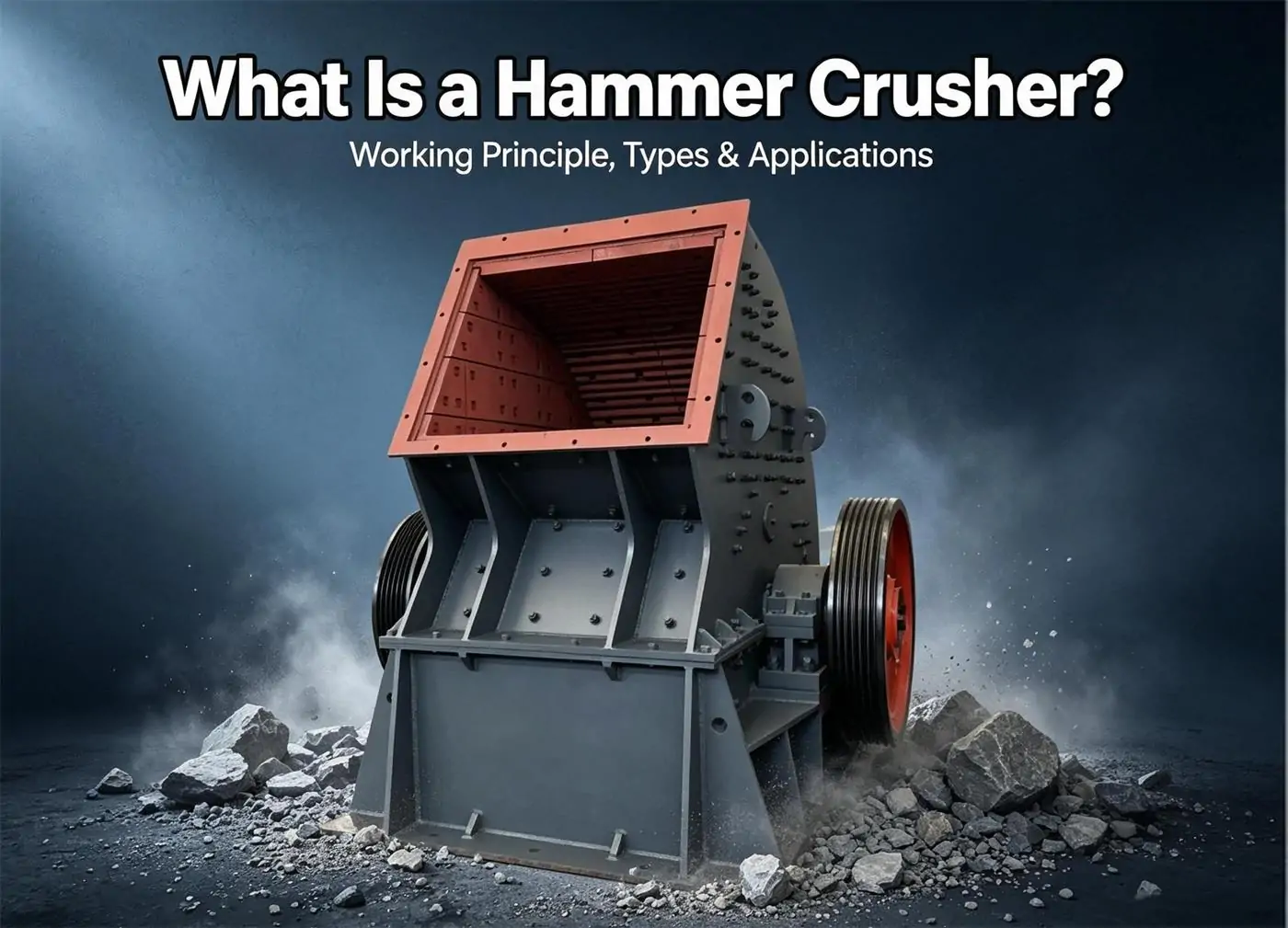
What Is a Hammer Crusher?
A hammer crusher is a crushing machine that breaks material through high-speed impact. It is commonly used to process low- to medium-hardness materials such as limestone, coal, gypsum, shale, and construction waste. Due to its high reduction ratio, a hammer crusher can often produce the required product size in a single crushing stage.
In a stone crushing plant, hammer crushers are typically used for secondary crushing, fine crushing, or standalone crushing of softer materials. They are designed for applications where efficient size reduction and relatively simple process flow are required.
What Is a Hammer Crusher Used For?
Hammer crushers are mainly used in limestone, coal, cement production, and light construction waste processing. They are suitable for soft to medium-hard materials where controlled size reduction is required.
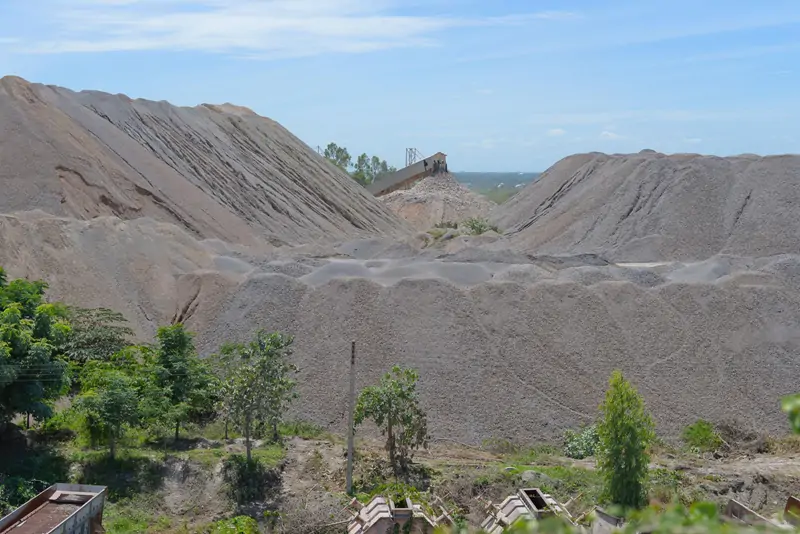
Limestone Crushing and Cement Production
In limestone processing and cement plants, hammer crushers are used to reduce raw limestone into smaller particles for grinding systems. They are commonly installed in the early crushing stage where high reduction ratio is required.
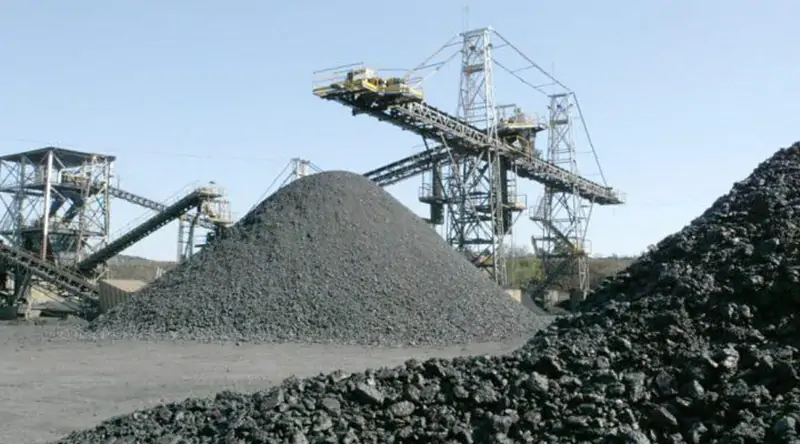
Coal Processing
Hammer crushers are widely used in coal handling and preparation plants. They reduce raw coal to a uniform size for combustion or further processing in power generation and industrial applications.
Construction Waste Recycling
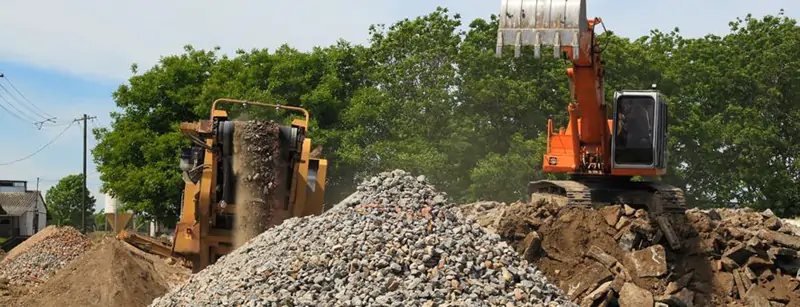
In construction waste recycling, hammer crushers process materials such as concrete blocks, bricks, and other brittle waste. The output is then used for backfilling, road base, or secondary aggregate production.
Small Aggregate Production Plants
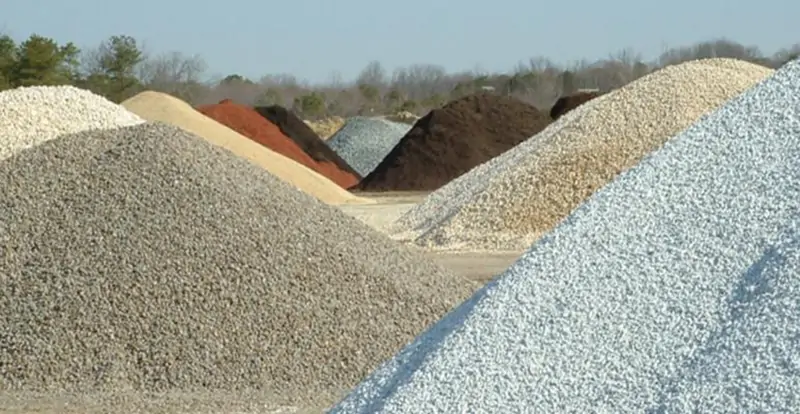
In small and medium aggregate plants, hammer crushers are used where the raw material is relatively soft. They provide both crushing and size reduction in a single stage, which helps reduce plant complexity and equipment investment.
Hammer crushers are most commonly applied in low- to medium-hardness material projects such as limestone processing, coal preparation, and selected recycling applications where efficiency and simplicity are more important than extreme wear resistance.
How Does a Hammer Crusher Work?
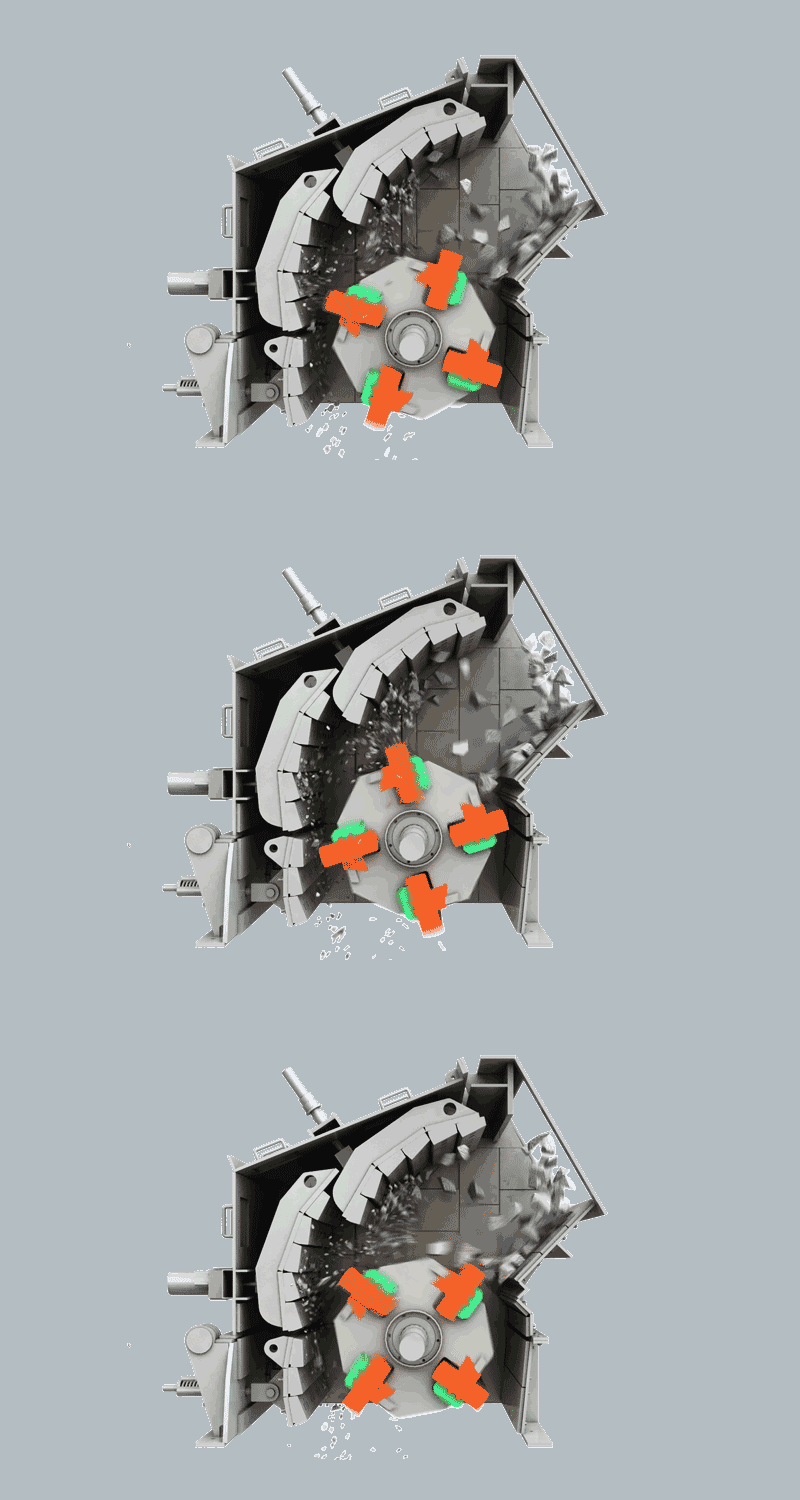
A hammer crusher operates by using high-speed rotating hammers to impact, crush, and break materials against the crushing chamber liners. Material enters the crushing chamber through the feed opening and is subjected to repeated impact, collision, and shearing forces until it reaches the required particle size and passes through the grate bars at the bottom of the machine. This crushing method is particularly effective for limestone, coal, gypsum, and other brittle materials with low to medium hardness.
In industrial crushing plants, the crushing performance of a hammer crusher is mainly influenced by rotor speed, hammer configuration, feed size, material hardness, and grate opening size. Proper adjustment of these parameters directly affects production capacity, product gradation, and hammer wear rate. The below are hammer crusher working steps:
Step 1: Material Feeding
Raw material enters the crusher through the feed opening and falls into the crushing chamber under gravity. The maximum feed size depends on the crusher model, rotor design, and hammer configuration.
Step 2: High-Speed Hammer Impact
The rotor drives the hammer heads at high speed, typically 500–1,800 rpm. Material is hit by rotating hammers and rapidly accelerated, generating primary breakage through strong impact force.
Step 3: Secondary Crushing and Collision
After the initial impact, material continues to collide with breaker plates, chamber liners, and other particles. Repeated impact, compression, and shearing further reduce particle size until it reaches the required gradation.
Step 4: Controlled Discharge
Crushed material that meets the required size passes through the grate bars at the bottom of the chamber and is discharged from the machine. Oversized particles remain inside for continued crushing until they reach the target size.
Main Components of a Hammer Crusher
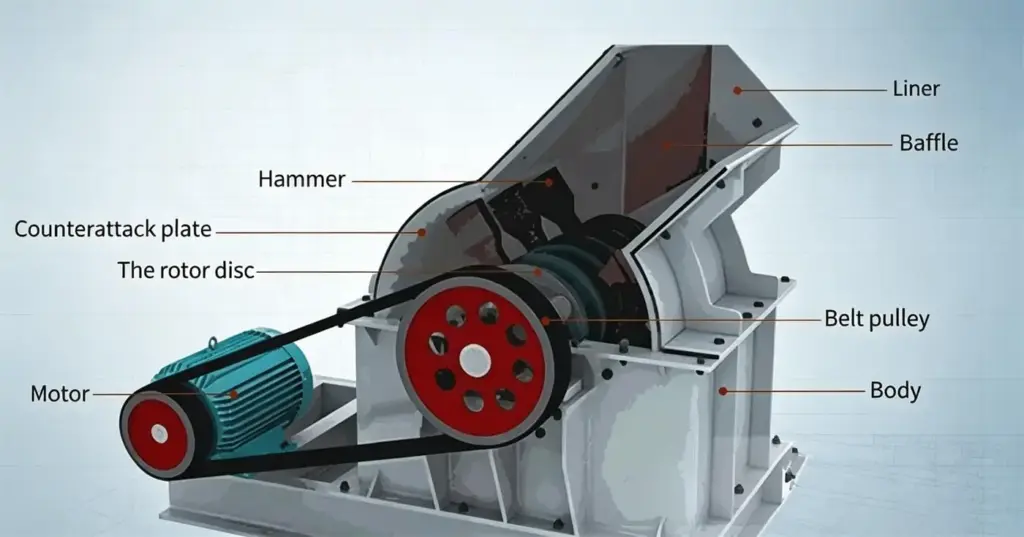
A hammer crusher is composed of several key mechanical systems, including the rotor assembly, hammer heads, crushing chamber, grate bars, main shaft, and drive system. These components work together to complete impact crushing and particle size control under continuous high-load conditions.
Rotor Assembly
The rotor is the core rotating element of the machine, consisting of the main shaft, discs, and spacers. It carries the hammer heads and transmits torque during operation. Dynamic balance accuracy is critical, as any imbalance will increase vibration and bearing load during continuous running.
Hammer Heads
Hammer heads are the main crushing elements installed on the rotor pins. They rotate at high speed to impact the feed material directly. Materials such as high manganese steel or high chromium alloy are commonly used, and wear condition directly affects output capacity and product size stability.
Crushing Chamber
The crushing chamber is the enclosed working space formed by the housing and liner plates. Material is repeatedly impacted by the hammer heads and rebounded by the liners, achieving gradual size reduction. The liners also protect the shell from direct wear.
Grate Bar
Grate bars are installed at the bottom of the crushing chamber to control final discharge size. Only particles smaller than the grate spacing can pass through, while oversized material remains inside for further crushing. Grate spacing directly determines product gradation.
Main Shaft
The main shaft supports the rotor system and transmits driving torque. It is subjected to bending and impact loads during operation. Typically manufactured from alloy steel with heat treatment to ensure fatigue resistance and long service life.
Drive System
The drive system consists of a motor, pulley, and coupling assembly. It provides stable power input to the rotor. Transmission alignment and power matching directly affect rotational stability, crushing efficiency, and overall equipment performance.
Types of Hammer Crushers
Hammer crushers are generally classified according to structure, crushing purpose, and application scenarios. The main types include single-stage hammer crushers, heavy hammer crushers, ring hammer crushers, reversible hammer crushers, and mobile hammer crusher plants. Each type is designed for different material conditions and production requirements.
Single-Stage Hammer Crusher
Single-stage hammer crusher is designed to complete primary and secondary crushing in one process. It is commonly used in cement and aggregate production lines where simplified flow and stable output are required for medium-hard materials.
- Uses: Used for one-time crushing and shaping of medium-hard materials with simplified process flow.
- Features: Combines multiple crushing stages in one machine, compact layout, fewer equipment units required.
- Suitable Materials: Limestone, gypsum, marl, and other low to medium hardness materials.
- Applications: Cement plants, aggregate production, building material processing.
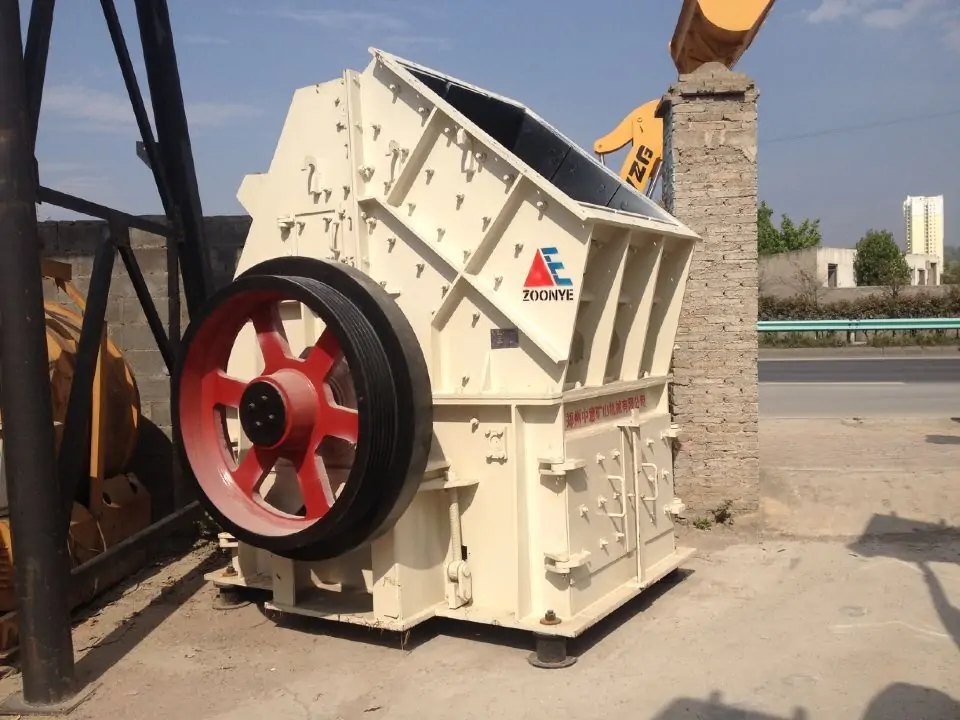
Heavy Hammer Crusher
Heavy hammer crusher is designed for large feed sizes and high-capacity crushing conditions. It can directly process large rocks into required sizes, reducing the need for multi-stage crushing systems.
- Uses: Used for primary crushing of large-sized raw materials.
- Features: Large feed opening, high reduction ratio, high production capacity, simplified crushing process.
- Suitable Materials: Limestone, coal gangue, shale, and other medium-hard materials.
- Applications: Mining operations, aggregate production lines.
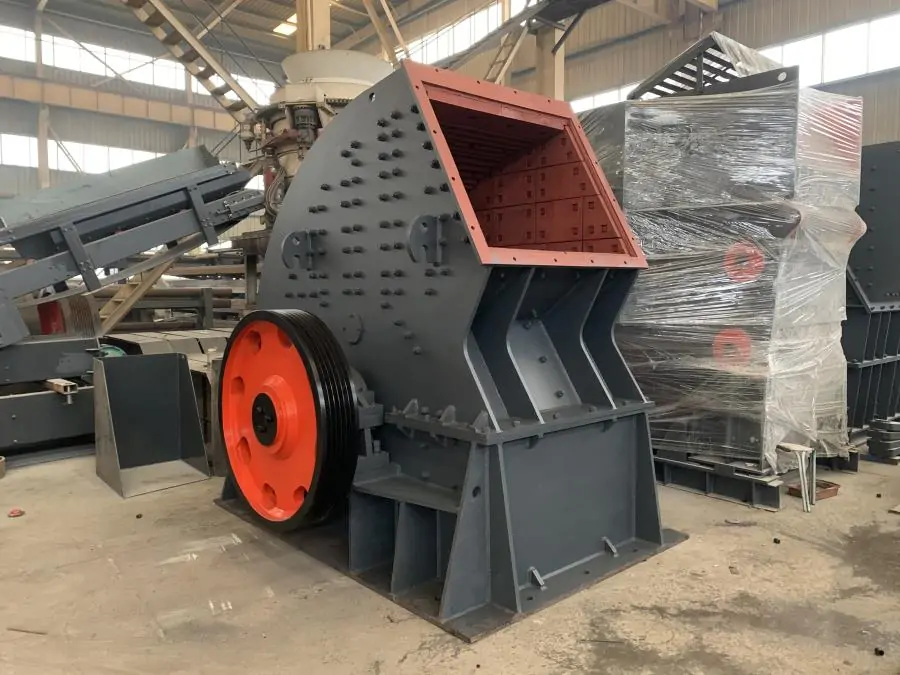
Ring Hammer Crusher
Ring hammer crusher is mainly used for fine and medium crushing of brittle materials, especially in coal processing systems. It provides uniform particle size and high crushing efficiency for low-hardness materials.
- Uses: Used for medium and fine crushing of coal and brittle materials.
- Features: Uniform discharge size, high efficiency, compact structure.
- Suitable Materials: Coal, coke, lignite, and other low-hardness materials.
- Applications: Coal preparation plants, power plant fuel processing systems.
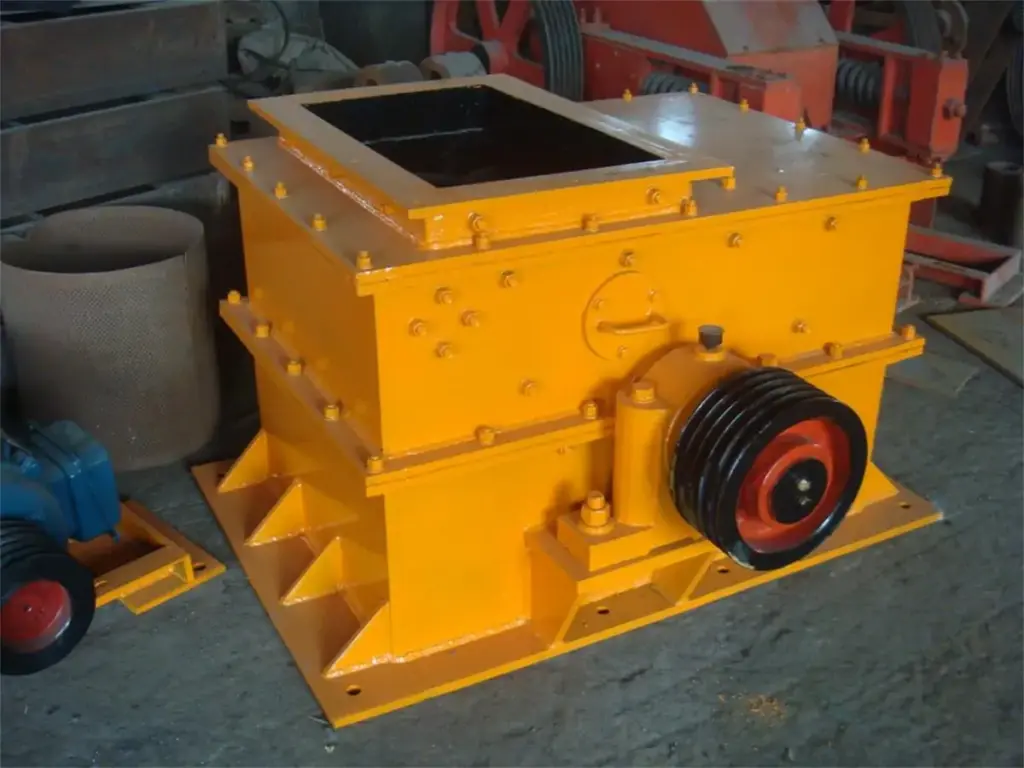
Reversible Hammer Crusher
Reversible hammer crusher features a rotor that can rotate in both directions, helping to balance hammer wear and extend service life. It is suitable for continuous production environments requiring stable operation and reduced maintenance frequency.
- Uses: Used to extend wear life in continuous crushing operations.
- Features: Bi-directional rotor operation, reduced hammer wear, improved utilization rate.
- Suitable Materials: Limestone, coal, gypsum, and other low to medium hardness materials.
- Applications: Cement plants, mining crushing systems, continuous production lines.
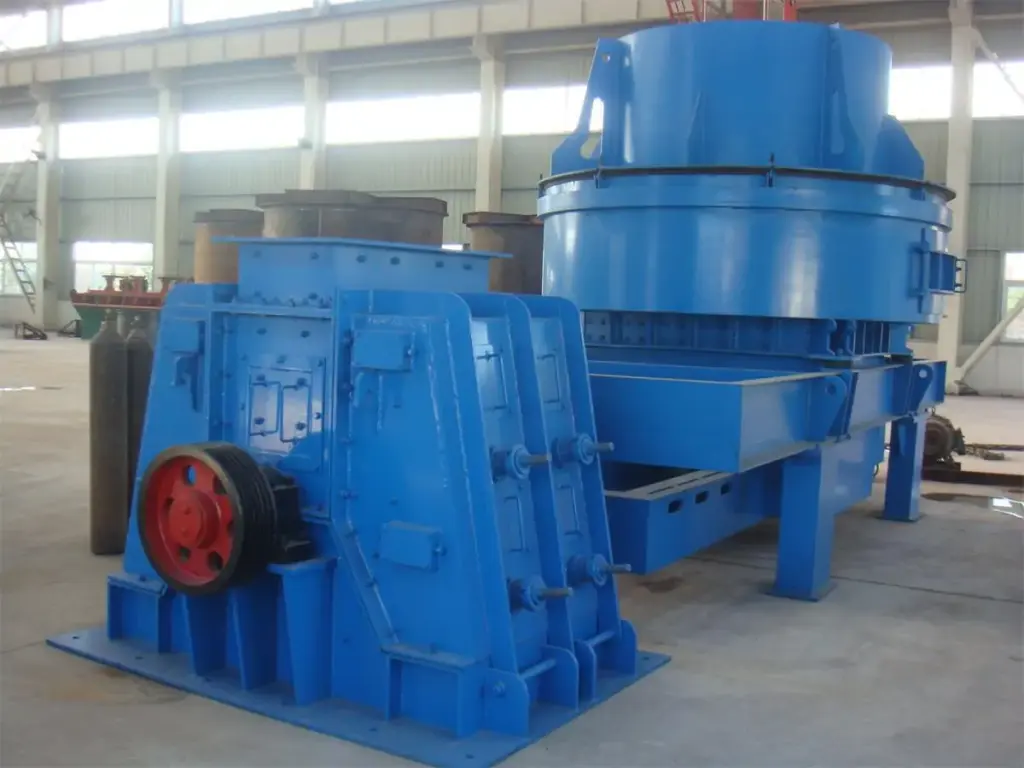
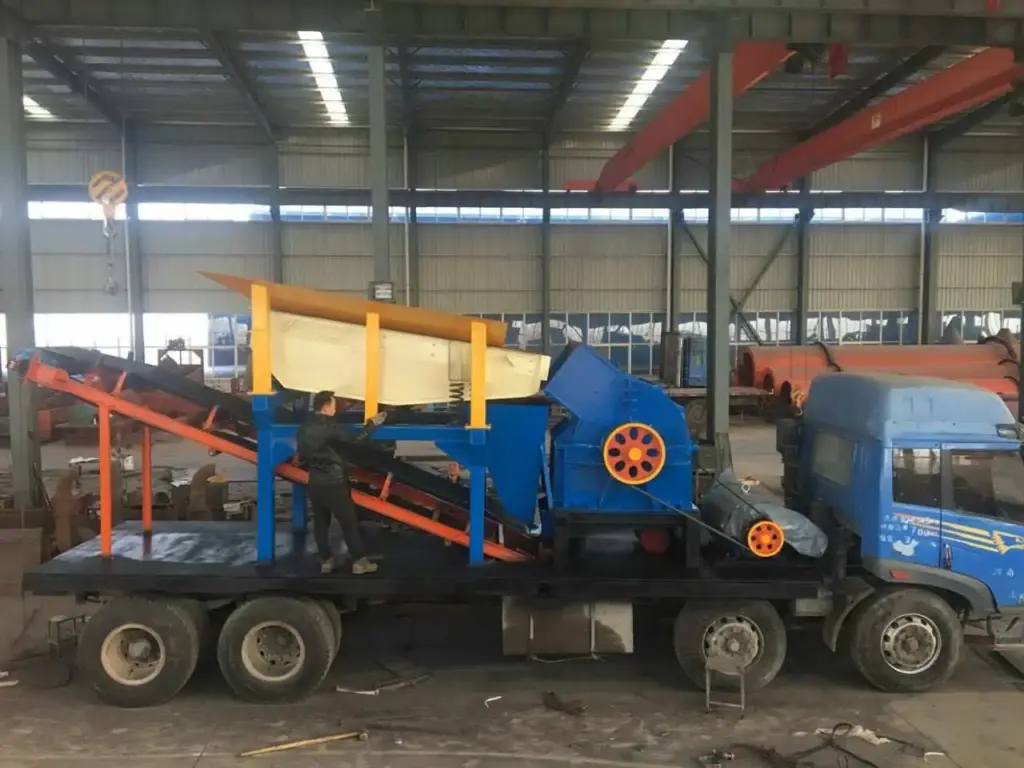
Mobile Hammer Crusher Plant
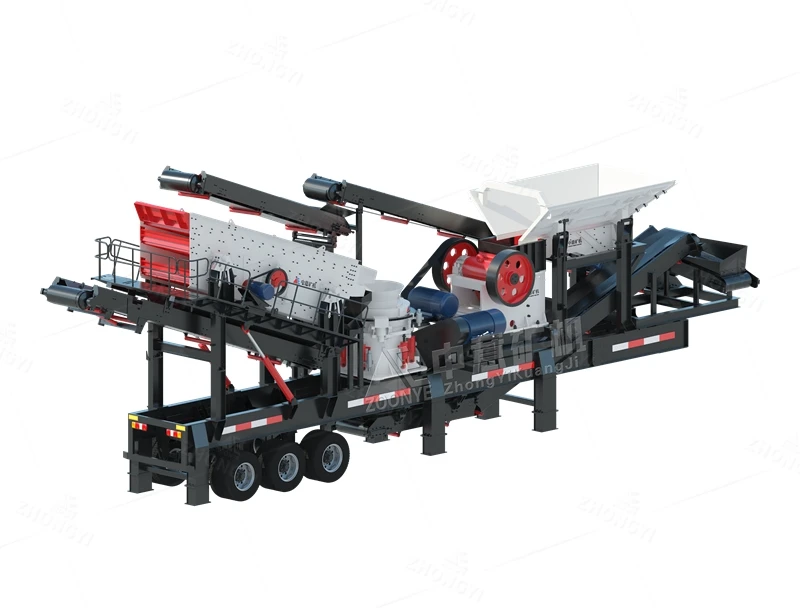
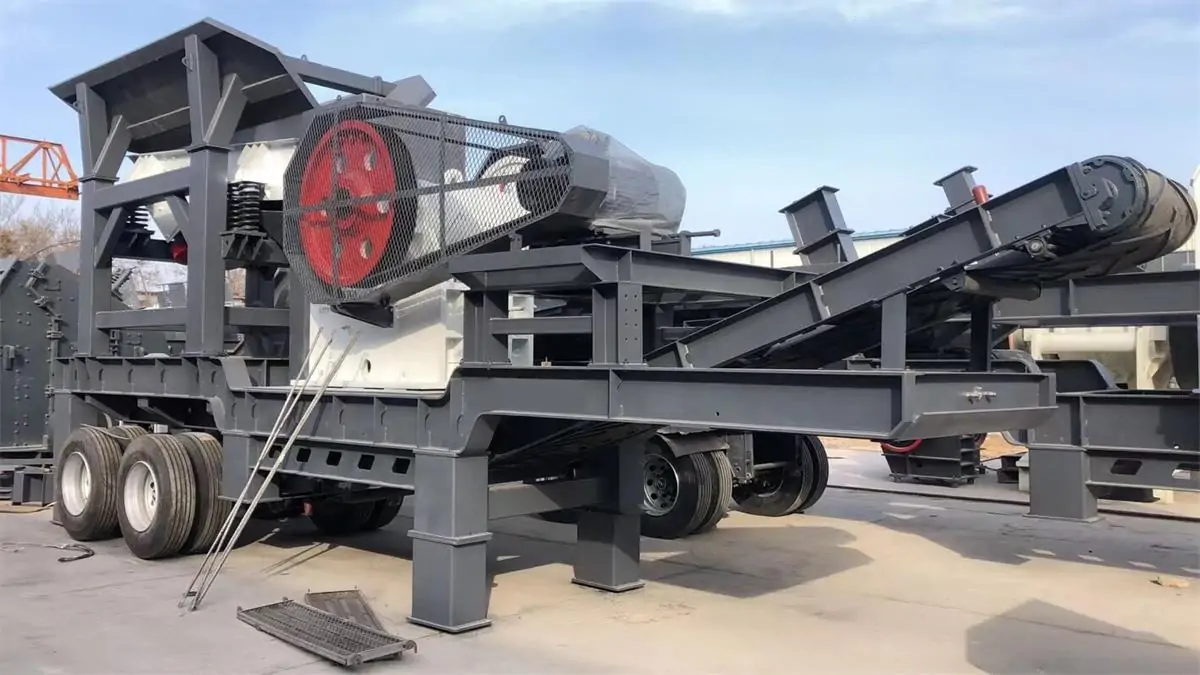
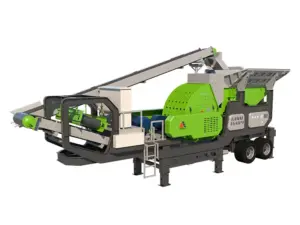
Mobile hammer crusher integrates the crushing unit on a mobile chassis, enabling flexible on-site operation and fast relocation. It is widely used in projects requiring temporary setups and frequent movement.
- Uses: Used for on-site mobile crushing and temporary project operations.
- Features: High mobility, no fixed foundation required, quick deployment.
- Suitable Materials: Construction waste, concrete blocks, bricks, and demolition debris.
- Applications: Construction waste recycling, urban demolition projects, temporary mining sites.
What Materials Can a Hammer Crusher Process?
A hammer crusher is designed for medium-soft to moderately hard, non-abrasive materials, where single-stage reduction is required. It breaks material through high-speed impact from rotating hammers, making it suitable for limestone-based aggregates, cement raw material preparation, and certain industrial mineral crushing applications. The key limitation is abrasion: materials with high silica content or strong hardness significantly increase wear rate and are generally not recommended.
Applicable Materials
| Material | Suitability | Notes |
| Limestone | Excellent | Most common application in cement and aggregate plants |
| Coal | Excellent | Widely used in power and coal preparation systems |
| Gypsum | Good | Suitable for controlled size reduction |
| Shale | Good | Works well in medium-soft sedimentary rock |
| Marl | Good | Often used in cement raw mix preparation |
| Clay-rich stone | Moderate | Requires controlled moisture content |
| Dolomite (soft grade) | Limited | Only low-abrasion conditions recommended |
| Granite / Basalt | Not recommended | Causes severe wear and high maintenance cost |
Advantages of Hammer Crushers
Hammer crushers are widely used for crushing low- to medium-hardness materials because they can combine efficient size reduction with a relatively simple process design. For materials such as limestone, coal, gypsum, and shale, they often provide a cost-effective solution for medium and fine crushing.
High Reduction Ratio and Simplified Process Flow
A hammer crusher can achieve a high reduction ratio in a single crushing stage. For many soft and medium-hard materials, it can produce the required product size without multiple crushing stages, helping simplify the overall process flow and reduce equipment requirements.
Simple Structure and Easy Maintenance
Hammer crushers have a relatively simple design with fewer major components than many multi-stage crushing systems. This makes installation and routine maintenance easier while allowing hammers, liners, and other wear parts to be replaced more efficiently.
Lower Investment and Space Requirements
Because fewer machines and auxiliary systems are often needed, hammer crusher plants typically require lower initial investment. The compact layout can also reduce installation space requirements, making the equipment suitable for projects with limited site space.
For limestone, coal, gypsum, and similar low-abrasion materials, hammer crushers offer an effective balance between production efficiency, equipment investment, and maintenance costs.
Limitations of Hammer Crushers
Hammer crushers are highly efficient for limestone, coal, gypsum, and other low-abrasion materials. However, they are not the best choice for every crushing application. Before selecting a hammer crusher, it is important to understand where its performance and operating cost may become less favorable.
Limited Suitability for Hard and Abrasive Materials
Hammer crushers are generally not recommended for highly abrasive or high-hardness materials such as granite, basalt, quartz, and other high-silica rocks. These materials accelerate wear on hammers and liners, increasing maintenance frequency and operating costs. In many hard rock applications, jaw crushers and cone crushers are often more economical choices.
Sensitivity to High Moisture Content
Materials with excessive moisture or high clay content can reduce crushing efficiency and increase the risk of material buildup inside the crushing chamber. In severe cases, blockages may occur, resulting in additional downtime and cleaning requirements.
Ongoing Wear Part Replacement
Because hammer crushers rely on high-speed impact crushing, hammers and liners are wear components that require regular inspection and replacement. Replacement intervals vary depending on material properties, production volume, and operating conditions.
For projects processing limestone, coal, gypsum, and similar materials, these limitations are usually manageable. The key is matching the crusher to the material and production requirements rather than selecting equipment based on capacity alone.
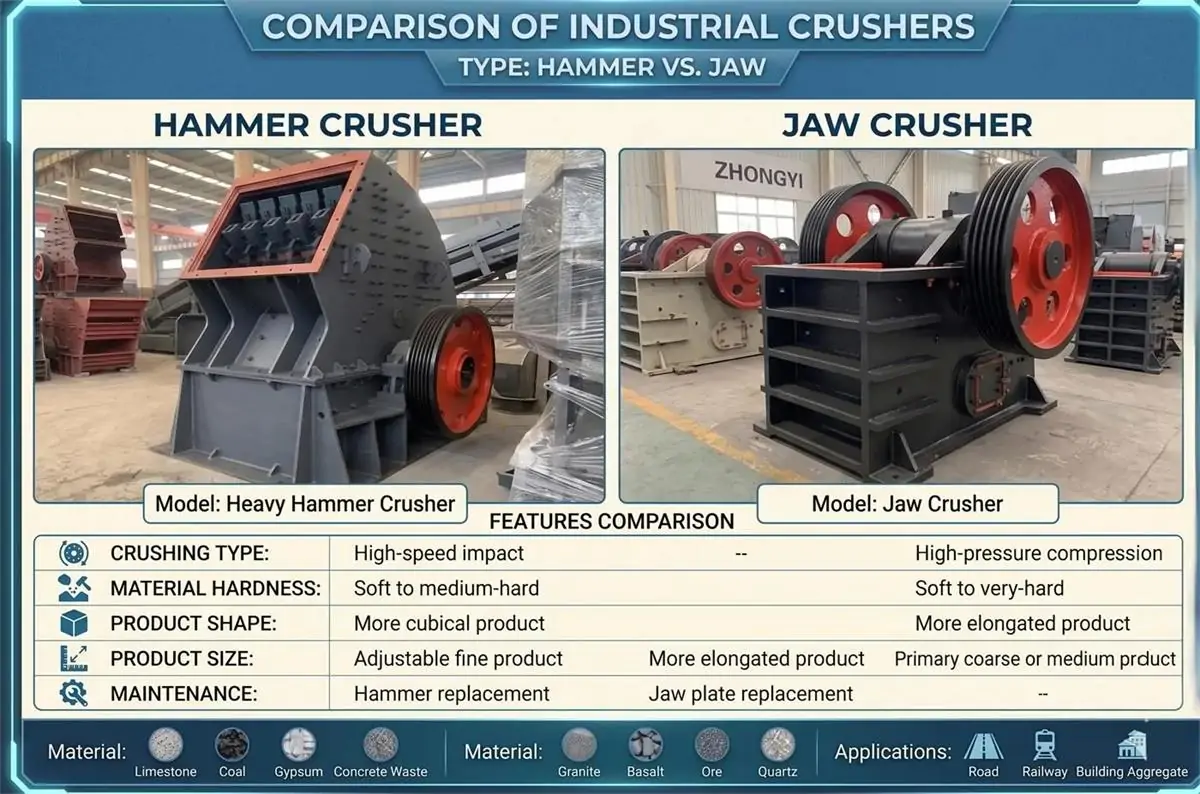
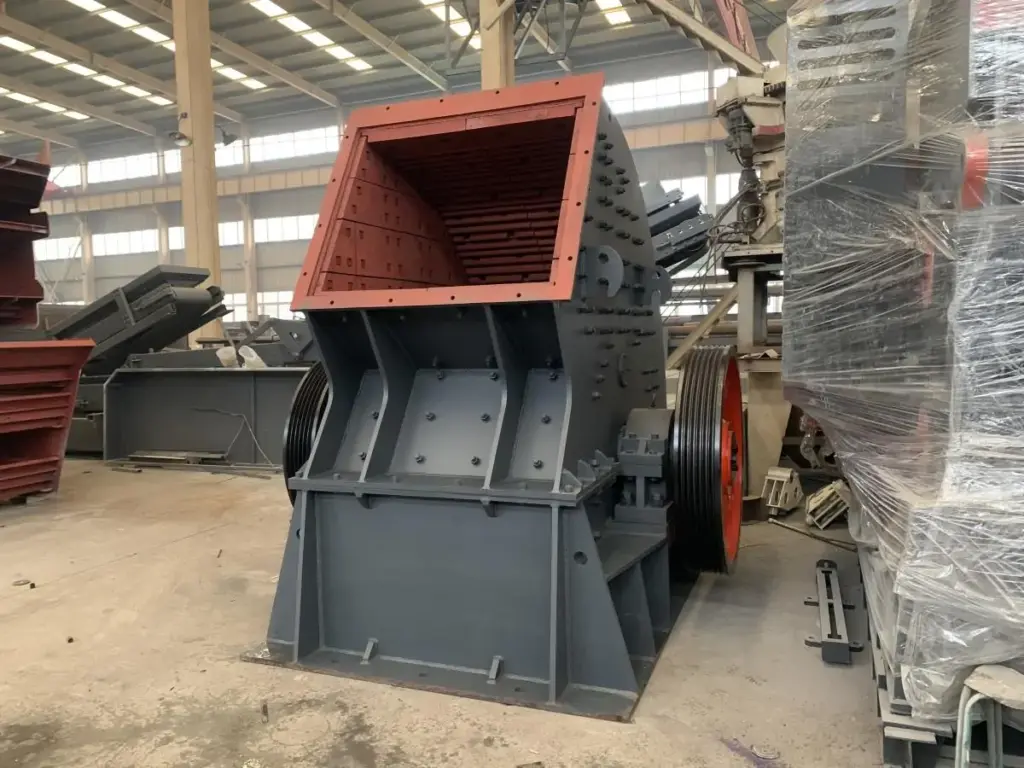
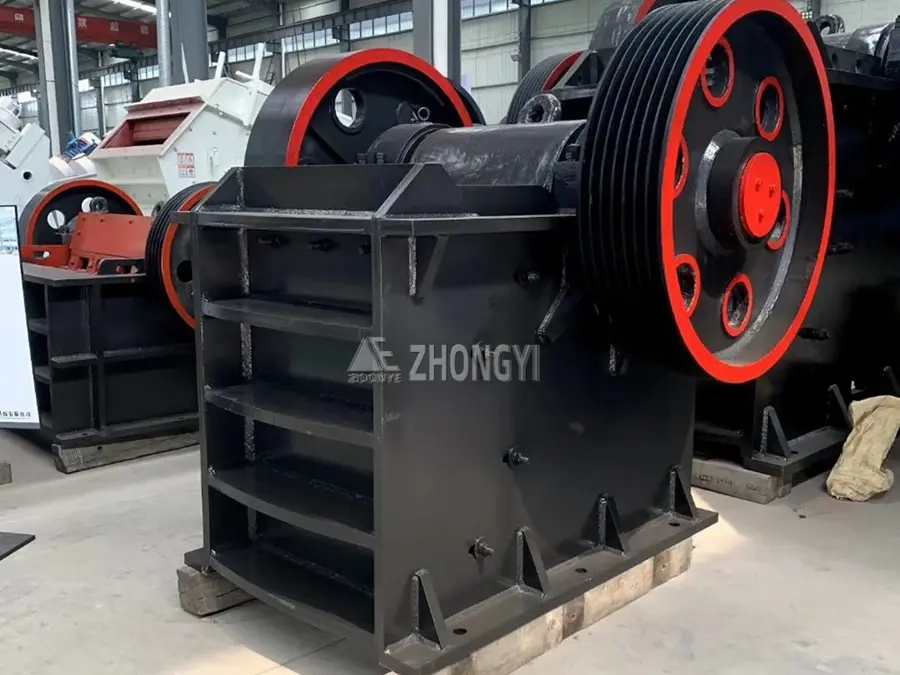
Hammer Crusher vs Jaw Crusher
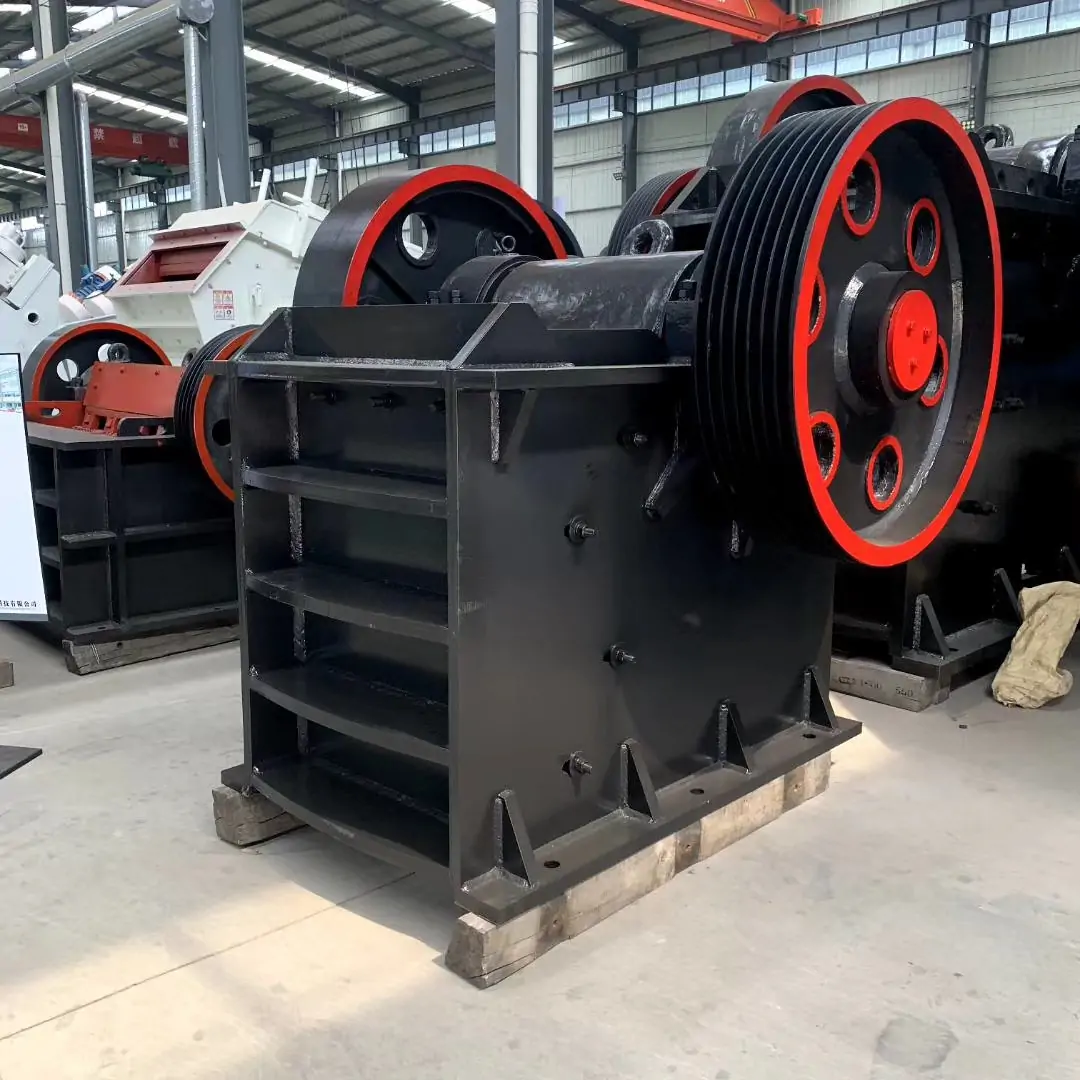
Hammer crushers and jaw crushers are used for different crushing purposes. In most projects, the choice depends on material hardness, feed size, and whether the process is primary or secondary crushing.
For details, please refer to this article: Heavy Hammer Crusher vs Jaw Crusher: Differences, Pros & Best Applications
| Item | Hammer Crusher | Jaw Crusher |
|---|---|---|
| Crushing Method | Impact | Compression |
| Feed Size | Medium | Large |
| Output Size | Finer | Coarser |
| Suitable Materials | Soft–medium materials | Soft to very hard rock |
| Hard Rock Performance | Limited | Excellent |
| Wear Cost | Higher | Lower |
| Initial Investment | Lower | Higher |
| Typical Application | Limestone, coal, recycling | Granite, basalt, ore (primary crushing) |
Hammer Crusher vs Impact Crusher
Hammer crushers are generally used for simpler, single-stage crushing of soft materials, while impact crushers are selected when better particle shape and secondary crushing performance are required. The choice mainly depends on whether the project prioritizes process simplicity (hammer crusher) or product quality and shaping control (impact crusher).
| Item | Hammer Crusher | Impact Crusher |
| Crushing mechanism | High-speed hammer impact | Rotor-driven impact + rebound crushing |
| Primary function | Single-stage crushing | Secondary crushing + shaping |
| Suitable materials | Limestone, coal, gypsum, shale | Limestone, concrete, soft–medium rock |
| Feed size | Medium (≤400 mm typical) | Medium to smaller feed (pre-crushed material) |
| Product shape | Relatively less controlled | Good cubic particle shape |
| Reduction ratio | High (single pass) | Medium to high (controlled stage-wise) |
| Wear characteristics | Higher wear in abrasive conditions | More stable in aggregate shaping use |
| Process role | Standalone or simple line | Part of multi-stage crushing system |
| Typical application | Cement raw material, basic crushing | Aggregate production, recycling, road base material |
Hammer Crusher vs Cone Crusher
Hammer crusher and cone crusher are used in different crushing stages and material conditions. Hammer crusher is mainly applied to soft rock in single-stage crushing where process simplicity is required. Cone crusher is used in secondary or tertiary stages for hard and abrasive materials where stable gradation and consistent output are required. The selection is typically based on material hardness, required product quality, and whether the process is single-stage or multi-stage.
| Item | Hammer Crusher | Cone Crusher |
| Crushing principle | High-speed impact | Compression + lamination |
| Application stage | Single-stage crushing | Secondary / tertiary crushing |
| Material type | Limestone, coal, gypsum, shale | Granite, basalt, hard rock, ore |
| Feed condition | Medium-soft material, larger feed allowed | Requires pre-crushed feed |
| Output control | Limited size control | Stable grading control |
| Product shape | Irregular, less consistent | Better cubic shape |
| Hard rock performance | Not suitable for long-term use | Designed for hard and abrasive rock |
| Wear condition | High wear in abrasive feed | Lower wear, stable liner life |
| System role | Simple or small-scale lines | Standard aggregate production lines |
How to Choose the Right Hammer Crusher?
Selecting the right hammer crusher depends on material type, feed size, capacity, and final product requirements.
Material Characteristics
Hammer crushers are suitable for soft to medium-hard materials such as limestone, coal, gypsum, and shale, typically with compressive strength below around 100–150 MPa. Hard and abrasive rocks such as granite and basalt are usually not recommended due to high wear cost.
Feed Size and Output Requirements
Typical feed size ranges from 50–800 mm depending on model. Output size can reach 0–50 mm. The crusher must match both feed size and final product requirements to avoid over-crushing and unstable operation.
Capacity Planning
Capacity ranges from about 5–1200 TPH depending on configuration. Selection should be based on actual production demand. Undersized equipment limits output, while oversized machines increase investment and operating cost.
Operating Cost
Operating cost includes wear parts, energy consumption, and maintenance. In abrasive conditions, wear part consumption can increase significantly, affecting long-term cost per ton.
Project-Based Selection
Selection should always be based on real project conditions such as material properties, plant layout, and production target. In many cases, different configurations are required even under similar capacity ranges.
Zhongyi provides hammer crusher selection support and customized solutions based on material, capacity, and project requirements.
Hammer Crusher Selection Support
Get a suitable hammer crusher configuration based on your material, feed size, and capacity requirements.
Conclusion
Hammer crushers are widely used for reducing soft to medium-soft materials such as limestone, coal, and gypsum through high-speed impact crushing. They are typically applied in single-stage crushing systems where a simple process flow and high reduction ratio are required. Selection should be based on material hardness, feed size, and production capacity to ensure stable operation and controlled operating cost.
For equipment selection, process design, or project-specific crushing solutions, please contact Zhongyi Mining technical team for further support.

Dr. Yu
Expert in Mineral Processing Solutions
With 15+ years of experience, Dr. Chen specializes in gravity, magnetic, flotation, and electrostatic separation. He focuses on ore processing and process optimization, sharing practical insights and equipment applications to help improve recovery rates and production efficiency.
FAQ
What is a hammer crusher used for?
A hammer crusher is used for medium and fine crushing in mining, cement, and aggregate production. It reduces raw materials like limestone and coal into smaller sizes for further processing or direct use in construction materials.
What materials are suitable for hammer crushers?
Hammer crushers are suitable for limestone, coal, gypsum, shale, and construction waste with low to medium hardness, generally below 100–150 MPa compressive strength. Hard rock such as granite or basalt is usually not recommended.
Can a hammer crusher handle hard rock?
It can process some medium-hard rock, but performance drops in high-abrasion materials like granite and quartz. Wear on hammers increases quickly, leading to higher maintenance cost. Jaw or cone crushers are more suitable for hard rock.
What industries use hammer crushers most?
Hammer crushers are commonly used in cement plants, limestone processing, coal preparation, and construction waste recycling. These industries require stable size reduction and consistent output for downstream crushing or grinding operations.
What is the typical output size of a hammer crusher?
Output size usually ranges from 0–50 mm depending on configuration, rotor speed, and screen setup. The final size can be adjusted to meet requirements for cement feed, aggregates, or recycling applications.
What is the capacity range of hammer crushers?
Capacity typically ranges from 5 to 1200 TPH depending on model and plant design. Small units are used for local production, while large stationary systems support continuous industrial-scale crushing operations.
What are the main advantages of hammer crushers?
Hammer crushers offer high reduction ratio, simple structure, and good efficiency for soft materials. They can reduce crushing stages in some plants, helping lower equipment investment and simplify production flow.
How to choose the right hammer crusher model?
Selection depends on material hardness, feed size, required output, and capacity. For soft limestone and medium production needs, hammer crushers work well. Zhongyi also provides customized solutions based on project requirements.