Introduction
Since most of the mineral resources needed by humans are extracted in large, lumpy forms, they are crushed to facilitate subsequent refining and screening. To improve mining efficiency, various specialized and high-efficiency stone crushers are required. Today, let’s explore: What Is a Stone Crusher Machine? as well as its types, working principles, and applications.
What Is a Stone Crusher Machine?
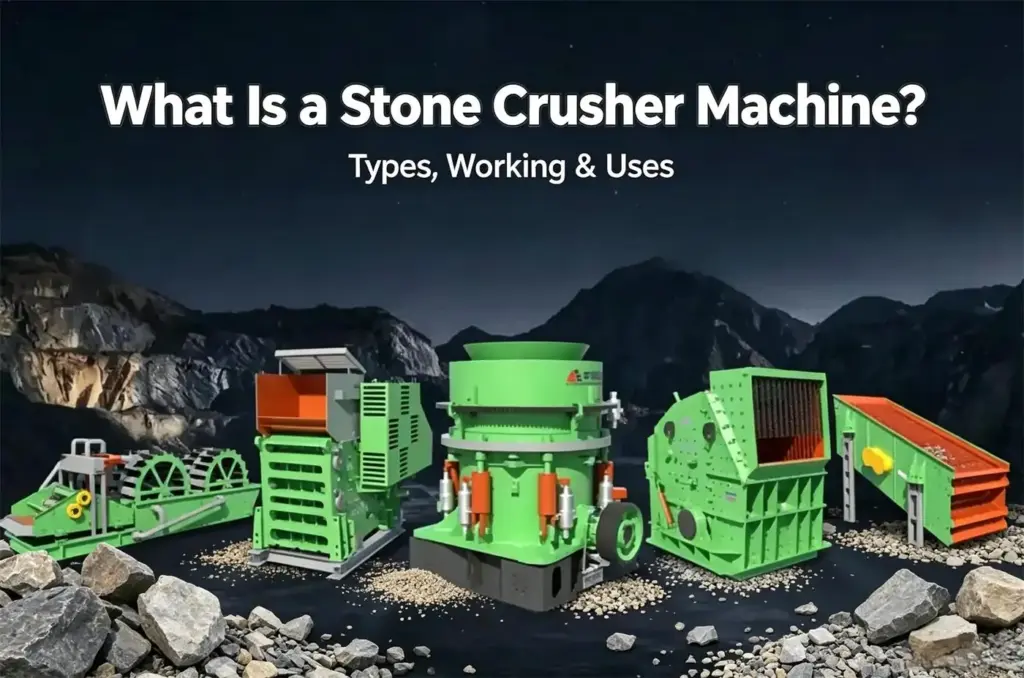
A stone crusher machine is an industrial piece of equipment used to break large chunks of rock, ore, and construction materials into smaller particles. the primary function of a stone crusher is to reduce the size of rock through mechanical forces (compression, impact, shearing, or grinding) so that it meets the requirements for subsequent screening, transportation, or production. It is widely used in industries such as mining, construction, highways, railways, cement production, and sand and gravel aggregate production.
Before learning about stone crusher machines, ZhongYi recommends that you first gain a basic understanding of crushing methods:
Crushing methods for crushers include compression, splitting, breaking, shearing, and impact or striking. Generally, these methods are used in combination; no single method is used exclusively.
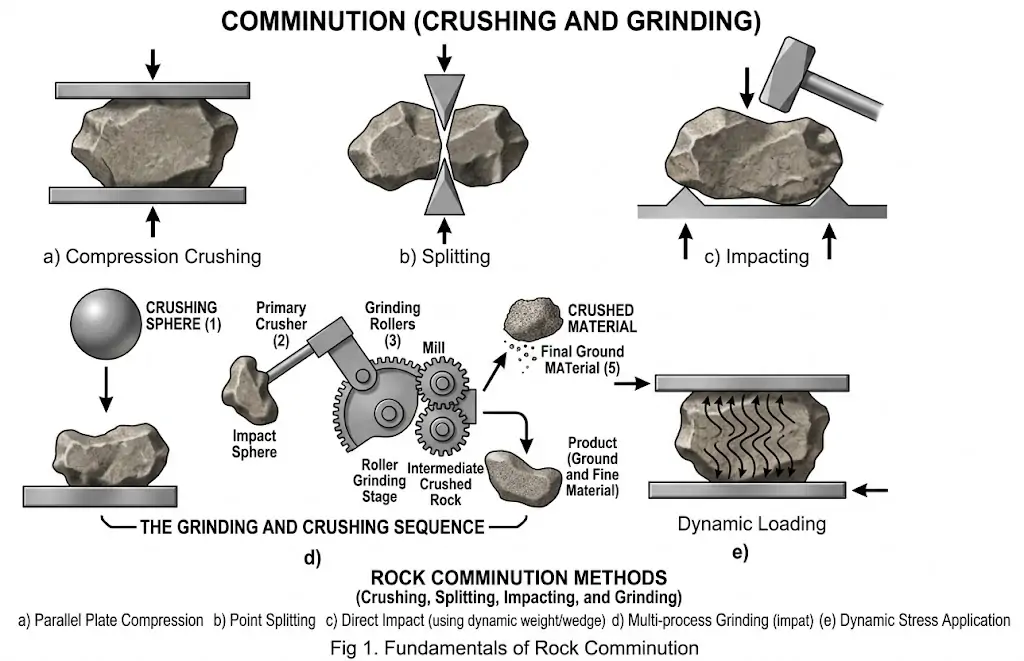
- Compression Crushing: The working surfaces of the crusher apply pressure to the material trapped between them; the material breaks when the compressive stress it experiences reaches its compressive strength limit.
- Splitting and Shearing Crushing: The edges of the working surfaces wedge into the material, generating tensile stress internally. When this stress exceeds the material’s tensile strength limit, the material splits, and powder is produced locally at the contact points between the sharp edges and the material.
- Bending and Fracture Crushing: Material clamped between the working surfaces behaves like a simply supported beam or a multi-supported beam subjected to concentrated forces; the material primarily experiences bending stress, but undergoes splitting at the points of contact with the working surfaces.
- Compression-Shear Crushing: A combination of compression crushing and shear crushing.
- Impact Crushing: Impact crushing includes the impact of a high-speed moving crushing body on the material to be crushed, the impact of high-speed moving material against a fixed wall, and the mutual impact of moving material particles.
In a stone crushing plant, stone crushers are installed at different stages of the production process. Primary crushers handle large feed materials, while secondary and fine crushers further reduce the material to the required size. Depending on the project requirements, the crushed material can be used for concrete production, road construction, railway projects, and mineral processing applications.
For example, raw materials such as granite, limestone, and basalt extracted from quarries are typically too large to be used directly in construction projects; they must first be processed using the crushing equipment described above to produce crushed stone, sand, or aggregate that meets the required specifications.
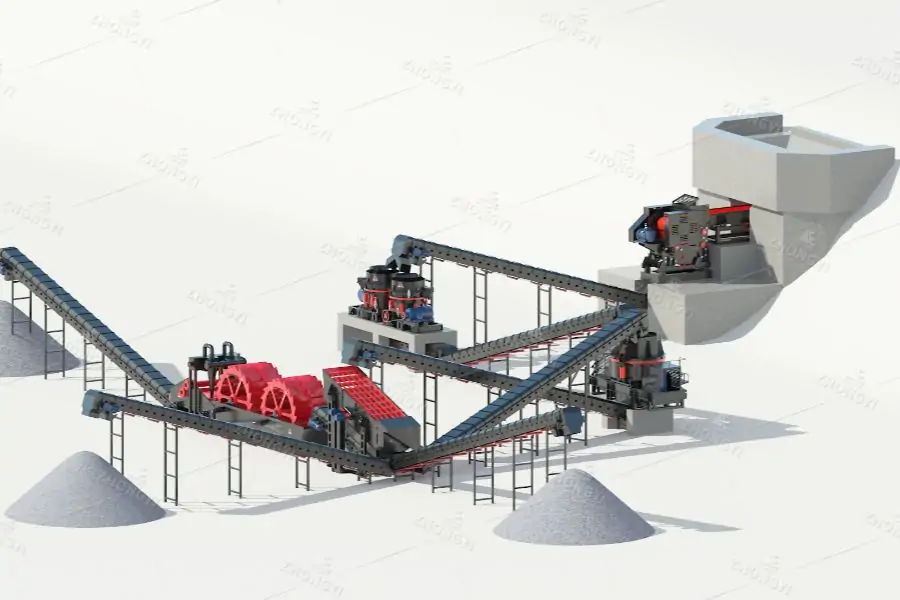
Main Types of Stone Crusher Machines
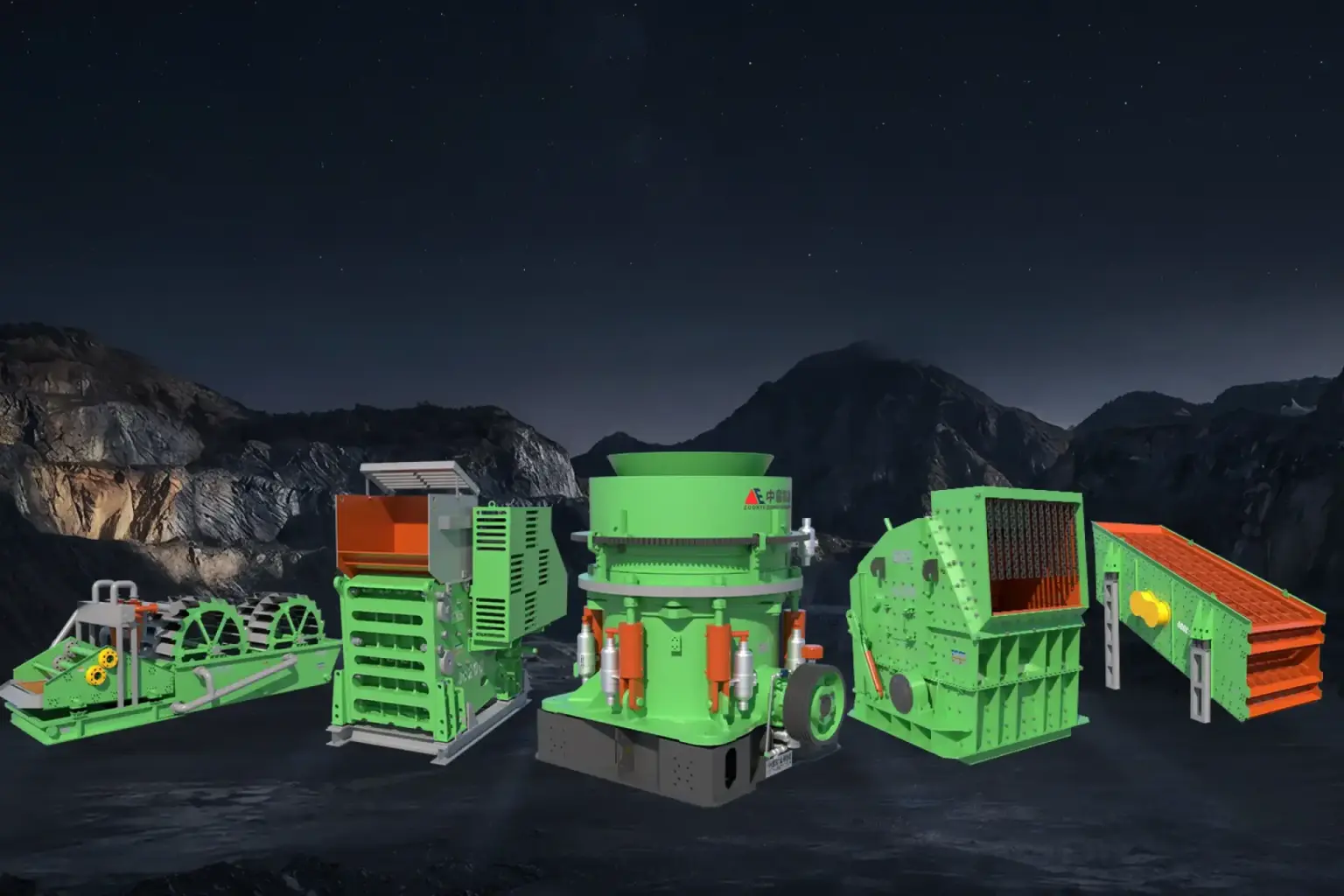
Stone Crushing Equipments are selected based on where they sit in the crushing process and how they break the material. A production line runs from feeding, to primary crushing, then secondary or shaping crushing, followed by screening and final product separation. Jaw crushers handle the initial reduction, cone or impact crushers refine the material, and screens ensure the final sizes meet specification for use in aggregates, mining, and construction projects.
Let’s take a look at some of the most common types of crushing equipment in ZhongYi.
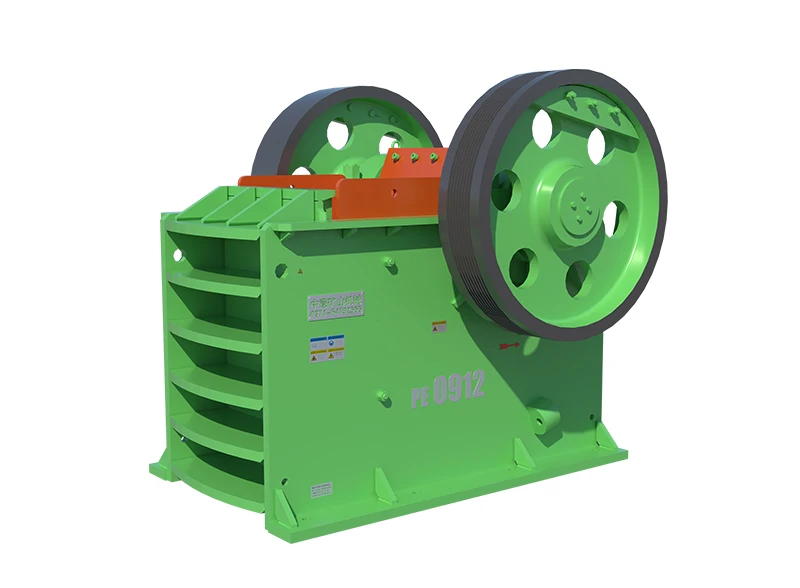
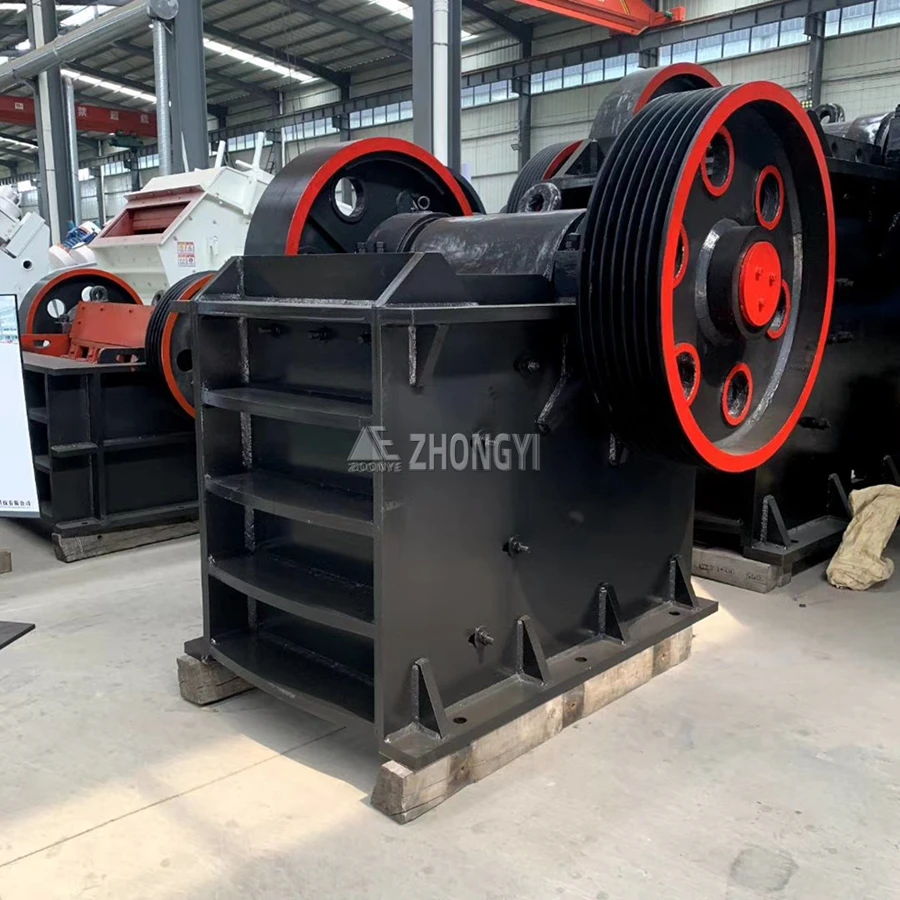
Jaw Crusher (Primary Crushing)
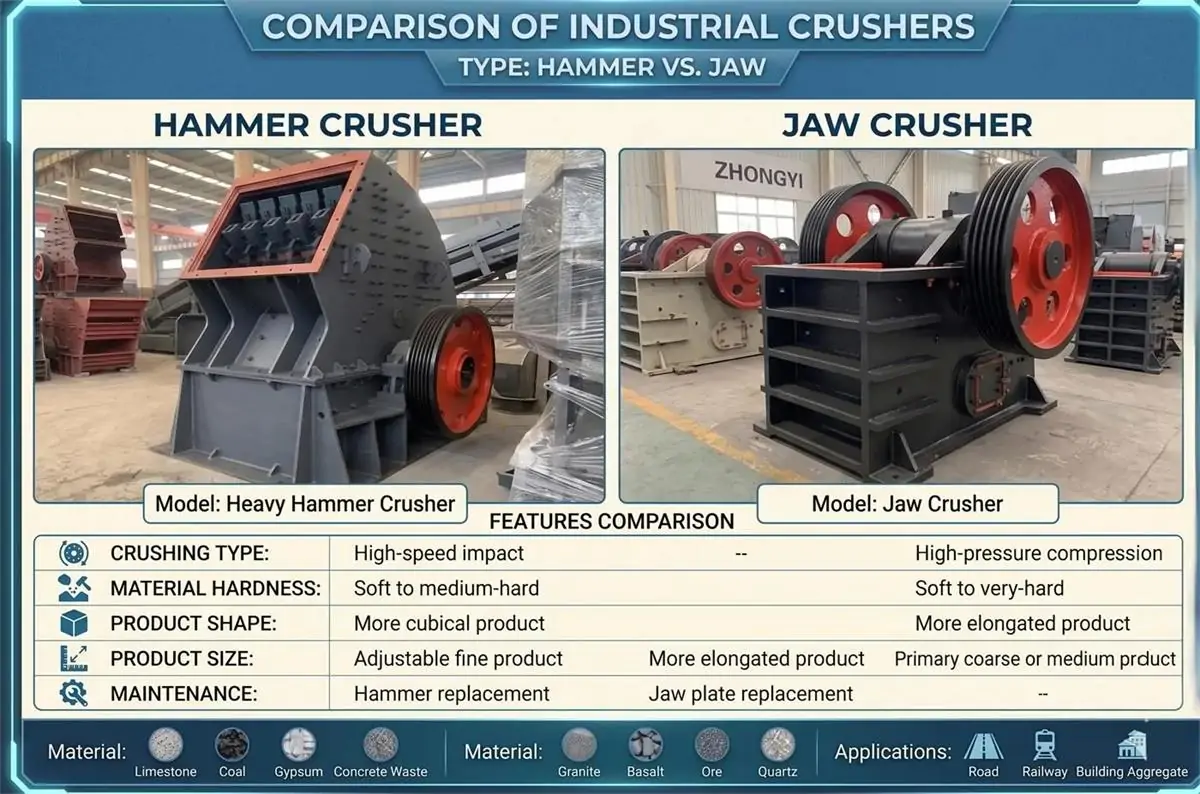
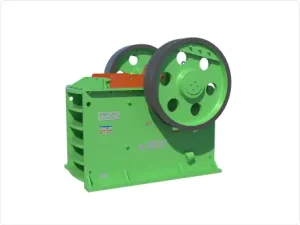
Jaw crusher is used in the primary crushing stage to reduce large-size raw materials into manageable feed for downstream processing. It operates through a compressive crushing mechanism between a fixed and a movable jaw plate, making it suitable for high-strength and abrasive materials in mining and quarry operations.
- Purpose: Primary coarse crushing
- Features: Compression crushing, large feed size capacity, simple structure, stable operation
- Applicable materials: Granite, basalt, hard rock, iron ore
- Applications: Quarry primary crushing, mining coarse reduction, feeding stage of crushing plants
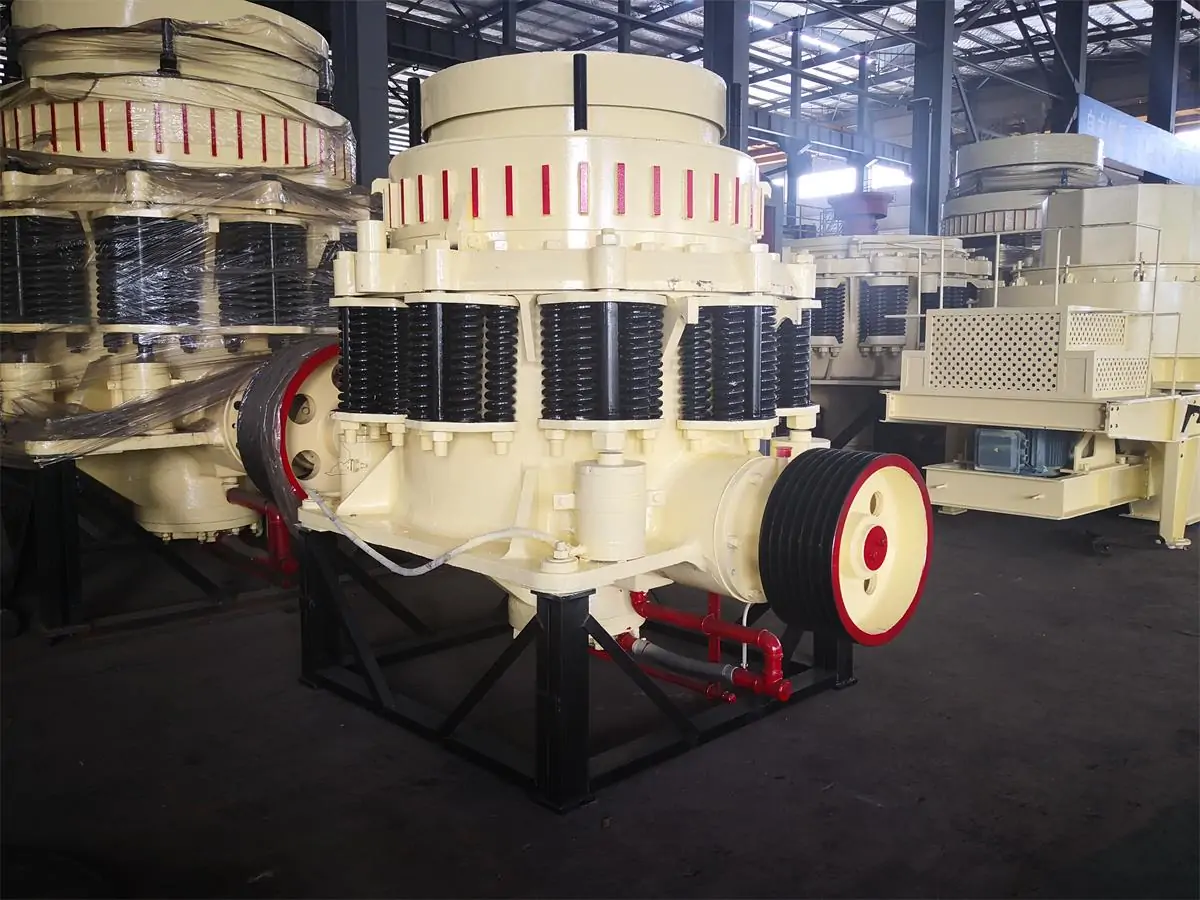
Cone Crusher (Secondary / Tertiary Crushing)
Cone crusher is designed for secondary and tertiary crushing stages where controlled particle size and consistent grading are required. It works through inter-particle compression and provides stable performance for high-hardness materials in large-scale aggregate and mining production.
- Purpose: Secondary / fine crushing
- Features: Lamination crushing, high efficiency, good particle shape, long wear life
- Applicable materials: Hard rock, river stone, ore, granite
- Applications: Aggregate production lines, mining fine crushing, sand and gravel plants
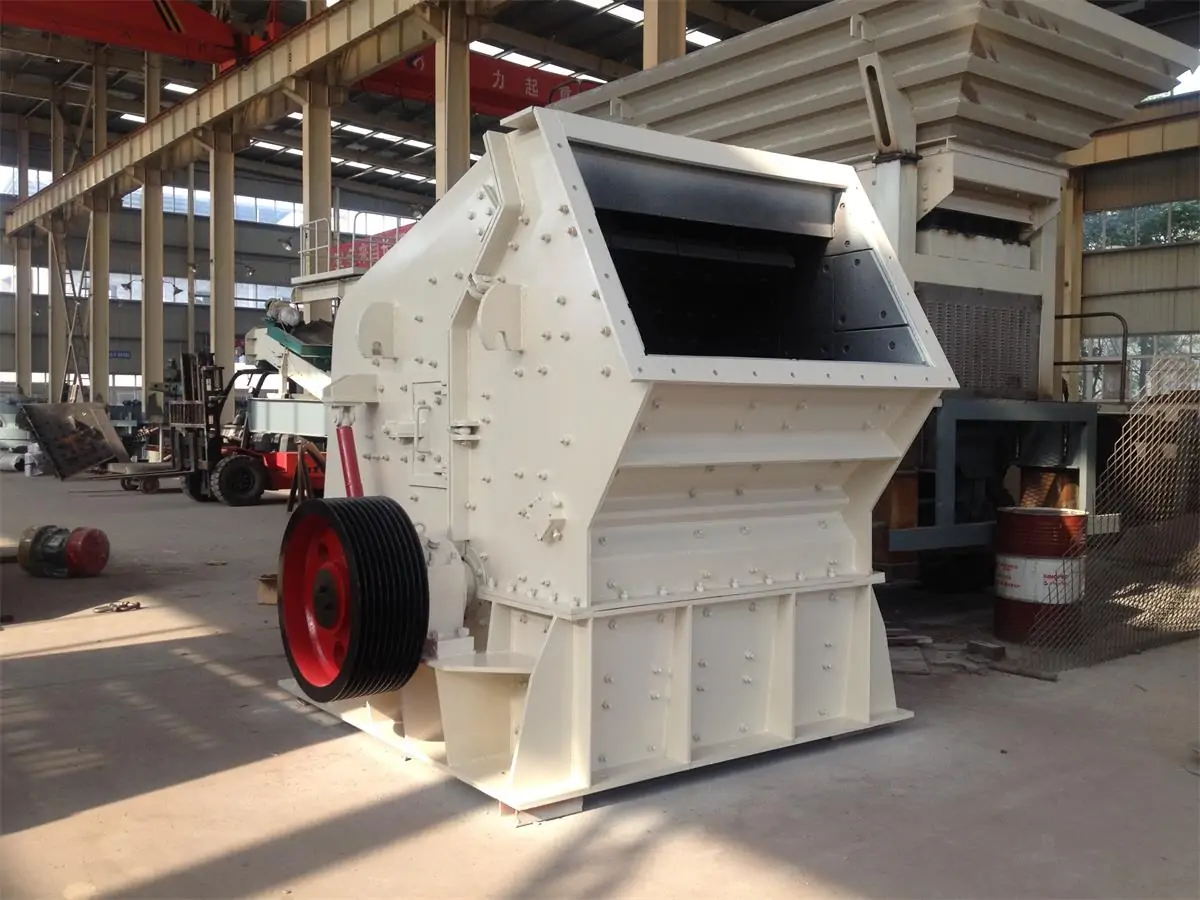
European Impact Crusher
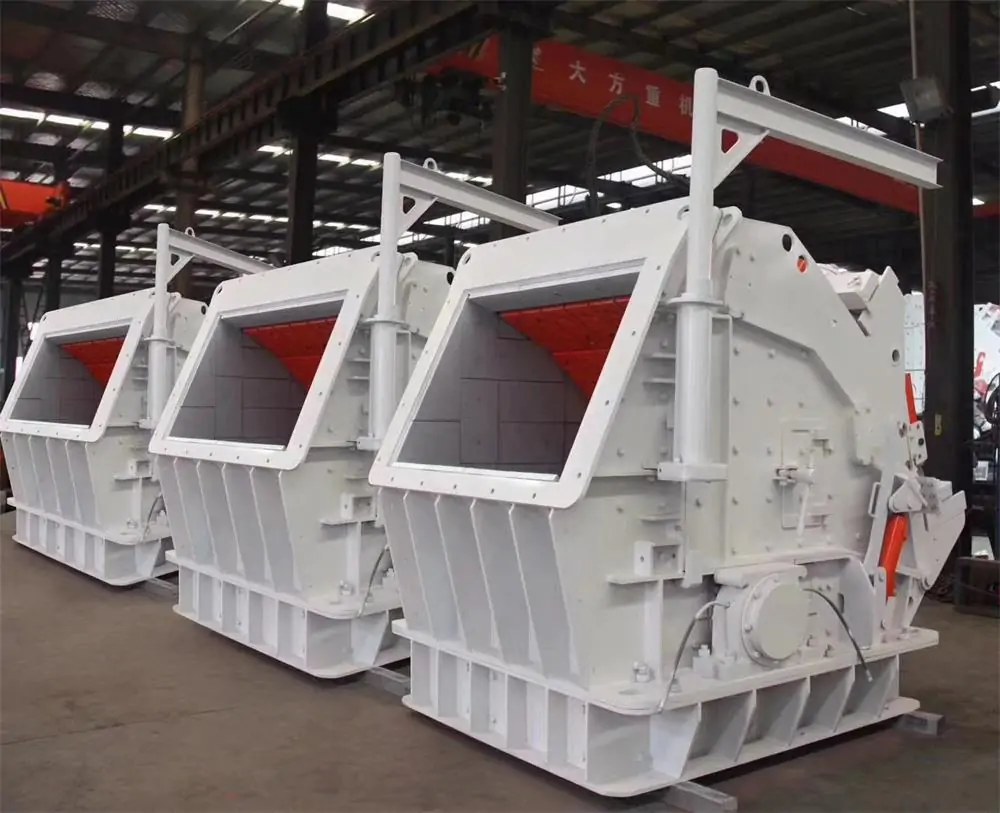
European impact crusher is used for secondary crushing and material shaping applications where product cubicity is a key requirement. It crushes materials through high-speed rotor impact, producing well-graded and uniform aggregates.
- Purpose: Medium crushing and shaping
- Features: High reduction ratio, excellent particle shape, strong shaping capability
- Applicable materials: Limestone, concrete, soft to medium-hard rock
- Applications: Construction aggregate production, recycling plants, road base material production
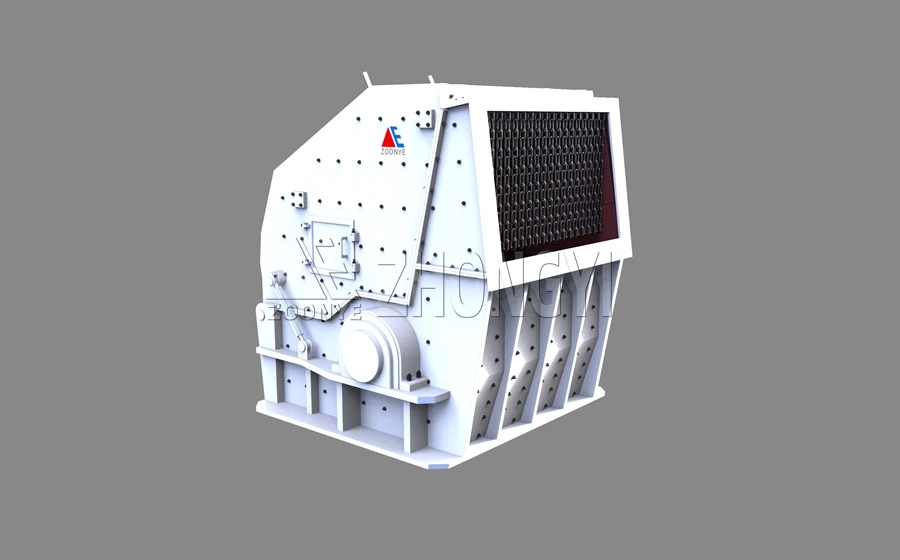
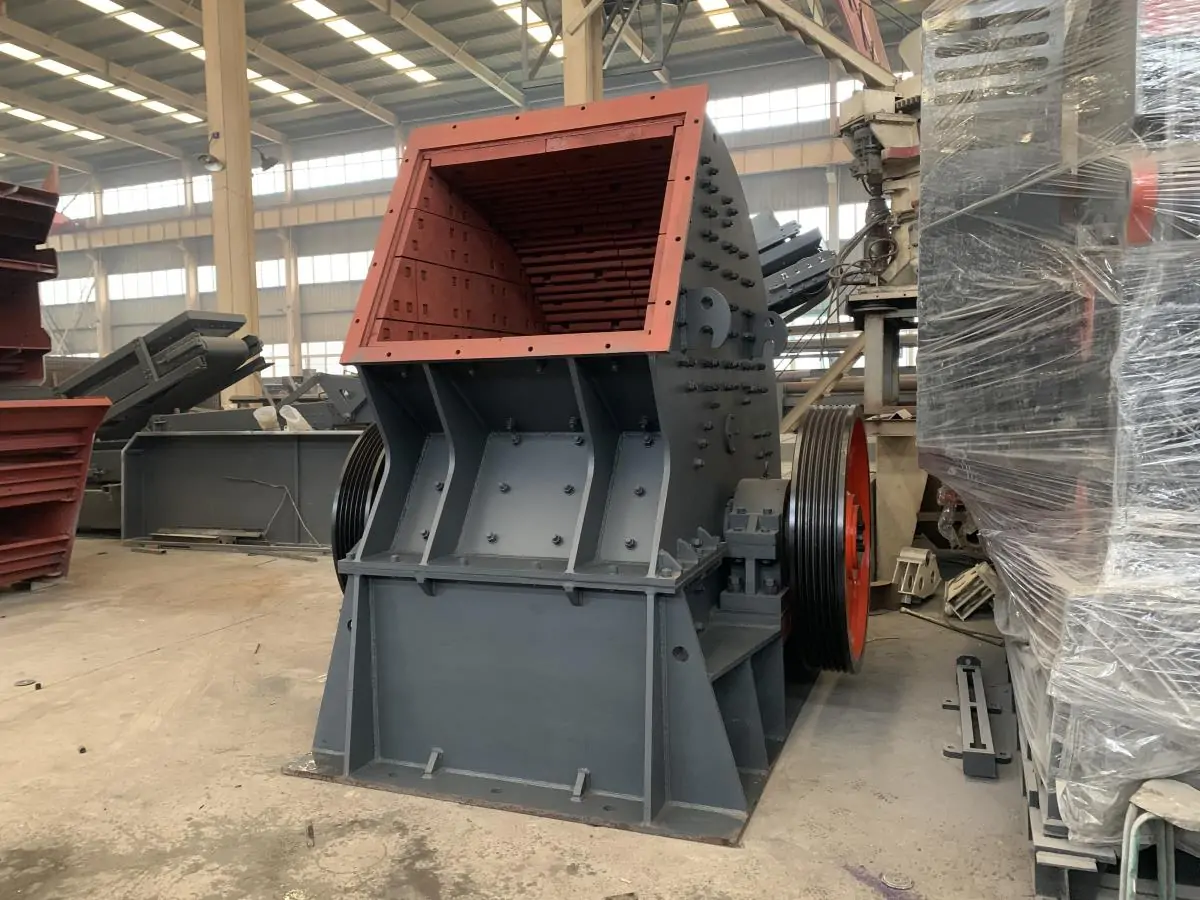
Hammer Crusher
Hammer crusher is applied in single-stage crushing of soft to medium-soft materials, where both crushing and shaping can be completed in one process. It reduces material through high-speed hammer impact, simplifying the production flow.
- Purpose: Single-stage crushing
- Features: One-time forming, high throughput, compact structure
- Applicable materials: Limestone, coal, gypsum, shale
- Applications: Cement production lines, small to medium aggregate plants, industrial raw material crushing
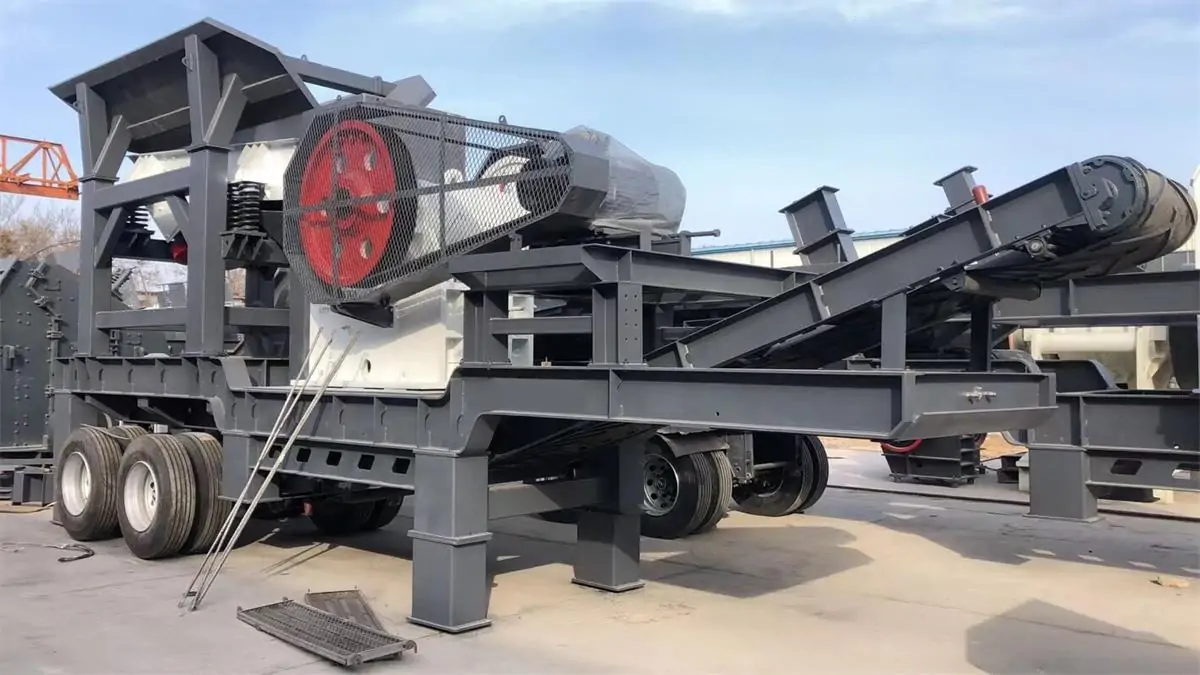
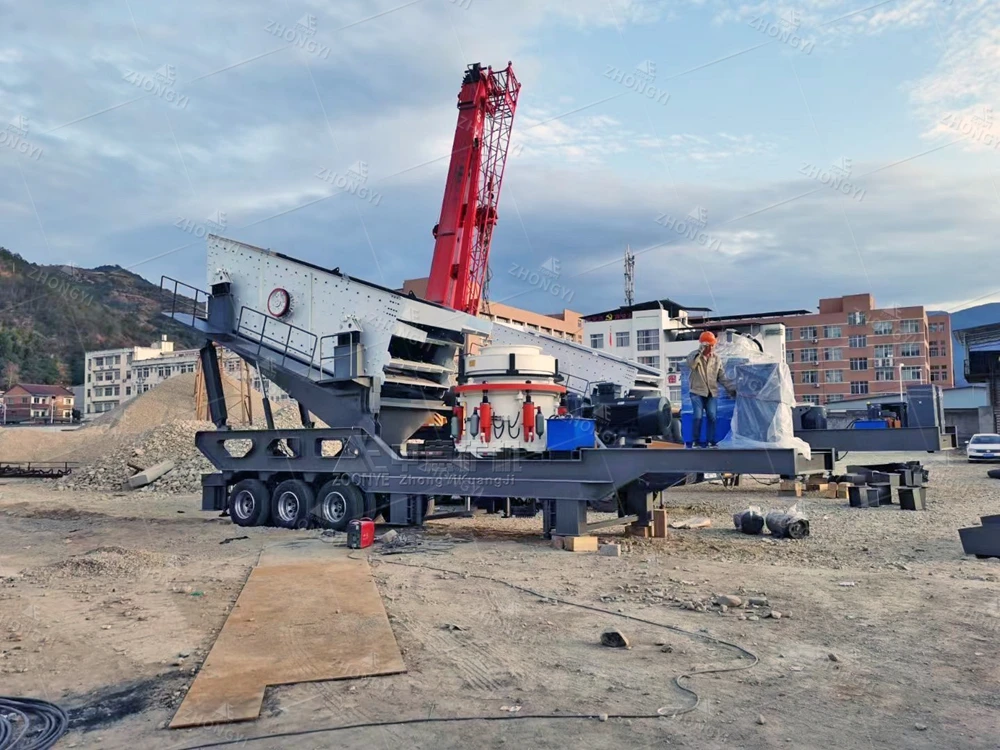
Mobile Stone Crusher Plant
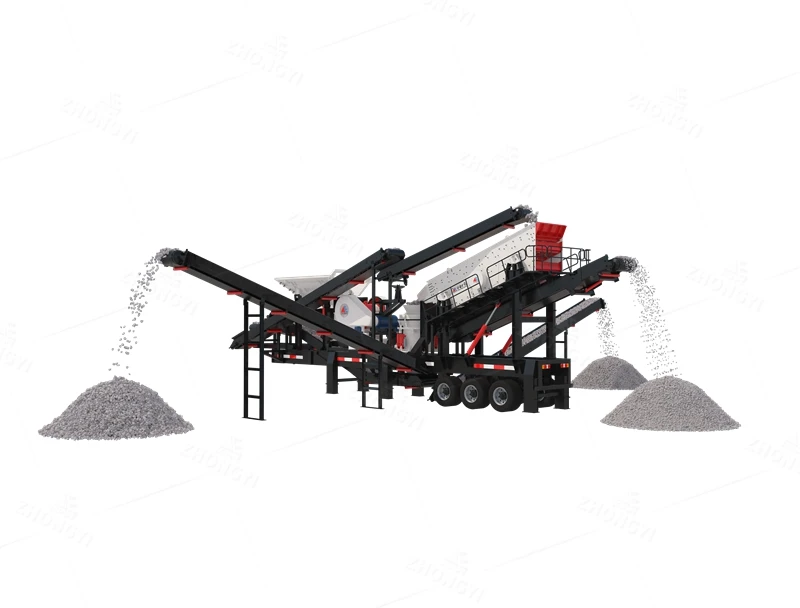
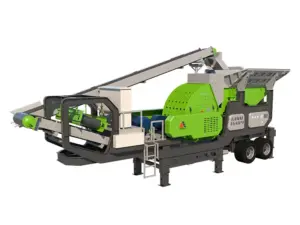
Mobile stone crusher plant is an integrated and relocatable crushing system designed for on-site material processing. It combines feeding, crushing, and screening modules on a mobile chassis, enabling flexible deployment without fixed infrastructure.
- Purpose: On-site mobile crushing
- Features: High mobility, fast setup, integrated design, reduced civil work requirement
- Applicable materials: Quarry stone, construction waste, ore, demolition materials
- Applications: Temporary projects, mining sites, road construction, recycling operations
Stone Crusher Machine Working Principle
A stone crusher machine reduces large rocks and stone materials into smaller sizes through a series of crushing stages. The process flow includes material feeding, crushing, screening, and discharge. Depending on the required output size, a crushing plant may use one or multiple crushers to gradually reduce the material to the desired specification.
Step 1: Material Feeding
Raw materials are fed into the crusher by trucks, loaders, or conveyors. A vibrating feeder is often used to maintain a steady material flow and ensure stable operation throughout the crushing process.
Step 2:Crushing and Discharge Process
Inside the crusher, the material is broken into smaller pieces by compression, impact, or other crushing forces, depending on the crusher type. After crushing, the material is discharged through the outlet opening, where the final size is controlled by the crusher settings and production requirements.
Step 3:Primary Secondary and Fine Crushing Stages
Most stone crushing plants use multiple crushing stages. Primary crushing reduces large feed materials into smaller pieces, while secondary and fine crushing stages further reduce the material to achieve the required product size and particle distribution. This staged process helps improve production efficiency and produce more consistent final products.
Below is our video demonstration of the crushed stone production process.
Applications of Stone Crusher Machines
Stone crusher machines are used in a wide range of industries where large rocks and raw materials need to be reduced to specific sizes. Depending on the material and production requirements, they can be used for mineral processing, aggregate production, infrastructure projects, and recycling applications. In most quarry projects, jaw crushers are used as the backbone of the primary crushing stage, followed by cone crushers for final shaping.
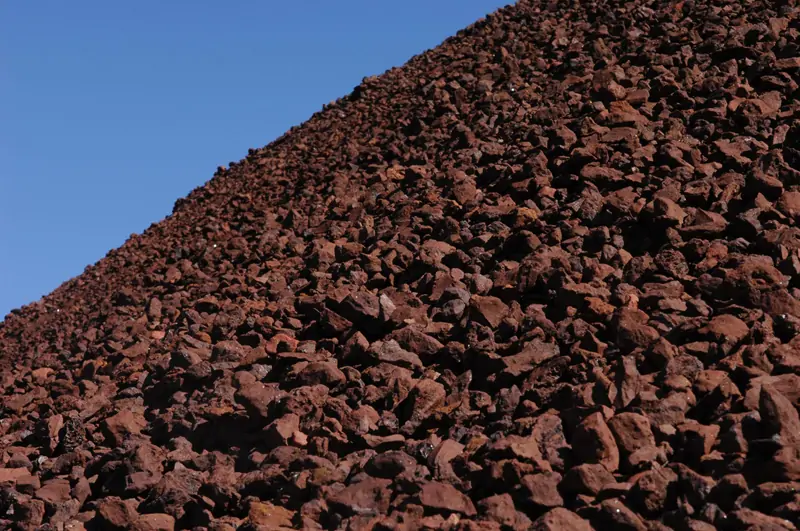
Mining
Stone crushers are widely used in mining operations to reduce the size of ore before grinding, beneficiation, or further processing. They help improve material handling and prepare feed material for downstream equipment.
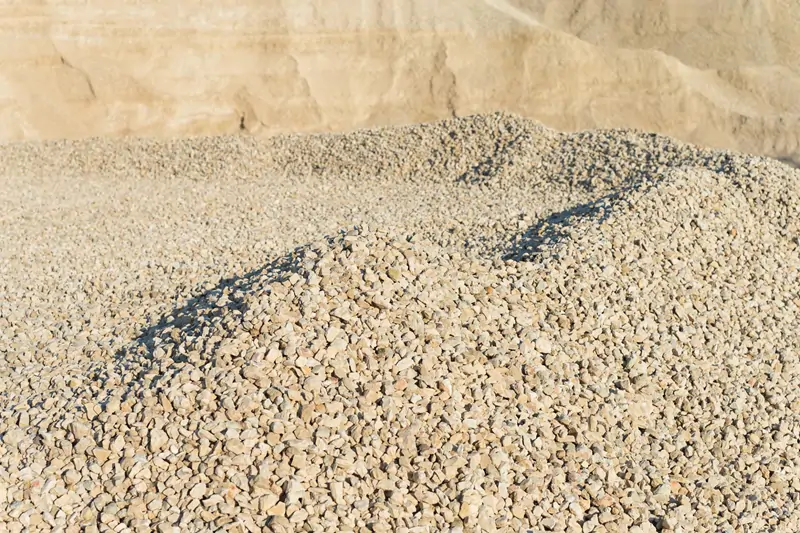
Quarrying
In quarrying plants, stone crushers process rocks such as granite, basalt, limestone, and sandstone into different aggregate sizes. The crushed material is used for concrete production, asphalt mixtures, and various construction projects.
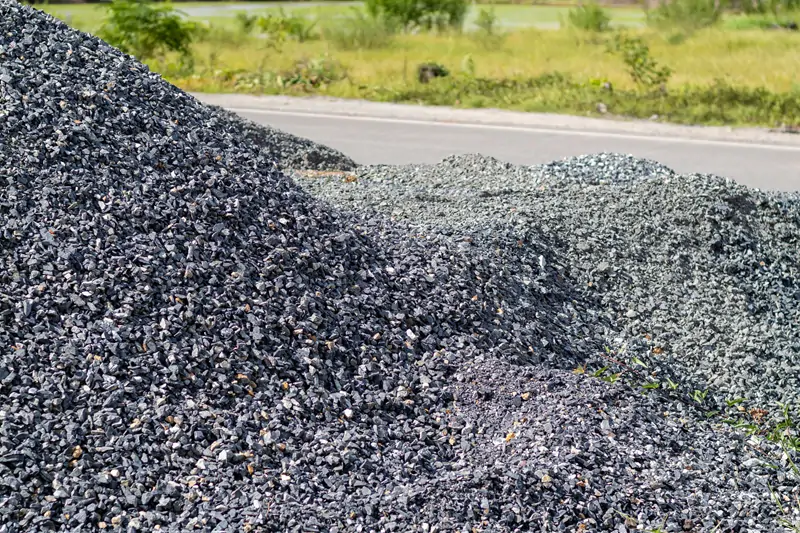
Infrastructure and Aggregate Production
Stone crushers play an important role in producing aggregates for roads, railways, bridges, airports, and other infrastructure projects. Different crushing stages are used to produce materials that meet specific size and quality requirements.
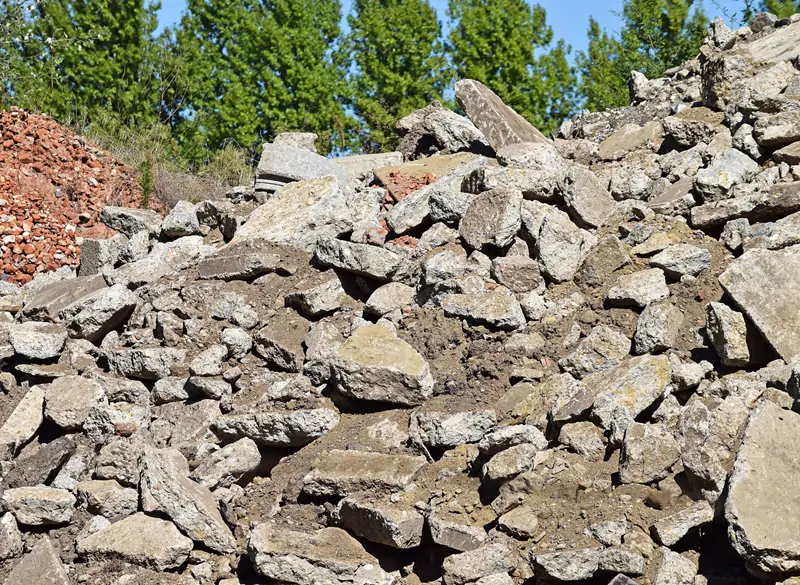
Construction Waste Recycling
Stone crushers can process concrete, bricks, asphalt, and other demolition waste into reusable aggregates. These recycled materials can be used in road base, backfilling, and other construction applications, helping reduce waste disposal costs and material consumption.
How to Choose the Right Stone Crusher Machine?
When selecting a stone crusher, ZhongYi recommends that you base your choice on factors such as material properties, feed size, production capacity requirements, and final product specifications.
Equipment is selected according to the crushing stage and overall plant configuration. A mismatch between these parameters often leads to unstable operation, higher wear rate, or inconsistent product grading.
- Material Properties (Hardness and Abrasiveness)
For hard rock such as granite, basalt, and iron ore, compressive crushing is required. Jaw crusher is typically used in the primary stage, followed by cone crusher for secondary reduction.
For softer materials such as limestone, coal, or gypsum, impact or hammer crushers can be considered, especially when shaping or single-stage reduction is acceptable.
We suggest evaluating abrasiveness at the beginning of selection, as it directly affects liner wear, maintenance interval, and operating cost.
- Feed Size
Large run-of-mine or blasted rock generally requires a jaw crusher as the first reduction stage.
If feed size is already controlled at quarry level, the process can be simplified or optimized by adjusting the primary stage configuration.
We suggest matching crusher inlet size with actual feed conditions rather than theoretical maximum size, to avoid overload or bridging.
- Capacity Requirement
Small systems are typically designed below 100 TPH.
Standard aggregate production lines are usually in the range of 100–300 TPH.
Large mining or quarry operations often exceed 300 TPH and require multi-stage continuous circuits.
We suggest leaving a reasonable margin for capacity fluctuation, but avoiding excessive oversizing that increases investment and energy consumption.
- Final Product Size
For coarse aggregates such as road base material, a jaw plus cone configuration is commonly used.
For concrete-grade aggregates, tighter grading control and screening systems are required.
Where cubic shape or manufactured sand is needed, impact crushing or shaping stages are generally introduced.
We suggest defining the final product specification first, as it often determines whether an additional shaping stage is necessary.
- Crushing Stage Configuration
Typical configurations include:
Single-stage: jaw crusher for soft or pre-crushed feed
Two-stage: jaw + cone or impact crusher for standard aggregate production
Three-stage: jaw + cone + shaping/sand making for high-spec aggregate requirements
We suggest treating the crushing circuit as a complete system rather than selecting equipment individually, as process matching has greater impact on performance than single-machine parameters.
- Operating Cost
Hard rock applications generally increase liner wear.
Impact systems may lead to higher wear in abrasive conditions.
Cone crushers are generally more stable in hard-rock production when feed is properly controlled.
We suggest evaluating lifecycle cost together with capacity and product requirements, rather than focusing only on initial equipment price.
Crusher Selection Support
Share your project details with our engineering team for a basic crushing solution and equipment recommendation.
Our Stone Crusher Case Videos
Conclusion
A stone crusher machine is a core piece of equipment used to reduce large rocks into smaller aggregates for construction, mining, and infrastructure applications. Different crusher types—such as jaw, cone, impact, and hammer crushers—are selected based on material properties, required capacity, and final product specifications.
Choosing the right equipment and crushing configuration is essential for stable production, controlled product quality, and optimized operating cost. An improper selection can lead to higher wear rates, lower efficiency, and inconsistent output.
For project-specific recommendations, equipment selection, or complete crushing plant design, please contact our technical team for a tailored solution and quotation.

Dr. Yu
Expert in Mineral Processing Solutions
With 15+ years of experience, Dr. Chen specializes in gravity, magnetic, flotation, and electrostatic separation. He focuses on ore processing and process optimization, sharing practical insights and equipment applications to help improve recovery rates and production efficiency.
FAQ
What materials can a stone crusher machine process?
Stone crusher machines can process a wide range of materials, including granite, basalt, limestone, sandstone, river stone, concrete waste, and various ores. The suitable crusher type depends on material hardness, moisture content, and the required final product size.
What is the typical output size of a stone crusher?
The output size can range from less than 5 mm to over 100 mm depending on the crusher type and plant configuration. Multiple crushing and screening stages are often used when projects require precise aggregate specifications.
Can one stone crusher handle all crushing stages?
Not always. While some applications use a single crusher, most medium and large crushing plants combine primary, secondary, and screening equipment. Multi-stage crushing generally provides better capacity, product quality, and production efficiency.
What factors affect stone crusher performance?
Several factors influence crusher performance, including material hardness, feed size, moisture content, crusher settings, and feeding consistency. Proper equipment selection and plant design can significantly improve throughput and reduce unnecessary wear.
What is the difference between fixed and mobile stone crushers?
Fixed stone crushers are commonly used in long-term mining and aggregate production projects, while mobile crushers offer greater flexibility and can be relocated between job sites. The best option depends on project duration, material source, and production requirements.
How can stone crusher operating costs be reduced?
Operating costs can be reduced through proper equipment selection, regular maintenance, stable feeding, and timely replacement of wear parts. An efficient plant layout can also help reduce energy consumption and minimize unnecessary downtime.
How long does a stone crusher machine typically last?
The service life of a stone crusher depends on equipment quality, operating conditions, maintenance practices, and material characteristics. With proper maintenance, the main structure of a crusher can often remain in service for many years.
Can Zhongyi design a complete crushing plant based on project requirements?
Yes. Zhongyi can design complete crushing solutions based on material type, feed size, capacity requirements, final product specifications, and site conditions. Equipment configuration, plant layout, and supporting systems can all be customized for different projects.
Technical References & Industry Standards
The following sources provide additional technical background on crushing equipment design, mining machinery standards, and comminution theory: