Introduction
Heavy Hammer Crushers and Jaw Crushers are both widely used for primary crushing, but they serve different production needs. Heavy hammer crushers offer one-stage crushing with high reduction ratios and lower investment costs, while jaw crushers are better suited for processing high-hardness materials and oversized feed.
In this article, we compare the two machines in terms of working principle, applicable materials, feed size, output size, production capacity, operating costs, wear parts, and typical applications. This guide will help you determine which crusher is the better choice for your crushing plant.
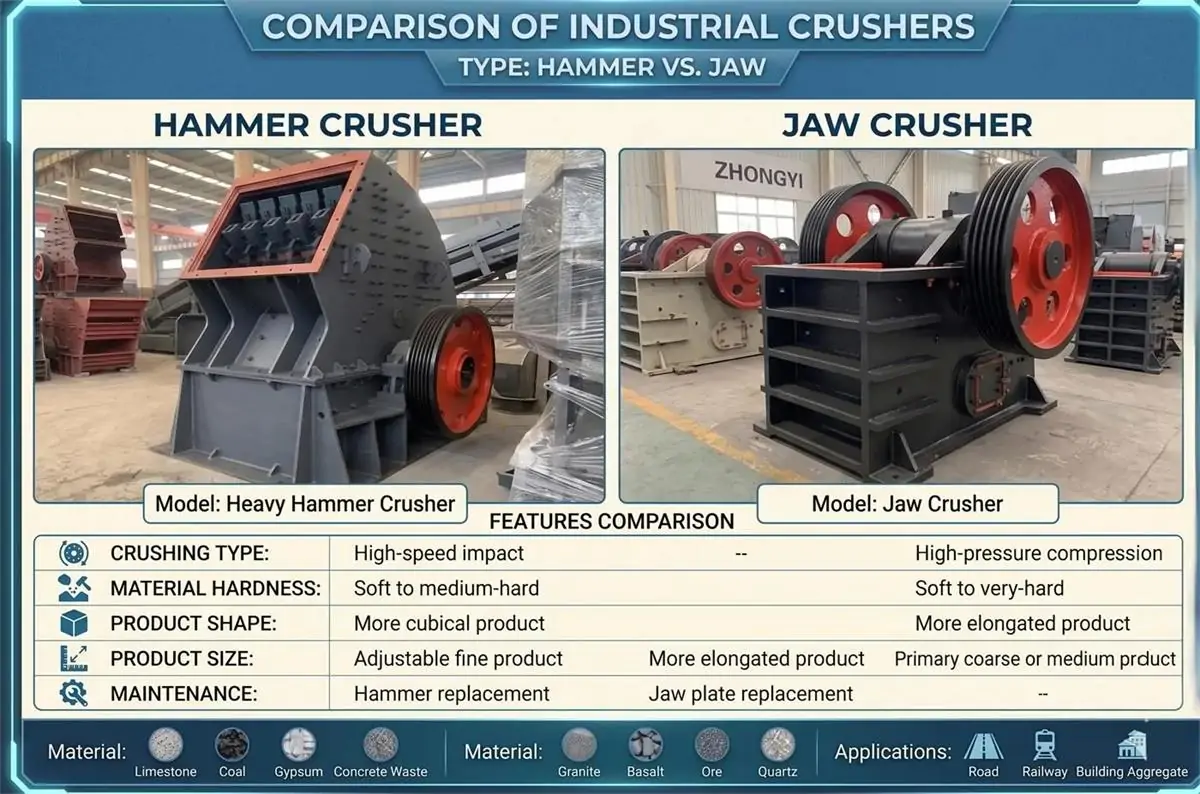
What Is a Heavy Hammer Crusher?
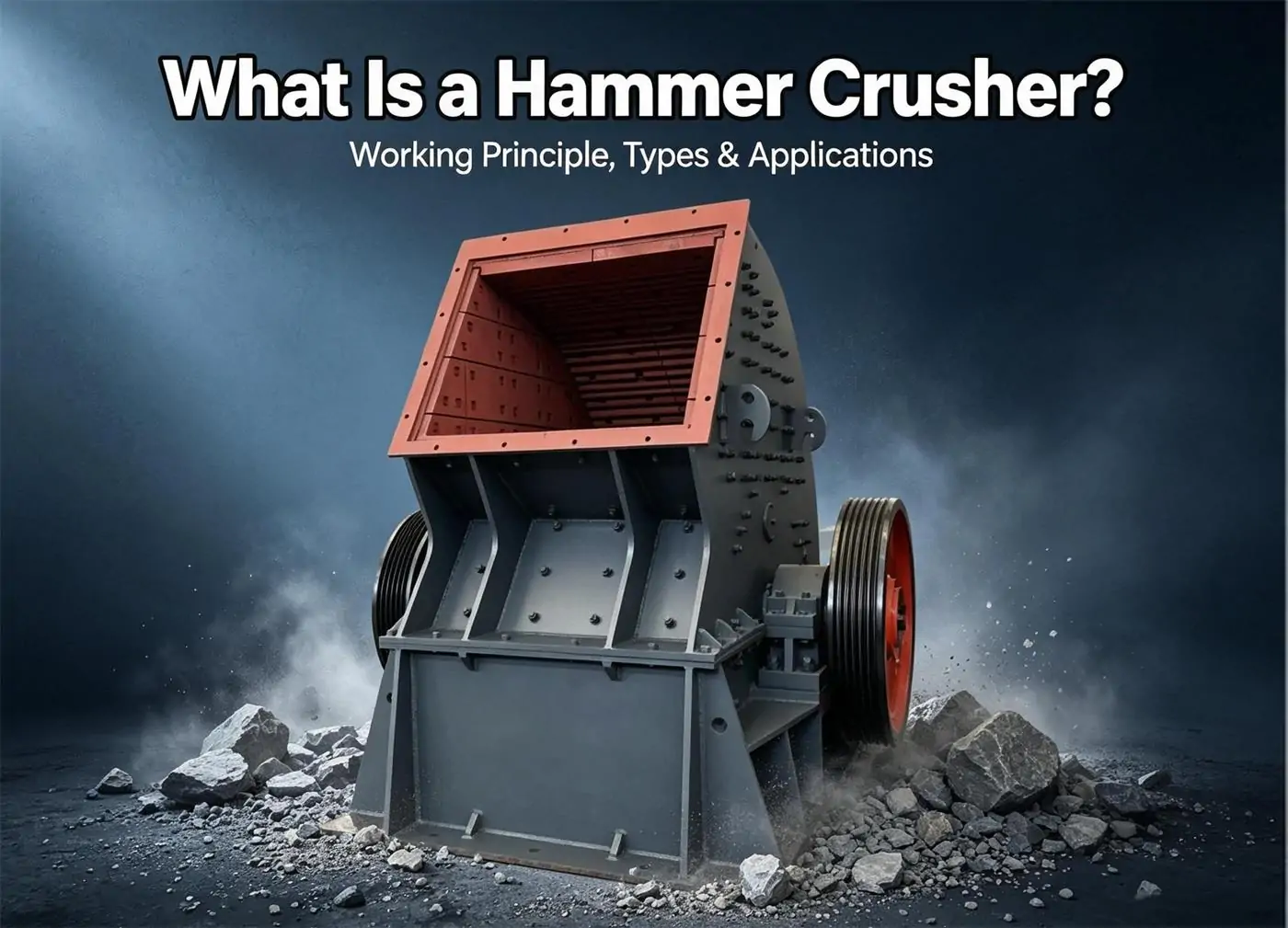
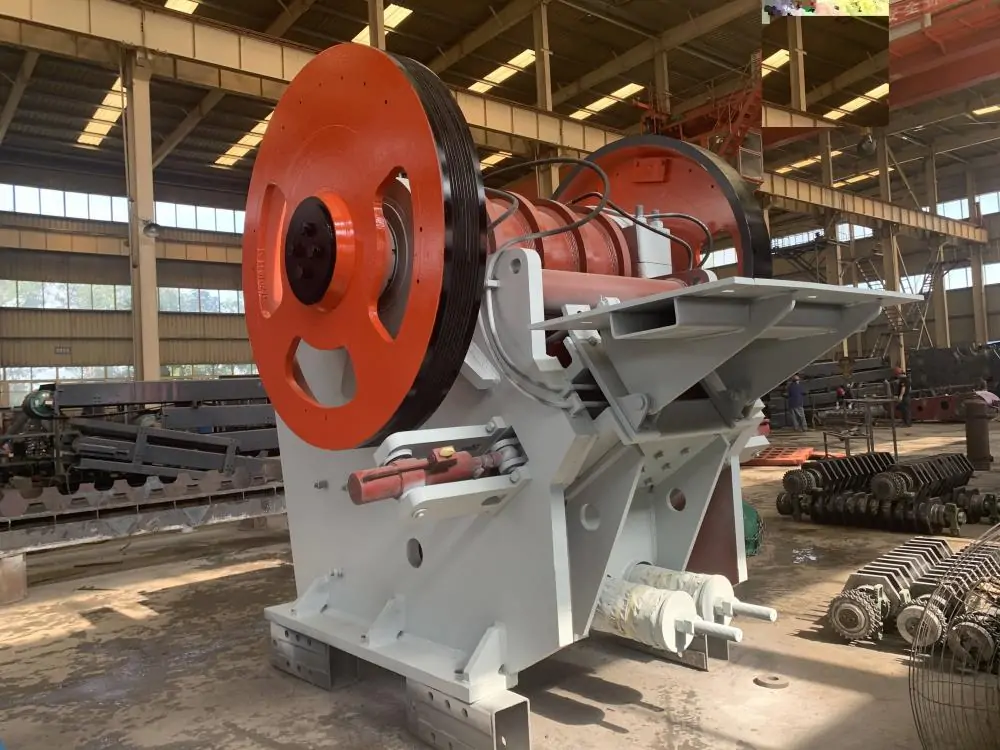
A Heavy Hammer Crusher is a high-capacity impact crusher designed for crushing limestone, coal, gypsum, and other low-to-medium hardness materials. It combines coarse and medium crushing into a single stage, reducing equipment investment and simplifying the process flow. Depending on the model, feed sizes can reach 1,200 mm, with production capacities ranging from 100 to 3,000 t/h.
- One-stage crushing with a reduction ratio of up to 25:1
- Feed size up to 1,200 mm
- Capacity range from 100–3,000 t/h
- Lower plant investment and reduced equipment footprint
- Cubical product shape suitable for aggregate production
Working Principle
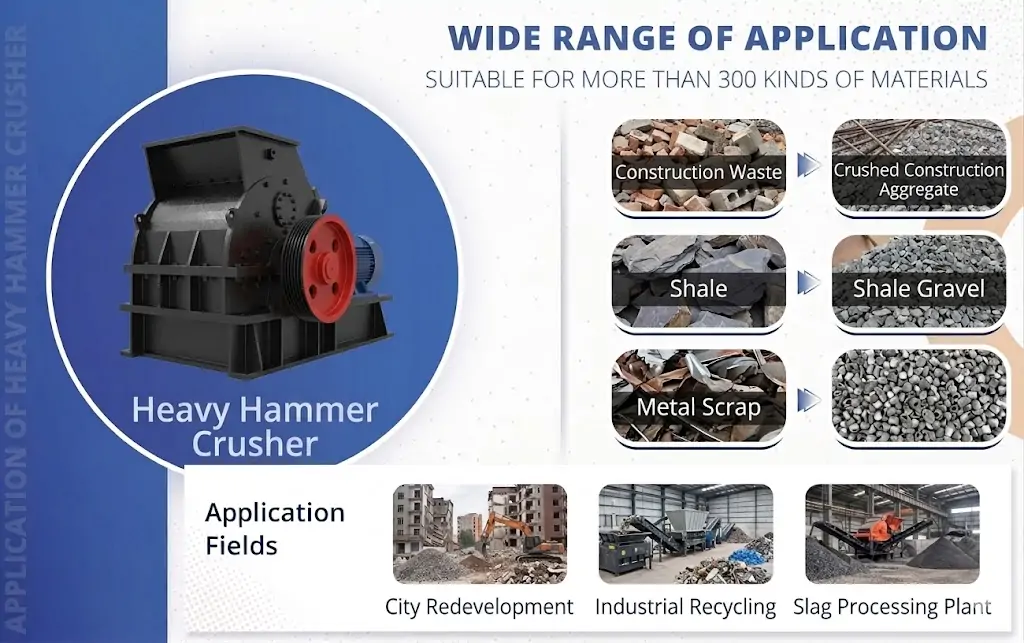
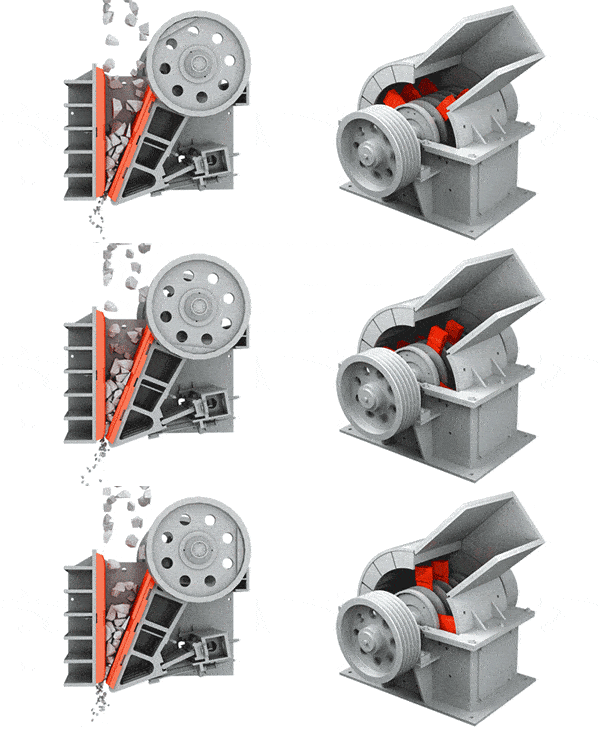
Material enters the crushing chamber and is struck by high-speed rotating hammers. The material is repeatedly impacted against breaker plates and crushing liners until it reaches the required size and is discharged through the grate openings.
Applications
Limestone – Aggregate production lines, cement plants, and lime processing facilities.
Coal – Coal preparation plants, thermal power stations, and industrial fuel processing.
Gypsum – Gypsum board production and cement additive processing.
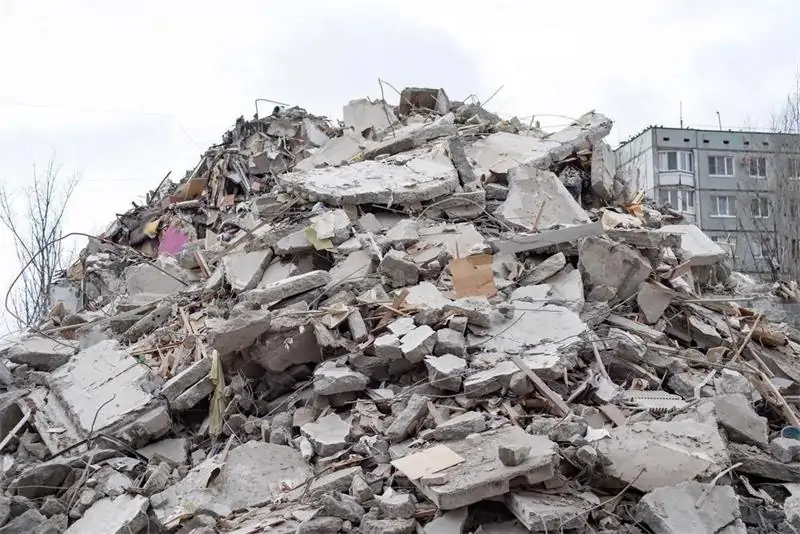
Construction Waste Recycling – Crushing concrete, bricks, and mixed demolition debris into recycled aggregates.
What Is a Jaw Crusher?
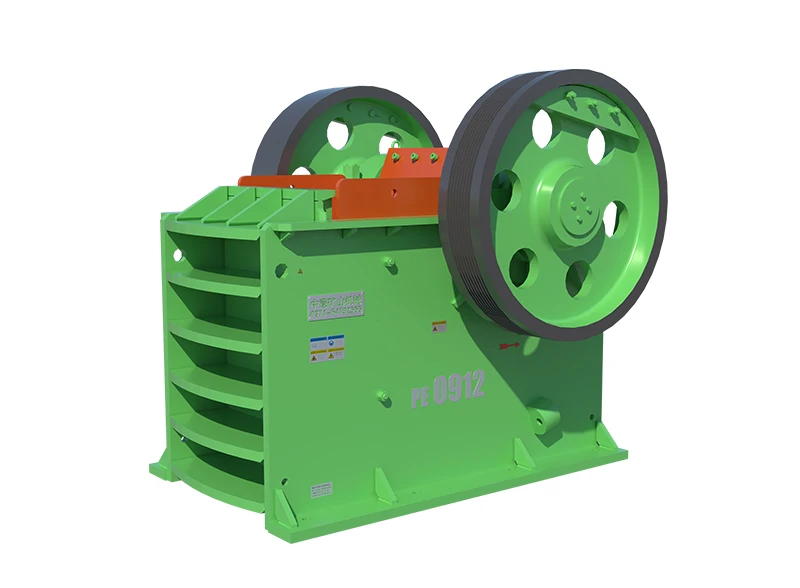
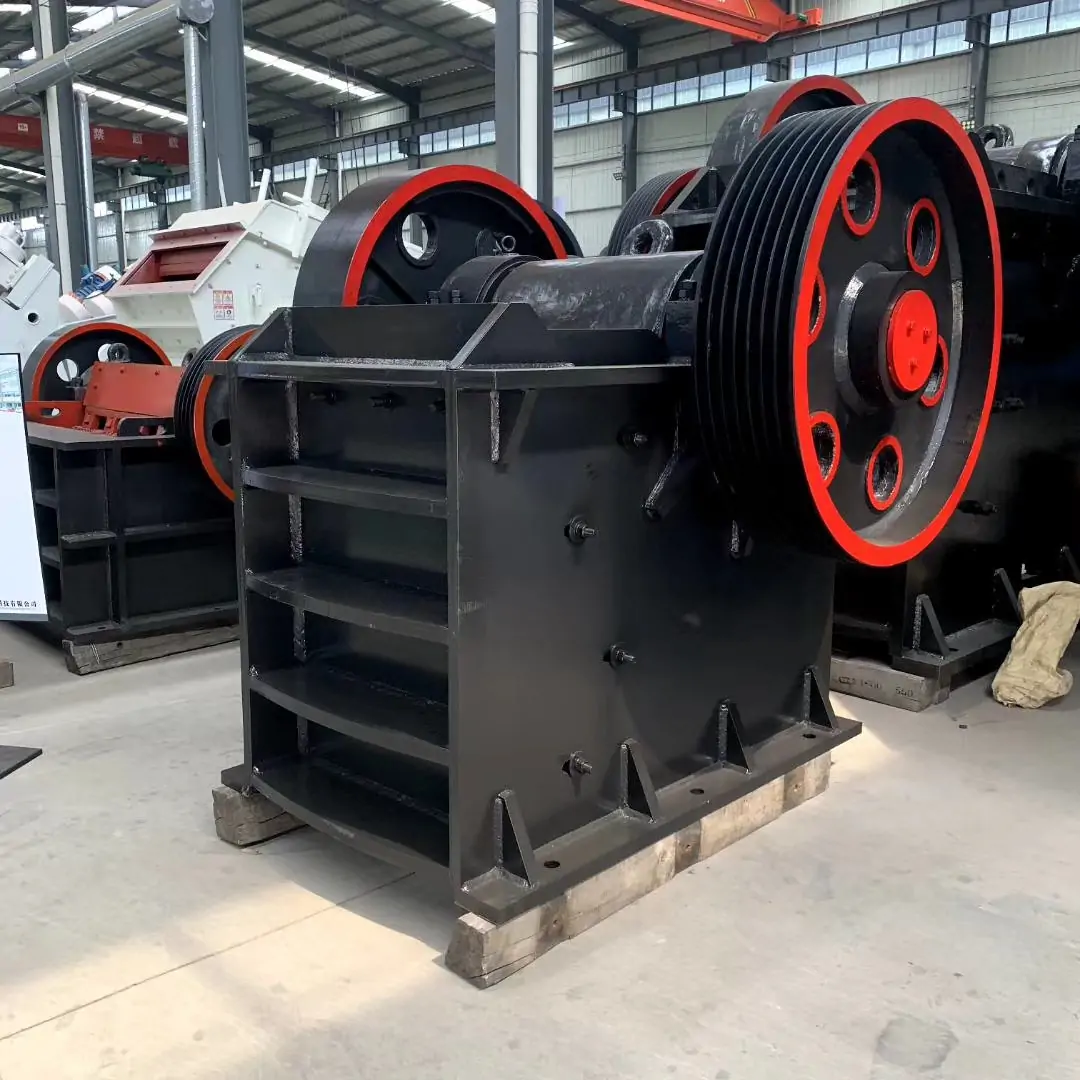
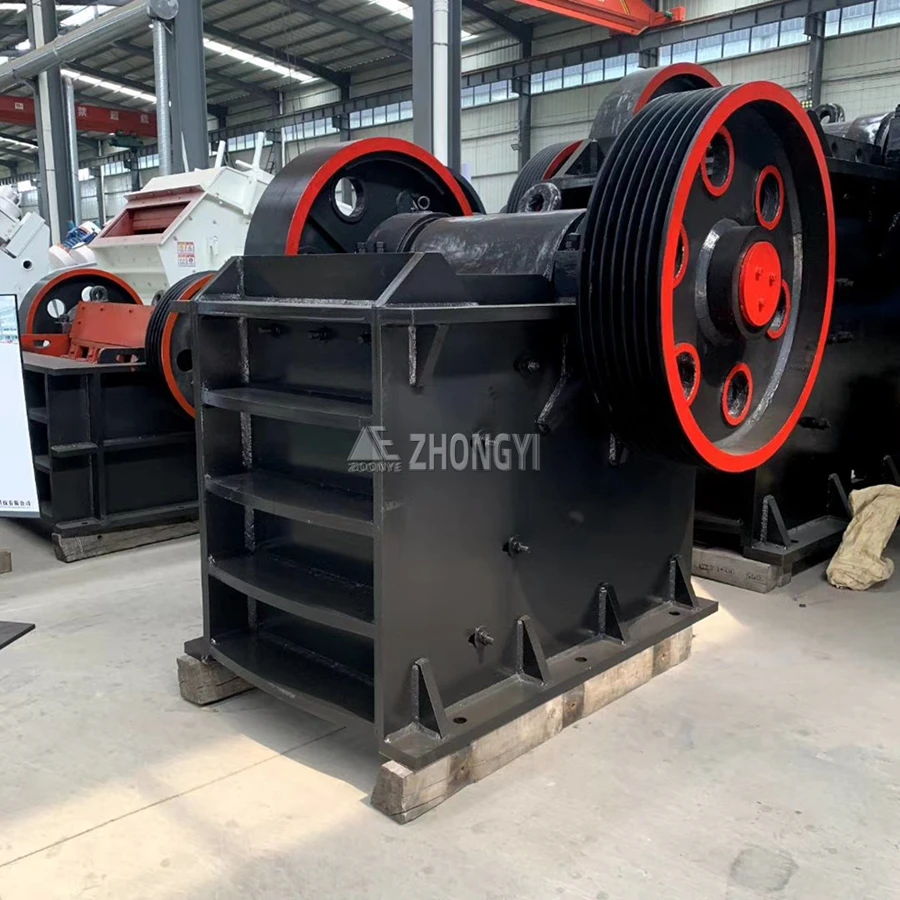
A Jaw Crusher is a primary compression crusher widely used in mining, quarrying, and aggregate production. It is designed to handle hard and abrasive materials while providing reliable operation under heavy-duty conditions. Depending on the model, jaw crushers can process feed sizes up to 1,500 mm and capacities exceeding 2,000 t/h.
- Suitable for materials with compressive strength up to 320 MPa
- Feed size up to 1,500 mm
- Capacity range from 50–2,200 t/h
- Low wear-part consumption on hard rock applications
- Stable performance in continuous heavy-duty operation
Working Principle
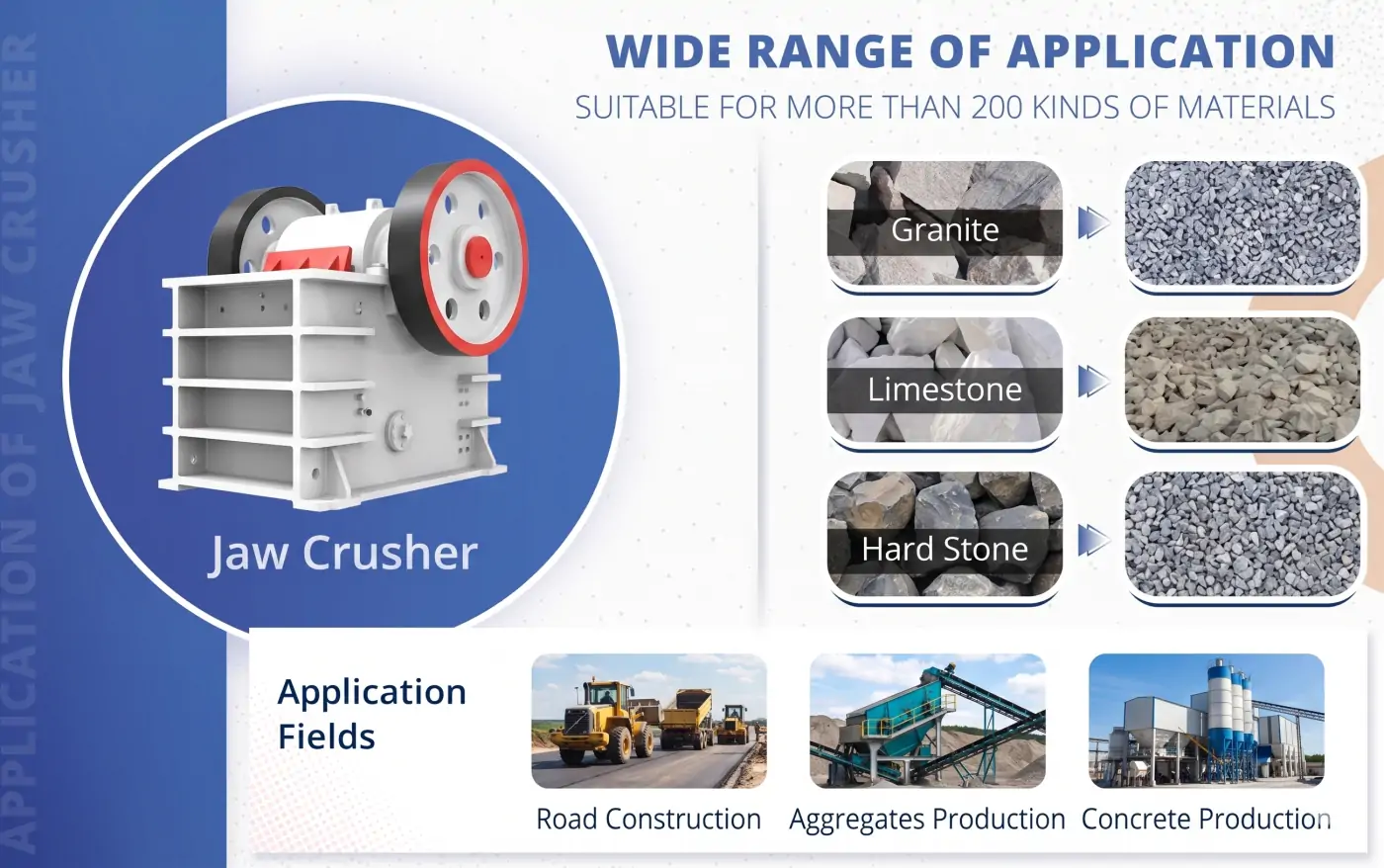
Material is fed into the V-shaped crushing chamber formed by a fixed jaw and a moving jaw. The moving jaw applies compressive force to break the material into smaller sizes, which are discharged from the bottom of the crusher.
Applications
- Granite – Primary crushing for aggregate and stone production plants.
- Basalt – Road construction aggregates and railway ballast processing.
- River Stone – Crushing natural gravel for concrete and infrastructure projects.
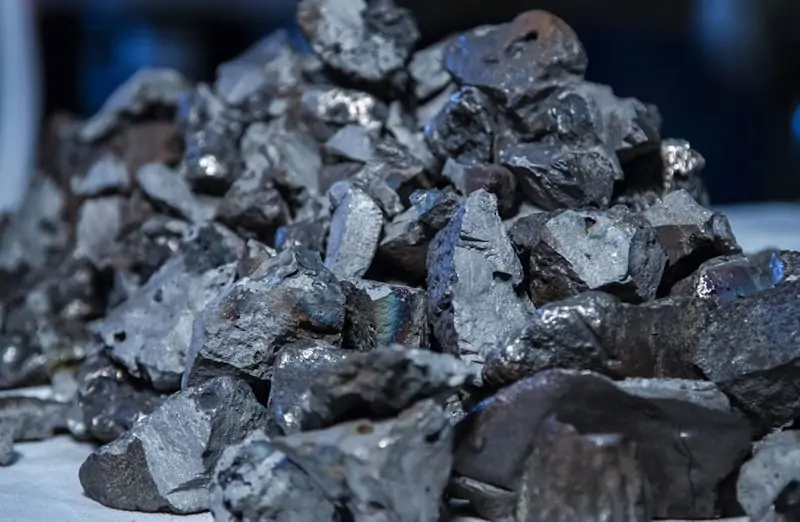
- Metal Ore Crushing – Primary size reduction of iron ore, copper ore, gold ore, manganese ore, and other metallic minerals.
Heavy Hammer Crusher vs Jaw Crusher: Key Differences
1. Working Principle & Crushing Ratio
The jaw crusher uses compression, squeezing rocks until they fracture. This method yields a lower crushing ratio of about 4:1 to 6:1, requiring a secondary crusher later in the line.
The heavy hammer crusher relies on high-speed impact. It smashes rocks instantly with a massive crushing ratio often exceeding 20:1, completing the job in a single pass.
2. Input Size vs. Output Granularity
| Specification | Jaw Crusher | Heavy Hammer Crusher |
| Max Feed Size | Up to 1,200 mm | Up to 1,000 mm |
| Output Size | 10–350 mm (Coarse) | Below 25 mm (Fine aggregate) |
| Flaky Particle Rate | Higher (Needs reshaping) | Very low (Excellent cubical shape) |
3. Material Hardness Adaptability
Jaw crushers handle hard, abrasive rocks like granite, basalt, and river pebbles up to 320 MPa without breaking a sweat.
Heavy hammer crushers struggle with high hardness. They are built for medium-hard, low-abrasion materials under 150 MPa, such as limestone, coal, or shale.
4. Wear Cost & Maintenance
If you feed hard rock into a hammer crusher, you will ruin the hammers fast. Here is a real-world case from a limestone plant processing 200 tons per hour.
Real Case Data: A client used a hammer crusher on limestone with 2% silica content. Hammers lasted 30 days. When they switched to a harder rock with 8% silica, the hammers wore out in just 4 days, skyrocketing their industrial mining crusher price for parts.
For silica-heavy or hard rock, always use a jaw crusher as the primary line to keep your wear costs manageable.
5. Initial Investment vs. Long-term ROI
A heavy hammer crusher setup requires less stone crushing equipment guide spending upfront because you buy fewer machines, conveyor belts, and screens for the line.
However, the jaw crusher line offers better long-term ROI for hard materials. It saves you thousands of dollars in monthly maintenance and unexpected downtime.
Heavy Hammer Crusher vs Jaw Crusher Comparison Table
| Comparison Item | Heavy Hammer Crusher | Jaw Crusher | Recommended Choice |
|---|---|---|---|
| Crushing Principle | High-speed hammer impact crushing | Compression crushing between jaw plates | Depends on material hardness |
| Suitable Material Hardness | Soft to medium-hard materials (≤150 MPa) | Medium-hard to hard materials (≤320 MPa) | Hard rock → Jaw Crusher |
| Typical Materials | Limestone, coal, gypsum, marl, shale, construction waste | Granite, basalt, river stone, quartz, iron ore | Based on raw material type |
| Maximum Feed Size | Up to 1,200 mm | Up to 1,500 mm | Large feed → Jaw Crusher |
| Discharge Size | 0–50 mm (adjustable) | 50–300 mm (primary crushing) | Fine output → Heavy Hammer Crusher |
| Reduction Ratio | 10:1–25:1 | 3:1–8:1 | High reduction → Heavy Hammer Crusher |
| Production Capacity | 100–3,000 t/h | 50–2,200 t/h | Large limestone plants → Heavy Hammer Crusher |
| Finished Product Shape | Cubical, low flakiness content | Requires secondary crushing for better shape | Better aggregate shape → Heavy Hammer Crusher |
| Number of Crushing Stages | One-stage crushing possible | Usually requires secondary crusher | Simplified process → Heavy Hammer Crusher |
| Plant Layout | Compact, fewer machines | More equipment required | Limited space → Heavy Hammer Crusher |
| Initial Investment | Lower total project investment | Higher due to additional equipment | Budget-sensitive projects → Heavy Hammer Crusher |
| Power Consumption per Ton | Lower in one-stage limestone crushing | Competitive in hard rock applications | Depends on material |
| Wear Parts | Hammers and liners wear faster | Jaw plates have longer service life | Lower wear cost → Jaw Crusher |
| Maintenance Frequency | More frequent hammer replacement | Less frequent maintenance | Lower maintenance → Jaw Crusher |
| Operating Cost | Lower for soft rock projects | Lower for hard rock projects | Depends on material hardness |
| Moisture Tolerance | Moderate | Better for wet and sticky feed | Wet materials → Jaw Crusher |
| Best Application | Limestone aggregate plants, cement plants, construction waste recycling | Hard rock quarries, mining, metal ore processing | Based on project requirements |
Final Recommendation
Choose a Heavy Hammer Crusher if you are processing limestone, coal, gypsum, or construction waste and want a simplified one-stage crushing process with lower investment and higher production efficiency.
Choose a Jaw Crusher if you are processing hard and abrasive materials such as granite, basalt, quartz, or metal ores, where durability, lower wear-part costs, and stable long-term operation are critical.
Advantages of Heavy Hammer Crushers
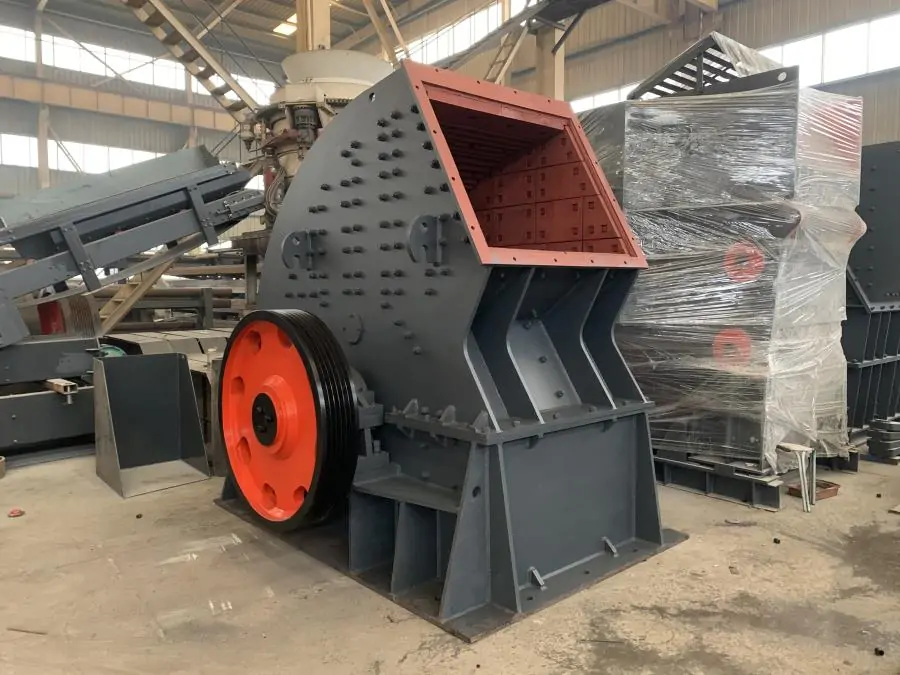
Heavy hammer crushers are commonly used in limestone and soft rock crushing lines. They are designed for one-stage crushing, reducing process complexity and equipment cost.
One-Stage Crushing Process
Feed size up to 1,200 mm can be reduced directly to below 50 mm. Jaw crusher + secondary crusher is not required in most limestone applications.
Lower Equipment Investment
One unit replaces jaw crusher + impact crusher/hammer secondary crusher system. Total investment reduced by about 20–40% depending on plant scale.
Reduced Plant Footprint
Compact layout, shorter conveyor distance, fewer transfer points. Plant area can be reduced by 20–30% compared with multi-stage crushing lines.
Higher Throughput for Limestone Production
Capacity ranges from 100–3,000 t/h. Suitable for large-scale limestone aggregate and cement raw material crushing lines.
Better Aggregate Shape
Impact crushing produces more cubical particles, lower flake content, better grading for concrete and road base materials.
Advantages of Jaw Crushers
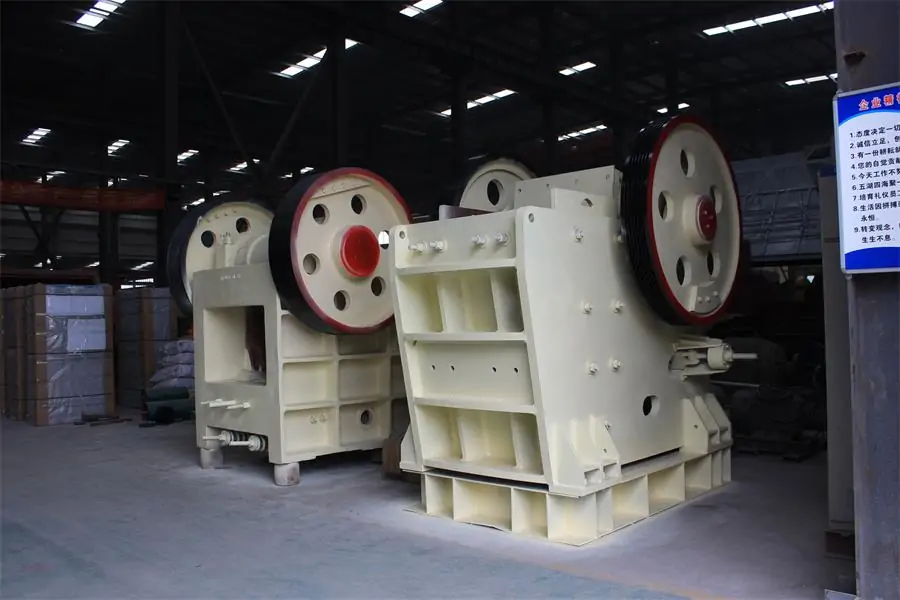
Jaw crushers are standard primary crushers for hard and abrasive rock. They are built for high compressive strength materials and continuous heavy-duty operation.
Excellent Performance on Hard Rock
Suitable for granite, basalt, quartz, and ore with compressive strength up to 320 MPa. Stable performance under high load.
Lower Wear Consumption
Compression crushing structure. Main wear parts are jaw plates, with lower consumption when processing hard rock compared with impact crushers.
Stable Operation Under High Load
Feed size up to 1,500 mm. Capacity up to 2,200 t/h depending on model. Designed for continuous operation in mining and quarrying.
Suitable for Multiple Crushing Circuits
Can be used in single-stage or multi-stage crushing systems. Commonly paired with cone crusher or impact crusher for secondary and fine crushing.
Long Service Life
Heavy-duty frame and bearing design. Low failure rate, suitable for long-term mining operation with stable maintenance cycle.
Which Crusher Is Better for Different Materials?
Limestone Crushing
Recommendation: Heavy Hammer Crusher
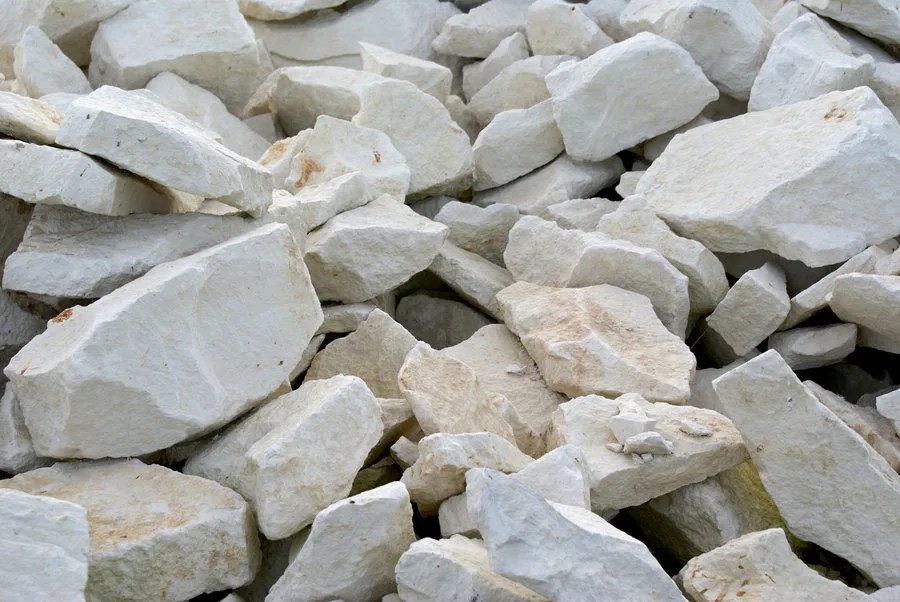
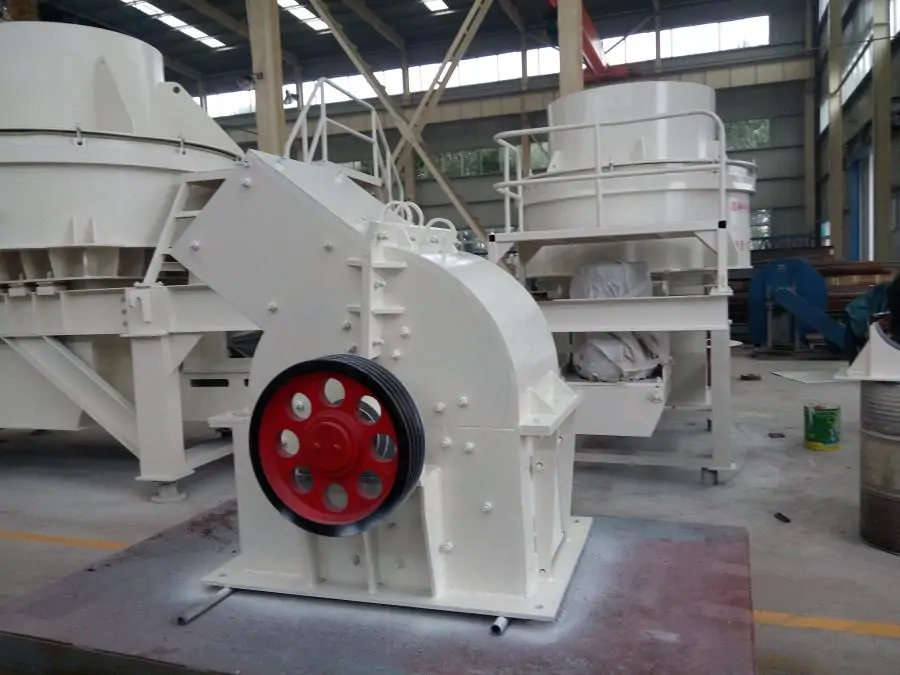
Limestone is a low-abrasion material with moderate compressive strength. A heavy hammer crusher can complete coarse and medium crushing in a single stage, reducing the number of machines required in the production line. It is widely used in aggregate plants and cement raw material crushing systems.
Granite Crushing
Recommendation: Jaw Crusher
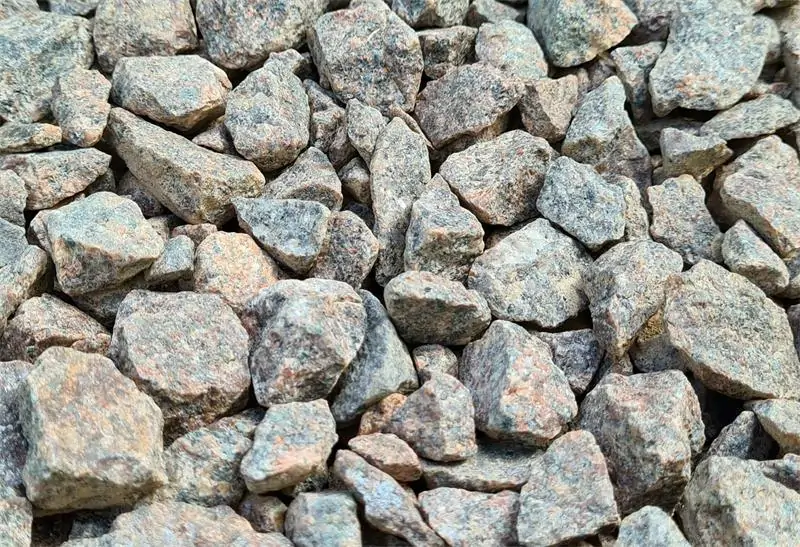
Granite features high hardness and strong abrasiveness, placing greater demands on wear parts. Jaw crushers provide high crushing force and stable operation under heavy loads, making them the standard primary crushing equipment for granite quarries and aggregate production lines.
Basalt Crushing
Recommendation: Jaw Crusher
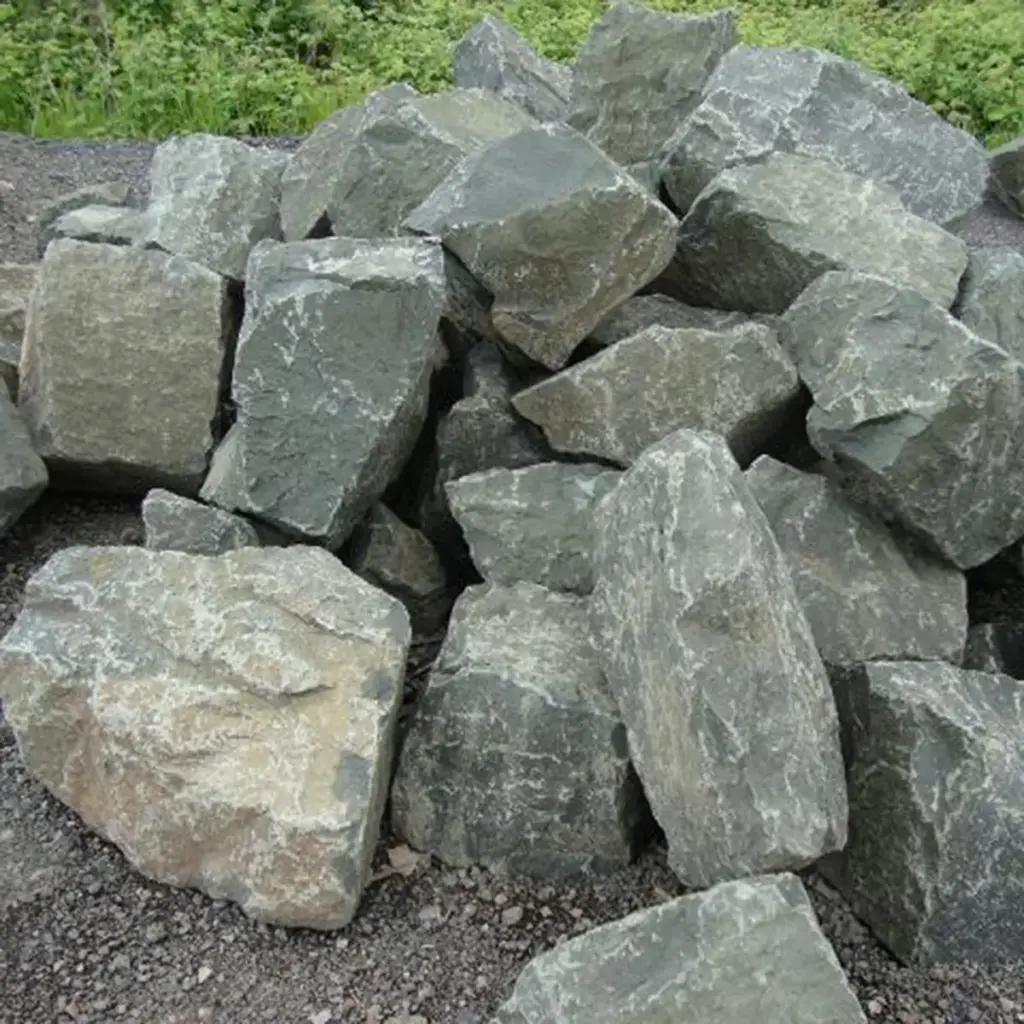
Basalt has high compressive strength and severe wear characteristics. Jaw crushers offer longer wear-part life and lower maintenance frequency when processing basalt. They are commonly installed as the primary crusher in road aggregate and railway ballast production plants.
Coal Crushing
Recommendation: Heavy Hammer Crusher
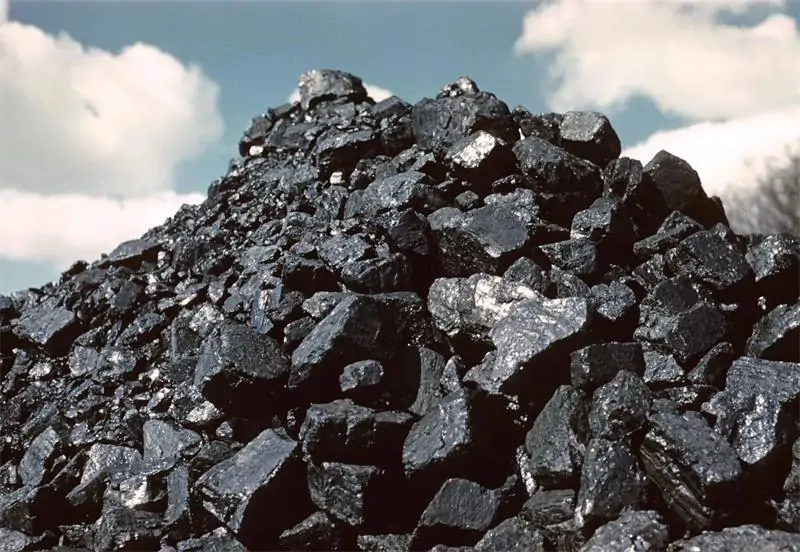
Coal fractures easily under impact force and does not require high compression crushing force. Heavy hammer crushers deliver high throughput, uniform discharge, and simplified process flow, making them a common choice for coal preparation plants and thermal power projects.
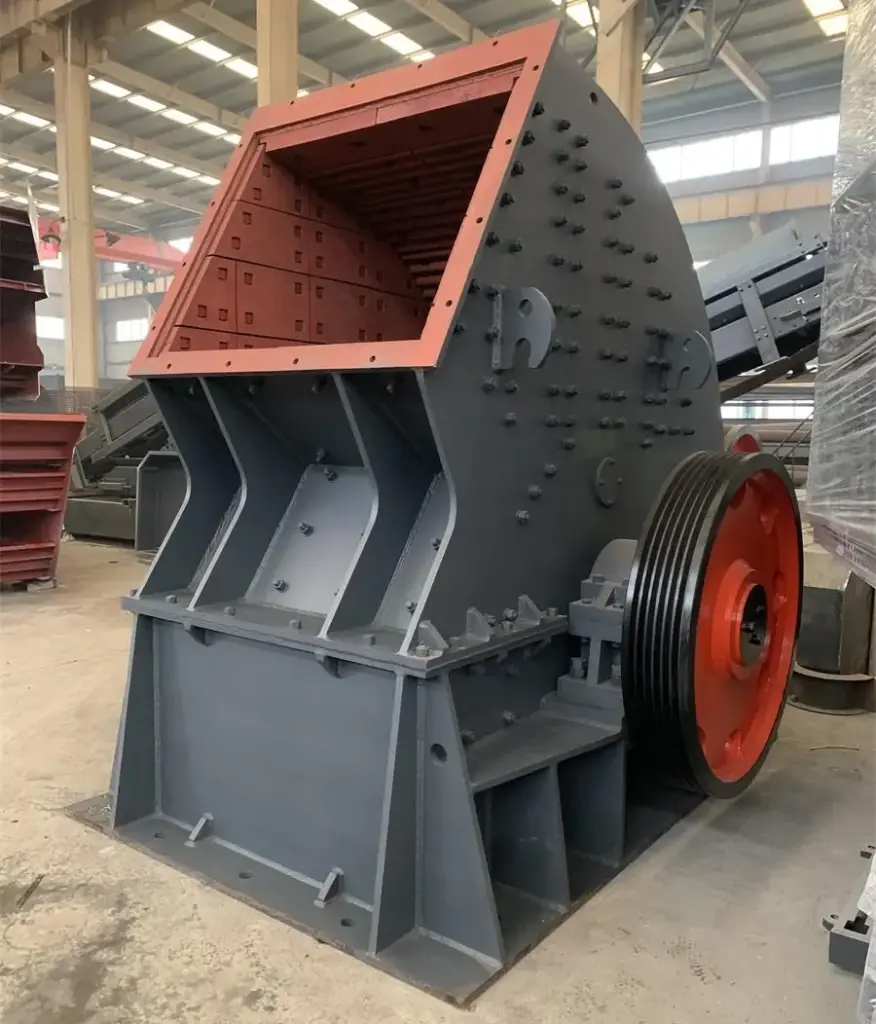
Construction Waste Recycling
Recommendation: Heavy Hammer Crusher
Construction waste typically contains concrete blocks, bricks, mortar, and asphalt fragments. Heavy hammer crushers can efficiently break mixed materials while producing recycled aggregates suitable for backfilling, road base, and recycled building materials.
Metal Ore Crushing
Recommendation: Jaw Crusher
Metal ores such as iron ore, copper ore, gold ore, and manganese ore generally require high crushing pressure during primary size reduction. Jaw crushers provide reliable performance, strong crushing capacity, and low operating risk, making them the preferred choice for mining and mineral processing plants.
How to Choose Between a Heavy Hammer Crusher and a Jaw Crusher?
Use these three engineered benchmarks to guide your rock crusher selection process:
- Check your rock hardness first: Test your raw material. If it is granite, river pebble, or basalt (above 150 MPa), buy a jaw crusher. If it is limestone, shale, or gypsum (below 150 MPa), go with a heavy hammer crusher.
- Look at your final product requirements: If your buyers demand high-grade cubical aggregates for high-speed railways or concrete plants, choose the heavy hammer crusher. It delivers better shape without needing an extra reshaping machine.
- Calculate your daily operation budget: If you want a lower initial investment and your material allows it, the hammer crusher saves you from buying secondary machines. If you want stable, long-term low maintenance costs on tough rock, stick to a jaw crusher.
Conclusion
Choosing between a Heavy Hammer Crusher vs Jaw Crusher comes down to your material hardness and your operational budget. For hard, high-silica rocks, a jaw crusher protects your bottom line from extreme wear costs. For soft to medium limestone, a heavy hammer crusher simplifies your production line in a single pass.
Ready to optimize your plant configuration? At Zhongyi, we bring over 16 years of manufacturing experience to your quarry site. All our stone crushing equipment guide setups match strict international standards, ensuring high durability and low cost-per-ton.
Contact us today for a custom production line layout and an accurate quote based on your specific rock type.

Dr. Yu
Expert in Mineral Processing Solutions
With 15+ years of experience, Dr. Chen specializes in gravity, magnetic, flotation, and electrostatic separation. He focuses on ore processing and process optimization, sharing practical insights and equipment applications to help improve recovery rates and production efficiency.
FAQs
Is a heavy hammer crusher better than a jaw crusher?
Neither crusher is universally better. A heavy hammer crusher is ideal for limestone, coal, gypsum, and other low-to-medium hardness materials, offering high reduction ratios and one-stage crushing. A jaw crusher performs better on hard, abrasive materials such as granite, basalt, and metal ores where durability and wear resistance are critical.
Can a heavy hammer crusher replace a jaw crusher?
In limestone quarries, cement plants, and construction waste recycling projects, a heavy hammer crusher can often replace a jaw crusher and secondary crusher by completing primary and secondary crushing in a single stage. However, for high-hardness rocks, a jaw crusher remains the preferred primary crushing solution.
Which crusher has lower operating costs?
Operating costs depend largely on material hardness. For limestone and other soft rocks, heavy hammer crushers typically reduce overall costs by simplifying the process flow and lowering equipment investment. For granite, basalt, and quartz, jaw crushers generally achieve lower wear-part consumption and lower long-term operating costs.
Which crusher produces better aggregate shape?
Heavy hammer crushers typically produce more cubical aggregates with fewer elongated and flaky particles due to their impact-crushing mechanism. Jaw crushers mainly perform coarse crushing and often require secondary impact or cone crushers to achieve the aggregate shape required for concrete and asphalt production.
Is a jaw crusher suitable for limestone?
Yes. Jaw crushers are widely used for primary limestone crushing, especially when feed sizes exceed 800 mm or when production lines require multiple crushing stages. However, in many limestone plants, heavy hammer crushers are selected because they can reduce process complexity and improve overall production efficiency.
What is the maximum feed size for a heavy hammer crusher?
The maximum feed size varies by model, but large heavy hammer crushers can typically accept materials ranging from 800 mm to 1,200 mm. Some customized units designed for quarry applications can handle feed sizes exceeding 1,500 mm, depending on material characteristics and moisture content.
Which crusher is best for granite and basalt?
Jaw crushers are generally the preferred choice for granite and basalt because these materials have high compressive strength and strong abrasiveness. The compression-crushing principle provides better wear resistance, longer service life, and more stable performance under demanding hard-rock crushing conditions.
How do I select the right crusher for my plant?
Crusher selection should be based on material hardness, feed size, required capacity, discharge size, product quality requirements, and budget. For soft rock and one-stage crushing applications, a heavy hammer cru