Introduction
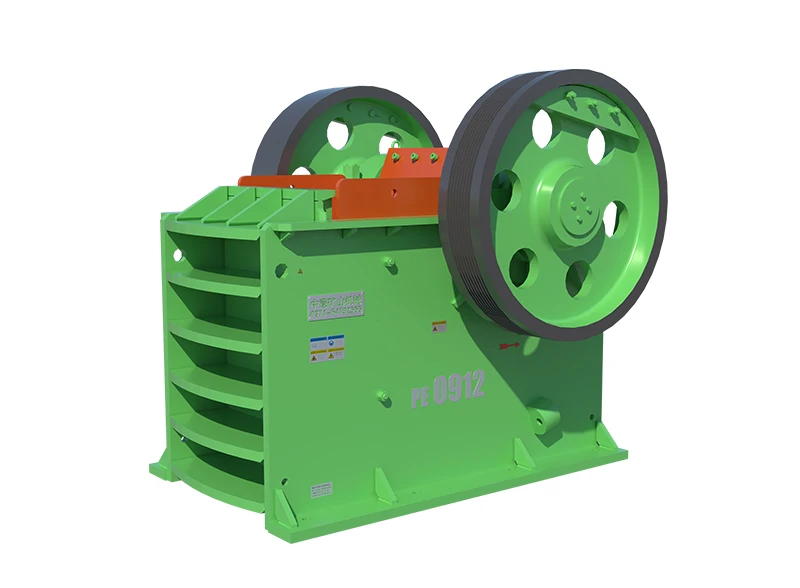
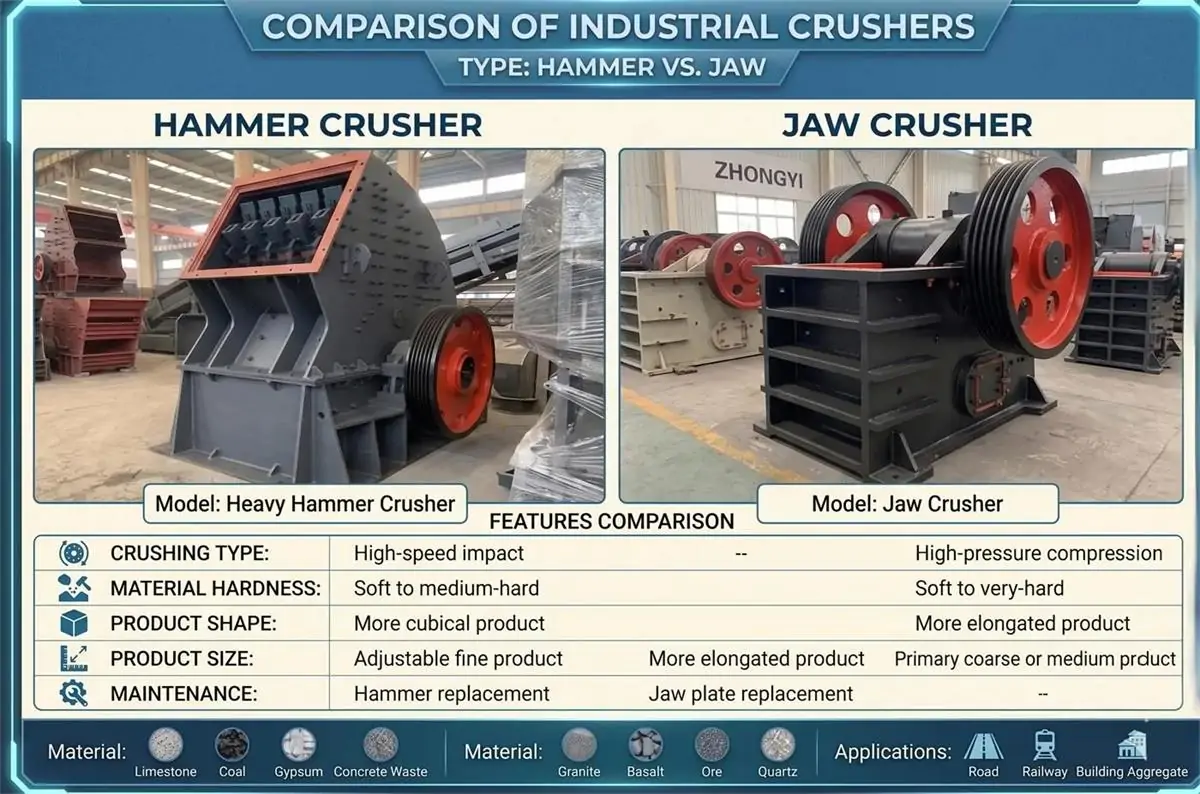
European Jaw Crusher for Hard Rock is widely used in mining, quarrying, and aggregate production for processing materials such as granite, basalt, quartz, and iron ore. These hard and abrasive rocks place higher demands on crushing equipment and can increase wear, reduce efficiency, and raise maintenance costs if the crusher is not properly selected.
For this reason, many mining and aggregate producers rely on European jaw crushers for hard rock applications. This article explains the key features, applications, performance advantages, and selection factors to help you choose the right equipment for your project. If you are planning a hard rock crushing project or evaluating jaw crusher options, continue reading to learn more.
What Is a European Jaw Crusher for Hard Rock?
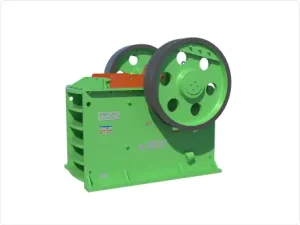
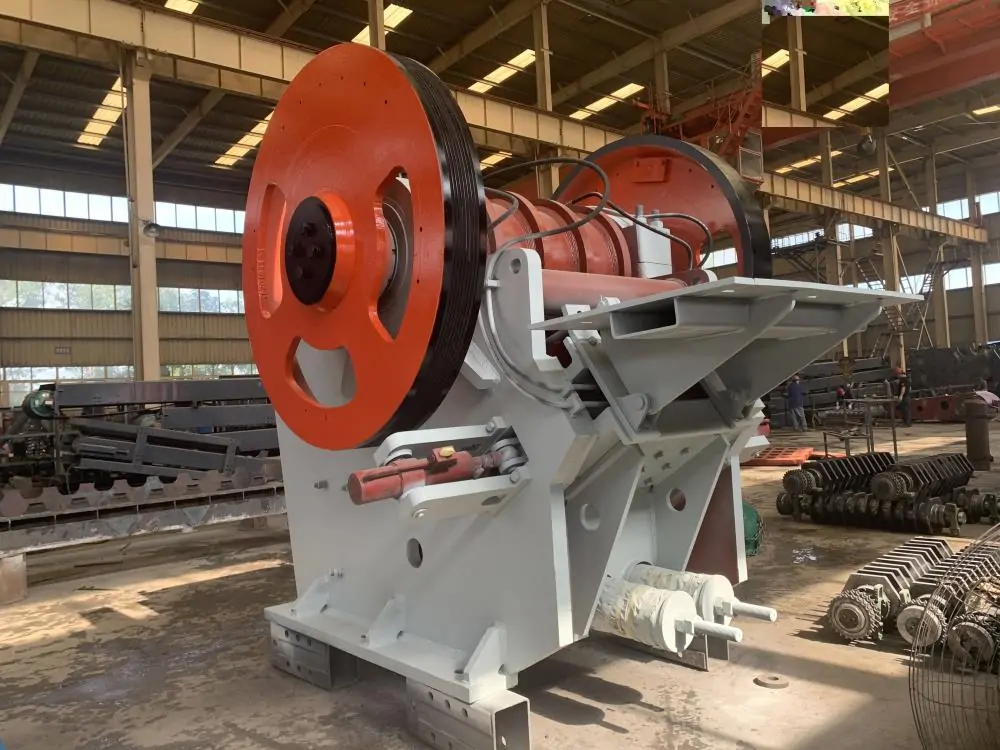
A European jaw crusher is a heavy-duty primary crushing machine designed for hard and abrasive rocks such as granite, basalt, and iron ore. It uses a deep crushing chamber and optimized toggle geometry to achieve high crushing force, stable output, and reduced wear in mining and quarry applications.
Why European Jaw Crushers Are Preferred for Hard Rock?
European jaw crushers are widely used in hard rock crushing because they are designed for heavy-duty working conditions. Compared with standard jaw crushers, they focus more on structural strength, stability, and long-term operation under high load. This makes them suitable for processing granite, basalt, quartz, and iron ore in mining and aggregate production.
Reinforced Structure and Heavy-Duty Bearings
The frame is reinforced with a rigid structure and paired with heavy-duty bearings to handle continuous impact from hard rock. This improves stability, reduces deformation, and ensures reliable operation under long-term high-load conditions.
Deep Crushing Chamber
A deeper crushing chamber improves material compression and reduces blockage risk. It also helps handle larger feed sizes and improves throughput in primary crushing applications.
Larger Feed Opening
A larger feed opening allows bigger raw materials to enter directly without excessive pre-crushing. This improves feeding efficiency and supports stable operation in high-capacity production lines.
Higher Crushing Efficiency
The overall design improves crushing efficiency through optimized chamber geometry, stable transmission, and better force distribution. This helps maintain consistent output size while reducing energy consumption and wear costs.
Working Principle of European Jaw Crusher
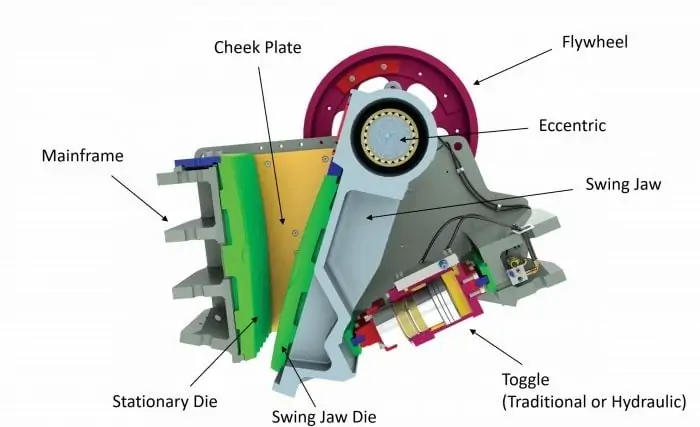
The European jaw crusher works on a compression crushing mechanism, where material is progressively reduced in a closed crushing chamber formed by a fixed jaw and a movable jaw. The system is driven by an eccentric shaft, which generates a reciprocating motion of the movable jaw to complete the crushing cycle.
Compression Crushing Process
Feed material enters the crushing chamber from the top and is gradually compressed between the fixed jaw and movable jaw. Under repeated compression cycles, the material is broken along natural fracture lines and discharged from the bottom once it reaches the required size.
Feed Material → Fixed Jaw → Movable Jaw → Compression & Breakage → Discharge
Features of European Jaw Crusher
When selecting a European jaw crusher for hard rock applications, the focus should be on stability, wear resistance, and long-term operating cost. Hard rock such as granite, basalt, quartz, and iron ore places higher impact and abrasion loads on the equipment, so proper configuration directly affects production efficiency and maintenance frequency.
Feed Opening Size
The feed opening determines the maximum rock size the crusher can accept. A larger opening reduces the need for pre-crushing and helps maintain stable feeding in hard rock crushing operations.
Capacity Range
Capacity should match project requirements, typically ranging from small quarry setups below 100 TPH to large mining plants above 300–1000 TPH. Correct capacity selection helps avoid overload, unstable operation, and unnecessary energy waste.
Flywheel and Shaft Design
A reinforced flywheel and shaft system ensures stable energy transfer during continuous crushing. This is especially important for hard rock, where impact loads are higher and more consistent.
Jaw Plate Material and Maintenance
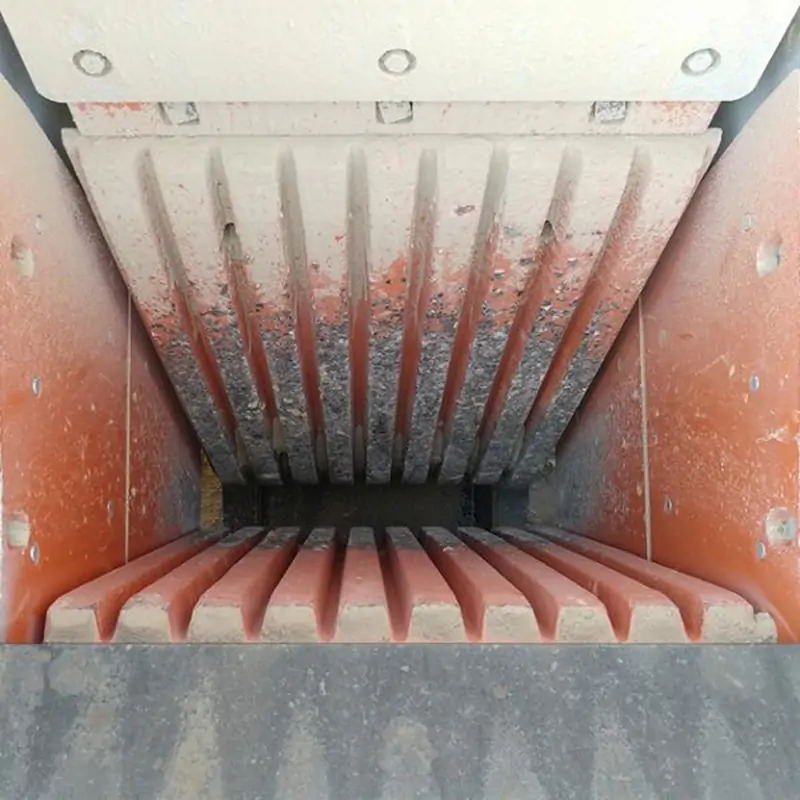
Jaw plates are the main wear parts in hard rock crushing. High manganese steel or alloy materials are commonly used to extend service life. A well-designed maintenance structure also helps reduce downtime and simplify part replacement.
Discharge Adjustment System
The discharge system controls final product size. A stable and adjustable setting is important for producing different aggregate sizes used in construction, road building, and infrastructure projects.
Performance Comparison for Hard Rock Applications
When processing hard rock such as granite, basalt, quartz, and iron ore, crusher performance directly affects production stability and operating cost. European jaw crushers are designed for heavy-duty hard rock applications, while traditional jaw crushers are more commonly used for general crushing. The key differences are mainly reflected in efficiency, wear life, maintenance, and operating cost.
Crushing Efficiency
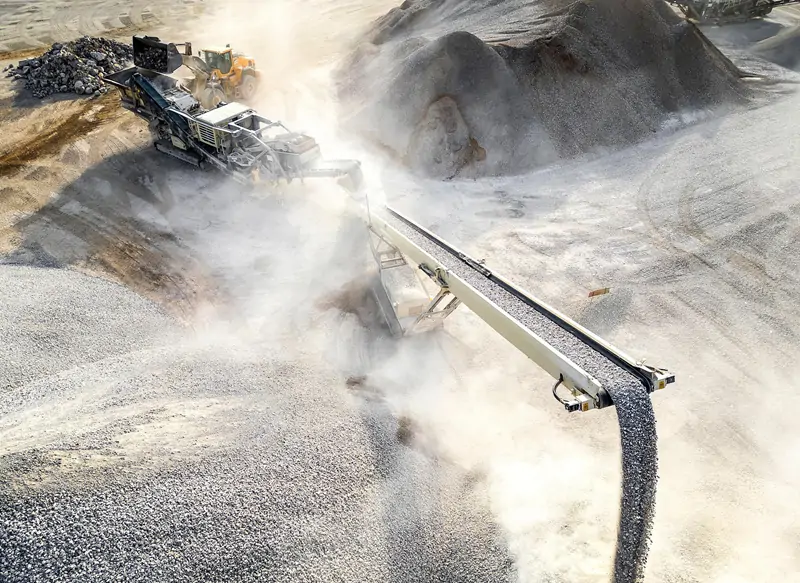
European jaw crushers maintain more stable performance under continuous hard rock feeding. The optimized crushing chamber improves material flow and reduces blockage, helping maintain consistent output in mining and aggregate production.
Wear Part Life
Hard rock creates high abrasion and continuous impact on wear parts. European jaw crushers typically offer better load distribution, which helps extend jaw plate and liner service life and reduces replacement frequency compared with traditional models.
Maintenance Requirements
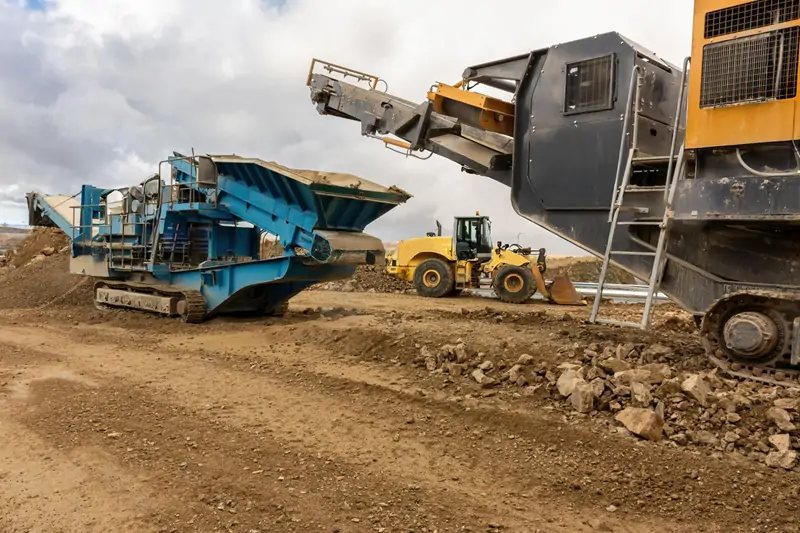
European jaw crushers are designed with easier access to key components. This simplifies inspection and maintenance work, reduces downtime, and supports more stable long-term operation in hard rock crushing projects.
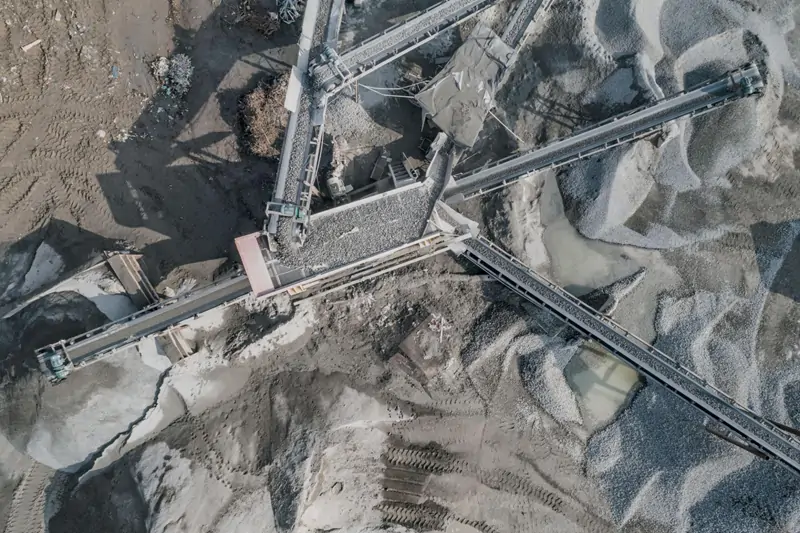
Operating Cost
Operating cost is driven by energy consumption, wear part replacement, and downtime. In hard rock applications, European jaw crushers generally achieve lower overall operating cost due to higher efficiency and longer wear part life.
Request a Customized Solution
Contact our team for tailored European jaw crusher solutions based on your project requirements.
European Jaw Crusher vs Standard Jaw Crusher
European jaw crushers are designed for higher load conditions and hard rock applications, with a focus on crushing efficiency, structural strength, and stable operation in continuous production lines. Standard jaw crushers are generally used in basic primary crushing setups with lower design pressure and simpler process requirements. The selection depends on material hardness, required capacity, and whether the project is a standard aggregate line or a heavy-duty mining application.
| Item | European Jaw Crusher | Standard Jaw Crusher |
| Design focus | High load, hard rock, continuous operation | Basic primary crushing, general use |
| Crushing chamber | Deep V-shaped chamber | Conventional chamber design |
| Crushing efficiency | Higher throughput stability | Moderate efficiency |
| Applicable materials | Granite, basalt, iron ore, hard rock | Limestone, medium-hard stone, general aggregates |
| Structural strength | Heavy-duty reinforced frame | Standard frame structure |
| Feed capacity | Larger and more stable feed handling | Limited compared to European type |
| Wear performance | More uniform wear distribution | Faster wear under hard rock conditions |
| Operation condition | Suitable for mining-scale production | Suitable for small to medium plants |
| Maintenance level | Hydraulic adjustment, easier control | Mechanical adjustment, more manual work required |
How to Choose the Best Jaw Crusher for Hard Rock?
Selecting a jaw crusher for hard rock is not a simple capacity comparison. In practice, failures usually come from wrong matching between feed condition, chamber design, and wear system—not from “undersized machines”. The selection should follow a process-first logic: material → feed → circuit → wear cost → capacity validation.
In hard rock projects, equipment selection should prioritize wear cost and stability rather than only capacity rating.
Material hardness (Mohs scale)
For materials above Mohs 6 (granite, basalt, iron ore), the key decision is whether the crusher can maintain stable compression under high resistance.
As a rule: the harder and more abrasive the rock, the more important chamber geometry and frame rigidity become than motor power alone.
If the material contains high silica content, priority should be given to designs with better wear distribution, not just higher force.
Feed size requirement
Feed size is often underestimated in field projects. If blasting produces oversized and irregular feed (>600 mm), a larger feed opening alone is not enough—the chamber must have enough depth to avoid bridging and “top choking”.
In real projects, unstable feed size is one of the main causes of capacity drop and uneven jaw wear.
Output size demand
Output requirement determines whether jaw crusher is sufficient or only the first stage.
If final product requires tight grading (e.g., concrete aggregate), jaw crusher cannot work alone—it must be paired with cone or impact crusher for control of fines and shape.
A common mistake is oversizing jaw crusher while underdesigning secondary stage.
Capacity (TPH)
In hard rock, rated capacity is rarely achieved continuously. What matters is stable operating capacity under full load condition, not peak output from test data.
Wear cost consideration
Wear cost is usually the deciding factor in hard rock projects.
Two machines with similar capacity can have very different cost per ton depending on liner design and wear pattern.
If wear is concentrated at the upper chamber, maintenance cycles shorten significantly. A better design is one that distributes wear evenly across the jaw plate rather than maximizing initial throughput.
Site condition (fixed/mobile)
Fixed plants allow heavier frames and higher stability under continuous operation. Mobile systems are more sensitive to load variation and require better feed control.
In practice, mobile jaw crushers are often selected for flexibility, not lowest cost per ton, while fixed installations are chosen for long-term production efficiency.
Project Case
300 TPH Granite Crushing Plant (Indonesia – West Java)
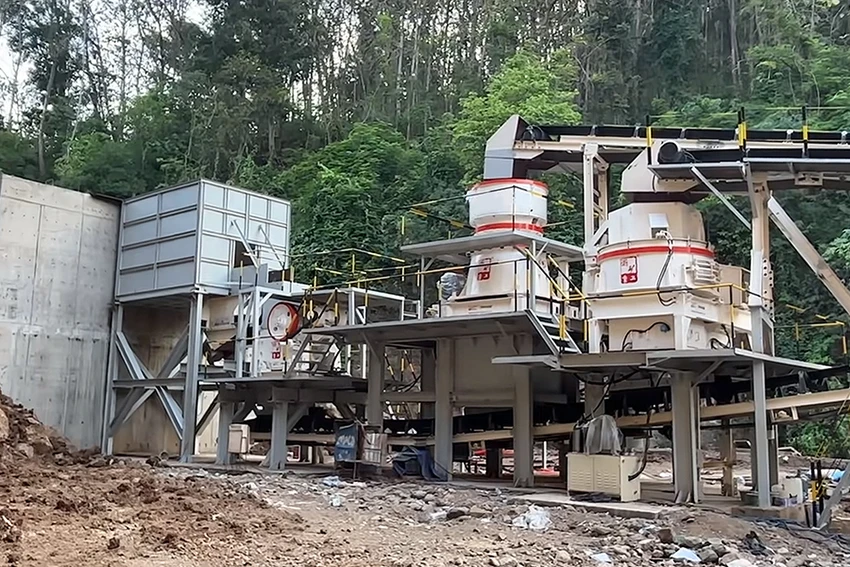
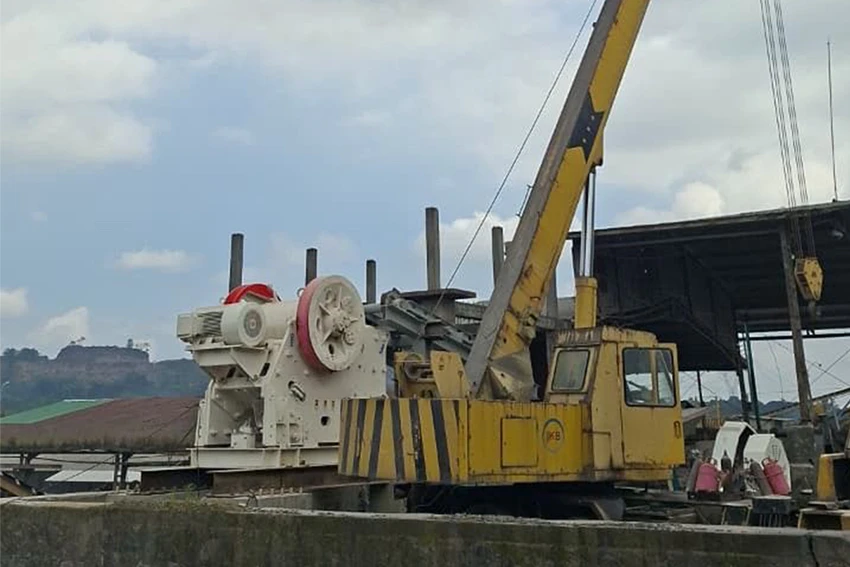
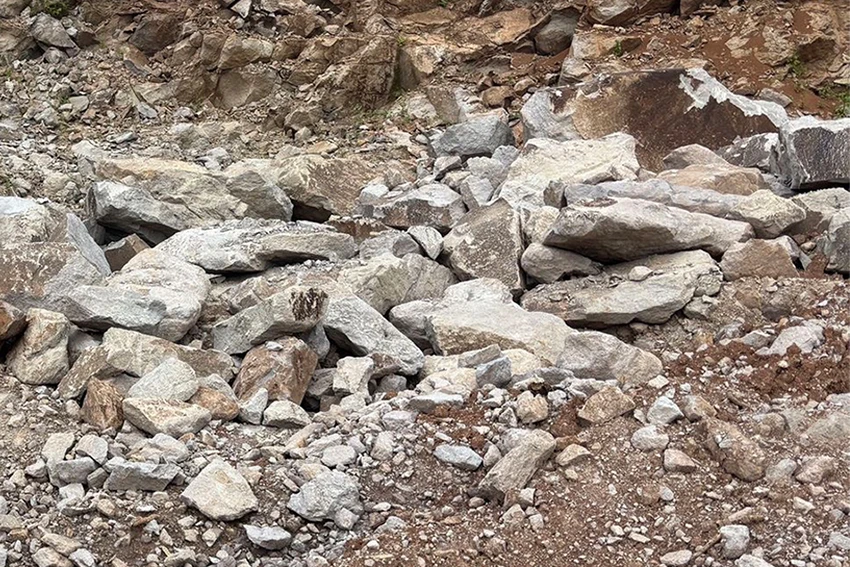
A quarry project in West Java, Indonesia required a stable crushing solution for hard granite used in road base and concrete aggregate production. The feed size was up to 700 mm, with continuous operation and stable output requirements.
The plant was configured with a European jaw crusher for primary crushing, followed by a cone crusher and vibrating screen for final grading. The system produced three finished sizes: 0–5 mm, 5–20 mm, and 20–40 mm.
Material: Granite
Capacity: 300 TPH
Configuration: European Jaw Crusher + Cone Crusher + Vibrating Screen
Feed Size: Up to 700 mm
The European jaw crusher improved primary crushing stability and reduced blockage under high-hardness conditions. After commissioning, the plant achieved stable output with consistent aggregate size and lower maintenance frequency compared to the previous setup.
Conclusion
European jaw crushers are designed for hard rock primary crushing applications, offering high crushing strength, stable operation, and optimized chamber design for materials such as granite, basalt, and iron ore. Compared with conventional jaw crushers, they provide improved efficiency, better wear distribution, and more consistent product size, making them suitable for demanding quarry and mining conditions. Selection should be based on feed size, material hardness, and required production capacity to ensure stable long-term performance.
For equipment selection, technical evaluation, or complete crushing plant design, please contact Zhongyi Mining technical team for project support and quotation.

Dr. Yu
Expert in Mineral Processing Solutions
With 15+ years of experience, Dr. Chen specializes in gravity, magnetic, flotation, and electrostatic separation. He focuses on ore processing and process optimization, sharing practical insights and equipment applications to help improve recovery rates and production efficiency.
FAQ
What is a European jaw crusher used for in hard rock processing?
A European jaw crusher is mainly used for primary crushing of hard rock materials such as granite, basalt, quartz, and iron ore. It reduces large stones into smaller sizes for secondary crushing or direct use in aggregate production, mining, and construction projects.
What makes European jaw crushers suitable for hard rock?
The output size can range from less than 5 mm to over 100 mm depending on the crusher type and plant configuration. Multiple crushing and screening stages are often used when projects require precise aggregate specifications.
What is the typical feed size for a European jaw crusher?
The feed size usually ranges from 100 mm to 1200 mm depending on the model. Larger feed openings are suitable for big rock blocks, while proper sizing helps avoid blockage, uneven wear, and reduced crushing efficiency in hard rock operations.
What capacity range can European jaw crushers achieve?
Capacity typically ranges from 50 TPH to over 1000 TPH depending on the plant configuration and material conditions. Hard rock applications usually require higher power and optimized crushing stages to maintain stable and continuous production output.
How long do wear parts last in hard rock crushing?
Wear part life depends on material hardness, feeding conditions, and operating time. In hard rock applications, jaw plates and liners wear faster, but European jaw crushers usually offer improved load distribution, which helps extend service life and reduce replacement frequency.
What is the difference between European jaw crushers and standard jaw crushers?
European jaw crushers generally provide stronger structure, deeper crushing chamber, and better load capacity. Compared with standard models, they perform more stably in hard rock conditions and offer better efficiency and lower long-term operating costs.
What are the main operating cost factors for jaw crushers?
Operating cost mainly includes energy consumption, wear part replacement, and maintenance downtime. In hard rock crushing, equipment efficiency and wear resistance play a key role in reducing total cost of ownership over long-term production.
Can European jaw crushers be customized for different projects?
Yes. European jaw crushers can be customized based on material type, feed size, capacity requirements, and site conditions. Zhongyi provides tailored crushing solutions for different mining, quarrying, and aggregate production projects.