What Is a Rotary Drum Dryer?
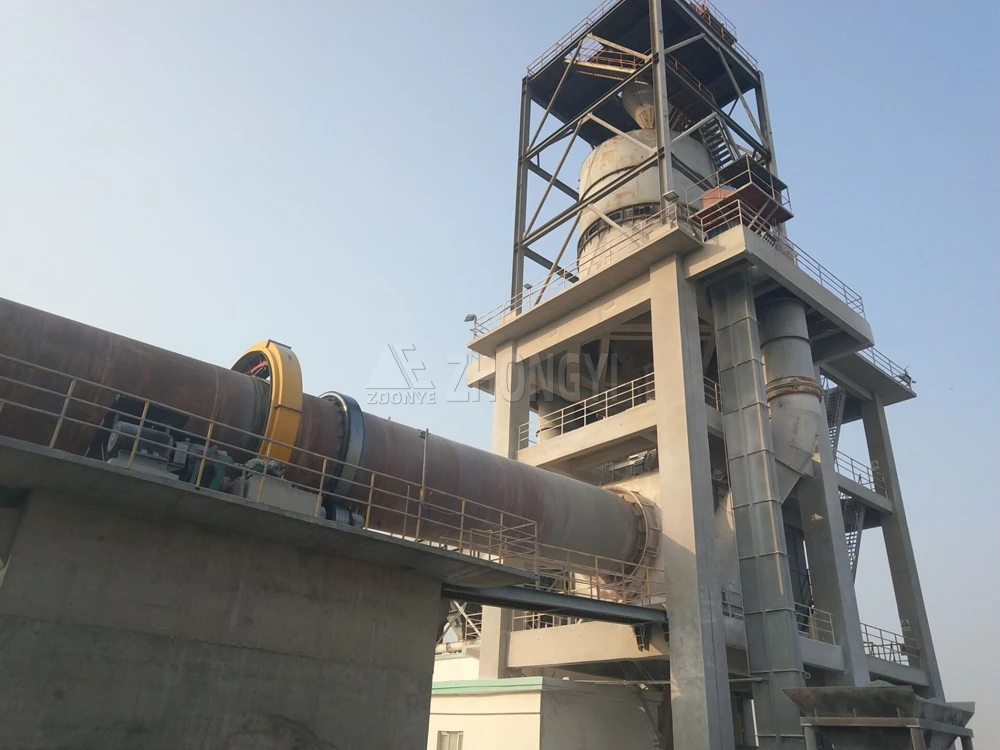
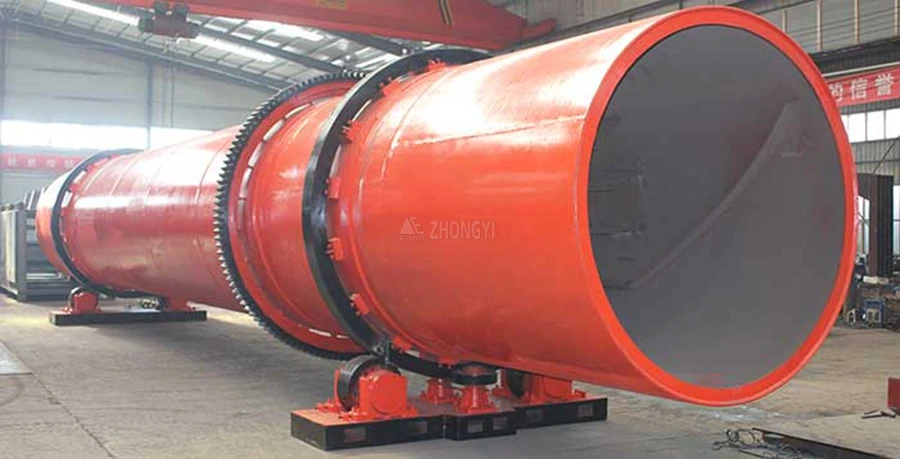
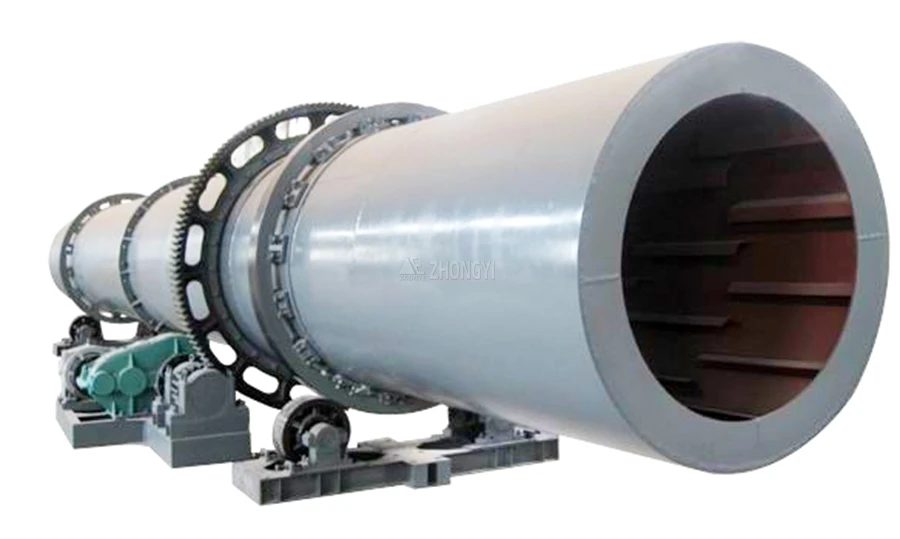
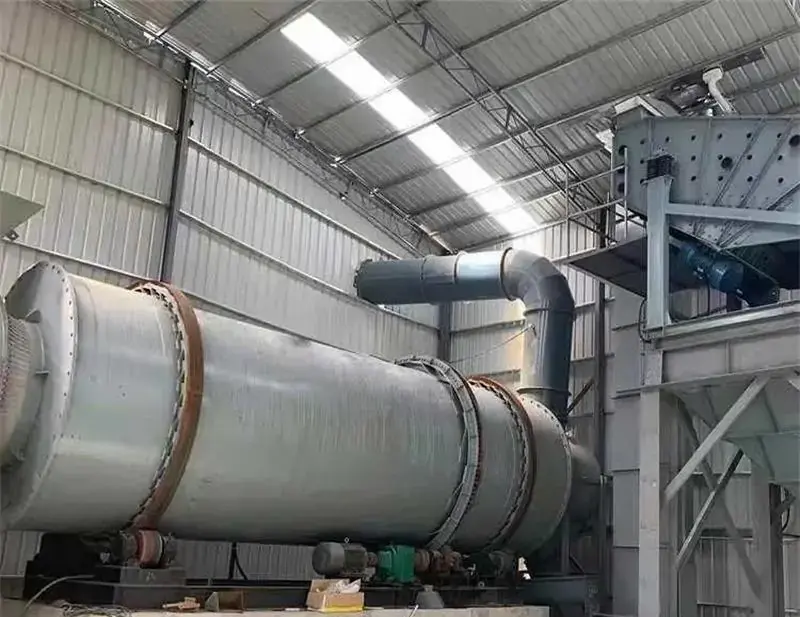
A Rotary Drum Dryer, also known as a rotary dryer, rotary drying machine, or drum dryer, is a continuous thermal drying equipment used to remove moisture from bulk materials. It consists mainly of a slightly inclined rotating drum, lifting flights, drive and support assemblies, and a hot-air or heat-supply system. As the drum rotates, the flights lift and cascade the material through the drying zone, allowing heat and mass transfer to occur continuously. Depending on the material and process requirements, the dryer can operate in either parallel-flow or counter-flow mode.
In a processing plant, the rotary drum dryer normally works between material preparation and downstream handling equipment. Depending on the application, upstream equipment may include feeders, crushers, shredders and screens, while downstream equipment can include coolers, conveyors, storage systems or RDF/SRF preparation equipment. For waste and biomass applications, a dust collector and exhaust treatment system are also typically integrated with the dryer. The final configuration is determined by material type, feed moisture, target moisture and required capacity.
How Does a Rotary Drum Dryer Work?
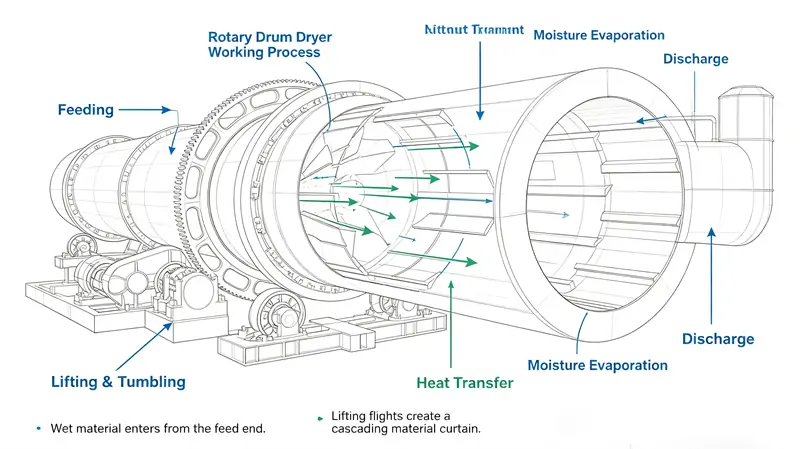
A rotary drum dryer reduces material moisture through controlled material movement and heat transfer inside a rotating drum. Wet material enters from the feed end and moves gradually toward the discharge end as the drum rotates. Internal lifting flights repeatedly raise and cascade the material, increasing its exposure to the drying medium. Depending on the process design, the dryer can use parallel-flow or counter-flow operation and direct or indirect heat transfer.
Feeding → Lifting & Tumbling → Heat Transfer → Moisture Evaporation → Discharge → Exhaust Treatment
Feeding, Lifting and Material Movement
Wet material is continuously fed into the drum by a belt conveyor, screw conveyor, feeder or bucket elevator. The feeding system is selected according to material moisture, particle size and flowability to maintain a stable feed rate. As the drum rotates, lifting flights pick up and release the material repeatedly, forming a cascading material curtain inside the drum. Drum diameter, inclination, rotational speed, flight configuration and residence time are coordinated to control material movement and provide consistent exposure to the drying medium.
Heat Transfer, Moisture Removal and Discharge
The drying medium transfers heat to the material as it moves through the drum, causing moisture to evaporate and leave through the exhaust stream. Parallel-flow or counter-flow operation can be selected according to the material, initial moisture and target moisture. Depending on the system design, direct heating or indirect heat transfer may be used. After drying, the material is discharged to downstream conveying, cooling, storage or further processing equipment, while the moisture-laden exhaust is directed to dust collection and exhaust treatment.
Rotary Drum Dryer Design and Key Components
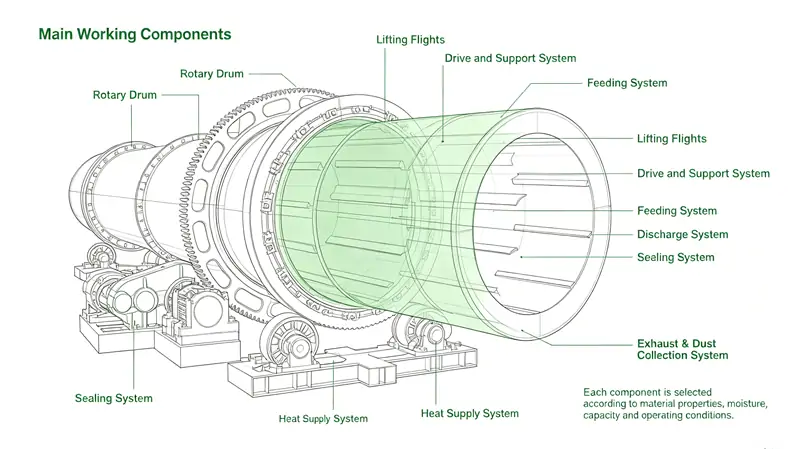
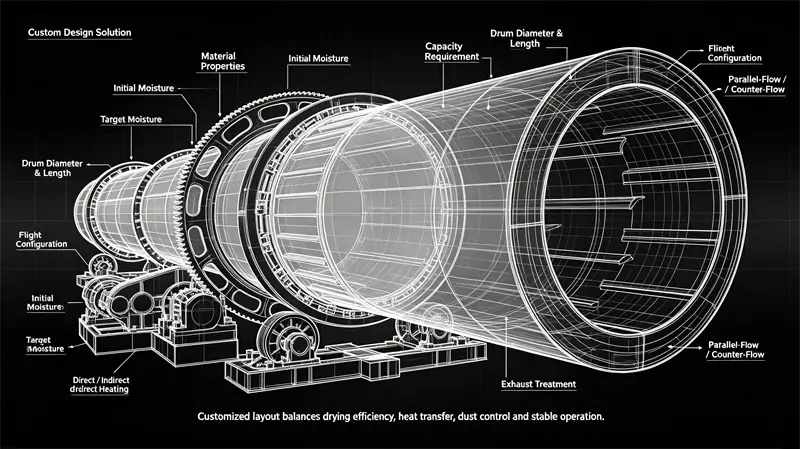
A rotary drum dryer consists of several integrated components that work together to control material movement, heat transfer, moisture removal and continuous discharge. The main components are selected according to material properties, feed moisture, required capacity and operating conditions.
- Rotary Drum: The main drying chamber where wet material moves continuously. Drum diameter and length affect drying volume, residence time and capacity.
- Lifting Flights: Lift and cascade material during drum rotation, improving material dispersion and heat transfer. Design varies with material properties.
- Drive and Support System: Includes the motor, reducer, riding rings and support rollers to maintain stable drum rotation.
- Feeding and Discharge System: Controls continuous material feeding and discharge according to material flowability, capacity and plant layout.
- Sealing System: Reduces air leakage, dust escape and heat loss around the feed and discharge sections.
- Heat Supply System: Provides thermal energy for moisture evaporation through suitable direct or indirect heating arrangements.
- Exhaust and Dust Collection System: Removes moisture-laden air and controls dust using cyclones, bag filters or other treatment equipment.
Heat Source and Energy Considerations
The heat demand of a rotary drum dryer is mainly determined by the amount of water that needs to be evaporated, feed moisture, target moisture, material temperature, exhaust temperature and overall heat losses. The available energy supply and local operating conditions are also important when selecting the heating system. Natural gas, biomass fuel, waste heat and hot air can all be considered, depending on fuel availability, required drying temperature and environmental requirements.
For a complete rotary drying system, the heat source should be matched with dryer capacity, material characteristics, airflow and exhaust treatment rather than selected separately. Natural gas provides stable temperature control, biomass can utilize locally available residues, waste heat can recover usable thermal energy from existing processes, while hot-air systems provide controlled drying conditions. The appropriate configuration depends on the material, moisture reduction requirement, energy supply and plant conditions.
Rotary Drum Dryer Applications
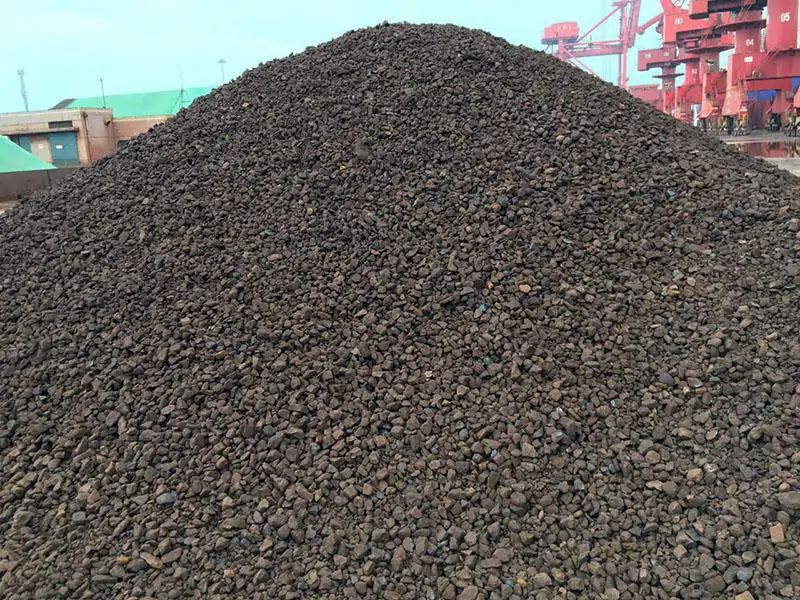
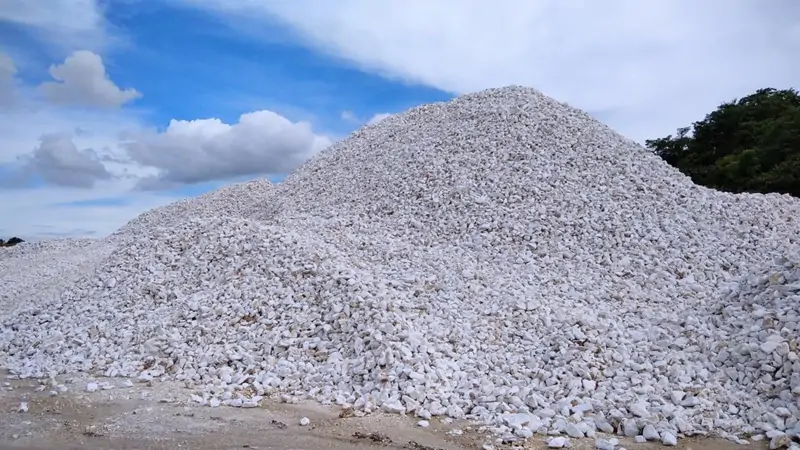
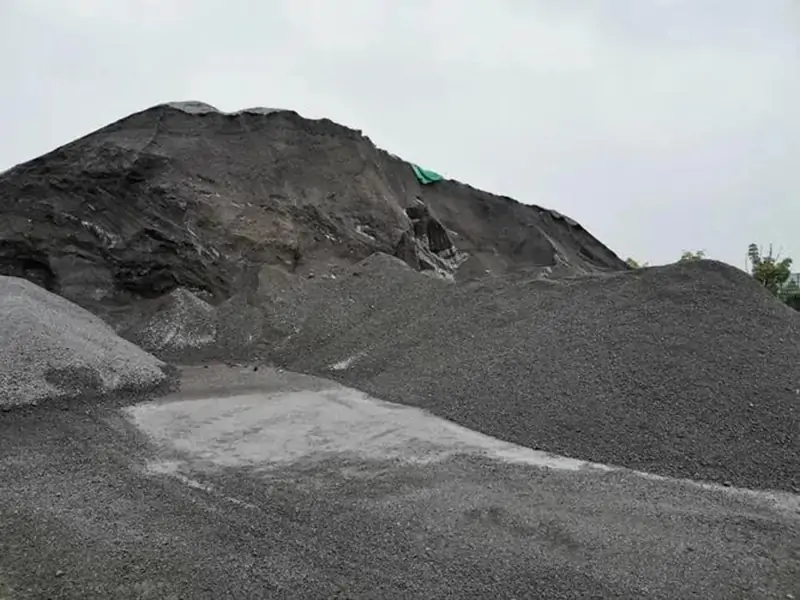
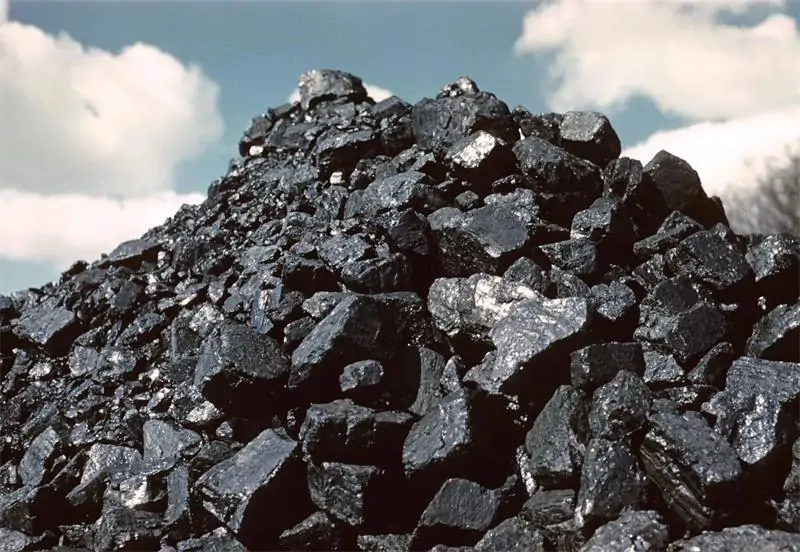
For mineral processing plants, a rotary drum dryer is mainly used to reduce moisture in concentrates, mineral sands, slag, sludge and tailings after dewatering or other processing stages. The application and dryer configuration should be selected according to material condition, feed moisture, required capacity and target moisture. Common applications include:
Rotary Drum Dryer Models and Specifications
Zhongyi rotary drum dryers are available in different drum sizes and configurations. The table below lists the main equipment specifications, including drum size, volume, rotation speed, motor power, overall dimensions and weight. Actual capacity and configuration are matched to the material, moisture content and required drying conditions.
| Drum Size | Drum Volume (m³) | Drum Speed (r/min) | Motor Power (kW) | Overall Dimensions (mm) | Weight (t) |
| Ø1.0 × 10 m | 6.73 | 3–5 | 5.5 | 10000 × 1876 × 2069 | 7.6 |
| Ø1.2 × 6 m | 5.8 | 6000 × 2159 × 2475 | 8.5 | ||
| Ø1.2 × 8 m | 5.8 | 8000 × 2159 × 2475 | 9.89 | ||
| Ø1.2 × 10 m | 5.8 | 7.5 | 10000 × 2159 × 2475 | 11.93 | |
| Ø1.2 × 12 m | 5.8 | 11 | 12000 × 2159 × 2475 | 13.5 | |
| Ø1.5 × 8 m | 4.8 | 8000 × 2655 × 2895 | 14.74 | ||
| Ø1.5 × 10 m | 4.8 | 10000 × 2655 × 2895 | 15.93 | ||
| Ø1.5 × 12 m | 4.8 | 15 | 12000 × 2655 × 2895 | 17.13 | |
| Ø1.5 × 14 m | 4.8 | 14000 × 2655 × 2895 | 18.33 | ||
| Ø1.8 × 10 m | 4.59 | 10000 × 3060 × 2980 | 17.93 | ||
| Ø1.8 × 12 m | 4.59 | 18.5 | 12000 × 3060 × 2980 | 19.89 | |
| Ø1.8 × 14 m | 4.59 | 14000 × 3060 × 2980 | 20.85 | ||
| Ø1.8 × 18 m | 4.59 | 22 | 18000 × 3060 × 2980 | 22.3 | |
| Ø2.2 × 12 m | 4.43 | 12000 × 3620 × 3570 | 30.31 | ||
| Ø2.2 × 14 m | 4.9 | 14000 × 3620 × 3570 | 32.23 | ||
| Ø2.2 × 18 m | 4.9 | 30 | 18000 × 3620 × 3570 | 36.15 | |
| Ø2.2 × 20 m | 4.9 | 20000 × 3620 × 3570 | 38.1 | ||
| Ø2.4 × 14 m | 3.85 | 14000 × 3860 × 3760 | 39.9 | ||
| Ø2.4 × 24 m | 3.85 | 45 | 24500 × 3860 × 3760 | 54.8 | |
| Ø2.5 × 20 m | 3.6 | 23600 × 3860 × 4800 | 55.9 | ||
| Ø3.0 × 20 m | 3.2 | 185 | 25000 × 4900 × 5000 | 103.8 |
Note: Actual capacity depends on material type, moisture content, bulk density, target moisture and drying conditions. Final equipment selection should be confirmed through process calculations and project requirements.
What Materials Can a Rotary Drum Dryer Handle?
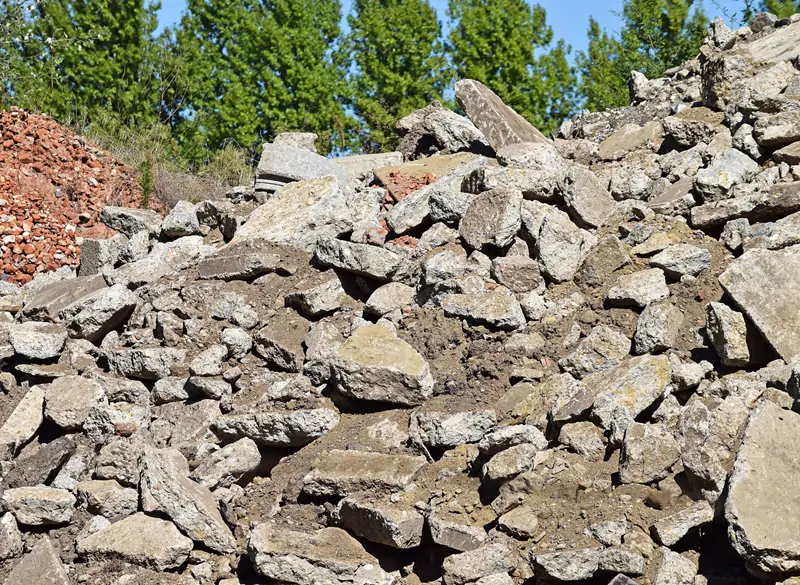
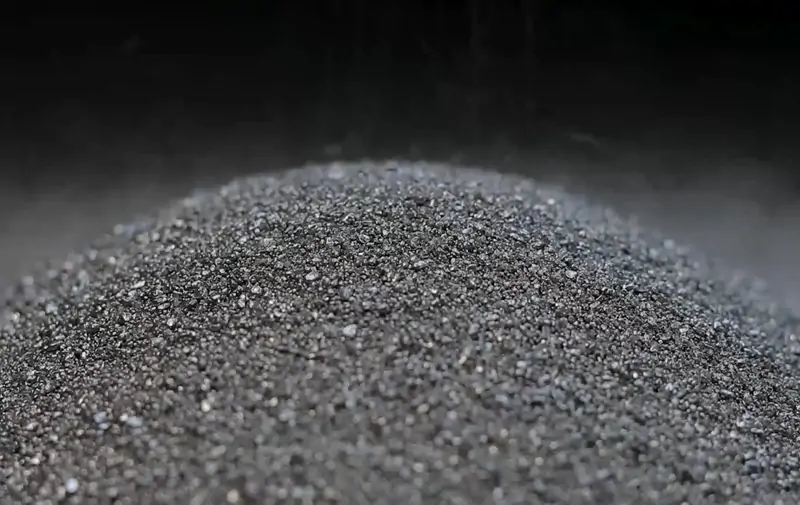
A rotary drum dryer is commonly used for wet bulk materials that require continuous moisture reduction. Typical applications include biomass, RDF, sludge, wood residues, mineral materials and industrial by-products. The dryer is selected according to the actual feed condition rather than material name alone, with moisture, particle size, bulk density, flowability and target moisture being key factors.
Advantages of Rotary Drum Dryer
A rotary drum dryer is built for continuous moisture removal from bulk materials in industrial processing. Its performance depends on the combined design of the rotating drum, lifting flights, heat transfer system, drive assembly and exhaust treatment. This configuration allows the dryer to handle different material conditions while maintaining controlled material movement and stable operation.
Rotary Drum Dryer Types
Rotary drum dryers can be configured in different ways according to the heat transfer method, airflow arrangement, drum structure and material requirements. The main differences affect heat transfer, residence time, moisture removal, exhaust handling and equipment footprint.
Direct and Indirect Rotary Drum Dryers
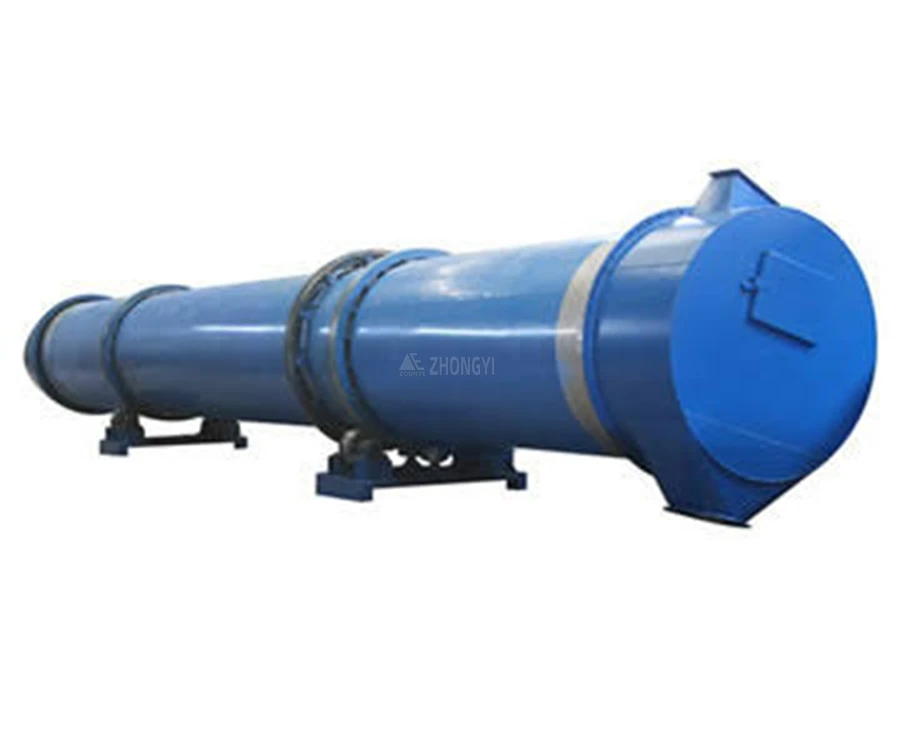
Direct Rotary Drum Dryer
Hot gas comes into direct contact with the material, providing efficient heat transfer and continuous moisture removal. It is widely used for biomass, wood chips, RDF, mineral materials and other bulk solids where direct contact with the drying gas is acceptable.
Get a Quote
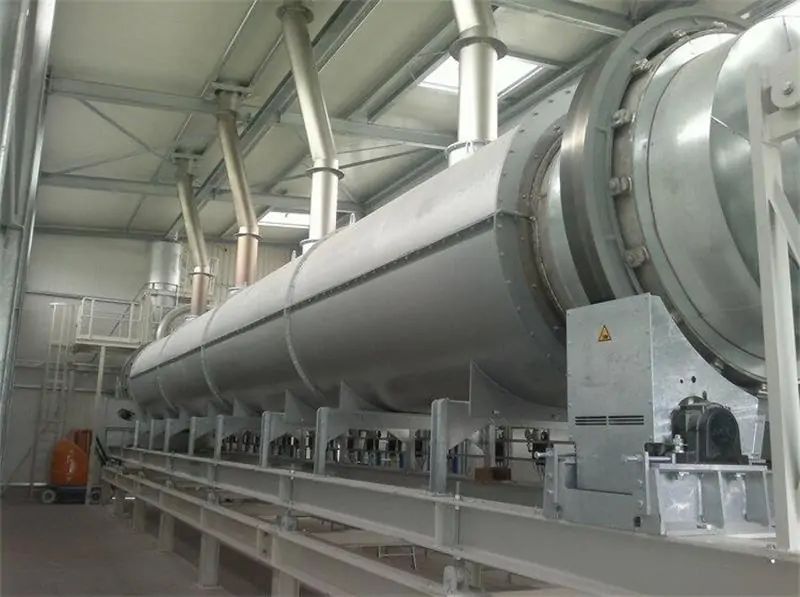
Indirect Rotary Drum Dryer
Heat is transferred through the drum wall or internal heating surfaces without direct contact between the material and combustion gases. This configuration is considered when product contamination, oxygen exposure or controlled drying conditions are important.
Get a Quote
Single-Pass and Multi-Pass Rotary Drum Dryers
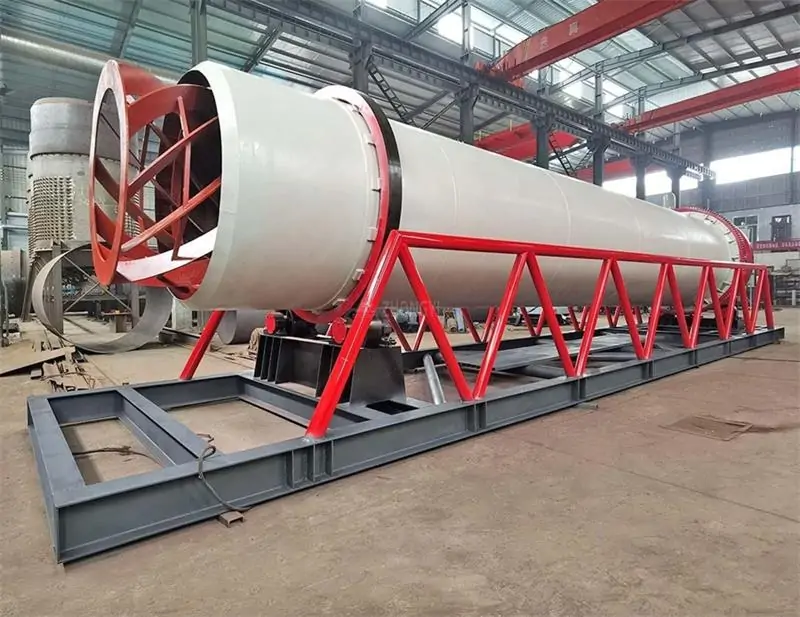
Single-Pass Rotary Drum Dryer
Material travels through one drying drum from feed to discharge. The layout is relatively straightforward and provides convenient access for inspection and maintenance. It is suitable for many continuous industrial drying applications.
Get a Quote
Multi-Pass Rotary Drum Dryer
Material passes through multiple drying sections or concentric drums within a compact arrangement. The longer effective drying path can improve heat utilization and reduce equipment footprint for suitable materials.
Get a Quote
Parallel-Flow and Counter-Flow Dryers
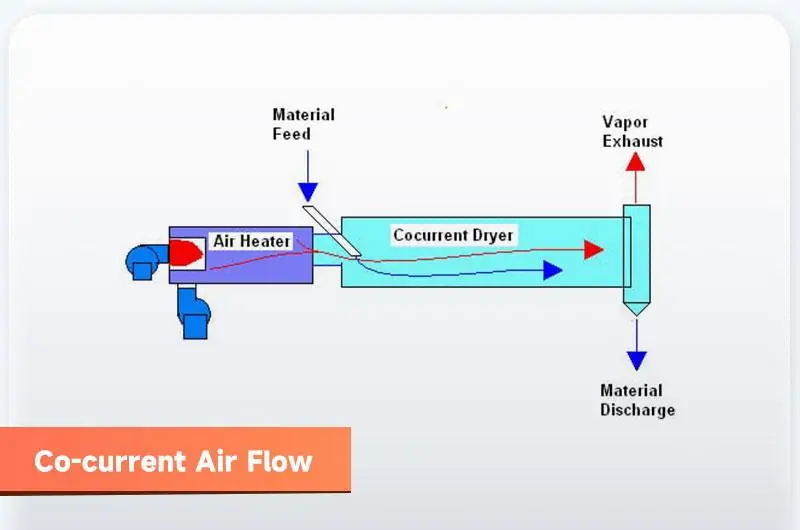
Parallel-Flow Dryer
Hot gas and wet material move in the same direction. The highest-temperature gas contacts the wettest feed first, making this arrangement suitable for materials requiring rapid initial moisture removal.
Get a Quote
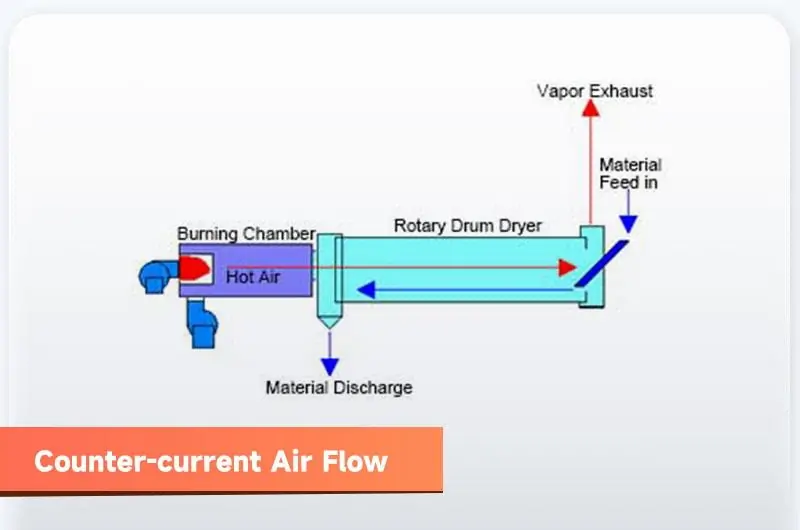
Counter-Flow Dryer
Hot gas and material move in opposite directions. The arrangement can provide strong final-stage drying and is considered when a lower product moisture content is required.
Get a Quote
How to Choose the Right Rotary Drum Dryer?
Selecting a rotary drum dryer starts with the material. Provide the material type, particle size, bulk density, stickiness, abrasiveness and heat sensitivity, as these factors affect feeding, lifting, residence time and internal flight design. Different materials require different drum configurations and operating conditions, so capacity alone should not be used to select the dryer.
Feed moisture, target moisture and required capacity determine the actual drying load. For example, a 10 t/h feed at 30% moisture requires a different drying duty from the same capacity at 15% moisture. The manufacturer should use the moisture to be removed together with material properties to determine drum diameter, length, rotation speed, airflow and required heat input.
The final configuration should also consider the available heat source, operating conditions and exhaust requirements. Natural gas, biomass fuel, waste heat or other hot-air systems can be considered according to the site. For dusty materials such as RDF, biomass, sludge and fine minerals, the dryer should also be matched with suitable exhaust and dust collection equipment. For a proper recommendation, provide material type, feed moisture, target moisture, capacity, feed size and available heat source to the manufacturer.
Recommended Case Study Title
Luoyang Aluminum Hydroxide Rotary Dryer Project
For the 50,000 t/y aluminum hydroxide project in Luoyang, Henan, Zhongyi supplied a Φ1.5 × 14 m rotary dryer as the core drying equipment. The wet aluminum hydroxide filter cake had relatively high moisture and a tendency to agglomerate, so the rotary dryer was configured with suitable lifting plates and material-distribution components to improve turnover inside the drum, reduce build-up, and provide stable moisture reduction before the crushing and grinding stages.
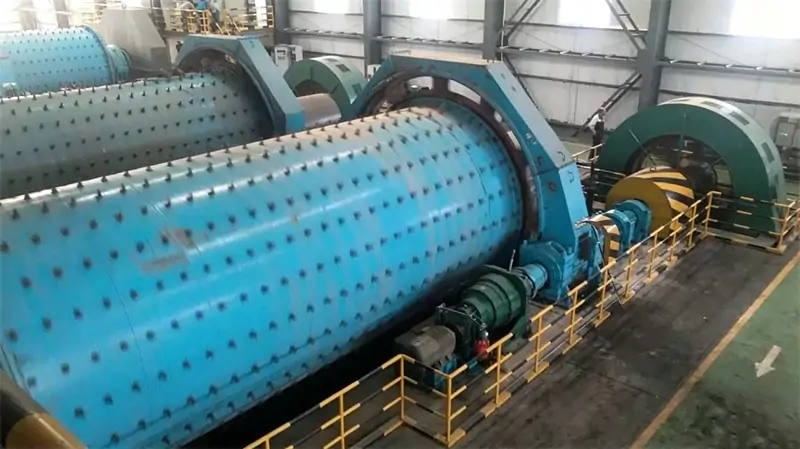
The rotary dryer was integrated with the existing jaw crusher, fine crusher, double-roll crusher, and wet grid ball mills. Zhongyi also completed installation, commissioning, and dust-collection integration. During operation, the dryer maintained smooth material discharge and stable moisture conditions, supporting the line’s designed 50,000 t/y production capacity and providing reliable drying performance for continuous aluminum hydroxide processing.
Why Work With Zhongyi Mining?
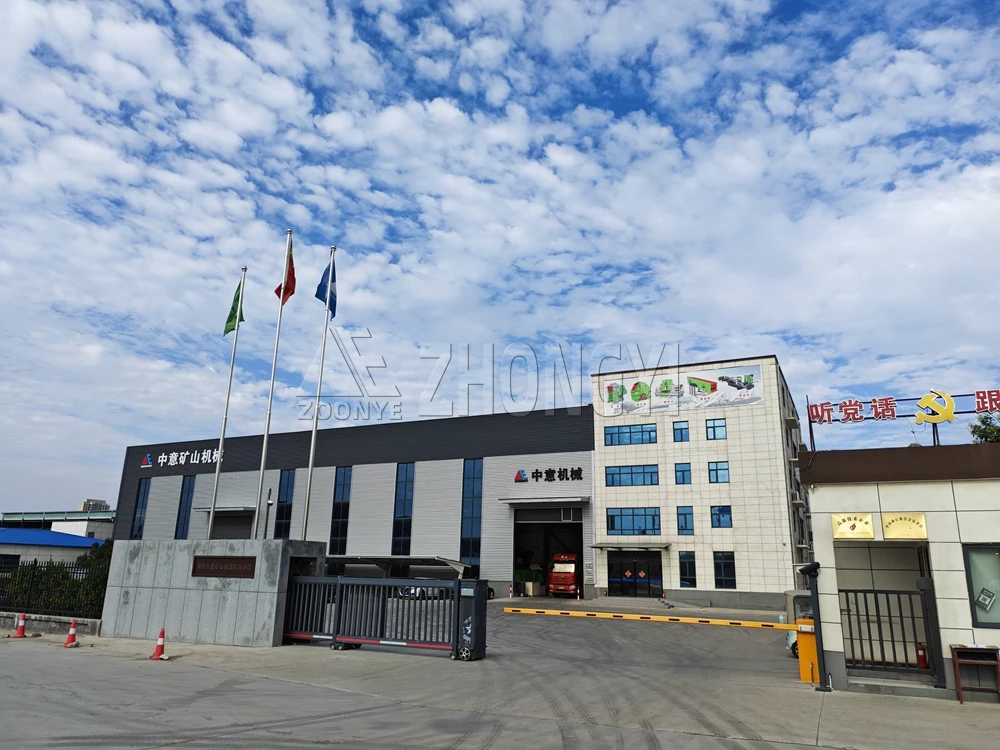
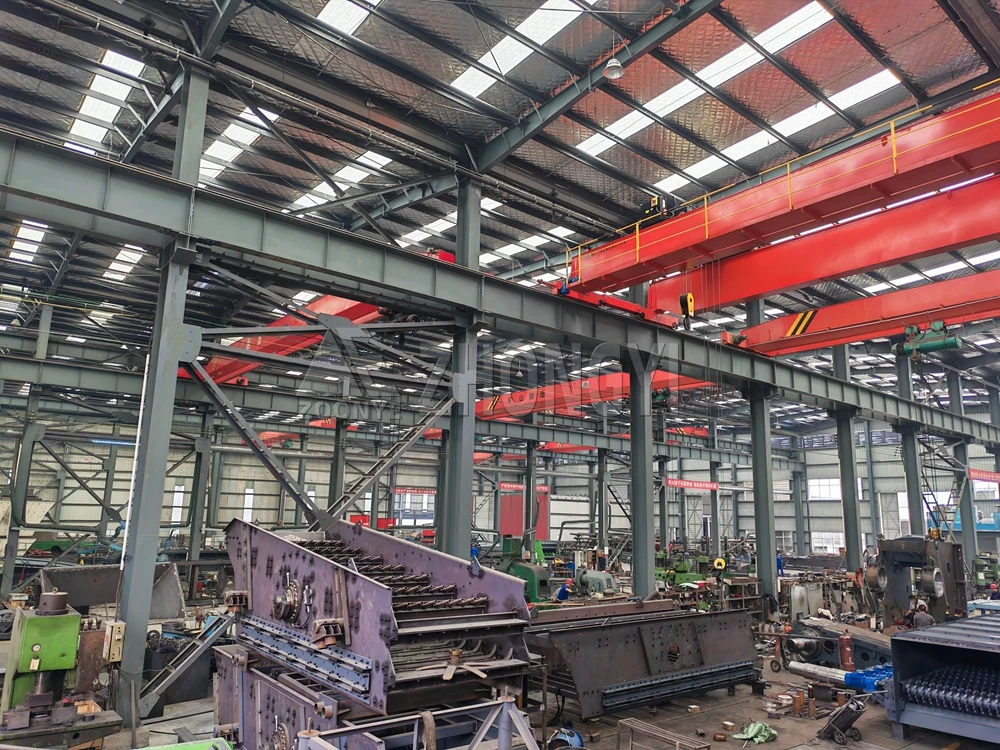
Zhongyi Mining combines equipment manufacturing with mineral processing engineering, so the rotary drum dryer is selected as part of the actual process rather than as a standalone machine. We can assess material characteristics, moisture content, required capacity and downstream requirements, then configure the dryer, heat source, feeding and dust collection system accordingly. With 16+ years of manufacturing experience, a 40,000+ m² factory and 60+ patents, our equipment is designed and manufactured in-house with production and quality control handled by our own engineering team.
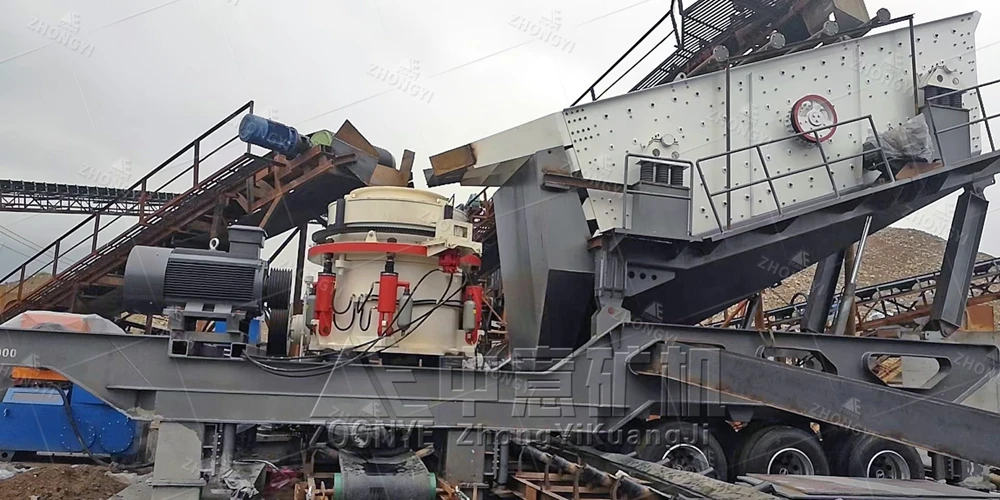
For projects that require more than equipment supply, Zhongyi provides ore identification, pilot testing, equipment selection, process design, installation and commissioning. This is particularly important for drying applications where feed moisture and material behavior can vary significantly from one project to another. Our experience across crushing, screening, grinding, separation, dewatering and drying also allows the dryer to be integrated with existing or new mineral processing lines, with practical consideration given to capacity, operating conditions, maintenance and total system requirements.
Request a Customized Solution
Partner with Zhongyi for a rotary drum dryer engineered for continuous moisture reduction, stable drying performance, and reliable operation in mineral processing applications. Dryer size, lifting flights, heat source, and auxiliary systems can be configured according to material characteristics, feed moisture, capacity, and target moisture.
Request a Custom Rotary Drum Dryer
Every drying project has different material conditions, moisture requirements, capacity targets, and site constraints. Zhongyi can customize the rotary drum dryer and supporting system according to your actual process requirements, including dryer size, lifting flights, heat source, feeding, exhaust and dust collection.
For projects requiring upstream or downstream equipment, the dryer can also be integrated into a complete mineral processing solution with crushing, screening, grinding, separation and dewatering equipment. Send us your material type, feed moisture, target moisture, required capacity and available heat source. Our engineering team can recommend a suitable configuration and process layout. Contact Zhongyi to discuss your project requirements.
Please Provide the Following Information:
FAQs
What materials can a rotary drum dryer dry?
A rotary drum dryer is suitable for many bulk materials, including biomass, wood chips, sawdust, sludge, sand, minerals, fertilizer, and other granular materials. The actual dryer configuration depends on material moisture, particle size, bulk density, stickiness, and required final moisture. For high-moisture or sticky materials, the drum structure, lifting flights, feeding system, and airflow should be designed for stable operation.
How do I choose the right rotary drum dryer capacity?
Rotary drum dryer capacity depends on feed rate, initial moisture, target moisture, material density, and operating hours. The amount of water that must be evaporated is more important than simply looking at tons per hour. A manufacturer should calculate the required evaporation capacity and heat load before selecting the drum diameter, length, and heating system for a specific application.
What feed moisture can a rotary drum dryer handle?
The suitable feed moisture range varies with the material and dryer design. Rotary drum dryers can process relatively high-moisture materials because the rotating drum provides continuous lifting, mixing, and heat transfer. However, very wet or sticky feed may require a customized feeding system, internal flights, airflow, and drum speed to reduce material buildup and maintain consistent drying performance.
What final moisture can a rotary drum dryer achieve?
The achievable final moisture depends on the feed moisture, material properties, evaporation requirement, heat input, airflow, and residence time. A rotary drum dryer can be designed around a specified outlet moisture target rather than a fixed moisture level for every material. For applications with strict moisture requirements, representative material data should be provided so the drying system can be properly sized.
What heat sources can be used for a rotary drum dryer?
A rotary drum dryer can use different heat sources, including natural gas, biomass, coal, diesel, hot air, or available waste heat. The suitable option depends on local fuel availability, operating cost, emissions requirements, and material characteristics. When sufficient waste heat is available from another process, it may also be incorporated into the drying system to improve overall energy utilization.
How can I reduce rotary drum dryer energy consumption?
Energy consumption mainly depends on feed moisture, required water evaporation, heat source efficiency, exhaust temperature, airflow, insulation, and dryer loading. Pre-dewatering wet materials where practical can significantly reduce the thermal load. Proper drum sizing, optimized lifting flights, efficient combustion, good insulation, controlled airflow, and potential heat recovery can further improve drying efficiency and reduce operating costs.
What information is needed to select a rotary drum dryer?
For proper rotary drum dryer selection, suppliers normally need the material name, processing capacity, initial moisture, required final moisture, particle size, bulk density, and material temperature. The available heat source, operating hours, and site conditions may also affect the design. Based on these parameters, the manufacturer can determine the appropriate drum size, heating system, airflow, feeding equipment, and discharge configuration.
Can a rotary drum dryer be customized for a complete drying line?
Yes. A rotary drum dryer can be integrated with feeding, conveying, crushing, screening, heating, dust collection, and discharge equipment to form a complete drying system. The configuration depends on the material and production requirements. For industrial projects, the manufacturer can design the equipment layout, heat source, material handling system, and dust control according to the required capacity and available plant space.