What Is a Bucket Wheel Sand Washing and Recycling Machine?
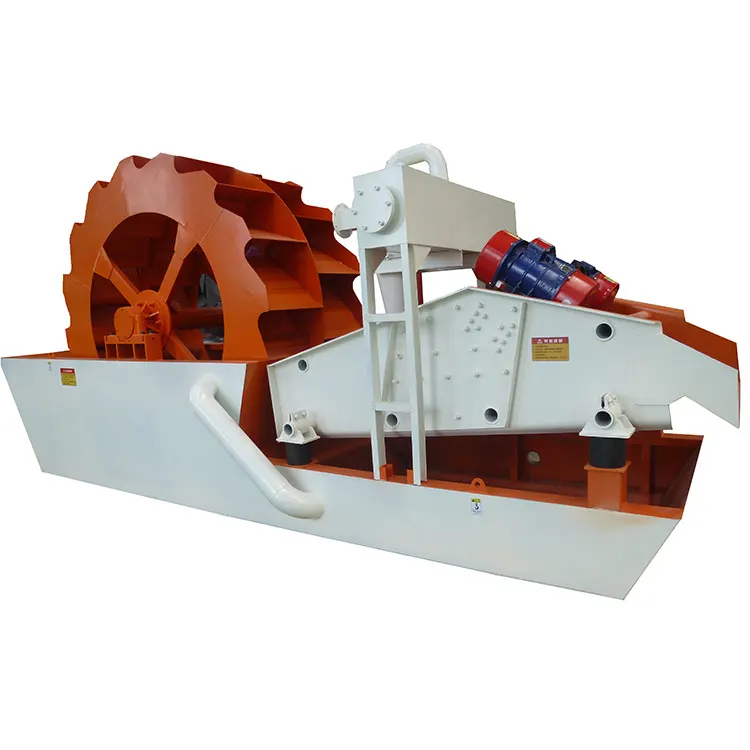
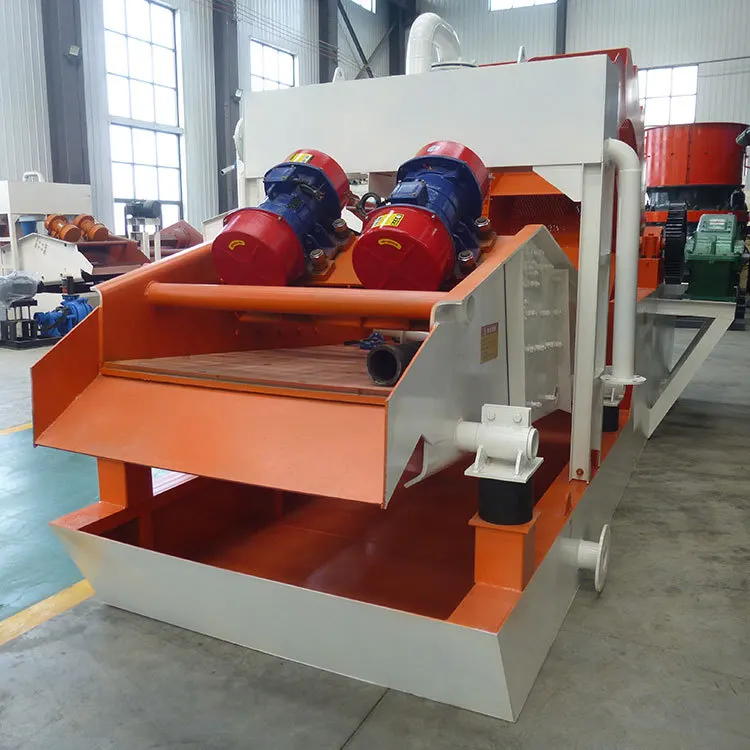
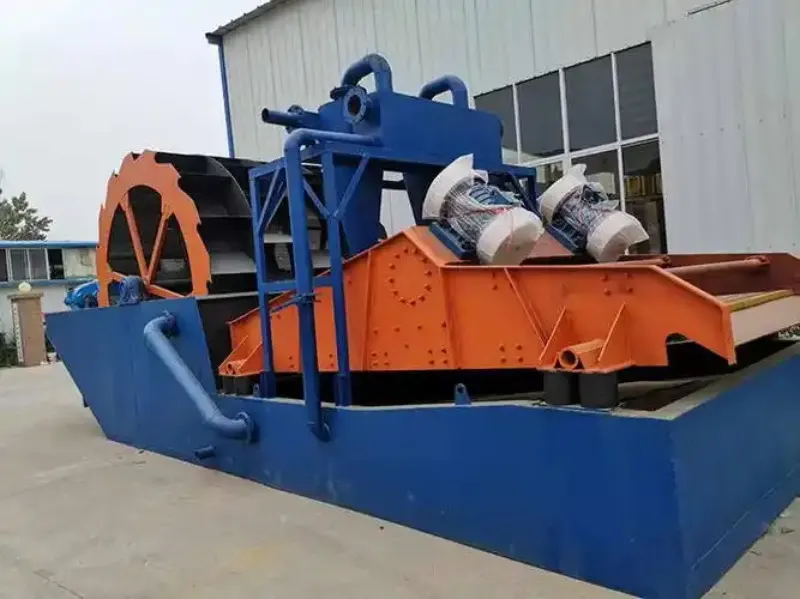
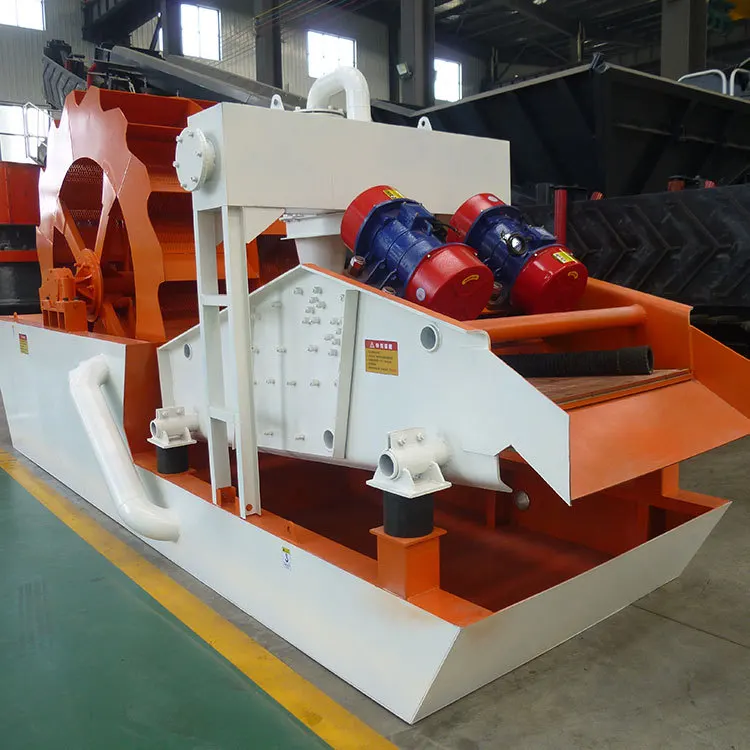
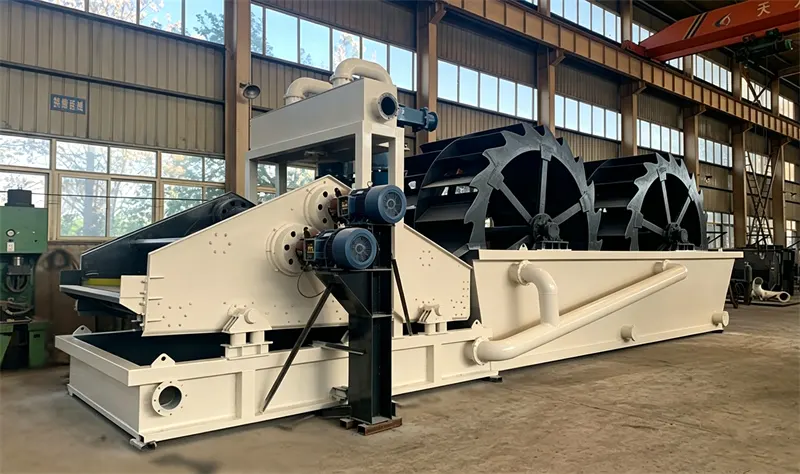
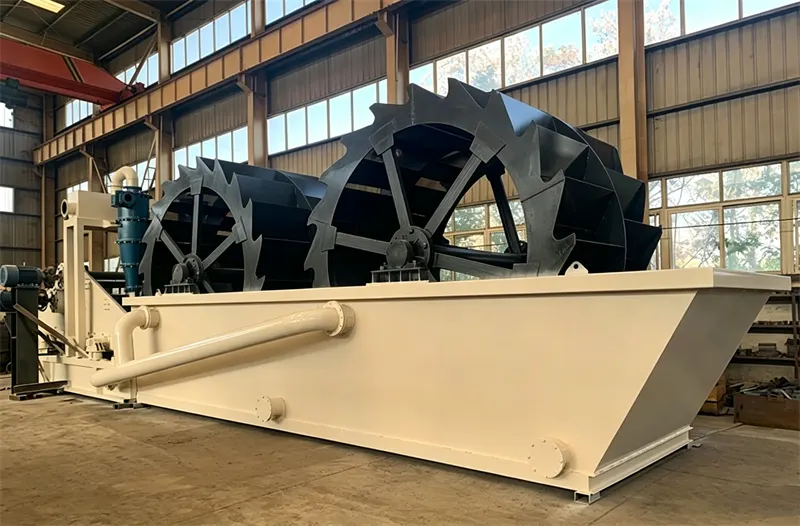
A bucket wheel sand washing and recycling machine is an integrated system that combines bucket wheel sand washing, fine sand recovery, and dewatering in one compact unit. Also known as a sand washing and recycling machine, it is designed to wash and deslime sand while recovering usable fine particles carried away with the washing slurry. Compared with a standalone bucket wheel sand washer, the integrated configuration adds a fine sand recovery section to reduce the loss of valuable sand during washing.
In a typical sand and aggregate plant, the bucket wheel sand washing section receives sand-water mixtures from upstream equipment such as vibrating screens or trommel screens. After washing, the sand is discharged for conveying or stockpiling, while slurry containing fine sand enters the recovery circuit, typically through a slurry pump and hydrocyclone, before dewatering. This sand washing recycling machine configuration is suitable for manufactured sand, river sand, gravel, and other washable aggregate materials where both sand cleanliness and fine-particle recovery need to be considered.
Why Is Fine Sand Recovery Important in Sand Washing?
Fine sand recovery prevents usable fine particles from leaving with wastewater. During bucket wheel sand washing, part of the fine sand can remain in the slurry, reducing finished-sand yield and affecting product gradation. A recovery stage separates these particles before they enter the settling system.
Finer Grinding for Mineral Liberation
In fine-grained or closely associated ores, valuable minerals may remain locked in gangue after conventional grinding. Ultra fine grinding further reduces particle size to improve liberation and create suitable conditions for flotation, leaching, and other separation processes. The appropriate grinding size should be established through ore characterization and beneficiation testing.
Fine Sand Can Leave With Washing Water
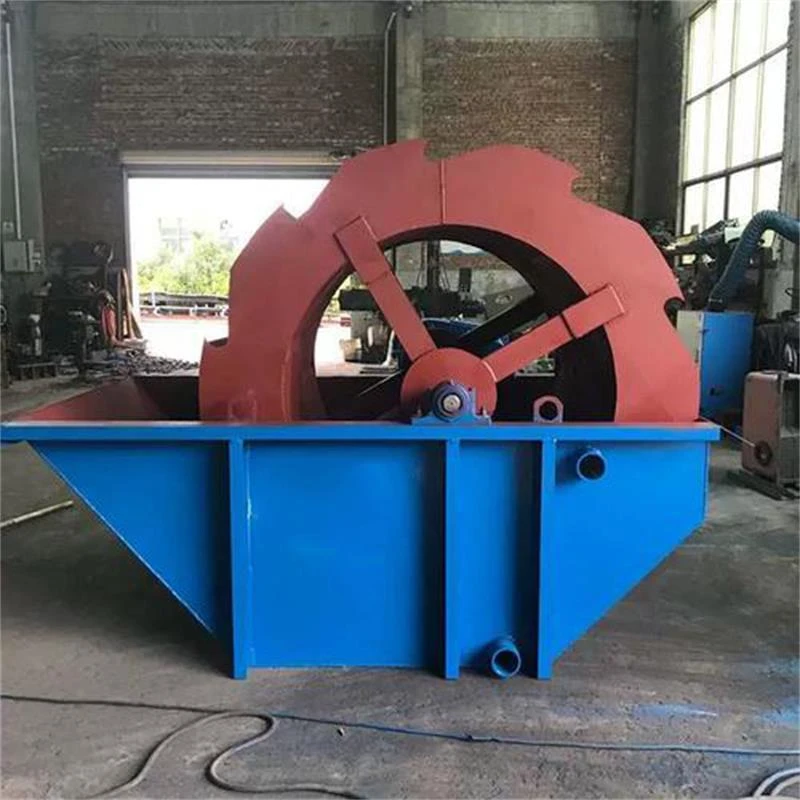
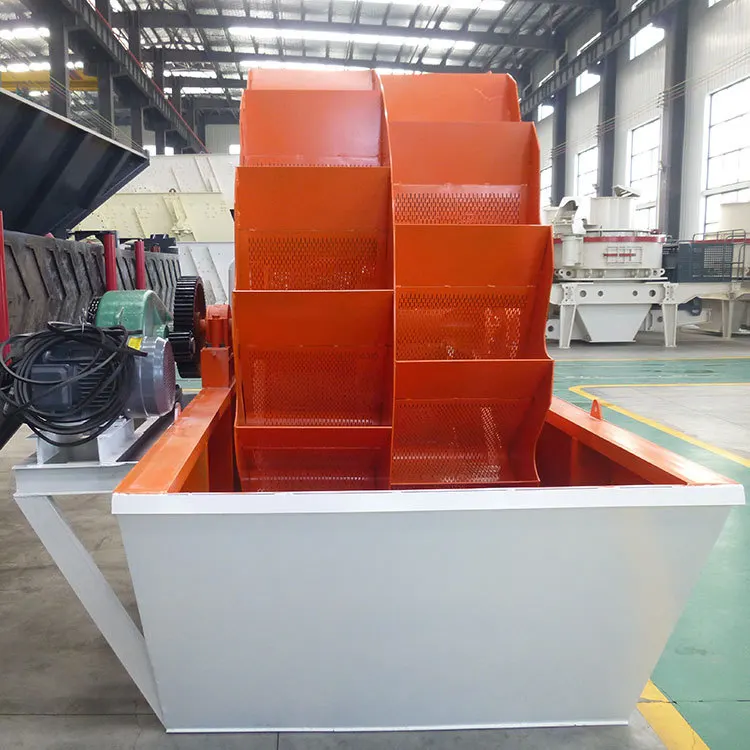
A bucket wheel sand washer performs the main washing and sand lifting, but fine particles can still be carried away with overflow water. A sand washing and recycling machine adds a recovery circuit to reclaim usable fine sand from the slurry.
Fine Sand Loss Affects Product Yield and Gradation
Excessive fine sand loss reduces saleable output and may make the finished sand too coarse. The recovery system uses a slurry pump and hydrocyclone to separate fine sand before dewatering.
Recovery Also Improves Slurry Management
Fine sand recovery reduces the solids load entering downstream settling equipment. Slurry concentration, pump pressure, hydrocyclone classification, water flow, and dewatering should be matched to the material and required capacity.
How Does the Bucket Wheel Sand Washing and Recycling Machine Work?
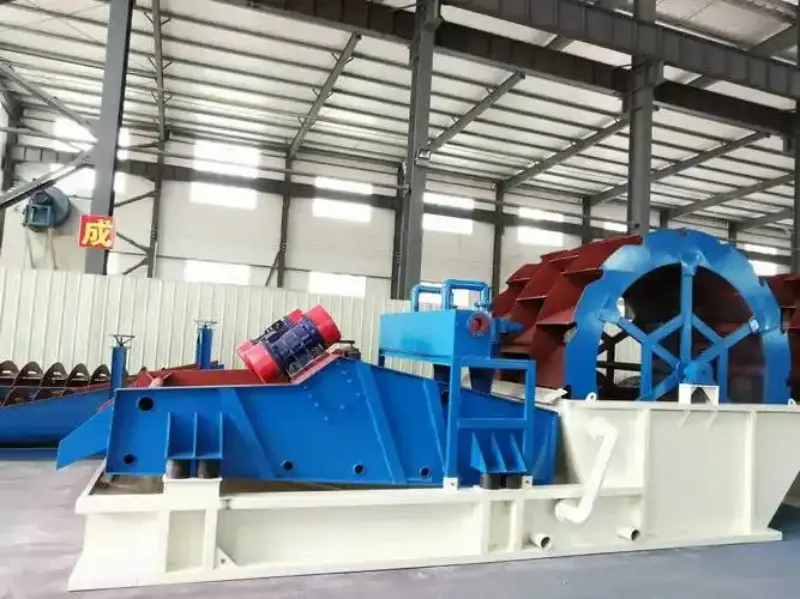
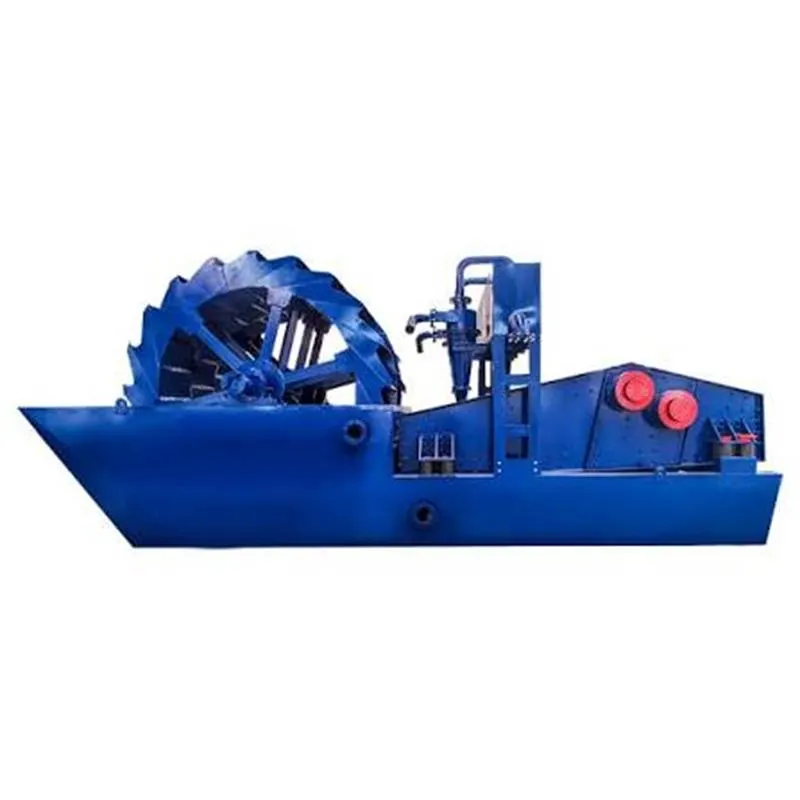
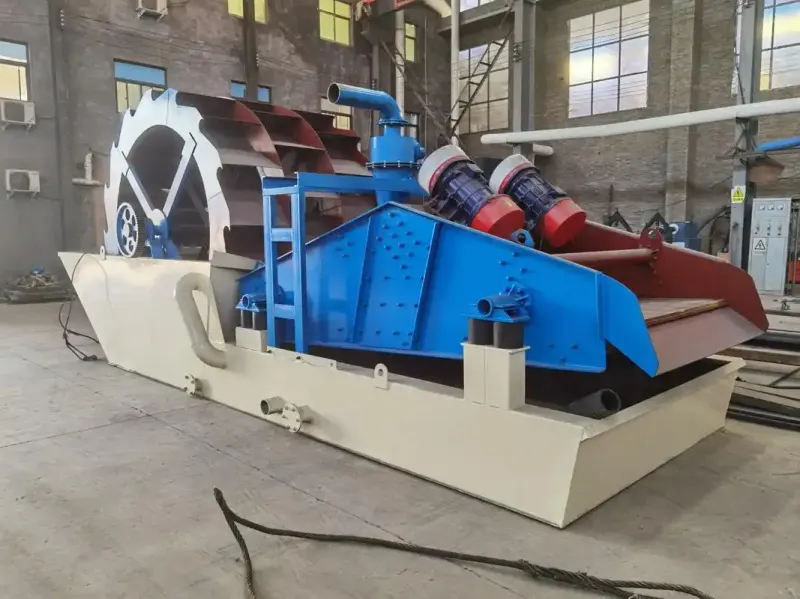
The bucket wheel sand washing and recycling machine combines washing, fine sand recovery, and dewatering in one process. Material typically enters from a vibrating screen or trommel screen, while fine-sand-containing wastewater is routed to the recovery circuit.
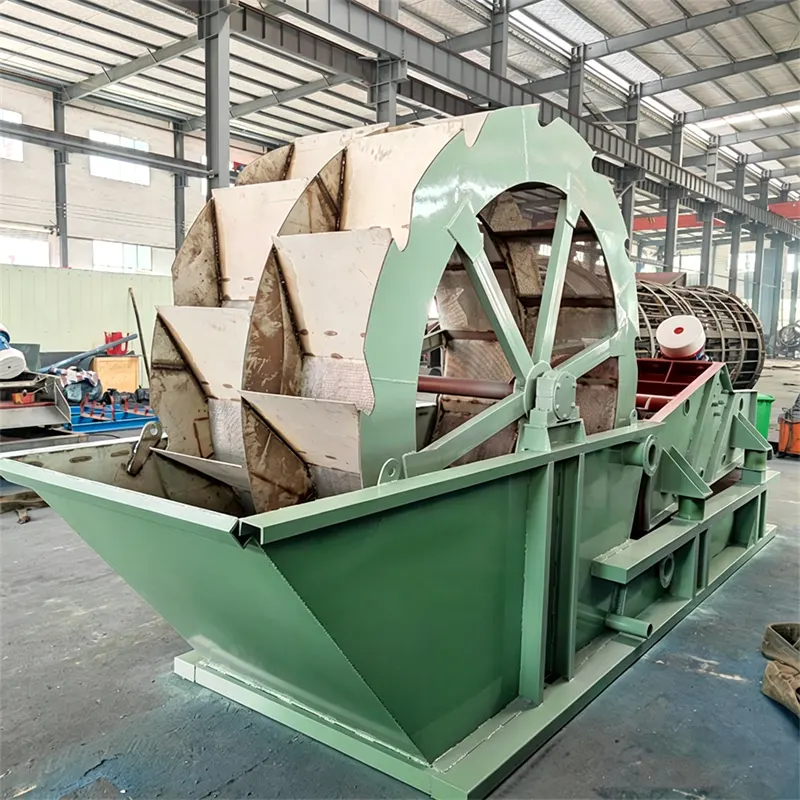
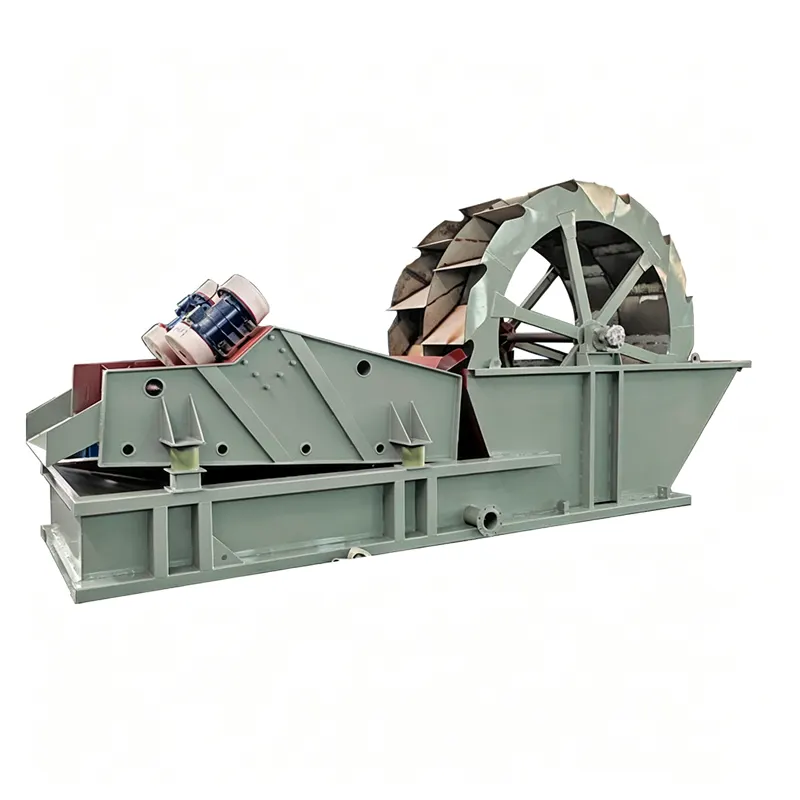
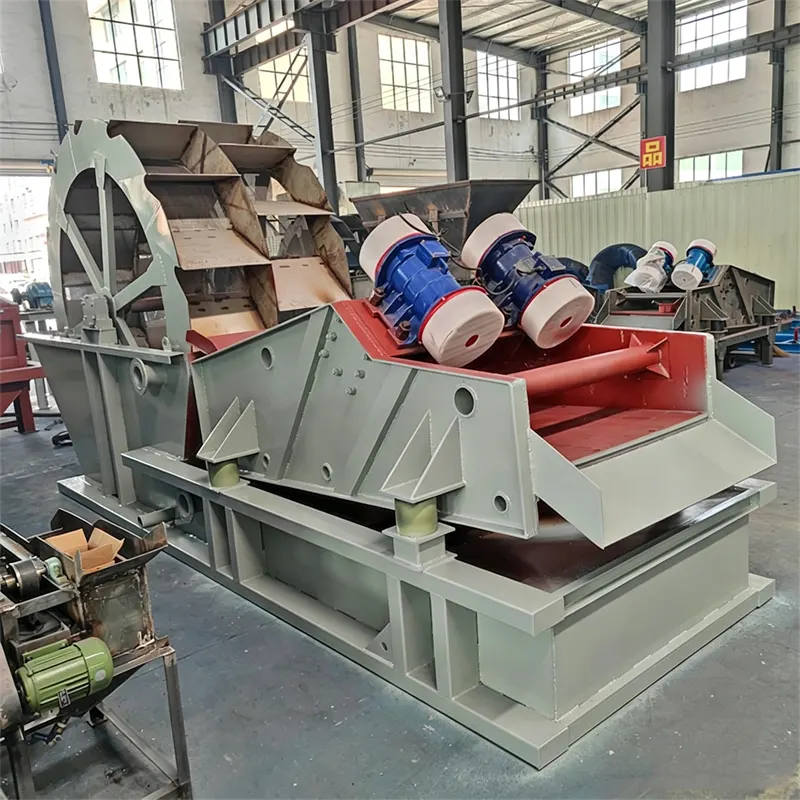
Main Components of the Integrated Sand Washing System
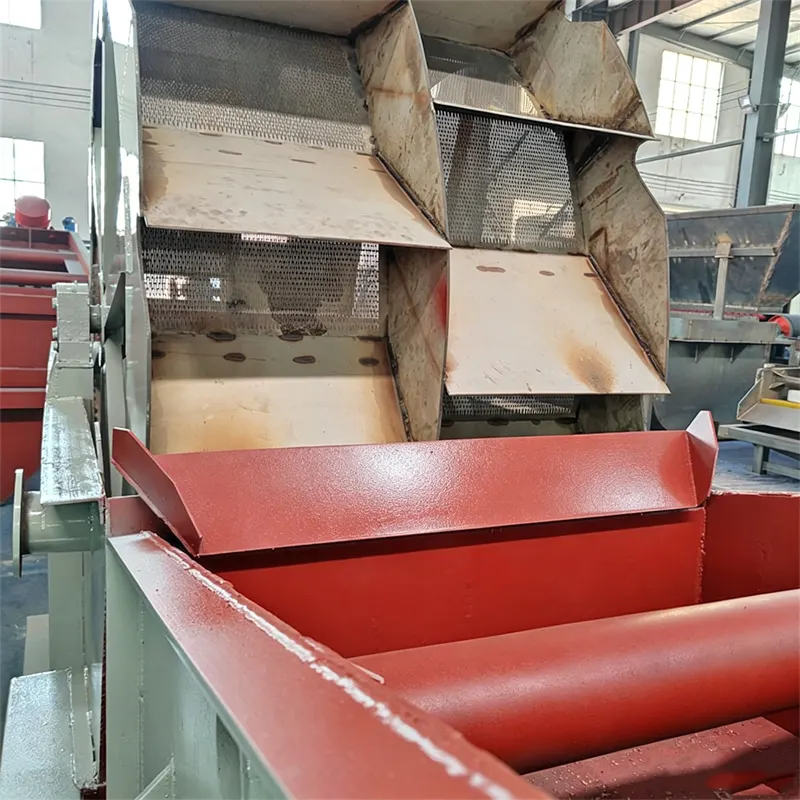
The sand washing and recycling machine combines mechanical washing with fine sand recovery and dewatering. The main equipment is organized by function rather than individual parts:
This configuration keeps the bucket wheel sand washer focused on washing and lifting, while the downstream recovery and dewatering sections handle fine sand and excess water.
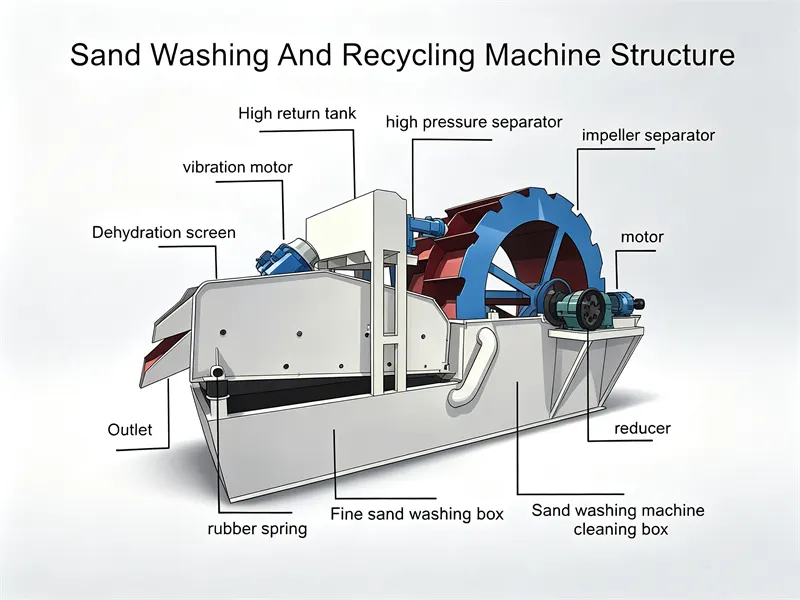
What Materials Can Be Washed and Recovered?
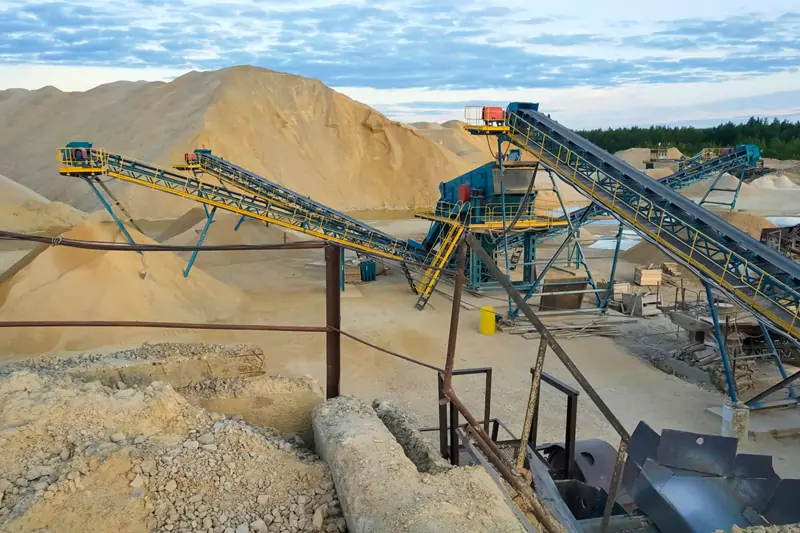
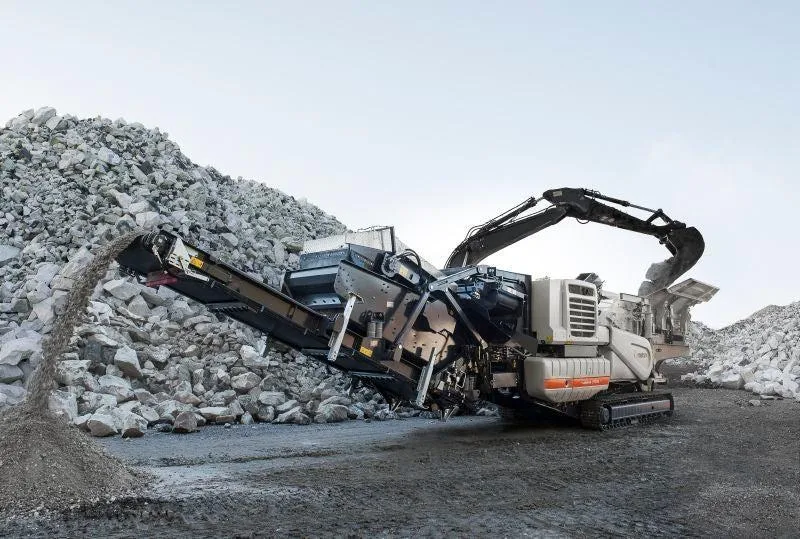
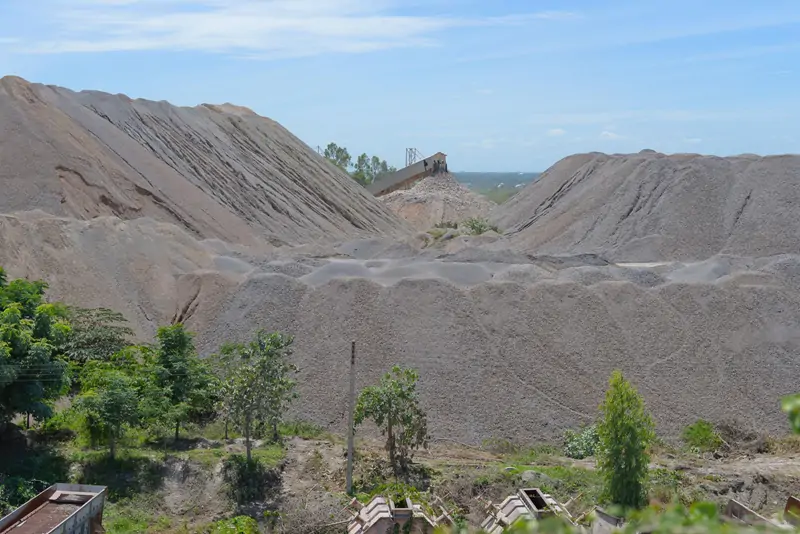
The bucket wheel sand washing and recycling machine is designed for sand and aggregate materials containing clay, silt, dust, and other unwanted fines.
Technical Specifications
The following table lists the main specifications of the HS series bucket wheel sand washing and recycling machine. Model selection is based on required capacity, feed conditions, and the washing, recovery, and dewatering configuration.
| Model | Specification (mm) | Pump (kW) | Dewatering Screen (kW) | Washer (kW) | Capacity (t/h) |
| HS-1 | 2816 + 2816 + 1642 + 250 × 2 | 45 | 2 × 5.5 | 2 × 5.5 | 60 |
| HS-2 | 3016 + 3016 + 1842 + 300 × 2 | 45 | 2 × 5.5 | 2 × 5.5 | 70 |
| HS-3 | 3024 + 3024 + 1842 + 300 × 2 | 55 | 2 × 7.5 | 2 × 7.5 | 90 |
| HS-4 | 3220 + 3220 + 1842 + 350 × 2 | 45 | 2 × 7.5 | 2 × 5.5 | 80 |
| HS-5 | 3224 + 3224 + 2442 + 350 × 2 | 55 | 2 × 11 | 2 × 7.5 | 100 |
| HS-6 | 3620 + 3620 + 2442 + 550 × 2 | 55 | 2 × 11 | 2 × 7.5 | 120 |
| HS-7 | 3624 + 3624 + 2448 + 550 × 2 | 75 | 2 × 11 | 2 × 7.5 | 150 |
Capacity depends on feed gradation, material properties, slurry concentration, and the selected washing, recovery, and dewatering configuration.
Bucket Wheel Sand Washing and Recycling Machine Configuration
Not every sand washing project requires the same setup. The bucket wheel sand washing and recycling machine can be configured according to the material condition, fine sand loss, product moisture, required capacity, and site requirements.
Configuration A: Washing Only
Bucket Wheel Washer
This configuration is used when the main requirement is sand washing and desliming. The bucket wheel agitates and lifts the feed material while water removes clay, silt, and other surface impurities. The washed sand is then lifted from the tank and partially dewatered during discharge. It is suitable for relatively clean feed materials where fine sand loss through the wastewater is not a major concern.
Configuration B: Washing + Fine Sand Recovery
Bucket Wheel Washer + Fine Sand Recovery Unit
This configuration is suitable when the washing process carries a noticeable amount of fine sand into the wastewater. The bucket wheel handles the main washing and desliming process, while the downstream recovery unit separates usable fine particles from the slurry and returns them to the product stream. It is used when reducing fine sand loss and improving finished-sand yield are important.
Configuration C: Washing + Recovery + Dewatering
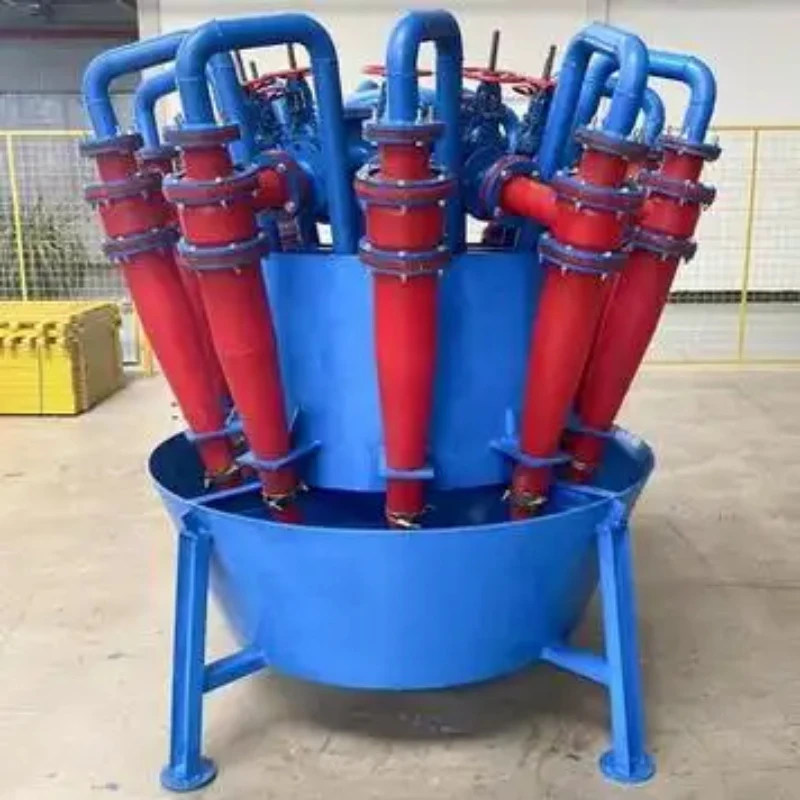
Bucket Wheel Washer + Hydrocyclone + Dewatering Screen
This configuration integrates washing, fine sand recovery, and final dewatering. After washing, the slurry containing recoverable fine sand is pumped to the hydrocyclone for classification, and the recovered sand is then processed by the dewatering screen. The finished product has lower surface moisture and can be directly conveyed or stockpiled, making this setup suitable for projects with stricter product handling and moisture requirements.
The final configuration should be selected according to feed material, capacity, feed size, clay and fine sand content, product specifications, water conditions, and plant layout.
Bucket Wheel Sand Washer vs. Sand Washing and Recycling Machine
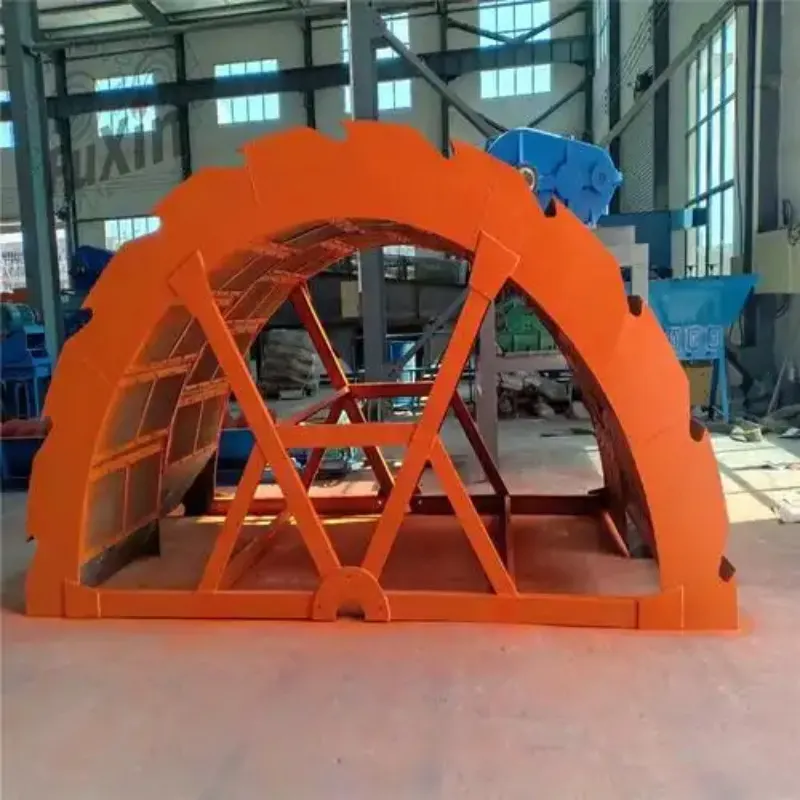
A bucket wheel sand washer and a sand washing and recycling machine serve different process requirements. The former focuses on washing, desliming, and basic dewatering, while the latter integrates fine sand recovery and dewatering into the washing process. The choice depends on feed conditions, fine-sand loss, product moisture requirements, and existing plant configuration.
| Feature | Bucket Wheel Sand Washer | Sand Washing and Recycling Machine |
| Sand washing | ✓ | ✓ |
| Desliming | ✓ | ✓ |
| Fine sand recovery | Separate recovery unit if required | Integrated recovery circuit |
| Dewatering | Basic / optional | Integrated configuration |
| Fine sand loss control | Depends on setup | Recovery circuit included |
| Process integration | Separate equipment | Washing + recovery + dewatering |
| Suitable for | Washing, desliming and basic dewatering | Washing, fine sand recovery and dewatering |
What Determines Fine Sand Recovery Performance?.
Fine sand recovery performance is mainly determined by the feed material and operating conditions. Particle size distribution, fine-sand content, clay or silt content, material density, and slurry concentration affect how much usable fine sand enters the wastewater. The bucket wheel washing section must be operated with suitable water flow and slurry conditions; excessive fines or unstable concentration can increase sand loss and change the recovery load.
The recovery circuit also needs to be properly matched to the feed. Hydrocyclone selection, slurry pump capacity and pressure, and dewatering screen configuration directly affect classification, recovery, and final product moisture. Upstream screening can remove oversize material and reduce unnecessary load, while downstream dewatering improves product handling. Therefore, fine sand recovery performance should be evaluated together with the feed material, slurry conditions, and complete recovery circuit rather than by a single recovery-rate number.
How to Select the Right Sand Washing and Recycling Machine?
Equipment selection should match the feed conditions, production target, product requirements, and plant layout. The following six parameters are normally required:
- Required Capacity: Target production rate in TPH for sizing the machine and recovery system.
- Material and Feed Conditions: Material type, maximum feed size, and clay or silt content.
- Fine Sand Content: Proportion of fine particles that may enter the washing water and require recovery.
- Product Requirements: Finished sand size, gradation, cleanliness, and required moisture level.
- Water Conditions: Available water supply, recycled water availability, and slurry concentration.
- Site and Plant Layout: Installation footprint, elevation, power supply, and connection with existing screens, pumps, or conveyors.
For high-clay or unusual materials, feed testing is recommended before final equipment selection.
Why Choose Zhongyi Mining for Sand Washing Equipment?
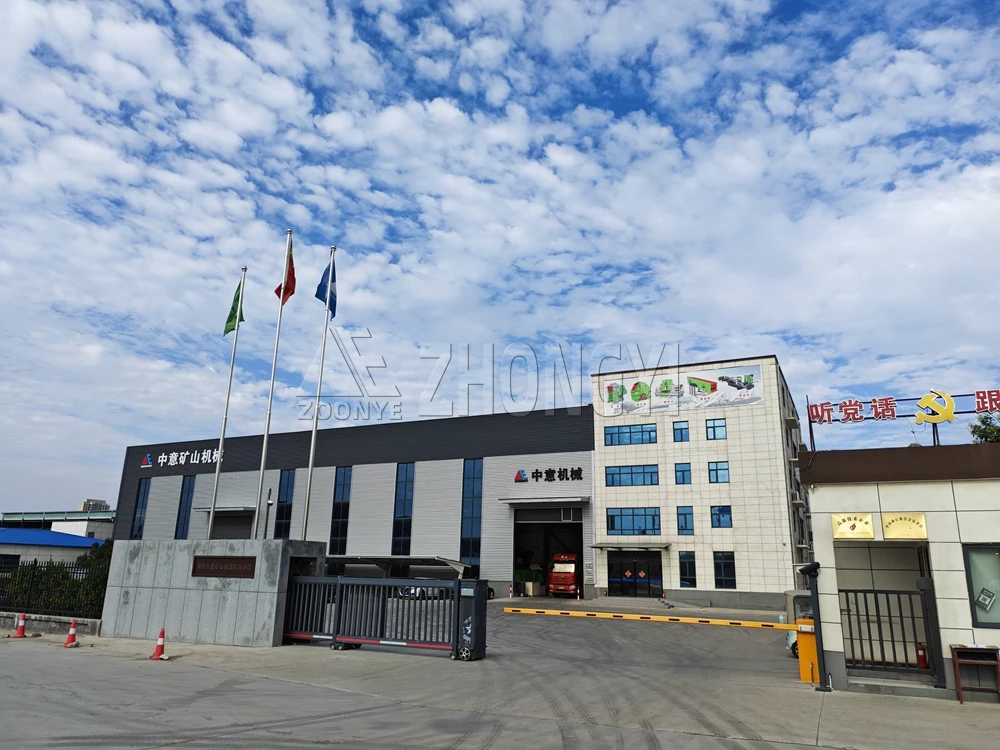
Zhongyi Mining provides equipment manufacturing and process engineering for sand washing and aggregate plants. We select and configure washing, fine sand recovery, dewatering, crushing, screening, and conveying equipment according to feed material, required capacity, product specifications, and site conditions, helping avoid mismatched equipment and process connections.
Our project support covers the main stages from site survey, process design, and equipment selection to manufacturing, installation, and commissioning. For complete sand washing systems, we can coordinate the equipment layout and process connections, while on-site installation, commissioning, operator guidance, spare parts, and technical support are available according to project requirements.
Request a Customized Solution
Partner with Zhongyi for a Bucket Wheel Sand Washing and Recycling Machine designed for sand washing, desliming, fine sand recovery, and dewatering in manufactured sand, aggregate, and mineral processing plants.
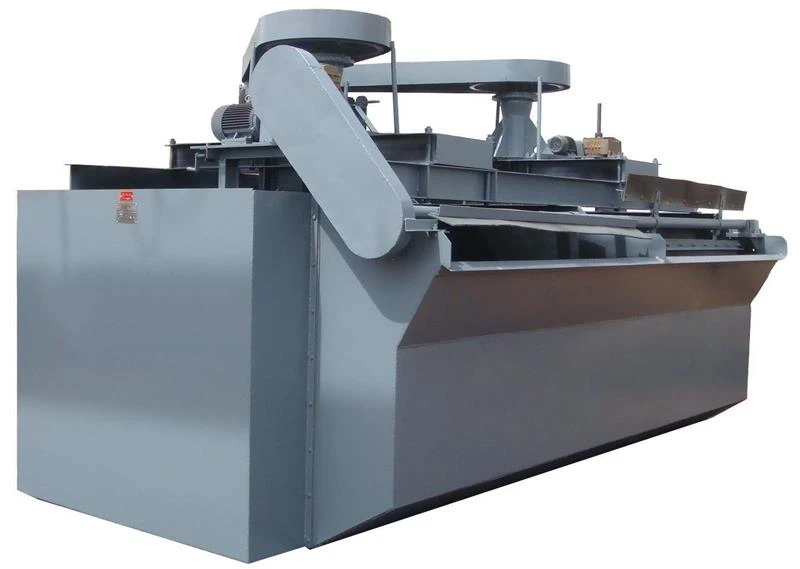
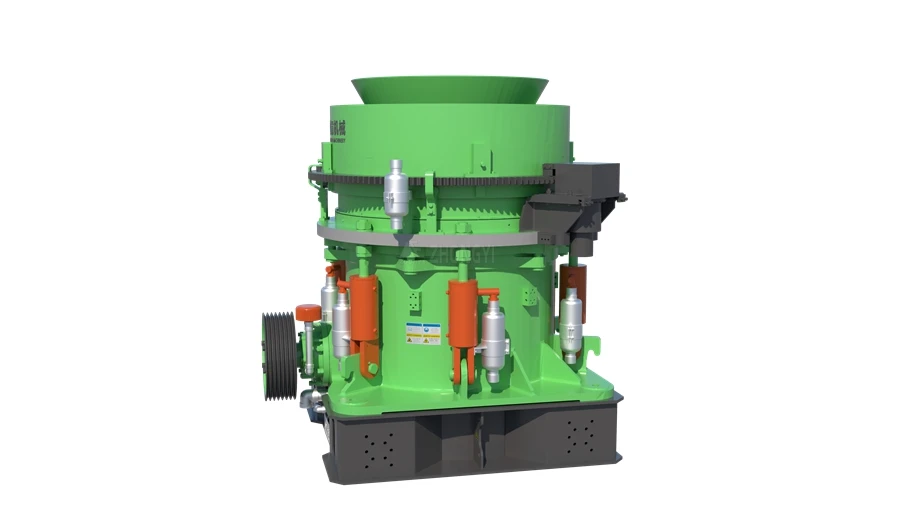
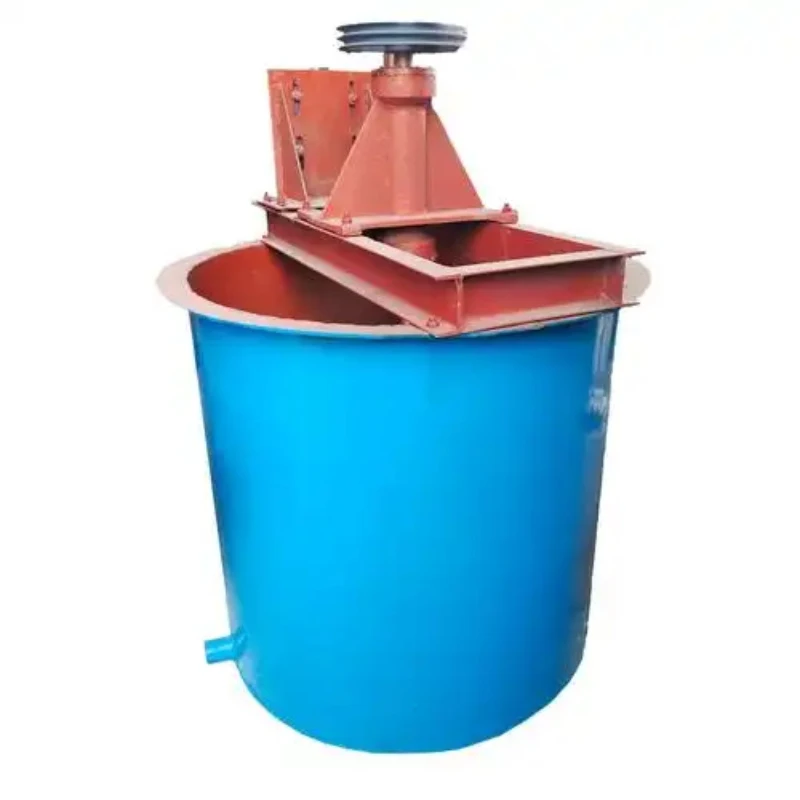
Custom High Density Agitation Tank Solutions
Every sand washing project has different feed materials, capacity targets, product requirements, and site conditions. Tell us your material type, feed size, required capacity, fine sand content, target product specifications, water conditions, and existing equipment. Zhongyi can then develop a suitable washing, fine sand recovery, dewatering, crushing, and screening configuration. For complete plant requirements, see our [Mineral Flotation Plants Solution] or other process solutions, and contact Zhongyi for equipment selection and a project-specific process design.
Please Provide the Following Information:
FAQs
What is a bucket wheel sand washing and recycling machine?
A bucket wheel sand washing and recycling machine combines sand washing, desliming, fine sand recovery, and dewatering in one process. The bucket wheel removes clay, silt, and surface impurities, while the recovery circuit separates usable fine sand from washing slurry. A dewatering screen can then remove excess water before the recovered sand is conveyed or stockpiled.
What is the capacity of a bucket wheel sand washing and recycling machine?
The HS series bucket wheel sand washing and recycling machine covers approximately 60–150 t/h, depending on the model. Actual capacity varies with feed size, particle-size distribution, material density, clay content, slurry concentration, and the selected washing and recovery configuration. The machine should therefore be sized from actual feed conditions and process requirements rather than the nominal capacity range alone.
Does every bucket wheel sand washer need a fine sand recovery system?
No. A standalone bucket wheel sand washer can be used when the main requirement is washing and desliming and fine-sand loss is acceptable. A fine-sand recovery circuit is more appropriate when usable fines are being carried away with wastewater. The decision should consider feed gradation, fine-sand content, target product specifications, water conditions, and whether the existing plant already has recovery equipment.
How does the machine recover fine sand from washing wastewater?
Fine-sand-bearing wastewater is collected and transferred by a slurry pump to a hydrocyclone. Centrifugal classification separates recoverable fine sand from water and finer suspended solids. The concentrated underflow is then discharged to a dewatering screen for further water removal. Recovery performance depends on particle-size distribution, slurry concentration, hydrocyclone selection, pump pressure, water flow, and the condition of the complete recovery circuit.
Can the machine process sand with high clay or silt content?
The machine can process sand containing clay, silt, and other unwanted fines, but high or sticky clay content increases the washing load and may require additional treatment. Feed testing is recommended when the material contains cohesive mud lumps or a high proportion of clay. Depending on the feed characteristics, additional scrubbing, classification, or washing stages may be required before the fine-sand recovery section.
What is the maximum feed size for a bucket wheel sand washing and recycling machine?
For the HS series, the stated maximum feed size is up to 10 mm. Actual feed conditions should still be checked before selection because oversized particles can increase equipment load and affect washing performance. Upstream screening is normally used when the feed contains particles above the specified size or has significant size variation. Feed testing can also help confirm the suitable washing and recovery configuration.
Can the machine produce a drier finished sand product?
Yes. A dewatering screen can be integrated after the fine-sand recovery stage when lower product moisture is required. The recovered sand is fed onto the screen, where vibration removes free water before discharge. Final moisture depends on feed characteristics, screen configuration, water content, and operating conditions, so the dewatering stage should be selected according to the required product handling conditions.
How should I select the right sand washing and recycling machine?
Start with material type, maximum feed size, required capacity, particle-size distribution, clay and silt content, fine-sand content, product gradation, target moisture, and available water. Existing screens, pumps, conveyors, and installation space should also be considered. These parameters determine whether washing only, washing plus recovery, or washing plus recovery and dewatering is the appropriate configuration.