What Is a Pendulum Feeder?
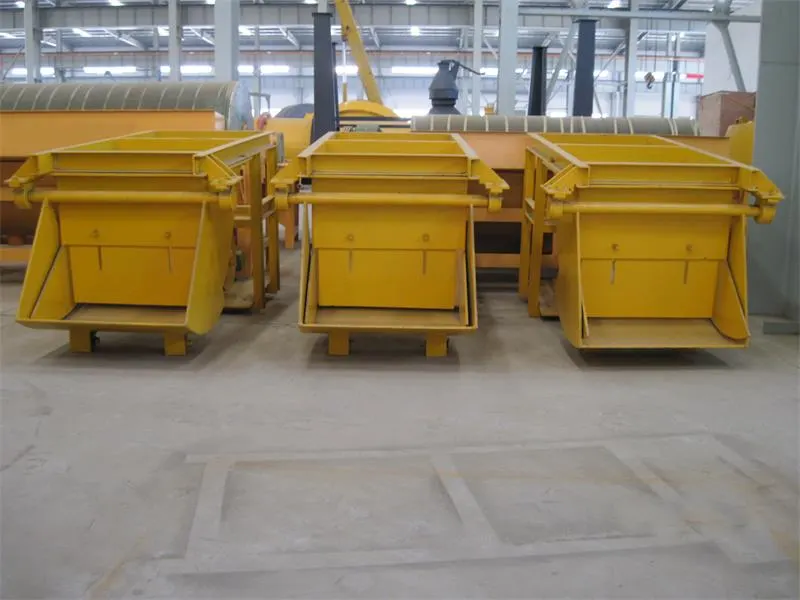
A pendulum feeder, also known as a swaying feeder or pendulum ore feeder, is a mechanical feeding machine used to control the discharge of granular ore from a hopper or ore bin. It is normally installed below the storage bin, where it receives material from the hopper and feeds it to downstream equipment at a controlled rate.
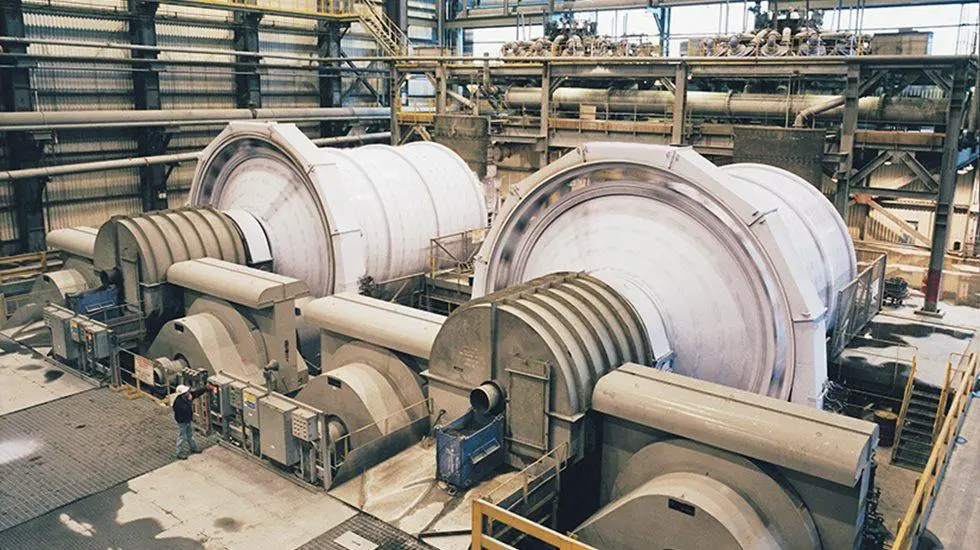
In mineral processing plants, pendulum feeders are commonly used for granular and small-lump materials. Depending on the model, the maximum feed particle size can reach 50 mm. The feeder does not crush or process the ore; its role is to regulate material flow from the storage stage to the next process. A typical arrangement is ore bin → pendulum feeder → belt conveyor → ball mill, making it a practical type of ore feeding equipment for grinding and mineral processing circuits.
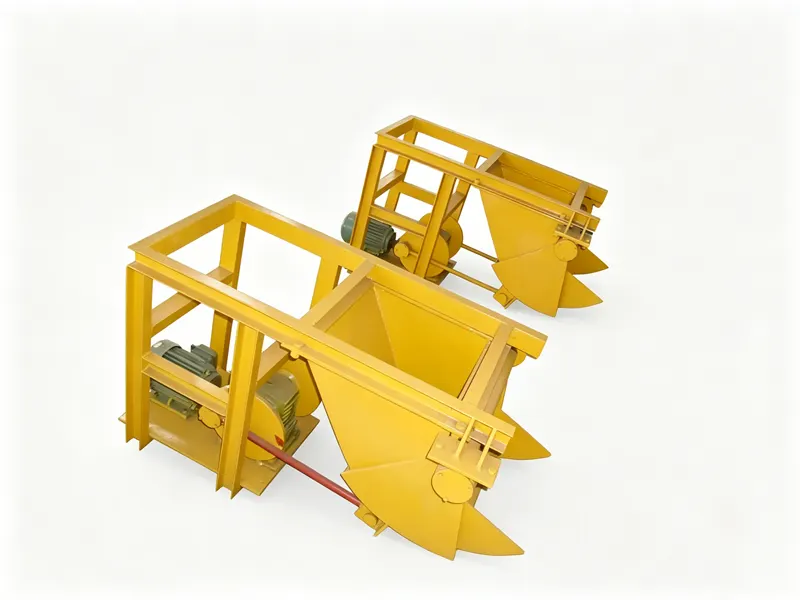
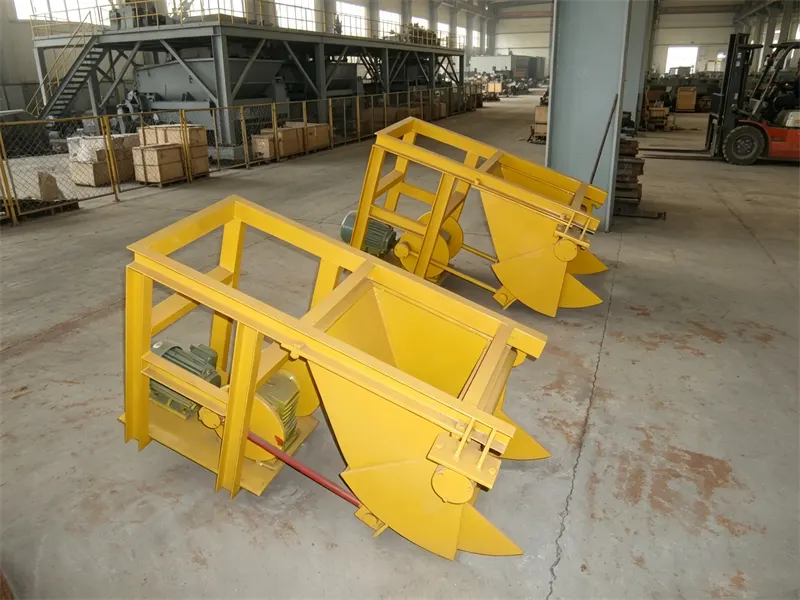
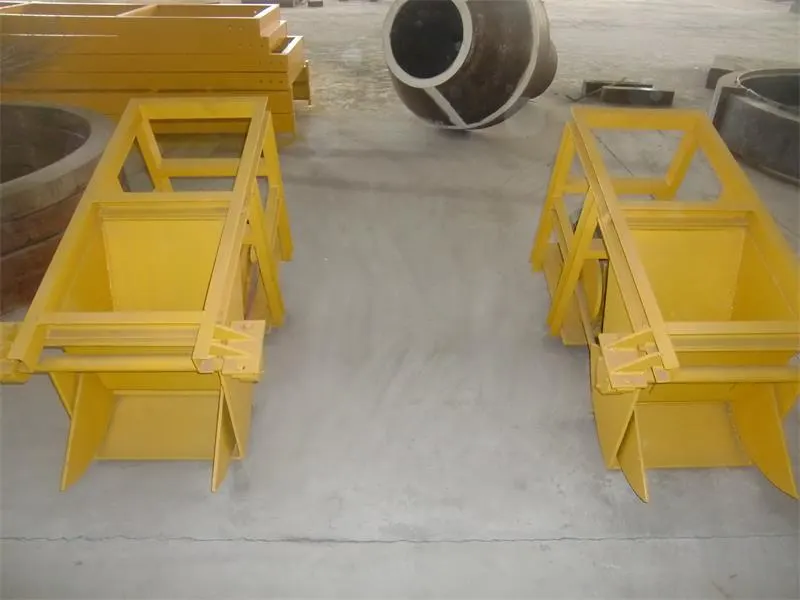
Pendulum Feeder Structure
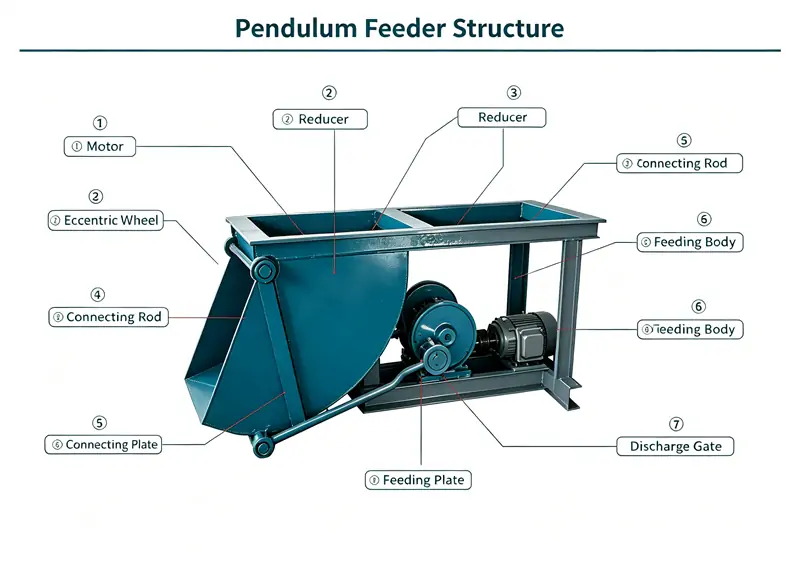
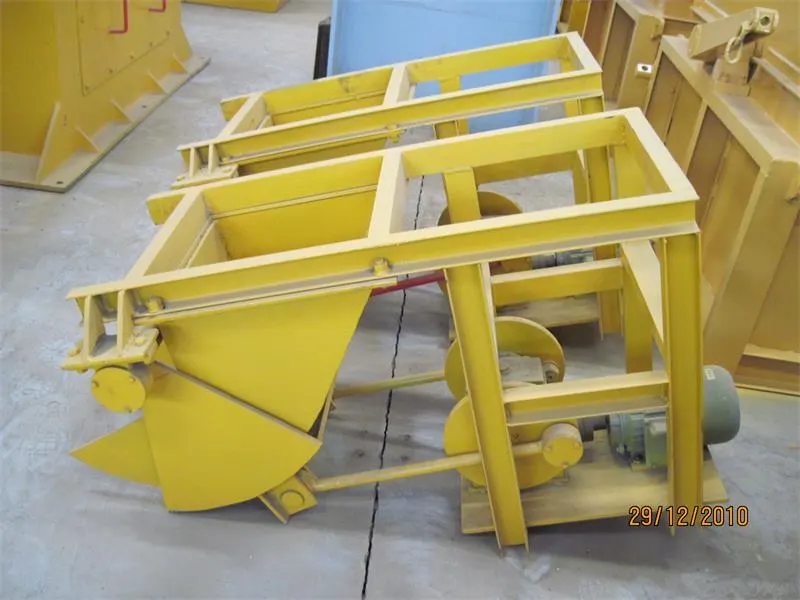
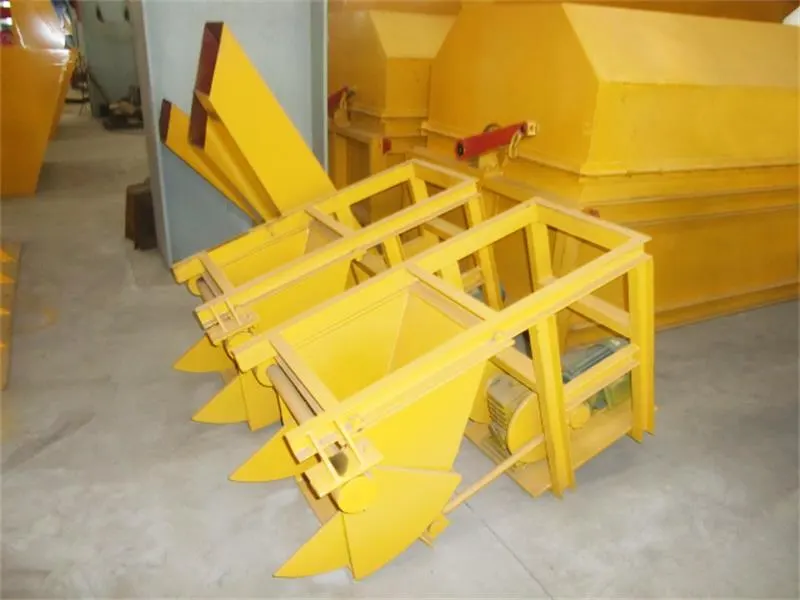
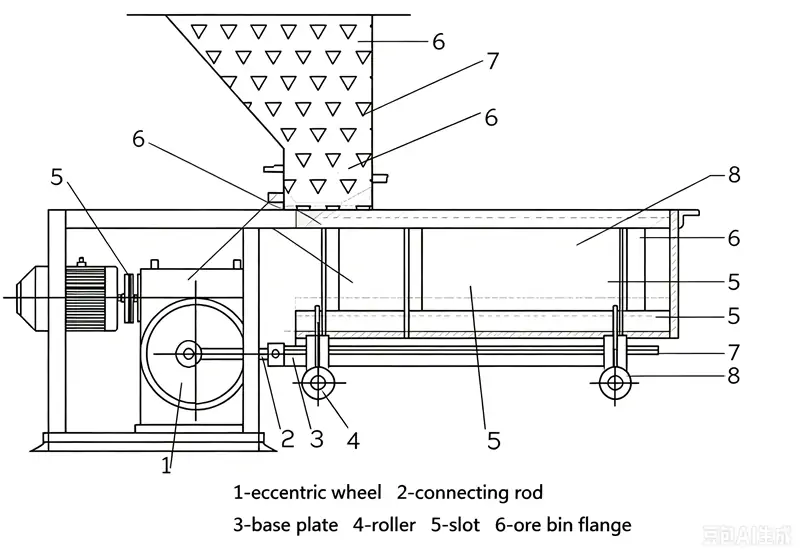
The pendulum feeder structure combines a drive system with a feeding mechanism mounted below the hopper. The motor and reducer provide the drive, while the eccentric wheel and connecting rod work with the feeding plate to move material toward the outlet. The feeding body supports the material load, and the discharge gate provides a practical way to control the outlet opening.
- Motor — Supplies the power required to operate the feeder.
- Reducer — Reduces the motor speed and transmits the drive to the eccentric mechanism.
- Eccentric Wheel — Creates the offset motion needed to drive the feeding mechanism.
- Connecting Rod — Links the eccentric wheel with the feeding plate and transfers its movement.
- Feeding Plate — Carries the material and moves it toward the discharge side.
- Feeding Body — Forms the main material-carrying section and guides the feed from the hopper to the outlet.
- Discharge Gate — Adjusts the outlet opening to help regulate material discharge.
How Does a Pendulum Feeder Work?
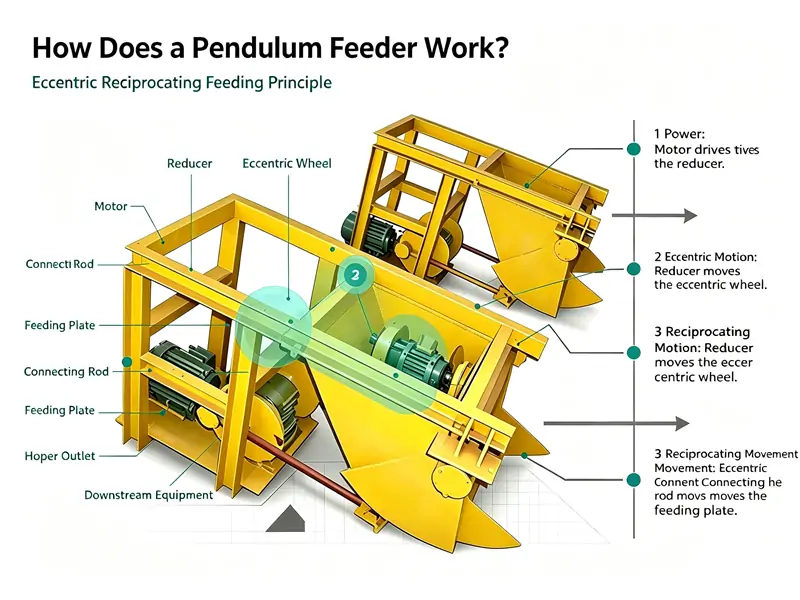
A pendulum feeder uses a simple eccentric mechanism to produce the reciprocating movement needed for feeding. The motor drives the reducer, which then drives the eccentric wheel. Through the connecting rod, this movement is transferred to the feeding plate, causing it to move back and forth and discharge material from the hopper.
Motor → Reducer → Eccentric Wheel → Connecting Rod → Feeding Plate → Material Discharge
How Is the Pendulum Feeder Feed Rate Adjusted?
The pendulum feeder feed rate is mainly adjusted by changing the eccentric stroke and discharge opening. The stroke changes the feeding plate movement, while the discharge gate controls the outlet size. Both can be adjusted according to the required pendulum feeder capacity and material conditions.
Eccentric Stroke
Changing the eccentric setting changes the pendulum feeder stroke. A longer stroke generally increases the amount of material discharged per cycle, while a shorter stroke reduces it. If both sides have adjustable drive components, their settings should remain consistent.
Discharge Opening
Adjusting the discharge gate changes the pendulum feeder outlet opening. A larger opening increases material flow, while a smaller opening reduces it. Actual capacity also depends on particle size, material density and flowability.
What Materials Can a Pendulum Feeder Handle?
A pendulum feeder for ore is mainly used for granular and small-lump materials discharged from a hopper. Common feed materials include gold ore, iron ore, copper ore, lead-zinc ore, tungsten ore and coal. Material size, moisture and flowability should be checked before selection.
Suitable Materials
Pendulum feeders are commonly used for gold ore, iron ore, copper ore, lead-zinc ore, tungsten ore, coal and other dry, free-flowing mineral processing feed. The maximum particle size should remain within the limit of the selected model.
Materials Requiring Caution
Sticky or high-moisture materials, very fine dry powder and oversized lumps require additional evaluation. Depending on material properties and hopper conditions, they may cause unstable discharge, outlet blockage or dust problems.
Pendulum Feeder Technical Specifications
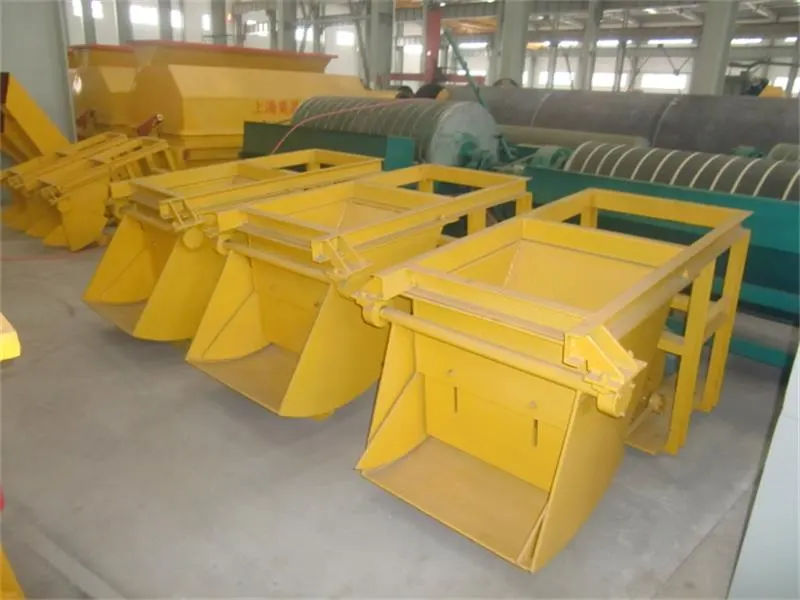
The main technical specifications of the pendulum feeder are listed below for model selection and equipment configuration.
| Model | Inlet W × H (mm) | Outlet W × H (mm) | Eccentric Stroke (mm) | Frequency (r/min) | Max. Particle Size (mm) | Feed Capacity (t/h) | Motor Model | Power (kW) | Speed (r/min) | Weight (t) |
| 250×250 | 250×250 | 250×30–115 | 0–90 | 46 | 25 | 4.5 | Y80L1-4 | 0.55 | 1390 | 0.13 |
| 300×300 | 300×300 | 300×30–125 | 0–90 | 46 | 30 | 6.5 | Y80S-4 | 0.75 | 1390 | 0.19 |
| 400×400 | 400×400 | 400×50–130 | 0–170 | 46 | 35 | 12 | Y90S-4 | 1.1 | 1400 | 0.26 |
| 600×600 | 600×600 | 600×50–150 | 0–220 | 46 | 50 | 25 | Y100L1-4 | 2.2 | 1400 | 0.65 |
Note: Feed capacity varies with material bulk density, particle size distribution, flowability and operating conditions.
How to Choose the Right Pendulum Feeder Model?
Pendulum feeder selection starts with the required capacity and particle size, followed by the hopper, material and downstream equipment.
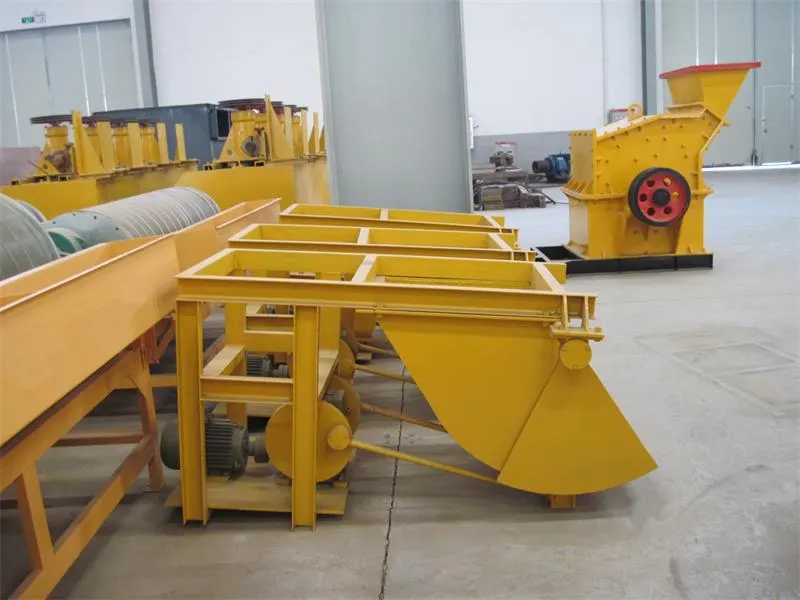
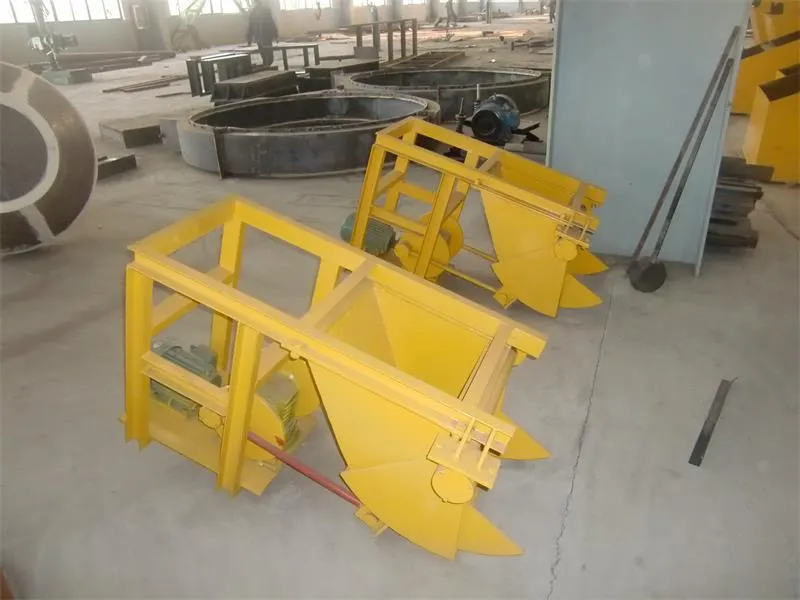
Pendulum Feeder vs Vibrating Feeder vs Trough Ore Feeder
Different feeders are designed for different material and process requirements. The table below compares pendulum feeders, vibrating feeders and trough ore feeders across key selection factors.
| Factor | Pendulum Feeder | Vibrating Feeder | Trough Ore Feeder |
| Feeding mechanism | Reciprocating feeding plate | Continuous vibration | Reciprocating bottom plate |
| Typical application | Ore bin and mill feeding | Crushing, screening and continuous feeding | Coarse ore and crushing-line feeding |
| Feed material | Granular, relatively dry material | Ore, rock, aggregates and other bulk materials | Bulk and coarse-grained ore |
| Feed control | Eccentric stroke + outlet opening | Vibration parameters | Feeding speed / drive configuration |
| Key selection factors | Particle size, flowability and hopper conditions | Feed size, capacity and material characteristics | Feed size, capacity and installation conditions |
The suitable feeder depends on material characteristics, required capacity, particle size, hopper configuration and downstream equipment.
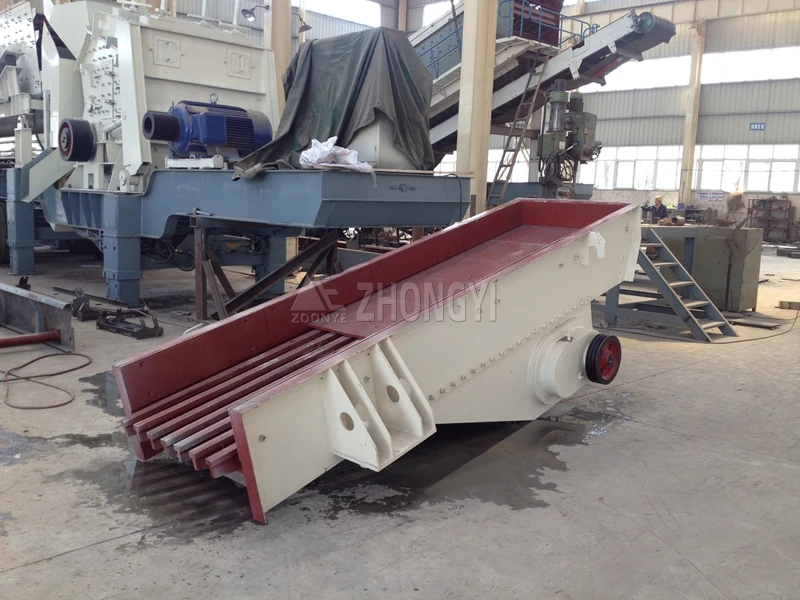
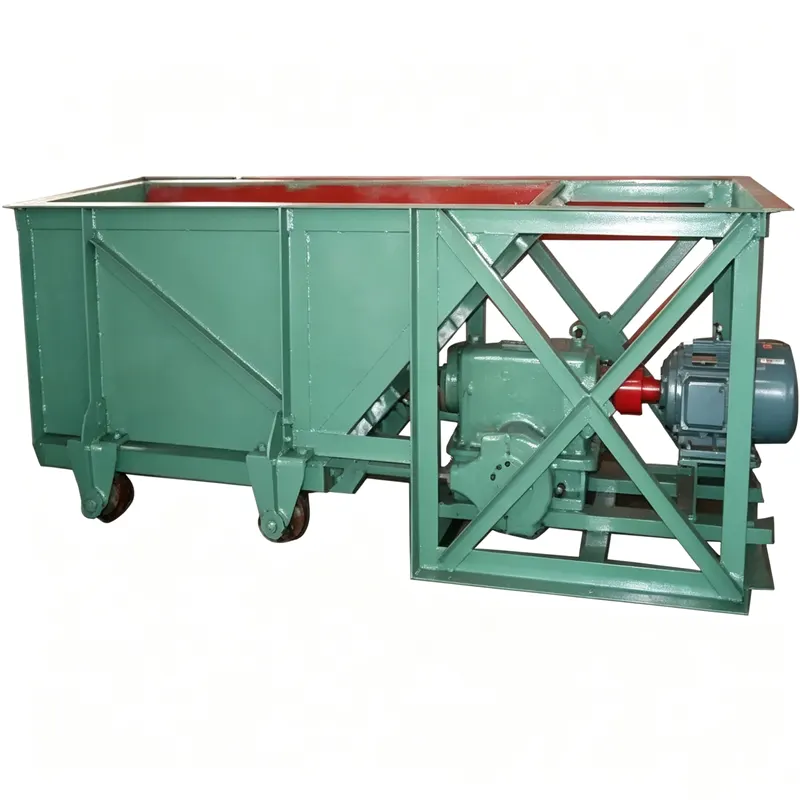
Pendulum Feeder Applications
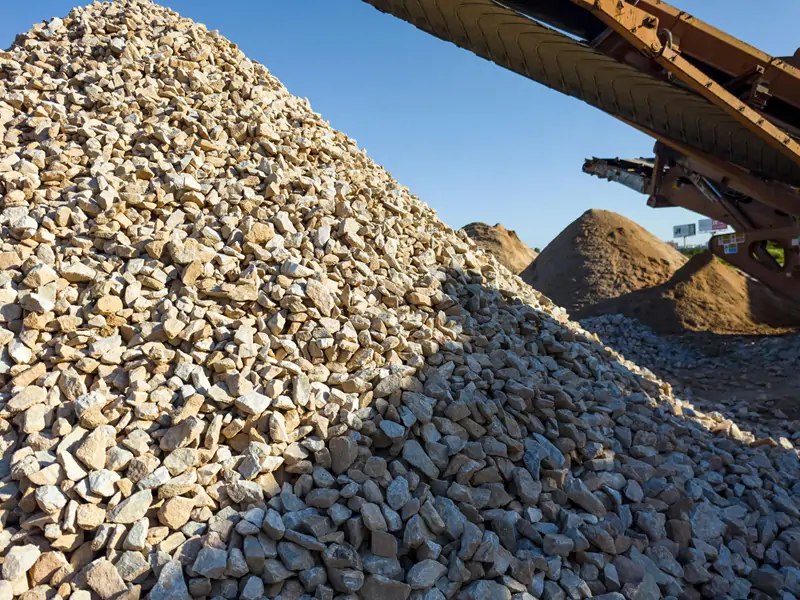
A mining pendulum feeder is used for controlled discharge of granular materials from ore bins, bunkers and storage hoppers. Its applications vary by material and feeding requirement.

Pendulum Feeder Installation & Operation
Correct installation and proper operation help maintain stable discharge and reduce common feeding problems. In our installation work, we pay particular attention to the hopper connection, feeder alignment and maintenance clearance before commissioning.
Installation
The pendulum feeder is normally installed below an ore bin or hopper. The feeder inlet and outlet should be aligned with the hopper and downstream equipment to avoid uneven material flow or unnecessary load on the feeding mechanism. The feeder should have stable support and sufficient clearance around the drive and discharge area for inspection and maintenance.
Operation
Before starting, check the motor, reducer and drive components, and make sure the discharge path is clear. During operation, observe whether the material is discharged evenly and listen for abnormal noise or vibration. We also recommend checking the motor operating condition during initial commissioning and after any adjustment to the feeding system.ker and production requirements, rather than simply choosing a larger machine from a capacity table.
Why Choose Zhongyi Mining?
Choosing a pendulum feeder requires more than matching capacity. The feeder must work with the material, hopper and downstream equipment as part of the complete process.
Practical Equipment Selection
We consider material type, particle size, required capacity, hopper dimensions and downstream equipment when selecting the feeder model. This helps avoid a common problem in projects: choosing a feeder based only on capacity while overlooking the actual feeding conditions.
Manufacturing & Project Experience
Since 2010, we have been manufacturing mining and mineral processing equipment and supporting complete processing projects. Our manufacturing facility covers 40,000+ m², with capabilities for equipment fabrication, assembly and testing.
From Equipment to Site Support
For projects that require more than a single feeder, we can support process design, equipment selection, plant layout, installation and commissioning. We also provide technical support and spare parts after delivery.
Request a Customized Solution
Partner with Zhongyi Mining for a pendulum feeder for controlled ore discharge from storage hoppers and ore bins, selected according to material, particle size, capacity and downstream equipment.
Custom High Density Agitation Tank Solutions
Every project has different feeding and process requirements. Zhongyi Mining can evaluate your project conditions and recommend a suitable feeder or complete process solution. Explore our Gold Mine Processing Plant Solutions for a broader mineral processing reference, or [Contact us] to discuss your project.
Please Provide the Following Information:
FAQs
What is a pendulum feeder?
A pendulum feeder is a mechanical feeding machine installed below an ore bin, hopper or storage bunker. It uses a reciprocating feeding plate to discharge granular material at a controlled rate. In mineral processing plants, it is commonly used for ore feeding, ball mill feeding and other applications where material needs to move from storage to downstream equipment at a controlled rate.
How does a pendulum feeder work?
The motor drives a reducer and eccentric mechanism, which moves the connecting rod and feeding plate back and forth. This reciprocating movement causes material to discharge from the hopper through the outlet. The feeding rate is affected by the eccentric stroke and outlet opening, while actual performance also depends on material properties and hopper conditions.
What is the maximum feed size of a pendulum feeder?
The maximum feed size depends on the selected pendulum feeder model. Different models have different inlet dimensions and allowable particle sizes, so the largest material lump should be checked against the technical specifications before selection. Oversized material can restrict discharge or cause blockage. For accurate selection, the actual maximum particle size should be provided with the project requirements.
How is the pendulum feeder feed rate adjusted?
The pendulum feeder feed rate is mainly controlled by the eccentric stroke and discharge opening. Changing the stroke affects the movement of the feeding plate, while changing the outlet opening affects the amount of material discharged. The final setting should consider the required capacity, particle size, bulk density and flowability rather than relying on the feeder adjustment alone.
What materials can a pendulum feeder handle?
Pendulum feeders are mainly used for granular and small-lump materials that can discharge freely from a hopper. Typical materials include gold ore, iron ore, copper ore, tungsten ore, coal and other mineral processing feed. Sticky materials, excessive moisture, very fine dry powder and oversized lumps require additional evaluation because they may affect material flow and discharge performance.
Can a pendulum feeder be used for ball mill feeding?
Yes. A pendulum feeder for ball mill applications is typically installed below an ore bin or hopper to control ore discharge into the grinding circuit. It provides the feeding link between material storage and the mill system. The selected feeder should match the ore particle size, required feed capacity, hopper arrangement and the operating conditions of the downstream grinding equipment.
How do I choose the right pendulum feeder model?
Start with the required feed capacity and maximum particle size, then check the hopper dimensions and material characteristics. Particle size distribution, bulk density and flowability can affect actual feeding performance. The downstream equipment should also be considered to ensure proper connection and feed requirements. A suitable model should be selected based on the complete feeding condition rather than capacity alone.
Why does a pendulum feeder feed unevenly?
Uneven feeding may result from unstable hopper discharge, an unsuitable stroke or outlet opening, or changes in material properties. Sticky or poorly flowing material can also affect the discharge. Check the hopper flow and feeder adjustment first, then confirm that the material size and operating conditions are within the selected model’s range. Persistent problems may indicate a mismatch between the feeder and application.