What Is a Trough Ore Feeder?
A trough ore feeder is a reciprocating feeding machine used to transfer bulk and coarse-grained ore from an ore bin, hopper, or storage bunker to downstream processing equipment. It is also commonly called a trough feeder or reciprocating feeder. The feeder moves material through the reciprocating motion of its bottom plate, providing controlled and continuous discharge for short-distance feeding.
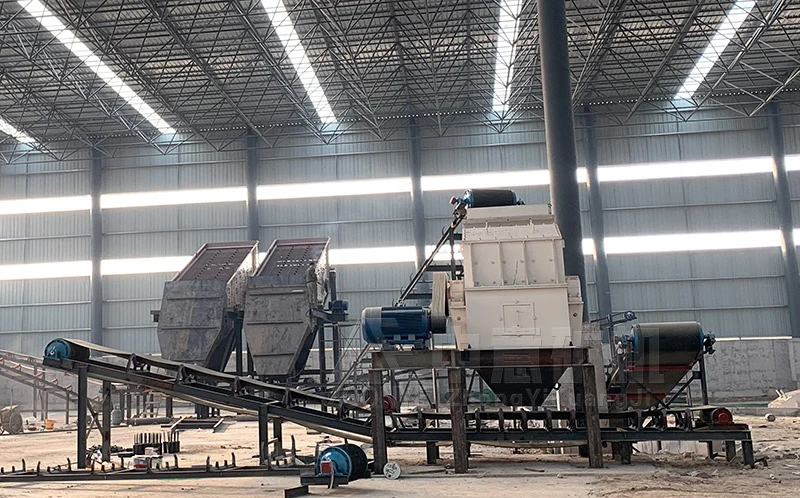
In a typical mineral processing circuit, the trough ore feeder is installed between the ore storage bin and the primary crusher, such as a jaw crusher, and can also feed screens or other processing equipment. Compared with belt conveying, it is mainly used for controlled feeding of bulk ore at the discharge point, making it suitable for the front end of crushing and mineral processing lines.
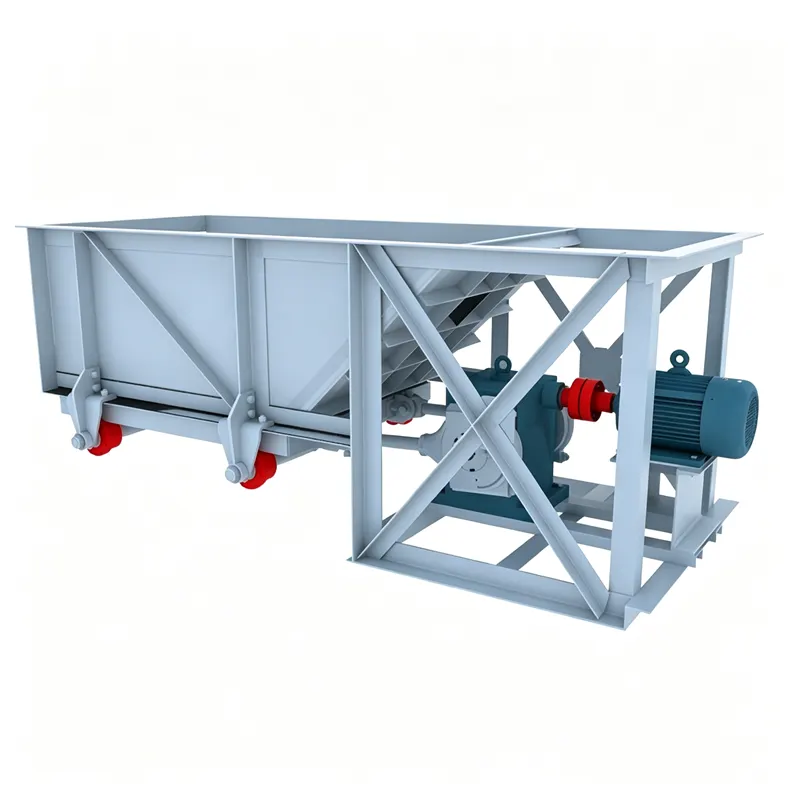
How Does a Trough Ore Feeder Work?
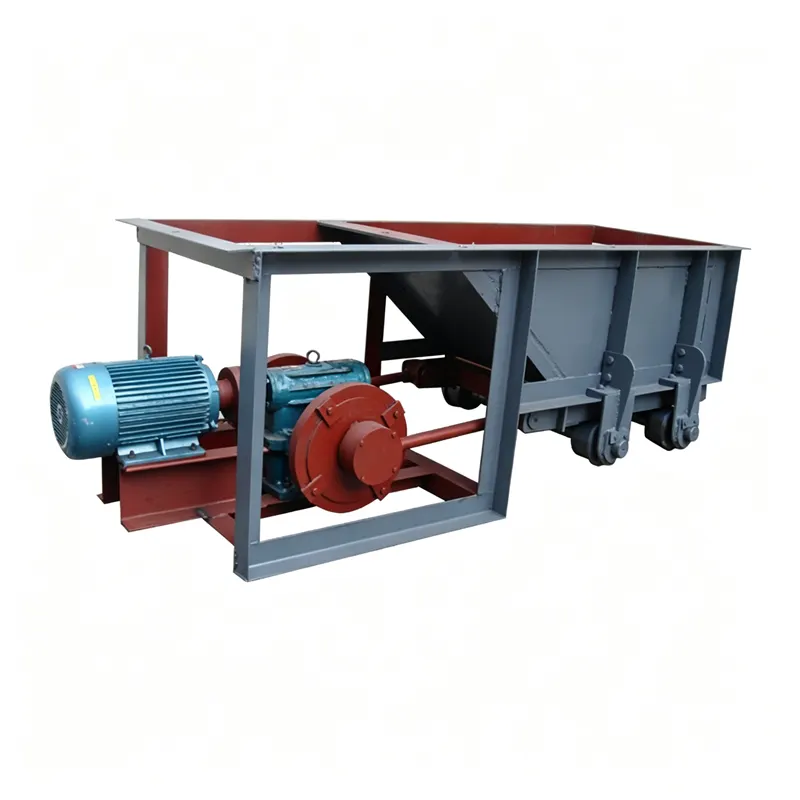
A trough ore feeder works by converting the rotary motion of the drive system into reciprocating motion of the bottom plate. Ore falls from the storage bin or hopper onto the feeding trough, and the reciprocating bottom plate moves the material toward the discharge opening. This repeated motion provides controlled and continuous feeding to downstream crushing or screening equipment.
Ore Enters the Feeding Trough
The ore is discharged from the ore bin or hopper onto the bottom plate of the feeding trough. The trough supports the material load, while the discharge opening connects the feeder with the next processing stage.
As the bottom plate reciprocates, the ore is carried toward the discharge end and gradually discharged into the receiving equipment. This arrangement allows the feeder to control the flow of bulk and coarse-grained ore directly below the storage bin.
The Drive System Creates Reciprocating Motion
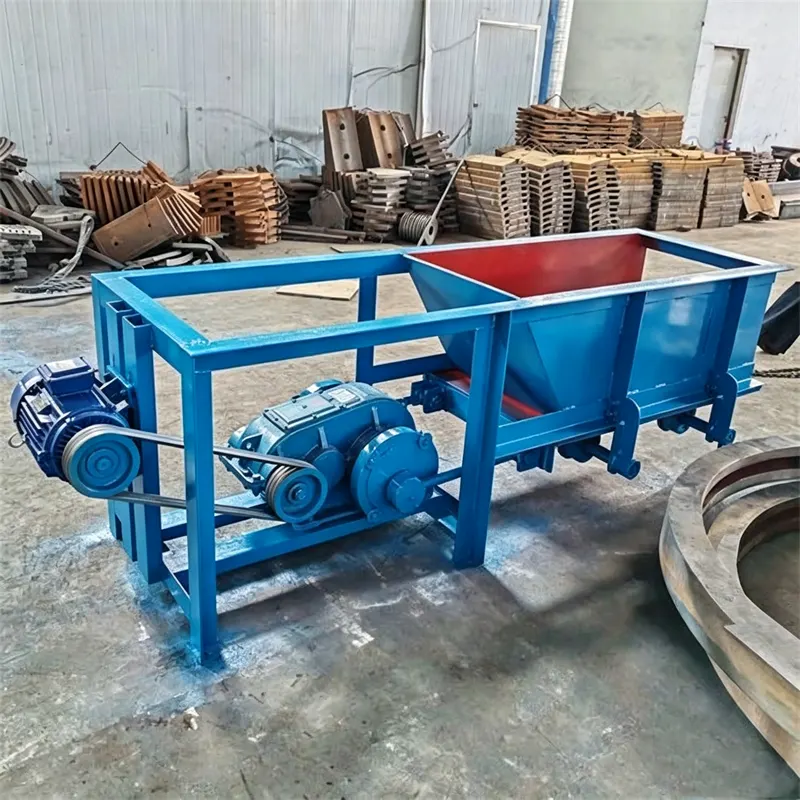
The electric motor drives the transmission system through the coupling and reducer. The reducer then drives the eccentric mechanism, which converts rotary motion into reciprocating linear motion through the connecting rod.
The bottom plate moves back and forth on the supporting rollers, providing the mechanical movement required to transfer the ore toward the discharge opening. The combination of the eccentric mechanism, connecting rod, bottom plate, and rollers forms the core feeding mechanism.
The Reciprocating Plate Controls Ore Feeding
During operation, the reciprocating bottom plate moves the ore toward the discharge opening with each working cycle. The repeated forward and backward movement keeps material flowing from the storage bin to the downstream equipment at a controlled rate.
For applications requiring adjustment of the feed rate, an adjustable-speed motor can be configured to change the feeding speed according to process requirements. This allows the trough ore feeder to be matched more closely with the capacity of the crusher, screen, or other receiving equipment.
Trough Ore Feeder Structure
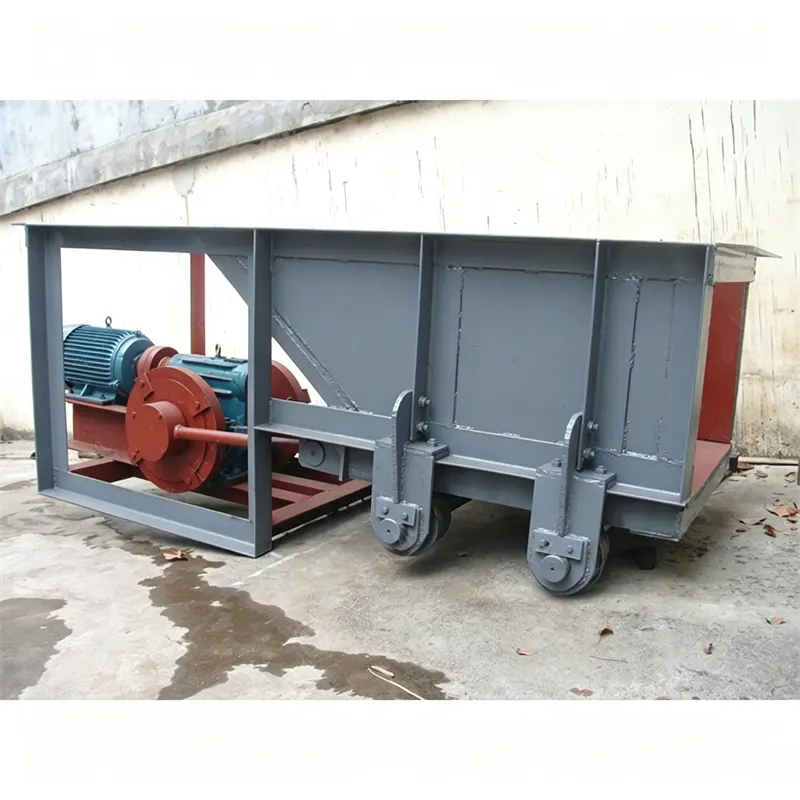
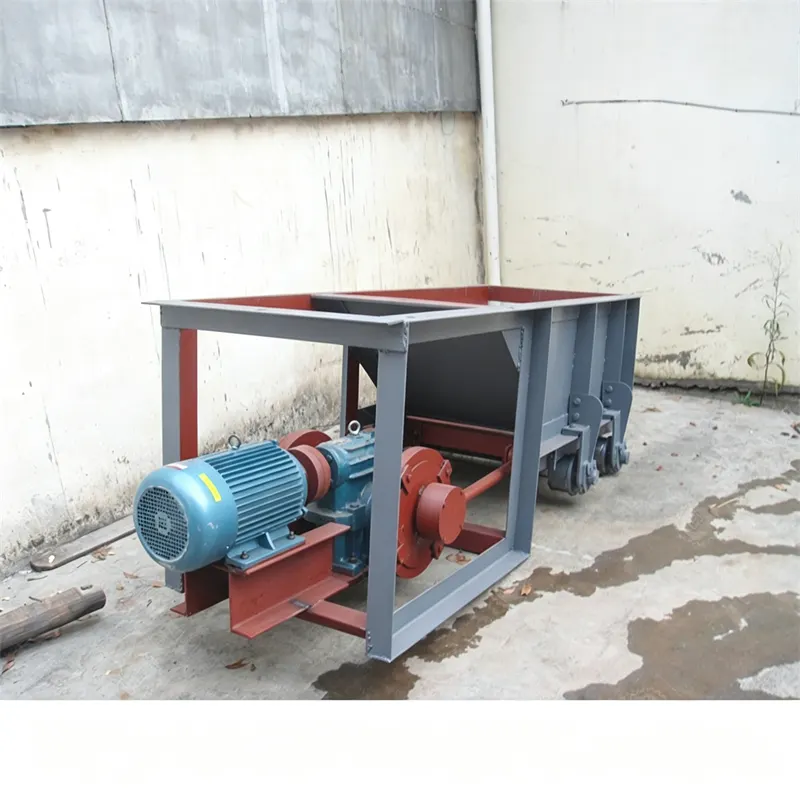
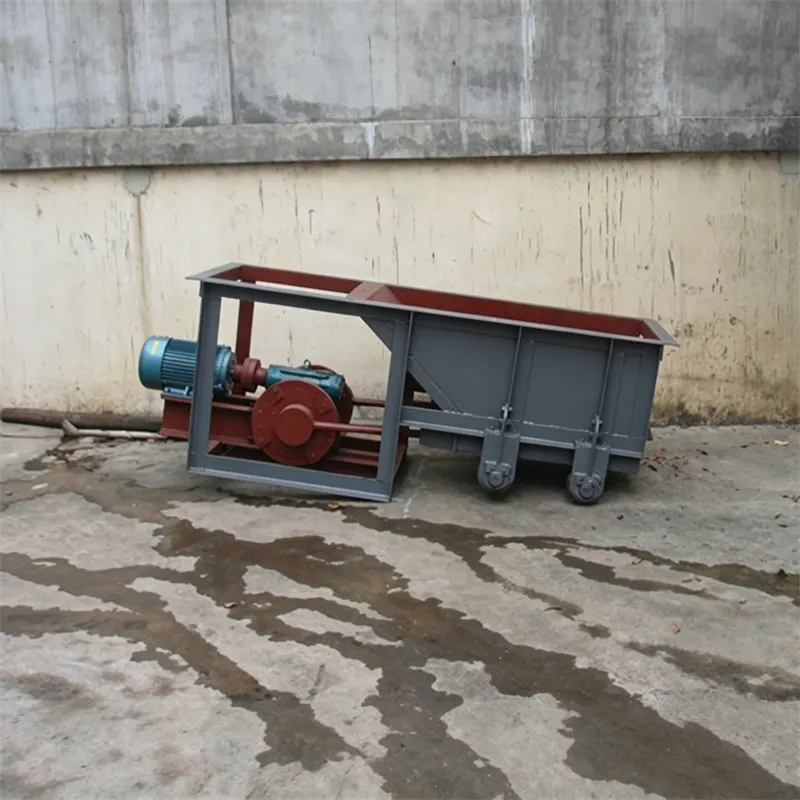
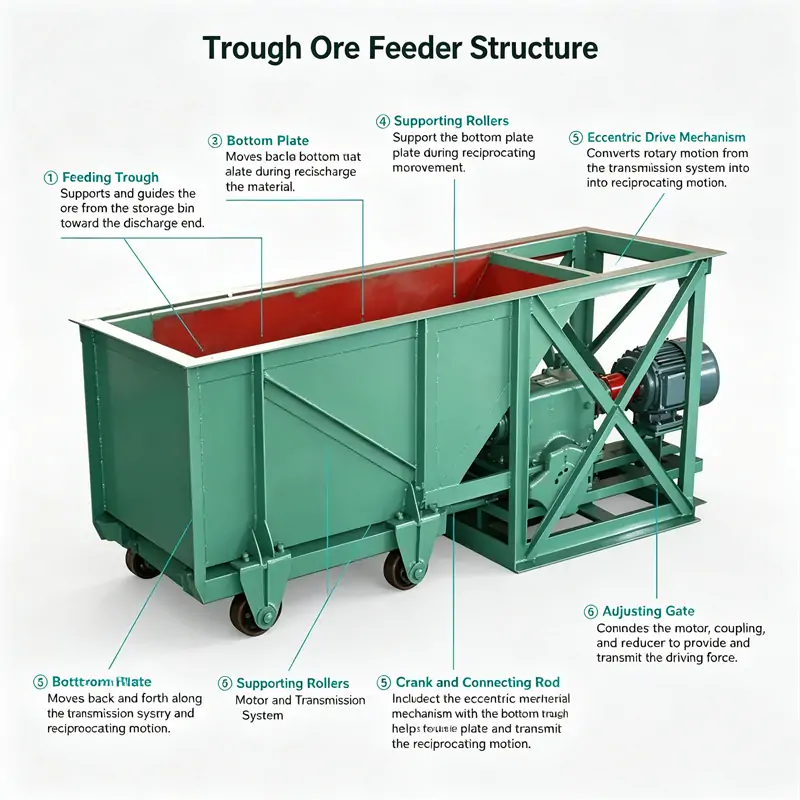
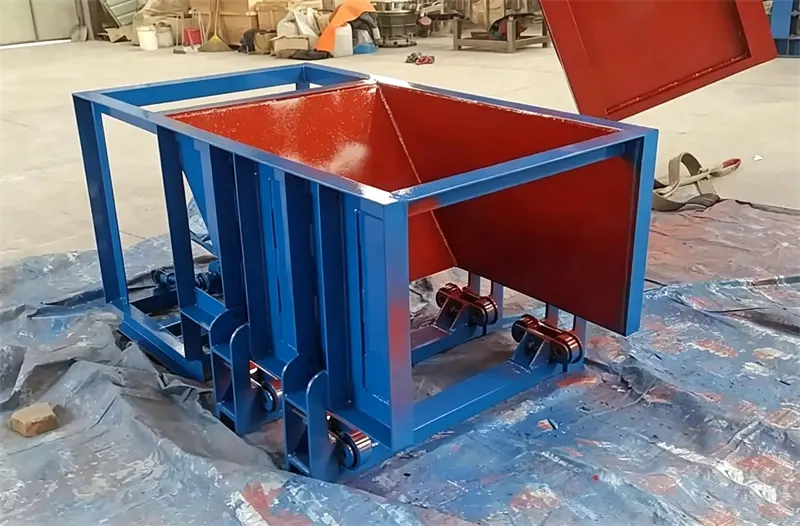
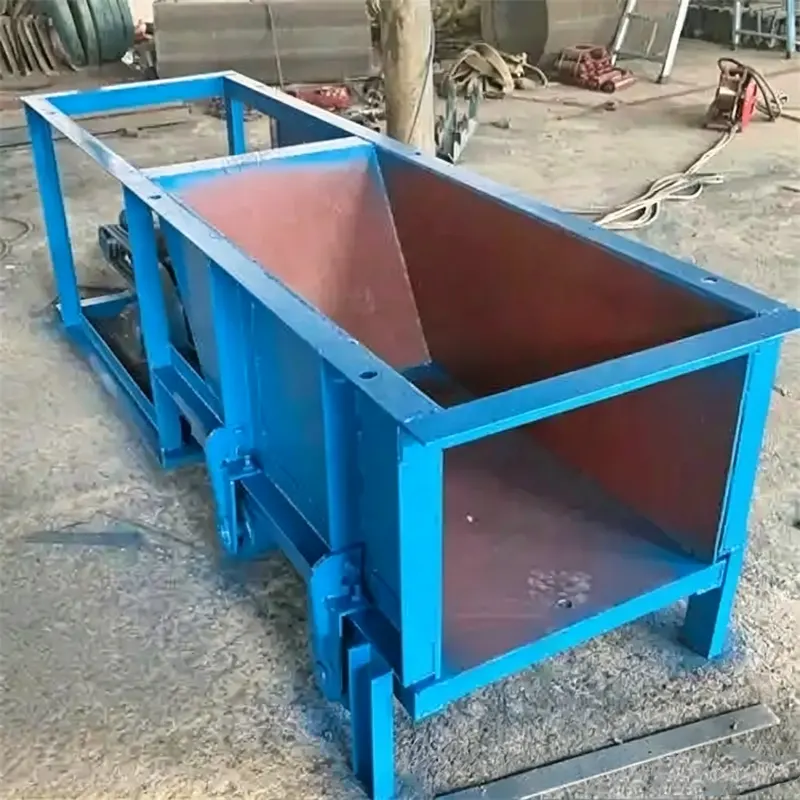
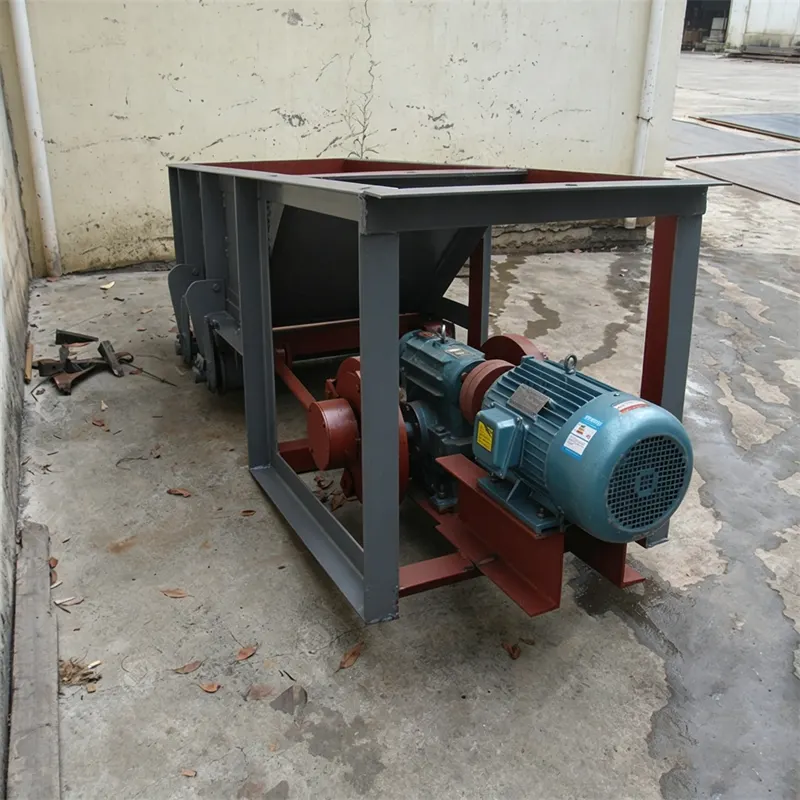
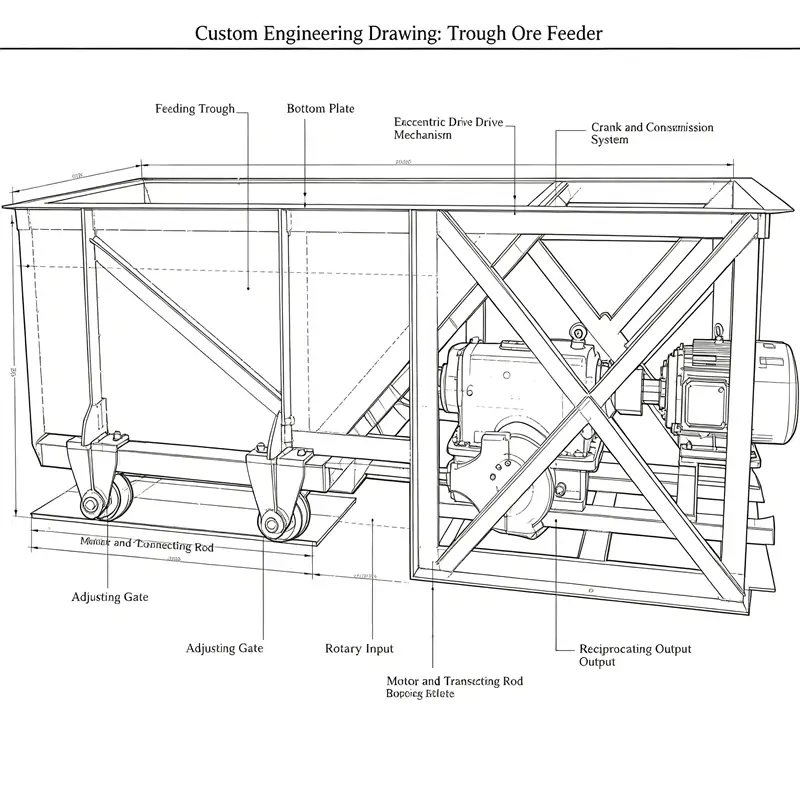
A trough ore feeder consists of a feeding trough, bottom plate, eccentric drive mechanism, supporting rollers, crank and connecting rod, and motor transmission system. These components form the mechanical system that supports the ore load and drives the bottom plate for controlled material discharge. The feeder can be installed on the ground or mounted below an ore bin, depending on the plant layout and discharge arrangement.
- Feeding Trough: Supports and guides the ore from the storage bin toward the discharge end.
- Bottom Plate: Moves back and forth along the trough to carry and discharge the material.
- Eccentric Drive Mechanism: Converts rotary motion from the transmission system into reciprocating motion.
- Supporting Rollers: Support the bottom plate during reciprocating movement.
- Crank and Connecting Rod: Connect the eccentric mechanism with the bottom plate and transmit the reciprocating motion.
- Motor and Transmission System: Includes the motor, coupling, and reducer to provide and transmit the driving force.
- Adjusting Gate: Controls the height of the material layer entering the feeding trough and helps regulate material flow from the storage bin.
Trough Ore Feeder Specifications
The following table lists the standard specifications of the trough ore feeder, including outlet size, maximum feed particle size, feed capacity, motor configuration, power, and equipment weight. Select the model according to the required feed capacity, maximum lump size, and installation conditions.
| Model | Outlet W × H (mm) | Max. Particle Size (mm) | Feed Capacity (t/h) | Motor Model | Power (kW) | Weight (t) |
| 300 × 300 | 300 × 300 | 50 | 10–20 | YL90L-4 | 1.5 | 0.27 |
| 400 × 400 | 400 × 400 | 100 | 10–30 | Y112M-6 | 2.2 | 0.54 |
| 600 × 500 | 600 × 500 | 200 | 10–50 | Y112M-4 | 4 | 1.05 |
| 700 × 500 | 700 × 500 | 250 | 10–60 | Y112M-4 | 4 | 1.1 |
| 1240 × 980 | 1240 × 980 | 350 | 36–90 | Y160M-6 | 7.5 | 1.91 |
Note: An adjustable-speed motor can be provided according to customer requirements to regulate the feed capacity.
Trough Ore Feeder Applications
Trough ore feeders are used in metal mining and processing plants to provide controlled feeding of run-of-mine ore to crushing, screening, and grinding circuits.
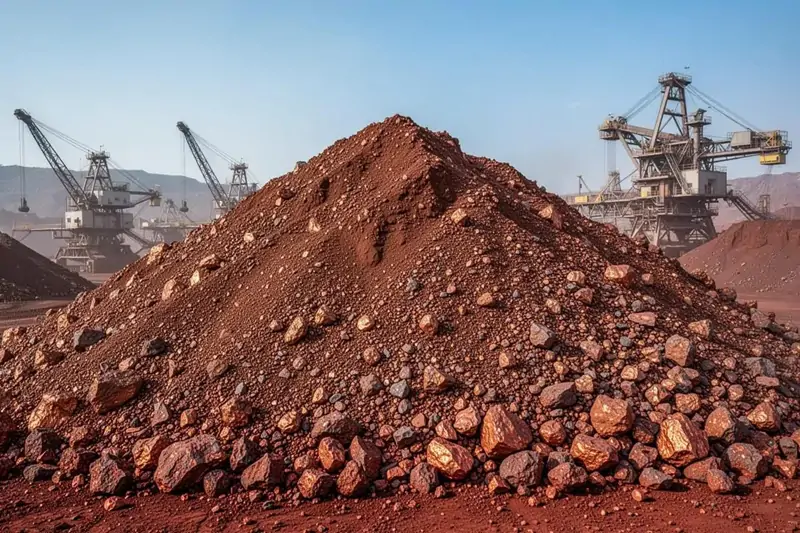
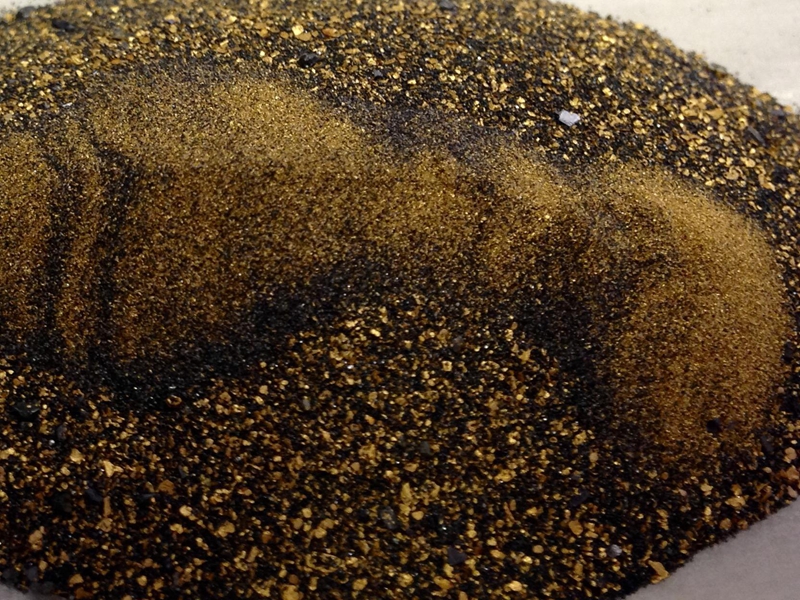
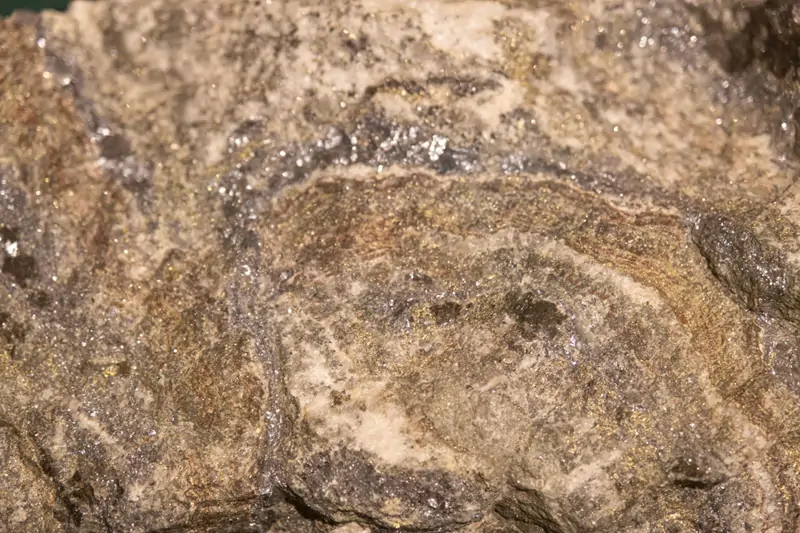
Trough Ore Feeder Applications in Crushing and Mineral Processing
A trough ore feeder is typically installed between a storage bin or hopper and downstream processing equipment. It provides controlled feeding of bulk material to maintain a stable flow into crushing, screening, and mineral processing circuits.
Ore Bin to Jaw Crusher
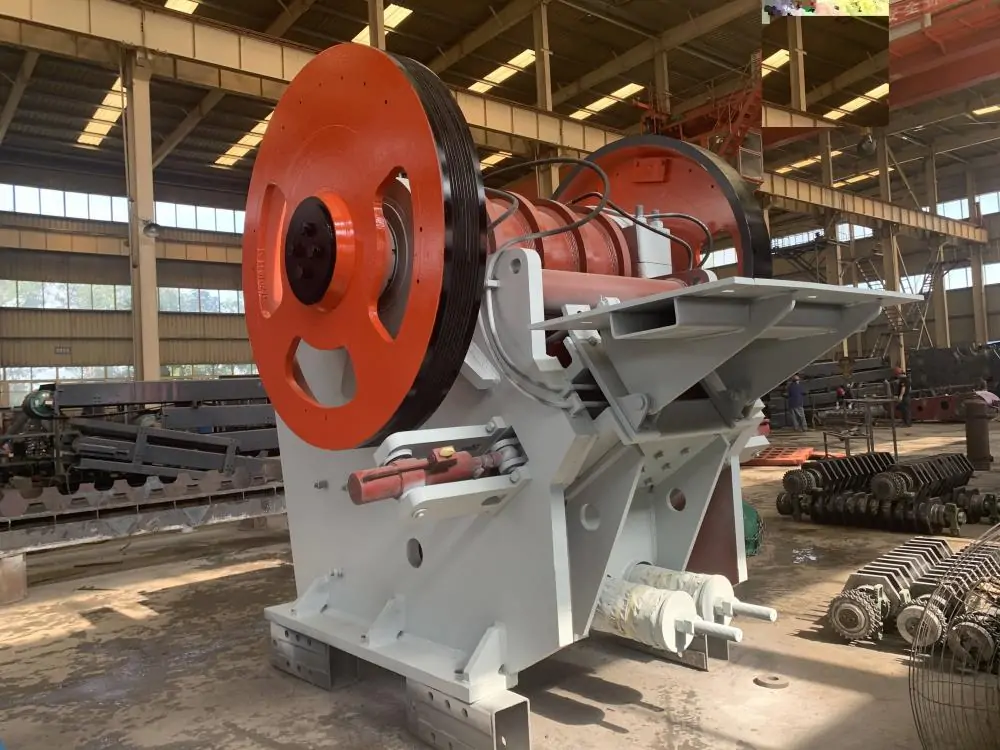
A common arrangement is ore bin → trough ore feeder → jaw crusher. The feeder controls the discharge of coarse ore from the storage bin and provides a stable feed to the jaw crusher. Its function is feeding, not crushing, helping maintain a consistent flow into the primary crushing stage.
Crushing and Screening Plants
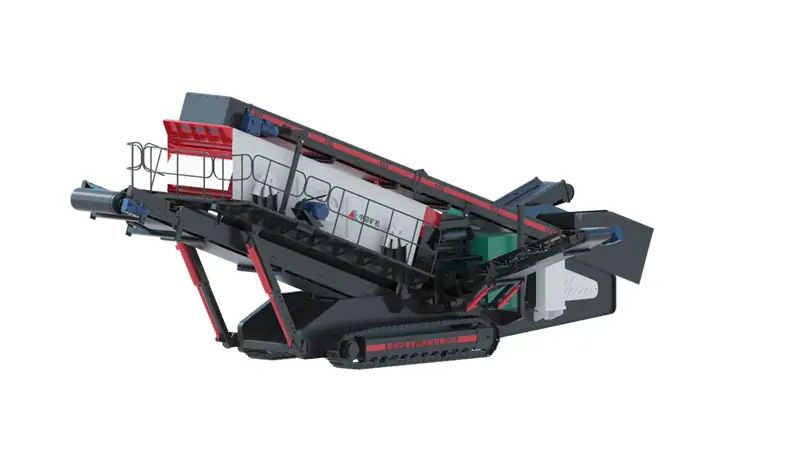
Trough ore feeders can be installed before primary crushing, screening, and other downstream processing stages where bulk material must be discharged from a storage bin at a controlled rate. The configuration depends on the feed size, required capacity, and plant layout.
Mineral Processing Plants
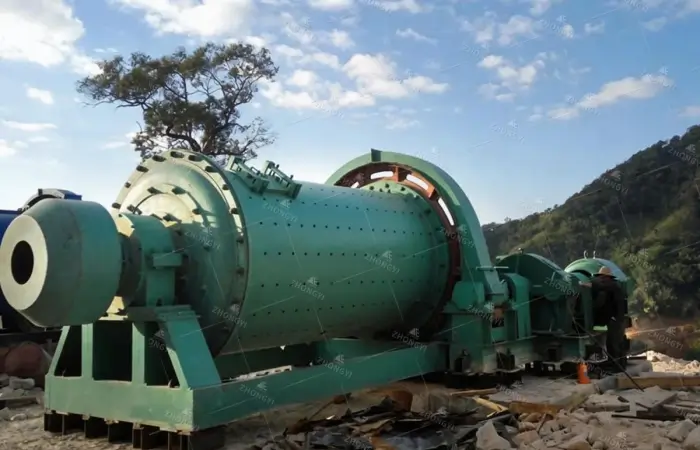
Trough ore feeders can also be used in mineral processing plants to feed metal ores, non-metallic minerals, aggregates, coal, and similar bulk materials to the next process stage. They can also feed ball mills or other processing equipment when the material and capacity requirements are suitable.
How to Select a Trough Ore Feeder?
Select a trough ore feeder based on feed size, required capacity, ore characteristics, and installation conditions. The selected model should match the material flow and downstream equipment capacity.
Match the Maximum Feed Size
Check the largest lump size in the actual feed, rather than relying only on the average particle size. The selected feeder should provide sufficient discharge space for the largest lumps without restricting material flow.
Match the Required Feed Capacity
Compare the required feed rate with the feeder’s capacity range and the processing capacity of the downstream crusher or screen. The goal is to maintain a stable material flow without overloading the feeder or receiving equipment.
Consider Ore Characteristics
Consider moisture, particle size distribution, and flowability before selection. Wet or cohesive ore may require different operating settings, so the eccentric mechanism and feeder configuration should be confirmed according to the actual material properties.
Check Installation Conditions
Confirm whether the feeder will be installed on the ground or below an ore bin, and check the available space, outlet position, equipment elevation, and maintenance access. The feeder should also align properly with the downstream equipment for smooth material transfer.
Trough Ore Feeder vs. Other Feeding Equipment
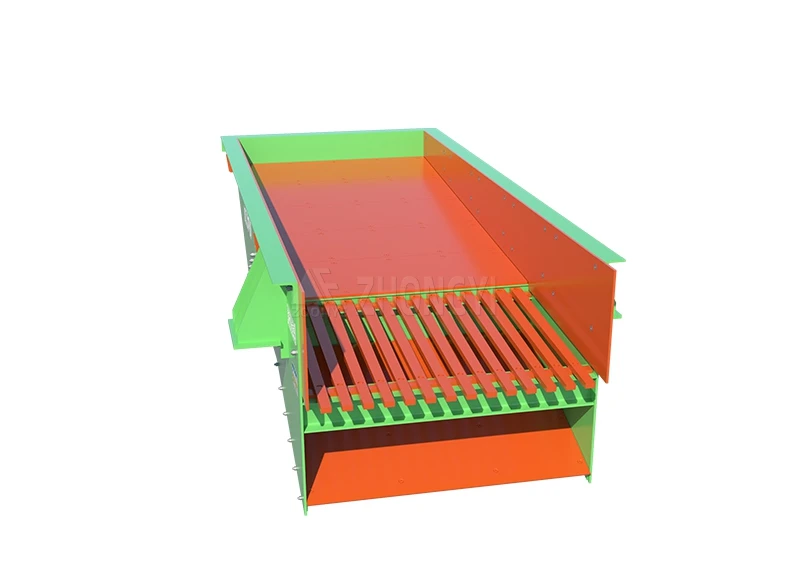
Different feeder types are designed for different material sizes, feeding methods, and process requirements. The following comparison provides a quick reference for selecting the appropriate feeding equipment.
| Feeder Type | Typical Use | Feed Material | Main Selection Factor |
| Trough Ore Feeder | Short-distance controlled feeding | Bulk and coarse-grained ore | Feed size and capacity |
| Vibrating Feeder | Continuous feeding and scalping | Bulk and granular materials | Feed rate and material characteristics |
| Belt Feeder | Continuous controlled feeding | Bulk materials | Belt width, speed, and load |
| Pendulum Feeder | Controlled feeding of finer materials | Relatively dry, free-flowing materials | Particle size and flowability |
Installation and Maintenance
Installation and Commissioning
Install the trough ore feeder on a level concrete foundation and secure it with anchor bolts. Align the feeder with the ore bin outlet and downstream equipment, ensuring sufficient space for inspection and maintenance. Before operation, check all fasteners and connections, then perform a no-load test to confirm smooth reciprocating movement without abnormal noise or vibration.
Routine Inspection and Maintenance
Regularly lubricate the bearings and moving parts, and inspect the supporting rollers, eccentric mechanism, connecting parts, reducer, and motor. Check the bottom plate and liners, if configured, for excessive wear, and tighten loose fasteners promptly. Any abnormal vibration, noise, temperature, or oil leakage should be investigated before continued operation.
Why Choose Our Trough Ore Feeder?
Choosing a trough ore feeder involves more than matching feed capacity. The feeder must fit the ore bin, downstream equipment, material characteristics, and overall plant layout. Our experience in mining equipment manufacturing and mineral processing projects allows us to support the equipment from model selection to installation and commissioning.
Manufacturing Capability
We handle equipment fabrication, machining, assembly, and inspection in-house, with ISO 9001 quality management procedures covering key production stages.
Mineral Processing Experience
Our equipment is used in crushing and mineral processing projects, allowing us to consider feed size, capacity, material conditions, and equipment connections when configuring the feeder.
Project and Service Support
We provide support for model selection, process connection, plant layout matching, installation, and commissioning, helping integrate the trough ore feeder with ore bins, crushers, screens, and other downstream equipment.
Request a Customized Solution
Partner with Zhongyi for a trough ore feeder designed for controlled feeding of bulk ore from storage bins to crushers, screens, and other processing equipment. Selection is based on feed size, capacity, ore characteristics, and plant layout.
Custom High Density Agitation Tank Solutions
Need a trough ore feeder for a specific mining process? Our engineering team provides equipment selection, process integration, plant layout matching, installation, and commissioning support to develop a feeding solution suited to your project. Explore our [Gold Mine Processing Plant Solutions] for a related application, or contact Zhongyi to discuss your requirements.
Please Provide the Following Information:
FAQs
What is a trough ore feeder used for?
A trough ore feeder transfers bulk and coarse-grained ore from a storage bin, hopper, or bunker to downstream equipment at a controlled rate. It is commonly installed before jaw crushers, screens, mills, and other processing equipment. The reciprocating bottom plate moves the material toward the discharge opening, making it suitable for controlled feeding in crushing and mineral processing plants.
Where is a trough ore feeder installed in a processing plant?
A trough ore feeder is typically installed below an ore bin or storage hopper and before the next processing stage. A common arrangement is ore bin → trough ore feeder → jaw crusher. Depending on the process, it can also feed screens, mills, or other equipment. The installation position should provide proper alignment between the storage outlet, feeder, and downstream equipment.
How do I choose the right trough ore feeder?
Selection should be based on maximum feed size, required capacity, ore characteristics, and installation conditions. The feeder outlet and capacity should also match the connected storage bin and downstream equipment. For example, larger ore lumps or higher feeding requirements may require a larger model. The actual operating conditions should be reviewed before confirming the final feeder configuration.
What is the maximum feed size and capacity of a trough ore feeder?
The standard models cover maximum feed particle sizes from 50 to 350 mm and feed capacities from 10 to 90 t/h. The applicable range depends on the selected model. When choosing a feeder, consider the largest actual ore lump and required continuous feed rate rather than selecting a model based only on average particle size.
Can the feeding capacity of a trough ore feeder be adjusted?
Yes. An adjustable-speed motor can be provided according to customer requirements to regulate the feeding capacity. This allows the feeder to better match the operating requirements of downstream crushers, screens, or other equipment. The motor configuration should be determined according to the required feed rate, process conditions, and overall equipment arrangement.
Can a trough ore feeder be connected directly to a jaw crusher?
Yes. It can be installed between an ore bin and jaw crusher to provide controlled feeding of coarse ore into the primary crushing stage. The feeder model should be selected according to the ore’s maximum lump size and required capacity. Proper alignment between the feeder discharge and crusher feed opening is also important for stable material transfer.
What maintenance does a trough ore feeder require?
Routine maintenance includes bearing lubrication, inspection of supporting rollers and the eccentric mechanism, checking connecting parts, and monitoring the motor and reducer. The bottom plate and liners, if configured, should be inspected for wear. Loose fasteners, abnormal vibration, unusual noise, or oil leakage should be addressed promptly to prevent mechanical problems from developing.
What information is needed for a customized trough ore feeder solution?
For equipment configuration, customers should provide the ore type, maximum feed size, required capacity, installation conditions, and downstream equipment. These details help determine the appropriate model and connection arrangement. For complete processing projects, our engineering team can also consider the feeder together with the ore bin, crusher, screen, and plant layout to develop a suitable feeding solution.