What Is a Raymond Mill?
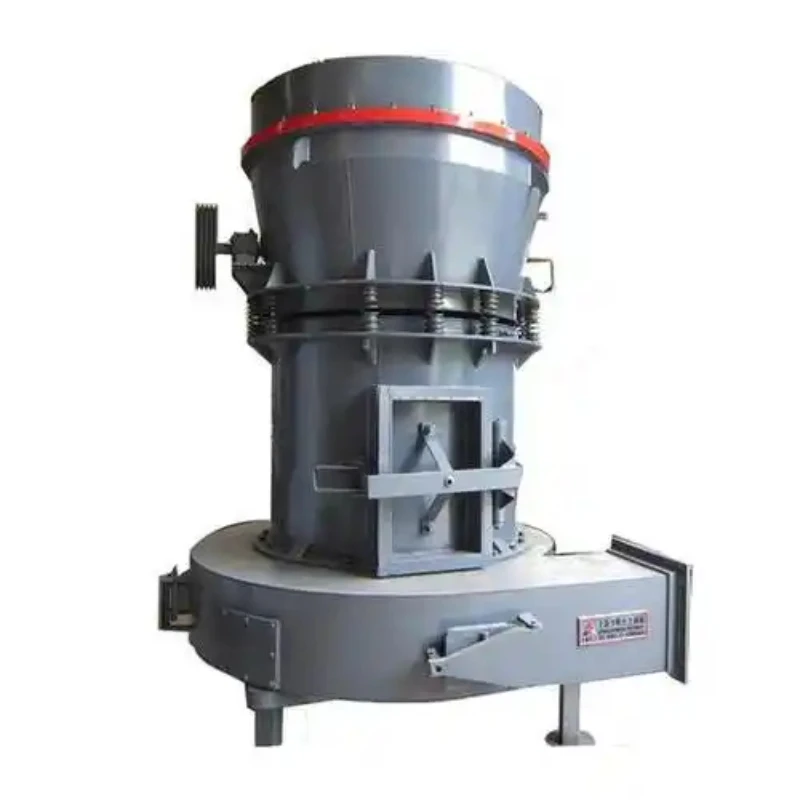
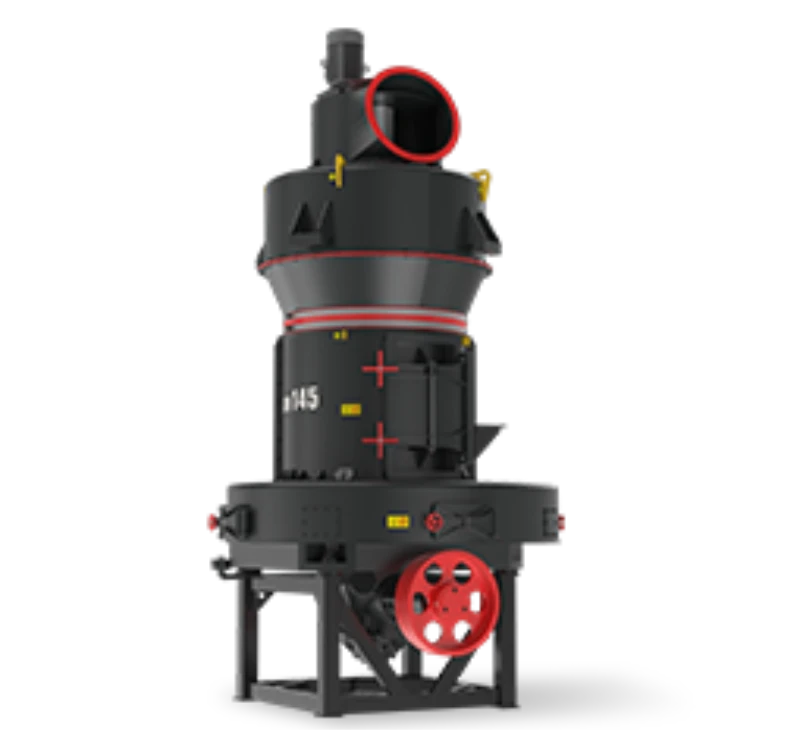
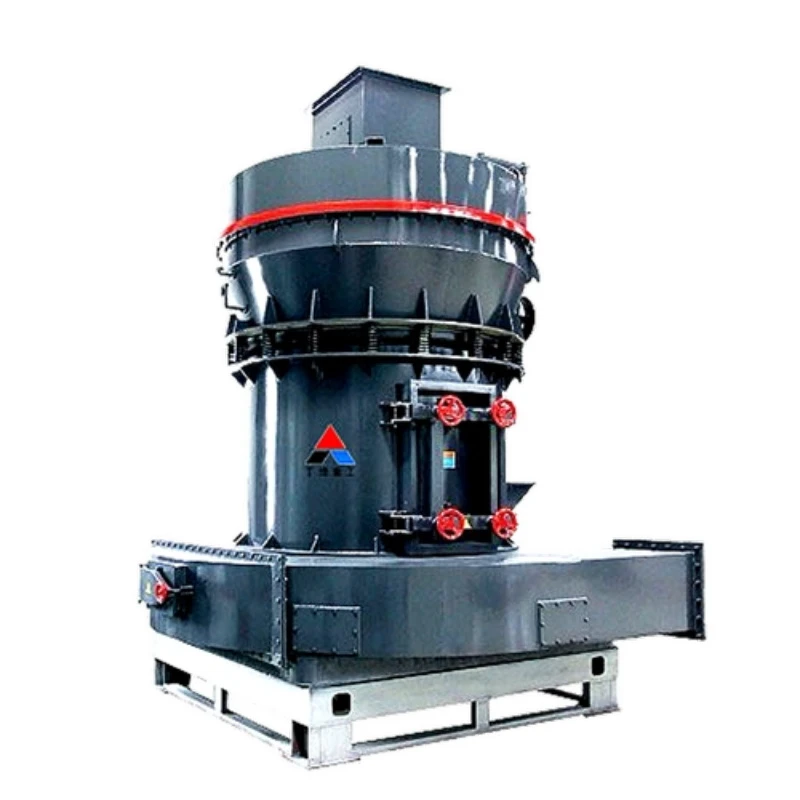
A Raymond Mill, also called a Raymond Grinding Mill or Raymond Roller Mill, is a dry grinding machine for producing fine powder from limestone, barite, dolomite, gypsum and other suitable minerals. It uses grinding rollers and a grinding ring for size reduction, with an air classifier controlling the final powder fineness, typically within 80–325 mesh depending on the material and configuration.
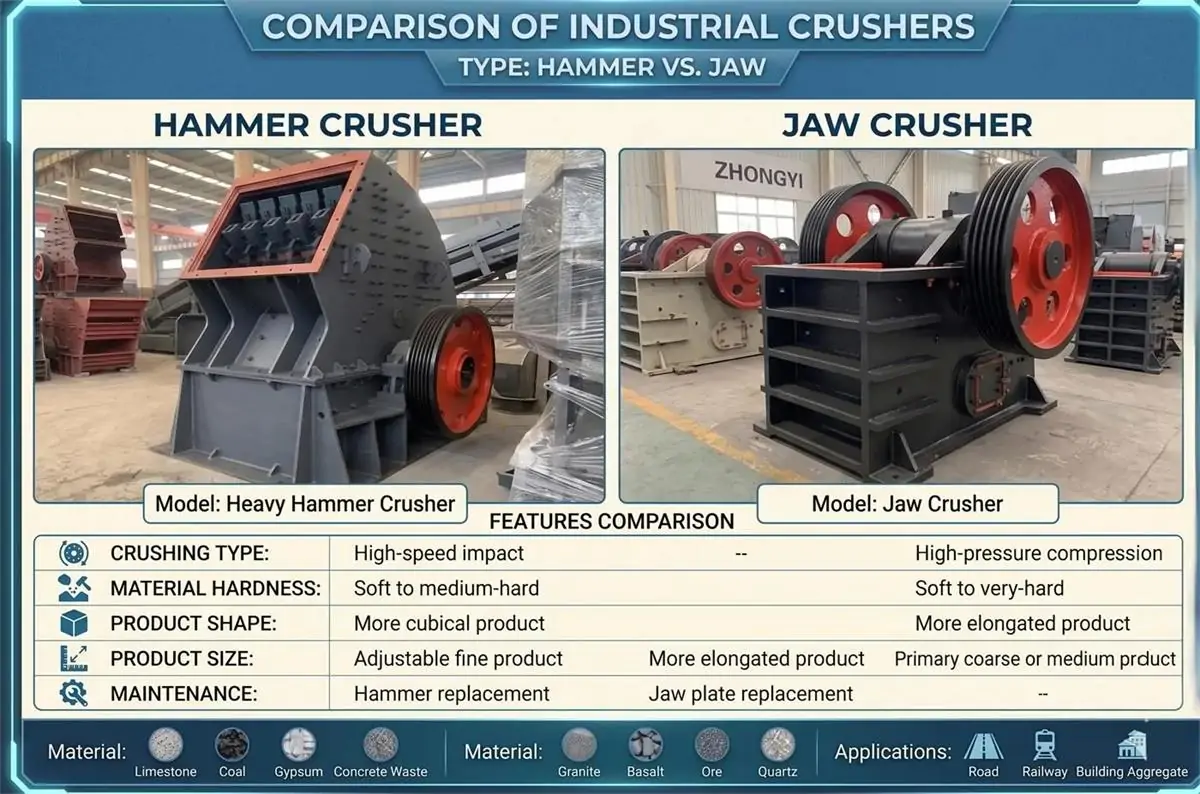
In a complete grinding line, the Raymond Mill is normally fed by a jaw crusher or hammer crusher and followed by a cyclone collector, dust collector, storage silo or packing system. The crusher prepares the feed size, while the Raymond Mill handles fine grinding and classification for the required product specification.
How Does a Raymond Mill Work?
A Raymond Mill combines roller-ring grinding and air classification to produce fine mineral powder. Material is fed into the grinding chamber, ground between the rollers and grinding ring, and carried by airflow to the classifier. Coarse particles return for further grinding, forming a continuous closed-circuit process.
Feeding and Roller-Ring Grinding
Material is fed evenly into the grinding chamber. As the main shaft rotates, the grinding rollers press against the grinding ring under centrifugal force. The rotating shovel directs material into the grinding zone, where compression and friction between the rollers and ring reduce it to the required particle size.
Airflow and Powder Classification
The blower generates airflow to carry ground particles upward to the classifier. Fine particles that meet the required fineness pass through with the airflow, while coarse particles are separated and returned to the grinding chamber for further grinding. Classifier conditions and airflow directly affect the final powder fineness.
Powder Collection and Air Recirculation
Qualified powder is carried to the cyclone collector and dust collection system for separation and discharge. The air then returns to the blower, forming a closed circulation. This continuous process integrates grinding, classification and powder collection within one Raymond Mill system.
In simple terms, a Raymond Mill uses rollers to grind the material and an air classifier to control the final powder fineness.
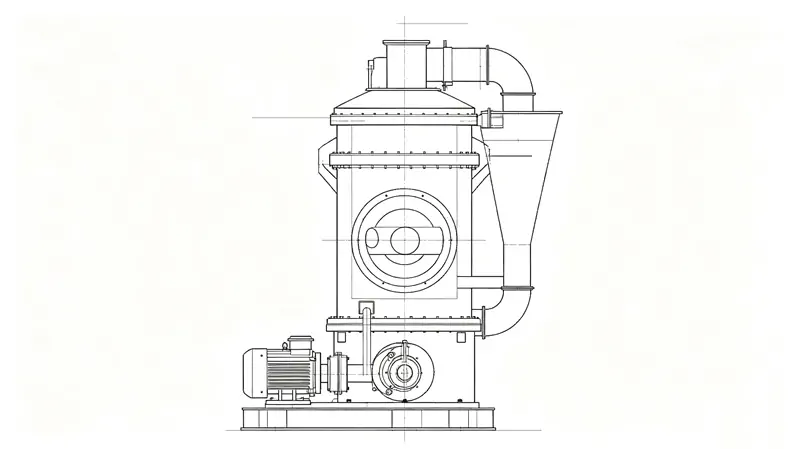
Raymond Mill Structure and Main Components
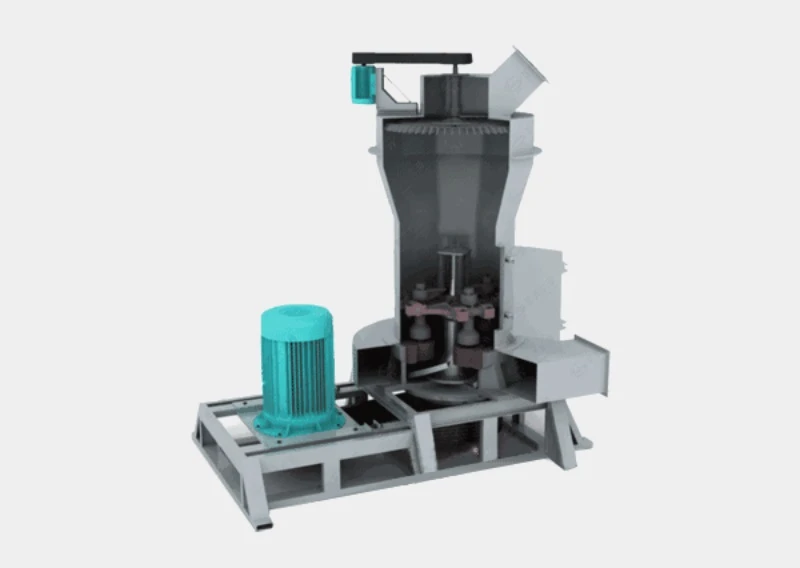
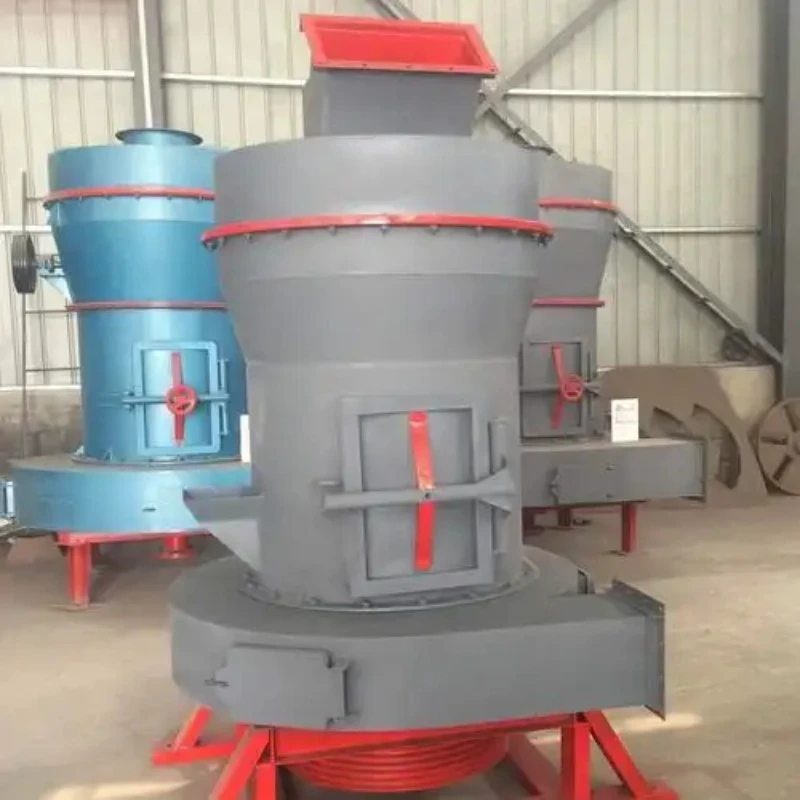
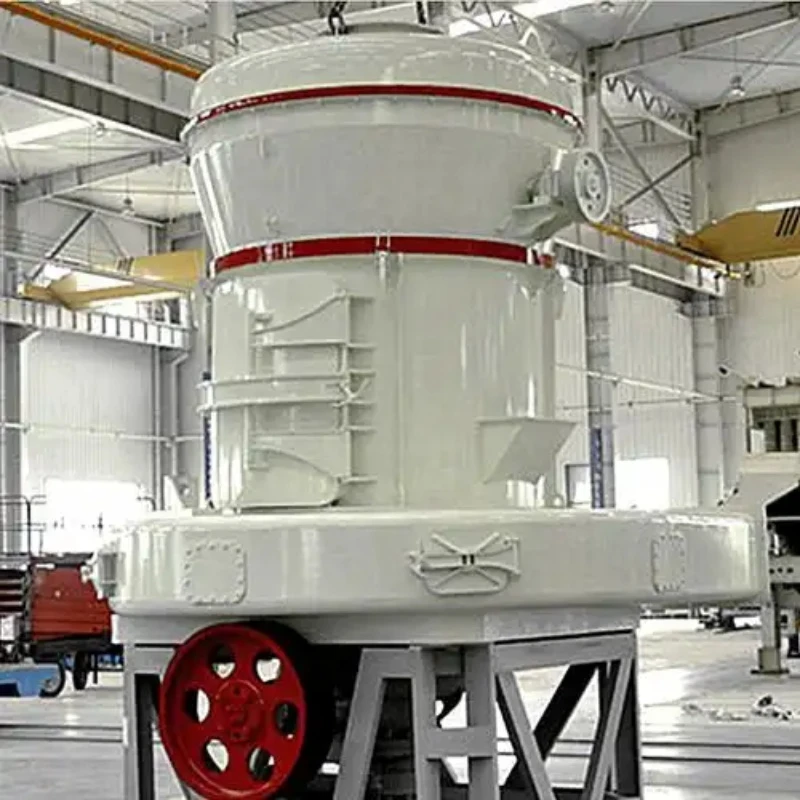
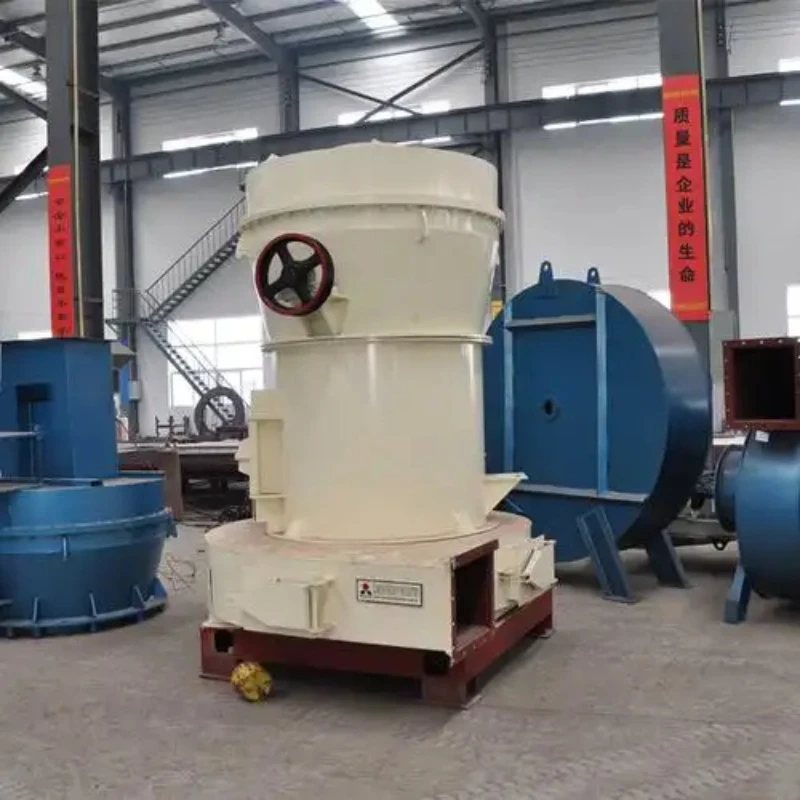
A Raymond Mill integrates grinding, classification, airflow and powder collection into one closed-circuit system. The grinding rollers and ring perform size reduction, while the classifier controls product fineness. The blower and collection units maintain material circulation and recover the finished powder.
- Grinding Chamber: Provides the enclosed space where material is ground between the rollers and grinding ring.
- Grinding Rollers: Apply grinding pressure against the ring to reduce the feed material.
- Grinding Ring: Provides the fixed grinding surface for roller-ring grinding.
- Shovel Blade: Lifts material from the grinding chamber floor and directs it into the grinding zone.
- Classifier: Separates fine and coarse particles according to their aerodynamic behavior and controls the product fineness.
- Main Shaft & Transmission: Transfer rotational power to the grinding assembly and maintain stable operation.
- Blower & Air Duct: Generate and direct airflow to convey ground particles through the classification and collection circuit.
- Cyclone Collector: Separates and collects qualified powder from the conveying airflow.
- Dust Collector: Captures residual fine particles before the air returns to the circulation system.
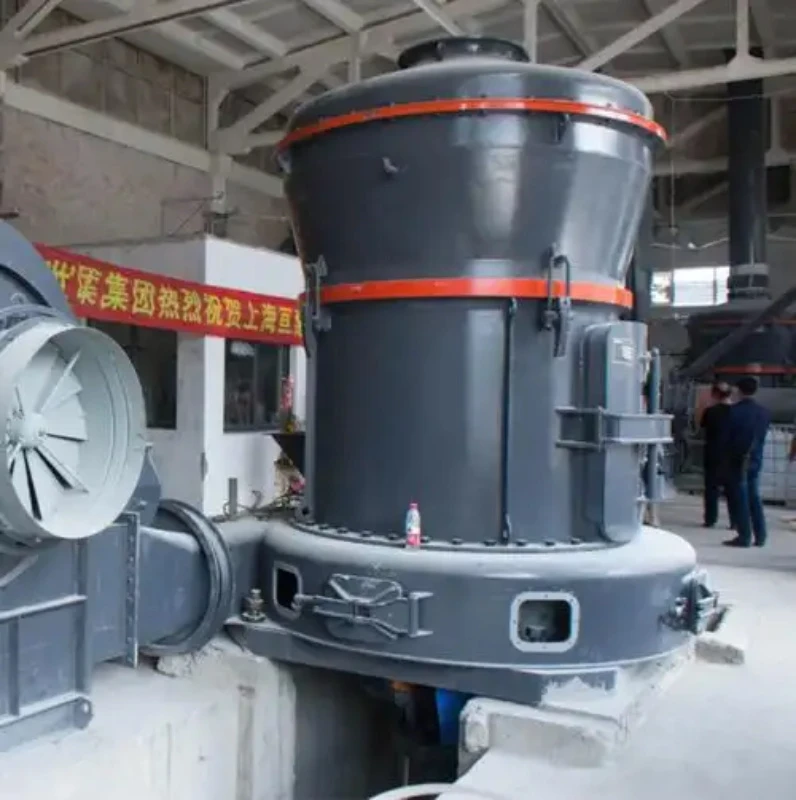
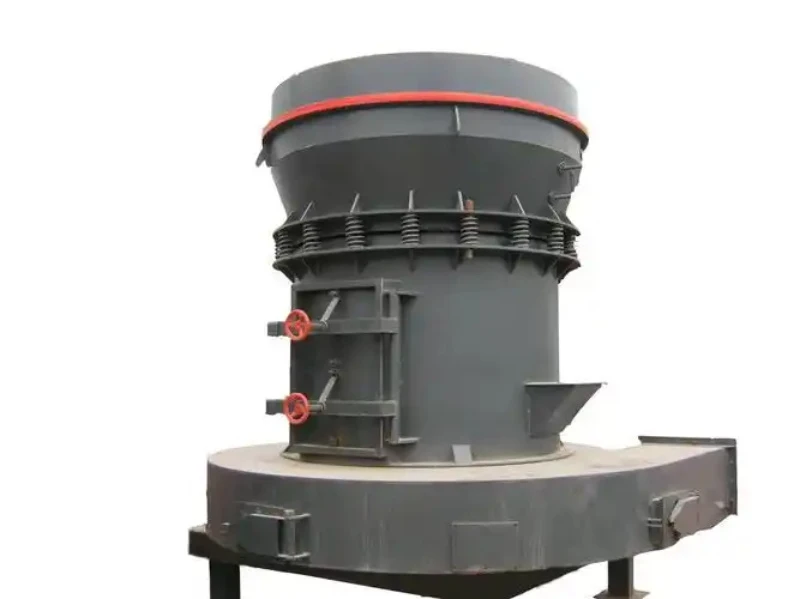
Raymond Mill Technical Specifications
Raymond Mill specifications vary according to the material, required capacity and target fineness. The following are the current reference specifications for Zhongyi Mining’s Raymond Mill range.
| Parameter | Specification |
| Capacity | 0.8–20 TPH |
| Feed Size | ≤30 mm |
| Output Fineness | 80–325 mesh |
| Grinding Method | Roller & Ring |
| Operation | Dry Grinding |
| Classification | Air Classification |
| Grinding Rollers | 3–6, depending on model |
| Main Shaft Speed | Model-dependent |
| Main Motor Power | Model-dependent |
| Air Circuit | Closed-Circuit Circulation |
| Typical Materials | Limestone, barite, dolomite, gypsum and other suitable minerals |
Technical Note
Actual capacity and final powder fineness depend on material hardness, feed size, moisture, abrasiveness and operating conditions. Zhongyi selects the appropriate Raymond Mill model and configuration based on the required capacity and product specification.
What Materials Can a Raymond Mill Grind?
A Raymond Mill is mainly used for dry grinding of non-metallic minerals and selected ores into controlled-fineness powder. Material selection depends on hardness, feed size, moisture, abrasiveness and required fineness rather than the material name alone.
Common Non-Metallic Minerals
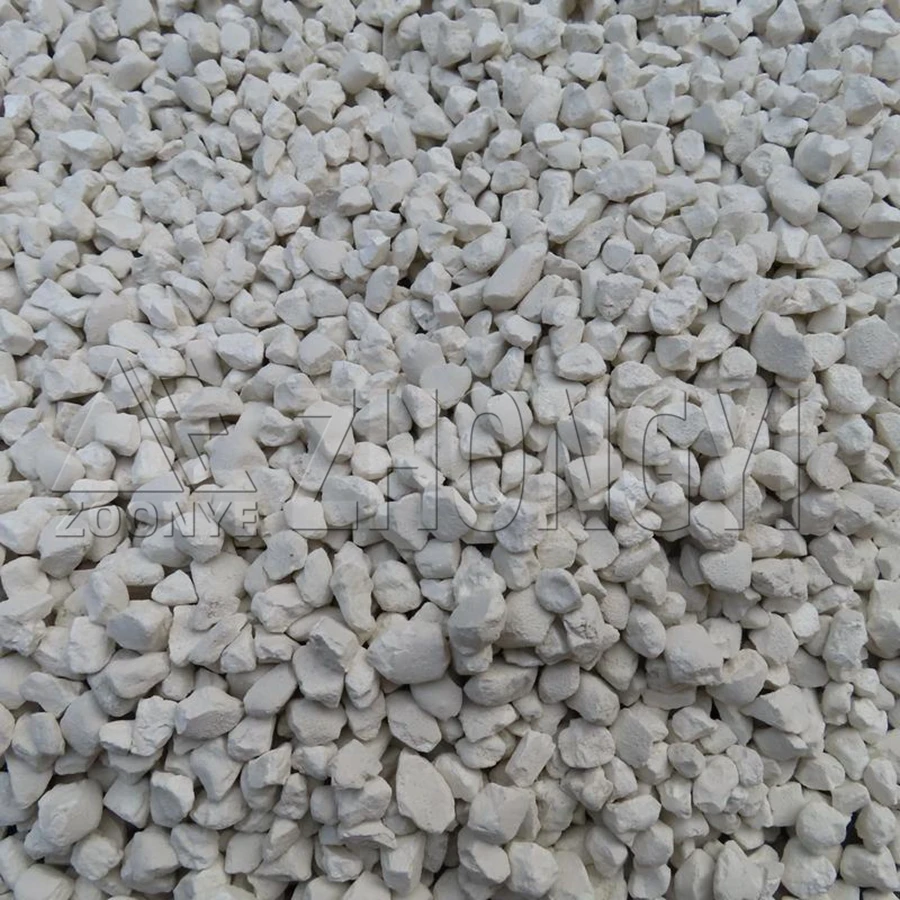
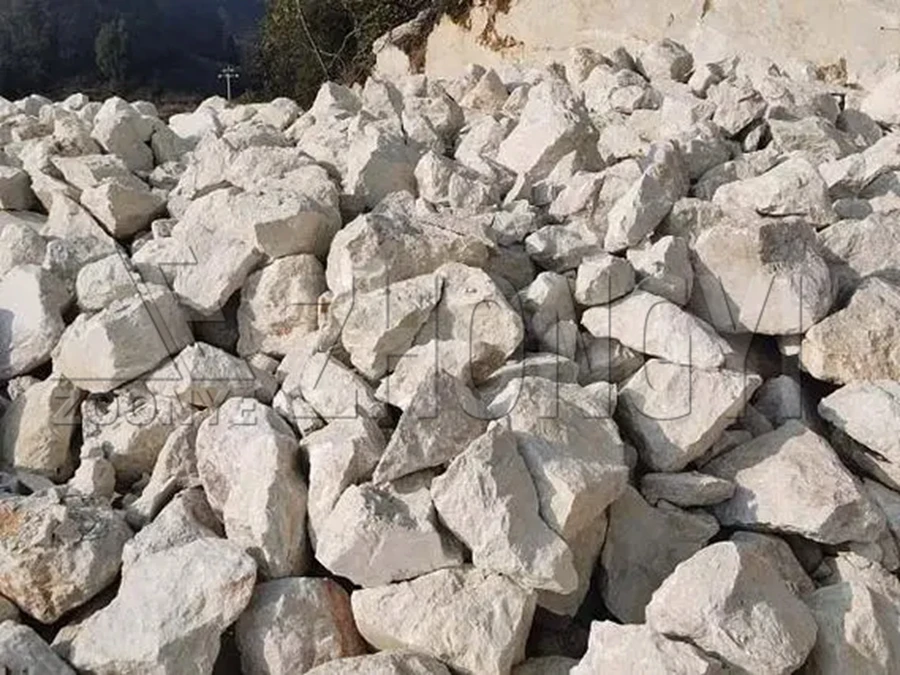
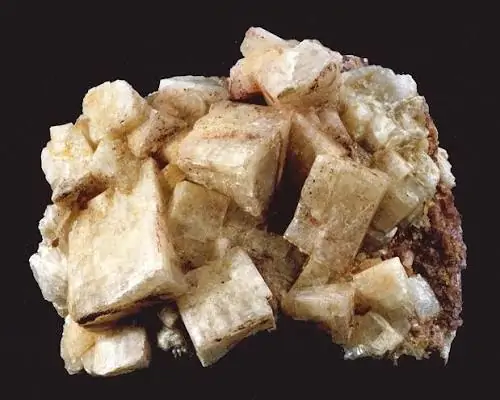
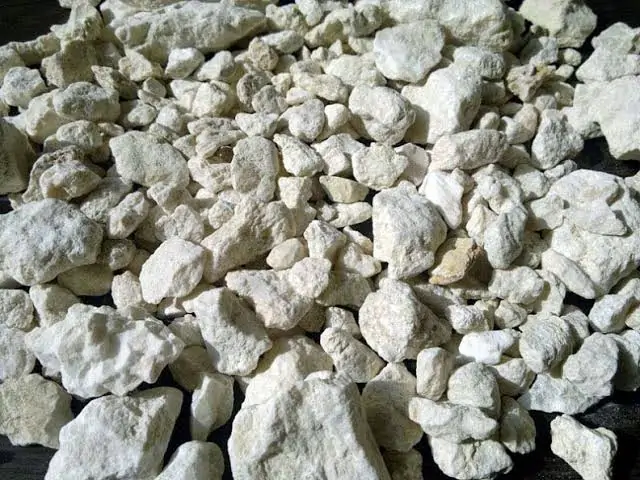
Typical materials include limestone, dolomite, barite, gypsum, calcite, kaolin, talc and feldspar. These materials are commonly processed into fine powder for construction materials, ceramics, glass, fillers, coatings, plastics, drilling and other industrial applications. The required product fineness and material characteristics determine the appropriate grinding and classification configuration.
Other Suitable Minerals and Selection Considerations
Raymond Mill can also process other suitable non-metallic minerals and selected ores when their physical properties fall within the equipment’s operating range. For unfamiliar or highly abrasive materials, testing is recommended to verify grinding capacity, achievable fineness and wear performance. Zhongyi Mining’s current reference range is ≤30 mm feed size and 80–325 mesh output fineness, with actual performance depending on material and configuration.
Raymond Mill vs. Ball Mill vs. Vertical Roller Mill
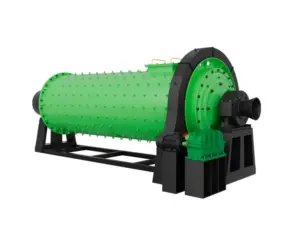
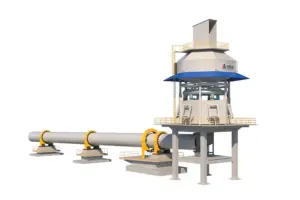
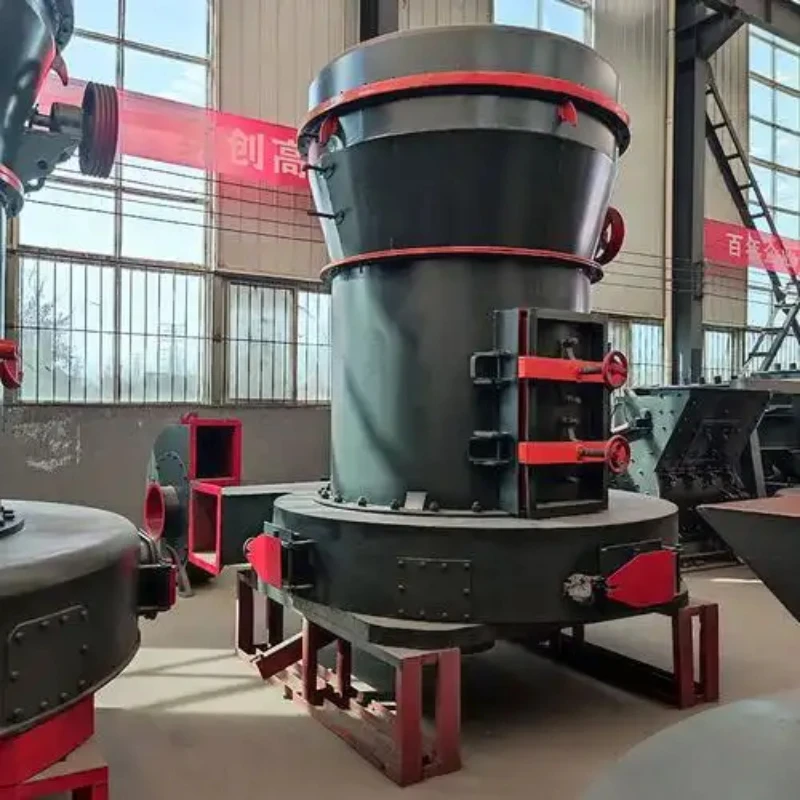
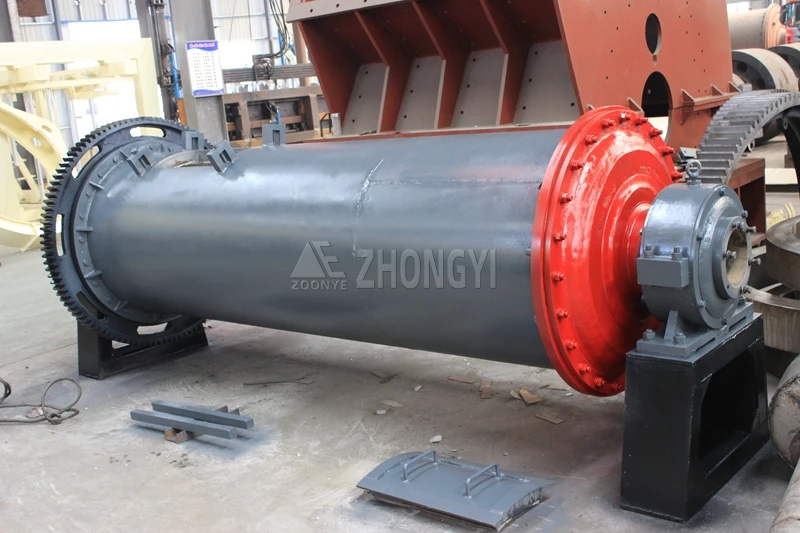
Raymond Mill, Ball Mill and Vertical Roller Mill use different grinding mechanisms and are designed for different production requirements. Raymond Mill is commonly used for dry grinding of suitable non-metallic minerals at small to medium capacities, while Ball Mill is more flexible for mineral grinding and can be configured for wet or dry operation. VRM is generally used for larger-scale continuous grinding and can integrate drying and classification.
For equipment selection, the key factors are material characteristics, capacity, moisture, target fineness and process configuration.
| Factor | Raymond Mill | Ball Mill | Vertical Roller Mill |
| Grinding Method | Roller & ring | Impact & attrition | Roller & grinding table |
| Typical Scale | Small–medium | Medium–large | Medium–large |
| Grinding Type | Dry | Dry or wet | Dry |
| Typical Fineness | 80–325 mesh | Fine | Fine–very fine |
| Drying Integration | Limited | Usually separate | Stronger |
| System Complexity | Moderate | Moderate | Higher |
| Typical Application | Non-metallic mineral powder | Mineral and ore grinding | Large-scale industrial grinding |
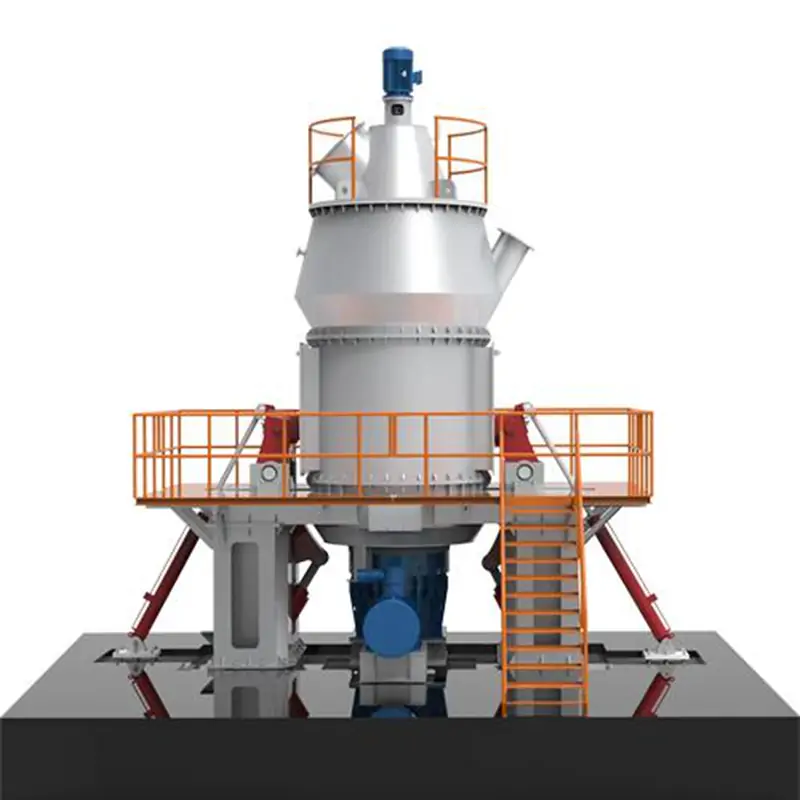
Raymond Mill Applications
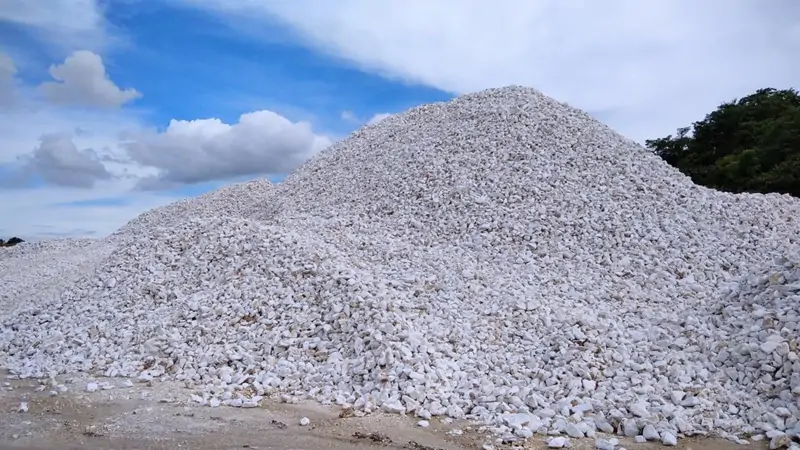
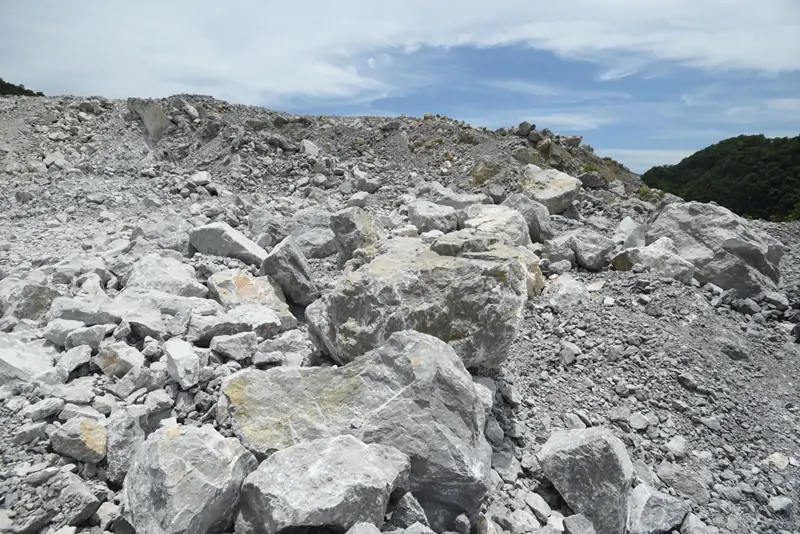
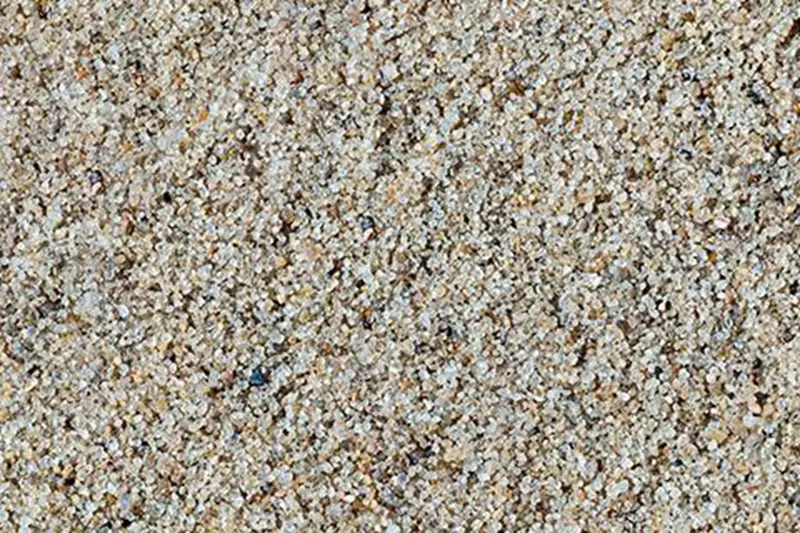
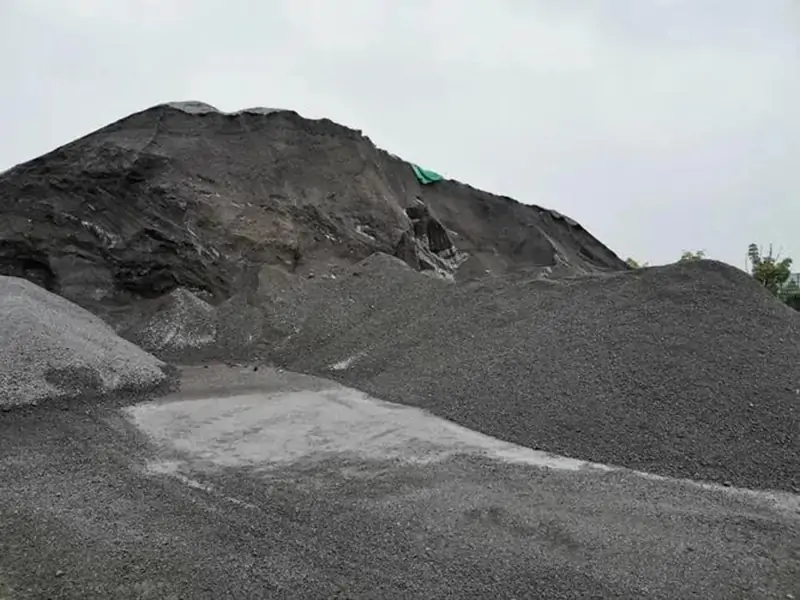
Raymond Mill is used to grind suitable minerals into fine, uniform powder for different downstream production processes. Its application mainly depends on the material properties and required powder fineness.
Raymond Mill Wear Parts and Maintenance
The main wear parts of a Raymond Mill are the grinding rollers, grinding ring and shovel blade. Classifier components, bearings and seals also require regular inspection. Wear rate mainly depends on material abrasiveness, feed conditions, operating load and maintenance practices.
Main Wear Parts
- Grinding Roller: Grinds material against the grinding ring and requires regular inspection for wear.
- Grinding Ring: Provides the grinding surface and gradually wears during continuous grinding.
- Shovel Blade: Lifts material into the grinding zone and is exposed to continuous abrasion.
- Classifier Components: Separate fine and coarse particles and directly affect the finished powder fineness.
- Bearings and Seals: Support rotating components and require proper lubrication and condition checks.
Causes of Excessive Wear
Excessive wear is commonly caused by abrasive materials, oversized feed, excessive feed rate, incorrect airflow, improper roller-ring clearance and insufficient maintenance. Stable feeding and operation within the specified working range help reduce unnecessary wear.
Routine Maintenance
Operators should regularly check the feed size and feed rate, roller and ring wear, roller-ring clearance, grinding pressure, airflow, fan condition, classifier operation, bearing temperature and lubrication, fan vibration and dust collector pressure. These checks help identify abnormal operating conditions before they lead to component damage or unplanned downtime.
Wear parts should be replaced according to their actual wear condition and operating environment, rather than following a fixed replacement interval.
Why Choose Us?
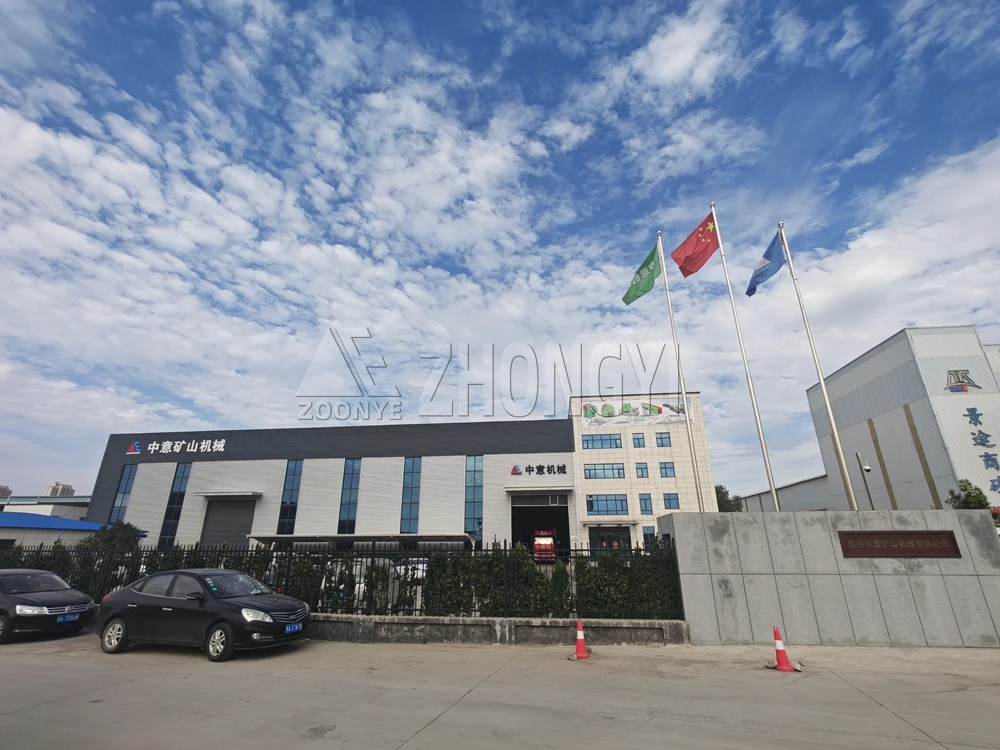
With more than 13 years of experience in mining machinery manufacturing, Zhongyi Mining integrates equipment design, production, process support and on-site commissioning. Our 40,000+ m² facility, 60+ processing machines and trained production team support the manufacturing of grinding, crushing, screening and mineral processing equipment. We have supplied equipment to mining, metallurgy, building materials and other industrial projects, with experience covering different materials, capacities and process requirements.
We focus on solving practical project requirements rather than supplying equipment alone. Our service covers ore identification, pilot testing, equipment selection, process flow design, manufacturing, installation and commissioning. Based on the customer’s material characteristics, capacity and product requirements, our technical team helps determine suitable equipment and process parameters, while on-site support assists with installation, commissioning and operation.
Request a Customized Solution
Partner with Zhongyi for a Raymond Mill designed for dry grinding, powder classification, and fine mineral processing in mining, building materials, chemical, and other industrial applications.
Custom High Density Agitation Tank Solutions
Every Raymond Mill project has different requirements for material type, feed size, capacity, powder fineness, moisture, and plant layout. Tell us your material, required capacity, target fineness, feed size, and site conditions, and our technical team can recommend the suitable mill model and grinding process. If your project also involves downstream mineral processing, see our [Calcination Plant Solutions] for a complete process reference. Contact Zhongyi to discuss your requirements and get a tailored Raymond Mill solution.
Please Provide the Following Information:
FAQs
What is a Raymond Mill used for?
A Raymond Mill is a dry grinding machine used to produce fine mineral powder for downstream processing or direct industrial use. It is commonly used for limestone, barite, dolomite, gypsum, calcite, kaolin, talc and feldspar. The equipment combines roller-and-ring grinding with air classification to control product fineness and is typically used in mineral processing, building materials, ceramics, fillers and related industries.
How does a Raymond Mill work?
A Raymond Mill grinds material between rotating grinding rollers and a fixed grinding ring. After grinding, an airflow carries the particles to the classifier, where fine particles meeting the required size pass through while coarse particles return to the grinding chamber. The qualified powder is then collected through the cyclone and dust collection system, forming a continuous closed-circuit grinding process.
What capacity can a Raymond Mill achieve?
Zhongyi Mining’s current reference Raymond Mill range covers 0.8–20 TPH. Actual capacity depends on material hardness, abrasiveness, moisture, feed size, required fineness and operating conditions. A higher capacity does not automatically mean a suitable configuration, because grinding performance and product requirements must also be considered. Buyers should provide their material and production requirements for more accurate model selection.
What fineness can a Raymond Mill produce?
The current reference output fineness of Zhongyi Mining’s Raymond Mill is 80–325 mesh. Final fineness depends on the material properties, classifier adjustment, airflow and grinding conditions. Different products may require different particle sizes, so the target mesh should be confirmed before equipment selection. If a specific particle-size distribution is required, providing the target specification helps determine the appropriate grinding and classification configuration.
Can a Raymond Mill grind different types of minerals?
Yes, a Raymond Mill can process many suitable non-metallic minerals and selected ores, including limestone, barite, dolomite, gypsum, calcite, kaolin, talc and feldspar. However, material suitability should be evaluated based on hardness, moisture, abrasiveness and feed size rather than material name alone. For unfamiliar or highly abrasive materials, testing can help verify grinding performance, achievable fineness and wear-part requirements.
How do I choose the right Raymond Mill model?
Model selection should consider the material type, feed size, required capacity and target fineness first. Material hardness, moisture and abrasiveness also affect grinding performance and wear. Site conditions, power supply and the required auxiliary equipment should be considered when designing the complete system. Providing these parameters allows Zhongyi’s technical team to match the mill model and grinding configuration to the actual production requirements.
What are the main wear parts of a Raymond Mill?
The main wear parts are the grinding rollers, grinding ring and shovel blade. Classifier components, bearings and seals also require regular inspection. Wear rate is affected by material abrasiveness, feed conditions, operating load and maintenance. Oversized feed, unstable feeding, incorrect airflow or improper roller-ring clearance can increase wear. Regular inspection and timely replacement of worn components help maintain stable grinding performance and reduce unexpected downtime.
What information is needed to get a Raymond Mill quotation?
For a suitable Raymond Mill quotation, buyers should provide the material type, maximum feed size, required capacity, target fineness and site conditions. Material hardness, moisture and abrasiveness are also useful when available. These details help determine the appropriate mill model, auxiliary equipment and system configuration. Zhongyi can then evaluate the grinding requirements and provide a solution based on the actual production conditions rather than capacity alone.