Introduction
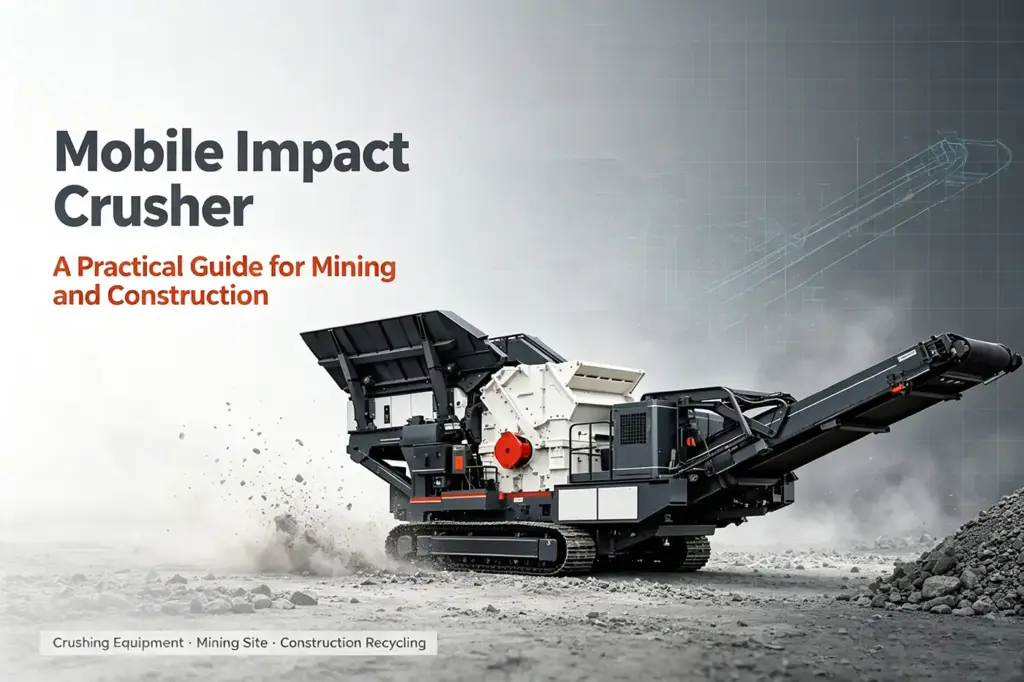
Mobile impact crushers have become a practical solution for mining, quarrying, and construction projects that require flexible crushing operations and reduced material handling costs. Unlike traditional stationary crushing plants, mobile impact crushers can be easily transported and deployed directly at the working site, making them ideal for processing aggregates, construction waste, limestone, and other raw materials.
With advantages such as high mobility, efficient crushing performance, and quick installation, these machines are widely used in primary and secondary crushing applications. However, selecting the right mobile impact crusher requires a clear understanding of its working principle, key components, applications, and performance factors.
In this guide, we will explore how mobile impact crushers work, their main features, common applications, and important considerations when choosing a suitable model for your project.
Step 1 — Match Crusher Type to Your Material Hardness
Crusher selection starts with the material. Its compressive strength, abrasiveness, moisture, and feed size determine the crusher type, the number of stages, and the wear cost per ton. If the material is misjudged, the result is usually wrong equipment selection, unstable production, and higher operating cost.
We focus on four key factors: Hardness (MPa), Abrasiveness (silica content), Moisture content, Feed size and consistency
Hardness
Abrasiveness
Moisture content
Feed size and consistency
Material Hardness
Hardness is the fastest way to narrow down your equipment options.
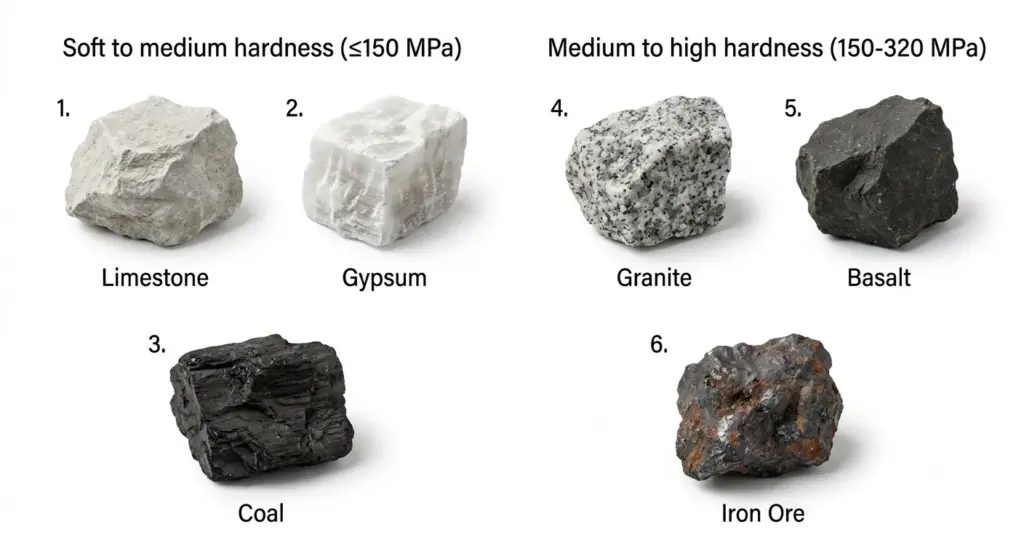
Soft to medium materials (≤150 MPa): including limestone, gypsum, and coal, are typically processed using impact crushers or heavy hammer crushers. These materials fracture easily, allowing most projects to achieve the required output size in a single-stage configuration, reducing both system complexity and capital cost.
For harder materials in the 150–320 MPa range: such as granite, basalt, iron ore, and quartz, a multi-stage crushing process is required. The standard solution combines a jaw crusher for primary reduction with a cone crusher for secondary crushing, delivering stable throughput, controlled gradation, and reliable long-term operation.
If you try to run hard rock through an impact or hammer crusher, you’ll see rapid wear, frequent shutdowns, and a sharp increase in operating cost.
Abrasiveness
Two materials can have similar hardness but very different wear behavior.
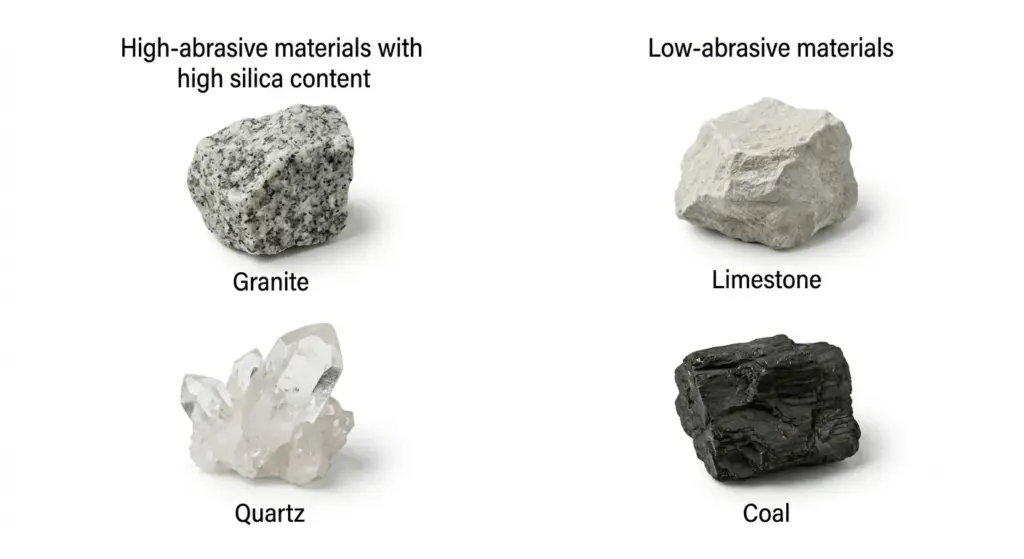
High-abrasive materials with high silica content: such as granite and quartz, accelerate wear on blow bars and hammers. For these applications, cone crushers with wear-resistant liners are the preferred solution to maintain consistent performance and control operating costs.
Low-abrasive materials: including limestone and coal, generate significantly less wear, resulting in lower maintenance cost and longer service intervals. In these conditions, impact crushers and heavy hammer crushers remain a cost-effective and efficient choice.
In many cases, abrasiveness—not hardness—is what determines your maintenance frequency.
Moisture Content — What Affects Stability
Moisture doesn’t change crushing strength, but it changes how material flows.
Materials with moisture content below 3% ensure stable feeding conditions and predictable crusher performance, allowing standard configurations to operate efficiently.
When moisture content exceeds 5%–8%, particularly with sticky or clay-rich materials, the risk of blockage increases—especially in impact and hammer crushers. Under these conditions, pre-screening or process adjustments are typically required to maintain continuous operation.
If your feed includes clay or fine particles with moisture, this becomes a key constraint.
Feed Size — What Sets Your Primary Stage
Feed size determines how your process starts.
Large feed sizes (≥500–1,200 mm): require a jaw crusher for primary reduction to ensure efficient size control and protect downstream equipment.
For controlled or smaller feed, materials can be processed directly by impact crushers or heavy hammer crushers, simplifying the process flow and reducing equipment requirements.
Inconsistent feed size often leads to unstable throughput and uneven wear.
Step 2 — Define Your Capacity Target (t/h)
Capacity decides how many machines you need and what type of system you should use.If capacity is too small, the plant will be overloaded, o is too large, you will waste investment and running cost.
50–200 t/h
200–500 t/h
500–3,000 t/h
50–200 t/h — Single-Unit Mobile Plant
If your requirement stays within 50–200 t/h, you usually don’t need a complex crushing system. In most cases, a single mobile crusher is enough to keep your operation efficient and easy to manage.
We recommend:
Mobile jaw crusher or mobile impact crusher. Optional small screening unit if you need separated final sizes.
This setup is simple to operate, quick to move, and keeps running costs low.
It is commonly used in small quarries, short-term projects, and construction waste recycling where flexibility matters more than high output.
200–500 t/h — Modular Multi-Unit Mobile Line
Once you go above 200 t/h, a single machine will start to limit your output and product consistency. At this point, you need a combination line instead of a standalone unit.
We recommend:
Mobile jaw crusher (primary) + mobile cone crusher or impact crusher (secondary). Add a mobile screening plant if you need 2–4 final product sizes.
This setup gives you stable production and better control over final aggregate sizes without stopping the line.
It is commonly used in medium-sized quarries, infrastructure projects, and operations that require continuous production with multiple specifications.
500–3,000 t/h — Semi-Mobile or Stationary High-Capacity System
When you reach 500 t/h and above, the focus shifts from mobility to throughput and long-term efficiency. At this scale, you are building a production system, not just a mobile setup.
We recommend:
Stationary or semi-mobile jaw crusher for primary crushing. Multiple cone crushers running in parallel for secondary crushing. VSI or fine cone crusher for shaping. Multi-deck screening system in a closed circuit.
This configuration is built for high and stable output, not frequent relocation.
It is widely used in large quarries, mining projects, and long-term aggregate production where cost per ton and system stability are the key priorities.
Capacity Specification Reference
| Capacity (t/h) | Max Feed Size | Final Size Range | Reduction Ratio | Typical Configuration |
|---|---|---|---|---|
| 50–100 | ≤500 mm | 0–50 mm | 8:1–10:1 | Mobile jaw + screen |
| 100–200 | ≤600 mm | 0–40 mm | 10:1–12:1 | Mobile impact or jaw + screen |
| 200–350 | ≤700 mm | 0–31.5 mm | 12:1–15:1 | Jaw + cone + screen |
| 350–500 | ≤800 mm | 0–25 mm | 15:1–18:1 | Jaw + cone (multi) + screen |
| 500–1,000 | ≤1,000 mm | 0–20 mm | 18:1–20:1 | Stationary jaw + cone + VSI |
| 1,000–3,000 | ≤1,500 mm | Custom grading | 20:1+ | Multi-stage crushing + screening system |
Step 3 — Lock In Your Output Size Requirements
Output size directly defines how many crushing stages you need and how complex your system will be.If this step is not defined clearly, you will either under-design the plant (can’t meet spec) or over-design it (unnecessary investment and operating cost).
We classify output requirements into three practical ranges:
100–300 mm
20–60 mm
0–5 mm
100–300 mm → Primary Jaw Only
This stage is only for size reduction, not final aggregate production. One jaw crusher is enough.
Typical reduction ratio is 3:1–8:1, suitable for coarse crushing without adding a second stage.
No strict requirement on grading or particle shape. Feed is usually large and uneven.
Limitations:
Output size is not uniform and cannot be used as finished aggregate.
Applications:
Pre-crushing, material preparation, or feeding into a secondary crushing line.
20–60 mm → Two-Stage System (Standard Aggregate Range)
This is the standard output range for most quarry and construction aggregate production. A single crusher cannot achieve both size control and particle shape.
Two-stage crushing is required.
Typical configuration is jaw crusher + cone crusher, or jaw crusher + impact crusher depending on material hardness.
Jaw crusher handles primary reduction. The second stage controls final size and grading.
Stable production in this range depends on controlled feed, closed-side setting (CSS), and recirculation if needed.
Limitations:
System is more complex than single-stage crushing, with higher investment and more wear parts to manage.
Applications:
Concrete aggregate (10–31.5 mm), road base material, and standard commercial aggregates.
0–5 mm → Sand Making System (VSI Required)
This range requires shaping, not just crushing. Conventional crushers cannot produce consistent fine sand.
A VSI crusher must be added as the final stage.
Typical configuration is jaw crusher + cone crusher + VSI sand making machine.
Jaw and cone perform size reduction. VSI performs shaping and fine crushing.
Final sand quality depends on rotor speed, feed size control, and material properties.
Limitations:
High energy consumption, strict feed requirements, and increased wear due to high-speed impact.
Applications:
Manufactured sand (0–5 mm), high-grade concrete, and asphalt aggregates.
Output Size vs Equipment Selection
| Output Size | Stage Count | Typical Configuration | Engineering Purpose | Key Constraint |
|---|---|---|---|---|
| 100–300 mm | 1 stage | Jaw crusher only | Size reduction only | No grading control |
| 20–60 mm | 2 stages | Jaw + cone / impact | Stable aggregate production | Material-dependent wear |
| 0–5 mm | 3 stages | Jaw + cone + VSI | Sand shaping + grading | High process control required |
Step 4 — Crusher Type Comparison: Jaw vs. Cone vs. Impact vs. Hammer
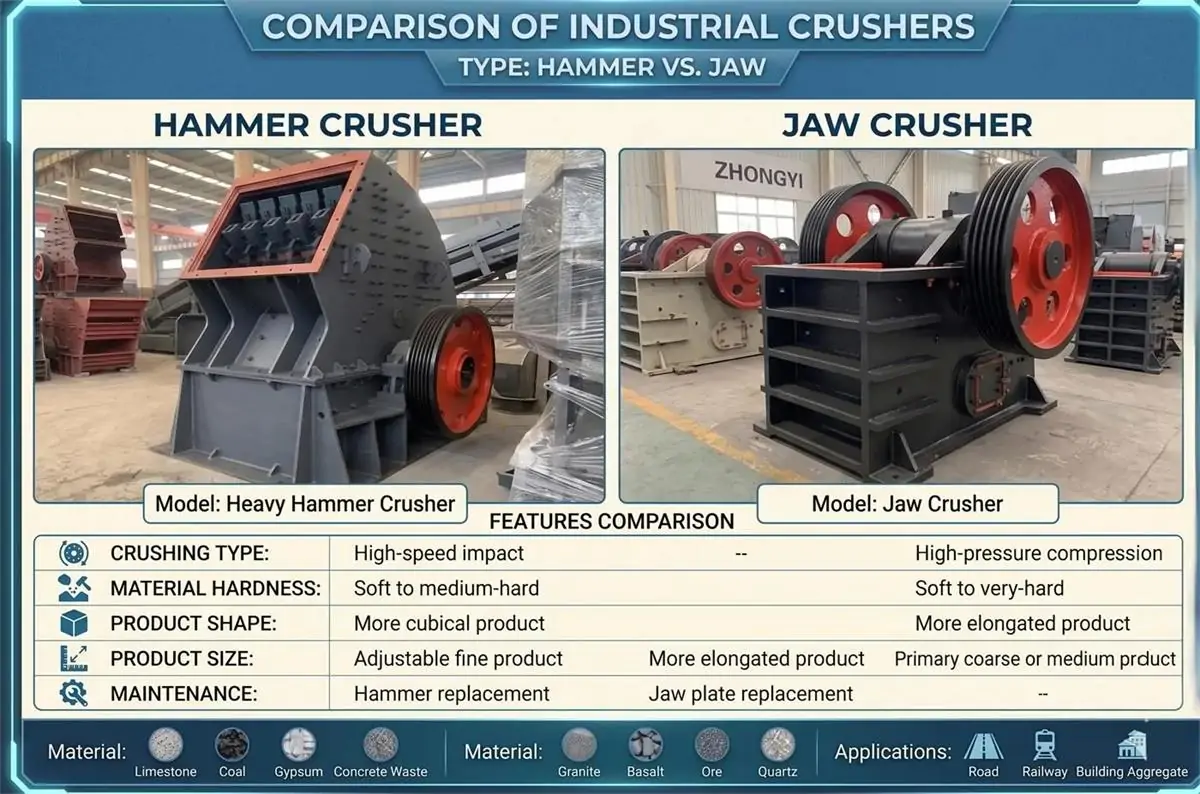
crusher selection is usually determined by feed size, material hardness, required product shape, and the number of crushing stages in the flow sheet. Understanding the role of each crusher type helps you avoid over-designing the system or creating unnecessary processing costs.
Comparison Table
| Crusher Type | Feed Size (mm) | Discharge (mm) | Reduction Ratio | Capacity (t/h) | Suitable Strength (MPa) | Wear Cost |
|---|---|---|---|---|---|---|
| Jaw Crusher | ≤1200 | 50–300 | 3:1–8:1 | 50–1500 | ≤320 | Low |
| Cone Crusher | ≤300 | 5–60 | 4:1–6:1 | 50–1200 | ≤350 | Medium |
| Impact Crusher | ≤800 | 10–60 | 10:1–20:1 | 50–800 | ≤200 | High |
| Hammer Crusher | ≤600 | 0–50 | 10:1–25:1 | 50–1200 | ≤150 | Very High |
Jaw Crusher
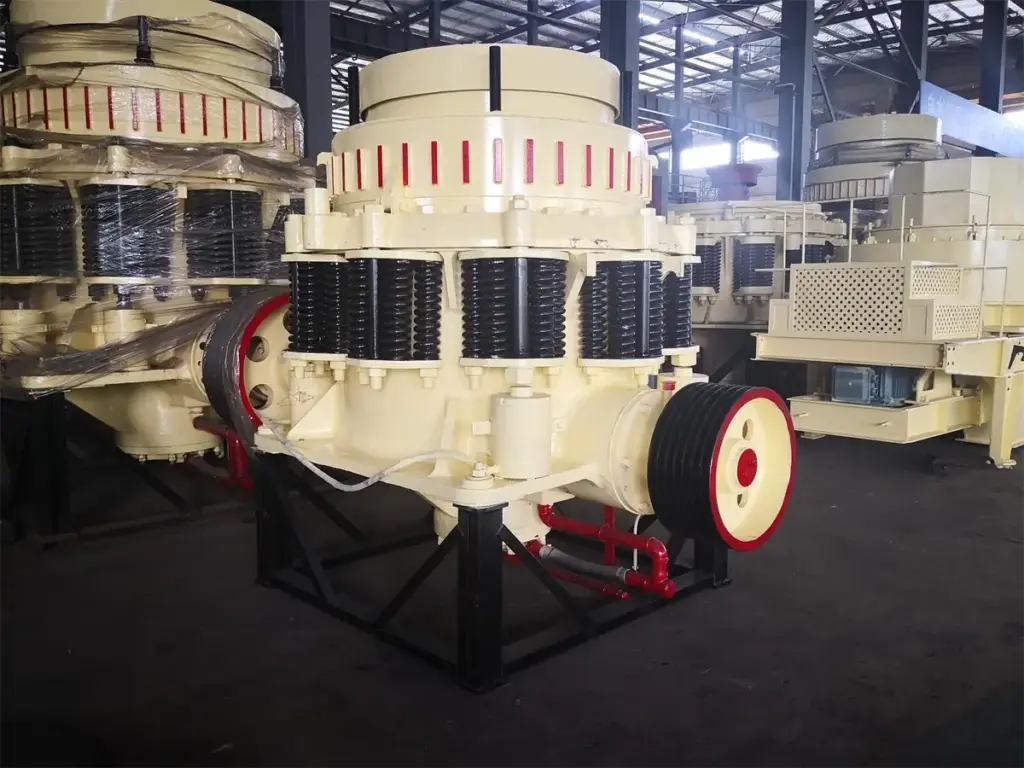
Cone Crusher
Impact Crusher
Hammer Crusher
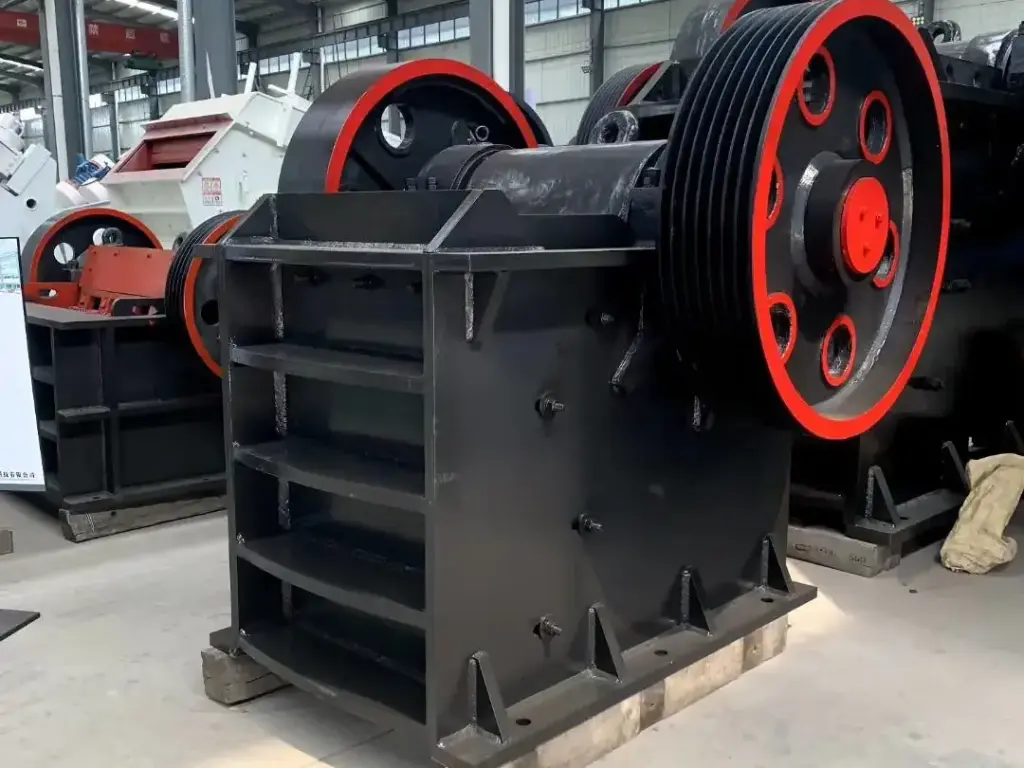
Jaw Crusher
Advantages:
Handles very large feed: Accepts big, irregular rock directly from blasting without pre-treatment.
Simple structure, high reliability: Fewer moving parts, low failure rate, easy maintenance in harsh conditions.
Low wear cost per ton: Jaw plates wear slowly, especially with hard rock, reducing operating cost.
Suitable for hard and abrasive rock: Performs well with granite, basalt, and other high-strength materials.
Limitations:
Poor particle shape: Output is elongated and flaky due to compression crushing.
Limited control over final size: Discharge size adjustment is coarse, not suitable for precise grading.
Not suitable for fine crushing: Efficiency drops significantly when targeting small output sizes.
Cone Crusher
Advantages:
Good particle shape: Laminated crushing improves cubicity and reduces flaky particles.
High efficiency in secondary/tertiary stages: Continuous crushing process allows stable and high throughput.
Suitable for hard and abrasive materials: Maintains performance under high-strength rock conditions.
Adjustable discharge size: Closed-side setting (CSS) allows relatively precise control.
Limitations:
Higher capital cost: More complex structure compared to jaw crushers.
Sensitive to feed conditions: Requires consistent, well-graded feed for optimal performance.
Not suitable for very large feed: Needs pre-crushing before operation.
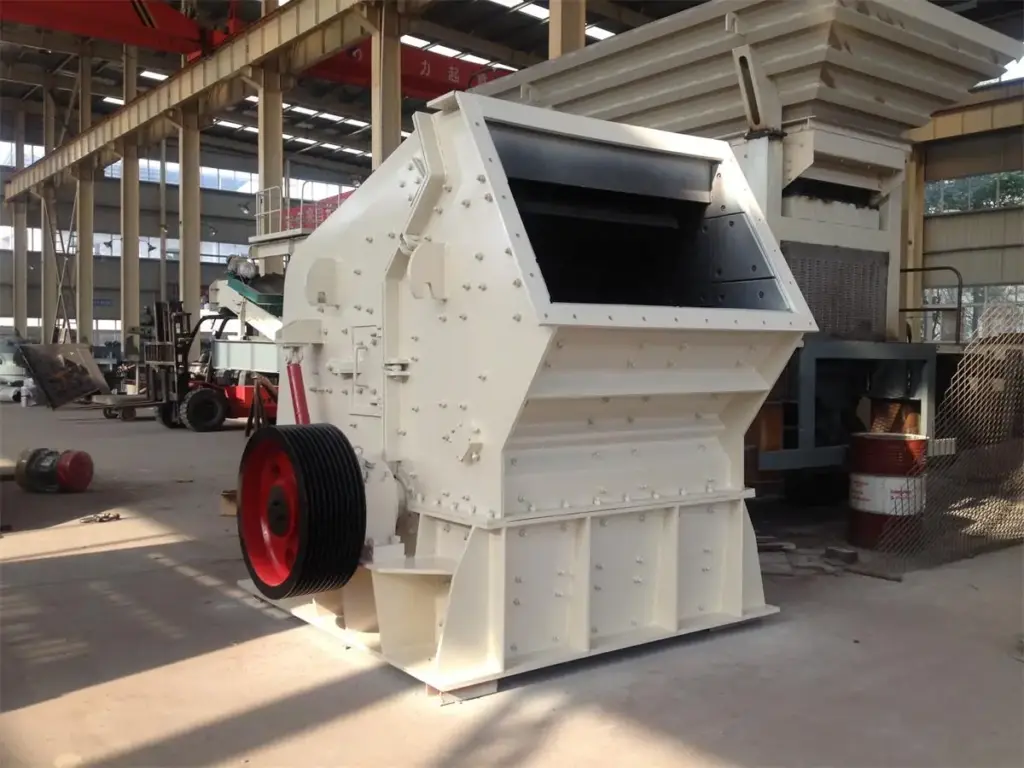
Impact Crusher
Advantages:
Excellent particle shape: Produces well-shaped, cubic aggregates suitable for concrete/asphalt.
High reduction ratio: Can achieve large size reduction in a single stage.
Flexible for medium-soft materials: Works well with limestone, recycled concrete, etc.
Limitations:
More fines generation: Produces higher percentage of fine material than compression crushers.
High wear cost: Blow bars and impact plates wear quickly, especially with hard rock.
Limited for hard/abrasive materials: Wear rate increases sharply with granite/basalt.
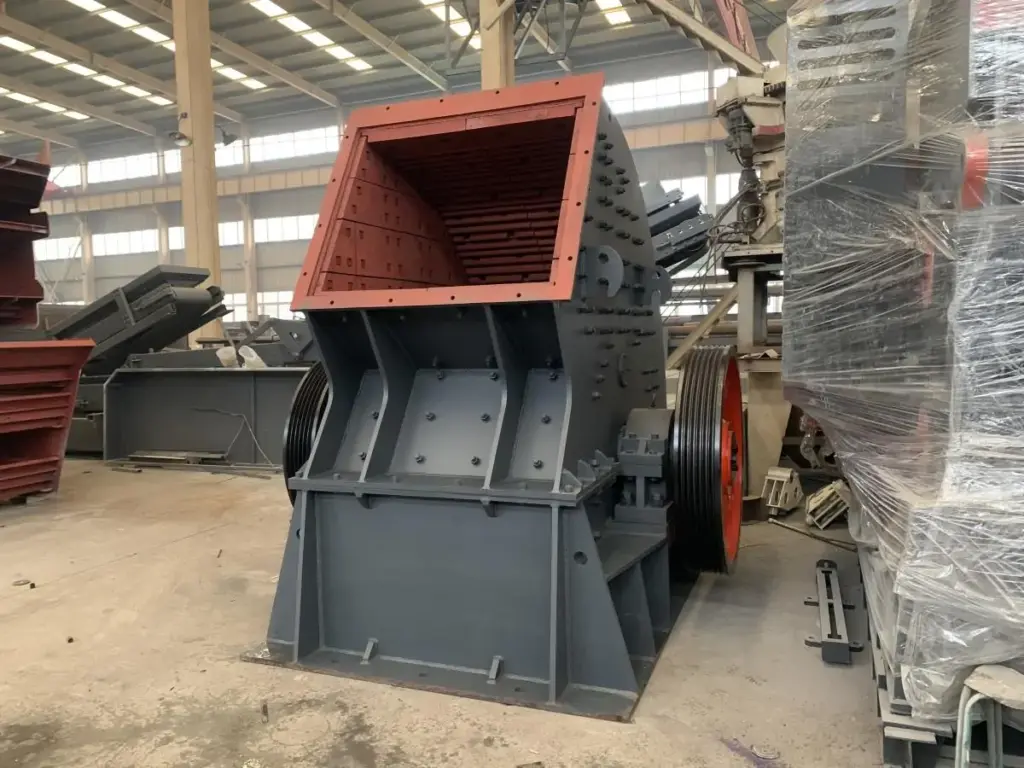
Hammer Crusher
Advantages:
Very high reduction ratio: Can crush directly from large feed to small output in one step.
Simple process flow: Often eliminates need for secondary crushing.
High production efficiency (soft rock): Suitable for continuous, high-volume operations.
Limitations:
Extremely high wear cost: Hammers wear rapidly and require frequent replacement.
Not suitable for hard materials: Performance drops sharply with high-strength or abrasive rock.
Over-crushing risk: Generates excessive fines if not properly controlled.
Quick Reference: Which Crusher for Which Job
- Primary crushing (large feed, coarse output) → Jaw crusher
- Secondary crushing (hard rock, stable grading) → Cone crusher
- Medium-soft rock, better particle shape → Impact crusher
- Soft material, one-stage crushing, high reduction → Hammer crusher
- Sand or fine material (<5 mm) → Requires VSI (not listed above)
Step 5 — Tracked or Wheeled: Mobility That Fits Your Site
Mobility selection is defined by three factors: ground condition, relocation frequency, and transport requirement. Different site conditions lead to completely different operating costs and efficiency.
Tracked
Wheeled
Tracked units are typically used in quarries, mining, or any site where ground conditions are poor and the working position changes frequently.
Rough terrain: Tracks provide low ground pressure and stable positioning on uneven, loose, or muddy surfaces.
Frequent relocation: The machine can move directly with the excavation face, reducing the need for material hauling.
Remote sites: Operation does not depend on road access or external transport conditions.
Flexible production layout: Suitable for temporary setups or sites where the process layout changes over time.
Wheeled units are more suitable for controlled environments where mobility between sites and cost efficiency are key considerations.
Flat and prepared ground: Performs efficiently on stable surfaces with less resistance and lower energy consumption.
Road transport: Can be towed directly, making inter-site movement faster and simpler.
Urban and infrastructure projects: Easier to integrate into projects with access limitations and transport regulations.
Lower overall cost: Lower capital investment and reduced wear compared to tracked undercarriage systems.
Tracked vs. Wheeled — Table
| Item | Tracked Crusher | Wheeled Crusher |
|---|---|---|
| Mobility | Self-propelled, on-site flex | Require |
| Ground ada | Excelle | Limited to stable, prepared surfaces |
| Relocation | Frequent, short | Occasional repo |
| Setup tim | Minimal | Requires position |
| Transport | Low-bed trailer re | Direct road |
| Operating cost | Higher (fu | Lower |
| Maintenance | Undercarr | Tires, |
Step 6 — Calculate Total Cost, Not Just Purchase Price
Equipment price is only part of the investment. Wear parts, energy consumption, and process design will determine long-term cost per ton.
Wear Parts Life
Fuel and Power Consumption
Process Design Impact on Cost
Wear Parts Life
Wear cost is driven by material hardness, feed size, and crushing stage.
- Jaw plates:
Typically 2,000–5,000 tons. Used in primary crushing, wear is relatively stable and predictable. - Cone liners:
Typically 3,000–6,000 tons. Longer life under well-graded feed, but sensitive to overload and uneven material. - Impact / hammer parts (reference):
Significantly shorter life under hard rock conditions, with higher replacement frequency.
Wear cost per ton increases rapidly when crushing hard or abrasive materials, especially in high reduction stages.
Fuel and Power Consumption
Energy cost varies by drive type and process layout.
- Diesel-driven units:
Typically 3–5 L per ton, depending on material and configuration. Higher flexibility, higher fuel cost. - Electric-driven systems:
15–30% lower operating cost under stable power supply. More suitable for fixed or semi-fixed plants. - Load stability:
Consistent feed improves efficiency and reduces unnecessary energy consumption.
Process Design Impact on Cost
Configuration has a direct impact on both capital investment and operating cost.
- Single-stage (hammer crusher):
Lower initial investment, simpler layout, fewer machines. - Two-stage (jaw + cone):
20–40% higher equipment investment, but better control over size, shape, and wear distribution. - Trade-off:
Single-stage reduces CAPEX but increases wear and fines. Multi-stage improves product quality and cost stability over time.
Quick Selection Decision Checklist
| Decision Point | What You Should Look At | Typical Outcome |
|---|---|---|
| Material (MPa) | Hardness and abrasiveness of rock | ≥200 MPa → Jaw + Cone / ≤150 MPa → Impact or Hammer |
| Capacity (t/h) | Continuous required output, not peak | ≤200 t/h → Single unit / >200 t/h → Two-stage or system |
| Output Size (mm) | Final product specification | 0–5 mm → VSI needed / 10–20 mm → Secondary crushing |
| Site Condition | Terrain and relocation frequency | Rough or mobile site → Tracked / Flat site → Wheeled |
| Budget Level | CAPEX vs long-term cost balance | Low budget → Simple flow / Long-term → Jaw + Cone system |
| Final Setup Logic | Combination of all factors | Hard + high capacity → Multi-stage / Soft + low cost → Single-stage |
Conclusion
Choosing a mobile crushing plant usually comes down to a few basics — what material you’re running, how much output you need, the site setup, and your budget. Once those are clear, the configuration is normally not complicated.
If the project has tighter requirements on capacity or final product, it’s better to bring in engineering support early. Zhongyi has been working on crushing and screening equipment for over 16 years, with projects built to international standards. If you want someone to take a look at your setup or suggest a full solution, we can go through it with you based on your actual material and working conditions.
FAQ
Can one mobile crusher handle both limestone and granite?
Not efficiently in the same configuration. Limestone can be processed with impact or hammer crushers, but granite requires a jaw crusher for primary crushing and a cone crusher for secondary stage to control wear and output stability.
What’s the difference between tracked and wheeled mobile plants?
Tracked plants are designed for rough terrain and on-site movement close to the working face. Wheeled plants are better for flat sites and frequent road transport between projects, with lower setup cost and simpler logistics.
How many tons per hour can a mobile crusher produce?
Mobile crushers typically range from 50 to 500 tons per hour depending on configuration and material hardness. Large multi-stage or modular systems used in quarry production can reach 800 t/h or more under stable feeding conditions.
Is a mobile plant cheaper than a stationary plant?
Mobile plants usually have lower civil construction cost and faster deployment, making them cost-effective for short to mid-term projects. Stationary plants are more economical in long-term, high-volume production due to lower operating cost per ton.
What maintenance does a mobile crusher need daily?
Daily maintenance includes checking wear parts, lubrication levels, belt tension, and hydraulic systems. Operators also need to monitor feed consistency and vibration to ensure stable operation and avoid unexpected downtime.
How long does it take to set up a mobile crushing plant on site?
Tracked mobile plants can usually be operational within a few hours after arrival. Wheeled plants typically require 1–3 days depending on site leveling, power connection, and full system configuration including conveyors and screens.