What Is a Sludge Dryer?
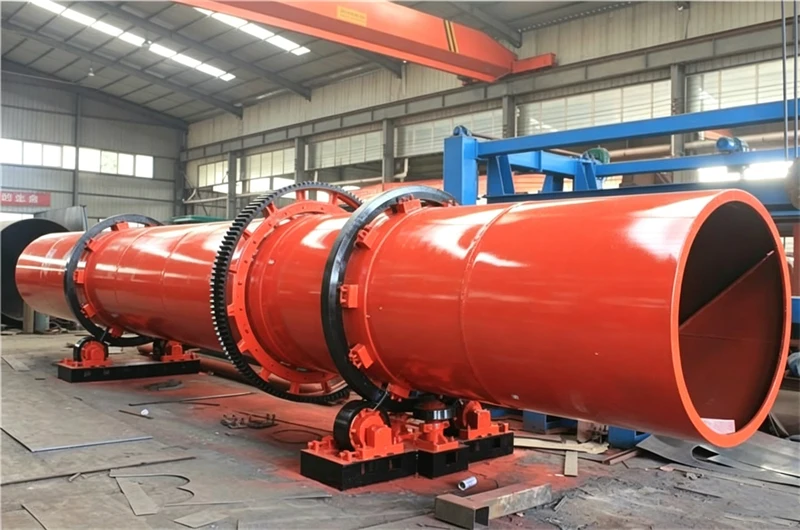
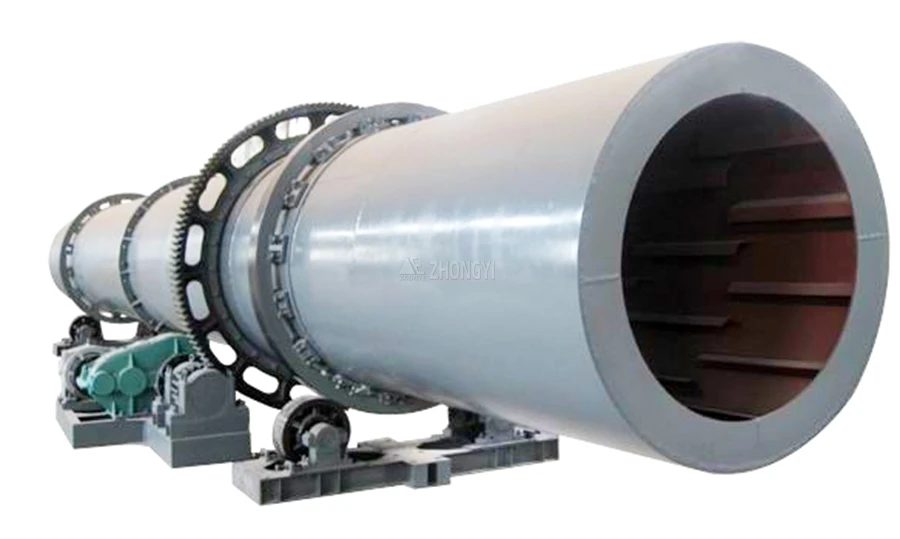
A Sludge Dryer, also known as a Rotary Sludge Dryer or Sludge Drying Machine, is continuous thermal drying equipment used to reduce the moisture content of dewatered sludge from mineral processing and beneficiation plants. It is typically installed downstream of equipment such as a thickener, filter press, or dewatering screen, where mechanically separated sludge still contains significant residual moisture. The dryer uses controlled heat transfer and material movement to further remove water before storage, conveying, disposal, or subsequent utilization.
In a complete mineral processing operation, the sludge dryer works as a downstream drying unit rather than a standalone dewatering machine. Wet sludge is first concentrated or mechanically dewatered, then fed continuously into the rotary dryer through a controlled feeding system. Inside the drum, lifting and dispersing components increase contact between the material and heated air, while the drying system controls residence time and temperature. Depending on the process, dried material can then be discharged to a conveyor, cooling unit, storage system, or downstream processing equipment, with the exhaust routed to dust collection and gas treatment equipment.
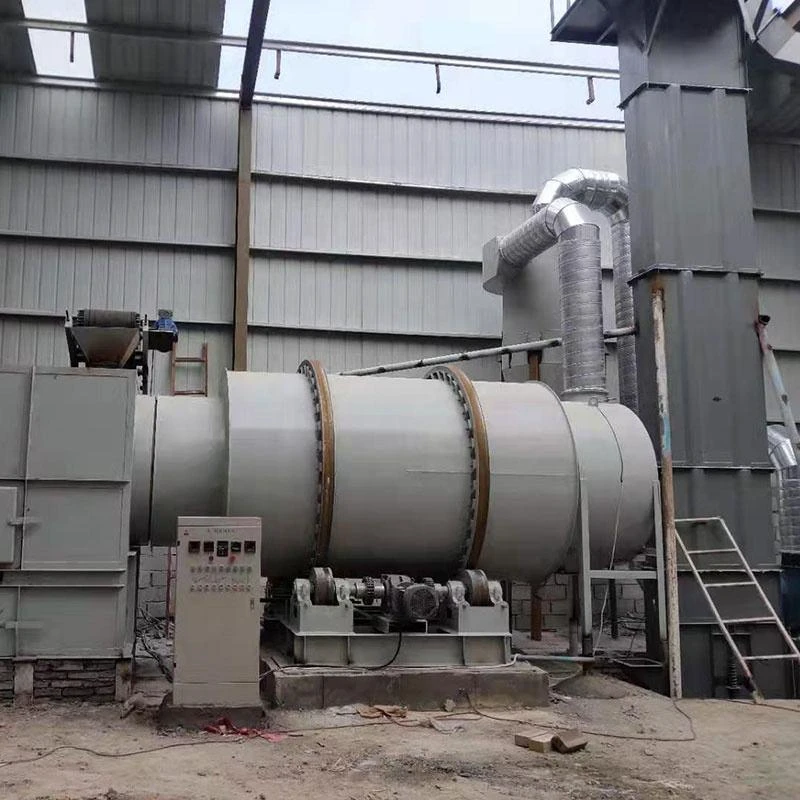
How Does a Rotary Sludge Dryer Work?
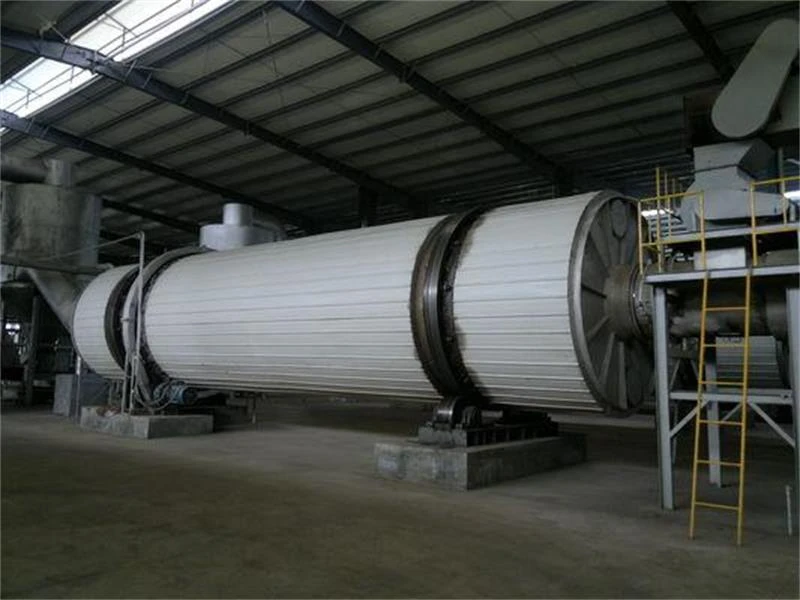
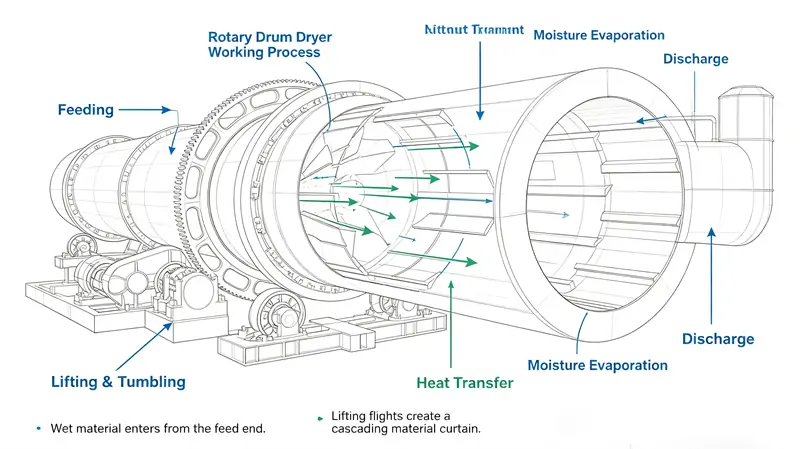
A Rotary Sludge Dryer continuously removes moisture from high-moisture, sticky sludge generated during mineral processing. Dewatered sludge enters the rotating drum, where lifting and dispersing components repeatedly raise and scatter the material while hot drying gas provides continuous heat transfer. As the sludge moves through the drum, moisture evaporates progressively until the material reaches the required final moisture for discharge and further handling.
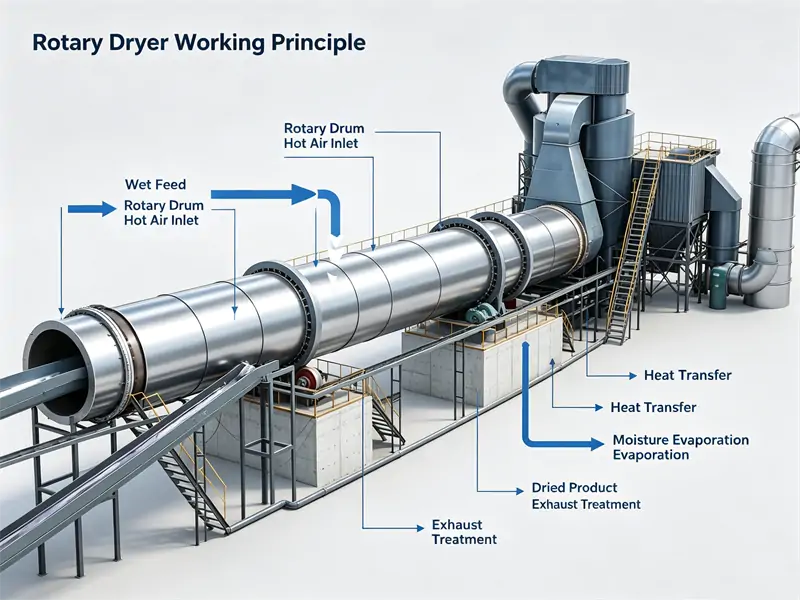
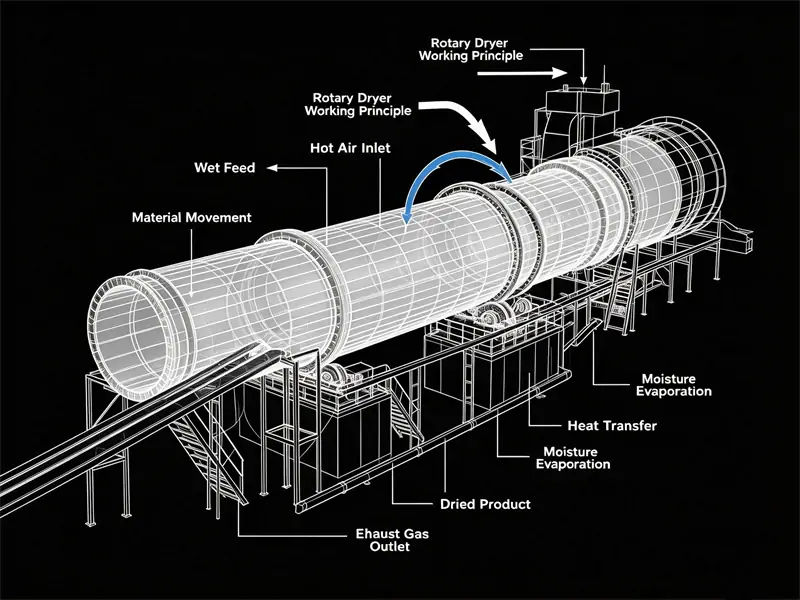
Rotary Sludge Dryer Structure
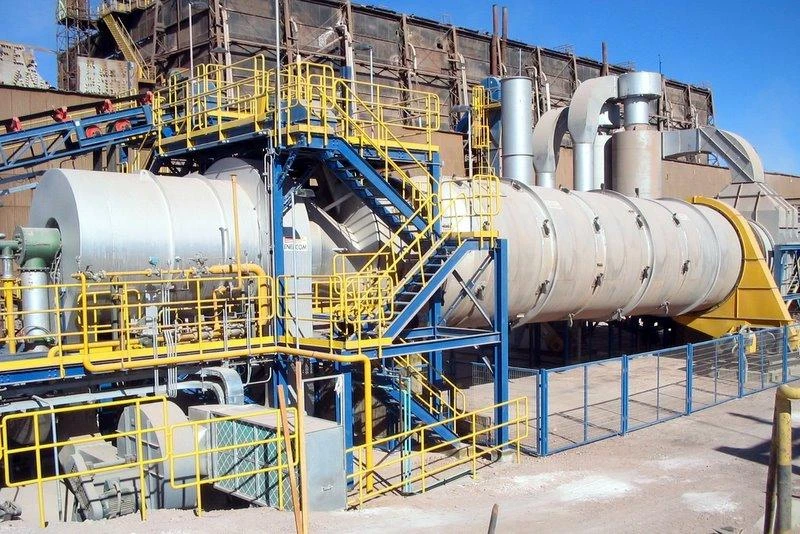
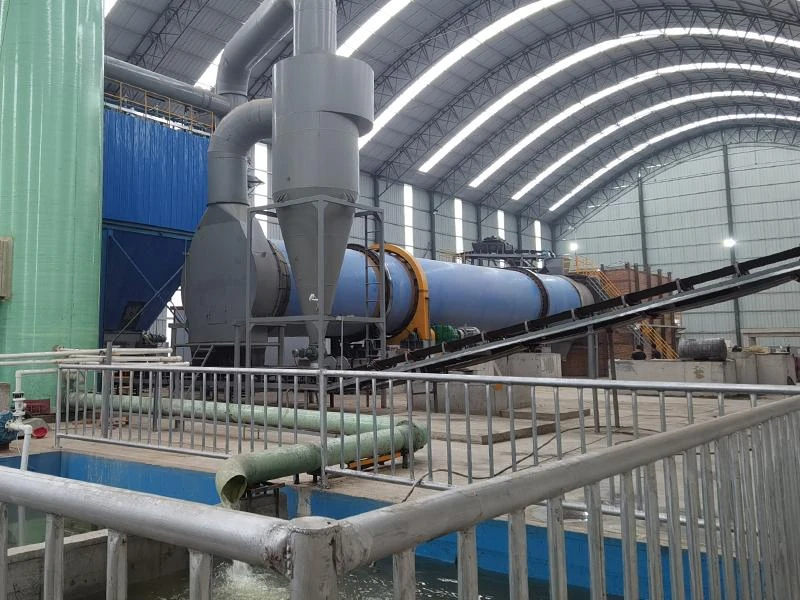
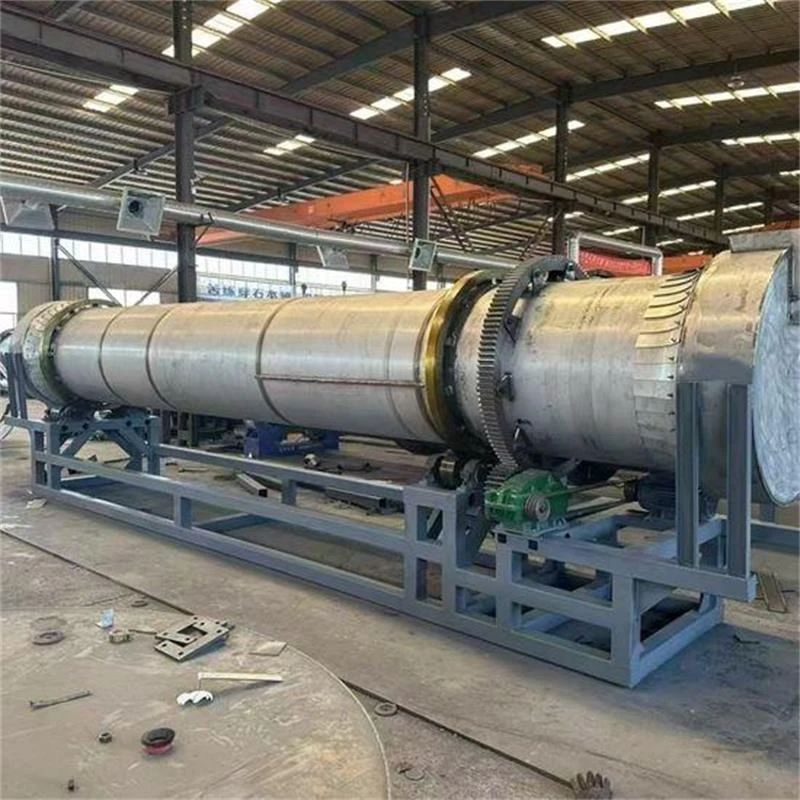
The Rotary Sludge Dryer consists of a rotating drum, internal lifting and cleaning components, feeding and discharge units, a heating system, and exhaust treatment equipment. Each component is configured to maintain stable material movement and heat transfer when processing high-moisture, sticky sludge from mineral processing plants.
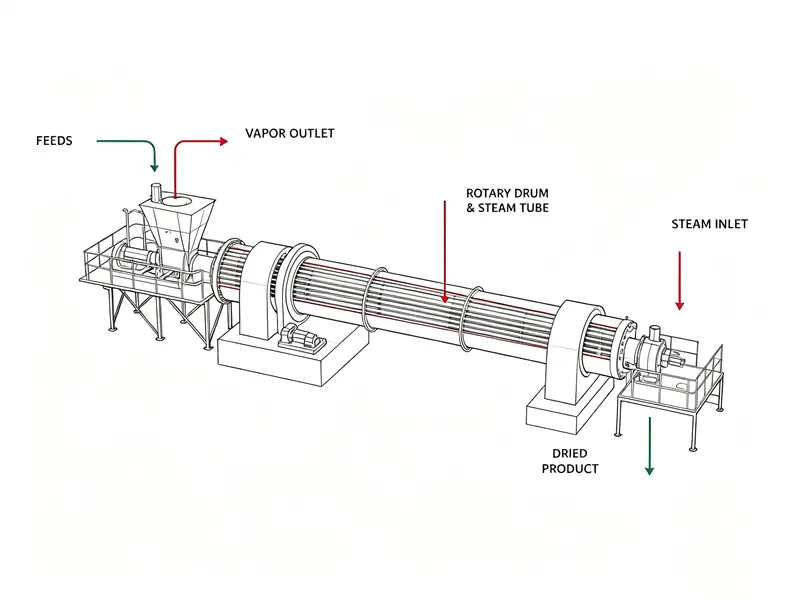
Applications
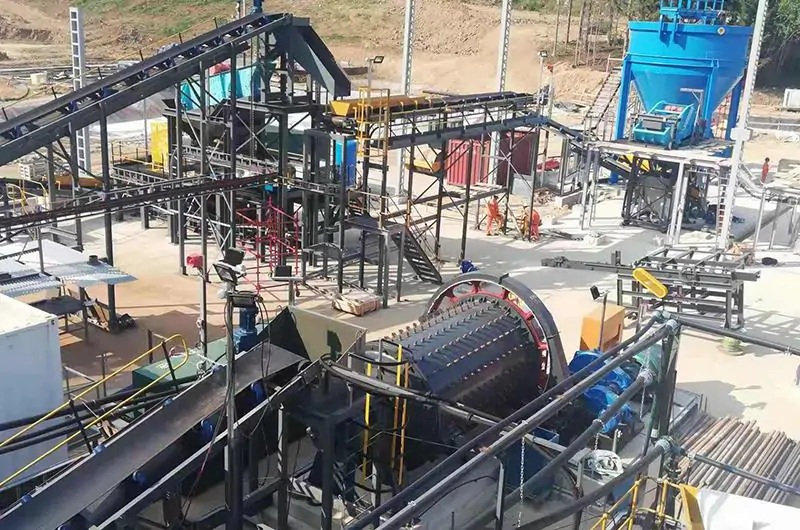
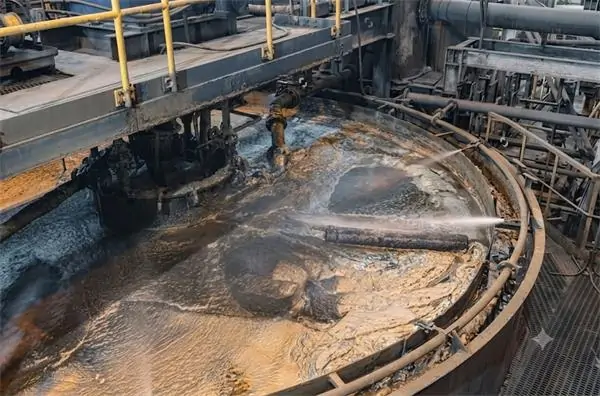
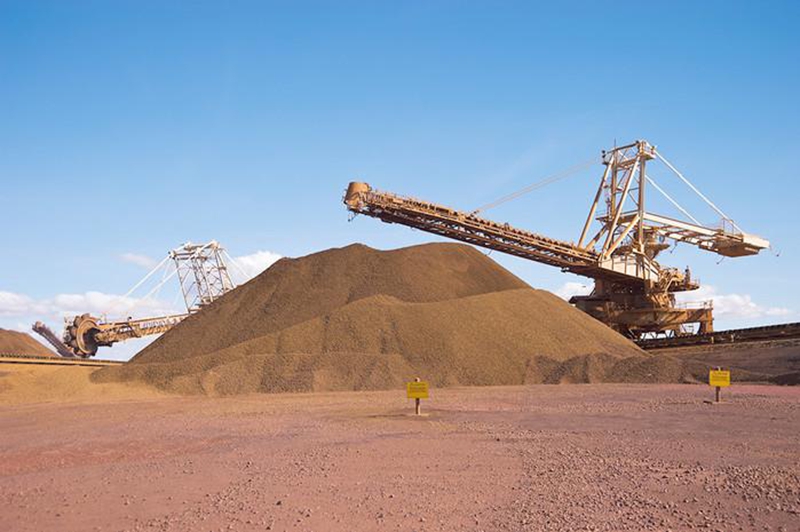
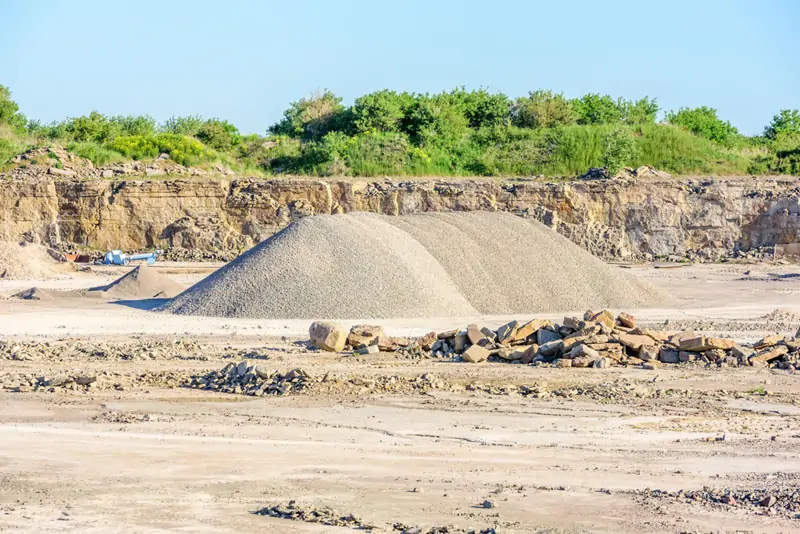
The Rotary Sludge Dryer is used for drying wet mineral sludge generated during beneficiation and mineral processing. These materials commonly contain fine mineral particles, water and a certain amount of sand, with moisture and particle size varying between processes. The dryer can be used after mechanical dewatering when further moisture reduction is required for conveying, storage or downstream treatment.
Rotary Sludge Dryer Specifications
The following specifications cover the main parameters of the Rotary Sludge Dryer, including drum size, rotational speed, heat source and operating mode. Capacity and drying performance are determined by the actual sludge feed conditions and required discharge moisture.
| Parameter | Specification |
| Equipment Type | Rotary Drum Sludge Dryer |
| Drum Diameter | 1.2–3.6 m |
| Drum Length | 8–28 m |
| Drum Speed | 1.5–8 rpm |
| Operation | Continuous |
| Heat Source | Hot Gas / Biomass / Waste Heat |
Sludge Dryer Capacity and Moisture
The capacity of a Sludge Dryer depends on the wet sludge feed rate, initial moisture and target final moisture. Mineral processing sludge with higher feed moisture requires more water evaporation, while a lower final moisture increases the drying load and residence time. Therefore, dryer capacity should always be evaluated together with the sludge moisture conditions rather than by t/h alone.
For example, when processing 10 t/h of sludge at 80% moisture and drying it to 20% final moisture, the feed contains 2 t/h of dry solids. The final dried product is 2.5 t/h, meaning the dryer needs to remove approximately 7.5 t/h of water. This water evaporation load is a key reference for determining the required dryer size, heat input and operating conditions.
Sludge Drying Process
Mineral processing sludge enters the drying section after mechanical dewatering. A thickener, filter press or dewatering screen removes part of the water, and the dewatered sludge is transferred to the feed hopper. The feeding system delivers the material to the Rotary Sludge Dryer at a controlled rate.
In the rotary dryer, the sludge is lifted and scattered by the internal flights as the drum rotates. Hot drying gas passes through the material and supplies the heat required for moisture evaporation. The sludge moves from the feed end to the discharge end while its moisture content is reduced to the specified level.
The wet exhaust gas leaves the dryer through the exhaust line and is sent to the dust collection system. Dried sludge is discharged from the drum and conveyed to cooling, storage or the next processing stage.
Process Flow:
Mechanical Dewatering → Sludge Storage → Feeding → Rotary Drying → Dust & Exhaust Treatment → Cooling → Dried Sludge Storage
Heat Source, Exhaust and Environmental Control
The drying system requires a suitable heat source and an exhaust system to handle moisture, dust and other emissions generated during operation. Heat can be supplied by natural gas, LPG, biomass or available waste heat, while the exhaust is collected through the ducting system and sent to the required treatment equipment.
A typical setup includes a cyclone separator or bag filter for dust removal and an induced draft fan for exhaust handling. Where sludge characteristics require it, additional vapor condensation or odor treatment can be added. The final configuration is selected according to sludge composition, exhaust characteristics and local emission requirements.
How to Select Sludge Drying Equipment?
Selecting drying equipment for mineral processing sludge starts with the actual feed conditions rather than equipment capacity alone. Key information includes sludge type, wet feed capacity, feed moisture, required final moisture and available heat source. These conditions determine the water evaporation load and the appropriate dryer size and operating conditions.
Feed and Moisture Conditions
Confirm the wet sludge capacity, feed moisture and target final moisture first. These values determine how much water the dryer must remove and provide the basis for sizing the drying system.
Sludge Characteristics and Heat Source
Check the sludge’s particle size, viscosity, abrasiveness and composition, together with the available heat source. Natural gas, LPG, biomass and waste heat can be considered according to plant conditions.
For equipment selection, provide: Sludge type · Capacity · Feed moisture · Final moisture · Sludge characteristics · Heat source
Why Choose Our Sludge Drying Equipment?
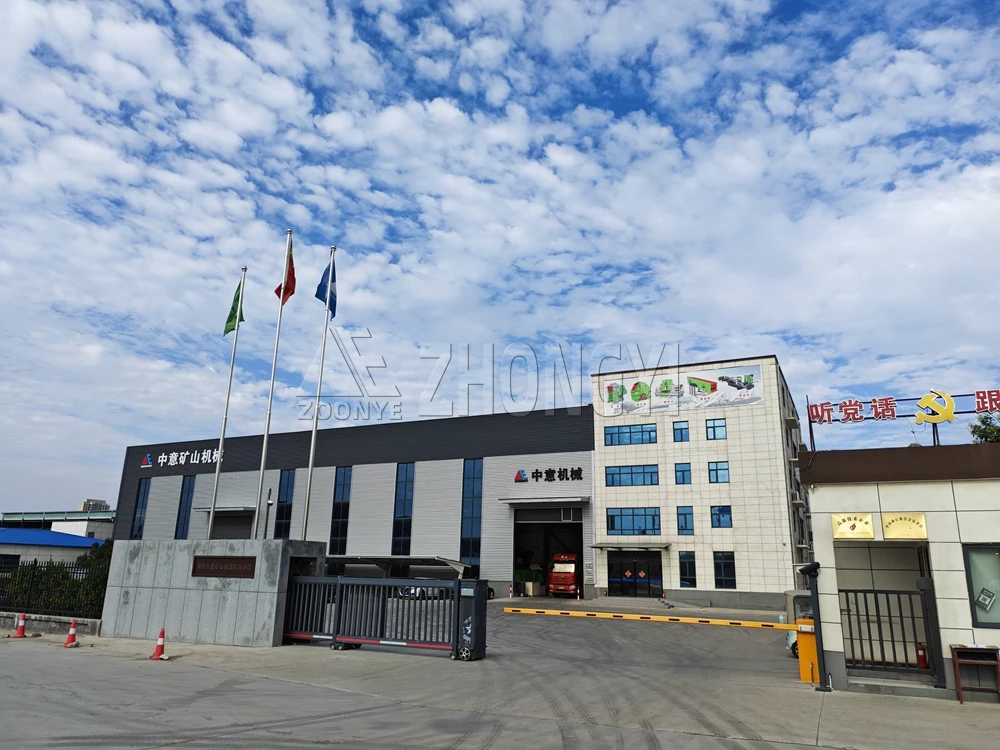
Zhengzhou Zhongyi Mining Machinery Co., Ltd. provides equipment design, manufacturing, assembly and installation for mining and mineral processing applications. Our production facility covers more than 40,000 m² and is equipped with 60+ sets of processing equipment for equipment fabrication and machining.
Our engineering team designs the Rotary Sludge Dryer according to sludge capacity, moisture content, material characteristics and heat source. Drum dimensions, internal lifting and cleaning components, feeding equipment and exhaust treatment can be configured for different mineral processing conditions.
Before delivery, equipment undergoes factory inspection covering fabrication, assembly and operating conditions. Zhongyi also provides installation and commissioning support, helping customers complete equipment assembly, system connection and initial operating adjustments at the project site.
Request a Customized Solution
Partner with Zhongyi for a rotary sludge dryer engineered for continuous moisture removal, stable material handling, and reliable operation in mineral processing plants.
Request a Custom Rotary Sludge Dryer
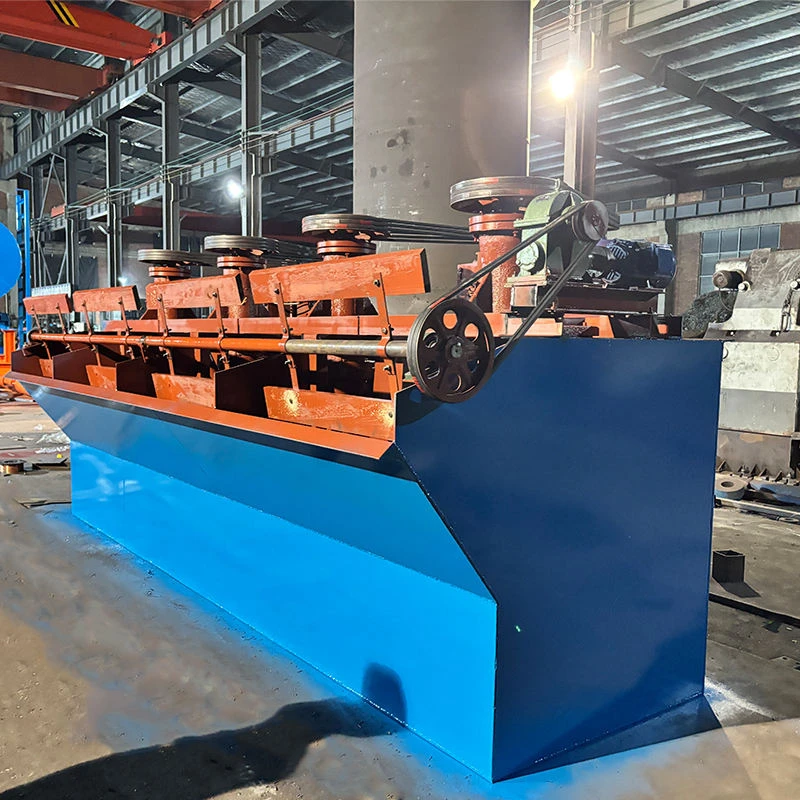
Every mineral processing sludge project has different feed moisture, capacity, material characteristics and final moisture requirements. Zhongyi develops custom rotary sludge drying solutions based on these conditions, covering the dryer, feeding system, heat source, exhaust treatment and material conveying. For complete beneficiation projects, the drying system can also be integrated with our Mineral Flotation Plants Solution. Share your sludge type, capacity, moisture content and heat source with our engineering team, and contact Zhongyi for a suitable equipment configuration and process solution.
Please Provide the Following Information:
FAQs
What type of sludge can a rotary sludge dryer process?
A rotary sludge dryer is suitable for mineral processing sludge, flotation sludge, tailings sludge and other wet mineral-based materials. The actual suitability depends on moisture content, particle size, viscosity, abrasiveness and solid composition. For sludge containing a high proportion of fine particles or sand, these characteristics should be considered when selecting the dryer structure and wear-resistant components.
How much sludge can a rotary sludge dryer process?
Dryer capacity depends on the wet sludge feed rate, moisture content and required final moisture. Large rotary dryers can handle continuous mineral processing applications, but there is no fixed capacity suitable for every material. The required throughput should be calculated together with the water evaporation load to determine the appropriate drum size, heat input and operating conditions.
What moisture content can a sludge dryer achieve?
The final moisture depends on the initial moisture, heat input, material properties, residence time and required drying conditions. A lower final moisture requires more water evaporation and usually increases the drying load. When selecting a Sludge Dryer, both feed moisture and target final moisture should be provided so the system can be properly sized.
How is the water evaporation capacity calculated?
Water evaporation is calculated from the wet feed rate, feed moisture and target final moisture. For example, 10 t/h of sludge at 80% moisture contains 2 t/h of dry solids. If the material is dried to 20% moisture, the final product is 2.5 t/h, requiring approximately 7.5 t/h of water evaporation.
How does a rotary sludge dryer prevent sludge from sticking?
Mineral processing sludge can become sticky during the early drying stage. Internal lifting and dispersing components repeatedly turn over the material, while self-cleaning structures reduce buildup on the drum and lifting flights. The internal arrangement can be selected according to sludge moisture, viscosity and particle characteristics to maintain material flow and stable heat transfer during continuous operation.
What heat sources can be used for sludge drying?
A Rotary Sludge Dryer can use natural gas, LPG, biomass or suitable waste heat as the drying heat source. Selection depends on the energy available at the mineral processing plant, fuel cost, required drying temperature and site conditions. Where suitable process waste heat is available, it can be incorporated into the drying system to reduce additional fuel requirements.
Does a sludge drying system require dust collection?
Yes. Exhaust gas from the drying process can contain water vapor and fine mineral particles. Cyclone separators, bag filters or a combination of dust collection equipment can be used according to the material and exhaust conditions. An induced draft fan and ductwork are also used to control gas flow and transfer the treated exhaust to the discharge point.
What information is needed to select a rotary sludge dryer?
For preliminary selection, provide the sludge type, wet feed capacity, feed moisture, required final moisture, material characteristics and available heat source. Particle size, viscosity and abrasiveness are also useful for equipment design. These parameters allow the engineering team to calculate the water evaporation load and determine the dryer size, heating capacity and required auxiliary equipment.