What Is a Bucket Wheel Sand Washer?
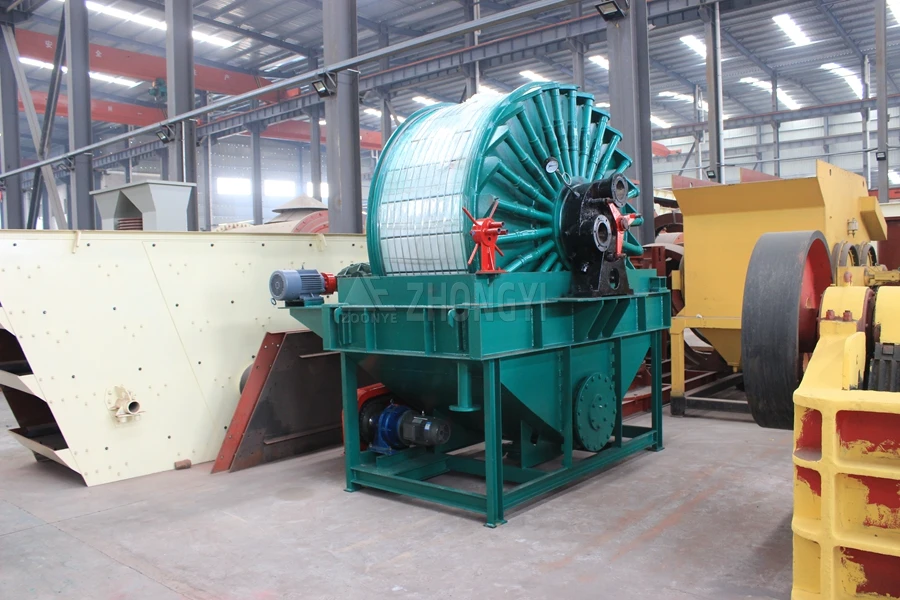
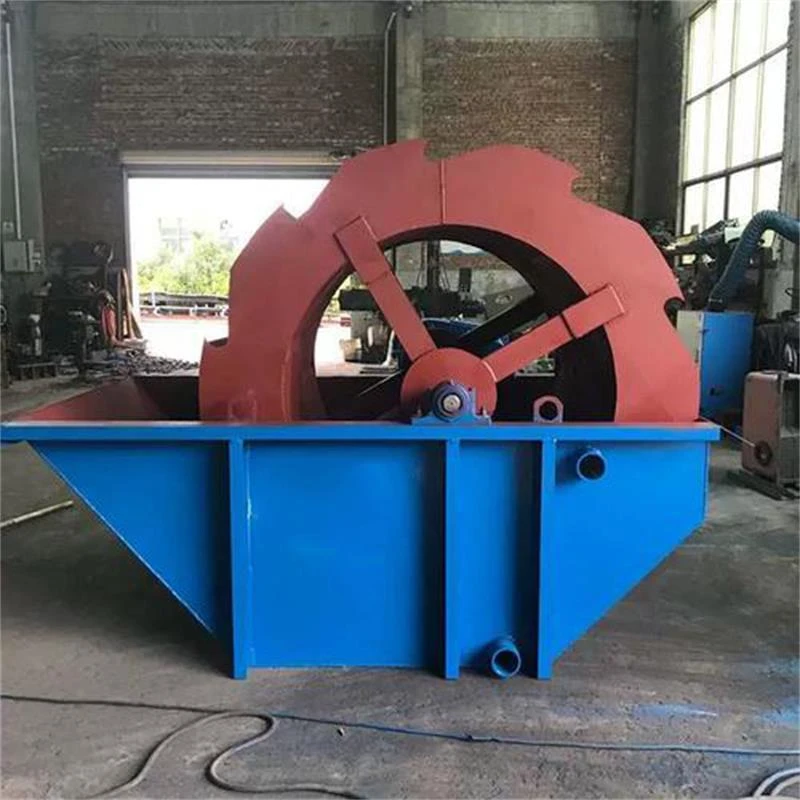
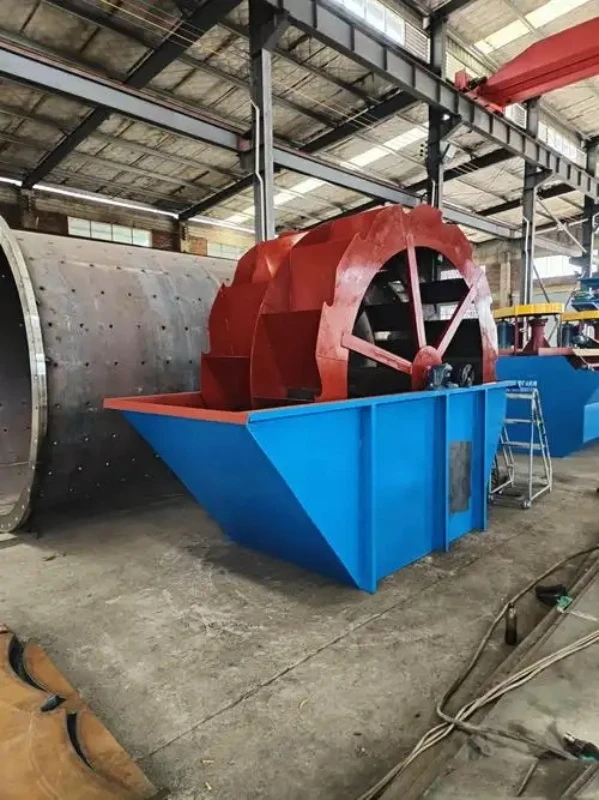
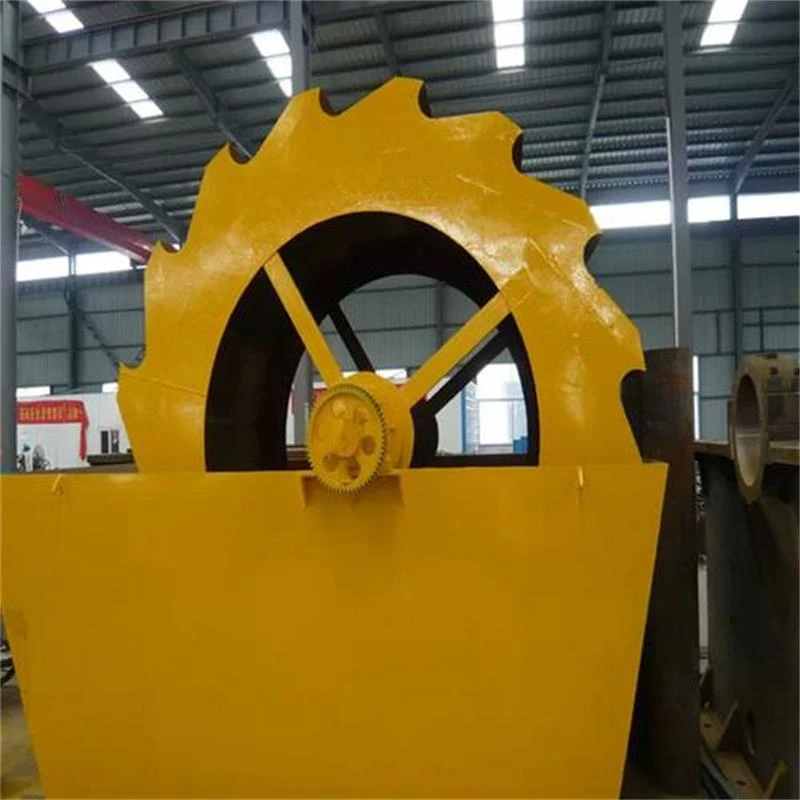
A bucket wheel sand washer, also known as a wheel sand washer, bucket wheel washer, or wheel-type sand washer, is a water-based machine for removing clay, silt, dust and other contaminants from sand and fine aggregates. It consists mainly of a washing tank, rotating wheel, buckets, drive system and discharge chute. Material is washed in process water, while contaminants leave with the overflow and cleaned sand is lifted by perforated buckets, which also provide partial dewatering. Typical feed size is below 10 mm.
In a sand production line, the washer is usually installed after crushing, screening or sand making equipment and before a dewatering screen, hydrocyclone or fine sand recovery unit. The final configuration depends on feed contamination, required sand quality, product moisture and water-recycling requirements.
How Does a Bucket Wheel Sand Washer Work?
A bucket wheel sand washer cleans sand through mechanical agitation, hydraulic separation and bucket lifting. Feed material enters the washing tank with process water. The rotating wheel removes clay, silt and surface contaminants, while clean sand settles and is recovered by the buckets. Water drains through the perforated buckets before the washed sand is discharged.
Washing and Contaminant Release
Sand and water enter the washing tank together. The rotating wheel moves the material, causing sand particles to tumble and rub against each other. This action removes clay, silt, dust and other contaminants from the particle surfaces. The washing intensity should match the feed’s clay content, fines and required product cleanliness.
Hydraulic Separation and Sand Settling
The released clay, silt and suspended contaminants remain in the water and leave through the overflow. Heavier, saleable sand settles in the tank for recovery. Stable water flow is important: excessive flow can increase fine-sand loss, while insufficient water can reduce washing performance.
Bucket Lifting and Partial Dewatering
Perforated buckets scoop the settled sand and lift it to the discharge chute. During lifting, free water drains through the bucket openings and returns to the tank, providing partial dewatering. A dewatering screen can be installed downstream when lower final moisture is required.
What Actually Determines Washing Performance?
Washing performance depends on the feed material, machine settings and operating conditions. The same bucket wheel sand washer may perform differently with changes in clay content, particle size, slurry concentration or water flow.
- Clay and Silt Content: Higher or sticky clay requires stronger washing and sufficient residence time. Excessive silt can increase fine-sand loss.
- Particle Size: Feed size and gradation affect washing and settling. Oversize material should be removed by upstream screening.
- Wheel Speed: Speed should match the feed characteristics. Too slow may leave contaminants attached, while excessive speed can increase fine-sand loss.
- Water Flow and Overflow Level: Proper water flow carries suspended clay and silt away. Excessive flow can also carry valuable fine sand into the overflow.
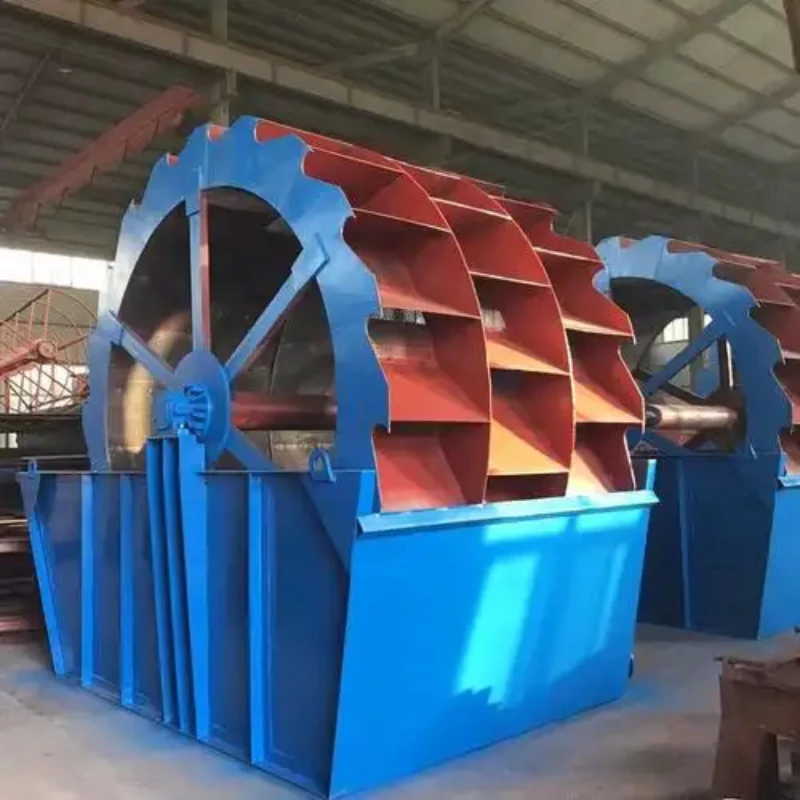
What Does a Bucket Wheel Sand Washer Remove?
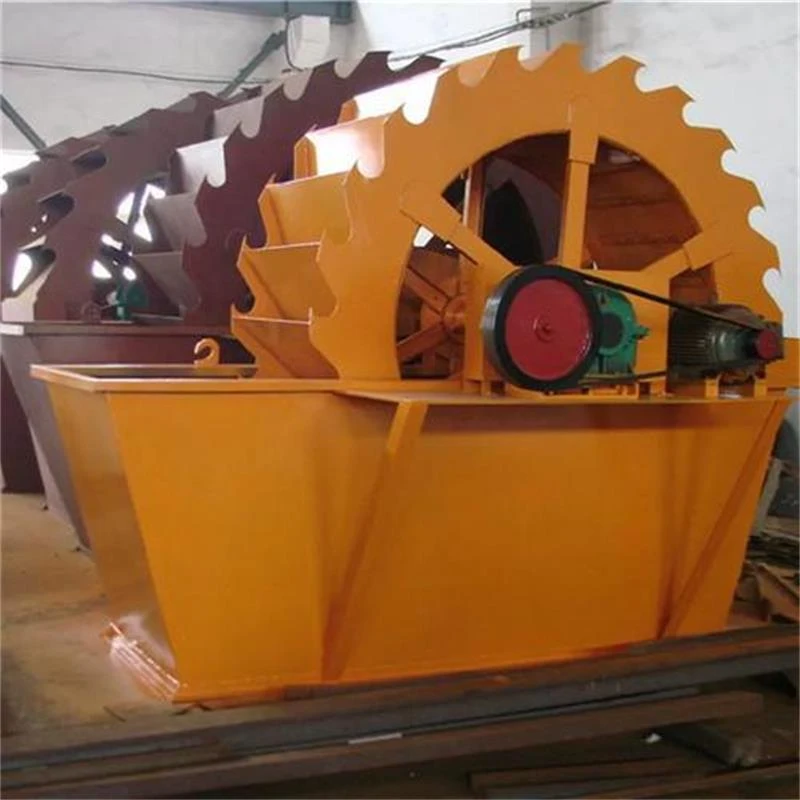
A bucket wheel sand washer separates unwanted contaminants from saleable sand through mechanical agitation, water flow and gravity. It mainly targets clay, silt, surface dust and lightweight impurities, while fine and coarse sand settle in the washing tank and are recovered by the bucket wheel.
| Contaminant / Fraction | Typical Behavior | Washing Objective |
| Clay | Disperses into process water during agitation | Remove |
| Silt | Remains suspended and exits with overflow | Remove / Reduce |
| Surface Dust | Released from particle surfaces during agitation | Remove |
| Lightweight Impurities | Float or move toward the overflow depending on feed | Separate |
| Fine Saleable Sand | Settles with the product fraction | Recover |
| Coarse Sand | Settles rapidly in the washing tank | Recover |
The objective is not simply to remove fines. It is to remove unwanted fines while retaining as much saleable sand as practical.
Bucket Wheel Sand Washer Structure
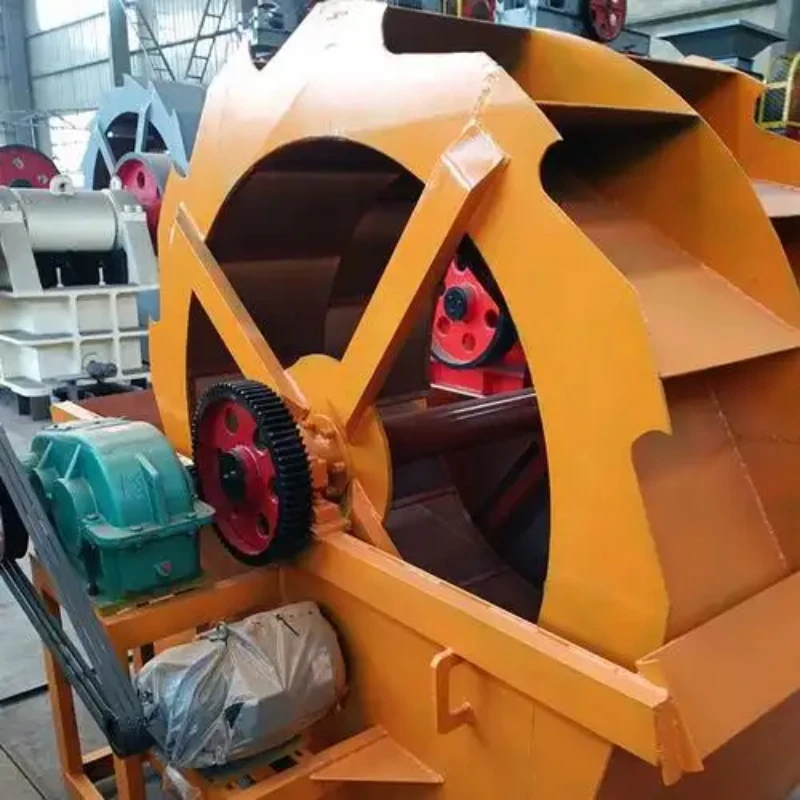
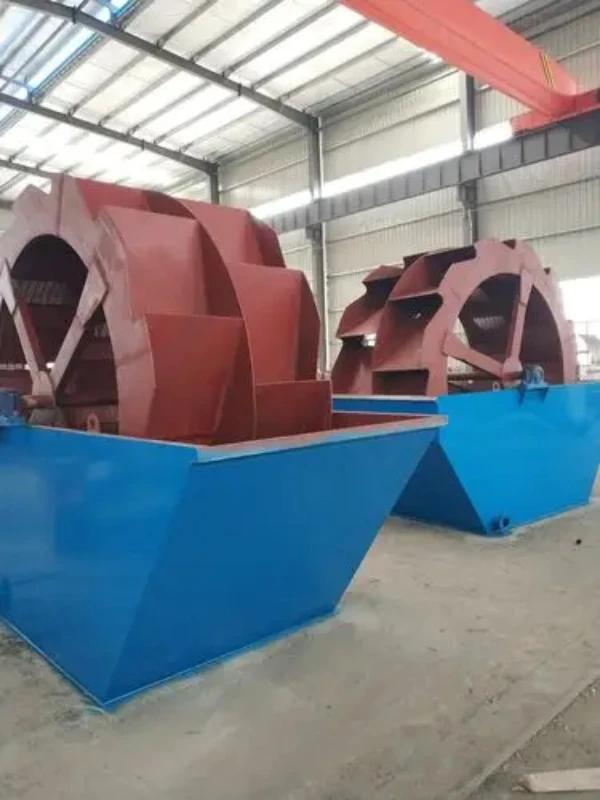
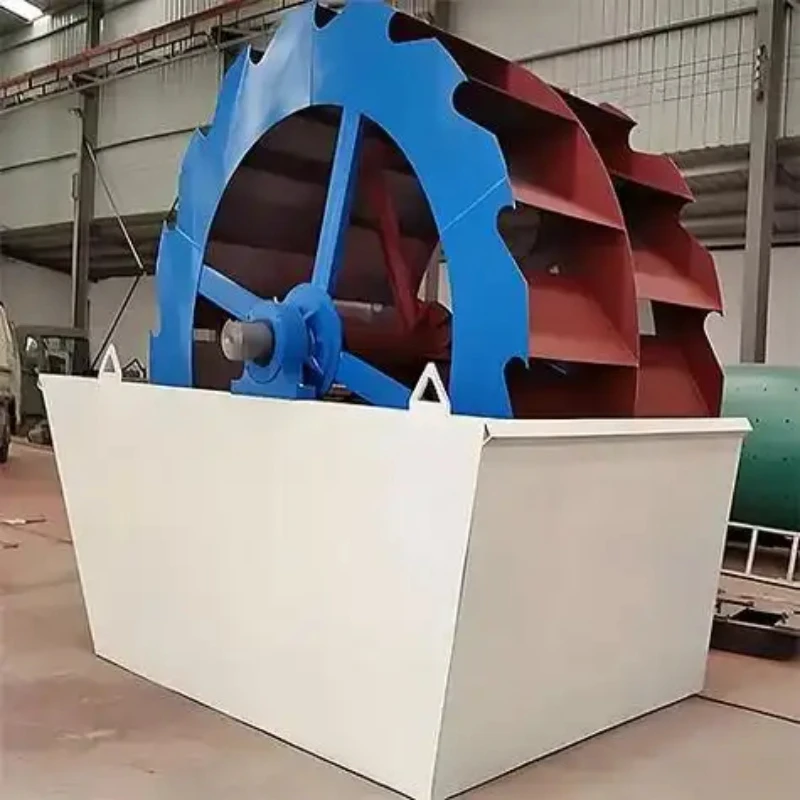
A bucket wheel sand washer mainly consists of a washing tank, bucket wheel, drive system, shaft and bearings, overflow system and discharge section. These components work together to wash, separate, recover and partially dewater sand.
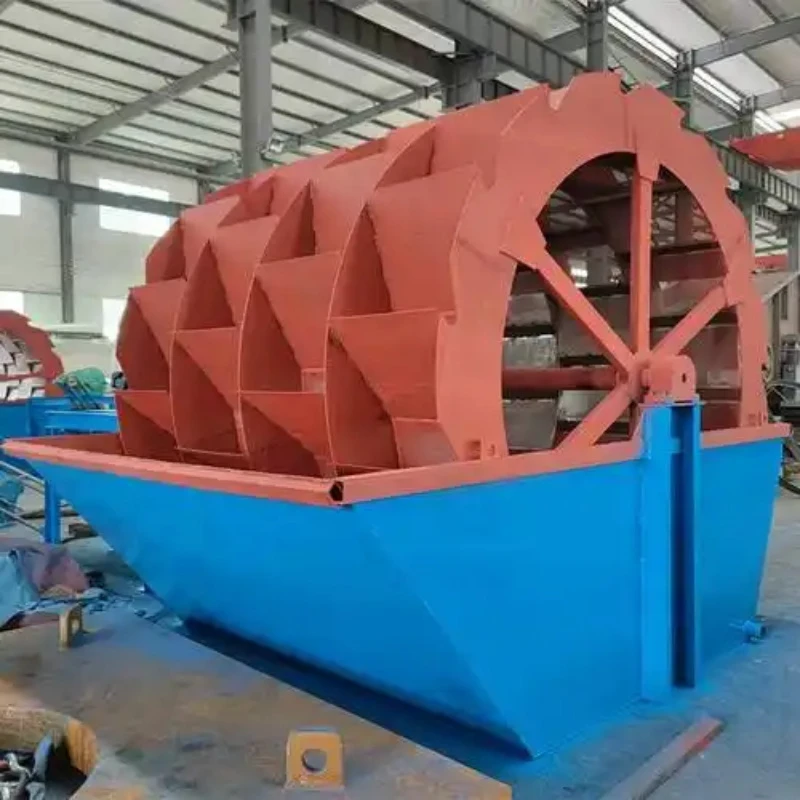
Bucket Wheel Sand Washer Technical Specifications
The following table lists the main specifications of the bucket wheel sand washer models, including wheel diameter, speed, feed size, capacity and motor power. Select the model according to the required throughput and feed conditions.
| Model | Wheel Diameter (mm) | Wheel Speed (rpm) | Max. Feed Size (mm) | Capacity (t/h) | Motor Power (kW) |
| XS22-2 | 2,200 | 2.5 | ≤10 | 15–30 | 4 |
| XS26-2 | 2,600 | 2.5 | ≤10 | 20–50 | 5.5 |
| XS28-3 | 2,800 | 1.2 | ≤10 | 50–80 | 11 |
| XS28-4 | 2,800 | 1.17 | ≤10 | 60–100 | 15 |
| XS30-4 | 3,000 | 1.2 | ≤10 | 120–200 | 15 |
| XS32-3 | 3,200 | 1 | ≤10 | 100–160 | 15 |
| XS32-4 | 3,200 | 1.17 | ≤10 | 150–250 | 18.5 |
| XS36-4 | 3,600 | 1 | ≤10 | 200–350 | 37 |
How to Size a Bucket Wheel Sand Washer?
Start with the required throughput, then check feed size, clay and silt content, target sand recovery, product moisture and available water supply. For example, a 100 t/h requirement should not be matched to a 100 t/h nominal machine without considering feed fluctuations, material cleanliness and operating conditions. Maximum feed size is commonly around 10 mm, but the actual limit depends on the selected model.
Machine selection = Throughput + Feed Characteristics + Washing Target + Water Conditions + Downstream Requirements
The selected model should also fit the available installation space and downstream equipment. Check the machine’s wheel diameter, capacity, motor power, dimensions and weight against the plant layout and handling requirements. Final sizing should be confirmed from the actual feed sample and required product specification rather than capacity alone.
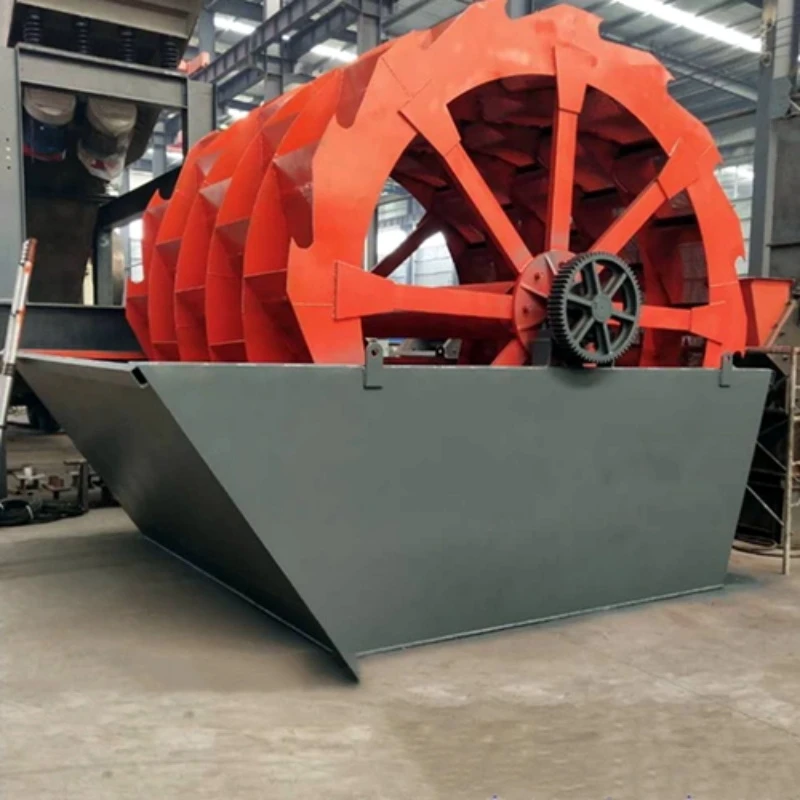
Bucket Wheel Sand Washer Applications
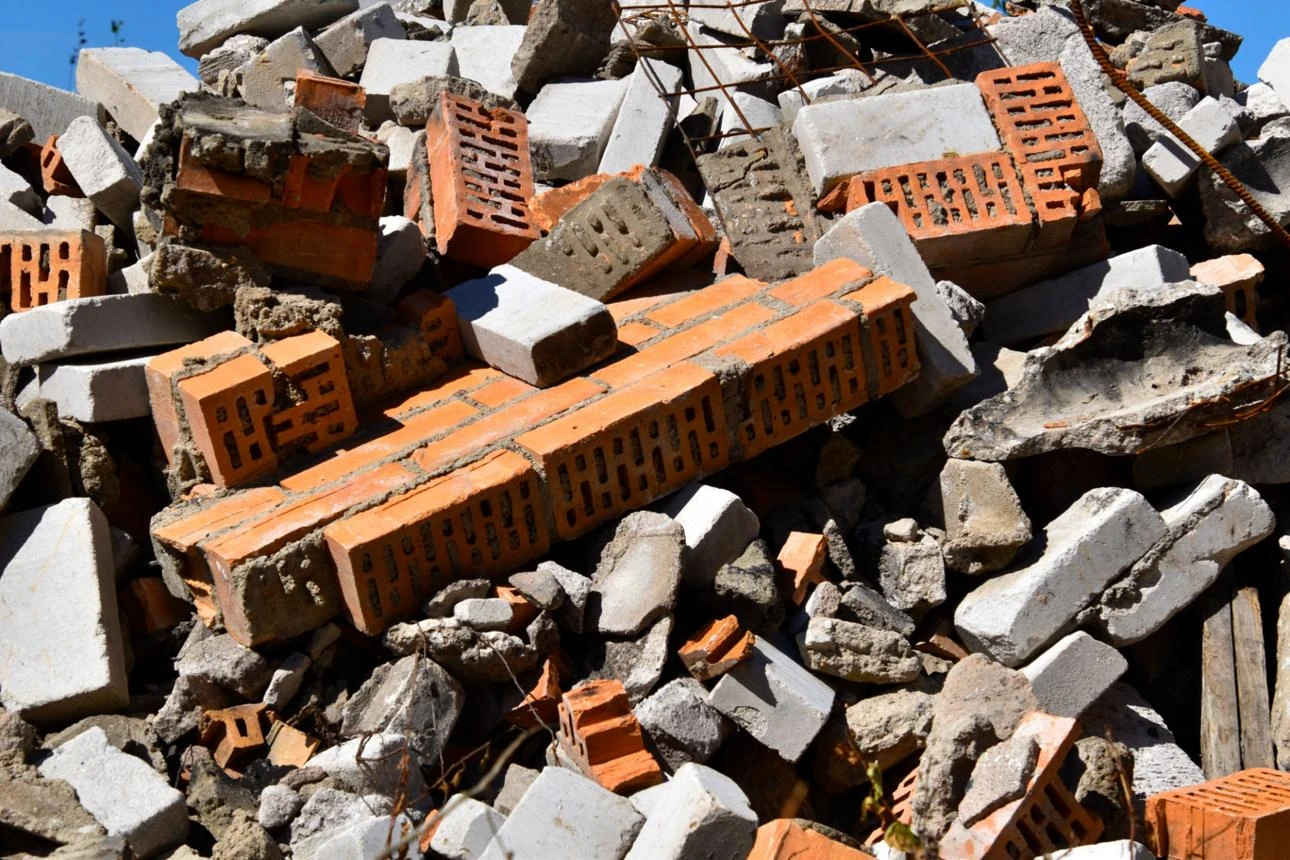
Bucket wheel sand washers are used where sand or fine mineral feed carries clay, silt, dust or other unwanted fines. Application and washing intensity depend on feed composition, particle size and the required product quality.
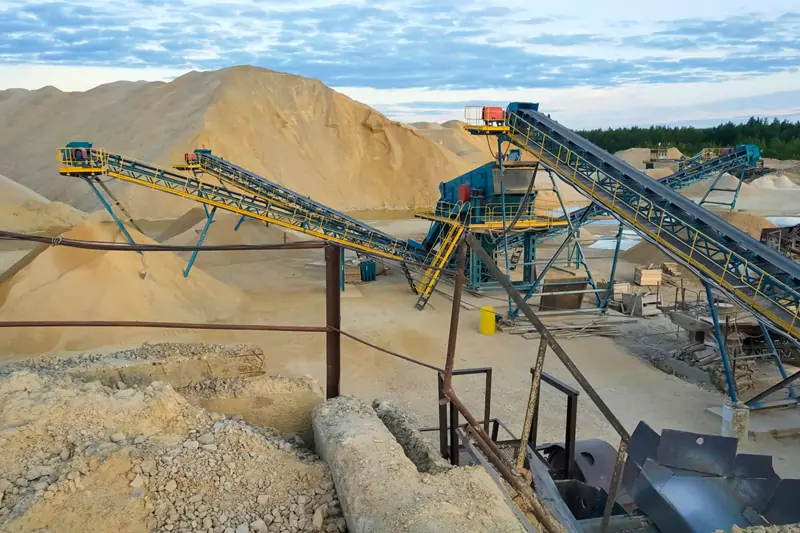
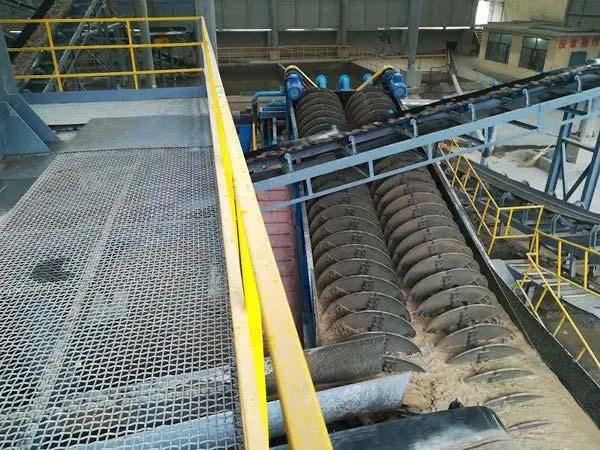
Where Does a Bucket Wheel Sand Washer Fit in a Washing Plant?
A bucket wheel sand washer is normally installed after crushing and screening to clean the sand fraction. It removes clay, silt and surface dust before the washed sand moves to dewatering, fine sand recovery or stockpiling.
Process Position
Raw Feed → Crushing → Screening → Sand Fraction → Bucket Wheel Sand Washer → Dewatering → Fine Sand Recovery → Clean Sand
Wash Water Overflow → Settling / Thickening → Water Recycling
The upstream crushing and screening stages control feed size and separate the sand fraction. The bucket wheel handles the washing stage, while downstream dewatering and fine sand recovery equipment are selected according to product moisture and sand recovery requirements.
Bucket Wheel Sand Washer vs. Other Sand Washing Equipment
Different sand washing equipment is designed for different feed conditions and processing duties. The comparison below highlights the main differences for equipment selection.
| Equipment | Main Application | Washing Duty | Product Handling |
| Bucket Wheel Sand Washer | Sand and fine aggregate | Clay, silt and surface dust removal | Sand recovery + partial dewatering |
| Screw Sand Washer | Sand and aggregate | Washing + mechanical scrubbing | Washing + conveying |
| Log Washer | Coarse, heavily contaminated aggregate | Intensive scrubbing | Washing + material discharge |
| Rotary Scrubber | Clay-bound ore and difficult feed | Strong tumbling and scrubbing | Washing + discharge |
| Dewatering Screen | Washed sand and aggregate | Free-water removal | Product dewatering |
A bucket wheel sand washer is generally suitable when sand washing, contaminant removal and product recovery are the main requirements. For heavily clay-bound or difficult feed, a log washer or rotary scrubber may provide stronger scrubbing. A dewatering screen can be added when lower product moisture is required.
Bucket Wheel Sand Washer Maintenance
Proper maintenance mainly comes down to controlling wear, keeping the drive system in good condition, and preventing material build-up during operation.
Maintenance focuses on the bucket wheel, buckets, shaft, bearings, drive system, tank and overflow weir. Check bucket and liner wear, blocked perforations, bearing condition, reducer lubrication and loose fasteners. Abnormal vibration or noise should be checked before continued operation.
We recommend keeping the feed within the specified size and capacity range and maintaining a stable water level. Lubricate bearings and drive components as required, and replace worn buckets, liners and other contact parts in time. If sand loss or poor dewatering occurs, check the feed, water flow and bucket drainage first.
Bucket Wheel Sand Washer Manufacturer
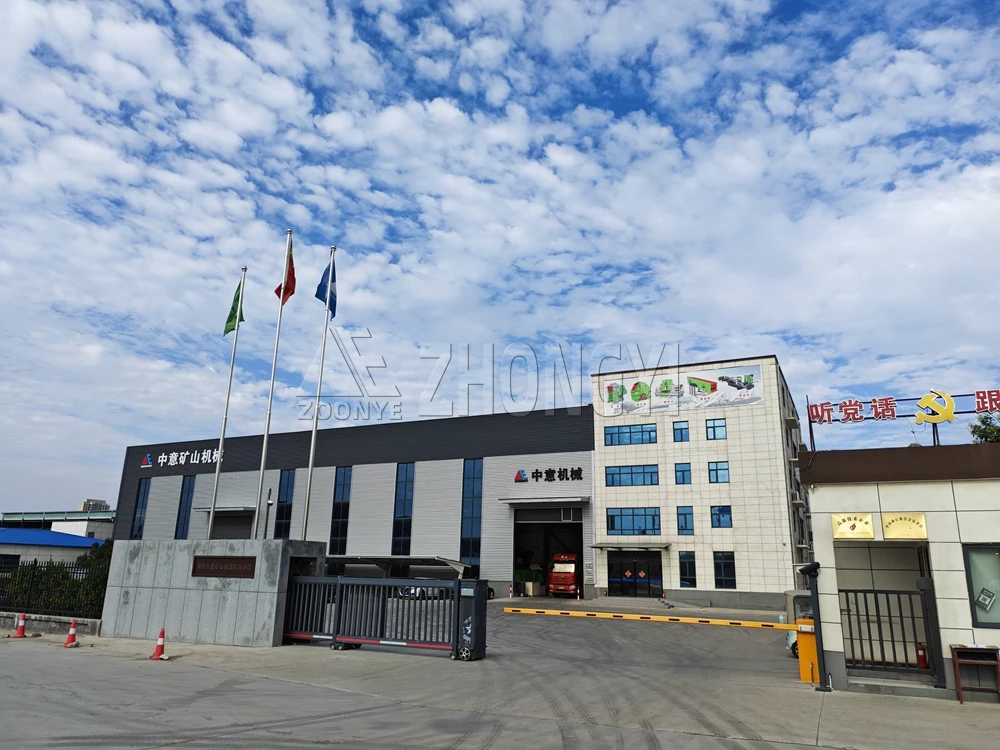
Zhengzhou Zhongyi Mining Machinery Co., Ltd. is a mining equipment manufacturer based in Xingyang, Zhengzhou, Henan. Founded on October 18, 2010, we cover equipment design, fabrication and inspection, with a factory area of 40,000+ m², 10,000+ m² of buildings, and 200+ processing machines. Our manufacturing system follows ISO 9001:2015 quality management procedures.
For sand washing projects, we consider more than the washer itself. We match the equipment with feed characteristics, required capacity, upstream screening, water conditions, dewatering and final product requirements. We provide equipment selection, process design, fabrication, factory inspection, installation and commissioning, spare parts and after-sales support for projects in mining and aggregate processing.
Request a Customized Solution
Partner with Zhongyi for a Bucket Wheel Sand Washer designed for sand washing, clay and silt removal, sand recovery, and partial dewatering in aggregate and mineral processing plants.
Custom High Density Agitation Tank Solutions
Every sand washing project has different feed conditions and product requirements. Send us your material type, required capacity, feed size, clay and silt content, target sand quality, product moisture and available water conditions. Based on these parameters, we can match the bucket wheel washer with suitable screening, dewatering and recovery equipment and integrate it into a complete [Stone Crusher Plant Solution] for aggregate processing. Contact Zhongyi to discuss your project and receive an equipment recommendation and process configuration.
Please Provide the Following Information:
FAQs
What is a bucket wheel sand washer used for?
A bucket wheel sand washer is used to remove clay, silt, dust and other unwanted fines from sand and fine aggregates. The rotating wheel agitates the material in water, while lighter contaminants remain suspended and leave through the overflow. Heavier sand settles and is recovered by perforated buckets. It is commonly installed after crushing and screening in aggregate and mineral processing plants.
What feed size can a bucket wheel washer handle?
Most standard models are designed for feed sizes up to approximately 10 mm, but the actual limit depends on the selected model and feed characteristics. Oversized particles should normally be removed through upstream screening. When selecting the equipment, suppliers should also review feed gradation, moisture and clay content, as these factors can affect washing efficiency, throughput and wear even when the nominal feed size is within specification.
How do I select the right capacity for a sand washer?
Capacity should be selected from the required hourly production together with the actual feed characteristics. A project requiring 100 t/h, for example, should not simply choose a machine rated at 100 t/h without considering peak feed, clay content, moisture and particle-size distribution. Allowing appropriate operating margin helps maintain stable washing performance when feed conditions fluctuate. Final selection should be confirmed from actual material data whenever possible.
Can a bucket wheel washer handle high-clay sand?
It can handle clay-contaminated sand, but the type and amount of clay are important. Loose clay can generally be dispersed through mechanical agitation and water flow, while sticky or heavily clay-bound material may require stronger scrubbing upstream. High clay content can also increase water demand and affect sand recovery. For difficult feed, material testing can determine whether additional scrubbing equipment is required before the washing stage.
How can fine sand loss be reduced during washing?
Fine sand loss is mainly affected by particle size, water flow, overflow conditions and feed characteristics. Excessive water flow can carry saleable fine sand out with the suspended clay and silt. Stable feeding and controlled water conditions are therefore important. When fine-sand recovery is a priority, a hydrocyclone or fine sand recovery unit can be added downstream to recover useful fines from the washing process.
Does a bucket wheel sand washer remove water from the product?
Yes, but only partially. As the perforated buckets lift the washed sand, free water drains through the bucket openings and returns to the washing tank. The discharged sand still contains moisture, so a dewatering screen is normally added when a lower final moisture level is required. The downstream configuration should be selected according to throughput, particle size, product moisture target and the required sand recovery rate.
What is the difference between a bucket wheel washer and a screw washer?
A bucket wheel washer combines sand washing, contaminant removal, sand recovery and partial dewatering, while a screw washer also provides mechanical conveying during the washing process. Bucket wheel equipment can be suitable when product recovery and water management are important. Screw washers may be preferred where stronger conveying or scrubbing is needed. The choice should be based on feed contamination, required washing intensity, capacity and downstream processing requirements.
What information is needed for bucket wheel sand washer selection?
For accurate equipment selection, provide the material type, required capacity, maximum feed size, particle-size distribution, clay and silt content, moisture and target product quality. Final product moisture and available water supply are also important for designing the washing and dewatering stages. Plant dimensions and downstream equipment should be considered as well. These details allow the washer size and supporting equipment to be matched to the actual process conditions.