What Is a Screw Classifier?
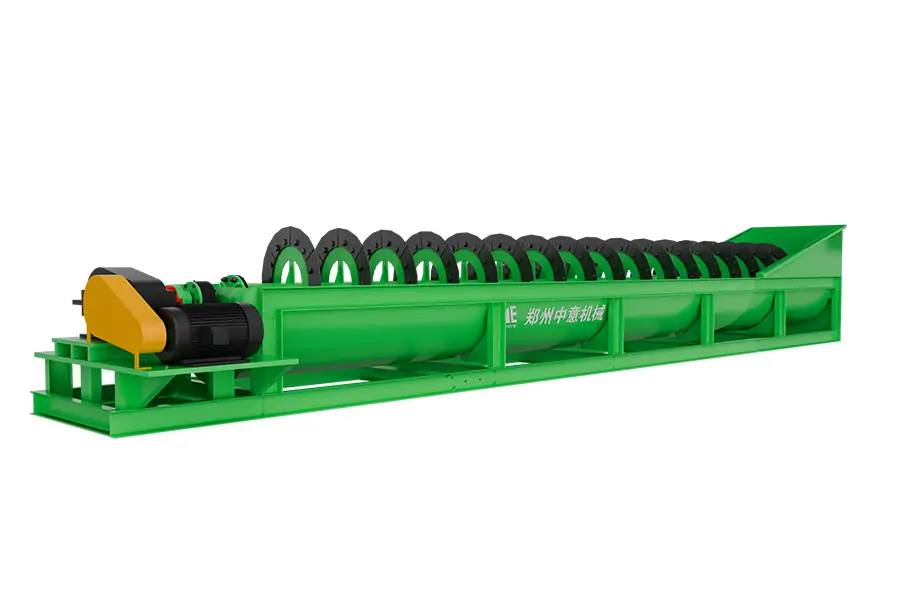
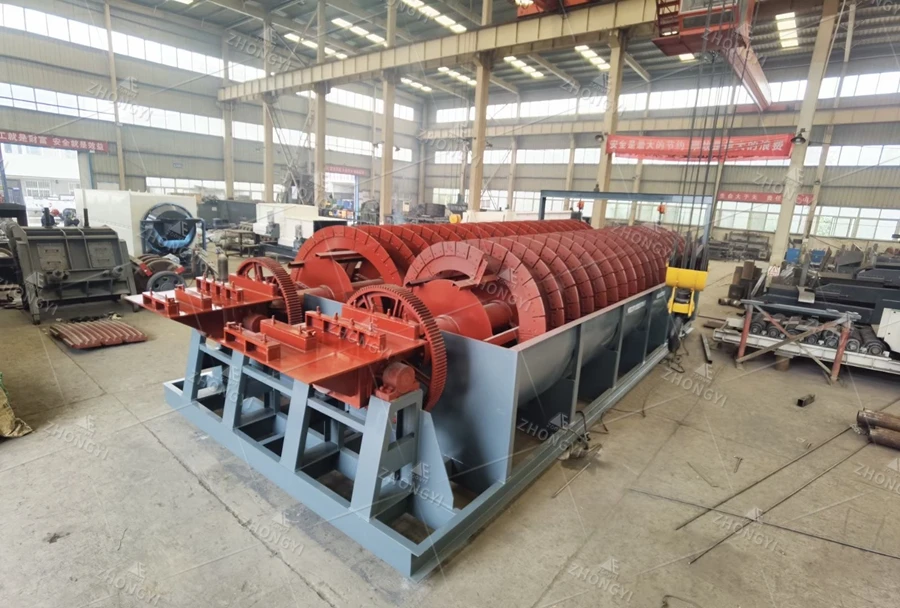
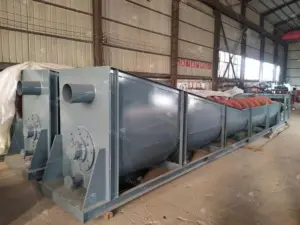
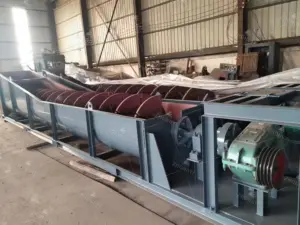
A screw classifier, also known as a spiral classifier, is a mechanical separation device widely used in mineral processing plants. It is used to classify solid particles by size, remove fine mud from slurry, and wash raw ore before downstream processing. Its working principle utilizes one or two rotating spiral rods within an inclined trough: coarser and heavier particles sink and are conveyed upwards by the spiral rods, while finer particles remain suspended in the overflow water and are discharged from the lower weir. For high-clay ores or heavily contaminated alluvial deposits, this washing sequence is standardly preceded by a heavy duty trommel screen machine to achieve preliminary disaggregation and mud liberation before final hydraulic sizing.
How Does a Spiral Classifier Work?
A Spiral Classifier separates mineral particles by combining gravity-driven sedimentation with mechanical screw conveyance—coarse solids sink and are discharged upward, while fine particles overflow with the water stream.
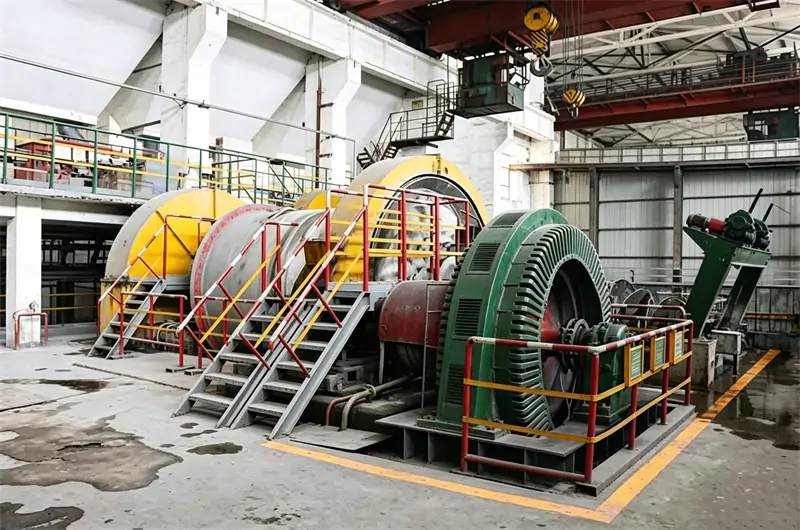
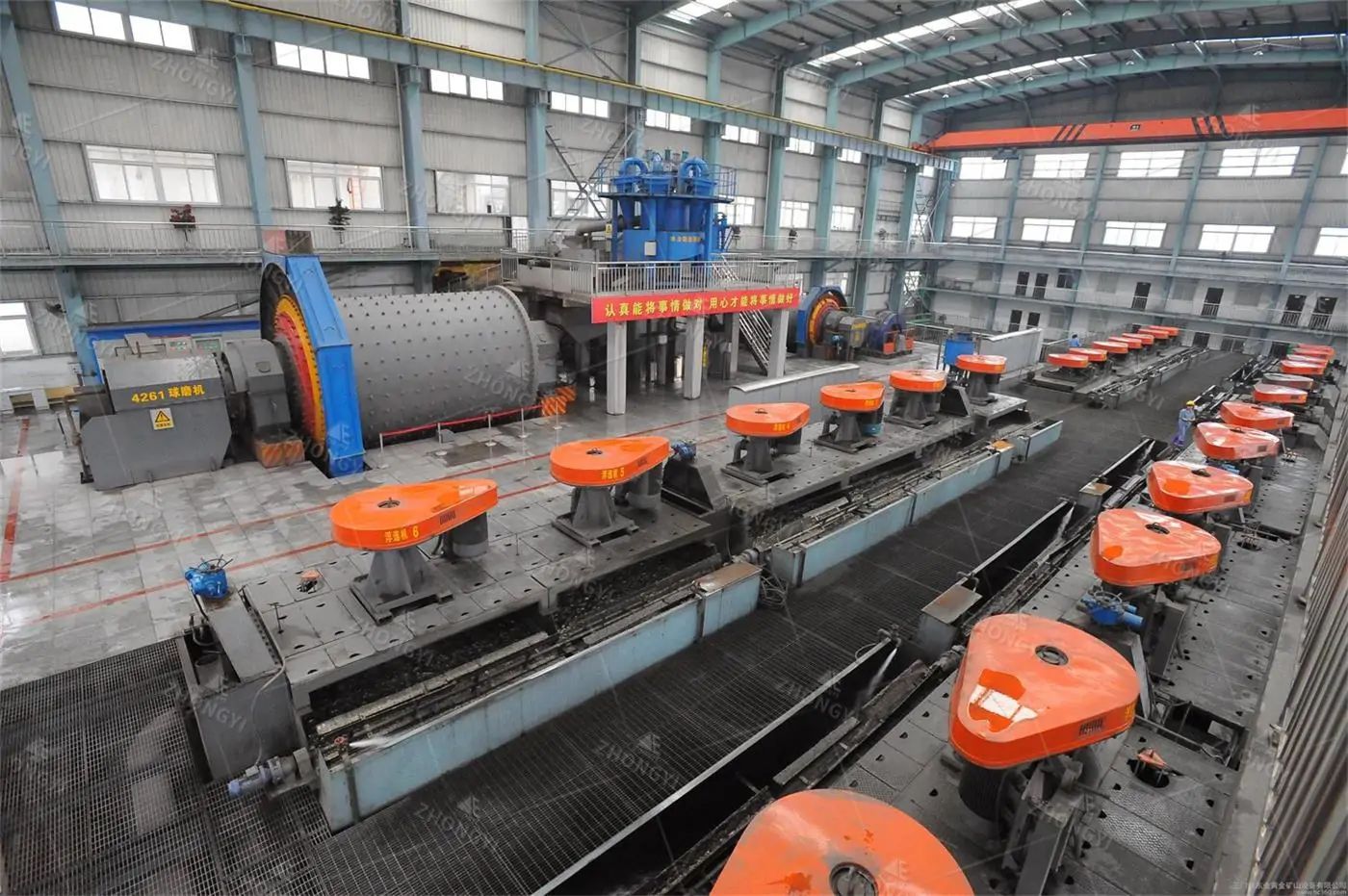
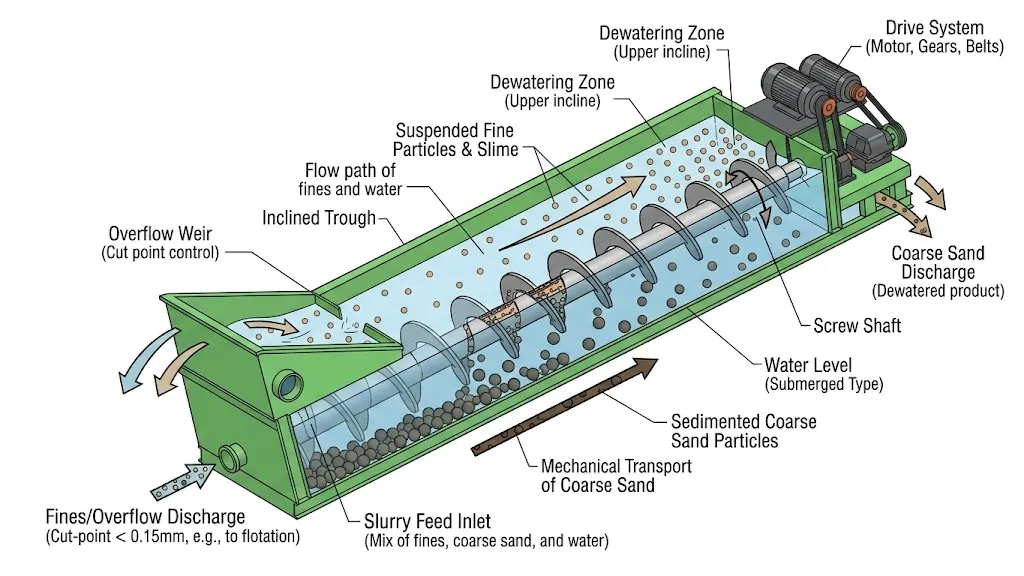
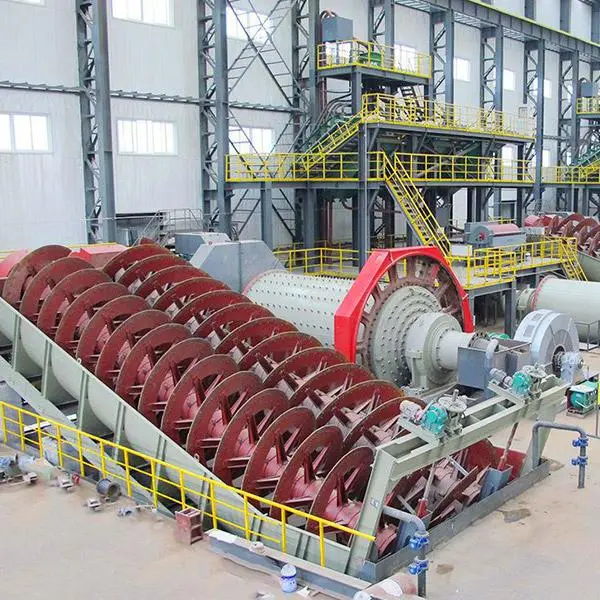
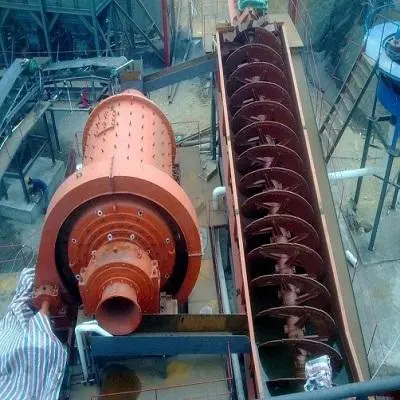
The classifier operates on differential settling velocity. When a slurry mixture enters the inclined trough, particles settle at rates proportional to their size and density. Coarse, heavy particles descend rapidly to the tank floor; fine, light particles remain in suspension. A continuously rotating helical screw then transports the settled coarse material up the incline toward the upper discharge end, while the fine-laden overflow exits freely at the lower weir. In classic wet concentration circuits, this coarse discharge is returned as sands directly to the feed end of a mining ball mill to form a stable closed-loop grinding operation.
Components of Spiral Classifier
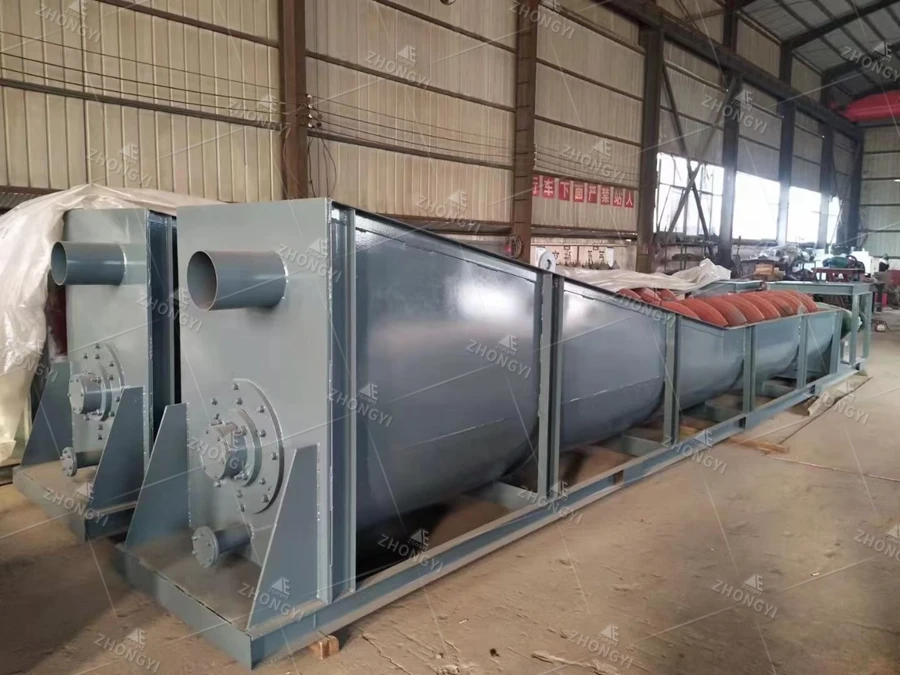
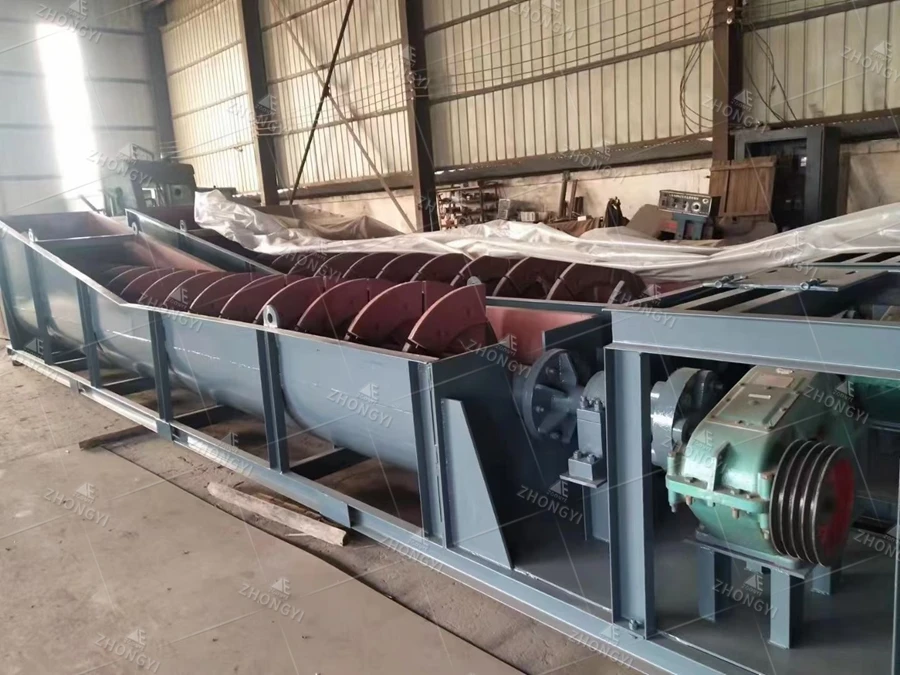
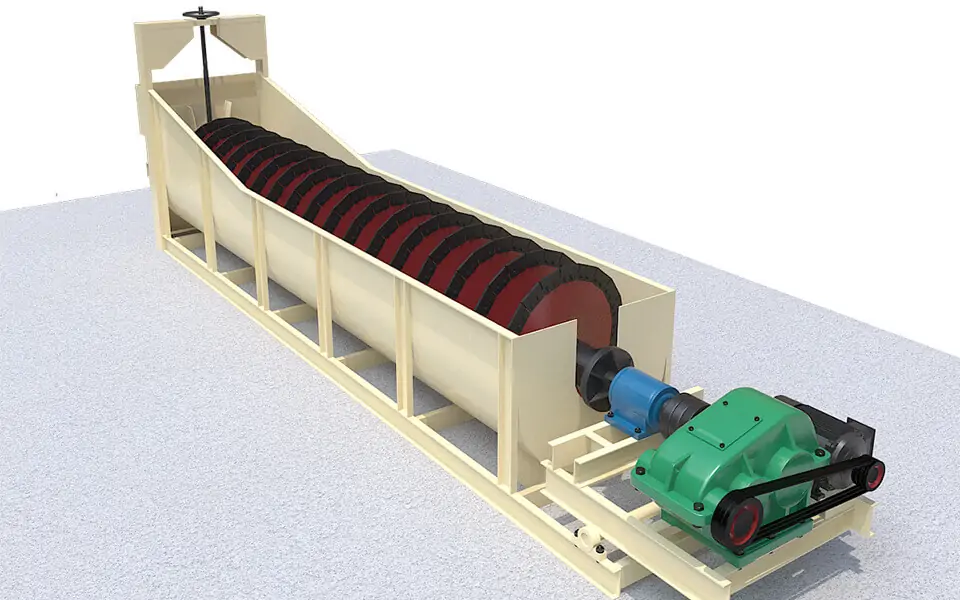
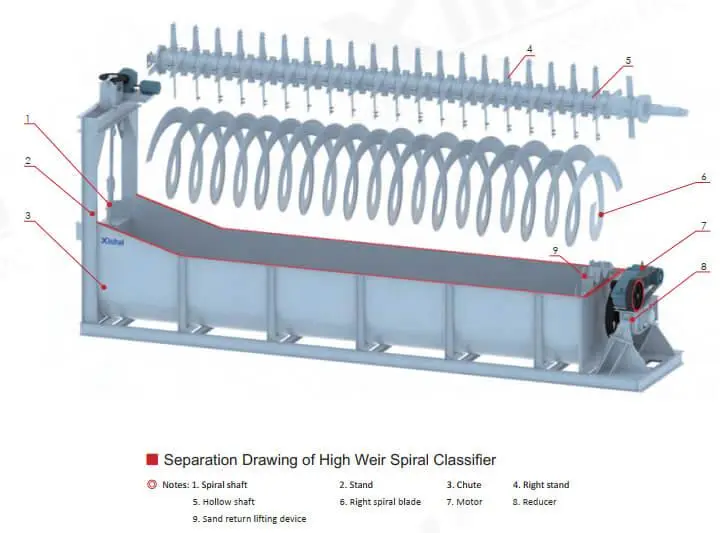
A spiral classifier is mainly composed of the tank body, spiral (screw) mechanism, transmission system, lifting device, overflow weir, and support frame. These components work together to achieve particle classification based on different settling speeds in mineral processing. When configured for industrial sand or brittle ore sizing, this integrated mechanical setup operates in close tandem with primary rod mill units to closely control the fineness modulus of the discharge.
Tank Body
The main container that holds slurry and provides the classification environment for solid-liquid separation.
Spiral (Screw) Mechanism
Rotating screw used to agitate and transport coarse particles toward the discharge end.
Transmission System
Includes motor, reducer, and drive components that power the spiral rotation at a controlled speed.
Lifting Device
Adjusts the height of the spiral for controlling pool level and classification efficiency.
Overflow Weir
Controls the discharge of fine particles and overflow slurry.
Support Frame
Provides structural stability and supports the entire classifier during operation.
Specifications
| Spiral Diameter (mm) | Tank Length (m) | Capacity (t/h) | Motor Power (kW) | Suitable Cut Point |
| 300 | 3.5 | 5–15 | 1.1 | Fine |
| 500 | 4.5 | 15–40 | 2.2 | Fine / Medium |
| 750 | 5.5 | 40–80 | 3.0 | Medium |
| 1000 | 6.5 | 80–150 | 5.5 | Medium / Coarse |
| 1500 | 8.0 | 150–280 | 7.5 | Coarse |
| 2000 | 9.5 | 280–450 | 11.0 | Coarse |
| 3000 | 12.0 | 450–700 | 15.0 | Coarse |
Notes on screw classifier specs:
Capacity — figures reflect typical slurry throughput under standard operating conditions. Actual output varies with feed density, particle size distribution, and screw speed.
Power — motor power listed is for the screw drive only. Factor in an additional 15–30% if a feed pump is part of the circuit.
Spiral classifier capacity scales roughly with the square of the diameter — doubling the spiral diameter increases capacity by approximately four times, not two. To maintain plant-wide circuit equilibrium, this volumetric capacity estimation must be strictly synchronized with the hourly primary tonnage originating from the upstream mining jaw crusher section.
Types of Screw Classifiers
Spiral Classifier come in two types. The right choice depends on how fine your overflow needs to be.
High Weir Spiral Classifier
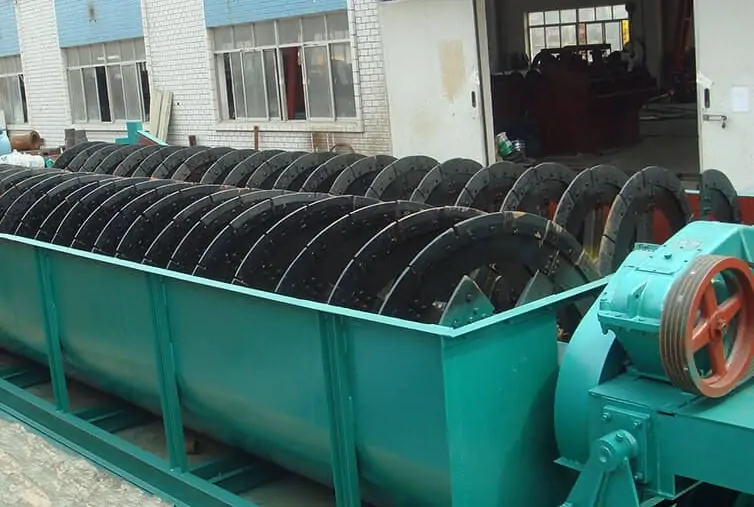
The weir sits above the lower screw shaft, creating a shallow settling pool.
Best for: Coarse-to-medium classification in closed-circuit grinding. Pairs well with ball mills.
Particle size: Overflow 0.15–0.83 mm (20–100 mesh)
Pros: High throughput, simple structure, low maintenance cost.
Cons: Poor separation sharpness at finer cuts; feed turbulence disrupts the settling zone.
Submerged Spiral Classifier
All screw blades run below the overflow surface, creating a deeper, calmer pool and longer settling time.
Best for: Fine grinding circuits and desliming where tight particle control is required.
Particle size: Overflow 0.07–0.15 mm (100–200 mesh)
Pros: Higher classification precision; handles feeds down to 0.074 mm.
Cons: Lower unit capacity; submerged bearings require more rigorous maintenance.
| High Weir | Submerged | |
| Overflow size | 0.15–0.83 mm | 0.07–0.15 mm |
| Application | Coarse circuits | Fine circuits |
| Capacity | Higher | Lower |
| Maintenance | Lower | Higher |
Applications
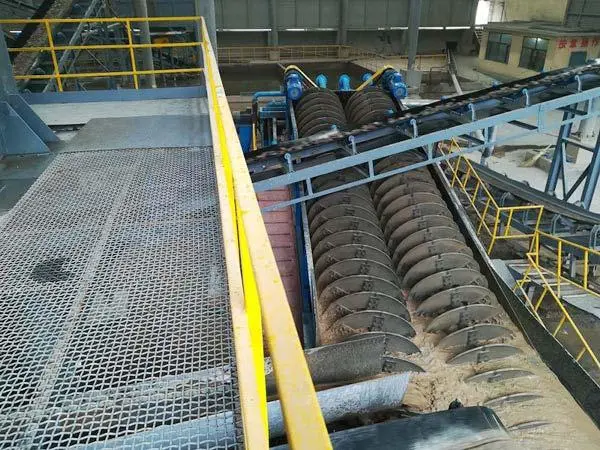
Spiral classifiers are designed for heavy-duty separation operations. Across various industries and regions, the following three application areas account for the majority of global installations:
For expert guidance and customized solutions, contact Zhongyi to select the most suitable Classifier Equipment for your project.
Request a Customized Solution
Partner with Zhongyi for expert technical support, customized solutions, and reliable equipment tailored to your ore characteristics and production requirements.
Custom Screw Classifier
Not all applications fit a standard model. We supply Classifier Equipment built to match your actual working conditions, including ore type, particle size range, and plant layout. The goal is stable classification and reliable long-term operation.
What We Customize
Screw Classifier Manufacturer and Supplier
Zhongyi has over 16 years of experience in the design and manufacturing of screw and spiral classifiers as professional mining classification equipment for mining and mineral processing.
Our equipment is developed based on practical operating conditions, with attention to slurry behavior, particle size distribution, and wear characteristics. Design, material selection, and fabrication follow international standards to ensure consistent performance under continuous, heavy-duty operation.
We supply both standard and custom-built units, with configurations adjusted to fit specific circuits, including closed-circuit grinding systems and sand washing lines. Each unit is engineered for stable classification, controlled overflow, and long service life. For localized or multi-site quarry deployments, our engineering team can also interface these classification systems with a comprehensive mobile crusher plant layout to enable on-site aggregate crushing and washing simultaneously.
FAQs
What is the difference between a Spiral Classifier and a spiral classifier?
There is no significant difference between this equipment and a spiral classifier. They refer to the same equipment used in mineral processing. “Spiral classifier” is the more commonly used industry term, while “screw classifier” is also widely searched online.
What does a screw classifier do in mineral processing?
A Classifier Equipment is used to separate fine and coarse particles based on their size and density. It is commonly applied in grinding circuits, sand washing plants, and ore processing to improve efficiency and material classification accuracy.
How do I choose the right screw classifier for my project?
Choosing the right spiral classifier depends on factors such as required capacity, particle size, and material type. It is recommended to consult with a supplier who can evaluate your processing needs and suggest the most suitable spiral classifier model.
What is the capacity range of a screw classifier?
The capacity of a spiral classifier varies depending on its size and design. Small models handle a few tons per hour, while large spiral classifiers used in mining operations can process hundreds of tons per hour efficiently.
What is the price of a screw classifier?
The price of a screw classifier depends on specifications such as spiral diameter, length, and capacity. Customized designs and materials also affect cost. Contacting a reliable manufacturer with your requirements ensures an accurate and competitive quotation.
How long does it take to deliver a screw classifier?
Delivery time for a screw classifier typically ranges from 2 to 6 weeks, depending on customization and order size. Standard models may be available faster, while large or customized spiral classifiers require additional manufacturing and testing time.
Do you provide installation and technical support?
Most professional screw classifier manufacturers provide installation guidance, commissioning support, and technical training. Some suppliers also offer on-site service or remote assistance to ensure the spiral classifier operates efficiently and reliably.
Can a screw classifier be customized?
Yes, This equipment can be customized based on project requirements such as capacity, material characteristics, and site conditions. Manufacturers can adjust spiral diameter, tank length, and configuration to meet specific mineral processing needs.